ClassicPress
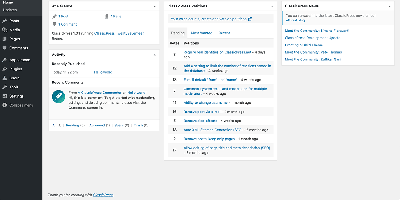
WordPress without Gutenberg: ClassicPress, the community-led fork, keeps the TinyMCE classic editor as the default and strips the block editor and Full Site Editing out of core entirely. The result is roughly half WordPress's size - obsolete libraries like jQueryUI, Thickbox, and Flash support are gone, replaced by native HTML5 elements and modern alternatives like SortableJS - which translates to a measurably faster admin and a leaner attack surface. Forked from WordPress 6.2, it remains compatible with the vast plugin and theme ecosystem targeting that lineage (anything not requiring blocks generally works, helped by a blocks-compatibility mode), and the PHP-first WordPress API developers have used for over a decade works unchanged - no React required to extend your CMS. The fork adds its own improvements: built-in media categories and tags with bulk editing, revision management that lets you prune database bloat, native HTML5 dialogs for accessible touch-friendly menus, and recent releases bring APCu object-cache support, vanilla-JS core widgets, and performant translations. Governance is democratic and community-driven rather than corporate. For content sites, business sites, and blogs where the classic editing workflow is the feature, ClassicPress is stability as a philosophy.
VanBlog
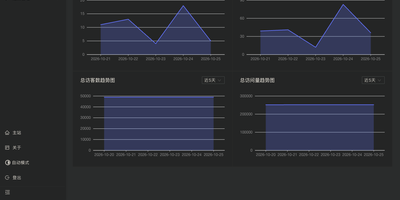
Publish a personal blog you fully own, with a Markdown writing desk, an admin dashboard, and reader-facing pages all in one install. Write posts with live preview, Mermaid diagrams, math formulas, and custom highlight blocks, then paste or upload images straight from the editor or import existing Markdown files when moving over from another platform. Posts and drafts can be managed in bulk, filed under categories and tags, and locked behind passwords for individual articles or whole categories. Readers get a table of contents, code copy buttons, search, RSS feeds, friend links, and donation links, and pages follow their light or dark preference on phones and desktops. The dashboard charts visitors and page views, with Google Analytics and Baidu Analytics as optional add-ons, while Waline comments bring email notifications and webhooks. Image storage is built in, with compression and watermarking, or can be handed to PicGo, object storage, or GitHub. Pipelines run custom code or call webhooks after selected events, custom pages and CSS, HTML, or JavaScript reshape the layout, and collaborator accounts with permissions plus API tokens let several authors share one site or feed a separate frontend. Backups, import and export, and update notices live in the admin panel, and HTTPS certificates for your domain are issued and renewed automatically. Running on a dedicated VPS on RepoCloud with guaranteed CPU, RAM, and SSD, full root SSH access, and a browser serial console. GPL-3.0 licensed.
Bloglite
Most blogging platforms demand a database server, a cache layer, and a healthy slice of RAM before you publish a single sentence; Bloglite runs a complete personal microblog in a few megabytes of memory. You write and edit posts directly in the web interface from a phone or a desktop browser, see the rendered result within seconds, and skip the commit, build, and deploy cycle that static site generators impose on every small update. Posts are written in Markdown with built-in syntax highlighting for code and rendered LaTeX for math expressions, so technical notes, recipes, snippets, and reading highlights all sit comfortably in the same public notebook. Upload images and files to embed them in posts, follow RSS feeds from inside the service, and retrieve anything later through the built-in search or an external search engine. Share posts through short numeric links or longer descriptive slug URLs, and keep ownership of everything: posts live in one SQLite database on your server, and automatic backups export the whole site to plain text files that can be downloaded through the API and committed to a Git repository on a schedule. Running on a dedicated VPS on RepoCloud with guaranteed CPU, RAM, and SSD, full root SSH access, and a browser serial console. MIT licensed.
Marble
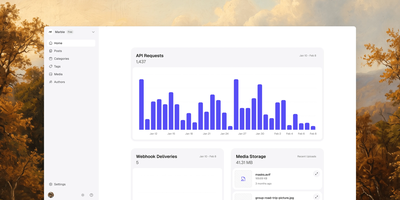
Marble gives your blog, changelog, or product updates a calm editorial home, then hands clean JSON to whatever website you already built. Writers work in a focused rich-text editor with headings, lists, code blocks, images, video, and embeds, while a readability score quietly grades each draft as it grows. Every post carries authors, one category, tags, a cover image, and typed custom fields, so a changelog entry and a long guide can share one predictable structure. Your frontend pulls sanitized HTML or Markdown through the REST API or typed SDK, filtering by category, tag, or search in a single request. Read-only public keys serve published posts safely, while scoped private keys unlock drafts and write access for the tools you trust. Uploads of images, video, audio, and documents land in a media library with alt text and dimensions, ready to embed anywhere. Signed webhooks announce every change to your site, Slack, or Discord with retries and a delivery log, and an MCP server lets AI agents search and draft content too. Running on a dedicated VPS on RepoCloud with guaranteed CPU, RAM, and SSD, full root SSH access, and a browser serial console. AGPL-3.0 licensed.
Xibo
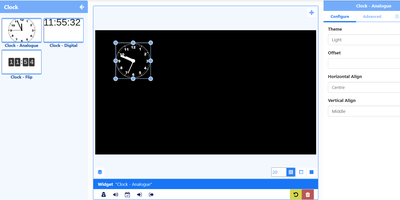
A lobby television stuck on a printed poster, a cafe menu board nobody remembers to update, a corridor screen looping last month's notices: Xibo replaces that drift with one web dashboard where every display on the network gets designed content, a schedule, and fresh media from a central library. Layouts are composed on a canvas of regions holding video, images, text and live widgets, then sequenced into playlists and grouped into campaigns spanning hundreds of screens. Scheduling works down to dayparts and dates, so breakfast menus stop at eleven, event signage appears only on event days, and each group of displays keeps its own programming. Proof-of-play reports record exactly what aired on every screen for advertiser billing and compliance audits. Windows, Android, LG webOS and Samsung Tizen players check in automatically, pull changed content and report their status back to the CMS. Running on a dedicated VPS on RepoCloud with guaranteed CPU, RAM, and SSD, full root SSH access, and a browser serial console. AGPL-3.0 licensed.
FlecBlog
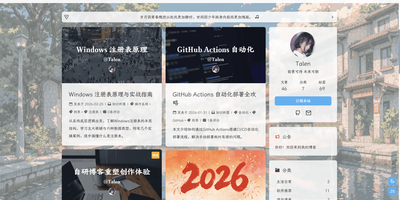
FlecBlog is a complete blogging system for people who want their own corner of the web to look considered, not cobbled together. Readers get a fast public site with server-rendered pages that search engines can actually read, per-article sharing cards, a sitemap that updates itself, and a feed for subscribers who still use readers. Writers get a separate admin console with a Markdown editor that previews as you type, syncs scrolling between the panes, uploads a pasted image without a detour, and estimates reading time while counting words. Posts can carry custom blocks like callouts, tabs, collapsible panels, link cards, and photo walls, so tutorials and essays do not all flatten into the same shape. The dashboard turns your archive into charts: visit trends by day or month, category breakdowns, a tag cloud, and a contribution calendar of your writing streak. Comments support guests and signed-in readers with nested replies and emoji, friend links handle the blogroll exchange, and short moments publish the small updates that are not full articles. Running on a dedicated VPS on RepoCloud with guaranteed CPU, RAM, and SSD, full root SSH access, and a browser serial console. MIT licensed.
ShopClass
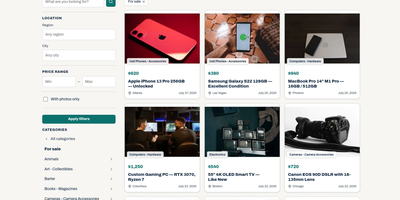
Running a niche marketplace should not mean renting listings from a platform that owns your audience; ShopClass lets you launch your own classifieds site, job board, property portal, or local marketplace. Sellers post listings with photos organized by categories and hierarchical locations, and each category carries its own custom fields, so vehicles ask for make, model, and mileage while jobs ask for salary and type and homes ask for rooms and area. Visitors search and filter across everything with SEO-friendly URLs, registered users manage their own listings, and moderation tools keep spam and abuse under control. You can charge for the privilege through paid plans and listing upgrades such as fees, premium placement, bumps, and highlights, turning the site into a business rather than a hobby. Static pages with a built-in editor cover the rest of the site, themes reshape the frontend, plugins extend it through the established Osclass extension API, and multi-language support serves audiences in their own language. Photos live on disk or S3-compatible storage, cleanup tools purge expired and blocked content, and a one-click updater pulls new releases when you are ready. Running on a dedicated VPS on RepoCloud with guaranteed CPU, RAM, and SSD, full root SSH access, and a browser serial console. GPL-3.0 licensed.
W-CMS
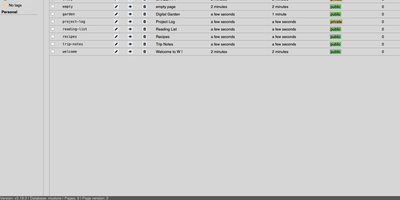
Taking notes and publishing a website usually need two different tools, but W treats them as the same act. Every page you create gets its own address, and a privacy level marks it public, private, or not yet published. The editor offers tabs for Markdown content, CSS, a custom body template, and JavaScript, with a metadata panel for title, description, tags, date, and authors. Home view lists every page with sorting, filters, search, and saved bookmarks for common queries. Two alternative views draw pages as a link graph and, for pages with coordinates, as markers on a map. A media manager organizes uploads in folders, offers a thumbnail gallery, and can optimize images for the web. Several users can work together with reader, editor, super editor, and admin roles, and optional LDAP sign-in is available in beta. Templates share layouts across pages, URL commands like add and edit speed up navigation, and an experimental API opens the data to scripts. Pages keep working even with JavaScript turned off. Everything is stored in plain files, so no database server is needed. Running on a dedicated VPS on RepoCloud with guaranteed CPU, RAM, and SSD, full root SSH access, and a browser serial console. AGPL-3.0 licensed.
Spica
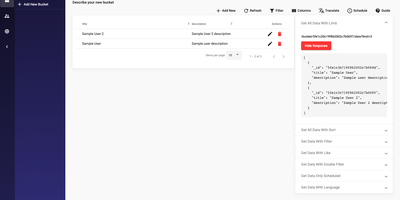
Spica skips the month of backend plumbing every new project starts with: data models, CRUD endpoints, logins, file storage, and an admin panel nobody wants to build. It hands you that whole layer as a running platform, so your first day is spent modeling your actual product. Define your data in Buckets and the REST API, with a GraphQL API alongside it, is generated automatically, complete with rules on each bucket as an entry-level security layer. Add custom policies so each user role reaches exactly the data and technical areas it should, then place your business logic in cloud functions triggered by events. Content teams get a back-office they can actually use: customized bucket views with a few clicks, inline image editing, data history, and localization for editors working in more than one language. Identities cover your users and editors, storage serves your files, and webhooks push events out to tools like Slack or Zapier when something changes. Run it as a backend engine for an application you are building, or purely as a headless CMS feeding a frontend that lives somewhere else. Running on a dedicated VPS on RepoCloud with guaranteed CPU, RAM, and SSD, full root SSH access, and a browser serial console. AGPL-3.0 licensed.
BlogFactory
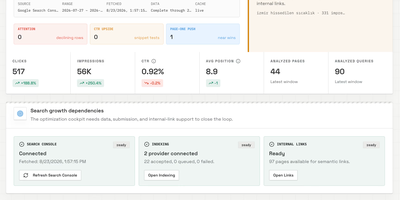
BlogFactory is the first open-source agent control plane purpose-built for multi-site content operations, shipping 16 distinct capabilities across four operational pillars — Operate, Grow, Control, and Deliver — in its v0.1.0 release. The platform keeps source evidence, AI-generated drafts, revisions, SEO metadata, human review, preflight checks, and CMS delivery destinations in one workspace while enforcing a server-side authority ceiling that prevents agents from ever publishing live content, accessing credentials, or performing administrative actions. AI agents connect through a Streamable HTTP MCP endpoint with OAuth authentication and site-scoped tool discovery, compatible with Codex, ChatGPT, and any MCP-capable client. Content creation supports single articles from keywords, titles, URLs, PDFs, text, or YouTube sources, batch campaigns, and programmatic content via reusable templates with structured data rows. The Search Growth module connects Google Search Console complete-day data to ranked optimization opportunities, 30-day growth plans, content classification by signal type (growing, low-CTR, almost-ranking, page-two, zero-click), indexing checks, and semantic internal-link suggestions. Brand Voice separates global voice rules, writer profiles, knowledge context, and brand guidelines from article mechanics. Approved drafts are delivered as CMS drafts to WordPress, Ghost, Wix, or Framer through idempotent, optimistic-locking-protected handoffs with explicit destination selection and preflight validation. The stack runs on React/Vite, a Hono/TypeScript API, PostgreSQL, and MinIO via Docker Compose, with providers including OpenRouter, OpenAI, and Google services under a bring-your-own-AI model. Running on a dedicated VPS on RepoCloud with guaranteed CPU, RAM, and SSD, full root SSH access, and a browser serial console. AGPL-3.0 licensed.

NeutralPress
Bloggers and small communities who love static-site speed but miss a real admin panel get both from NeutralPress, a dynamic CMS that regenerates pages only when content changes and serves everything else like a static site. You write in a WYSIWYG editor or in Markdown and MDX, manage drafts and versions, and build custom pages by dragging components together with live preview, all inside a backend that shares the frontend's design language instead of feeling like a separate era. A media system compresses and optimizes images, shows EXIF data, builds photo walls, and guards against hotlinking, while tags and categories organize the archive. Readers get nested comments with moderation and anti-spam, full-text search tuned for content and code terms, RSS and newsletter subscriptions, and a friend-links system that checks its own links and hides the dead ones. Behind the scenes, multi-role permissions, OAuth and passkey sign-in, two-factor authentication, rate limiting, audit logs that can restore changes, visitor analytics with keyword and device breakdowns, and scheduled health checks keep the site safe and understood. Storage can live on local disk, S3, R2, or other object stores, with several strategies running side by side. Running on a dedicated VPS on RepoCloud with guaranteed CPU, RAM, and SSD, full root SSH access, and a browser serial console. MIT licensed.