Valet Homelab
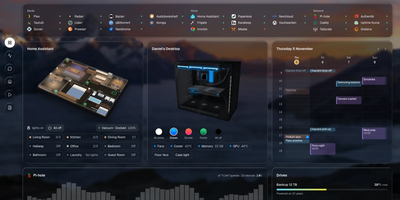
Open one page and see what is happening across every service in your homelab, then ask an AI assistant about downloads, lights, or what to watch tonight. Valet shows live status for 185 integrations, from Plex, Sonarr, and Immich to Home Assistant, Pi-hole, and Uptime Kuma, with progress bars and numbers that update without refreshing. Cards include a 3D floor plan with light controls, a PC with case and cooling controls, a calendar, backup health that flags overdue copies, and a year in review. The assistant works with a local or hosted model, switches models per chat, answers by voice, and supports slash commands, including your own. Anything it changes waits for your approval, and Valet works fine with the AI switched off. A wall mode at the /wall address turns a tablet or spare monitor into a read-from-across-the-room display with cards you pick, pages that take turns, and dimming at night. Add Valet to a phone Home Screen to install it as an app with its own notifications. API keys stay on the server, and there is no account and no telemetry. Running on a dedicated VPS on RepoCloud with guaranteed CPU, RAM, and SSD, full root SSH access, and a browser serial console. MIT licensed.
Open Intelligent UI
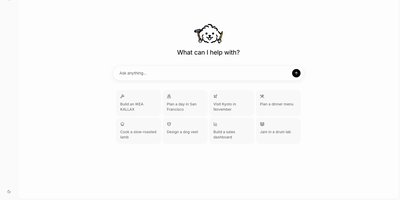
Ask for a day in San Francisco and get a routed map, photographs, and an editable itinerary instead of a wall of text. Open Intelligent UI recreates the interactive answers introduced in ChatGPT, with the model streaming a layout that the app renders live from a library of 55 components. A request for a phone comparison returns product cards and a side-by-side table, a money question returns sliders that recalculate loans and savings as they move, and a language question returns flip cards followed by a scored quiz. Dashboards offer date-range switches, KPI cards, area charts, ranked source bars, and sortable page tables, and maps add category filters, pins, expandable stops, and street routes. Fifty-nine built-in functions let each answer compute with its own state, so splits, schedules, and unit conversions update without another model call. Chat history keeps earlier answers, light and dark themes are one click away, and suggestion tiles start common requests. A development gallery shows worked examples, including a bike assembly guide, a retirement calculator, and a small arcade game, all without calling a model. Models connect through OpenUI Cloud, any OpenAI-compatible endpoint, or local Ollama, so keys and data stay in your control. Product teams, designers, and developers get a working reference for generative interfaces. Running on a dedicated VPS on RepoCloud with guaranteed CPU, RAM, and SSD, full root SSH access, and a browser serial console. MIT licensed.
Suparagent
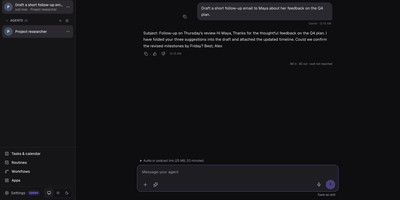
Suparagent turns a single server into a workspace of named AI coworkers that each have a job, a memory, and a folder of their own. Chat with an agent in the browser, pick an engine per conversation, and watch replies stream in as the sidebar keeps every thread searchable. Approval modes decide how much freedom an agent gets: ask first, accept edits, or plan only, so nothing touches a file or runs a command without your say. Routines send a prompt to an agent on chosen weekdays, through a webhook, or on demand, and every run lands in its own conversation. A kanban board with month, week, and upcoming views tracks tasks by owner and priority, and a canvas builds multi-step workflows from schedule triggers, model steps, agent steps, conditions, and approvals. Agents save notes you can edit, delegate to specialists in shared rooms, and reuse saved skills and templates. A usage panel totals turns and tokens by conversation, engine, and day, with a CSV export. Invite teammates with a one-time link, pair a phone, and keep agents working when your laptop is closed. Running on a dedicated VPS on RepoCloud with guaranteed CPU, RAM, and SSD, full root SSH access, and a browser serial console. Apache-2.0 licensed.
PicoClaw
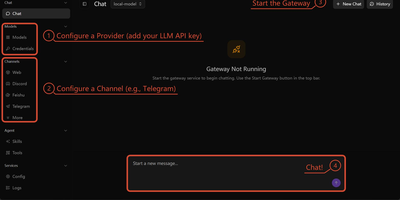
An 8MB Go binary that boots in under one second, uses less than 10MB of RAM, yet delivers full AI agent capabilities across 16+ chat platforms simultaneously. PicoClaw connects to Telegram, Discord, Matrix, IRC, Slack, WeCom, DingTalk, WeChat, LINE, and QQ while supporting LLM providers spanning OpenAI, Anthropic, Gemini, DeepSeek, AWS Bedrock, Azure, and local models via Ollama. Native Model Context Protocol support enables standardized tool integration, and the built-in smart routing engine directs simple queries to lightweight models to reduce API costs while sending complex tasks to capable models. Tool capabilities include secure shell execution, filesystem access, web search, cron scheduling for recurring tasks, and sub-agent spawning with status tracking. Gateway mode transforms PicoClaw into a full AI backend with REST API endpoints accessible from any client. The Skills system loads hierarchical behavior definitions from SKILL.md files, enabling customizable agent personalities and workflows. Compiles for x86_64, ARM64, ARMv7, RISC-V, MIPS, and LoongArch, making it deployable on hardware as cheap as a $10 Sipeed LicheeRV Nano. Achieved nearly 30,000 stars within six months of its February 2026 release. Running on a dedicated VPS on RepoCloud with guaranteed CPU, RAM, and SSD, full root SSH access, and a browser serial console. MIT licensed.
CowAgent
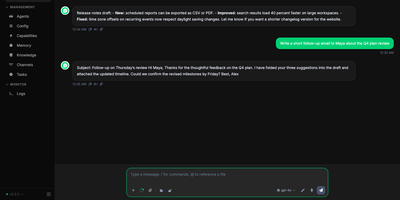
CowAgent is a personal AI agent that plans a task, picks the right tool, and keeps working until the job is done, all from a browser console on your own server. Open the chat page to hand it a request, and watch it read files, run terminal commands, search the web, and report back. Build a team of agents, each with its own role, model, skills, and knowledge, then have them collaborate in one shared conversation. Memory is layered into context, daily notes, and core facts, so the agent gets to know you over time, and a knowledge base organizes saved articles and documents into a browsable wiki. Install skills from a hub, from GitHub, or by describing one in plain language, and connect MCP tools through a form or pasted JSON. Provider credentials for chat, vision, image generation, speech, and embeddings live in one Models page, so each capability can use a different vendor. Connect Telegram, Slack, Discord, WeChat, Feishu, DingTalk, or WeCom and schedule recurring tasks. An OpenAI-compatible Chat API and shareable guest pages put the agent in front of other people. Running on a dedicated VPS on RepoCloud with guaranteed CPU, RAM, and SSD, full root SSH access, and a browser serial console. MIT licensed.
Varin
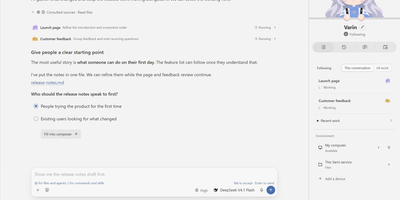
Talk to one assistant and a small team of agents quietly does the heavy lifting in the background. Ask for something in plain conversation and it answers, delegates tasks to other agents, and shows their progress in a side panel next to the thread. Answers are not just paragraphs: choices, checkboxes, tabbed drafts, tables, and live charts with adjustable sliders appear right inside the conversation. Open the Workbench to follow a task and message the agent doing it, or switch to the IDE for a Monaco editor, diffs, terminals, and Git beside the chat. Agents can read and edit files, run shell commands, search the web, work with PDF and Office documents, browse pages, and call MCP servers, skills, and extensions. Memory is inspectable and editable, work can be scheduled, and Codex or Claude Code can join as external agents. Connect any model provider or local service and watch usage and estimated cost per model. Running on a dedicated VPS on RepoCloud with guaranteed CPU, RAM, and SSD, full root SSH access, and a browser serial console. AGPL-3.0 licensed.
Iva Agent
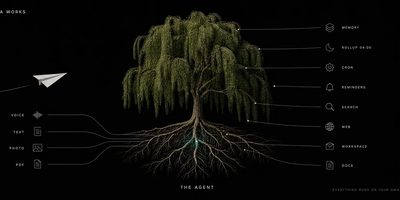
Your Telegram chats already contain your tasks, agreements, and reminders; Iva Agent turns that stream into a memory you can query months later from the same chat window. Send a voice note and it returns a task list, a draft email, or a meeting card, with the original words stored verbatim in a dated markdown log. A nightly rollup folds each day into weekly, monthly, and yearly summaries, then rewrites changing facts into typed cards for contacts, projects, decisions, and ideas. Ask what you agreed with a client and it answers from the card it wrote, complete with date and context. Photos are described by your vision model, forwarded posts pass an injection screen before the model reads them, and outgoing messages pass a secret-redaction gate. You can connect Gmail, Calendar, Drive, Sheets, Docs, and Tasks, search the web through Tavily, Exa, Parallel, or Brave, and add skills or MCP servers by dropping in a file. An optional userbot reads group chats from your own account, folds them into summaries, and flags messages that need you, guarded by server-enforced send pacing. Token accounting logs every model step, and the user allowlist fails closed when empty. Running on a dedicated VPS on RepoCloud with guaranteed CPU, RAM, and SSD, full root SSH access, and a browser serial console. MIT licensed.
Deskcomm
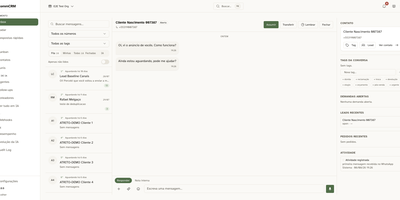
Converting inbound chat conversations into closed revenue is what Deskcomm orchestrates through an open-source sales operating system with native AI agent routing and WhatsApp integration. Sales representatives monitor incoming customer inquiries across connected WhatsApp Web sessions and official WhatsApp Cloud API channels from a real-time shared inbox with multimodal attachment previews. Autonomous AI agents qualify incoming leads, extract contact parameters, parse customer objections, and book calendar appointments before escalating complex deal negotiations to human account executives. Commercial teams organize deal progression through interactive kanban pipeline boards, where drag-and-drop movements trigger automated follow-up sequences and dynamic message templates. The built-in knowledge retrieval studio ingests internal product documentation and FAQ catalogs, allowing AI attendants to cite verified organizational knowledge during client interactions. Multi-tenant access controls enforce strict data isolation between business units with granular role assignments for managers and support operators. Administrators monitor token consumption across OpenRouter and OpenAI models while synchronizing customer records with external platforms through Model Context Protocol servers and outbound Webhooks. Running on a dedicated VPS on RepoCloud with guaranteed CPU, RAM, and SSD, full root SSH access, and a browser serial console. MIT licensed.
Taskuary
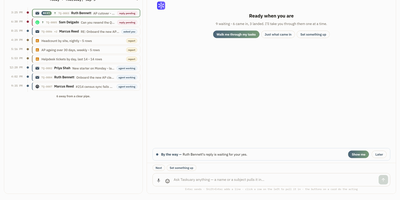
Mail, chats, tickets, alerts, and reports stop being five inboxes to check and become one sorted rail in Taskuary, your self-hosted AI work partner. A triage pass reads each arrival and gives it one verdict: nothing to do, a sentence settles it, an agent should work it, talk it through, or it is yours. The rail groups what survives into Urgent, On you, Goals, Agents working, For later, Reports, Advisor ideas, and FYI, and a morning card recaps what changed overnight, what was learned, and today's meetings. The Assistant can walk you through the pile one task at a time, presenting each card with Next, Write reply, Send to agent, and Mark done actions. Coding jobs go to the CLI you already run (Claude Code, Codex, Gemini, Cursor, Copilot, Qwen Code, OpenCode, or Kimi Code) inside your checkout; general jobs open a conversation instead. Results return as drafts attached to the task, and nothing leaves until you approve: replies, comments, invoices, and posts all wait for your click. Disagreeing with a verdict teaches the triage, and learned memory carries your preferences into the next decision. Running on a dedicated VPS on RepoCloud with guaranteed CPU, RAM, and SSD, full root SSH access, and a browser serial console. MIT licensed.
AI Real Estate Assistant
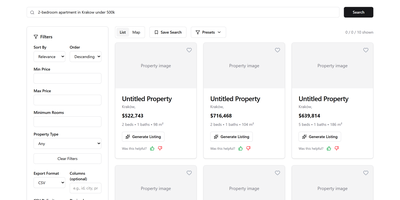
AI Real Estate Assistant puts a conversational search engine on top of your own property catalogue, so buyers type a request in plain language and receive matched listings in return. A query about a two-bedroom apartment in a named city under a price limit becomes extracted filters, semantic ranking over the catalogue, and a shortlist that matches the words instead of a rigid form. Behind the chat sits a working toolbelt: a mortgage calculator, a rent-versus-buy comparison, ROI and total-cost-of-ownership estimates, and an AI valuation that projects a property value one, three, five and ten years ahead with a confidence band. Every listing card shows an estimated monthly payment, and every property page carries an AI neighbourhood summary covering district character, nearby amenities and ease of getting around. Interactive maps cluster markers by area, a city overview page compares markets across districts, and a documents section accepts uploaded files that visitors can question in the same conversation. An agent directory presents the people behind the listings together with their stock, and the interface speaks nine languages with compliance labels on AI output. The demo mode answers with a local model and needs no paid key, and a real deployment routes each request to any of sixteen providers. Running on a dedicated VPS on RepoCloud with guaranteed CPU, RAM, and SSD, full root SSH access, and a browser serial console. MIT licensed.
QuantMind
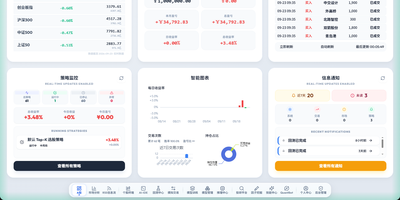
From raw market data to a simulated trade, every step of quant research happens in one web console. A home dashboard shows index levels, a paper account, strategy status, and recent fills at a glance, and a market analysis page tracks sector rotation and money flow. A stock terminal pairs candlestick charts with company profiles, financial and valuation tabs, and model score curves. Researchers describe a trading hypothesis in plain language, and the factor mining workspace drafts expressions, evolves them, and stores the winners in a factor library. The training studio offers thirteen algorithms, from boosted trees to recurrent networks, with walk-forward stability checks and local or remote GPU scheduling. The backtest center reports returns, Sharpe ratio, drawdown, and an equity curve for any date range, stock pool, and rebalance rhythm. Daily batch inference ranks the whole market, and a rolling news feed tags headlines as bullish or bearish. Paper trading replays real exchange rules, including price limits, lot sizes, fees, and slippage. A chat assistant can run these steps from a sentence, including through messaging apps. Running on a dedicated VPS on RepoCloud with guaranteed CPU, RAM, and SSD, full root SSH access, and a browser serial console. AGPL-3.0 licensed.
Hivekeep
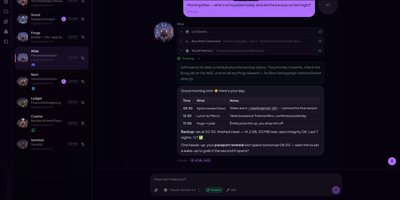
Most AI chats forget you by tomorrow; Hivekeep keeps a team of agents on your own server that remember everything, work together, and answer wherever you already talk. Each agent has a name, a role, and one continuous conversation that never resets, backed by long-term memory it can search. Agents hand tasks to one another, spawn helpers, and run scheduled jobs. Queenie, the built-in setup agent, connects providers and creates your first teammates through plain chat. They reach you on Telegram, Slack, Discord, WhatsApp, Signal, Matrix, or the installable web app, and a channel can move from one agent to another mid-conversation. Agents write custom tools, build mini-apps that open beside the chat, edit files in a workspace with a code editor, and add plugins from a marketplace. Credentials go straight into an AES-256-GCM vault that the model never reads. A context viewer and a token-usage dashboard show what each prompt contains and what each agent, model, and day costs. Running on a dedicated VPS on RepoCloud with guaranteed CPU, RAM, and SSD, full root SSH access, and a browser serial console. MIT licensed.
Agent-Me
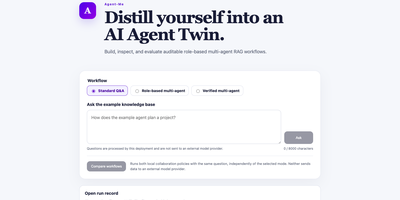
Build an AI twin that has to show its homework. Agent-Me answers questions from a folder of Markdown notes you control, and every reply arrives with the exact source excerpts behind it. Pick Standard Q&A for a direct grounded answer, Role-based multi-agent to watch a planner, researcher, critic, and writer hand work to each other, or Verified multi-agent to add a final check on citation paths and answer metadata. When the notes do not contain an answer, the critic blocks the draft and the app says so instead of inventing one. Press Compare workflows to run the baseline and verified pipelines on the same question and read the results side by side. Download a sanitized run record for any collaboration, then open it later in the browser to review the trace without re-running anything. The interface speaks nine languages, and the default mode never calls an outside model, so private notes stay on your server. Swap in your own documents and test supported, unsupported, and adversarial questions to see exactly where an assistant stays grounded. Running on a dedicated VPS on RepoCloud with guaranteed CPU, RAM, and SSD, full root SSH access, and a browser serial console. MIT licensed.
NextClaw
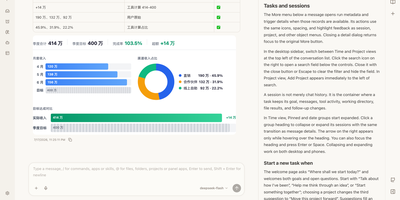
NextClaw is an AI workspace where a request for a report, a chart, or a small tool becomes organized research, files, and steps, with the result shown beside the conversation. Pick the engine for each task from Native, Claude Code, Codex, Hermes, or OpenCode, and the agent keeps its memory, skills, and workspace. A right-hand browser opens code, Markdown, HTML, Word, Excel, and PowerPoint files without losing the task that produced them. Connect providers like OpenRouter, OpenAI, Anthropic, Gemini, DeepSeek, or any OpenAI-compatible endpoint, and message the same agents from Telegram, Discord, Slack, WhatsApp, Feishu, or email. Scheduled tasks start from templates like a daily AI news brief or a competitor change tracker, and finished reports land in an AI Inbox you can read later or continue as a chat. A skill market installs new abilities, MCP servers extend tools, and Panel Apps keep the small pages an agent builds for you. Dedicated agents get their own role, home directory, and memory. Running on a dedicated VPS on RepoCloud with guaranteed CPU, RAM, and SSD, full root SSH access, and a browser serial console. MIT licensed.
Nojoin
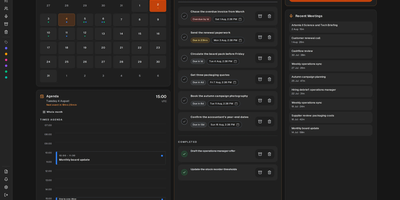
Nojoin takes notes on your Meet, Teams, and Zoom calls without sending a bot into the meeting: it records from your browser and transcribes on your own server. Nothing extra joins the call and nothing announces itself to the room; you meet as usual, press record, and the browser captures the audio. Transcription runs locally with Whisper or Parakeet, so the audio never leaves your hardware, and speaker recognition matches voiceprints across calls, so a person you name once is labelled correctly in later meetings too. AI notes can come from an API provider, your existing Claude or ChatGPT subscription, or Ollama on the same machine for fully local processing. During the call, Meeting Edge suggests questions, flags points you may have missed, and explains unfamiliar terms in real time. Afterward, analytics measured from the audio report talk-time share, turn-taking, and overlapping speech. A built-in MCP server hands Claude or ChatGPT 32 tools over your library, 19 of them writable, so an assistant can search every meeting, correct a misheard line, turn action items into tasks, and reconcile attendees with your CRM. Google and Outlook calendars sync automatically, every meeting carries its own chat, and finished notes export to PDF, Word, or plain text. Stored credentials are encrypted with a key you control, and anonymous telemetry can be switched off entirely. Running on a dedicated VPS on RepoCloud with guaranteed CPU, RAM, and SSD, full root SSH access, and a browser serial console. AGPL-3.0 licensed.
Saki Panel
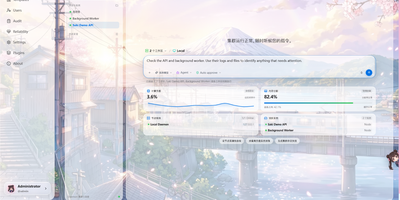
Saki Panel is a self-hosted operations console that manages your game servers, containers, and background processes across multiple Linux machines, with an AI assistant sitting inside the workspace when something breaks. Start, stop, restart, and monitor nine kinds of instances, from Minecraft and Steam game servers to Docker containers, Compose stacks, Node and Python apps, and plain shell commands. Remote nodes connect over SSH and report CPU, memory, and disk metrics to a cluster dashboard, so every machine is visible in one place. When an instance crashes, Saki Watch records the exit and its error fingerprint, then helps diagnose the cause from live logs, files, and metrics instead of making you copy text between a terminal and a chat window. Proposed fixes appear as diffs that need your approval, are graded by risk level, and can roll back automatically if verification fails after a patch. Day to day work happens in the same console: a web terminal, a file manager with an editor and archive support, database tools for SQLite, MySQL, PostgreSQL, and Redis, and cron-scheduled tasks with full run history. Role-based access with dozens of permission codes, audit logs, and incident notifications through webhooks or Telegram keep a small team in control. Running on a dedicated VPS on RepoCloud with guaranteed CPU, RAM, and SSD, full root SSH access, and a browser serial console. Apache-2.0 licensed.
DispatchMail
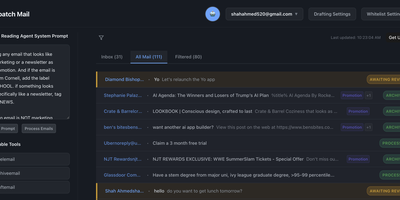
DispatchMail is an SuperHuman alternative and delivers a self-hosted AI email assistant that processes your Gmail inbox through configurable OpenAI prompts without sending data to third-party cloud services beyond the LLM API itself. The Flask backend connects to Gmail via IMAP, retrieves new messages according to your schedule, and routes them through customizable whitelist rules based on sender address, subject keywords, or natural language descriptions before AI processing begins. Two distinct prompt configurations control behavior — the Reading Prompt instructs how the AI should analyze and classify incoming messages, while the Draft Prompt defines how responses should be composed, letting you maintain consistent tone and policy across all automated replies. Whitelist filtering ensures the AI only processes messages you explicitly authorize, preventing unnecessary API costs and keeping sensitive emails out of the LLM pipeline entirely. The React web interface provides inbox management with message previews, AI-generated summaries, draft editing with human-in-the-loop approval before sending, and configuration panels for prompts and rules. Automatic labeling and archival organize processed messages into categories without manual intervention. The sender research feature uses LLM-powered deep analysis to build background profiles of email contacts. All email content, credentials, and processing results persist in a local SQLite database with zero cloud storage dependencies. Running on a dedicated VPS on RepoCloud with guaranteed CPU, RAM, and SSD, full root SSH access, and a browser serial console. Apache-2.0 licensed.