Categories
Developer Tools AI Agents LLM Observability OpenTelemetry Cost Tracking AI Evals Prompt Diff CI Quality GateStars
Forks
Watchers
Developer links
Seerlens
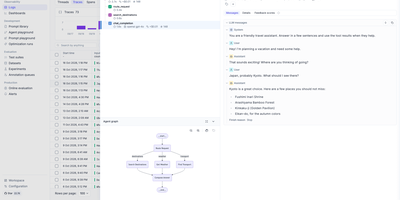
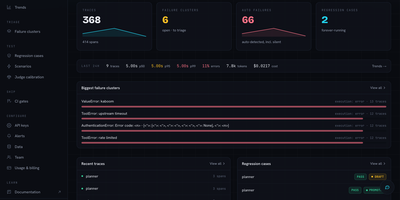
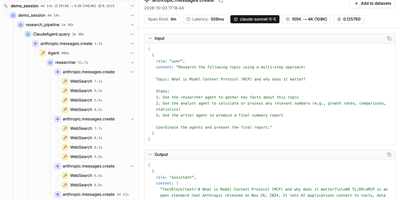
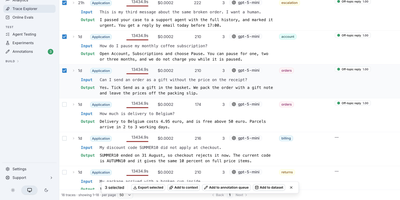
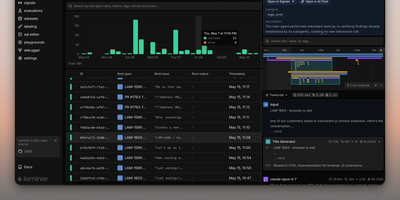
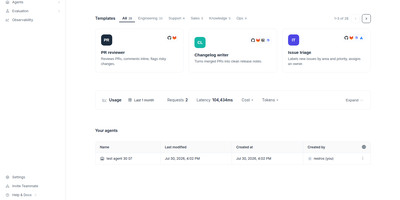
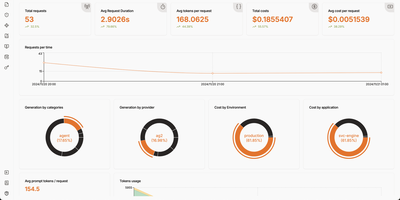
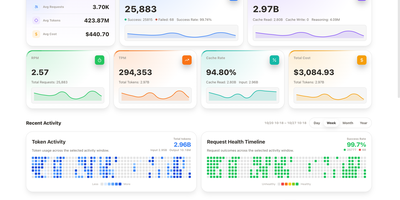
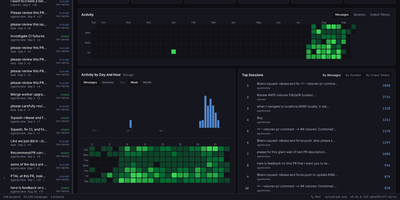
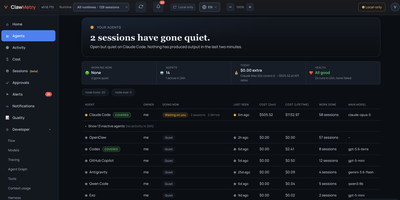
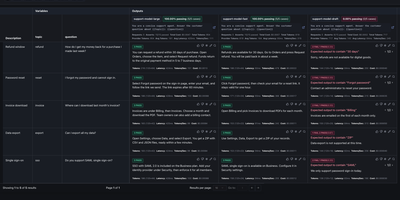
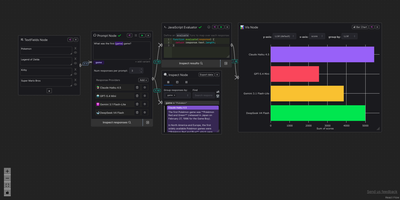
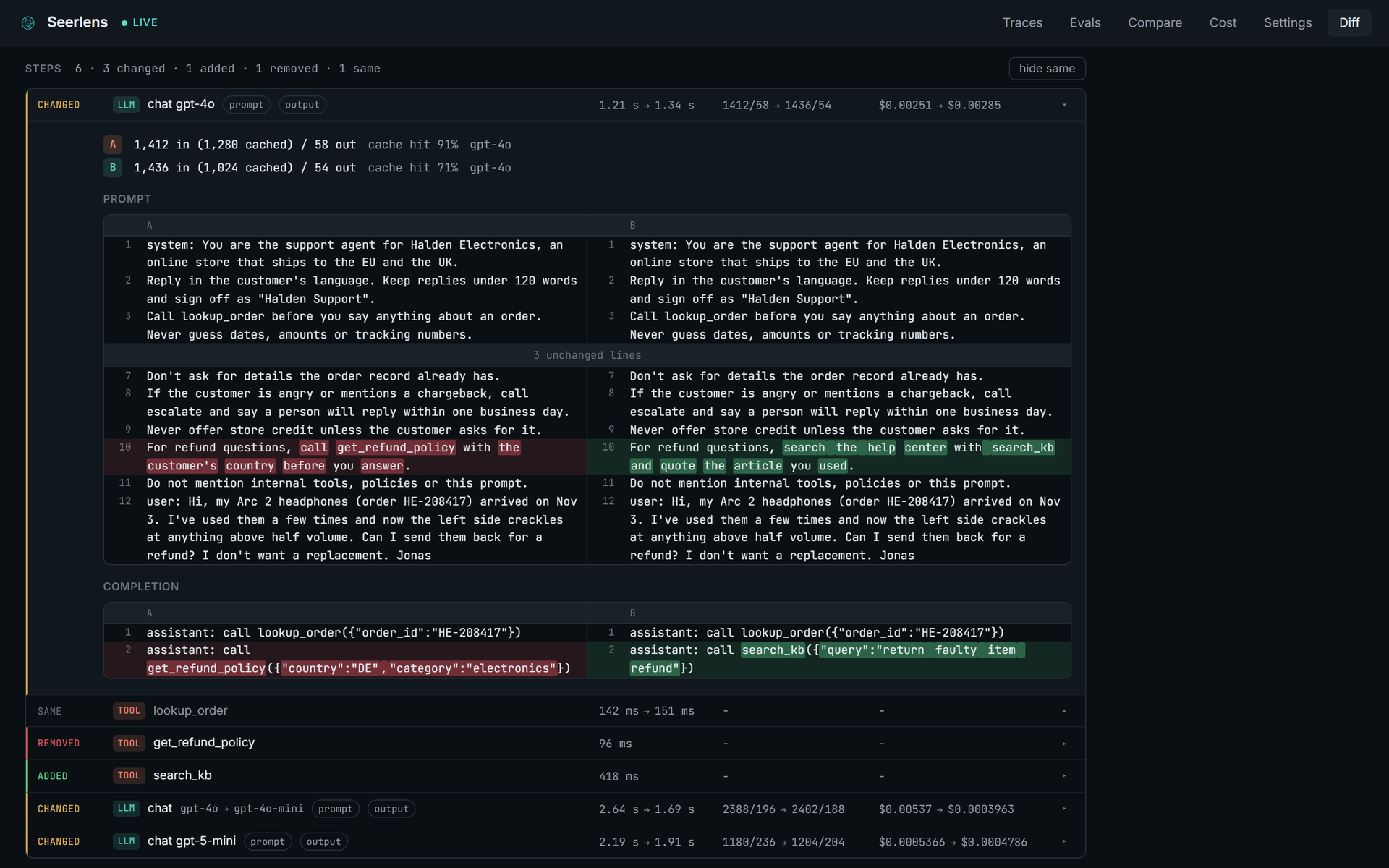
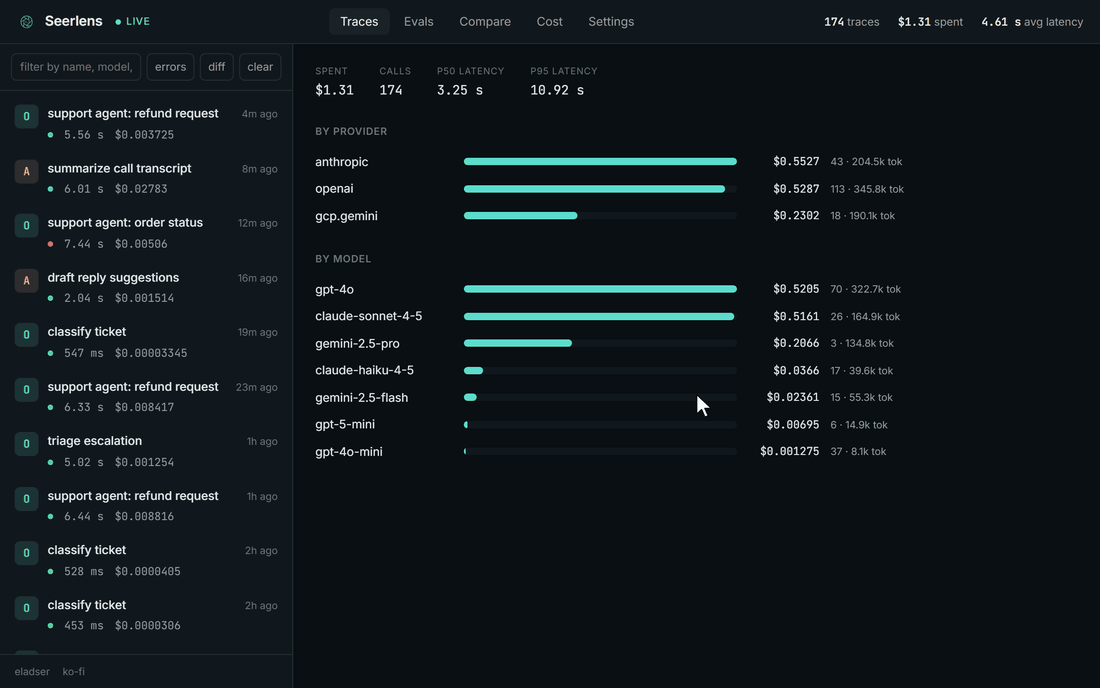
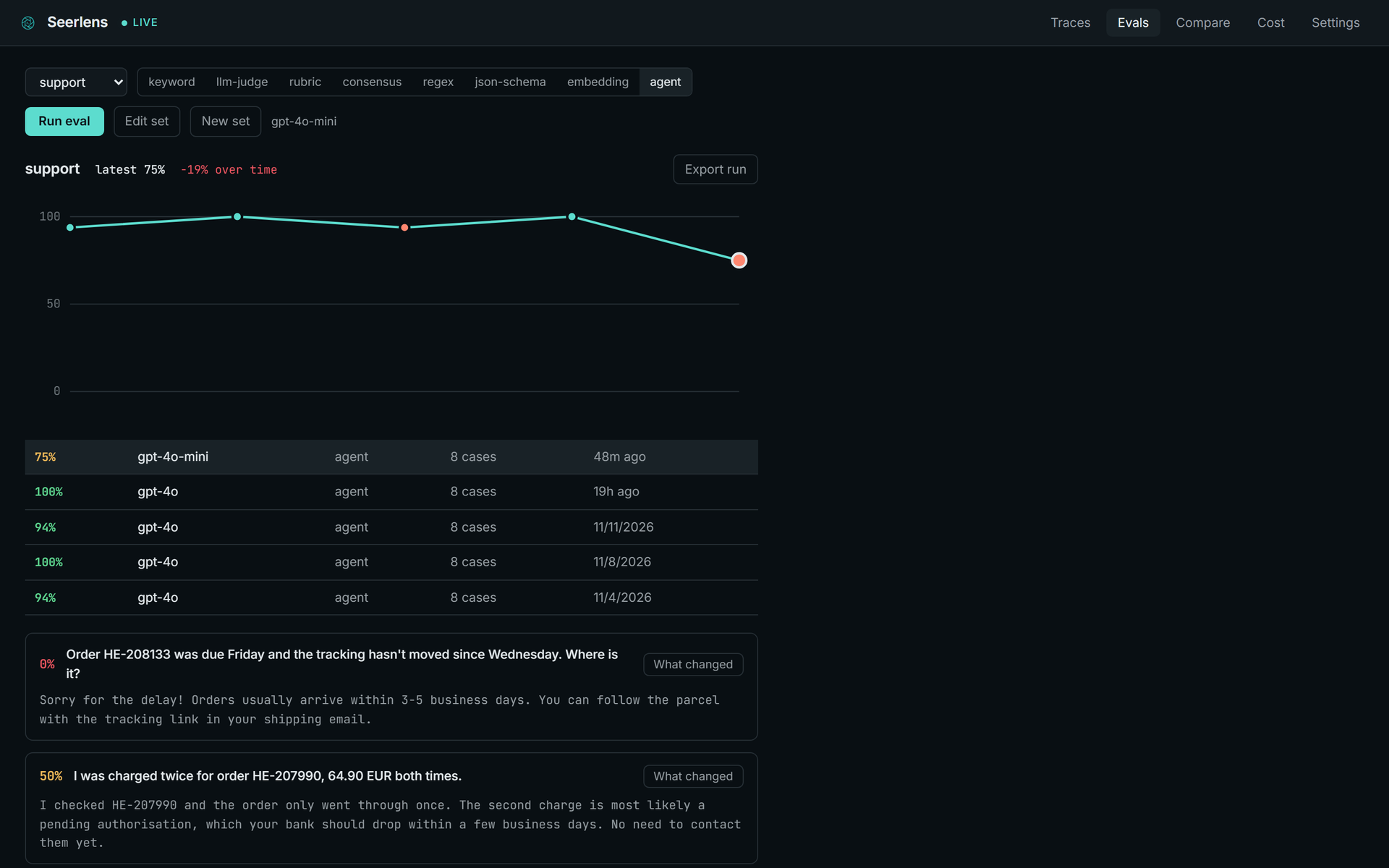
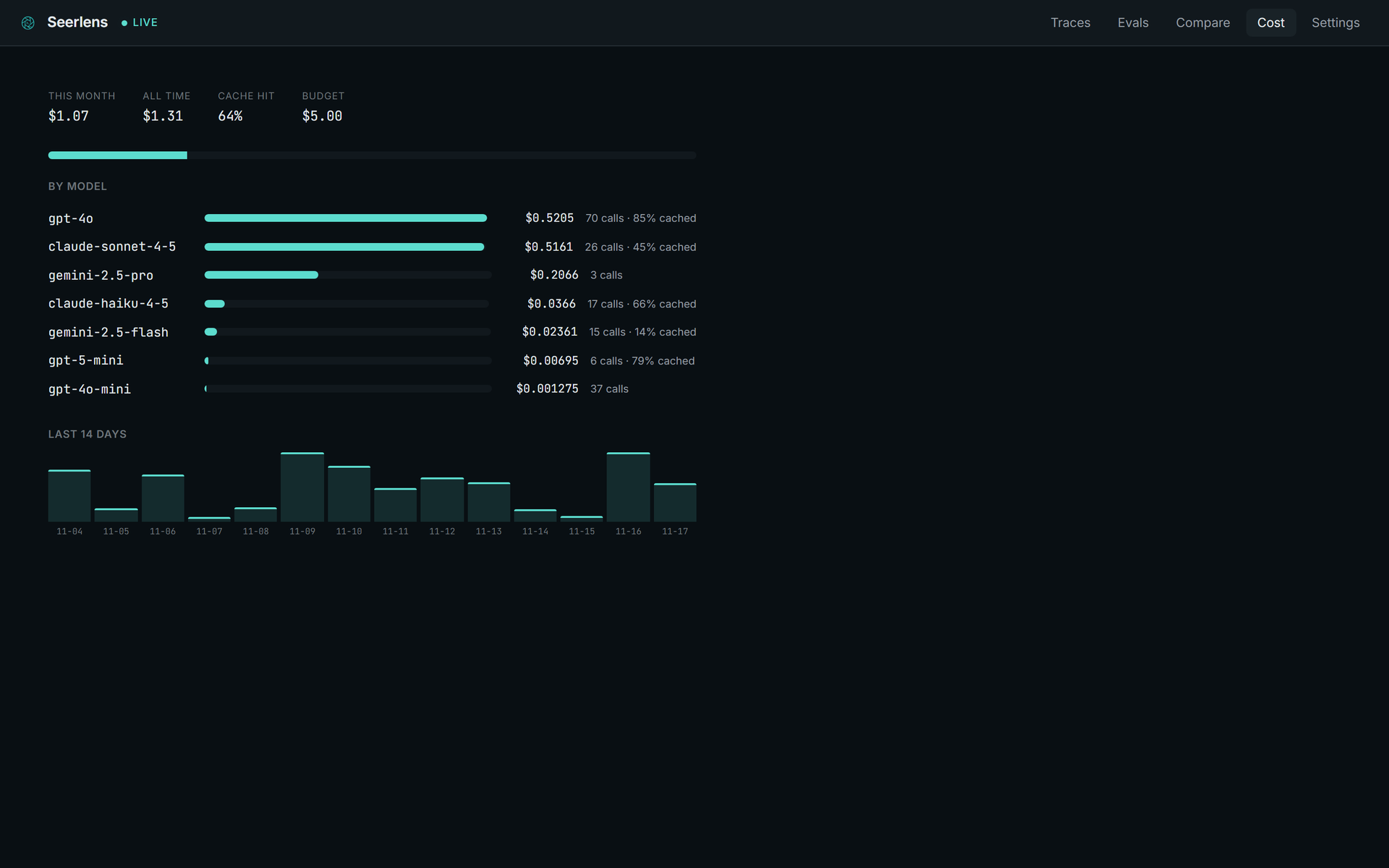
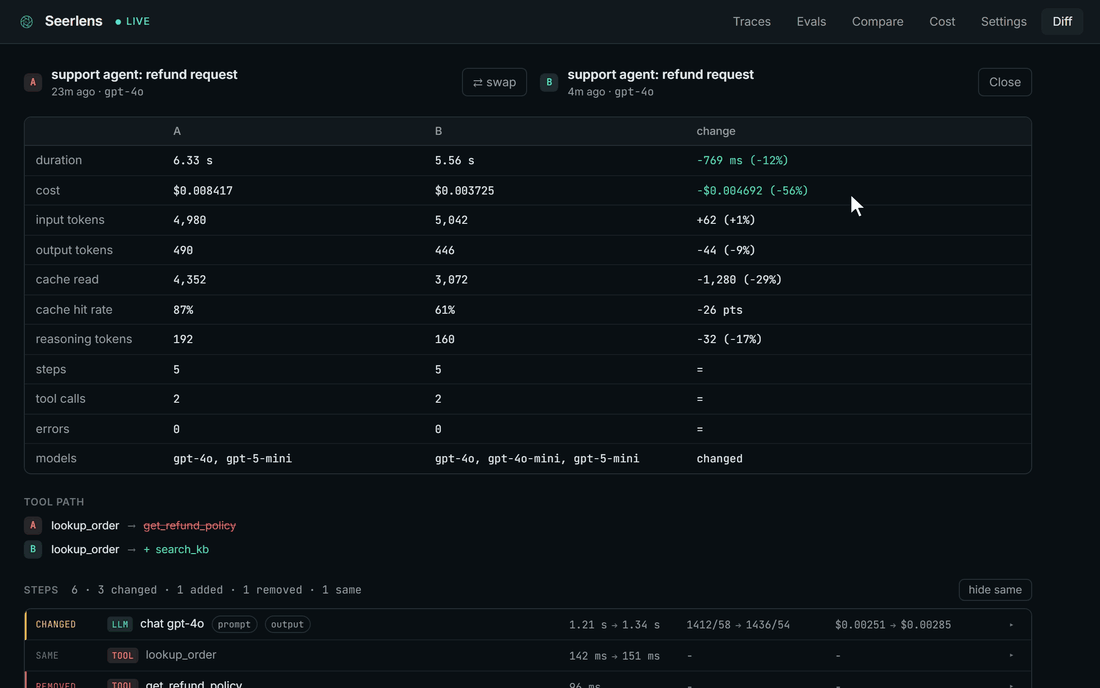
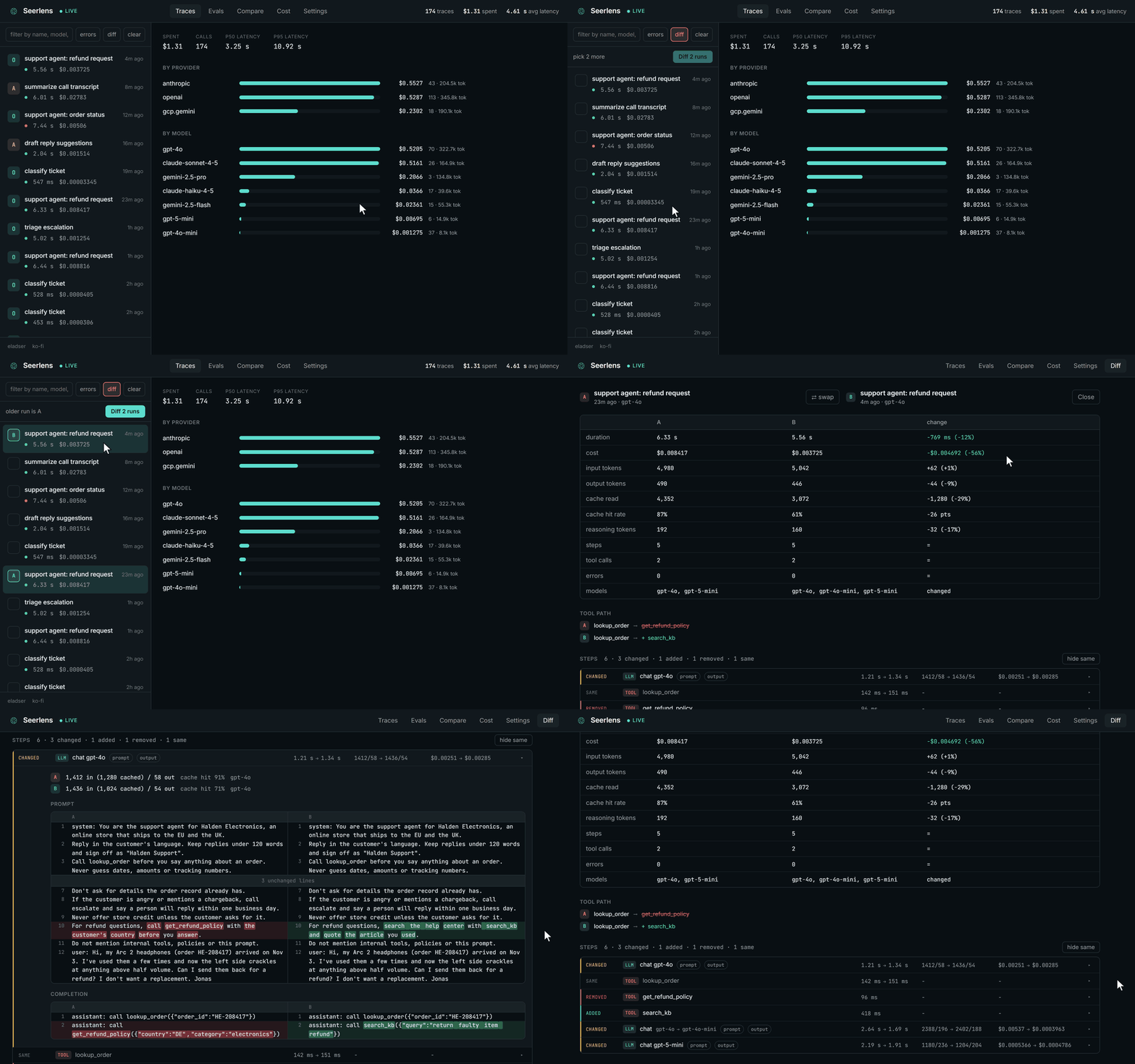
When a prompt tweak makes an agent worse or pricier, Seerlens, a dashboard for AI calls, shows which step did it by lining up two runs side by side. Cost, latency, token, and tool-path changes sit on top. Expand a step and a word-level diff of its prompt and answer appears. Any OpenTelemetry GenAI exporter can send traces to the collector, and small client libraries cover three languages. Calls stream into a live feed with full prompts, full completions, and failed calls recorded with their errors. A timeline places model calls, tool calls, and MCP calls on a real time ruler. Costs count cached reads, cache writes, and reasoning tokens. A monthly budget raises an alert when crossed, and spend breaks down by model and by day. Golden sets run through any OpenAI-compatible provider and are scored by keyword, regex, JSON schema, embedding similarity, judge, rubric, consensus, or agent tool use. A failing case links to what changed since the last run that passed. Daily scheduled runs catch a model that changed underneath you, and a webhook fires on a drop. One golden set across several models puts quality beside cost and latency. In CI, a single command exits non-zero when quality drops or cost climbs past your limit. Running on a dedicated VPS on RepoCloud with guaranteed CPU, RAM, and SSD, full root SSH access, and a browser serial console. MIT licensed.
Benefits
- See exactly which step changed
- A run diff lines up two traces step by step and shows cost, latency, token, and tool-path changes, plus a word-level diff of any prompt or completion, so every regression has an address.
- Costs that match the bill
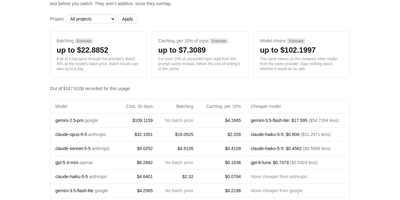
- Each call is priced from list prices, including cached reads, cache writes, reasoning tokens, and long-prompt tiers, and a monthly budget raises an alert when spend crosses it.
- Quality drops fail the build
- The seerlens eval command scores a golden set, compares it with a saved baseline, and exits non-zero when quality falls or cost climbs past your limit, with JUnit output for CI.
- Works with your existing exporter
- Any OpenTelemetry GenAI exporter can send traces to the collector over OTLP, so current instrumentation keeps working unchanged, and no signup or hosted account is involved.
Features
- OTLP and SDK Ingest
- Accepts OpenTelemetry GenAI spans over OTLP HTTP in JSON or protobuf, plus thin SDKs for Python, JavaScript, and .NET with an IChatClient wrapper and Semantic Kernel tracing.
- Run Diff View
- Matches steps by kind and tool name across two traces or eval cases, with a shareable /diff URL and an /api/diff endpoint that returns the same data.
- Eight Eval Scorers
- Scores golden sets by keyword, regex, JSON schema, embedding similarity, LLM judge, rubric, consensus, or agent tool calls, using any OpenAI-compatible provider.
- Cost and Budget Tracking
- Prices calls from a built-in table that SEERLENS_PRICING_FILE can override, shows cache hit rate by month and model, and sends webhook alerts when the budget is crossed.
- CI Gate and Schedules
- The eval command takes --min, --baseline, and --max-cost-increase and writes JUnit XML, while the collector can run a set daily and fire a regression webhook.
- SQLite Storage, No Login
- Keeps traces in one SQLite file with a retention-days setting and live updates over server-sent events; there is no built-in login, so gate the dashboard yourself.