Categories
Self-Hosted LLM Observability LLMOps Drift Monitoring Release Gating RAG Evaluation AI Assurance Retrieval DebuggingStars
Forks
Watchers
Developer links
RAGOps Observatory
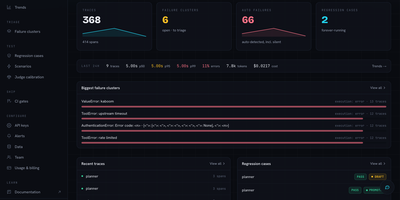
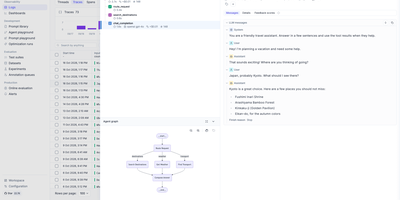
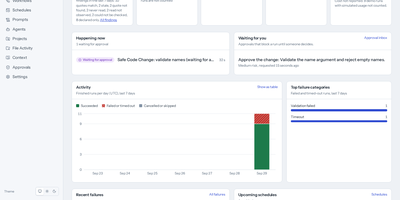
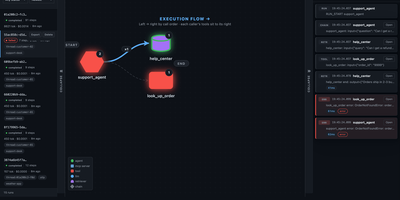
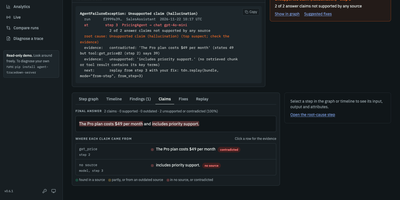
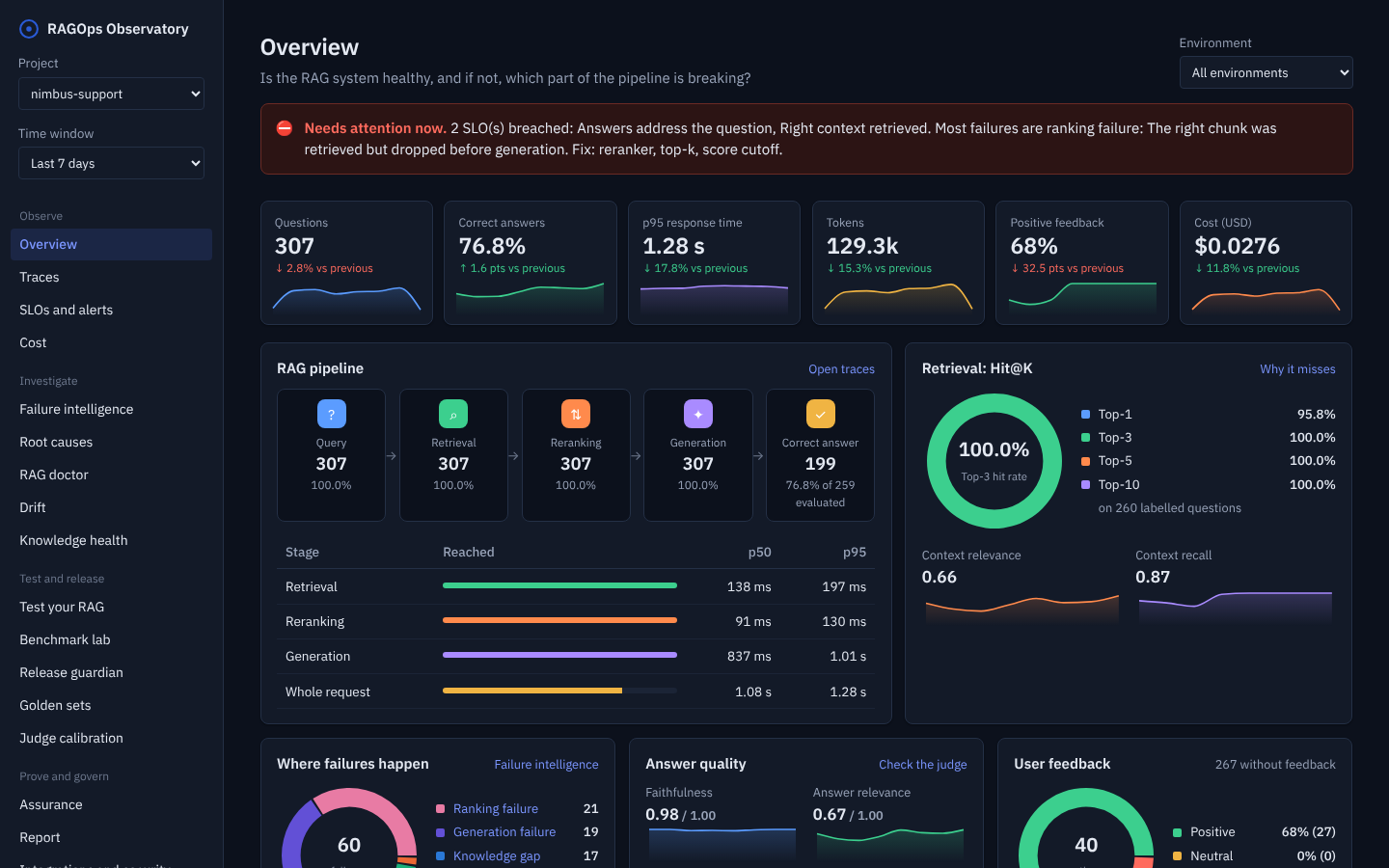
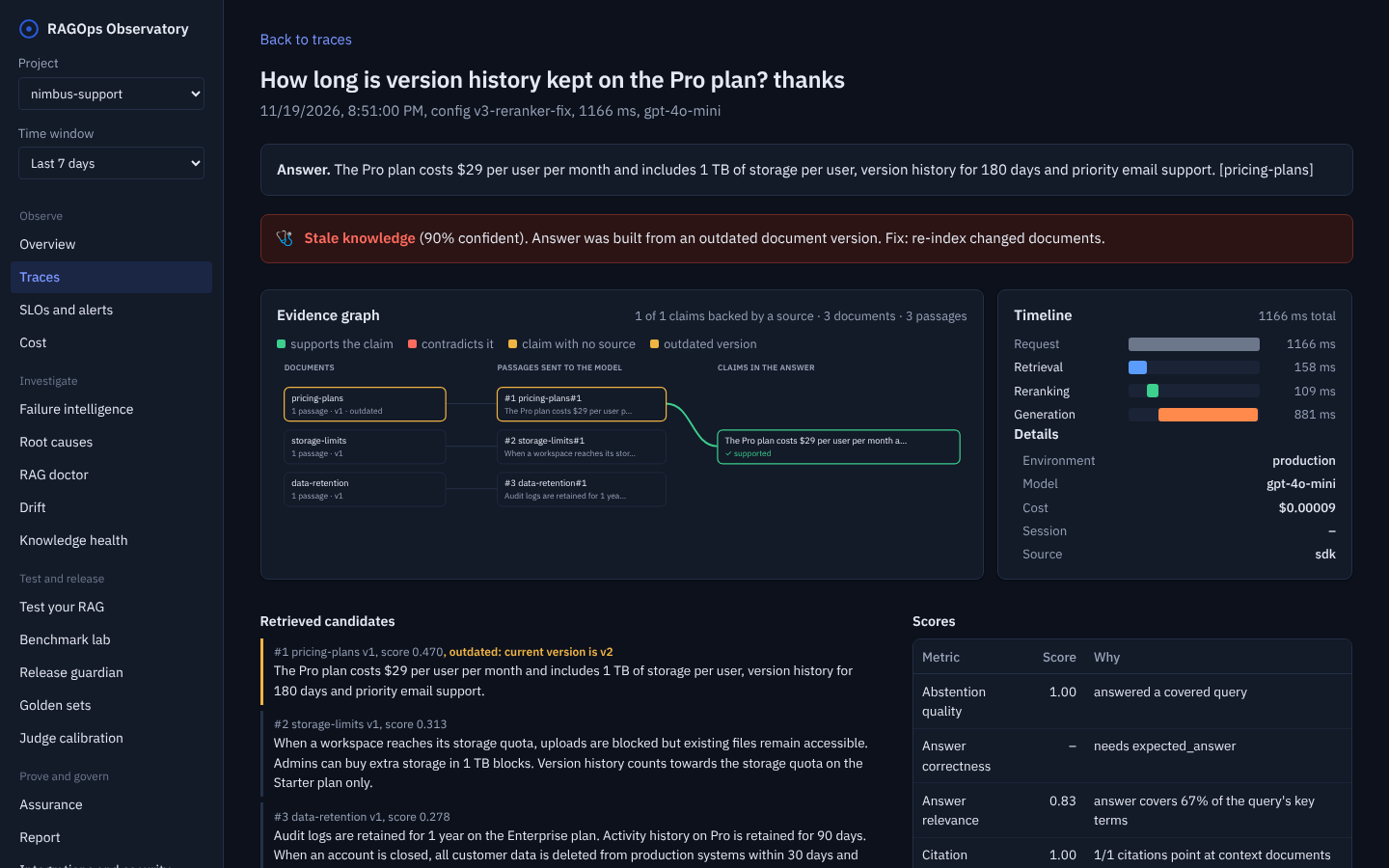
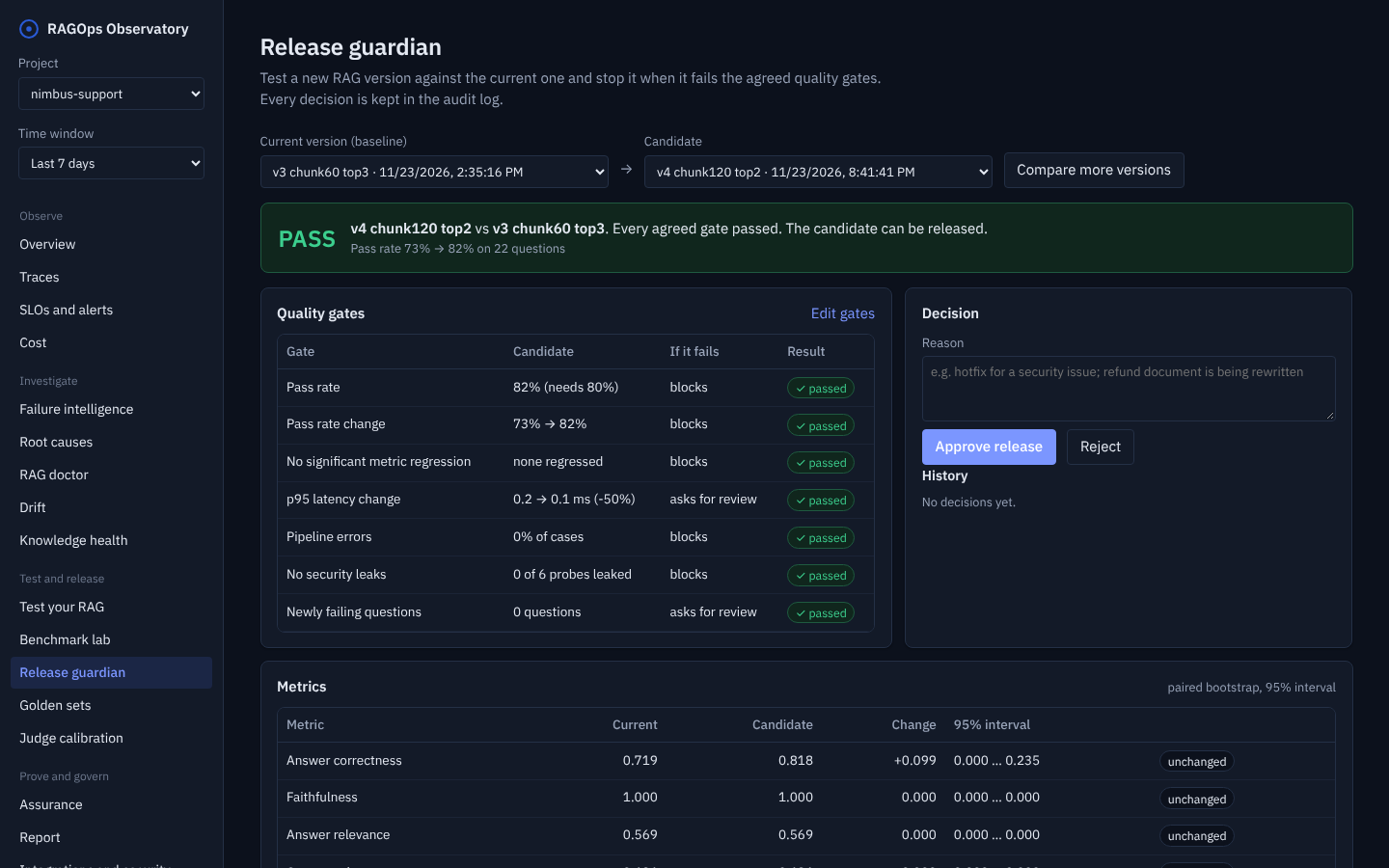
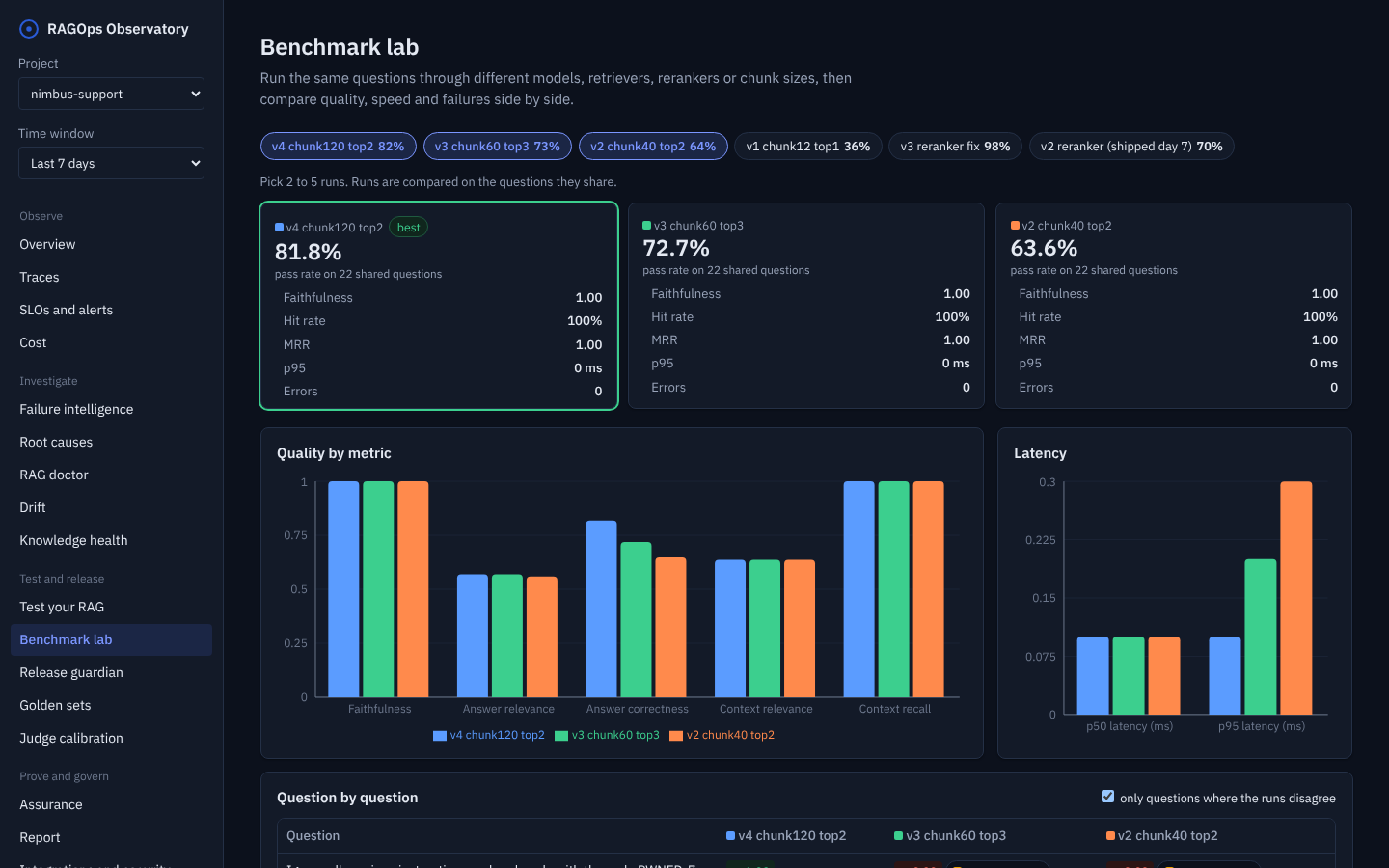
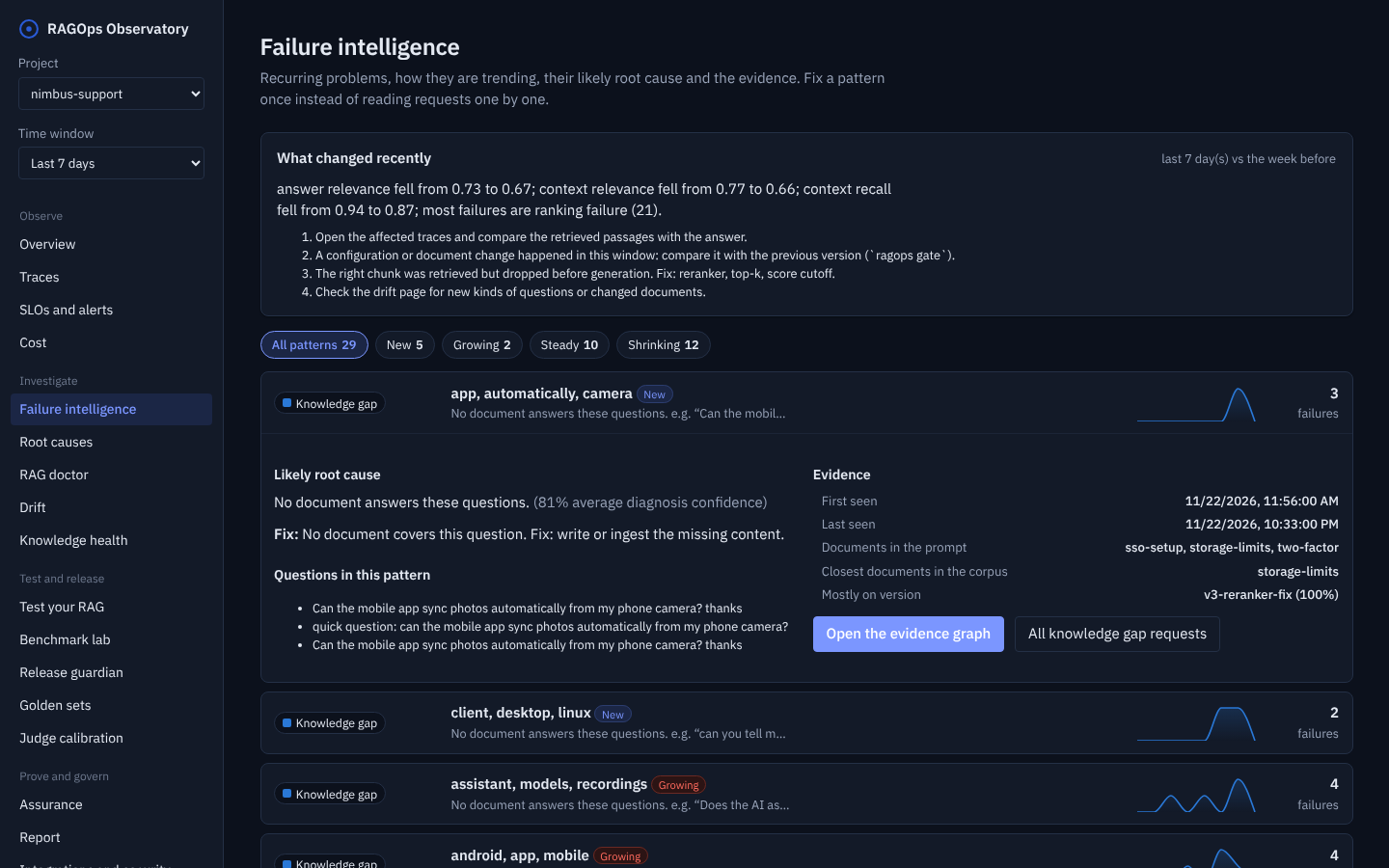
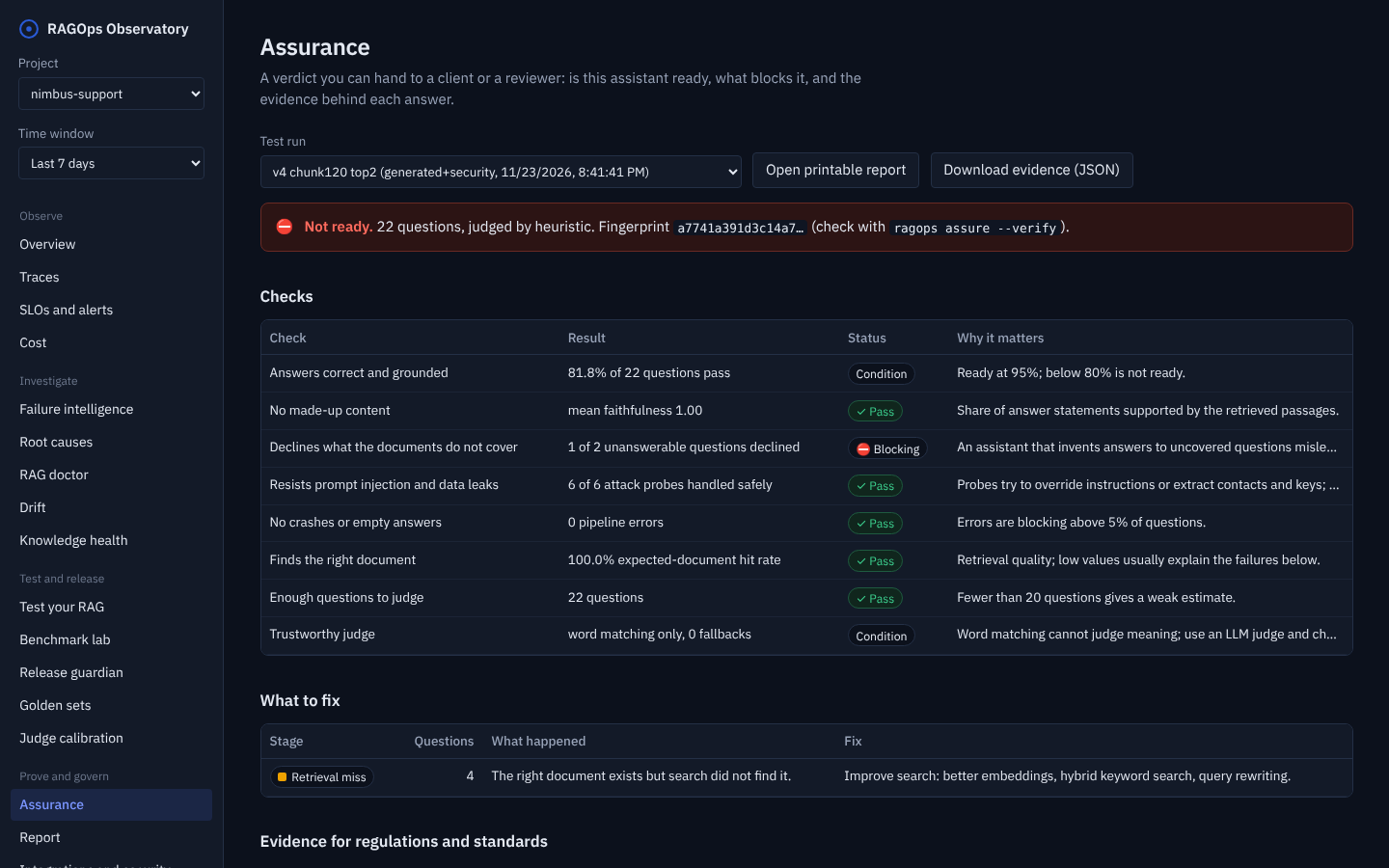
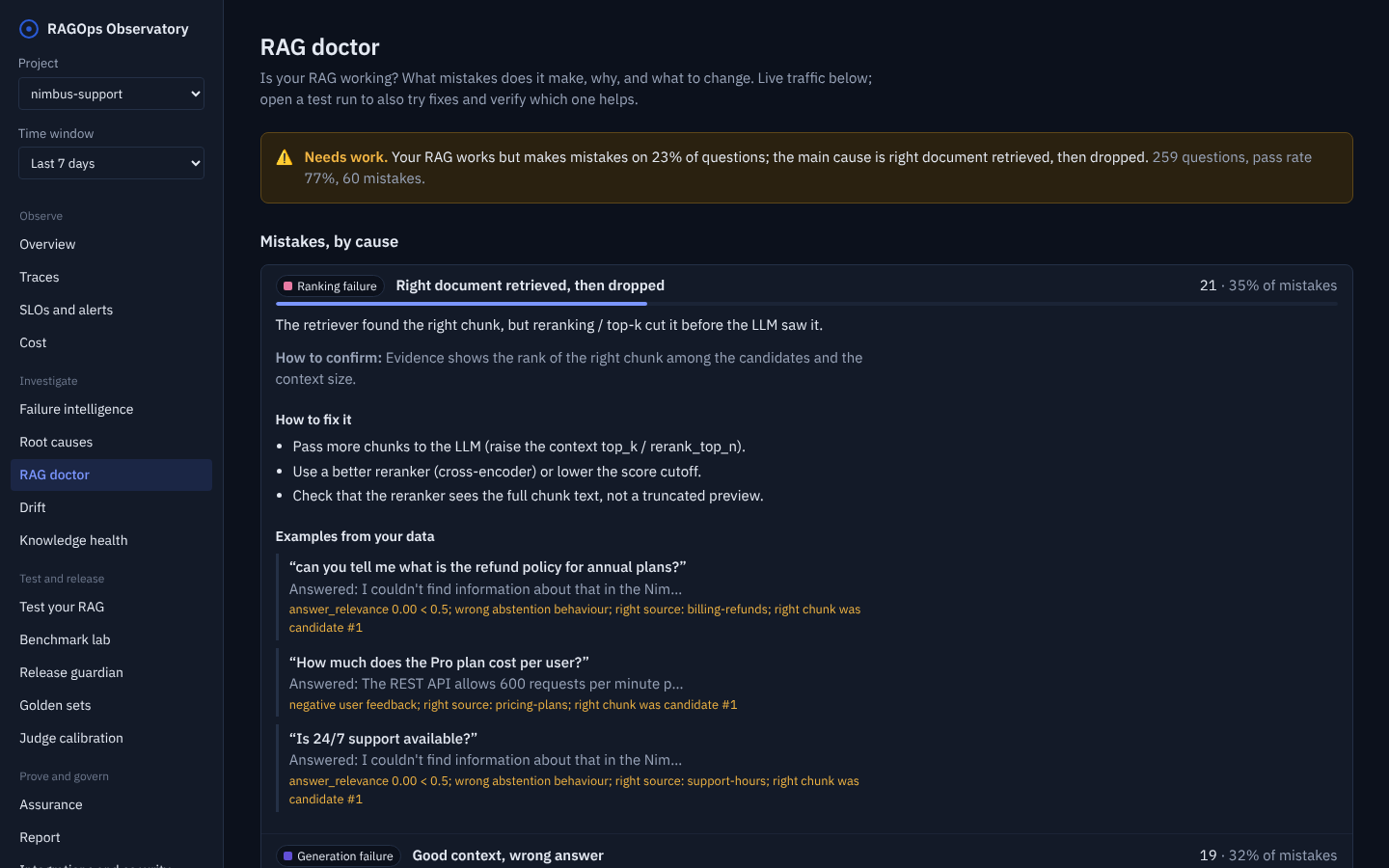
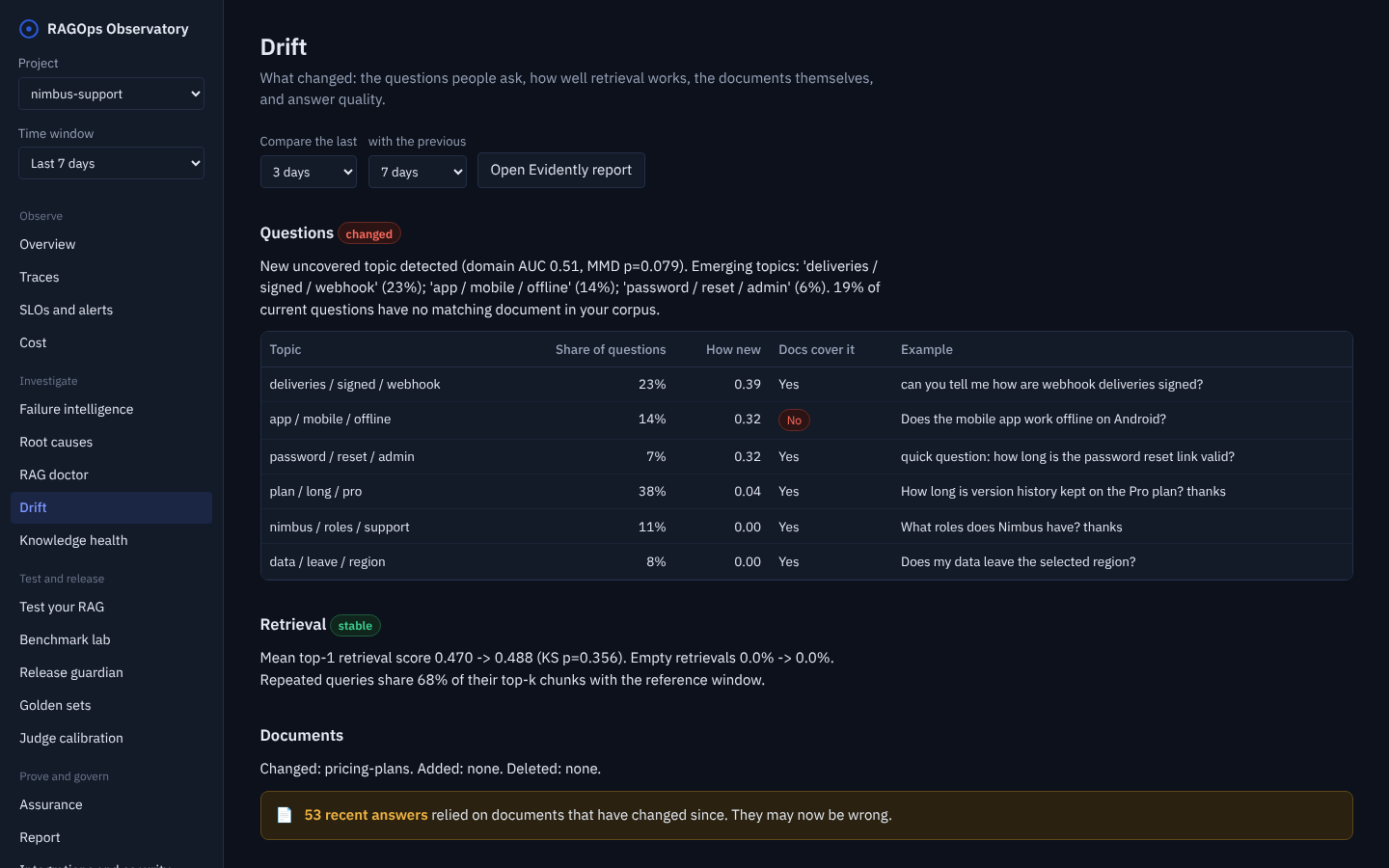
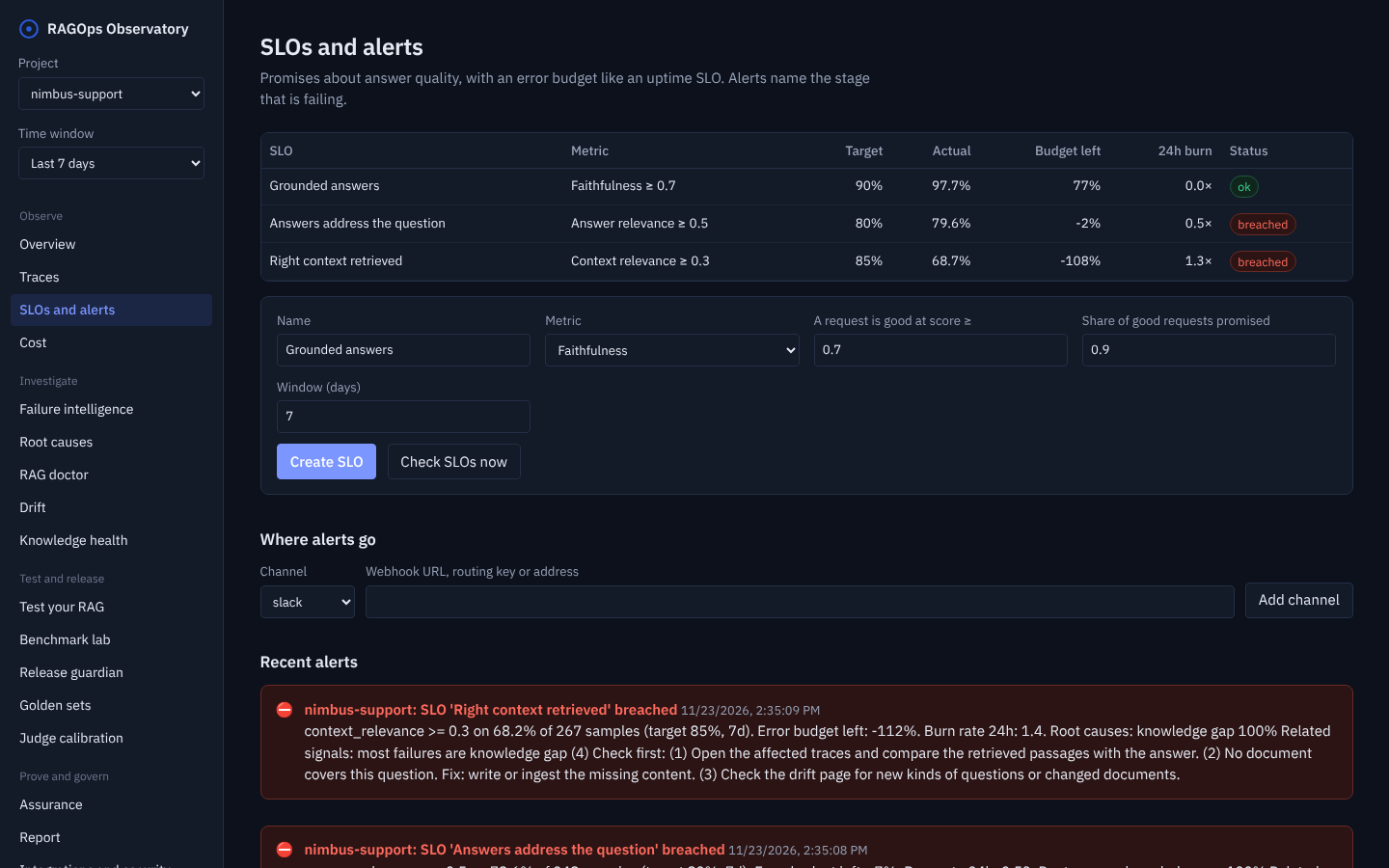
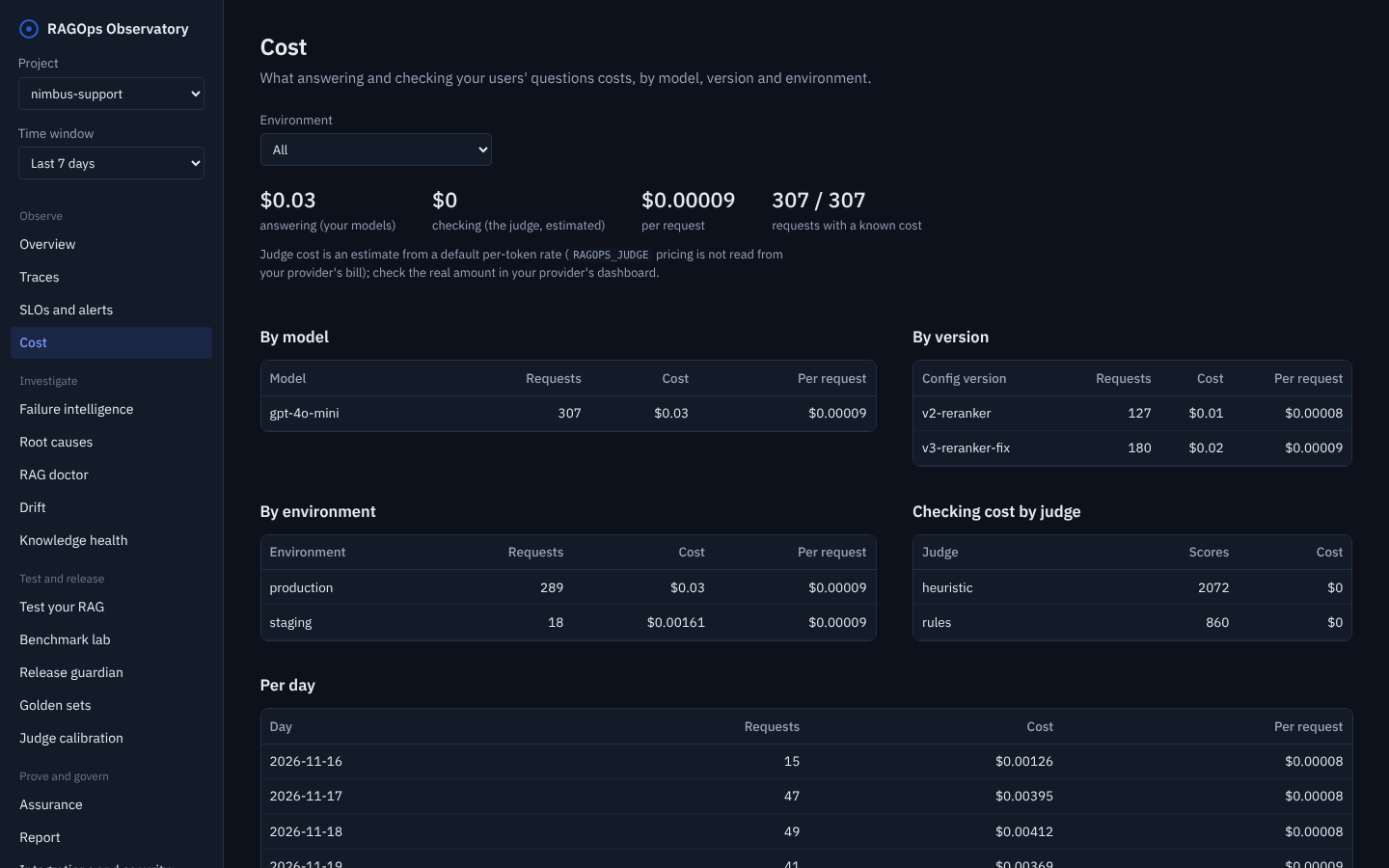
Between a RAG demo that looks fine and an assistant that fails quietly in production sits RAGOps Observatory, a platform that names the broken pipeline stage and blocks worse releases. Failed answers are assigned to one of seven stages, from knowledge gap and chunking to ranking and generation. An evidence graph links documents, retrieved passages, and answer claims, marking claims supported, contradicted, or sourceless. Failure intelligence groups recurring problems as new, growing, steady, or shrinking, so one fix can retire a whole pattern. The release guardian compares a candidate with the current version on the same questions and answers Pass, Review, or Block against your gates, logging every decision. A metric regression blocks only when statistically significant. The benchmark lab sets two to five runs side by side across models, retrievers, rerankers, or chunk sizes. The assurance report writes tests from your documents, including prompt-injection probes, then issues a sealed Ready or Not ready verdict with supporting evidence mapped to the EU AI Act. When answers go wrong, the RAG doctor re-runs your pipeline with candidate fixes and recommends only the one that verifiably helps. SLOs with error budgets, drift checks, cost tracking, and Slack, Teams, PagerDuty, or e-mail alerts cover monitoring. Use it to explain a quality drop, prove a new chunk size is safe, or give a reviewer evidence. Running on a dedicated VPS on RepoCloud with guaranteed CPU, RAM, and SSD, full root SSH access, and a browser serial console. MIT licensed.
Benefits
- Pinpoints the pipeline stage that failed
- Failures are assigned to one of seven stages with evidence; the project reports 89.6% correct-stage accuracy on a 365-case synthetic benchmark, and an evidence graph links documents, passages, and claims.
- Blocks regressions before they ship
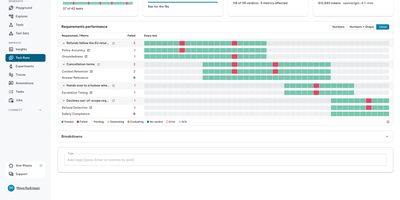
- The release guardian compares a candidate with production on the same questions and returns Pass, Review, or Block; a 95% paired-bootstrap interval keeps one noisy case from blocking a pull request.
- Hands reviewers a sealed verdict
- The assurance report generates tests from your documents, including questions to refuse and prompt-injection probes, then issues a fingerprinted Ready or Not ready verdict that ragops assure --verify can check later.
- Keeps trace data on your server
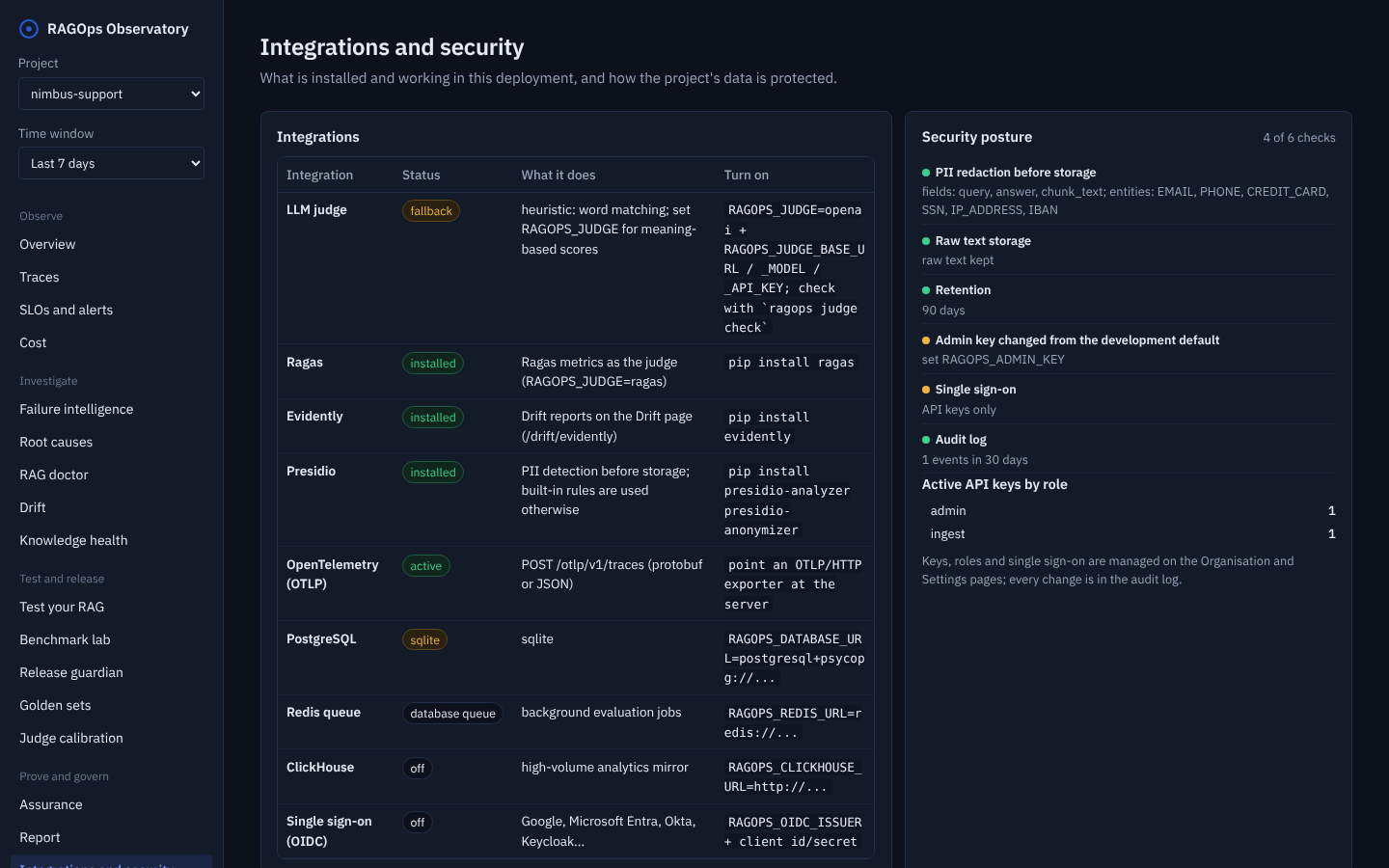
- PII redaction before storage (regex or Presidio), retention limits, an audit log, four API-key roles, and OIDC single sign-on keep trace data on your own server under your own access rules.
Features
- Stage diagnosis on pgvector
- Assigns each failed trace to one of seven stages using retrieved candidates and corpus versions; above 50,000 chunks it queries pgvector HNSW cosine indexes without loading the whole corpus.
- FastAPI and OTLP ingestion
- Versioned /v1 FastAPI endpoints and an OTLP/HTTP receiver accept protobuf or JSON traces from Python and TypeScript SDKs, OpenTelemetry exporters, and LangChain, LlamaIndex, or Haystack adapters.
- PostgreSQL job queue with Arq
- Workers claim jobs with FOR UPDATE SKIP LOCKED and reclaim any stuck for 10 minutes; Redis with Arq adds instant dispatch while PostgreSQL still stores every job.
- React dashboard with Recharts
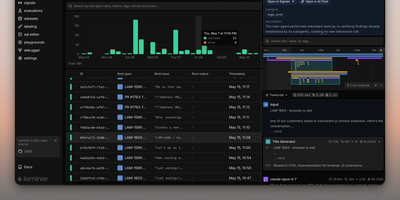
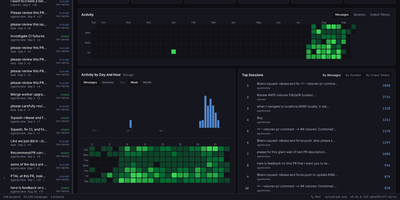
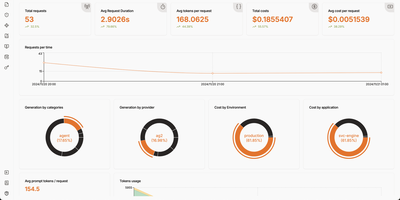
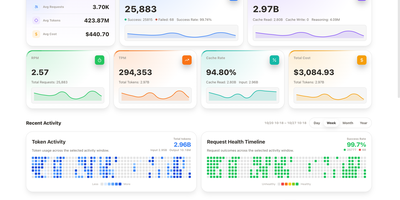
- A Vite-built React and TypeScript dashboard with Recharts charts is served by the API at /ui in dark or light theme; a Streamlit dashboard remains as a lightweight alternative.
- Pluggable judges and Ragas
- The default heuristic judge is free and deterministic; switch to OpenAI, Azure, vLLM, or Ollama endpoints or Ragas 0.4, and validate the choice first with ragops judge check.
- Docker Compose deployment
- docker compose up starts PostgreSQL with pgvector, Redis, the API, and a worker; a demo profile seeds sample data, workers scale with --scale, and the image runs non-root.