Stars
Forks
Watchers
Developer links
OpenMA
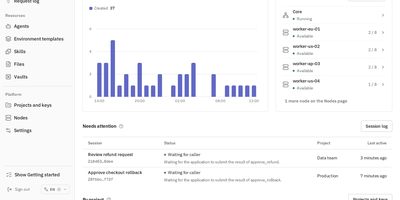
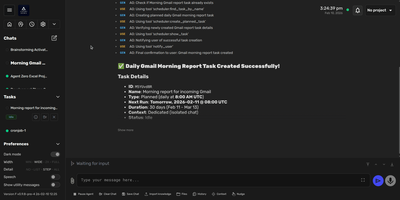
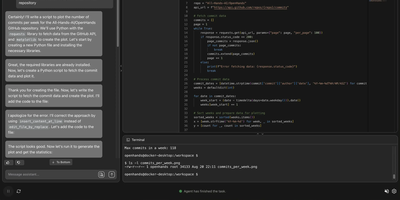
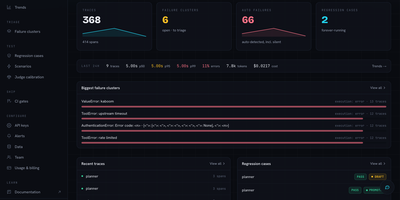
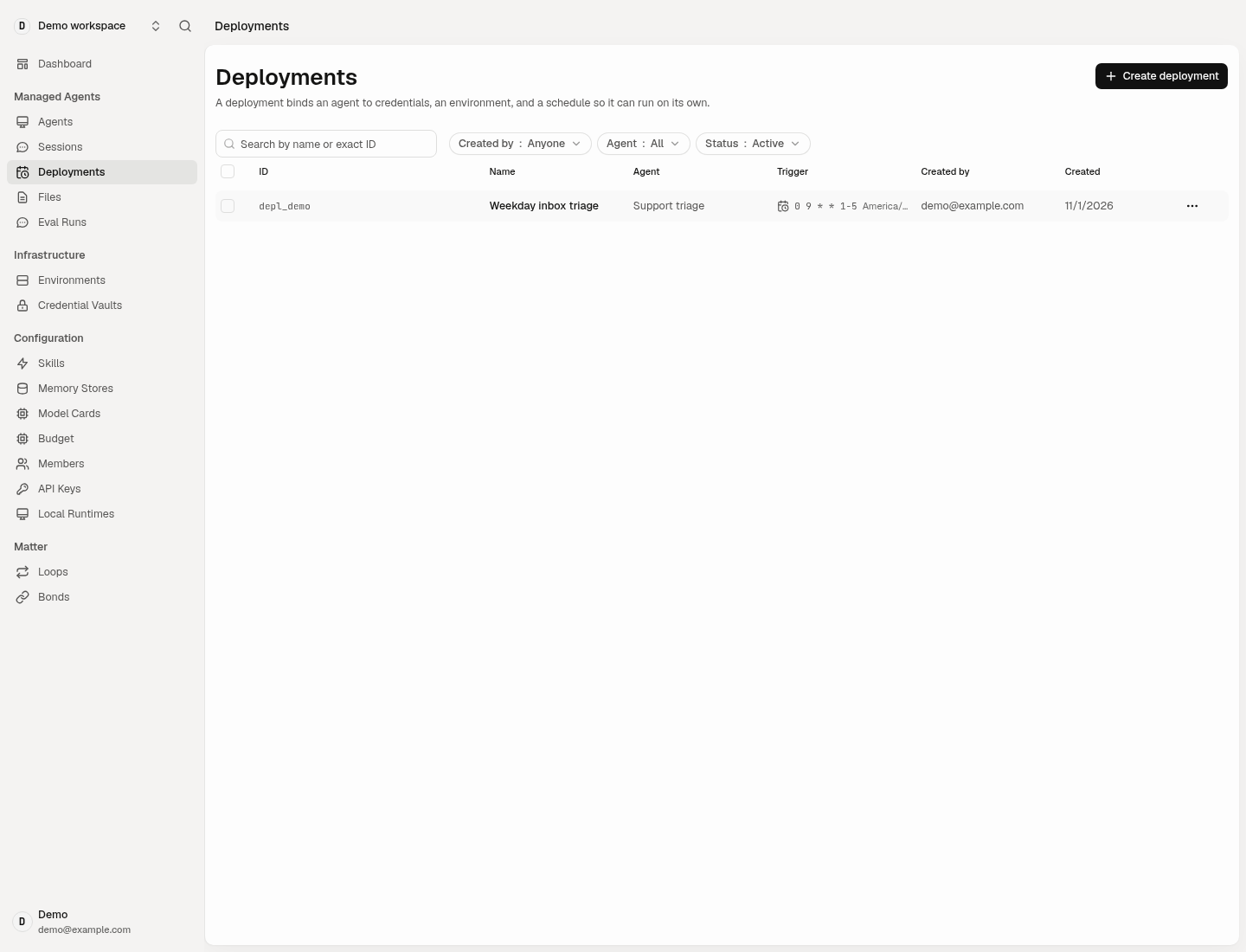
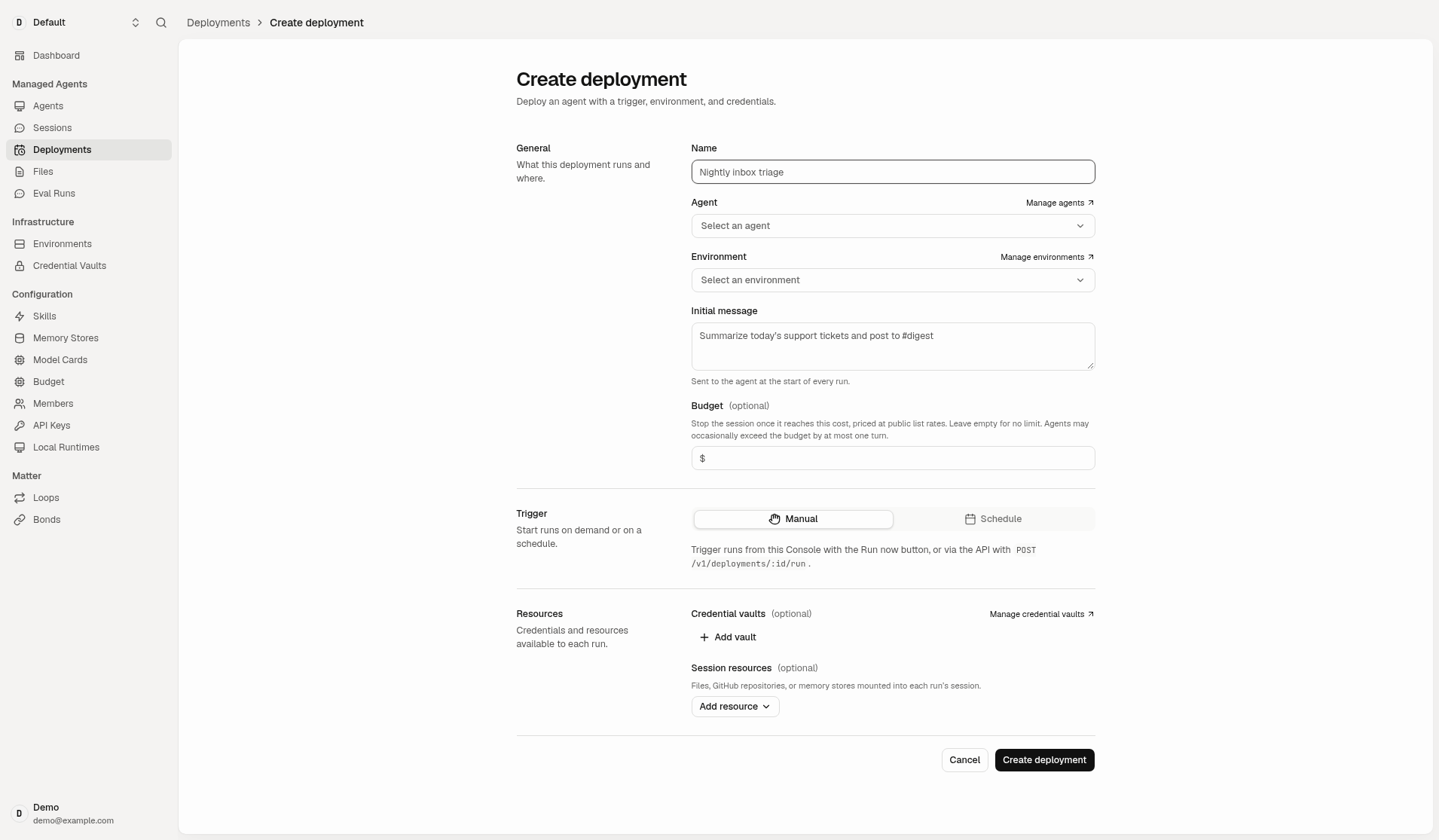
OpenMA lets you build and run AI agents with the model, harness, and sandbox you choose, on infrastructure you control, while it handles the sessions, execution, and recovery around them. Create an agent in the console, give it work, and come back later to the same session, because conversation history, streamed progress, and execution attempts are preserved rather than tied to one process that might die. Agents start with shell, file, web, and browser tools, then grow through MCP services and reusable Skills, while resources such as GitHub repositories, uploaded files, and shared memory attach to the work that needs them. Deployments run agents manually or on schedules you define, environments carry their own networking and package configuration, and model cards keep provider settings in one place instead of scattered environment files. If a sandbox fails, the session survives it; a replacement harness can rebuild context from durable events and workspace checkpoints. Operate everything through the console, the API, or the CLI, and plug in the database, queue, and object storage your deployment already trusts. Running on a dedicated VPS on RepoCloud with guaranteed CPU, RAM, and SSD, full root SSH access, and a browser serial console. Apache 2.0 licensed.
Benefits
- Sessions That Survive Failures
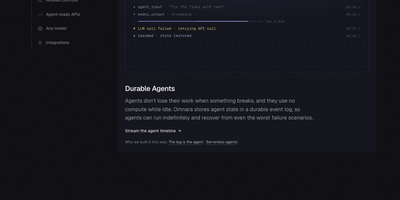
- Conversation history, progress, and execution attempts live outside any single process, so a dead sandbox or harness does not erase the agent's work or its context.
- Any Model, Harness, Sandbox
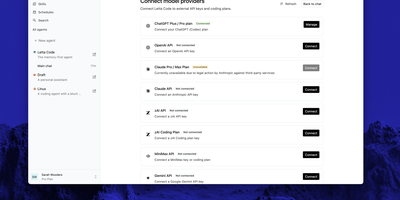
- Mix Anthropic, OpenAI, DeepSeek, OpenRouter, or custom endpoints with built-in or established agent harnesses and isolated sandbox providers, changing one layer at a time.
- Agents On A Schedule
- Deployments launch agent work manually or on recurring schedules with configurable frequency, turning standing tasks into unattended runs with retained outputs.
- Backends You Already Operate
- SQLite, PostgreSQL, or MySQL for data, SQL-backed or cloud queues for work, and S3-compatible, R2, or local filesystem storage keep the platform inside your stack.
Features
- Durable Sessions And Recovery
- Sessions preserve history and stream progress while execution is coordinated across attempts, with workspace checkpoints and retained outputs supporting recovery.
- Console Model Configuration
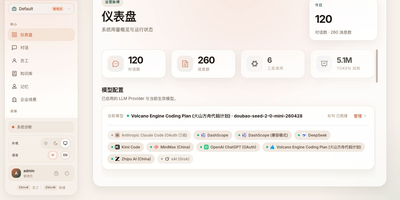
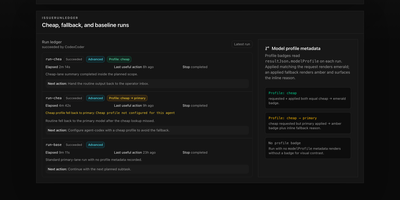
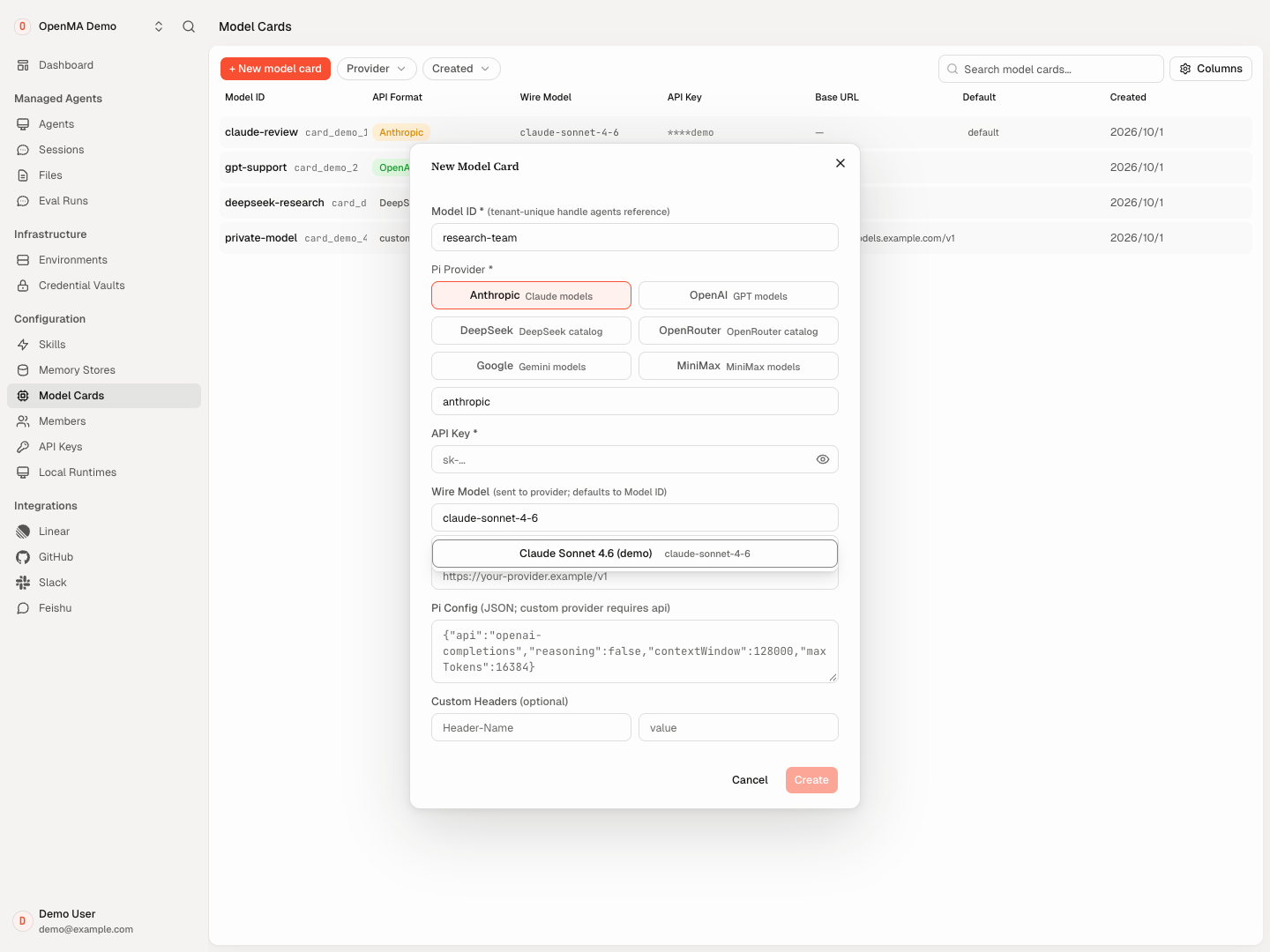
- Model cards configure Anthropic, OpenAI, DeepSeek, OpenRouter, and custom OpenAI-compatible endpoints from the console instead of scattered configuration files.
- Environments And Sandboxes
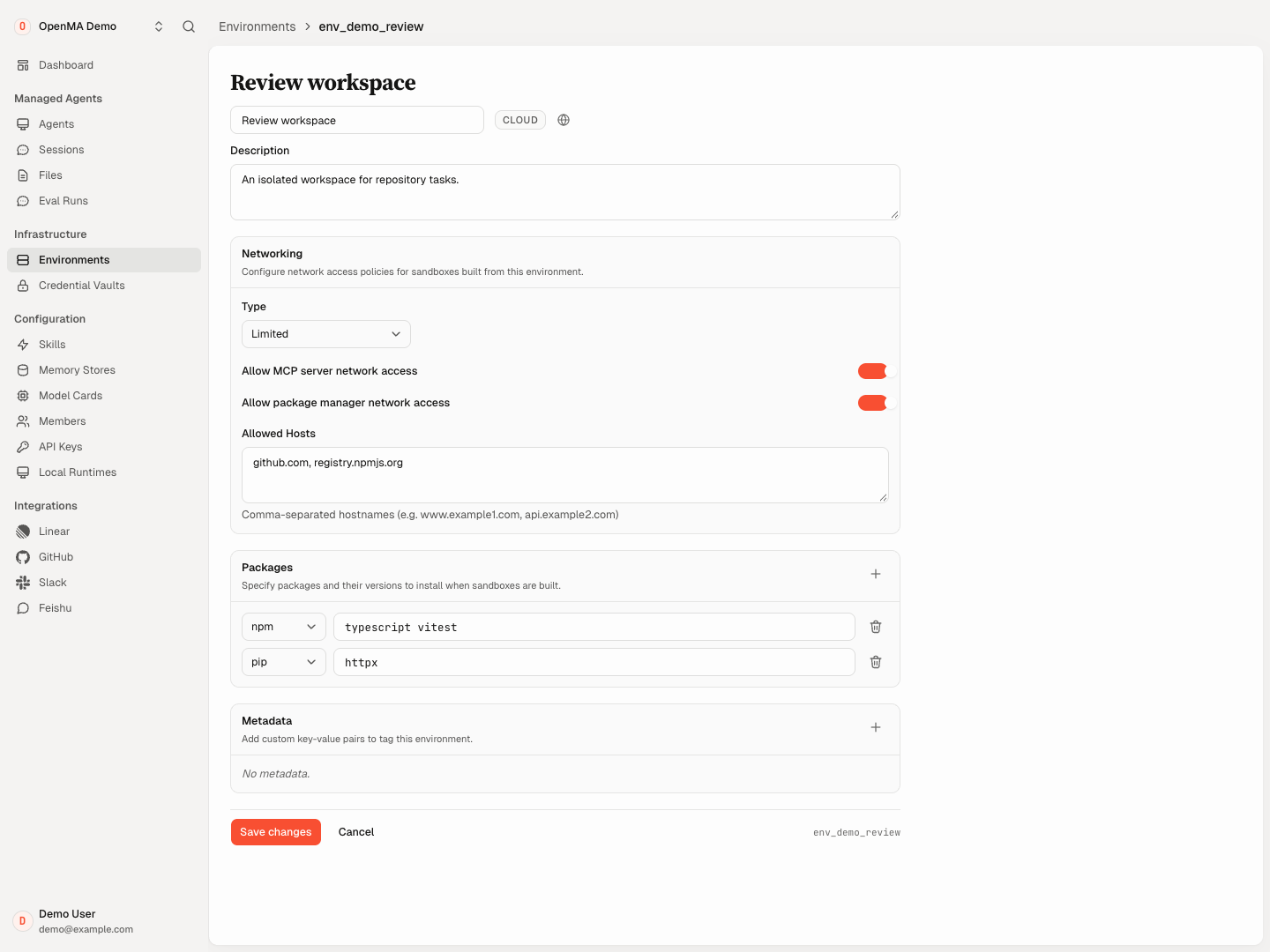
- Environments define networking and packages for isolated execution through providers such as LiteBox, E2B, Daytona, Cloudflare Sandbox, and OpenSandbox.
- Tools, MCP, And Skills
- Agents use shell, file, web, and browser tools out of the box, and extend through MCP services and reusable Skills shared across agents.
- Deployments And Resources
- Create deployments that run agents manually or on cron-style schedules, attaching GitHub repositories, file uploads, and memory stores as session resources.
- Console, API, And CLI
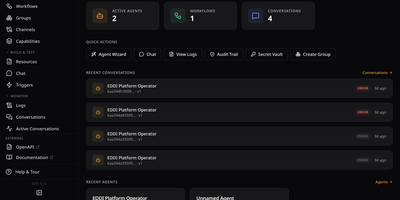
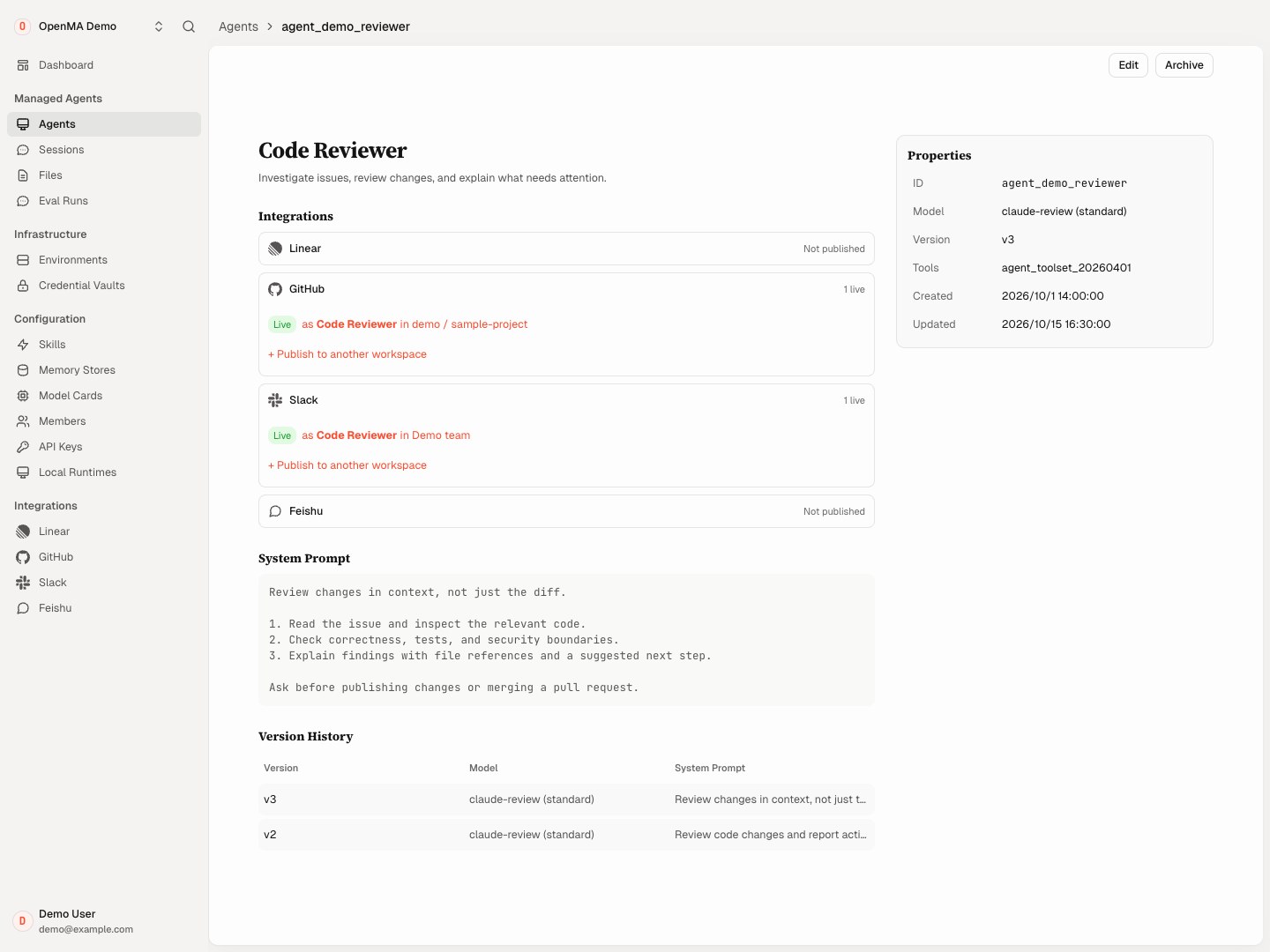
- The web console configures agents, integrations, and version history visually, while the API and CLI expose the same platform to automation.