Categories
Self-Hosted AI Agents MCP Server Project Management Developer Productivity Engineering Management Agent-Driven Development Jira AlternativeStars
Forks
Watchers
Developer links
Glideship
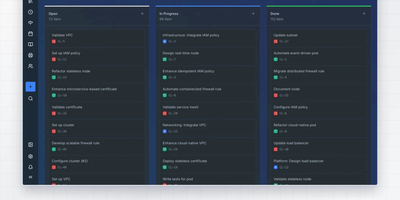
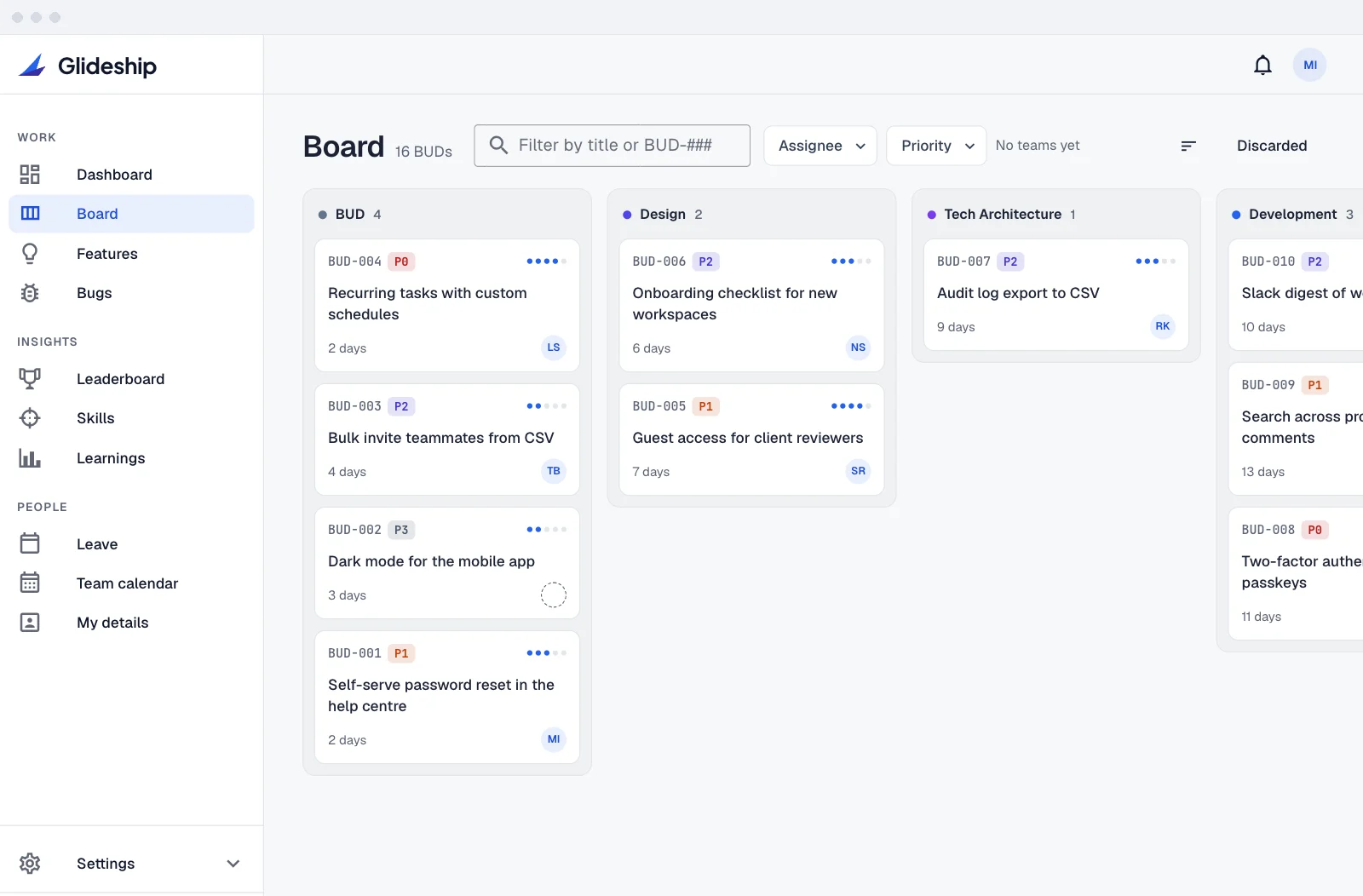
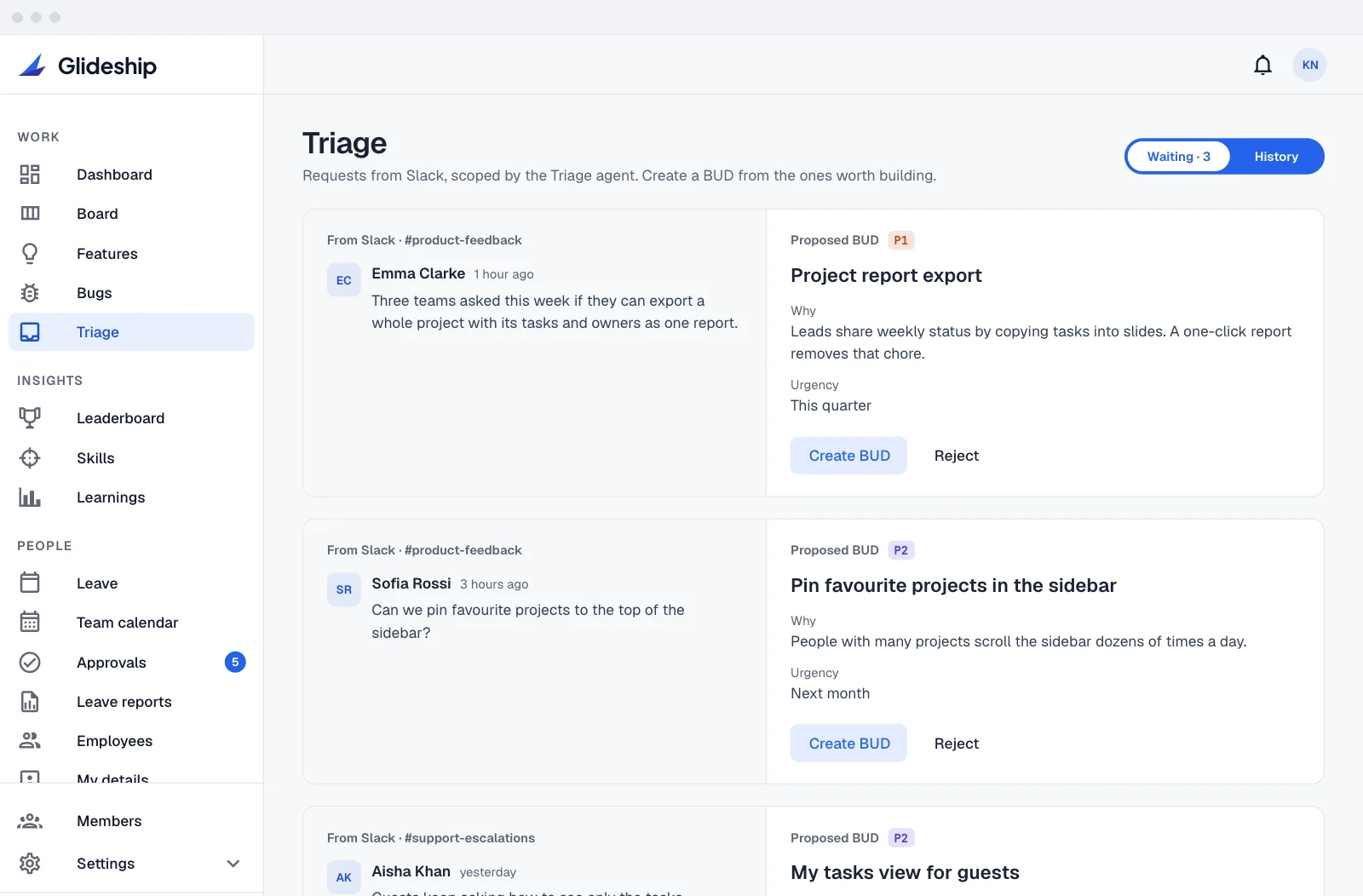
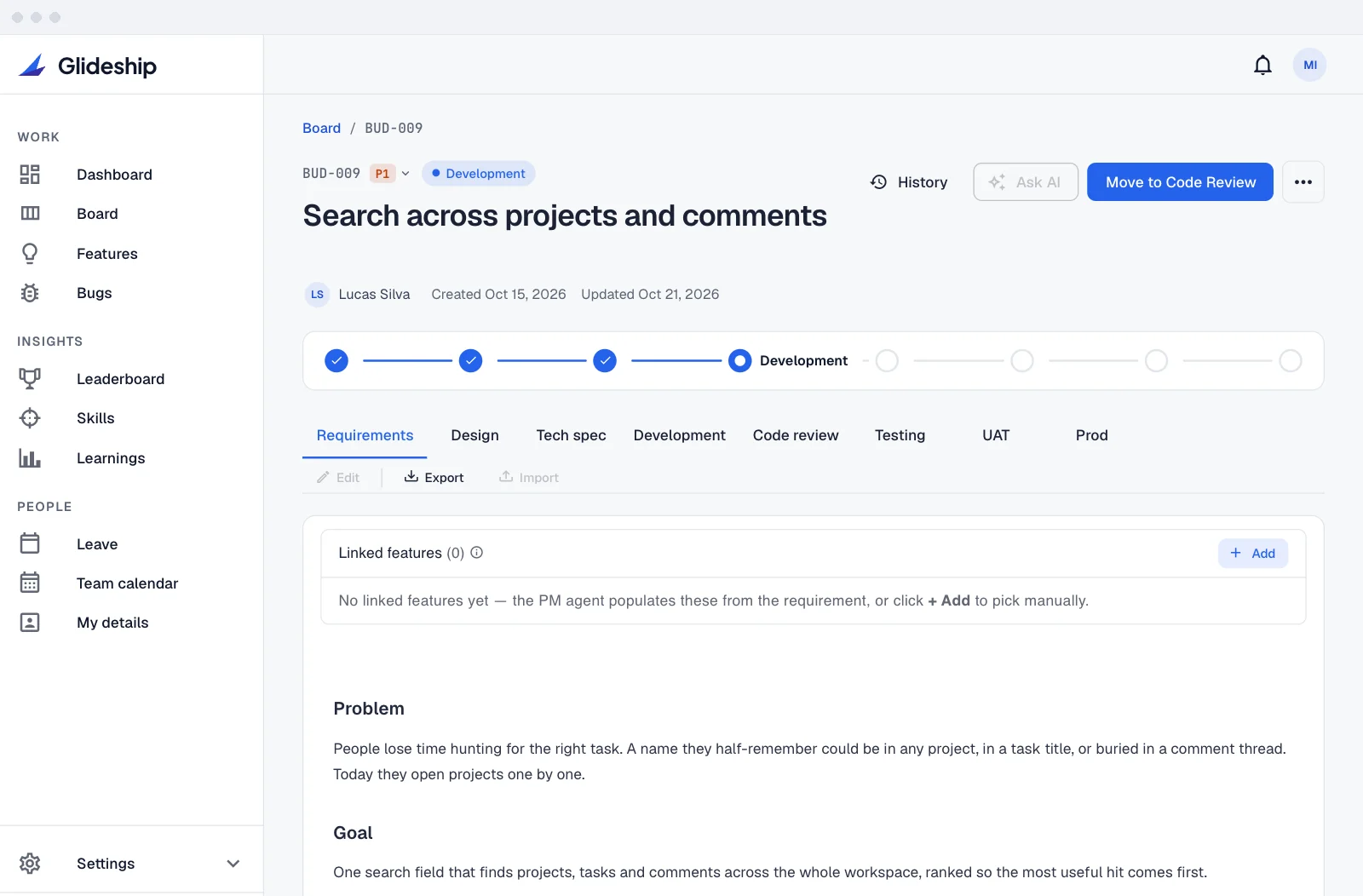
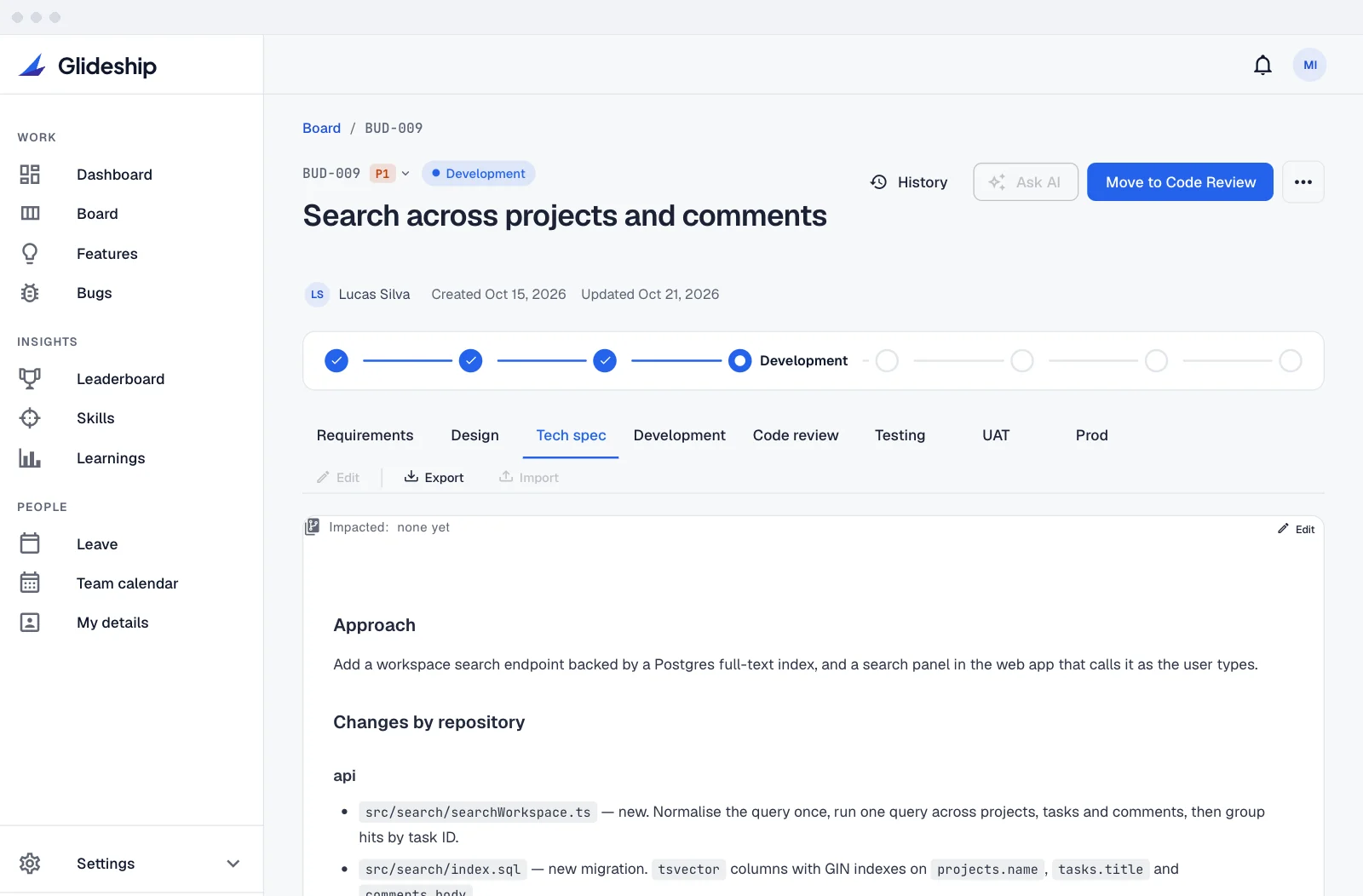
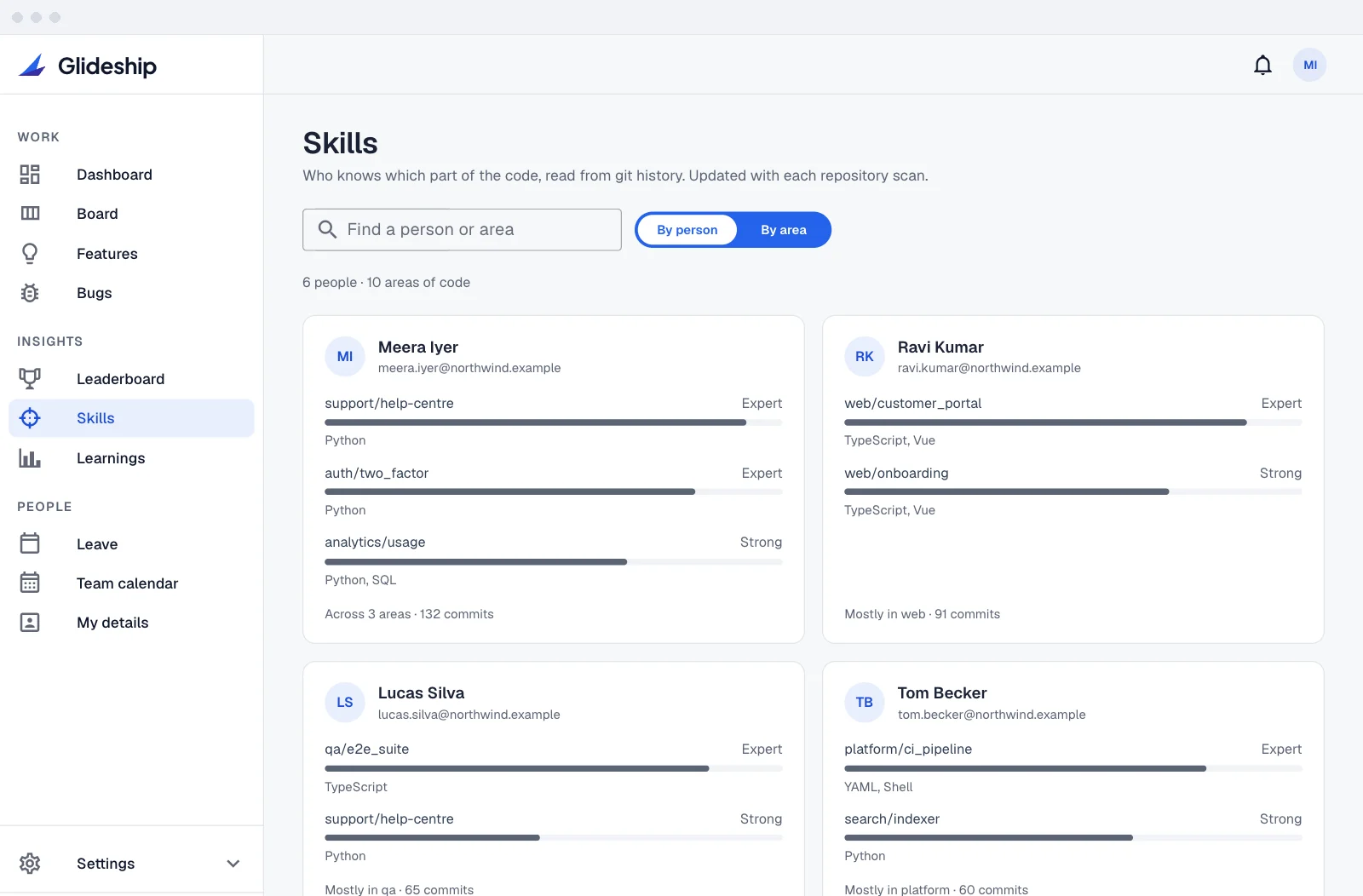
As a self-hosted alternative to Jira and Linear, Glideship swaps sprint ceremonies for twelve AI agents that handle intake, specs, estimates, test plans, and retrospectives while your team keeps every decision. Post a request in Slack and the Triage agent interviews you in-thread, checks existing work for duplicates by vector search, and queues a proposed BUD for a product manager to create or reject. Each BUD, short for Business Understanding Document, holds the spec, tech spec, test plan, acceptance criteria, and history of one feature as it moves from design through development, testing, and UAT to production. Delivery dates come from AI-PERT and 10,000 Monte Carlo simulations, reported as P50, P70, and P85 per phase instead of story points. A code-graph indexer scans multiple repositories, clusters features across them, and answers blast-radius questions such as what breaks if this file changes. Skill profiles rebuilt nightly from git history suggest the best-fit developer, while XP, levels, and a leaderboard reward work that reaches production. Choose Claude Code, GitHub Copilot, OpenAI Codex, or Ollama per organization, and a built-in MCP server lets any MCP client draft BUDs and read team context. Bring existing issues over from Jira, then give HR and Sales a People workspace with leave and work-from-home requests, loss-of-pay warnings, Slack approvals, policies per location, a team calendar, and encrypted employee records. Running on a dedicated VPS on RepoCloud with guaranteed CPU, RAM, and SSD, full root SSH access, and a browser serial console. Apache-2.0 licensed.
Benefits
- Agents draft, humans still decide
- Agents write specs, tech plans, and test cases, then your team reviews, edits, and approves at every phase, so planning poker, sprint planning, and manual status updates fall away.
- Delivery dates with confidence ranges
- AI-PERT and 10,000 Monte Carlo simulations produce P50, P70, and P85 delivery dates for each phase, factoring in skill profiles, backlog, and workload instead of story points.
- Data stays on your own server
- The database, embeddings, BUDs, scanned repositories, and audit log stay on your server. Only LLM prompts ever leave, and with the Ollama engine nothing leaves at all.
- HR and Sales get their own workspace
- HR and Sales roles get a People workspace for leave, work from home, and the team calendar, with HR also handling approvals, policies, and encrypted employee records.
Features
- Slack-native triage agent
- The Triage agent interviews requesters in a Slack thread, checks duplicates by vector search, estimates complexity, and queues a proposed BUD for product manager approval.
- One BUD per feature
- One Business Understanding Document holds the spec, tech spec, test plan, acceptance criteria, and history, moving through bud, design, tech architecture, development, testing, UAT, prod, and closed stages.
- Cross-repo code graph
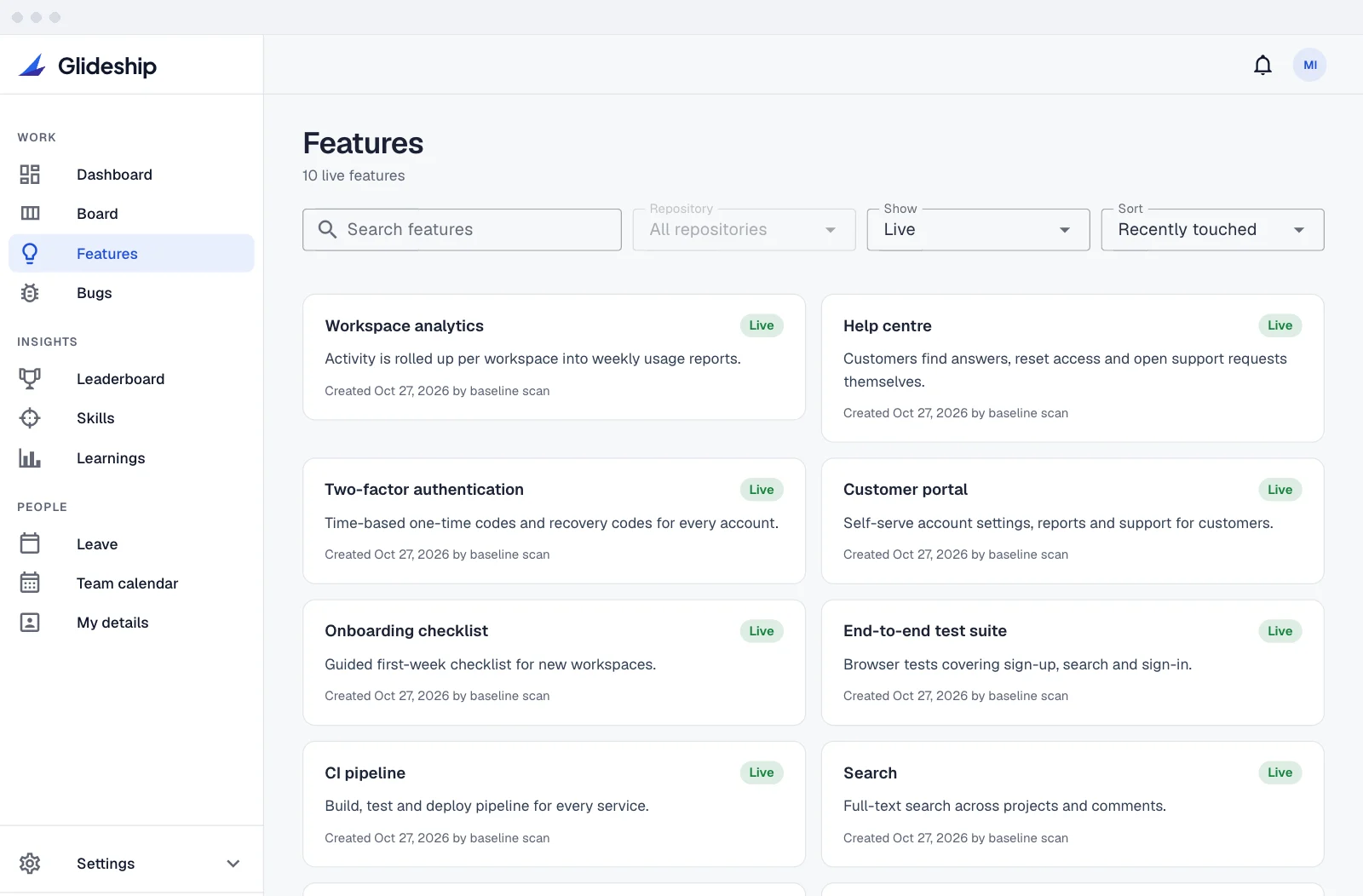
- A tree-sitter indexer scans your repositories, detects feature clusters across them, and answers blast-radius queries, with vector-indexed knowledge fed into every agent prompt.
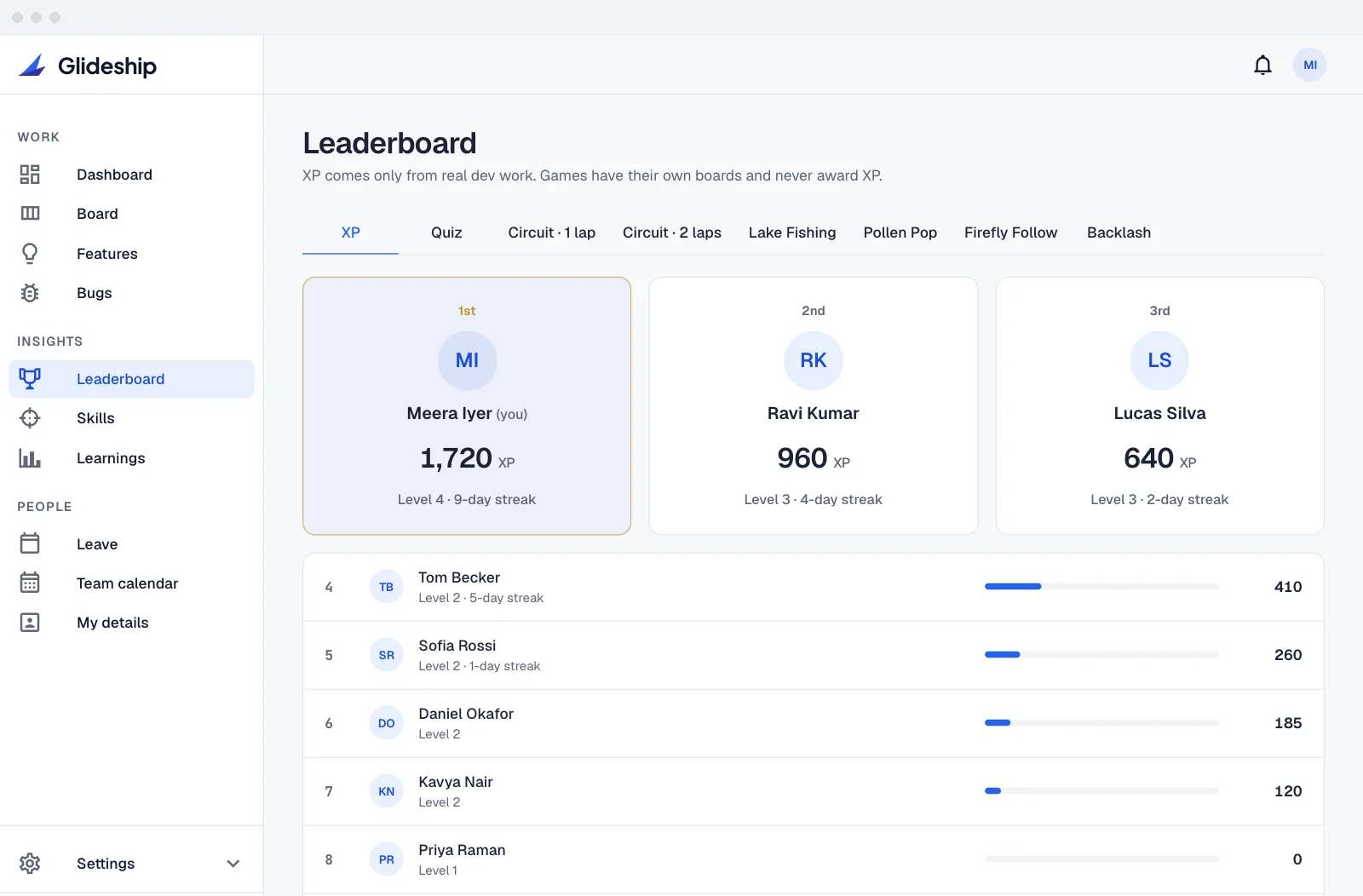
- Skill profiles and XP
- Per-module skill scores rebuild nightly from git history to suggest the best-fit developer, while XP, levels, and a leaderboard reward pull requests that reach production.
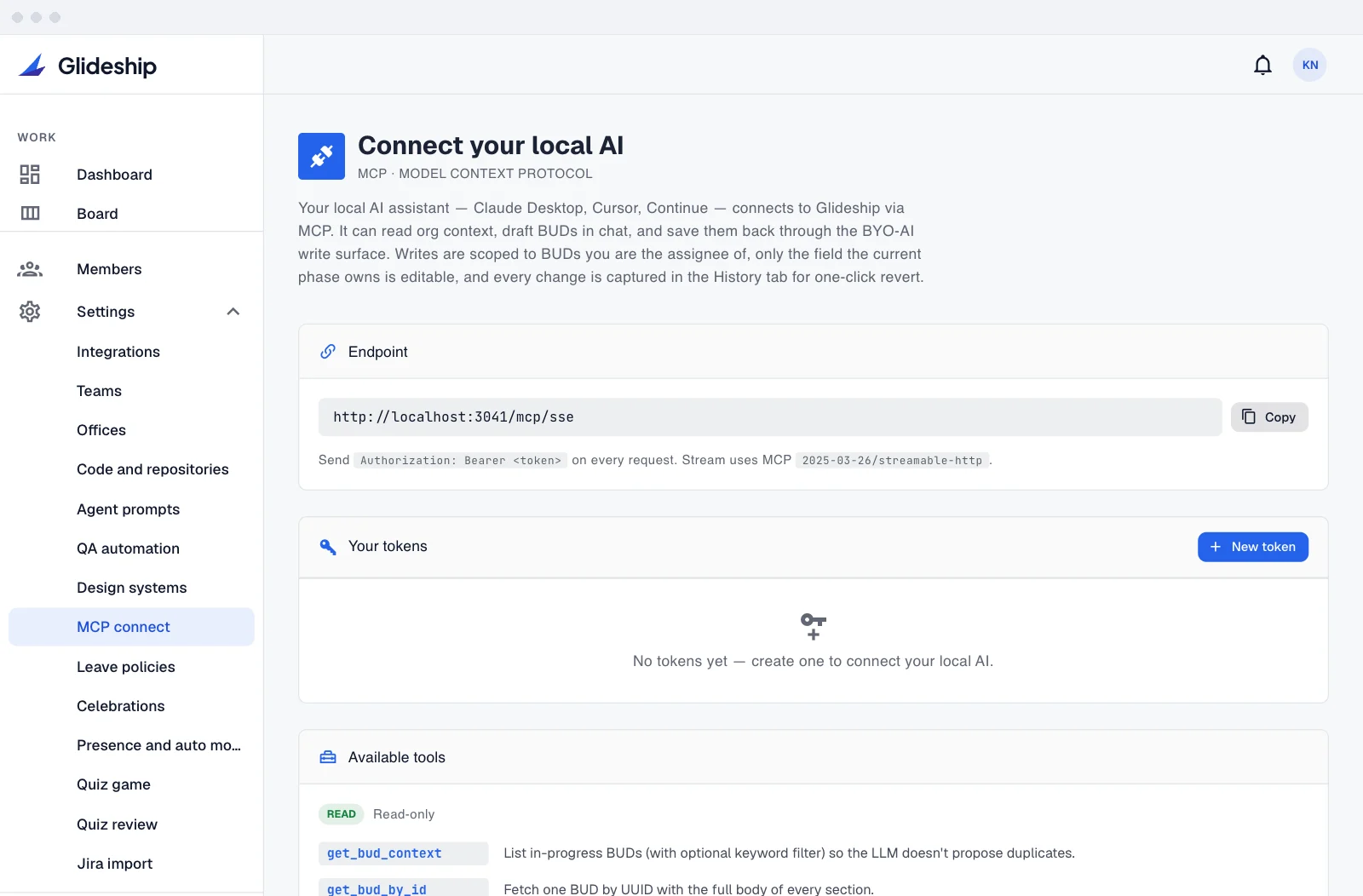
- Built-in MCP server
- A built-in MCP server lets Claude Desktop, Cursor, Continue, or any MCP client read org context, draft BUDs in chat, and save them back with every change revertible.
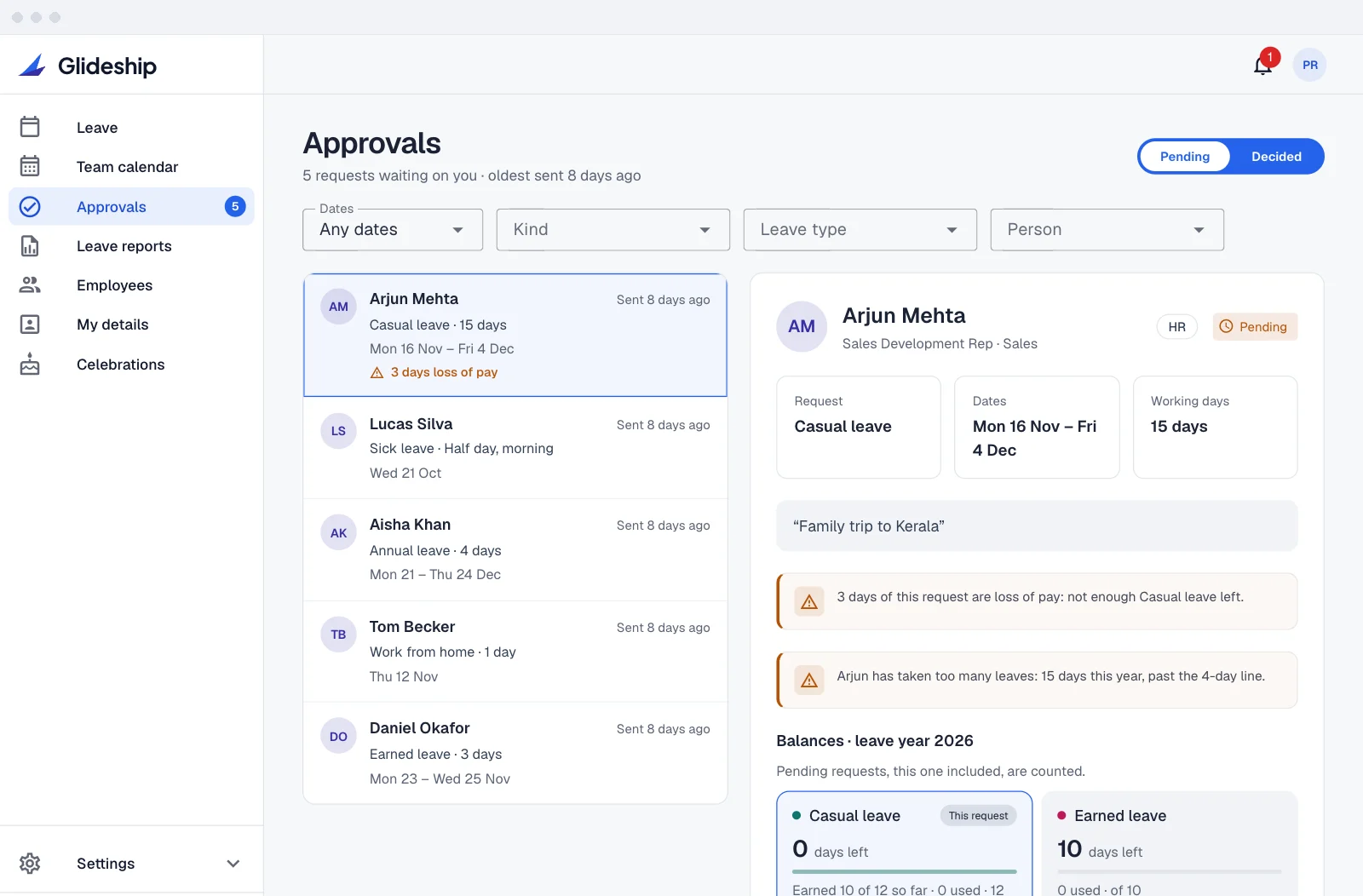
- People workspace
- Leave and work-from-home requests count working days, flag loss of pay, reach managers as Slack Approve and Reject buttons, and follow leave policies per location.