Categories
Productivity Open Source CRM Business Sales GraphQL Pipeline Management Customer ManagementStars
Forks
Watchers
Developer links
Twenty
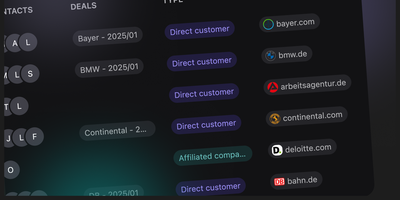
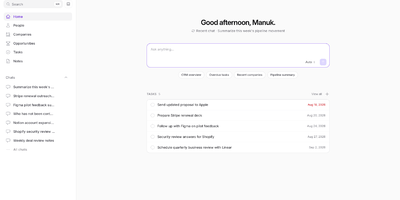
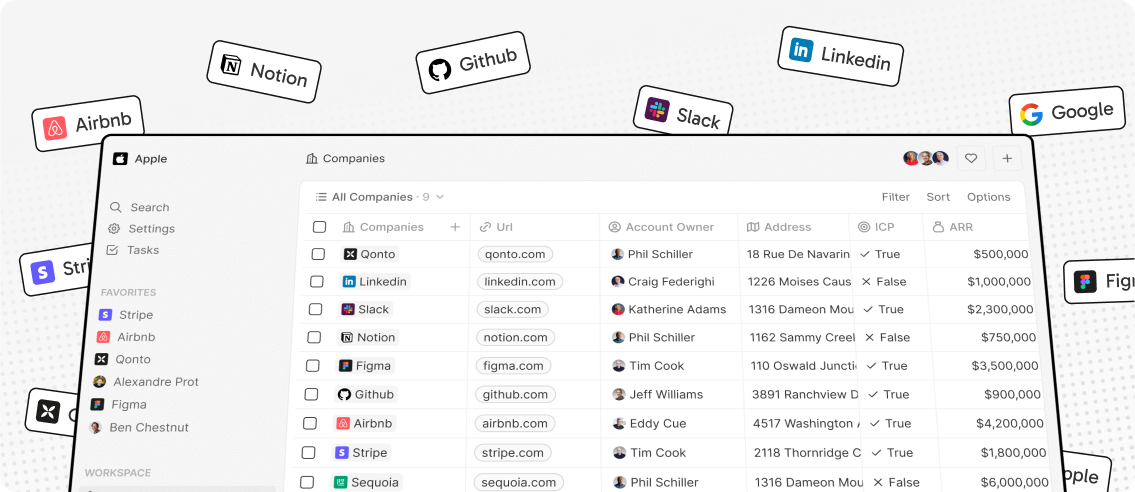
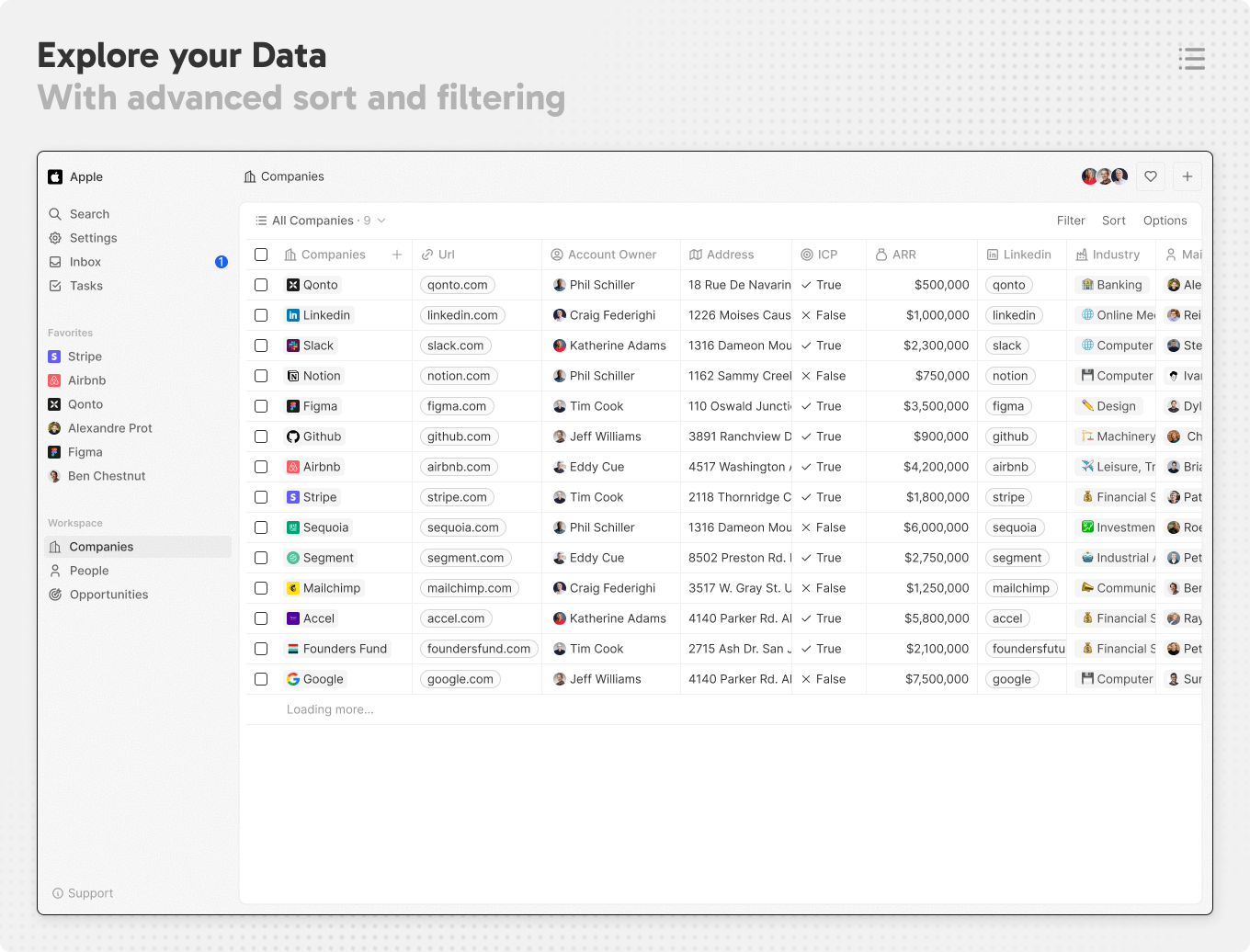
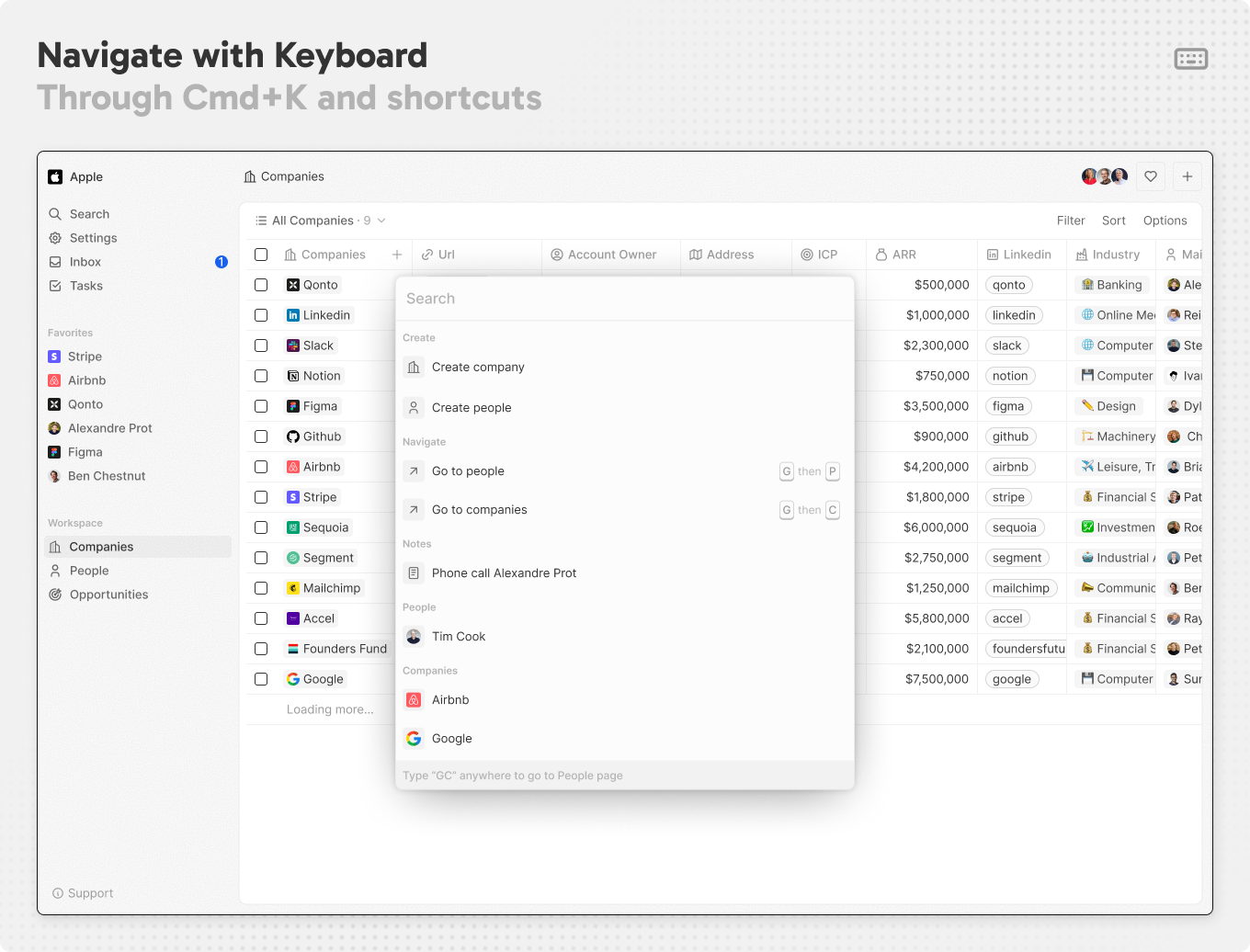
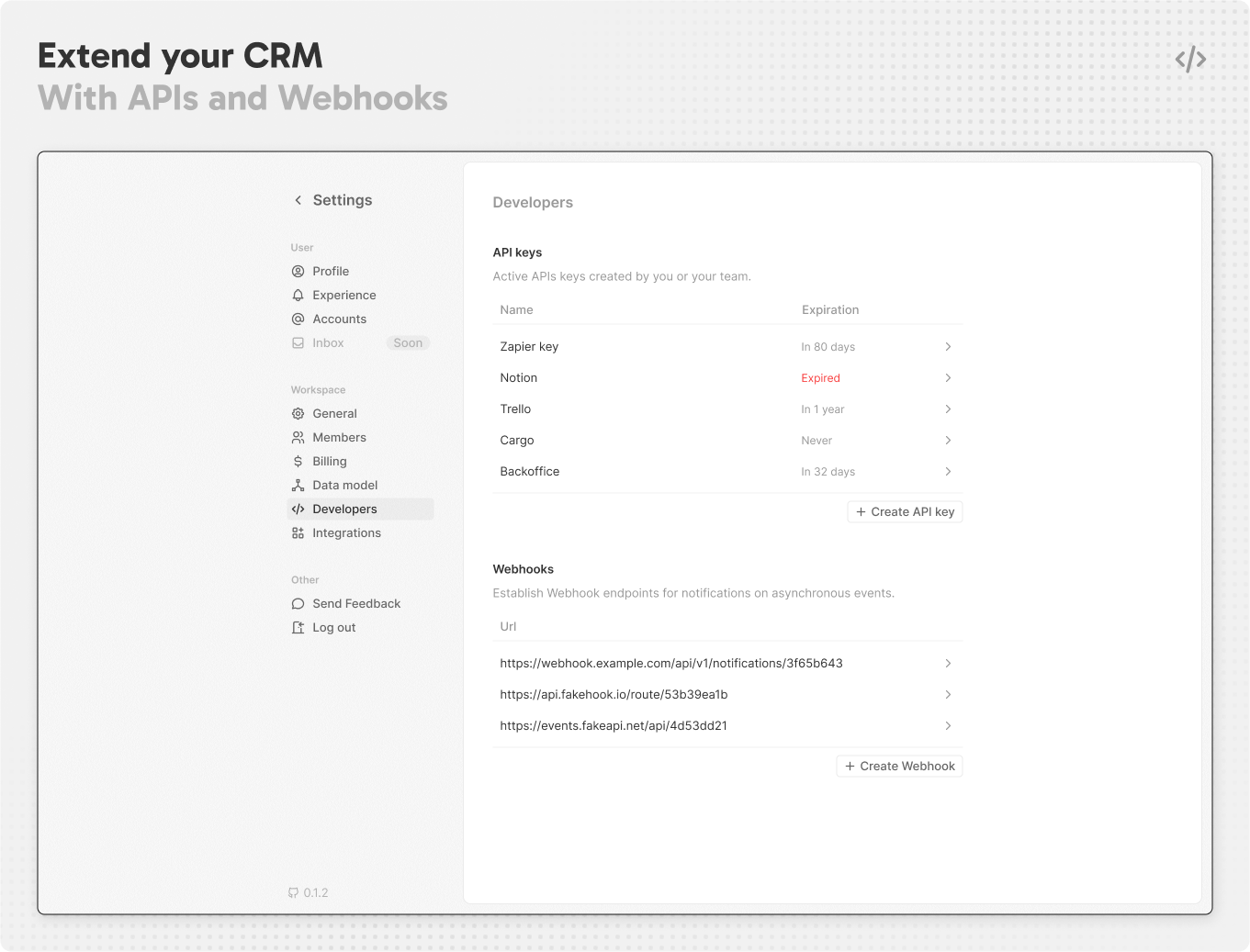
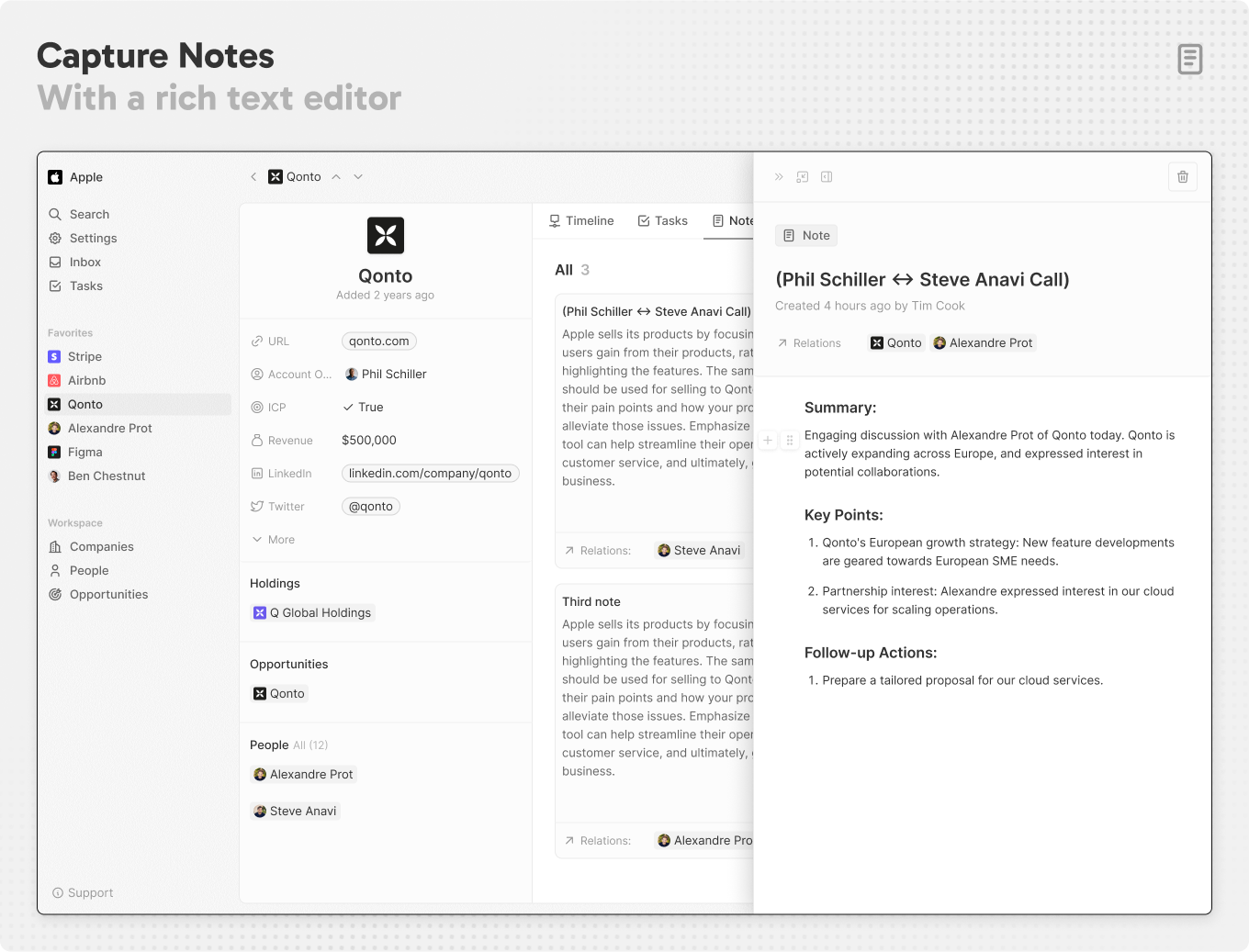
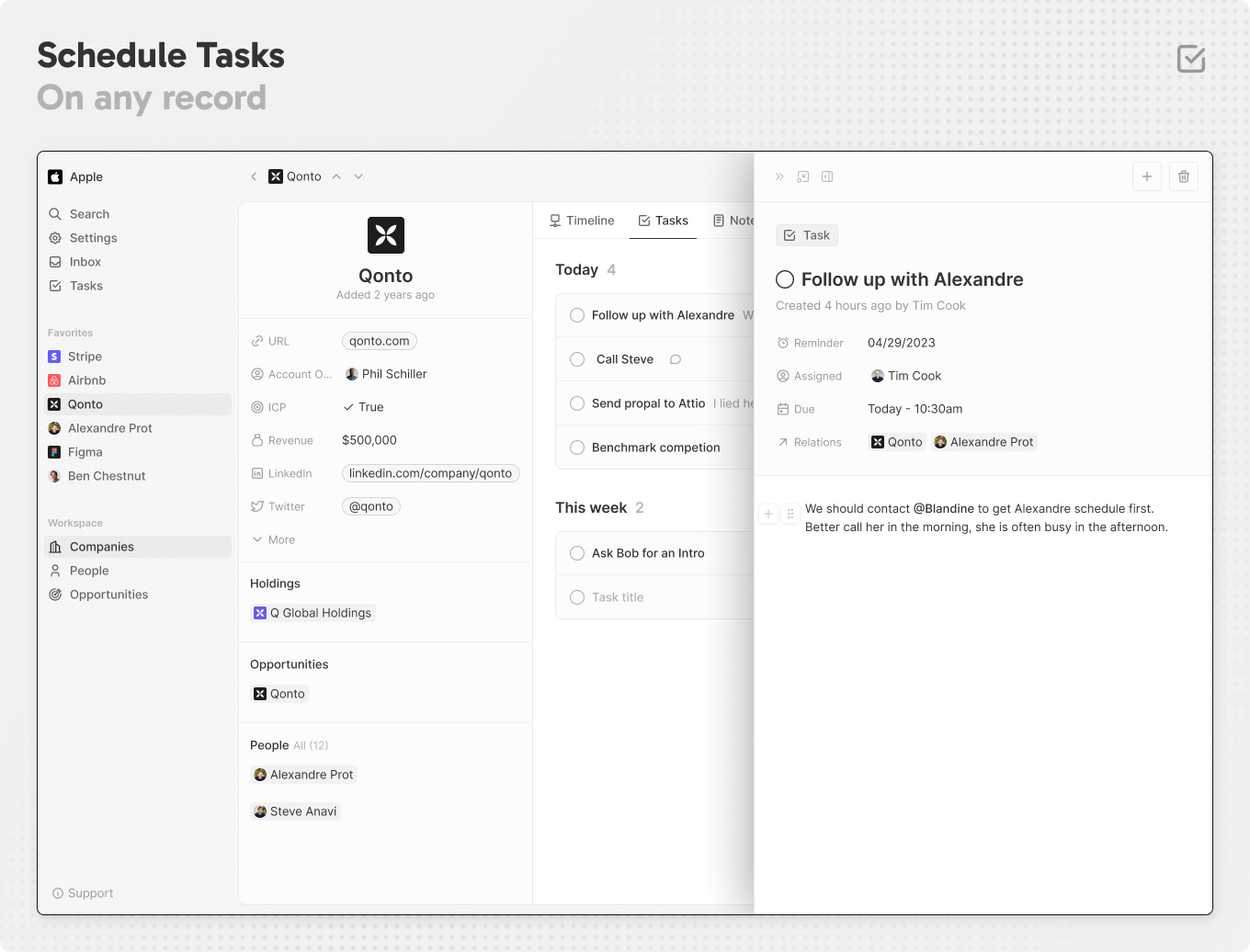
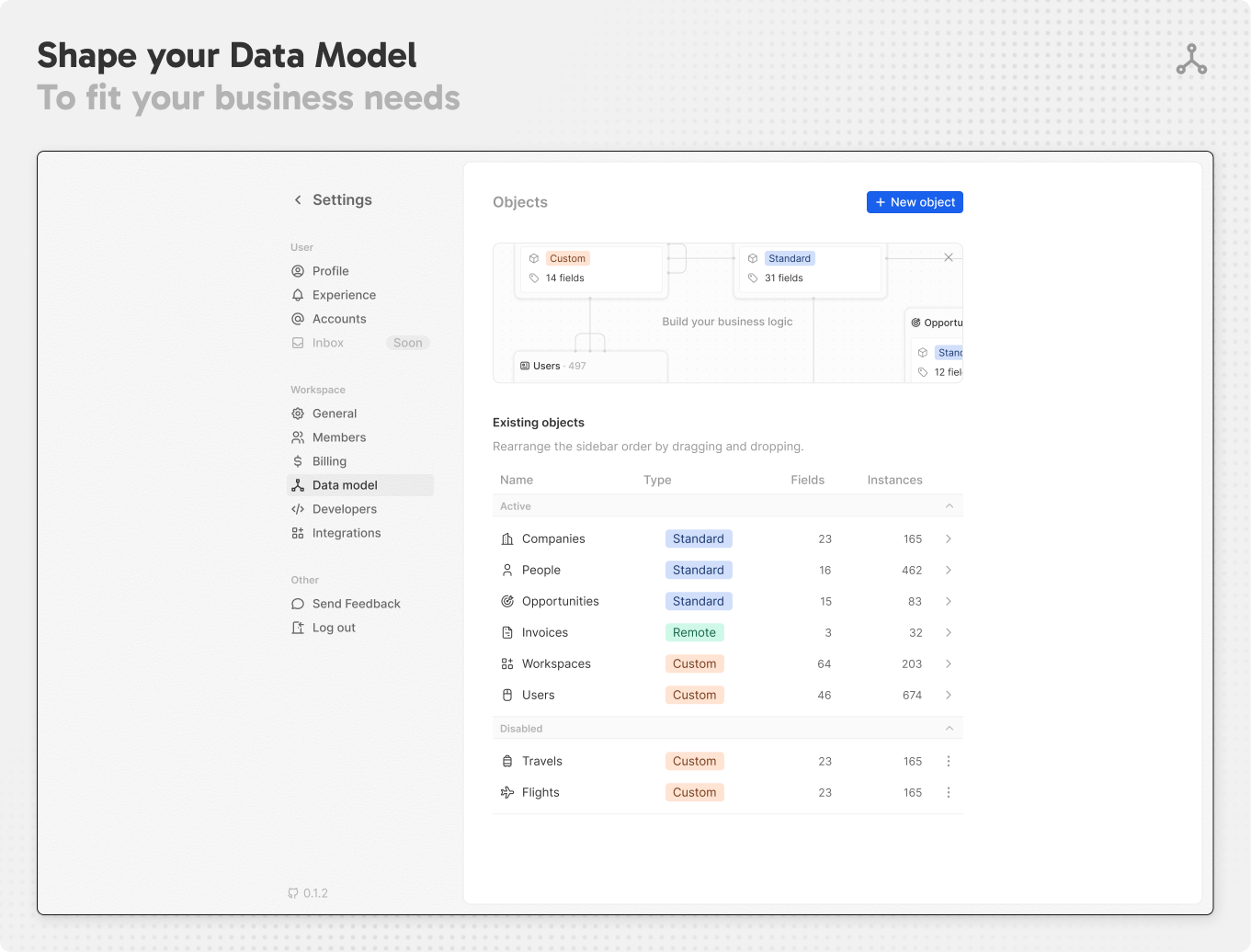
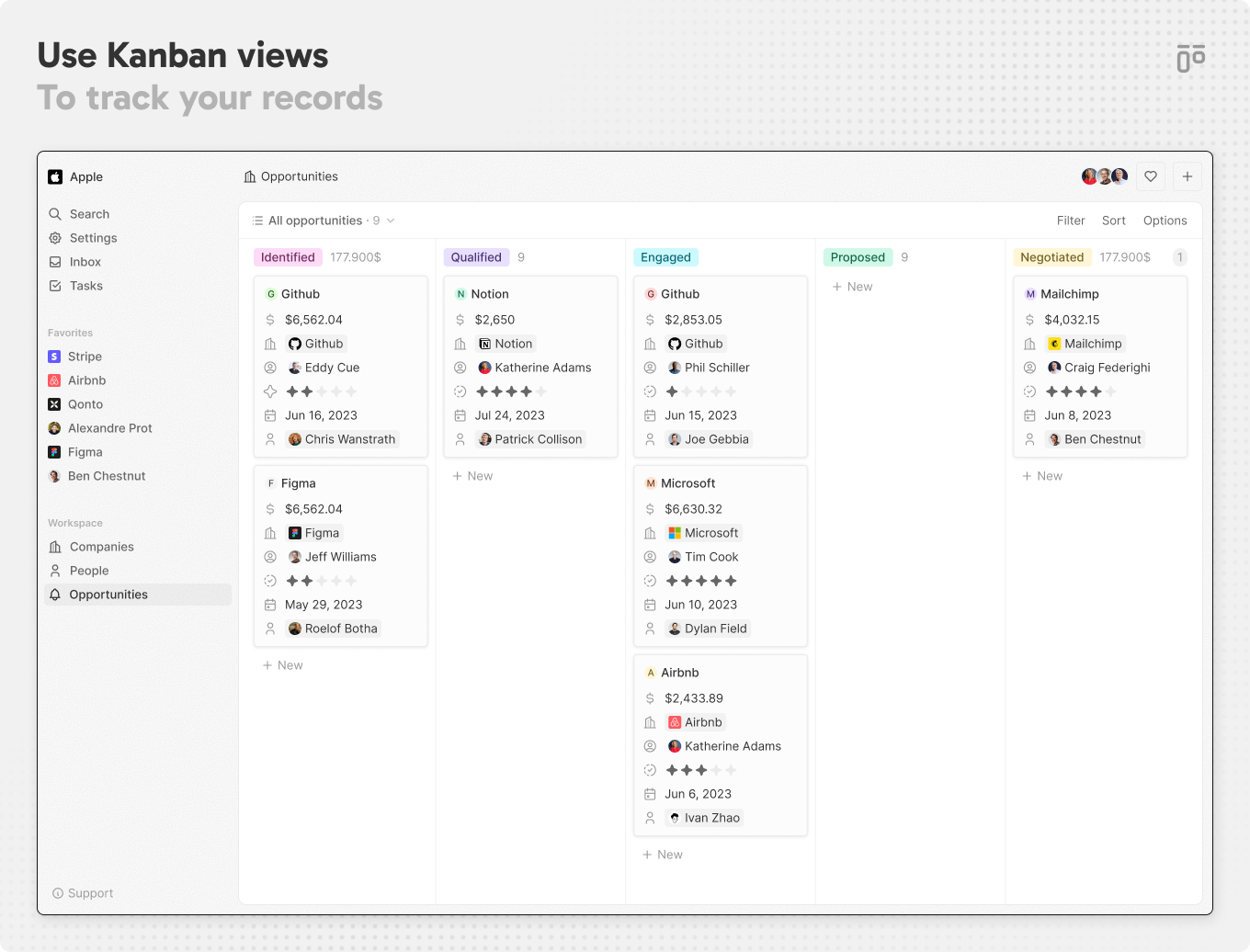
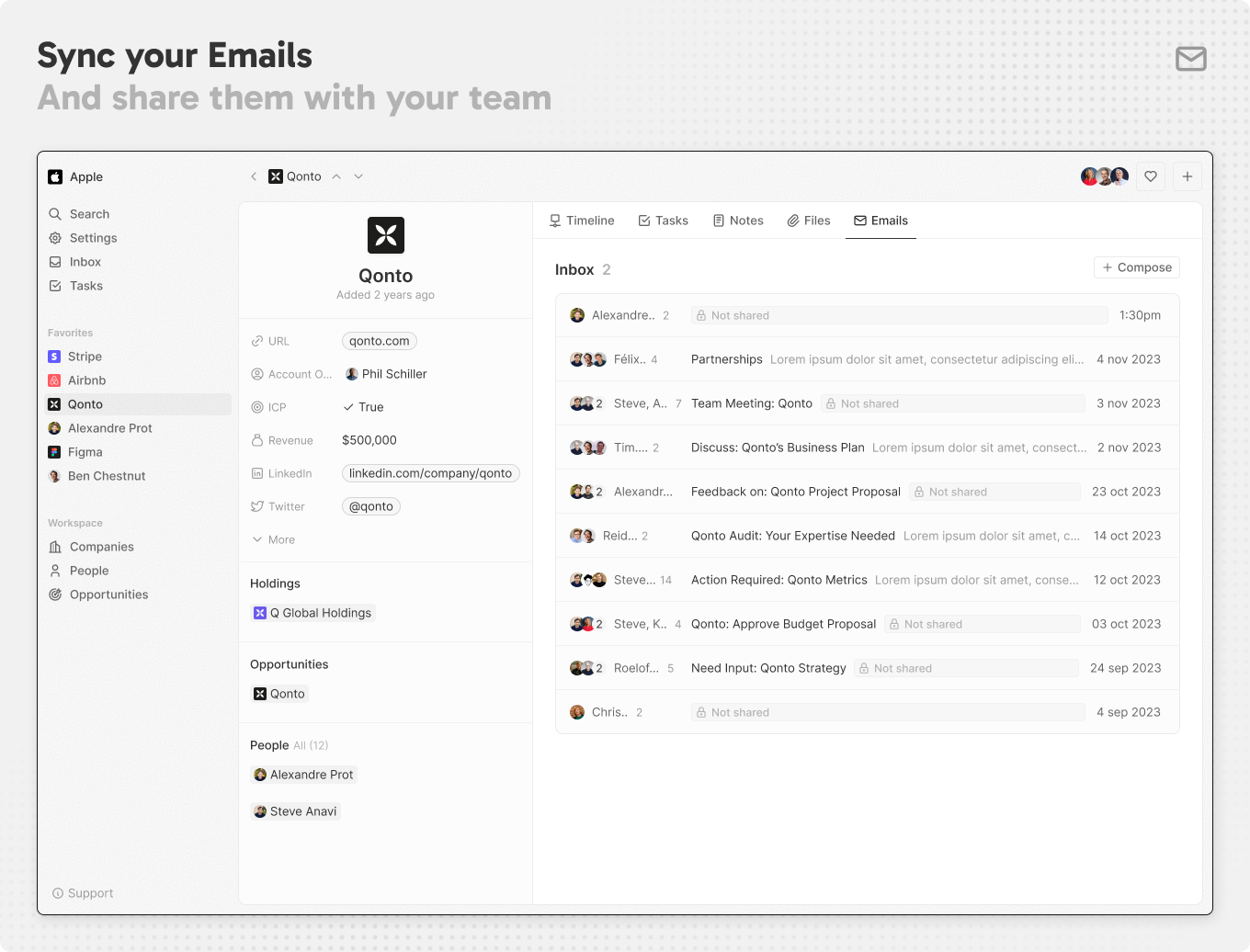
Salesforce's core workflow, open-source and on your own server: Twenty is a modern CRM built as exactly that alternative. It ships the standard CRM objects out of the box: people, companies, opportunities, notes, and tasks, displayed in table and kanban views with drag-and-drop and real-time updates. Its defining technical feature is a metadata-driven data model: you define custom objects and fields in the UI, and the backend regenerates its GraphQL schema at runtime, so a new object gets working queries, mutations, filters, and sorting within seconds, with no migrations to run - adapting the CRM to your sales process never requires code changes. A REST API is auto-generated from the same schema, GraphQL subscriptions push real-time updates, and webhooks fire on record changes for external integration. A visual workflow builder automates actions like notifications and field updates, TypeScript-based apps extend the platform with custom logic and frontend components, and email and calendar sync pulls Gmail messages and meetings onto contact timelines so communication history sits next to the record. The stack is NestJS with TypeORM, PostgreSQL, Redis, and BullMQ on the backend, React with Jotai on the frontend. Self-hosting on RepoCloud means unlimited users with no per-seat licensing - the pricing model that penalizes growing teams on commercial CRMs - and your pipeline, contacts, and deal history live in your own PostgreSQL database rather than a vendor's.
Benefits
- No Per-Seat Licensing
- Commercial CRMs charge per user per month, which penalizes growing teams. A self-hosted Twenty instance supports unlimited users for a flat hosting cost.
- Data Model That Evolves Without Migrations
- Custom objects and fields are defined in the UI and become part of the API immediately. Adapting the CRM to your sales process does not require code changes or database migrations.
- Full Customer Data Ownership
- All records live in your own PostgreSQL database. No third party holds your pipeline, contacts, or deal history, which simplifies compliance and removes vendor lock-in.
- Built for Technical Teams
- GraphQL-first APIs, webhooks, and TypeScript extension points mean engineers can integrate the CRM with internal systems the same way they integrate any other service in their stack.
Features
- Standard CRM Objects Plus Custom Ones
- People, companies, opportunities, tasks, and notes ship by default. Add custom objects with typed fields, relations, and select options through the settings UI.
- Table and Kanban Views
- Every object gets spreadsheet-style table views and kanban boards with drag-and-drop, saved filters, sorts, and per-view field visibility.
- Runtime GraphQL and REST APIs
- The GraphQL schema is generated from object metadata at runtime, with subscriptions for real-time updates. A REST API mirrors the same schema for simpler integrations.
- Workflow Builder
- Automate actions on record changes, such as sending notifications or updating fields, using the built-in visual workflow tool.
- Webhooks and Extensions
- Webhooks fire on data changes for external integration. TypeScript-based apps extend the platform with custom logic functions and frontend components.
- Email and Calendar Sync
- Connect Gmail or other accounts to sync messages and meetings onto contact timelines, keeping communication history next to the record.