Categories
Self-Hosted Alerting Network Monitoring Uptime Monitoring Home Lab Network Security Device Discovery Presence DetectionStars
Forks
Watchers
Developer links
Pi.Alert
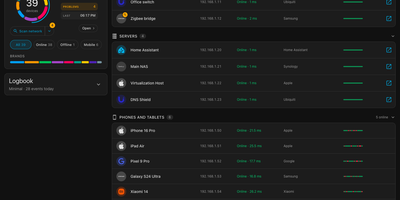
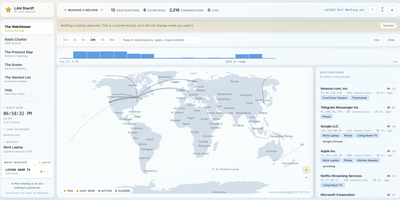
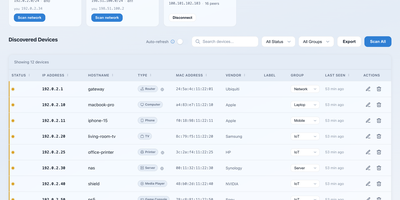
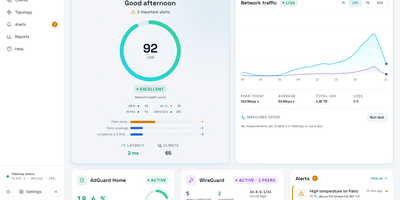
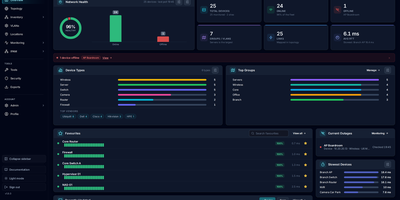
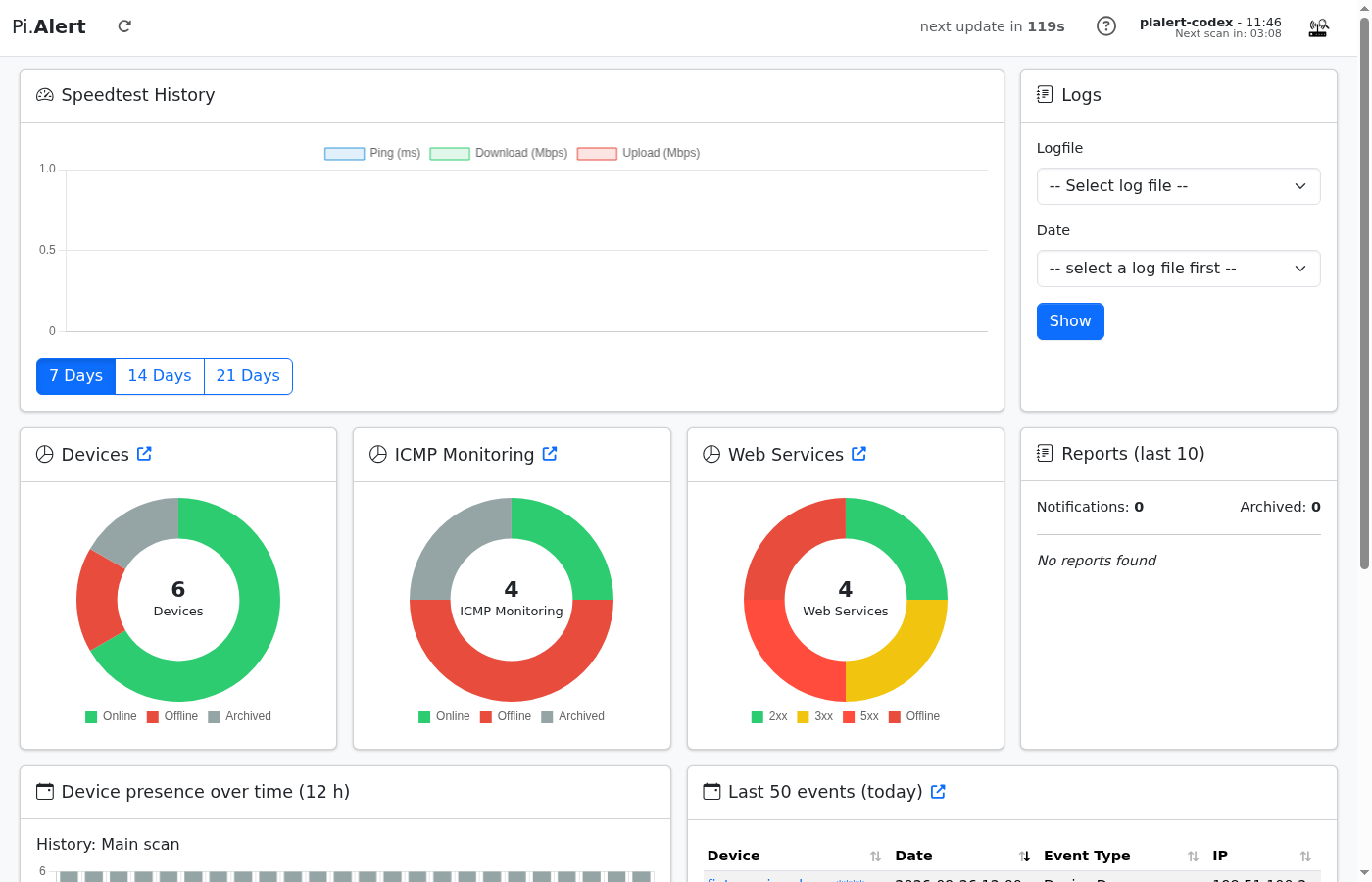
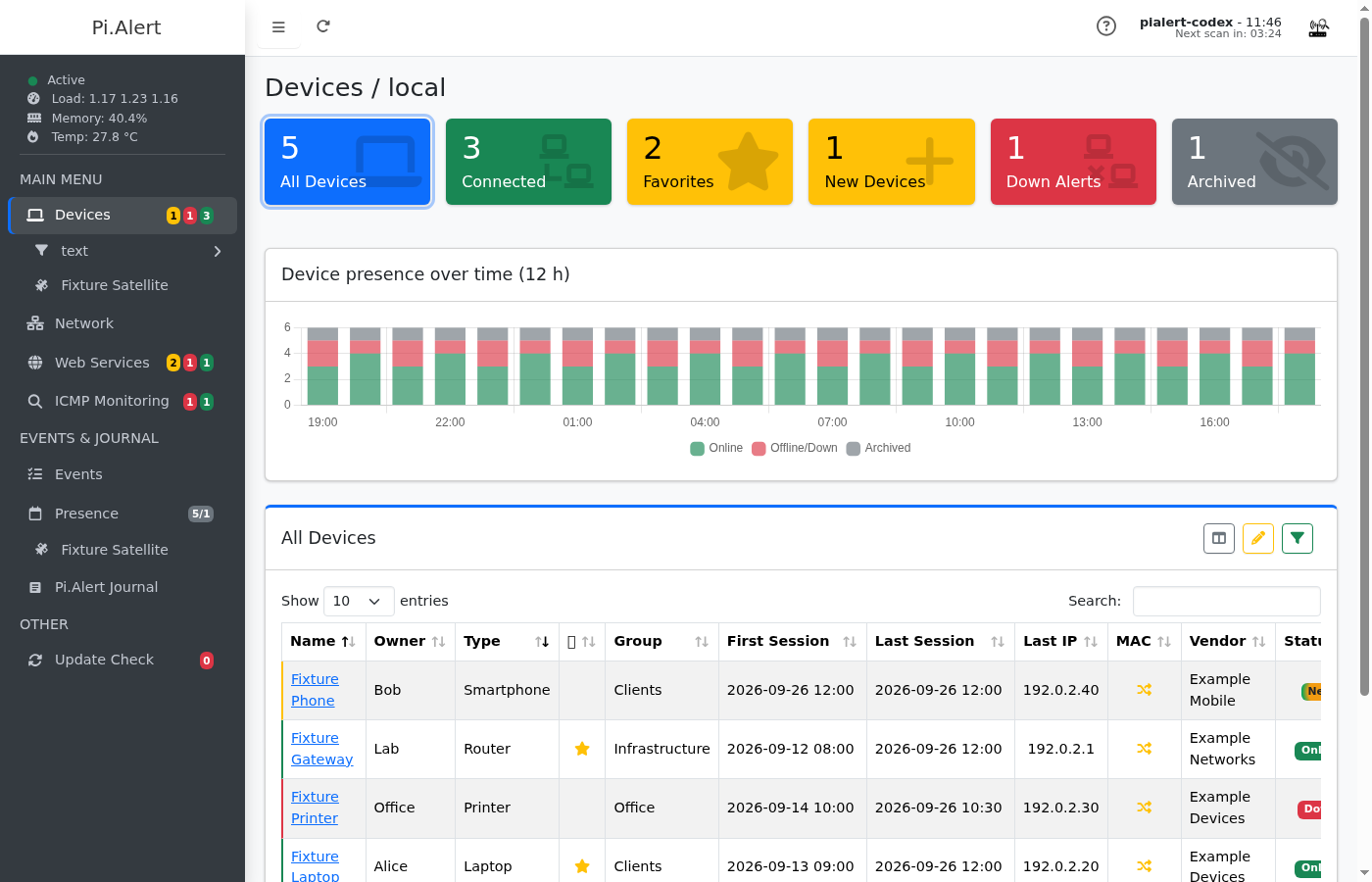
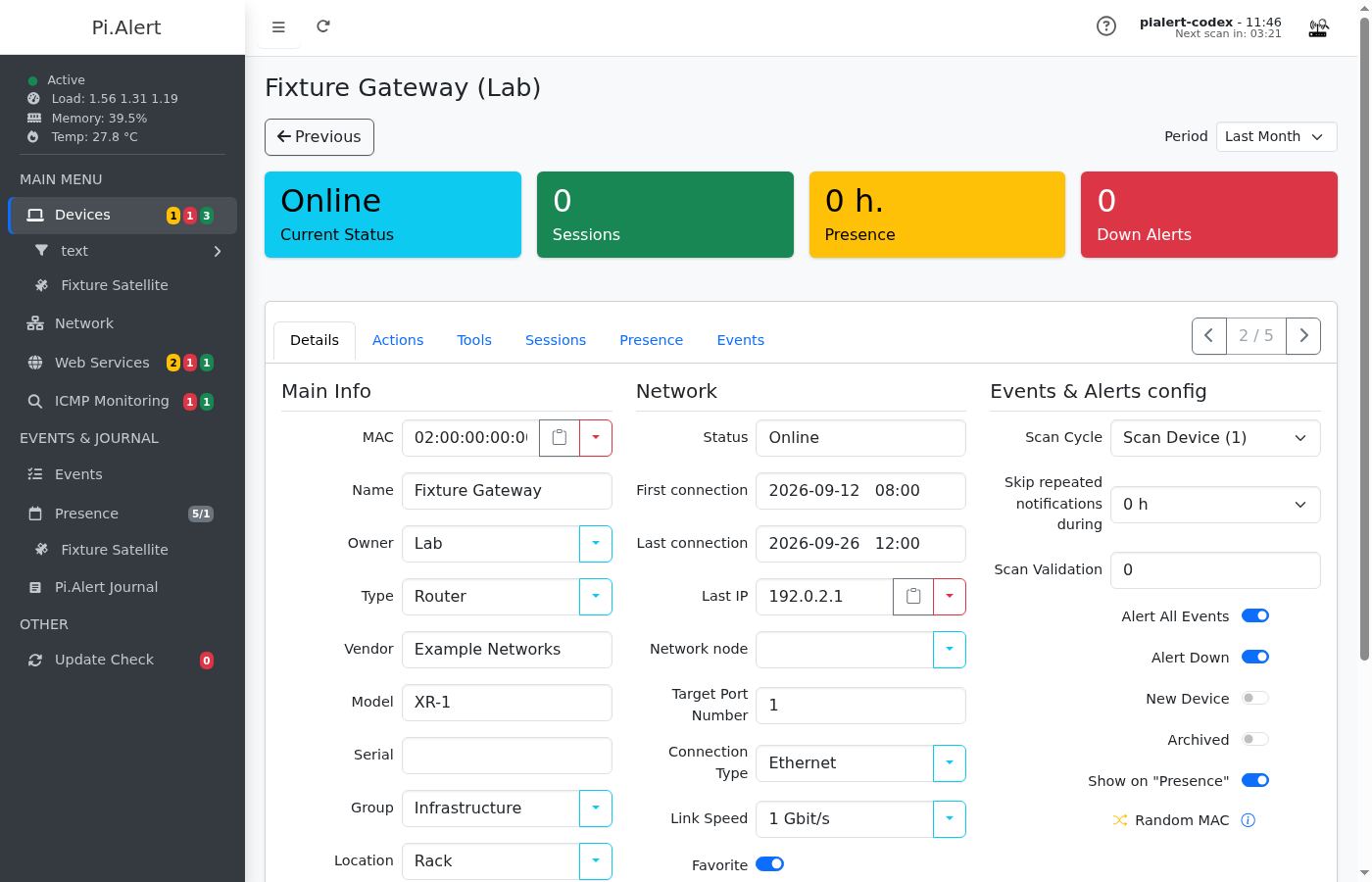
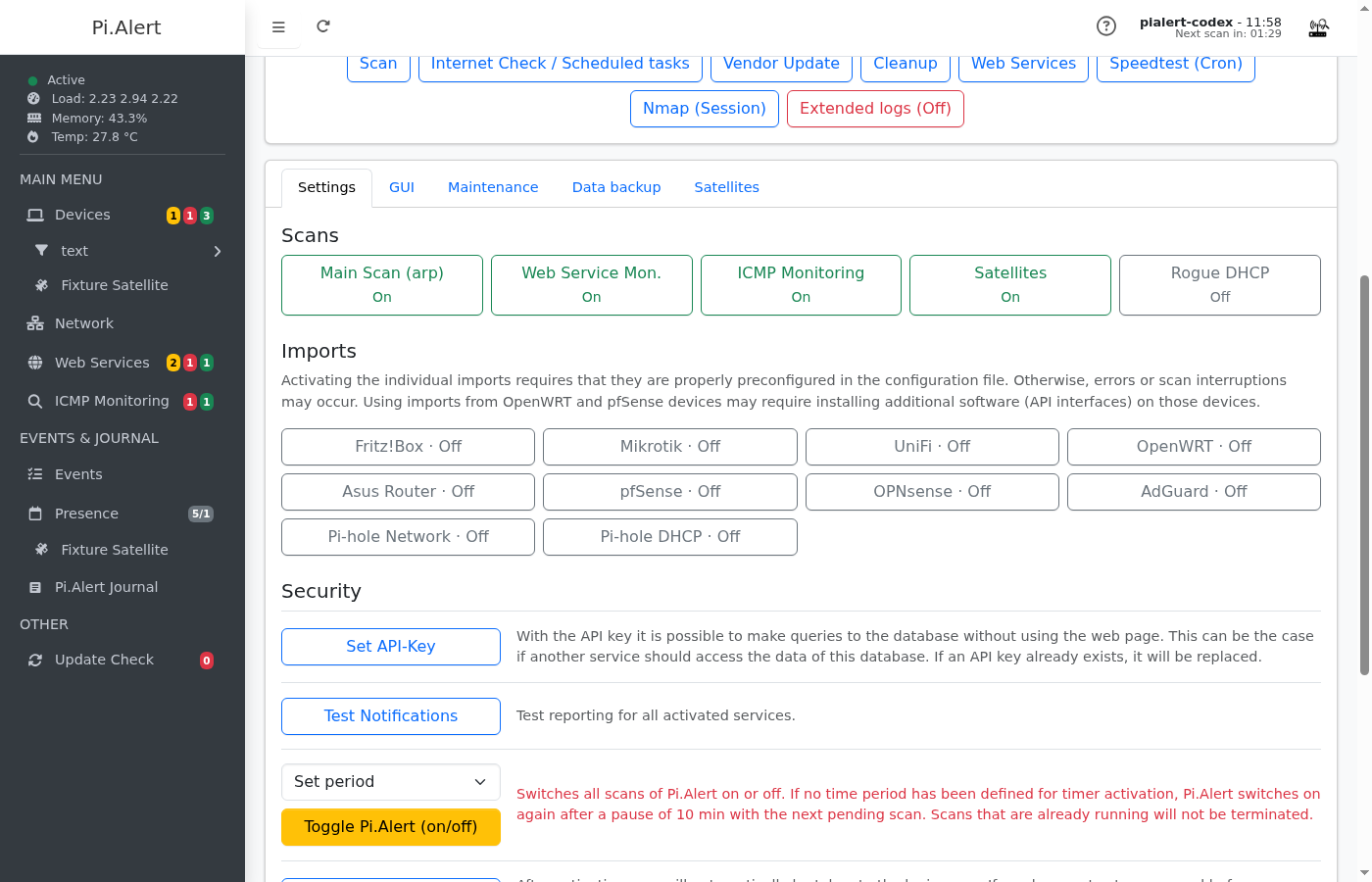
When an unknown phone joins your Wi-Fi or a camera drops offline, Pi.Alert raises an alert and keeps a running inventory of every device on your network. Home labs and small offices use it to see who is connected and whether cameras, printers, and internal services still answer. Device records are editable and hold owner, location, group, notes, and type, alongside session history, presence tracking, and an event log. Discovery layers arp-scan, Nmap, and ping, then merges imports from Pi-hole, FRITZ!Box, MikroTik, UniFi, OpenWrt, AsusWRT, pfSense, OPNsense, and AdGuard Home. Flag a machine as always-on and its silence becomes an alert too. Alerts arrive by email, Pushover, Pushsafer, ntfy, Telegram, or the web interface. Web service checks run every ten minutes, record HTTP status and response time, and log an event when a certificate's subject, issuer, or validity dates change. A relationships page maps devices onto routers, switches, and access points, ICMP checks reach hosts beyond your subnet, and a rogue DHCP check flags unwanted servers. Manual Nmap scans and Wake-on-LAN commands are built in. Satellites scan other network segments and report back to the main instance. A key-protected API feeds Home Assistant and Homepage, and optional MQTT publishing exposes overall and per-device status. Choose Standard, Glass, Piano, or Console themes, bulk-edit devices, and read the interface in 15 languages. Running on a dedicated VPS on RepoCloud with guaranteed CPU, RAM, and SSD, full root SSH access, and a browser serial console. GPL-3.0 licensed.
Benefits
- Know Who Joins Your Network
- Scans run every five minutes and raise an alert when an unknown device appears or a device marked always-on goes offline, delivered by email, Telegram, ntfy, Pushover, or Pushsafer.
- Catch Failing Sites And Certificates
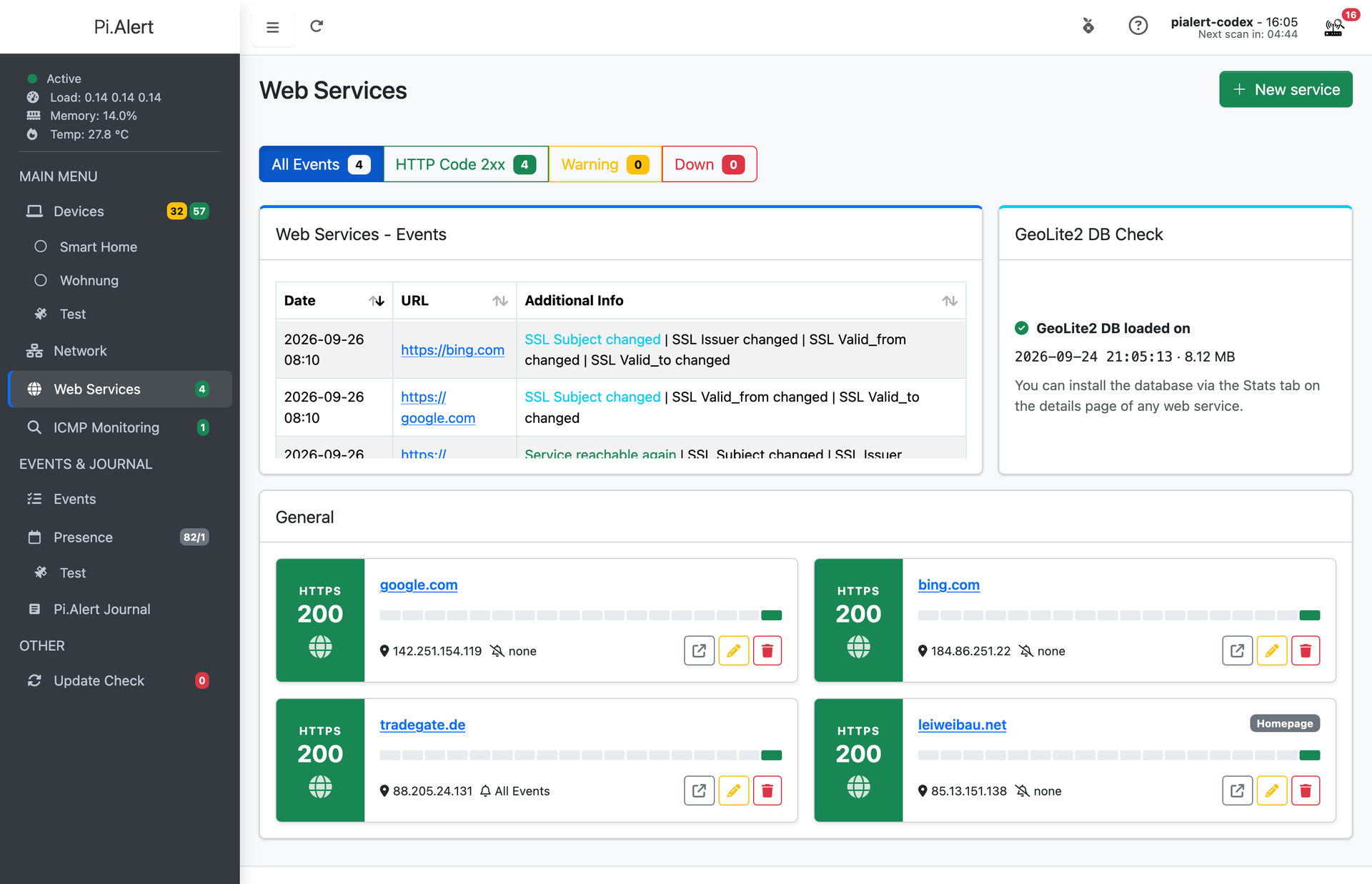
- Web service monitoring tests each URL every ten minutes, stores the HTTP status and response time, and raises an event when the SSL subject, issuer, or validity dates change.
- One Dashboard For Many Routers
- Imports from Pi-hole, FRITZ!Box, MikroTik, UniFi, OpenWrt, AsusWRT, pfSense, OPNsense, and AdGuard Home merge into one device list, and Satellites cover separate network segments.
- Plugs Into Your Smart Home
- A key-protected API feeds Home Assistant and Homepage, and optional MQTT publishing exposes overall and per-device status so automations and dashboards can react to network changes.
Features
- Layered Device Discovery
- Combines arp-scan, Nmap, and ping with imports from Pi-hole 5 and 6, FRITZ!Box, MikroTik, UniFi, OpenWrt, AsusWRT, pfSense, OPNsense, and AdGuard Home.
- Web Service Monitoring
- Checks URLs every ten minutes for HTTP status, response time, and SSL certificate subject, issuer, and validity changes, and keeps a rolling service journal.
- Network Relationship Map
- Assign devices to routers, switches, WLAN access points, and the Internet to see how everything connects, including unmanaged hubs and non-scannable devices.
- ICMP And DHCP Checks
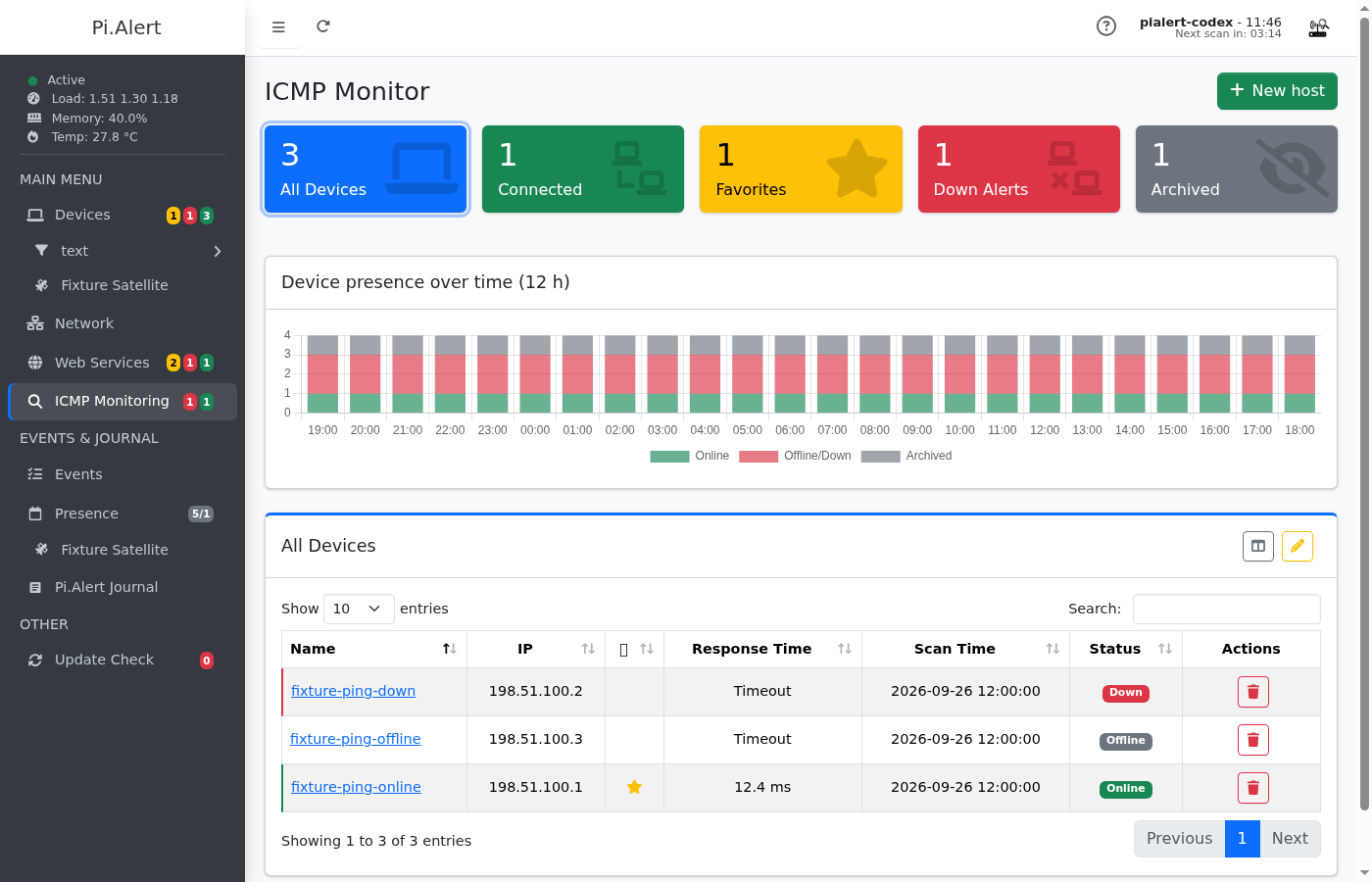
- Pings hosts outside the local subnet and flags unwanted DHCP servers, with manual Nmap scans and Wake-on-LAN buttons on each device page.
- Remote Satellite Scanning
- Pi.Alert-Satellite scans separate network segments independently and sends results to the main instance, using arp-scan, Pi-hole 6, MikroTik, UniFi, OpenWrt, AsusWRT, pfSense, or OPNsense.
- Themes And Languages
- Standard, Glass, Piano, and Console themes with dark mode, configurable table columns, a bulk editor, and a 15-language interface including German, French, Spanish, and Ukrainian.