Stars
Forks
Watchers
Developer links
NodePilot
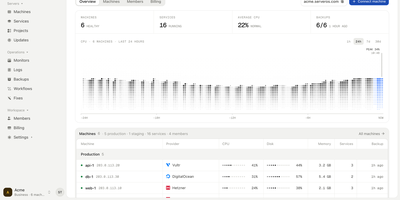
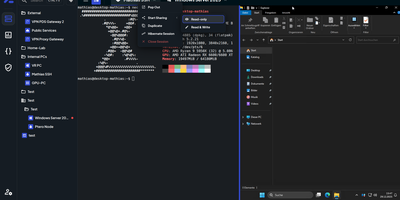
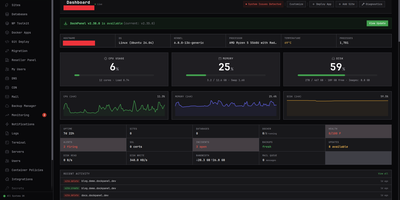
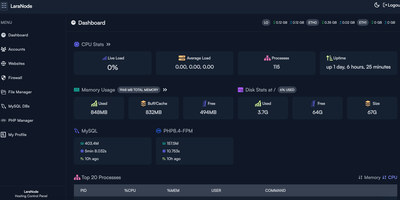
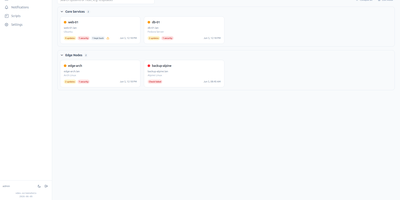
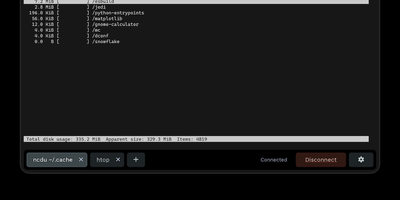
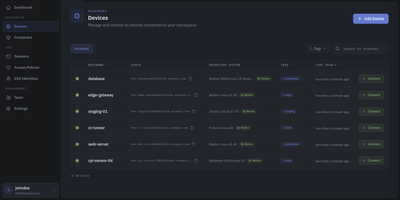
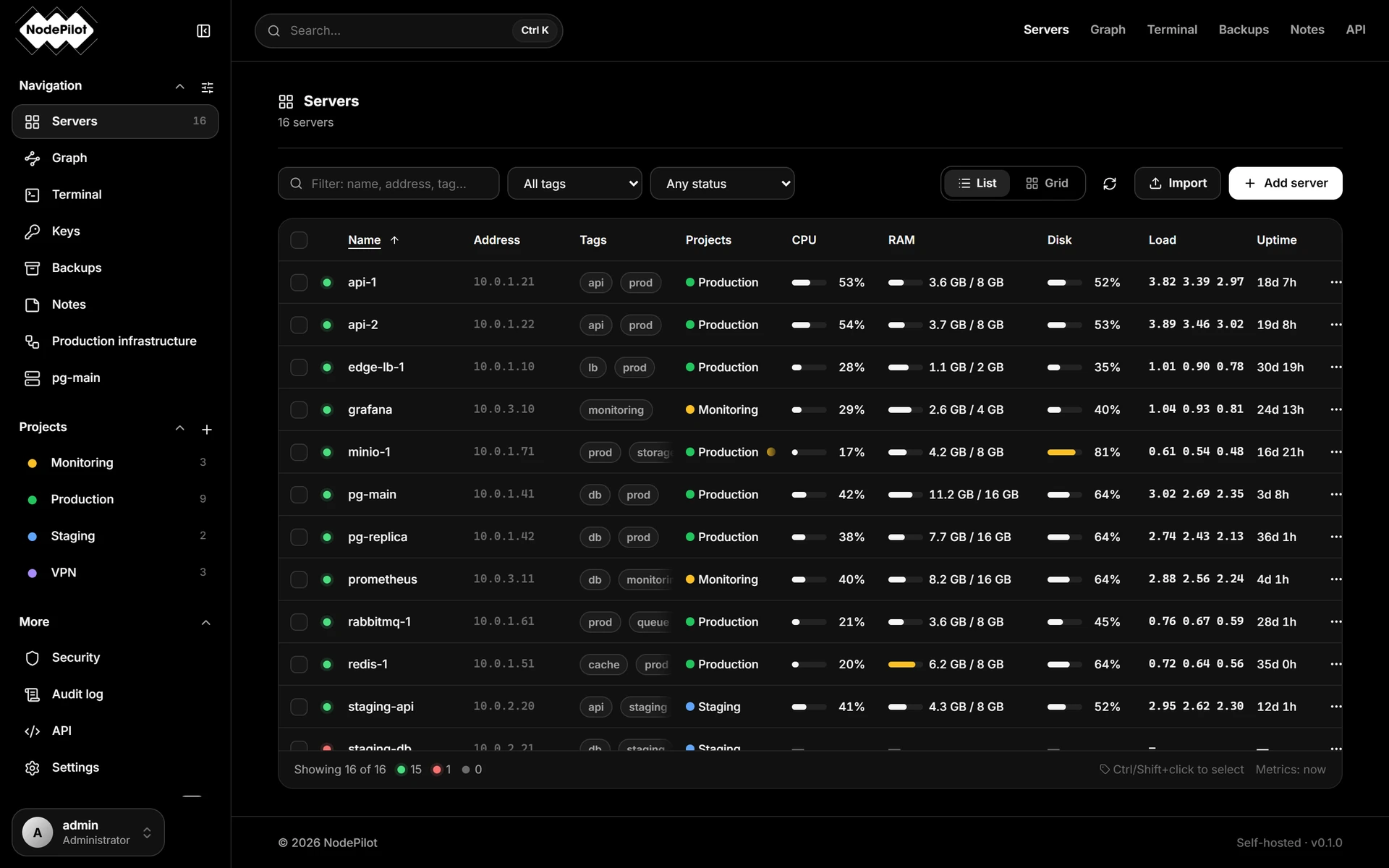
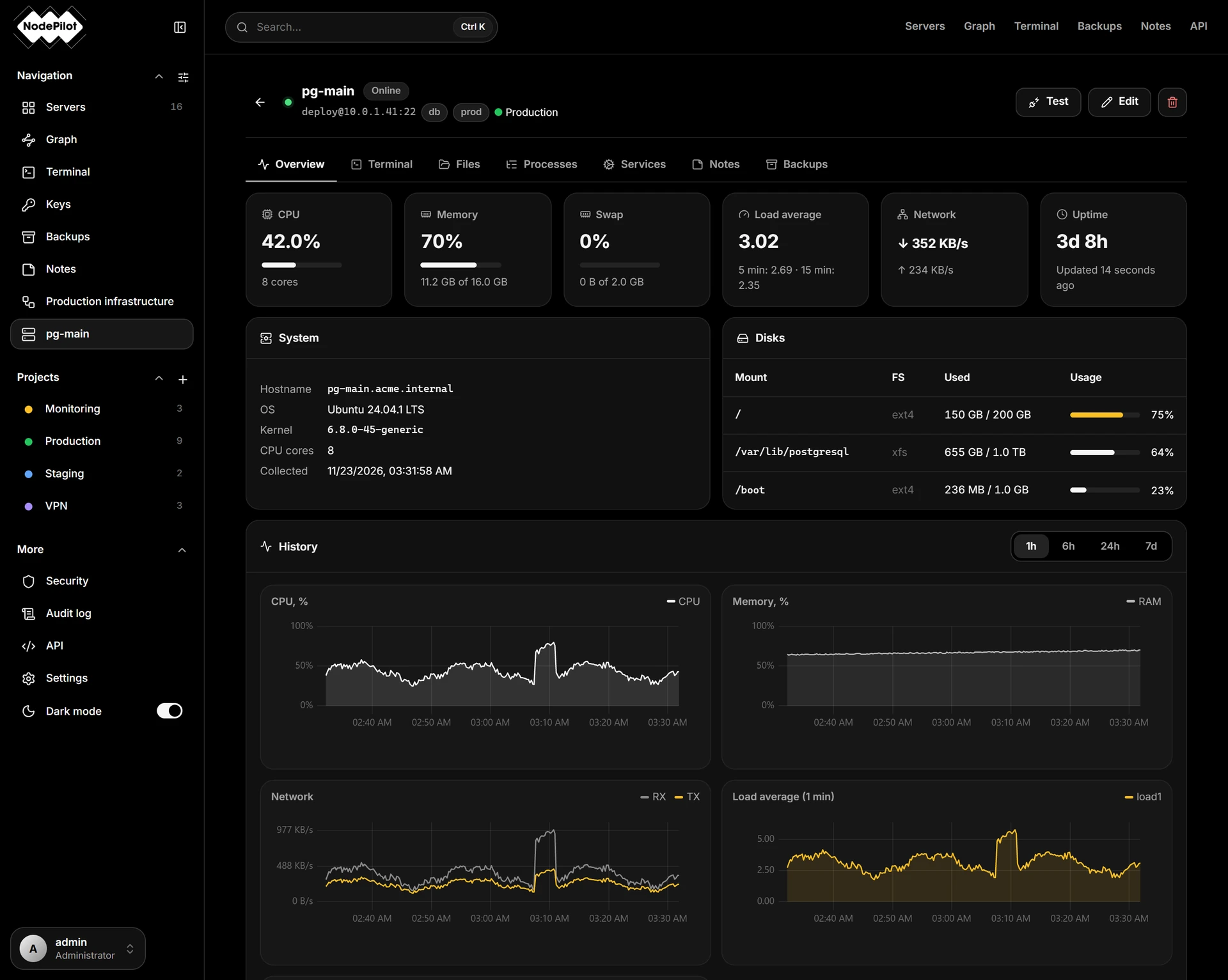
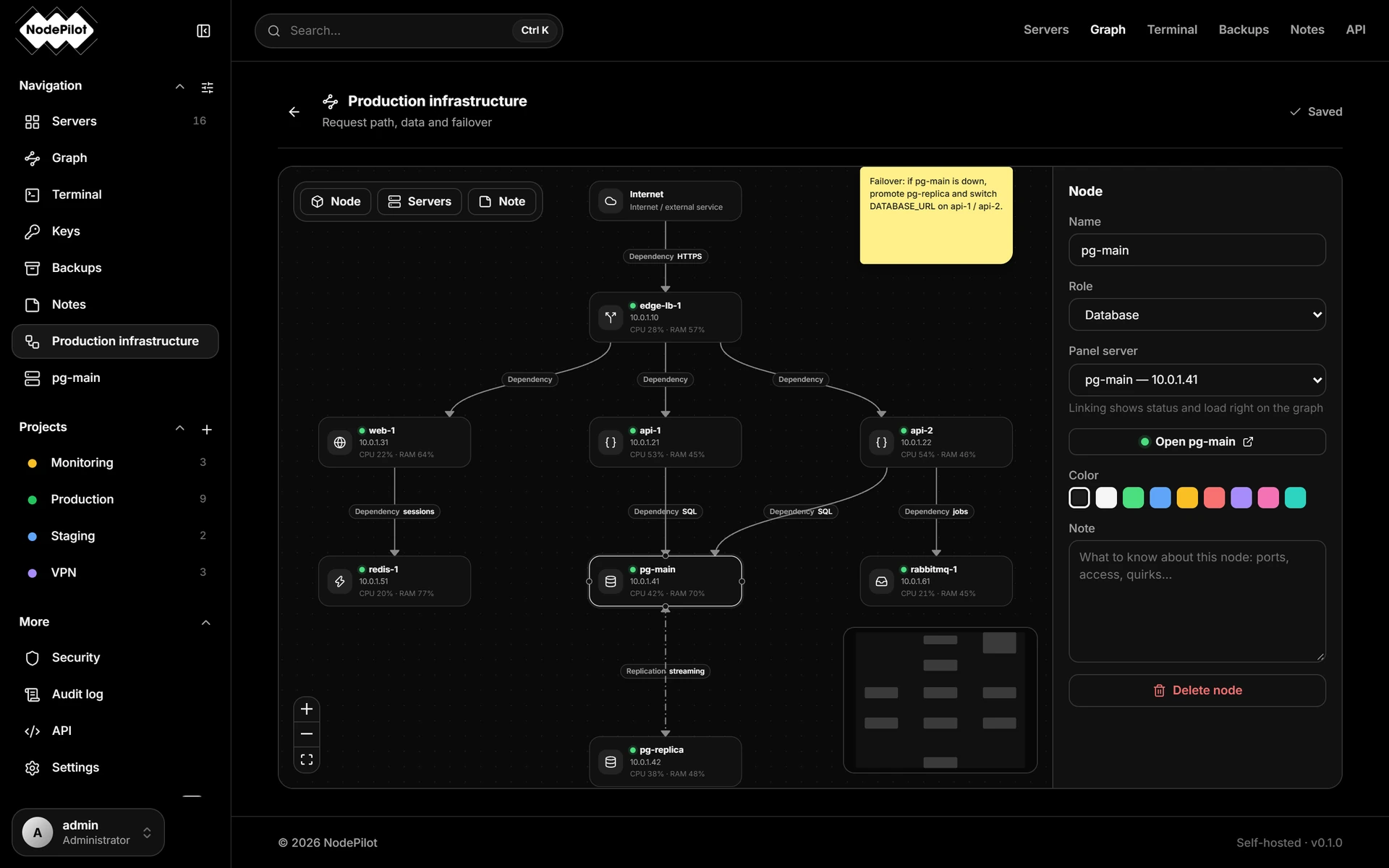
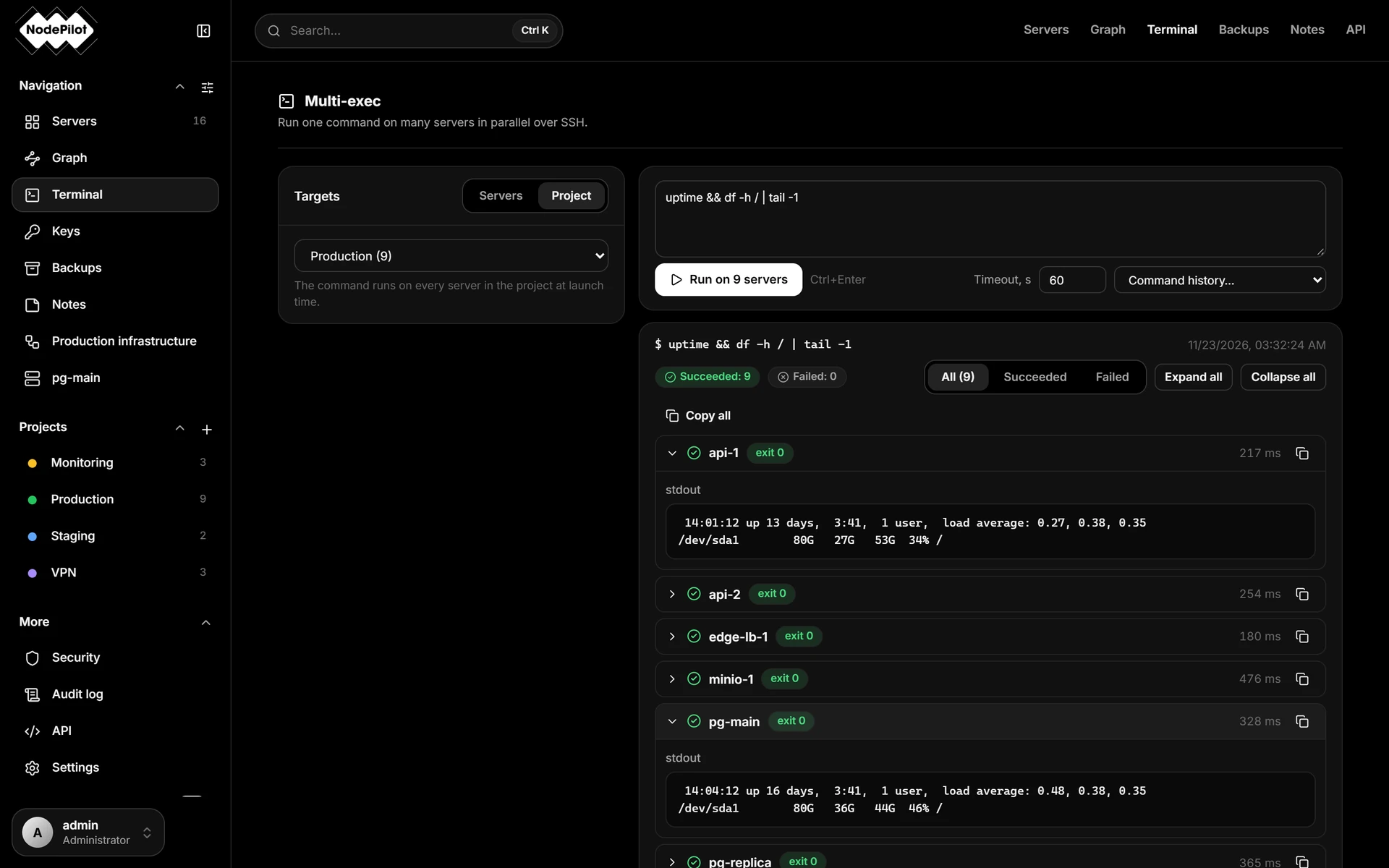
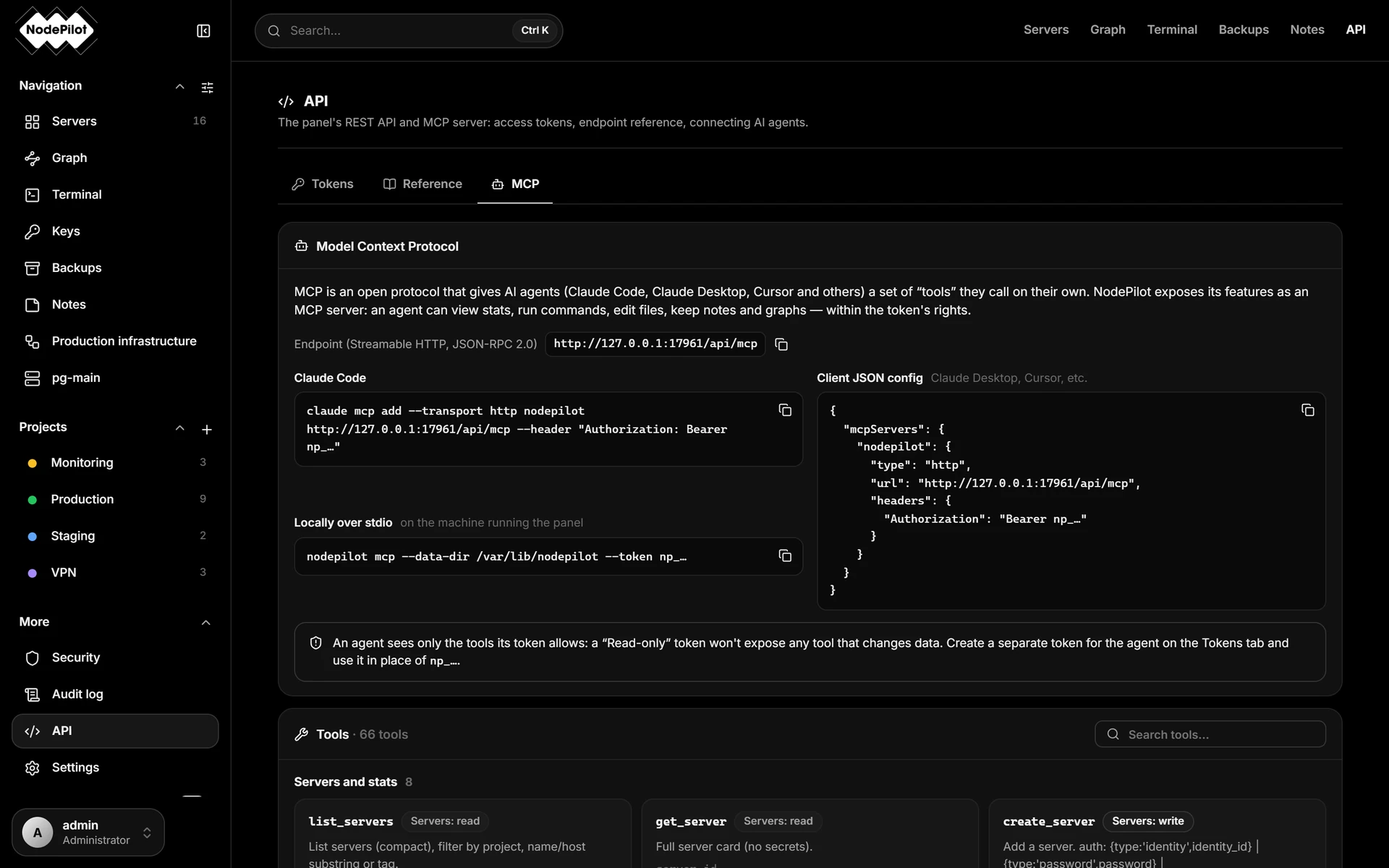
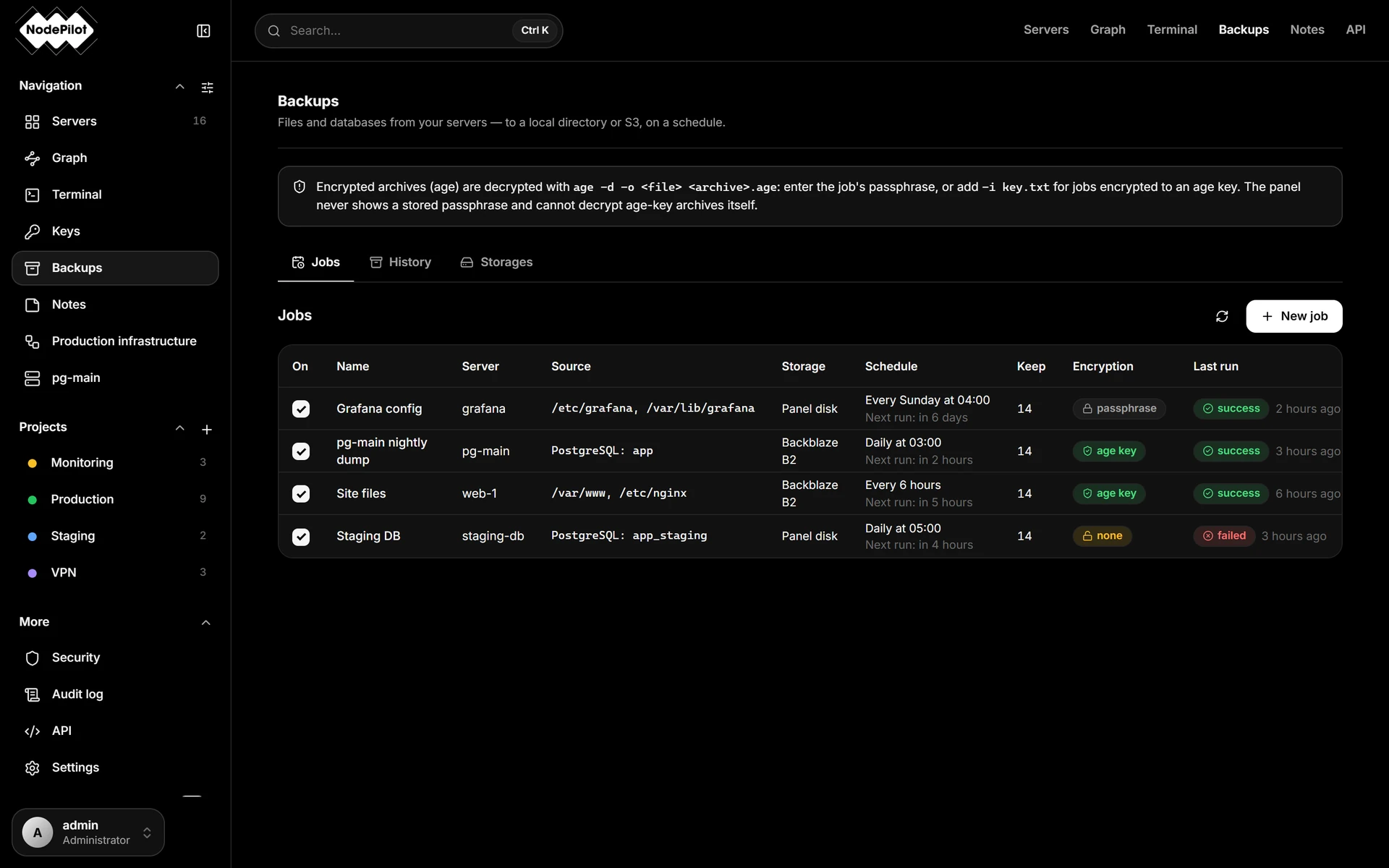
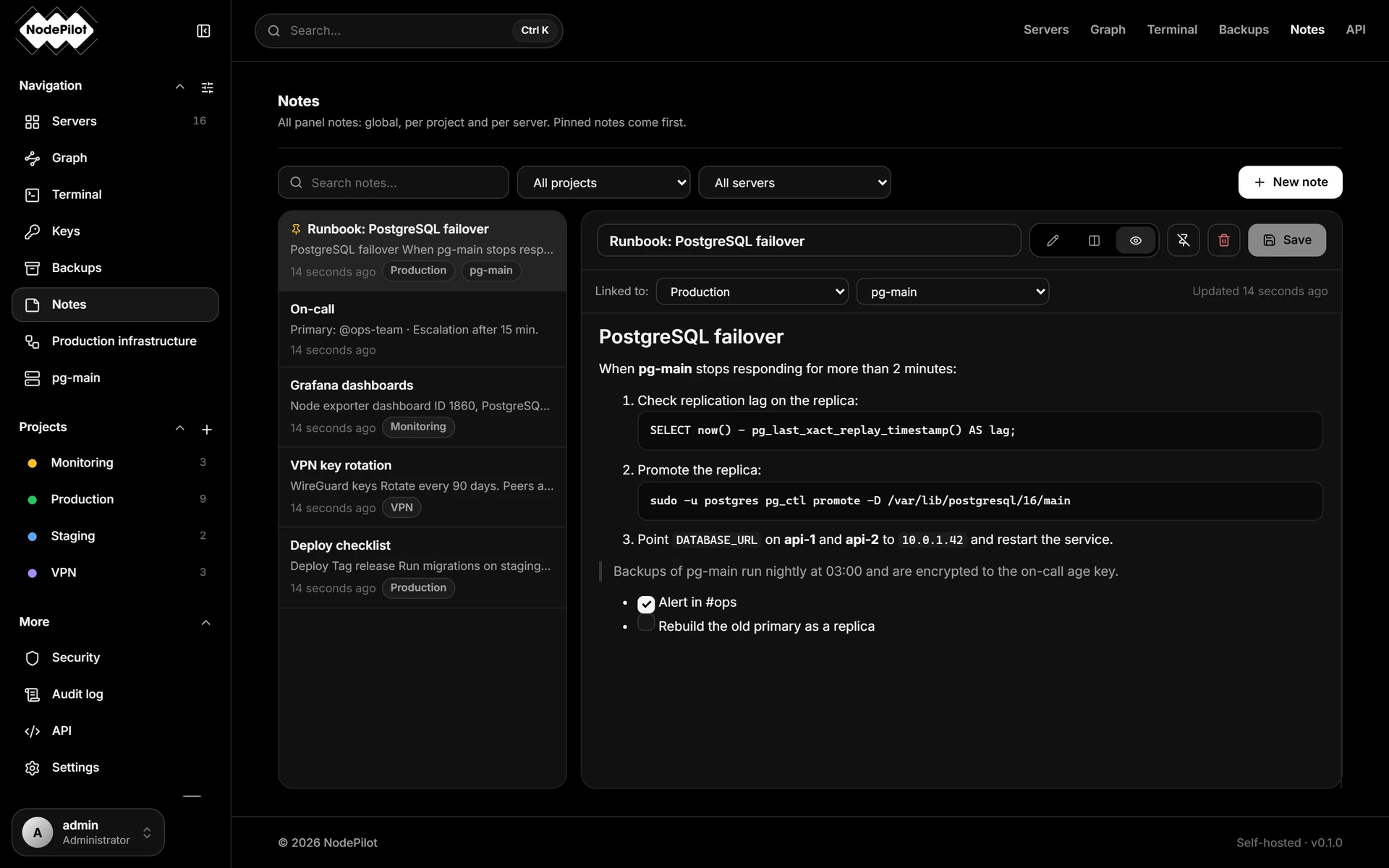
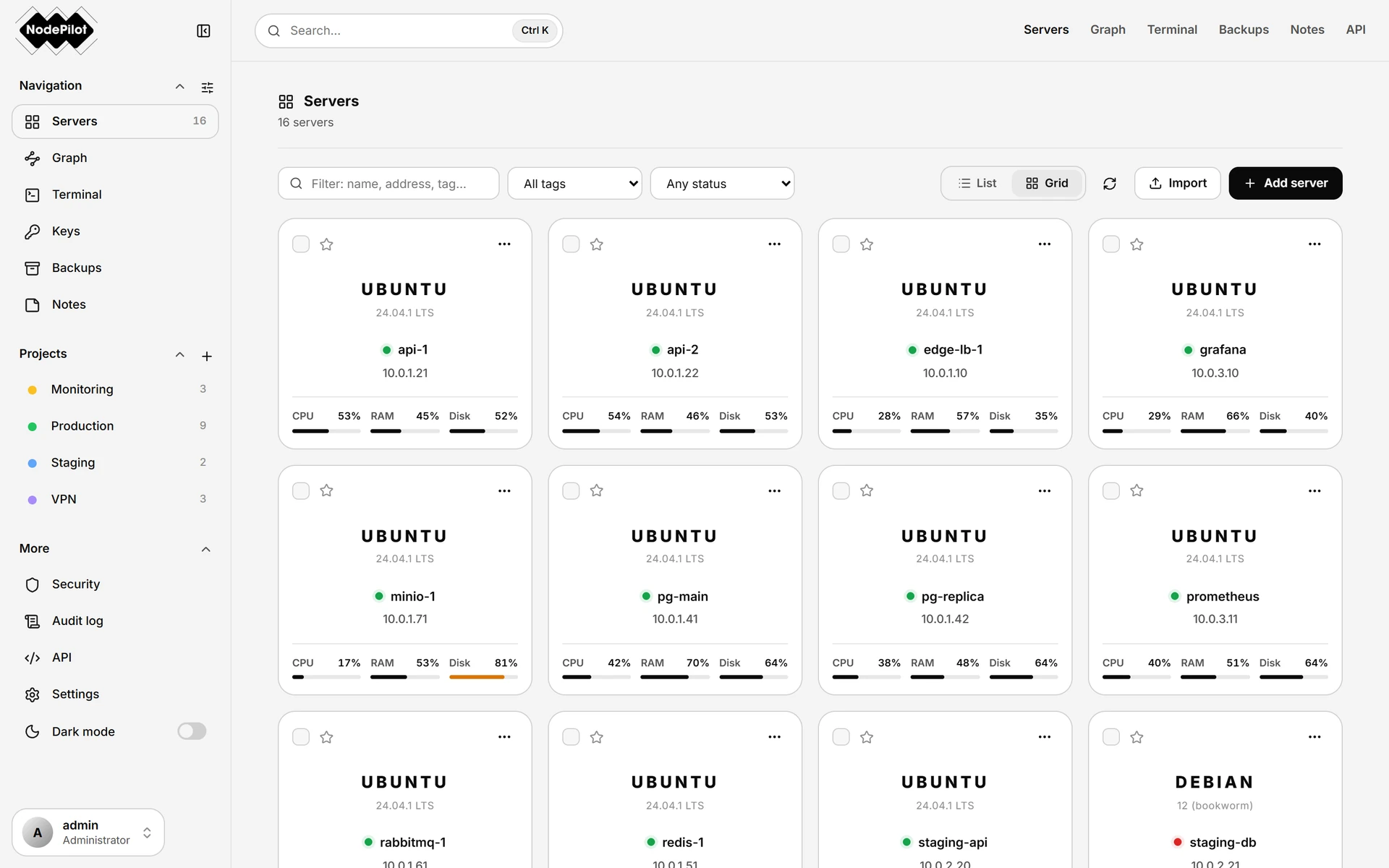
Admins who juggle dozens or hundreds of servers over SSH can run them all from one self-hosted browser panel, and let AI agents drive the same controls over MCP. Servers are grouped into projects, a server can belong to several, and a keychain holds the keys. The panel includes a web terminal, an SFTP file manager, process and systemd service controls, reboot and shutdown, and Markdown notes for runbooks. Agentless stats chart CPU, RAM, disks, network, and load history for every server, polled in parallel with backoff for unreachable hosts. One command can run on many servers at once, and infrastructure graphs map API, database, and VPN nodes with cascade links and notes on the canvas. Backups of files and PostgreSQL or MySQL databases run on schedules to the panel or to S3, encrypted to an age public key. AI agents reach 66 tools over MCP, through remote HTTP or a local stdio command, including persistent terminal sessions and graph editing, and an API token decides which tools each agent sees. Tokens can be full, read-only, or limited per area with an optional expiry, and every agent call is written to the audit log. Two-factor sign-in, a master key that can be sealed in a TPM, and pinned SSH host keys protect the credentials the panel stores. Running on a dedicated VPS on RepoCloud with guaranteed CPU, RAM, and SSD, full root SSH access, and a browser serial console. Apache-2.0 licensed.
Benefits
- One panel for every server
- Projects, a keychain, a web terminal, SFTP files, services, and processes share one browser panel built for hundreds of servers, with agentless stats.
- Agents stay inside token limits
- An MCP agent sees only the tools its API token allows, and every call is recorded in the audit log, so automation stays scoped and traceable.
- Credentials encrypted at rest
- Server passwords, keys, database passwords, and S3 keys are encrypted with a master key that can be sealed in a TPM, and users can enable TOTP.
- Scheduled encrypted backups
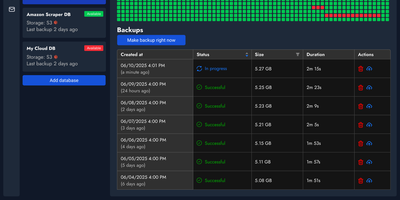
- Files and PostgreSQL or MySQL databases back up on schedules to the panel or to S3, encrypted to an age public key, with storages, jobs, and archives manageable over MCP.
Features
- Pooled SSH connections
- One long-lived SSH connection per server is shared by commands, stats, SFTP, and terminals, and stats poll 32 at a time with backoff for unreachable hosts.
- Single Rust binary
- One single-file binary with the web UI built in runs on Linux, Windows, and macOS, stores data in SQLite, and has a systemd installer for Ubuntu and Debian.
- Infrastructure graph editor
- Graphs map API, database, and VPN nodes with cascade links and notes on a canvas, tied to live server data, including a VPN cascade view.
- OpenAPI 3.1 and token scopes
- Everything the web UI does is available over HTTP, described by an OpenAPI 3.1 spec with a request console, and tokens carry full, read-only, or per-area permissions.
- MCP over HTTP or stdio
- 66 tools cover projects, servers, commands, persistent terminal sessions, files, notes, graphs, and backups, served at /api/mcp over HTTP or by a local stdio command.
- Sealed keys and audit forwarding
- XChaCha20-Poly1305 encryption, Argon2id password hashing, a rotatable panel SSH key, login lockout, and audit log forwarding to syslog or a webhook protect the panel.