Stars
Forks
Watchers
Developer links
Databasus
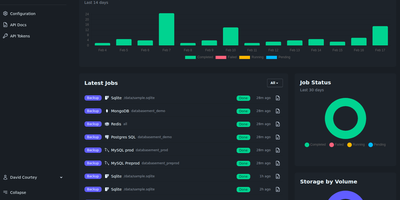
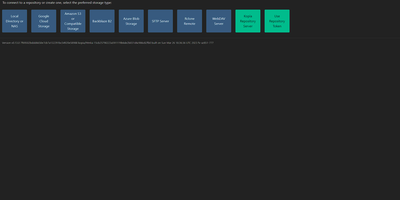
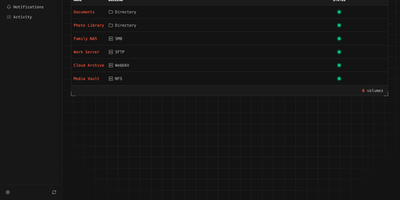
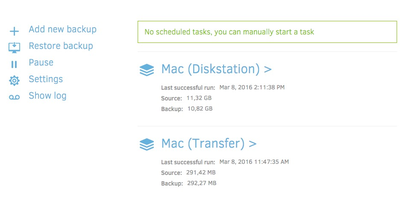
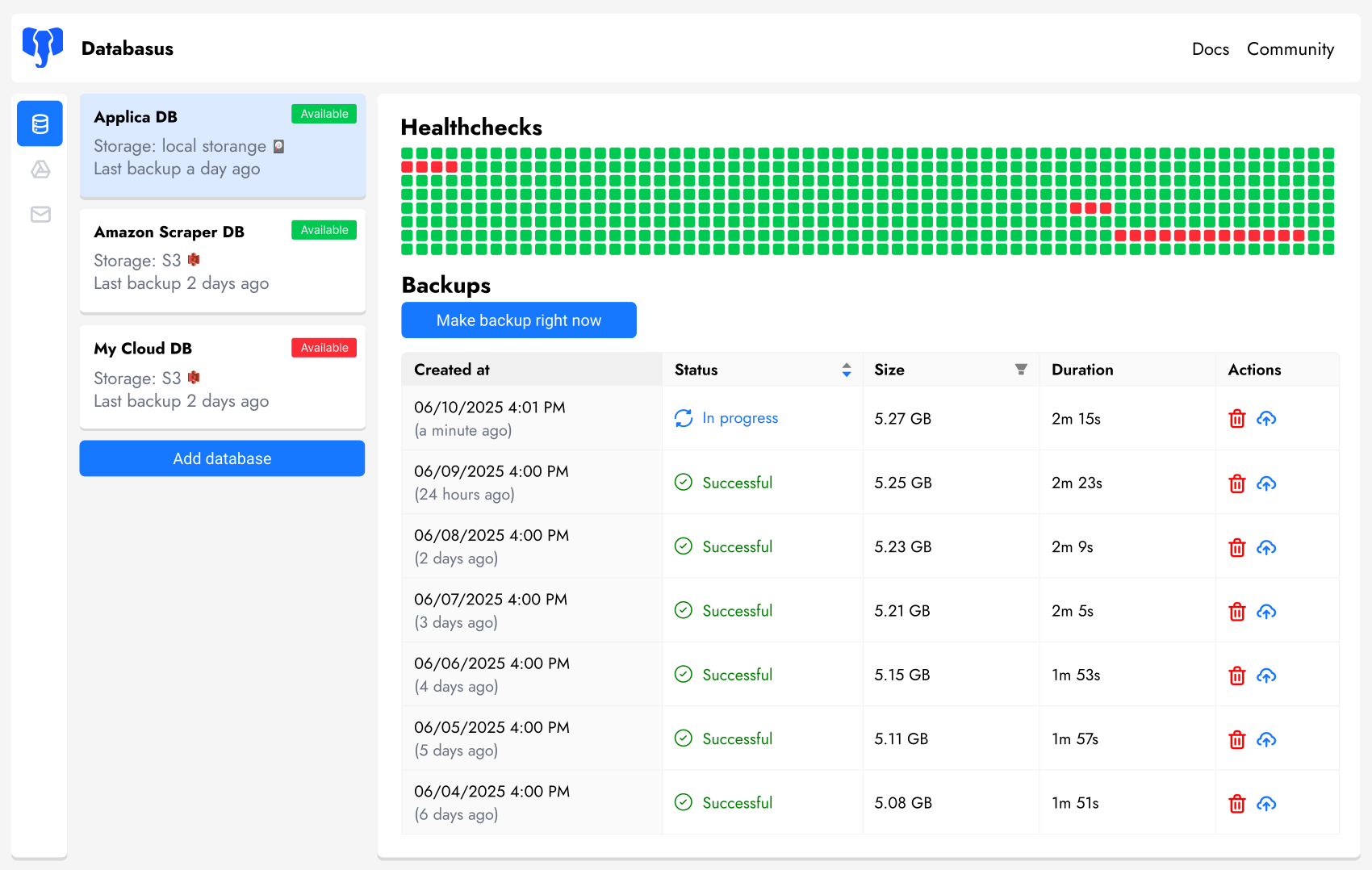
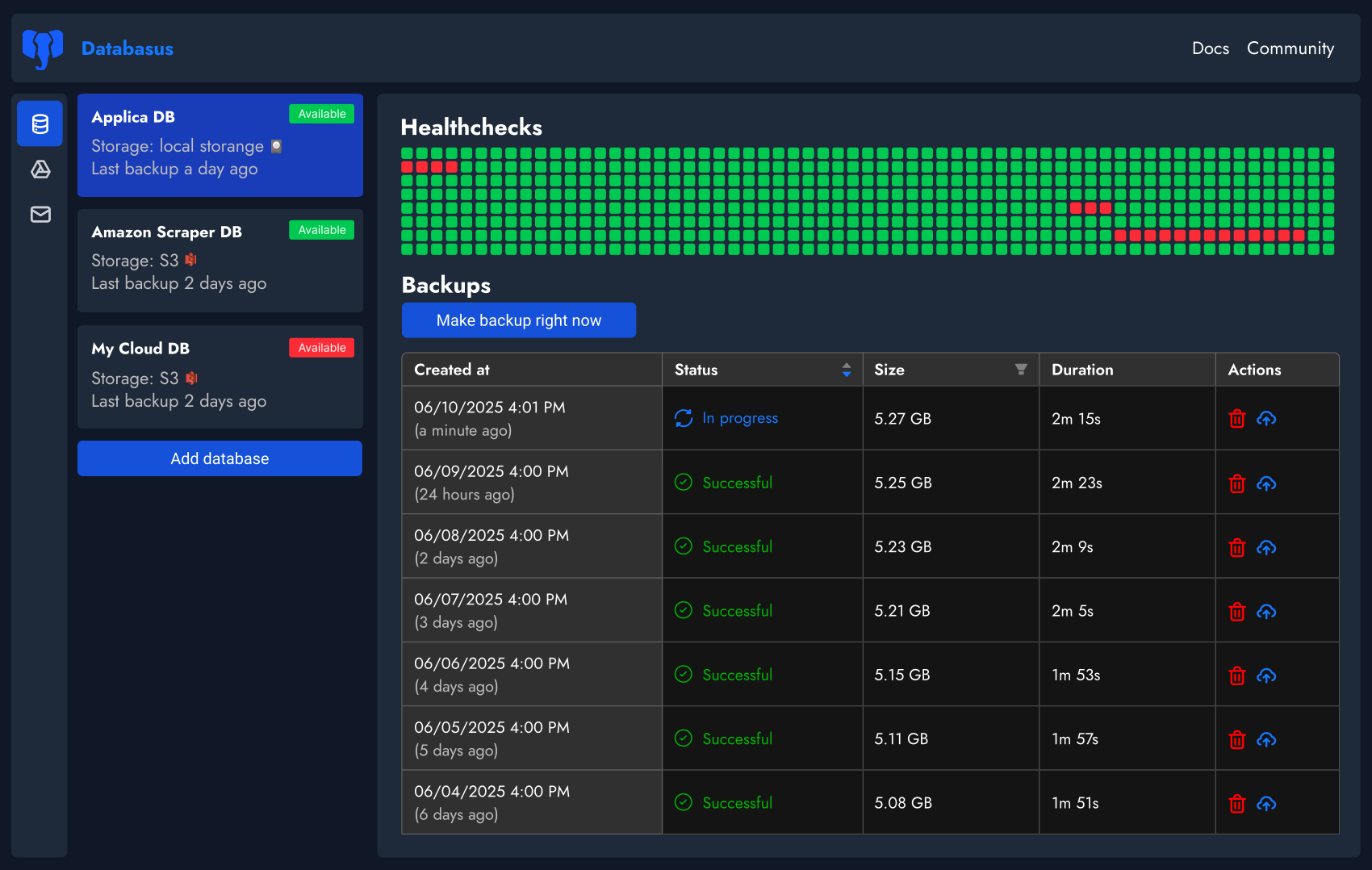
With over 7,500 GitHub stars and 1 million Docker pulls — making it the most popular open-source database backup tool on GitHub ahead of pgBackRest and WAL-G — Databasus delivers production-grade backup management through a designer-polished web interface that replaces complex configuration files and CLI-only workflows. The platform supports PostgreSQL 14-18, MySQL 5.7-8, MariaDB 10-12, and MongoDB 4.2-8 with logical backups via pg_dump and mysqldump, while PostgreSQL 17+ enables physical backups using the native pg_basebackup engine with block-level incremental support via pg_basebackup --incremental and continuous WAL streaming via pg_receivewal for Point-in-Time Recovery to any second between backups. Storage destinations include local disk, AWS S3, CloudFlare R2, Google Drive, Azure Blob Storage, SFTP, NAS, and rclone-backed targets, while built-in AES-256-GCM encryption secures both backup files and stored credentials. Restore verification runs automated recovery into throwaway Docker containers, validating backups by comparing schema counts, table structure, and row counts against the source database — proving recoverability rather than merely checking checksums. The notification system integrates with Slack, Discord, Telegram, email, and webhooks for real-time backup status alerts. Deployment options span a single Docker container, Docker Compose with Caddy for automatic HTTPS, Helm charts for Kubernetes clusters, or a one-line install script. SSH tunnel support reaches databases in closed networks through bastion hosts without public exposure. Running on a dedicated VPS on RepoCloud with guaranteed CPU, RAM, and SSD, full root SSH access, and a browser serial console. Apache 2.0 licensed.

Benefits
- Native PostgreSQL 17 Backup Engine
- Uses pg_basebackup for full backups, pg_basebackup --incremental for block-level changes, and pg_receivewal for continuous WAL streaming — no custom backup format or proprietary engine.
- Automated Restore Verification
- Spins up throwaway database containers, performs real restores, and validates schema structure and row counts against the source to prove backup recoverability beyond simple checksum checks.
- Multi-Database Unified Dashboard
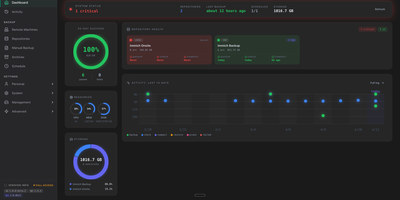
- Single web interface manages backups for PostgreSQL, MySQL, MariaDB, and MongoDB with scheduling, retention policies, health monitoring, and one-click restore across all database types simultaneously.
- Enterprise Storage and Encryption
- AES-256-GCM encryption protects backup files and credentials while storage destinations span S3, CloudFlare R2, Google Drive, Azure Blob, SFTP, NAS, and rclone-backed targets.
Features
- Point-in-Time Recovery
- Continuous WAL streaming via pg_receivewal enables recovery to any second between backups with near-zero RPO for PostgreSQL 17+ disaster recovery scenarios.
- Physical Incremental Backups
- PostgreSQL 17's native pg_basebackup --incremental transfers only changed blocks since the previous full backup, minimizing transfer time and storage consumption.
- SSH Tunnel Connectivity
- Reaches databases in closed networks through bastion hosts without exposing them publicly, using standard SSH tunnels for secure remote backup connections.
- Flexible Scheduling
- Hourly, daily, weekly, monthly, or custom cron expressions control backup timing with configurable retention policies using time period, count, or GFS strategies.
- Multi-Channel Notifications
- Real-time alerts via Slack, Discord, Telegram, email, and webhooks notify teams of backup completion, failures, and restore verification results.