Categories
Self-Hosted Metadata Management Research Data Management Open Access Institutional Repository Digital Repository DOI Registration Open ScienceStars
Forks
Watchers
Developer links
InvenioRDM
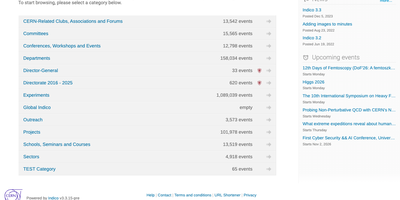
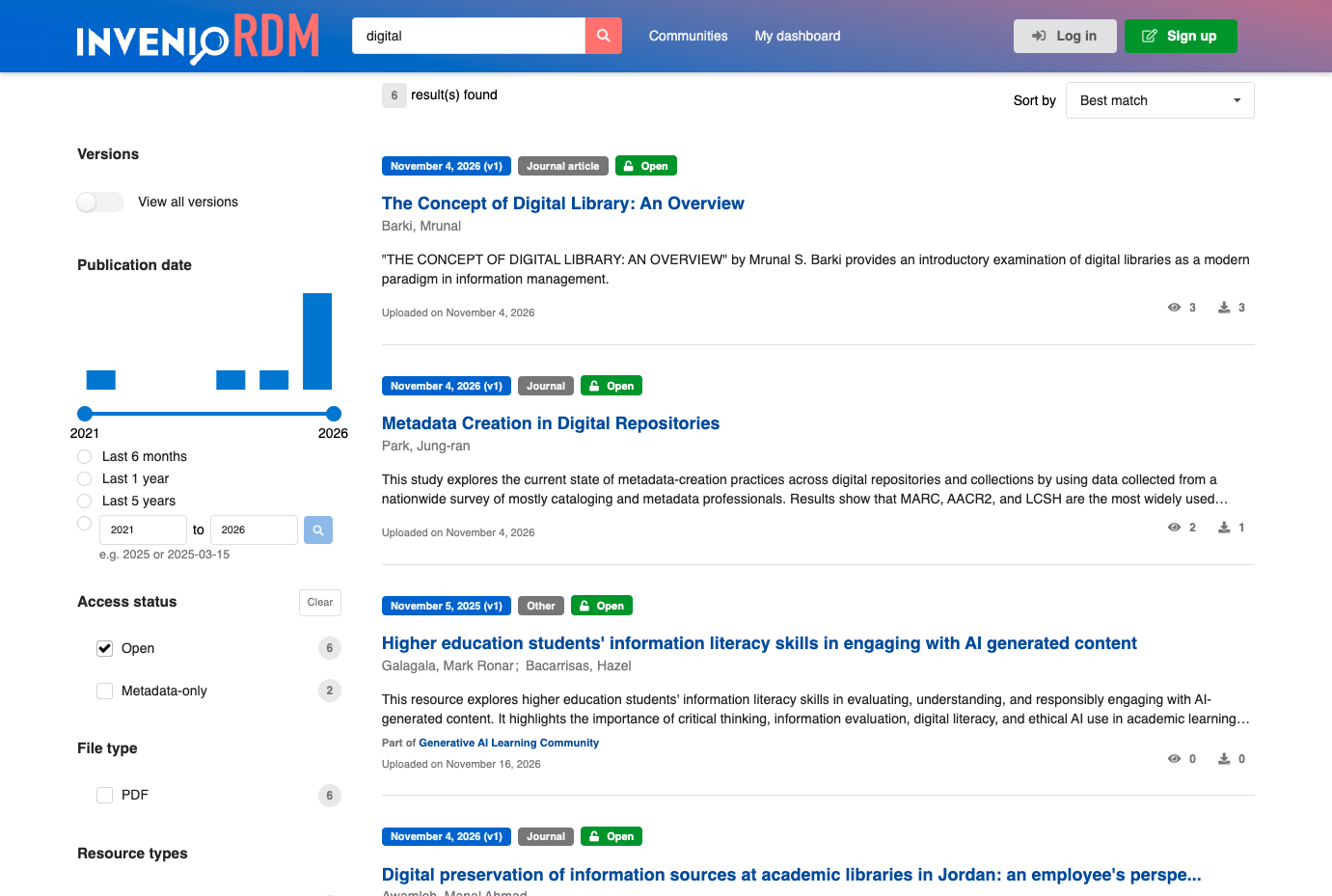
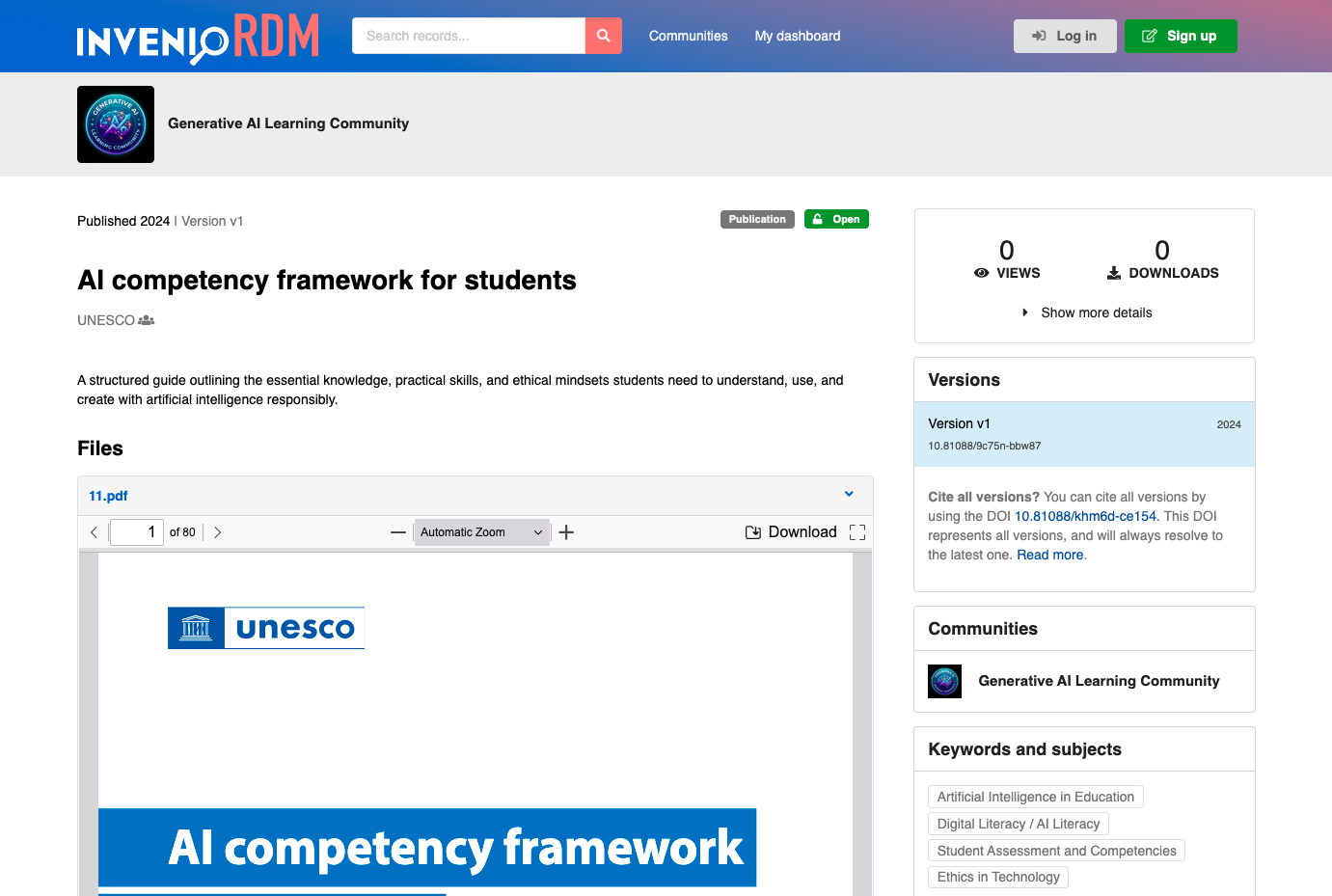
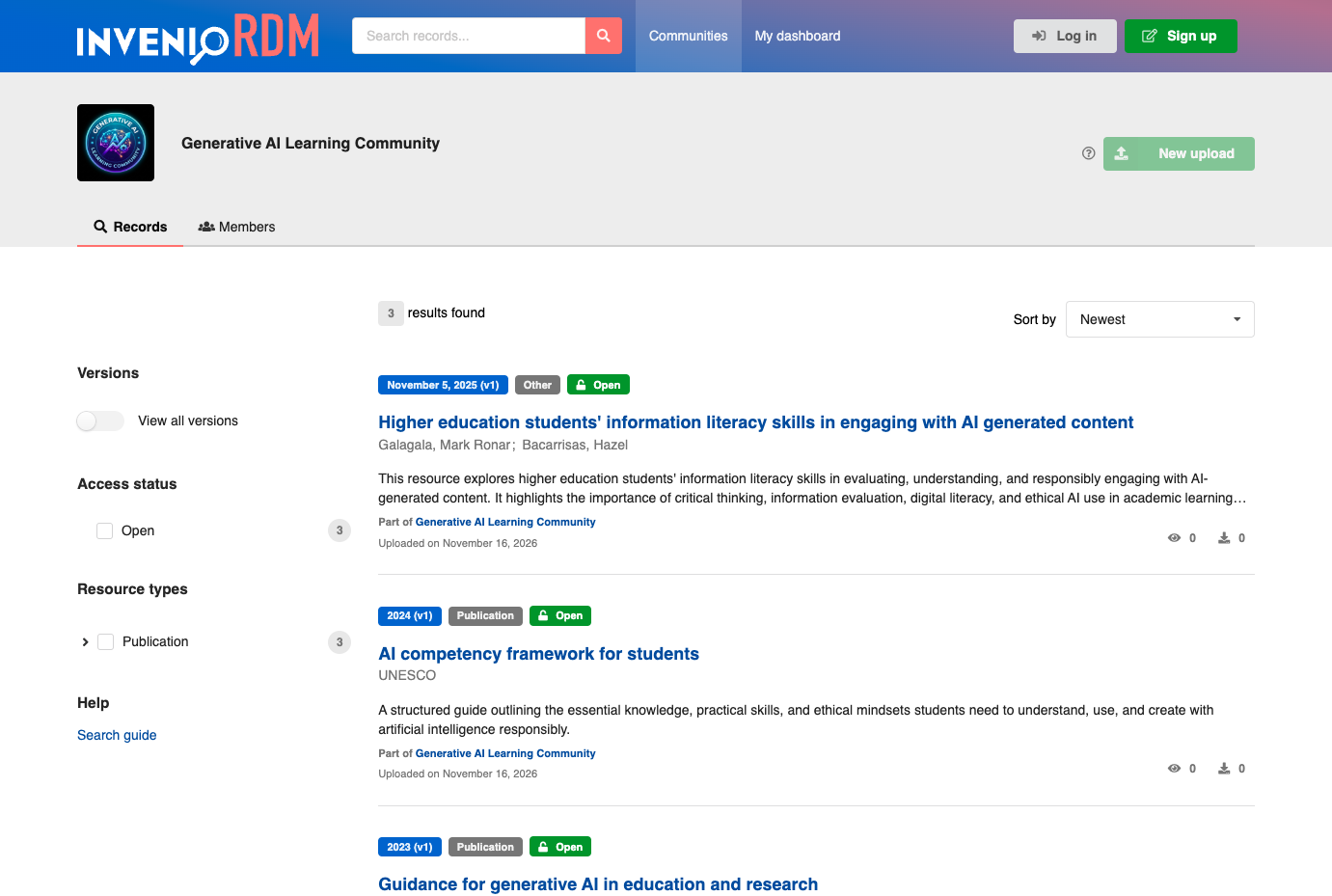
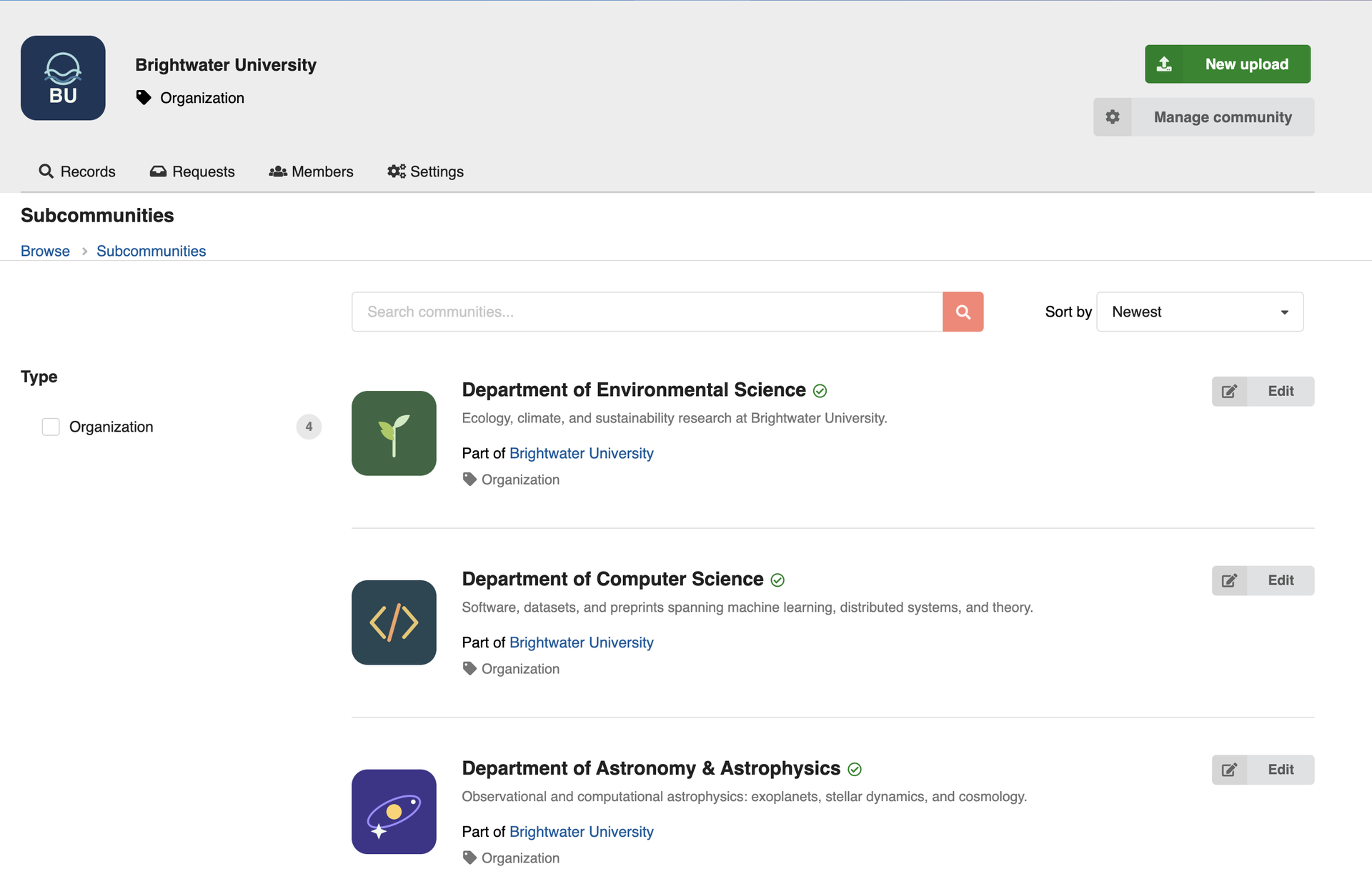
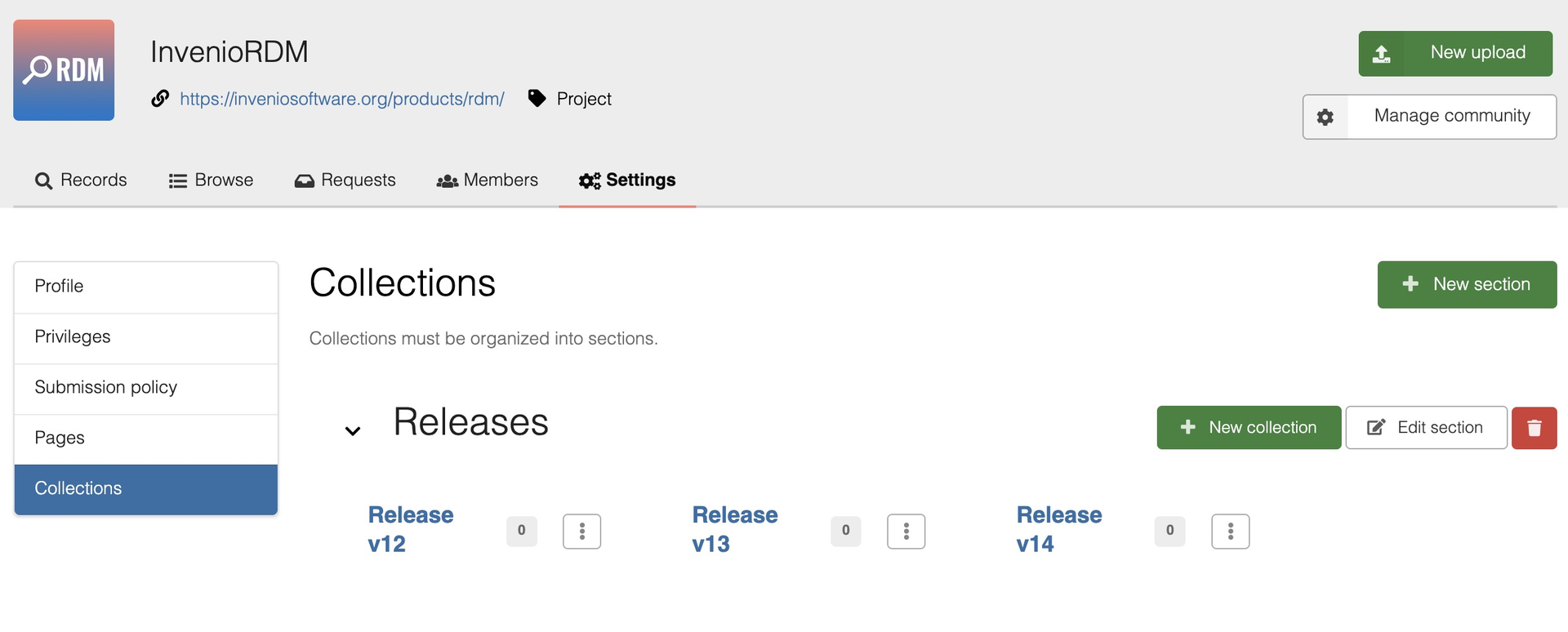
InvenioRDM is an open-source repository platform where researchers deposit datasets, papers, software, and other outputs, and institutions curate and publish them with persistent identifiers. The upload form collects files and descriptive metadata, lets depositors pick a community, and sets access to open, restricted, or embargoed with an automatic release date. Records can be restricted entirely or only their files, shared with reviewers through secret links, or published as metadata-only entries that point to files hosted elsewhere. Communities give groups their own space with a logo, custom pages, and member roles such as managers and curators, while submitted drafts open a review request that curators accept or decline. Requests also cover access to restricted files, membership invitations, and record deletion, each with comment conversations that render LaTeX equations. DOIs are registered through DataCite, authors and institutions are identified by ORCID and ROR, and metadata can be exported as DataCite JSON or XML, Dublin Core, or CSL JSON. An OAI-PMH server supports harvesting, and a versioned REST API covers every repository operation. Visitors get faceted search, advanced query syntax, search-as-you-type, previews for PDF, image, CSV, Markdown, XML, and JSON files, and citation strings in more than 800 styles. Administrators can change the theme, menus, and vocabularies, add custom fields, connect single sign-on, and store files locally or on S3-compatible storage with per-user quotas. Running on a dedicated VPS on RepoCloud with guaranteed CPU, RAM, and SSD, full root SSH access, and a browser serial console. MIT licensed.
Benefits
- Embargoes That Lift Automatically
- Restricted records can be embargoed and become public on a chosen date, which helps depositors meet funder open access mandates without an administrator opening each record by hand.
- Citable Records With Registered DOIs
- Published records can receive a DataCite DOI, and authors and affiliations carry ORCID and ROR identifiers, so deposits are cited and credited correctly across the scholarly web.
- Open Interfaces for Harvesting and Integration
- A built-in OAI-PMH server follows the OpenAIRE guidelines so aggregators can harvest metadata, while a versioned REST API lets institutions build their own integrations on top.
- Self-Hosted Data Under Your Control
- Records, files, and user accounts stay on a server you administer, with local or S3-compatible storage, per-user quotas, and single sign-on through your institutional identity provider.
Features
- Communities and Review Requests
- Groups curate their own collections with a logo, custom pages, and member roles, and review requests let curators accept or decline each submitted draft.
- Access Control and Sharing
- Restrict a whole record or only its files, share restricted records through secret links, and let guests or signed-in users request access to restricted files.
- Faceted Search and Previews
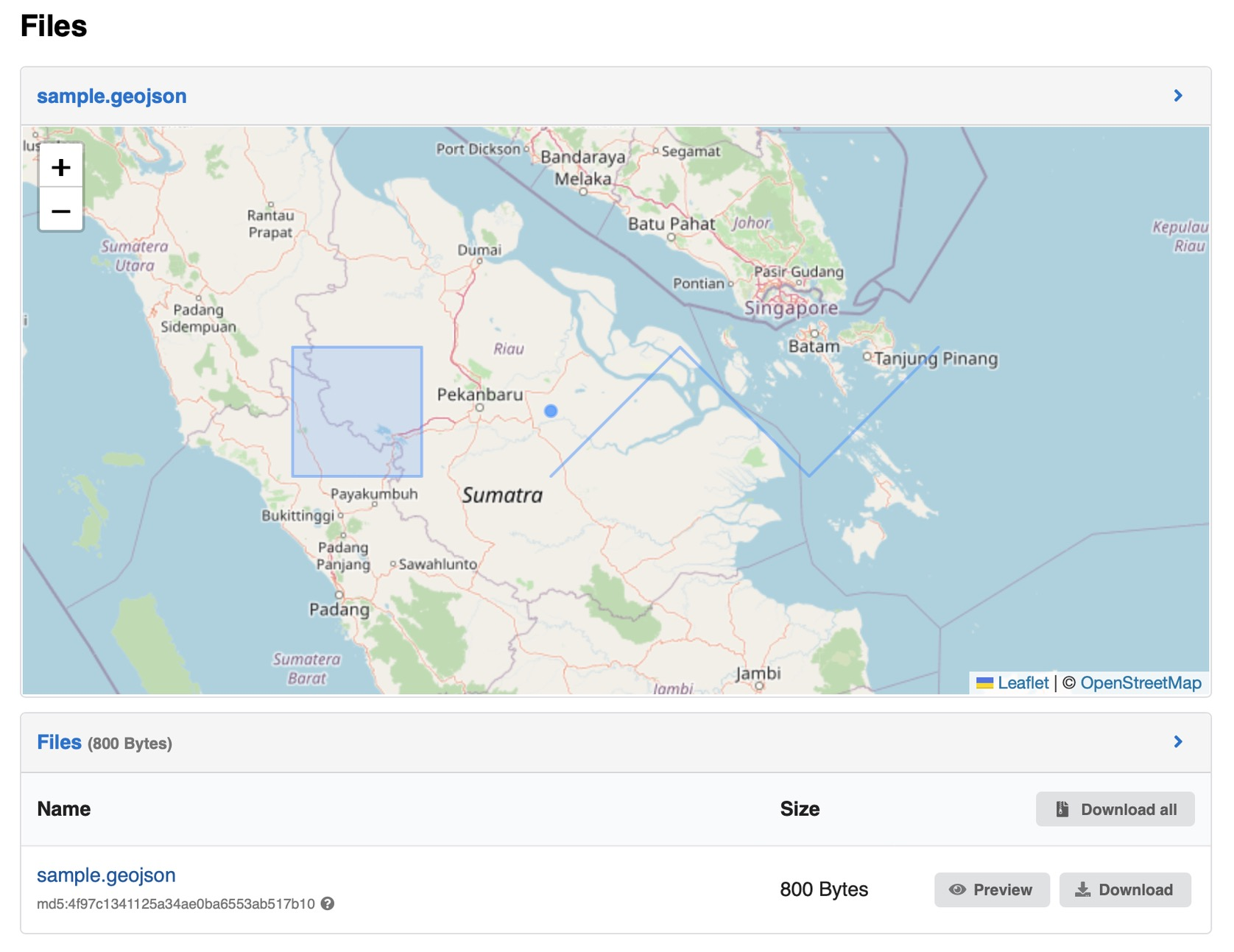
- Faceted search, advanced query syntax, and search-as-you-type sit beside previewers for PDF, image, CSV, Markdown, XML, and JSON files, plus citation strings in over 800 styles.
- OAI-PMH and REST API
- Metadata is harvestable through OAI-PMH and exportable as DataCite JSON or XML, Dublin Core, and CSL JSON, while a versioned REST API exposes every repository operation.
- Custom Fields and Vocabularies
- Administrators add custom metadata fields, adapt vocabularies for resource types, affiliations, funders, and subjects, and restyle the logo, theme, font, and menus to match an institution.
- File Storage and Quotas
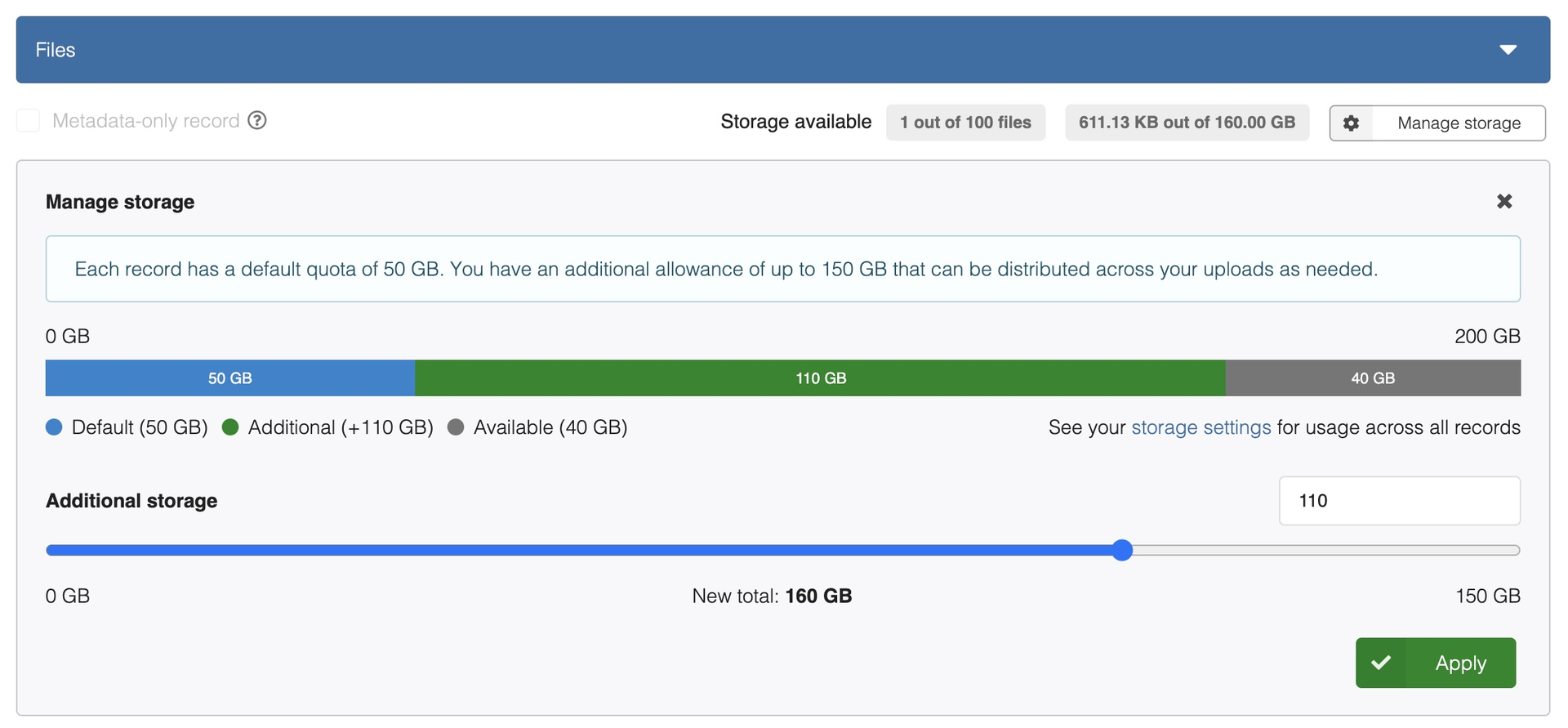
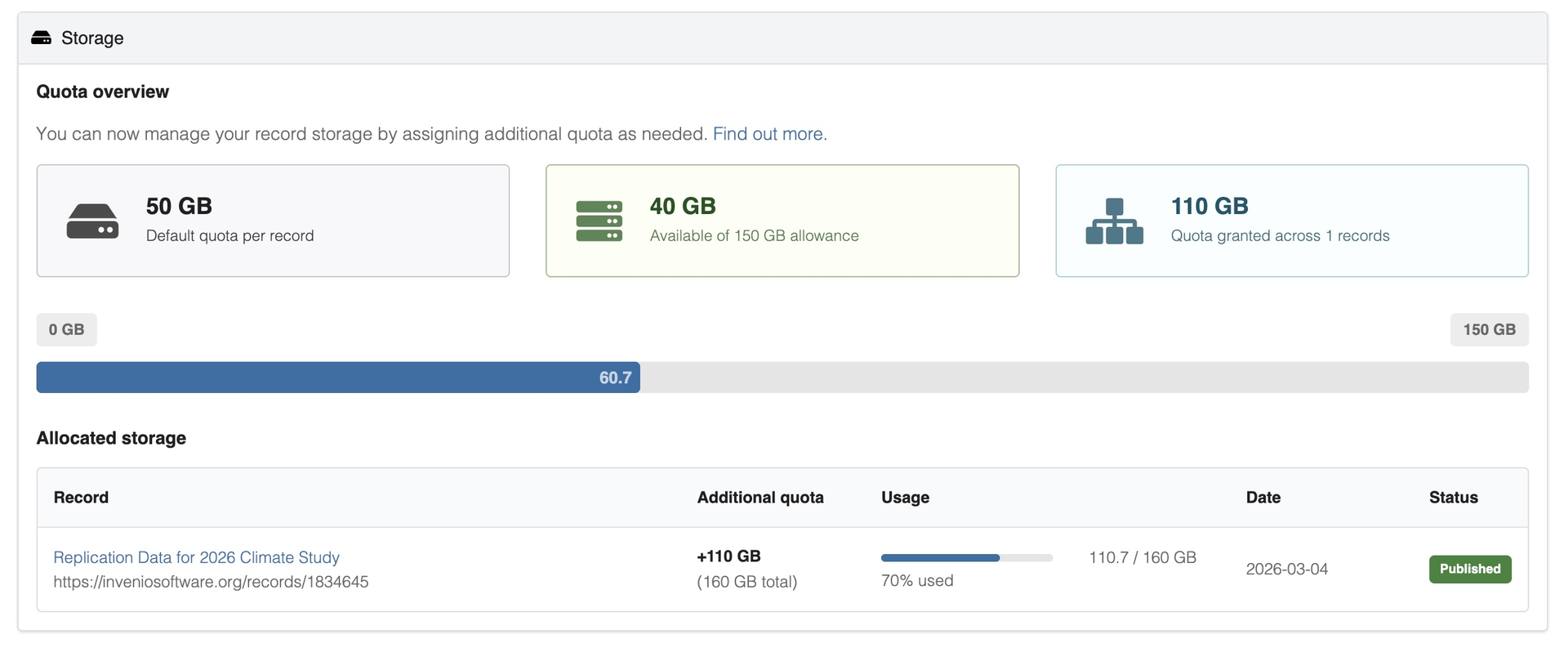
- Files go to local or S3-compatible storage with upload limits and per-user quotas, and ZIP and container files get previews that let depositors browse archive contents.