Stars
Forks
Watchers
Developer links
Wagtail
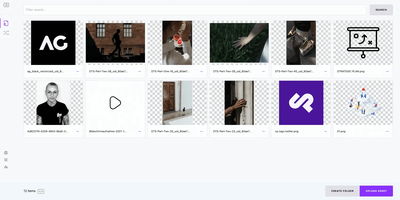
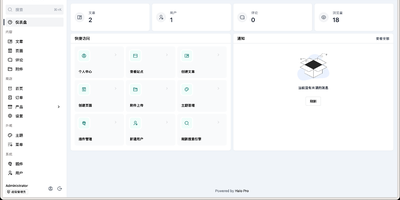
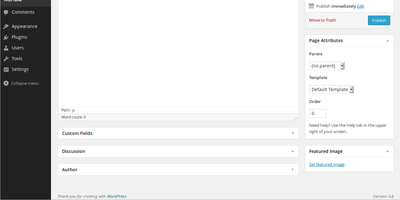
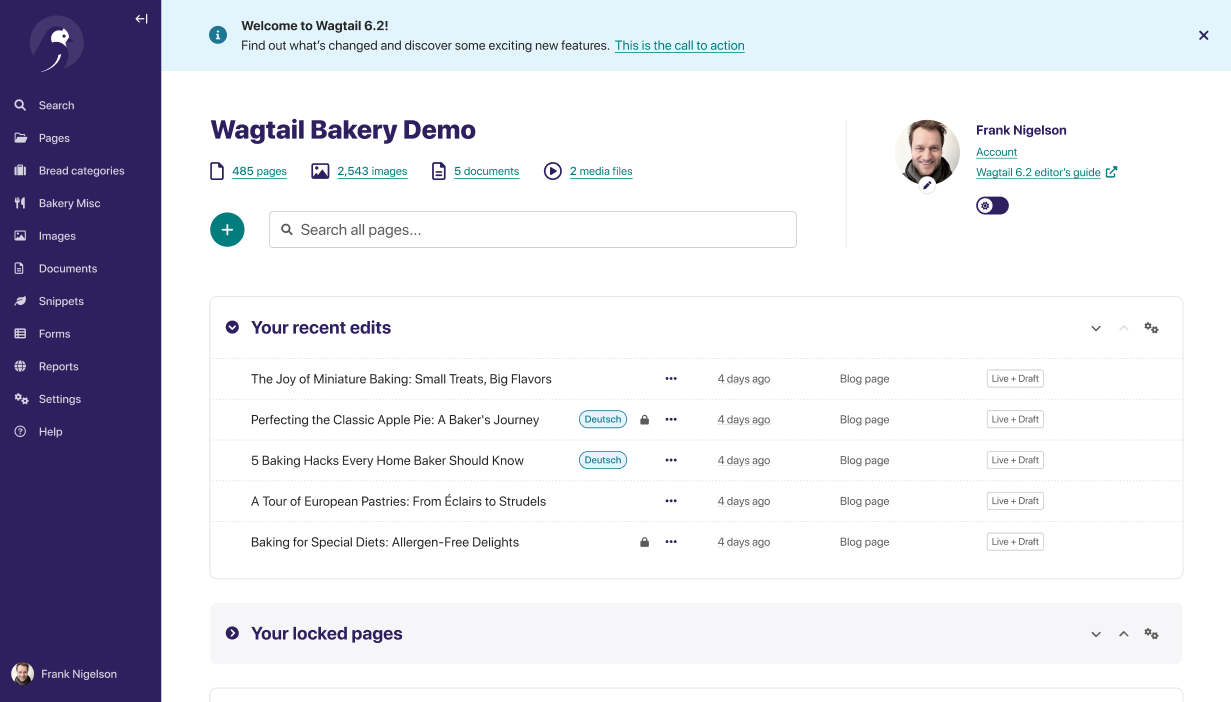
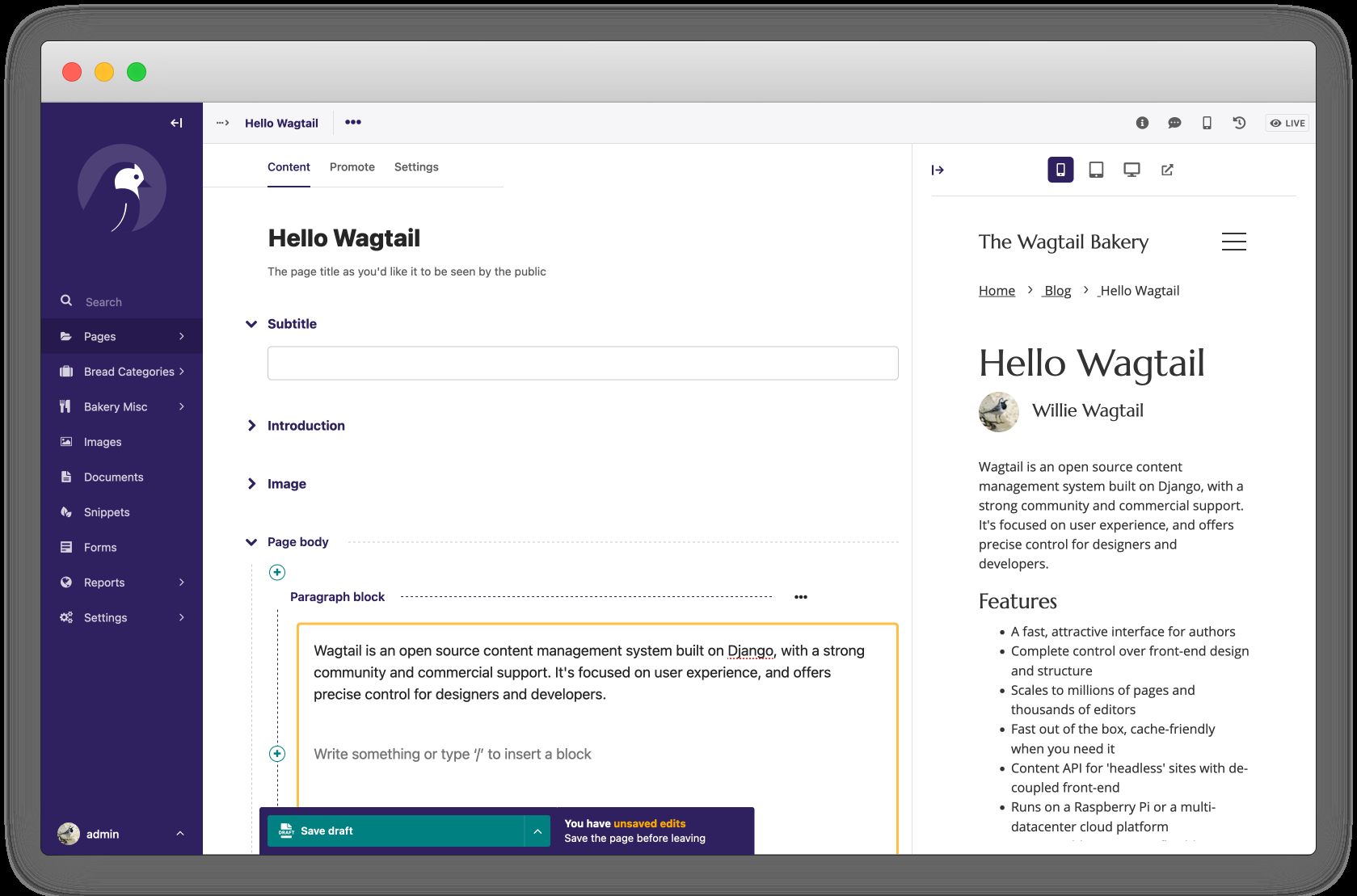
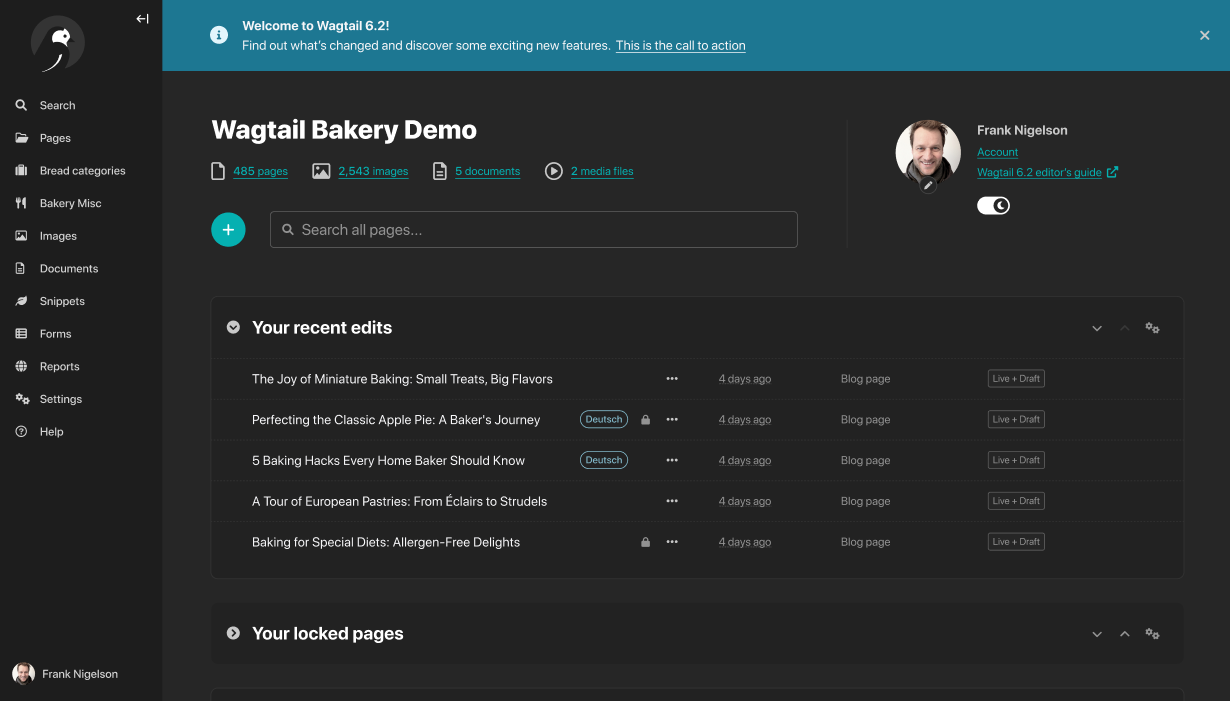
Backed by over 20,000 GitHub stars, 800 contributors, and organizations like Google, NASA, and the NHS, Wagtail is the Django-powered content management system that gives editors creative freedom through StreamField while keeping developers in full control of data structure and front-end rendering. StreamField lets editors compose pages from a custom library of content blocks — rich text, images, embedded videos, tables, code snippets, and developer-defined custom types — without compromising the underlying data model or breaking responsive layouts. The built-in JSON API supports headless deployments with versioned endpoints for pages, images, and documents, enabling decoupled front-ends in Next.js, Nuxt.js, or any framework that consumes REST. Editorial workflows provide configurable approval chains where content moves through draft, review, and publish states with commenting, task assignment, and email notifications built into the admin interface. Integrated search connects to Elasticsearch for full-text indexing with faceted filtering, or falls back to PostgreSQL and SQLite backends with fuzzy matching support added in v7.4. Multi-site management serves multiple domains from a single Wagtail installation with independent page trees, while the internationalization framework handles content translation with locale-aware URL routing. Image management includes focal point detection, responsive renditions, and automatic format conversion. The platform supports Django 5.2 and 6.0 with Python 3.10 through 3.14 and PostgreSQL, MySQL, MariaDB, or SQLite databases. Running on a dedicated VPS on RepoCloud with guaranteed CPU, RAM, and SSD, full root SSH access, and a browser serial console. BSD-3-Clause licensed.
Benefits
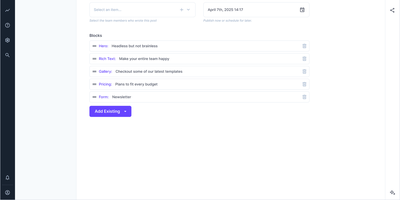
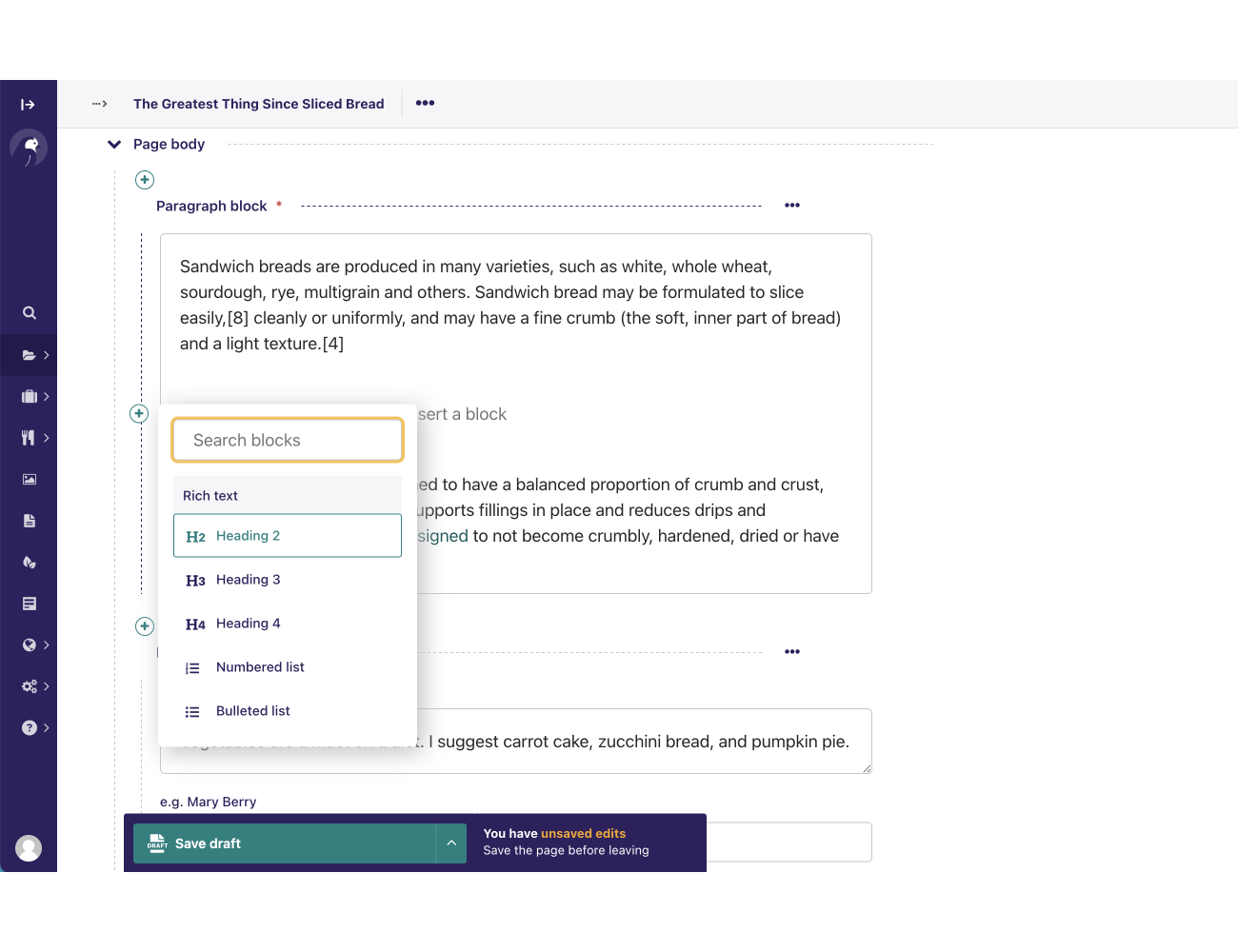
- StreamField Block-Based Editing
- Editors compose pages from custom content blocks including rich text, images, tables, and developer-defined types, maintaining structured data while enabling creative page layouts.
- Built-In Headless REST API
- JSON API endpoints serve pages, images, and documents for decoupled front-end architectures with Next.js, Nuxt.js, or any framework, plus a v3 API with OpenAPI schema export.
- Enterprise Editorial Workflows
- Configurable approval chains move content through draft, review, and publish states with inline commenting, task assignment, and email notifications for team collaboration.
- Full Django Ecosystem Access
- Built on Django with complete ORM access, any Django app integrates directly, supporting PostgreSQL, MySQL, MariaDB, and SQLite with Python 3.10 through 3.14 compatibility.
Features
- Integrated Search
- Full-text search via Elasticsearch with faceted filtering, or PostgreSQL and SQLite backends with fuzzy matching and ranked results across related fields.
- Multi-Site Management
- Serve multiple domains from a single installation with independent page trees, separate templates, and shared user accounts across all managed sites.
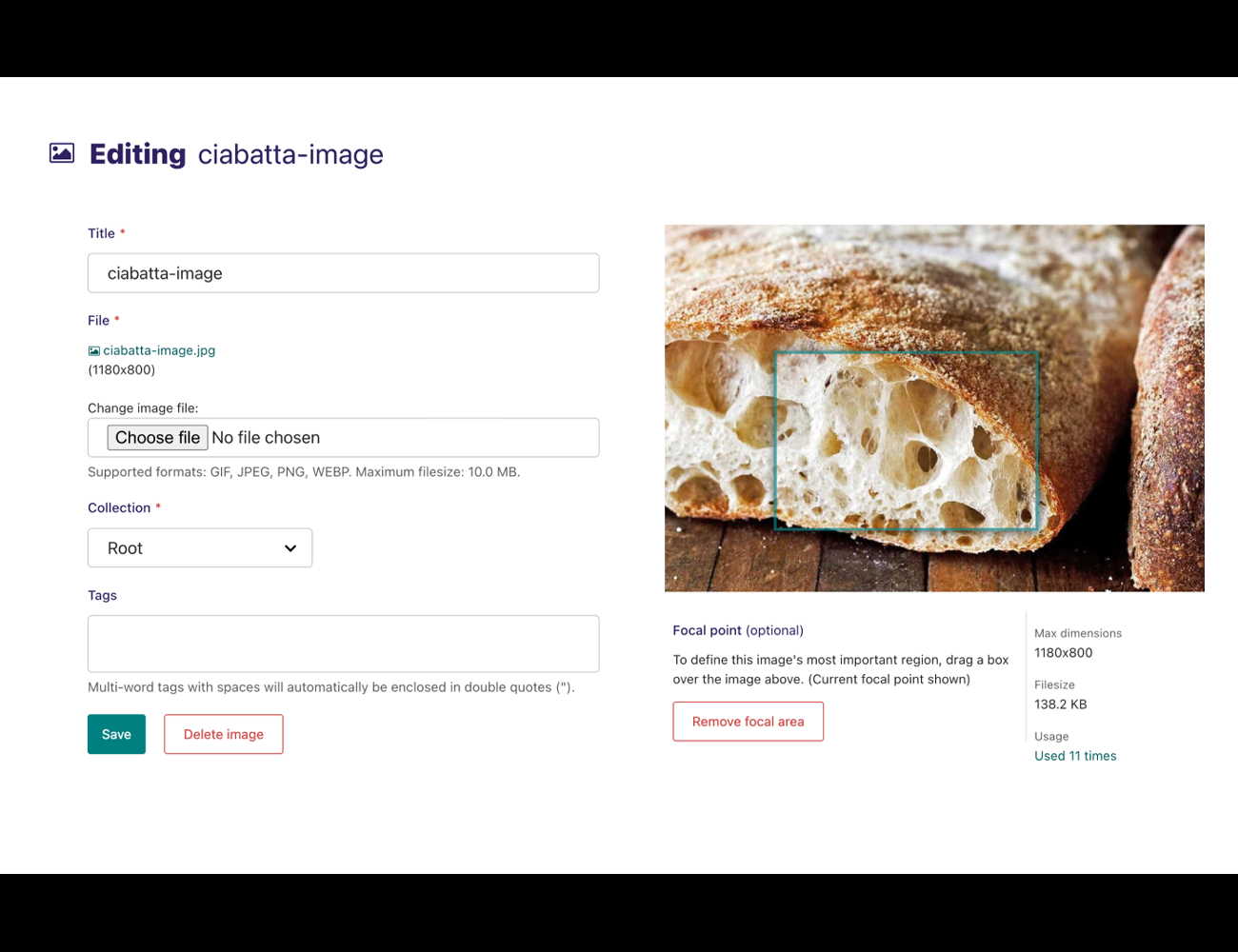
- Image Focal Points
- Automatic focal point detection and manual override ensure images crop correctly across responsive renditions with automatic WebP and AVIF format conversion.
- Content Internationalization
- Built-in translation framework with locale-aware URL routing, translatable page trees, and content synchronization between language versions for multilingual sites.
- Snippet and ModelAdmin
- Manage reusable content objects like team members, testimonials, and settings through dedicated admin interfaces without creating full page types for structured data.