Developer links
Inkling
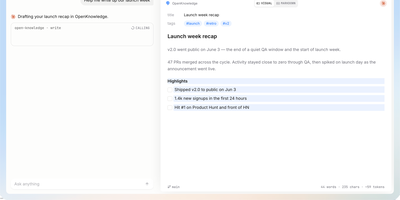
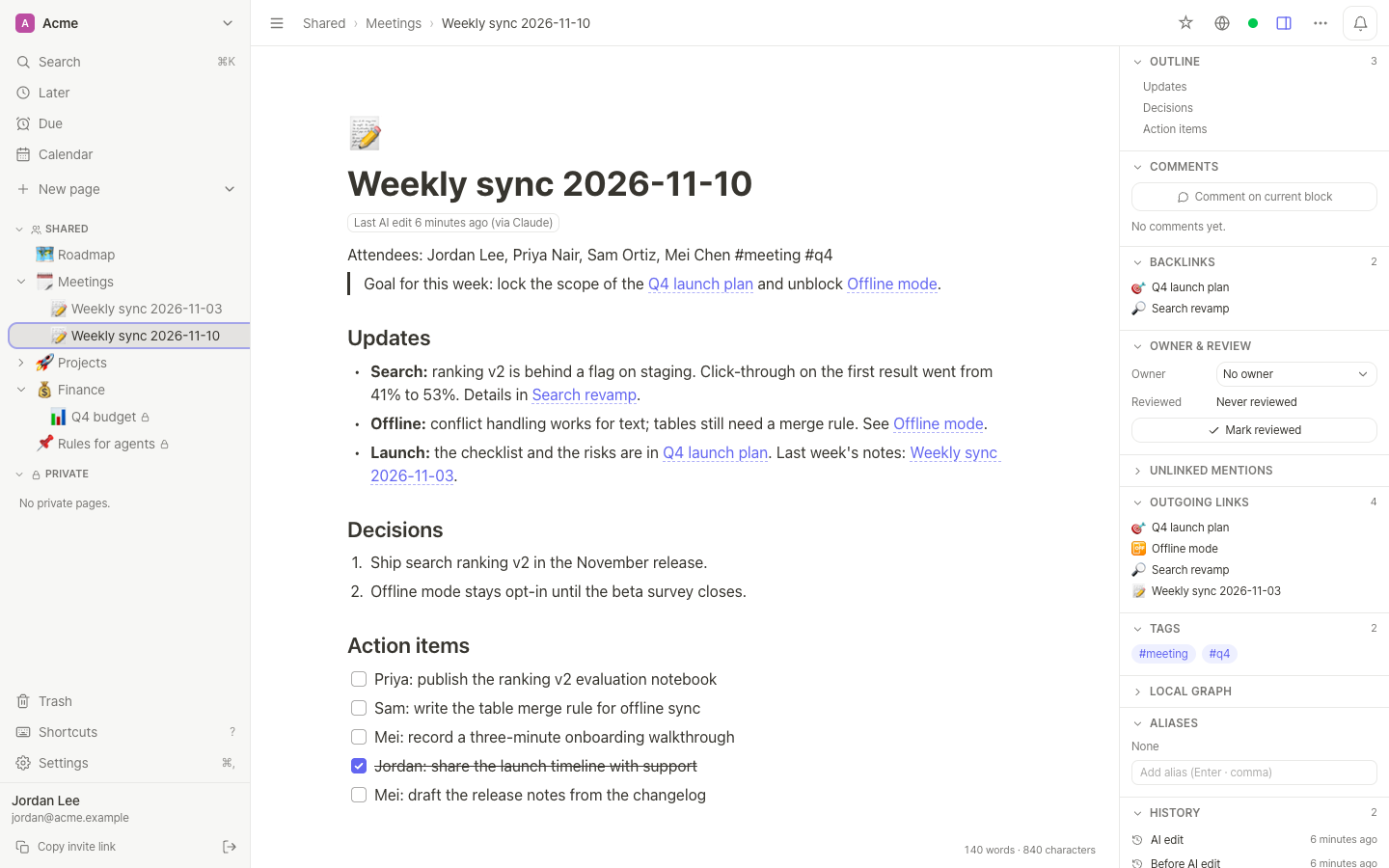
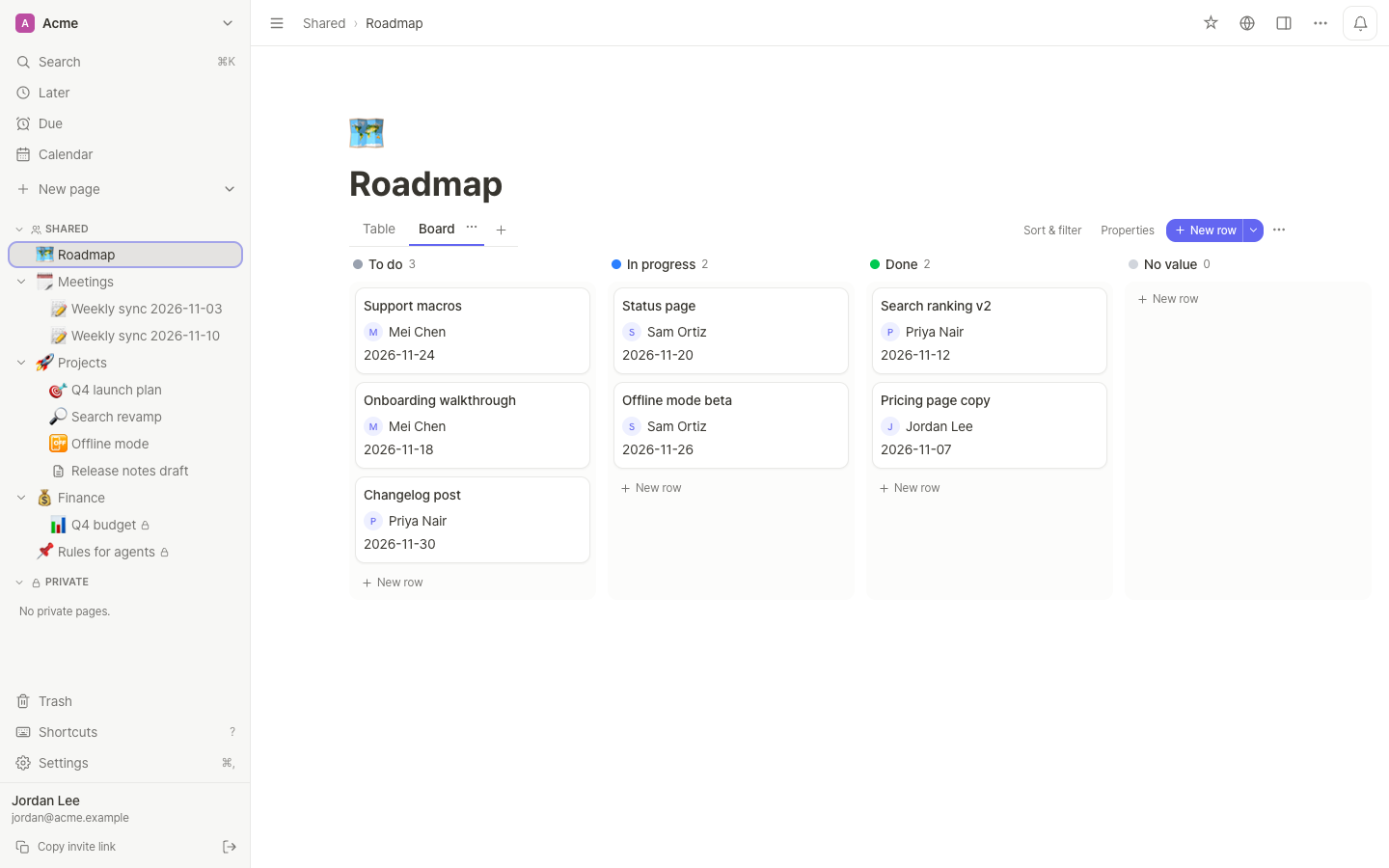
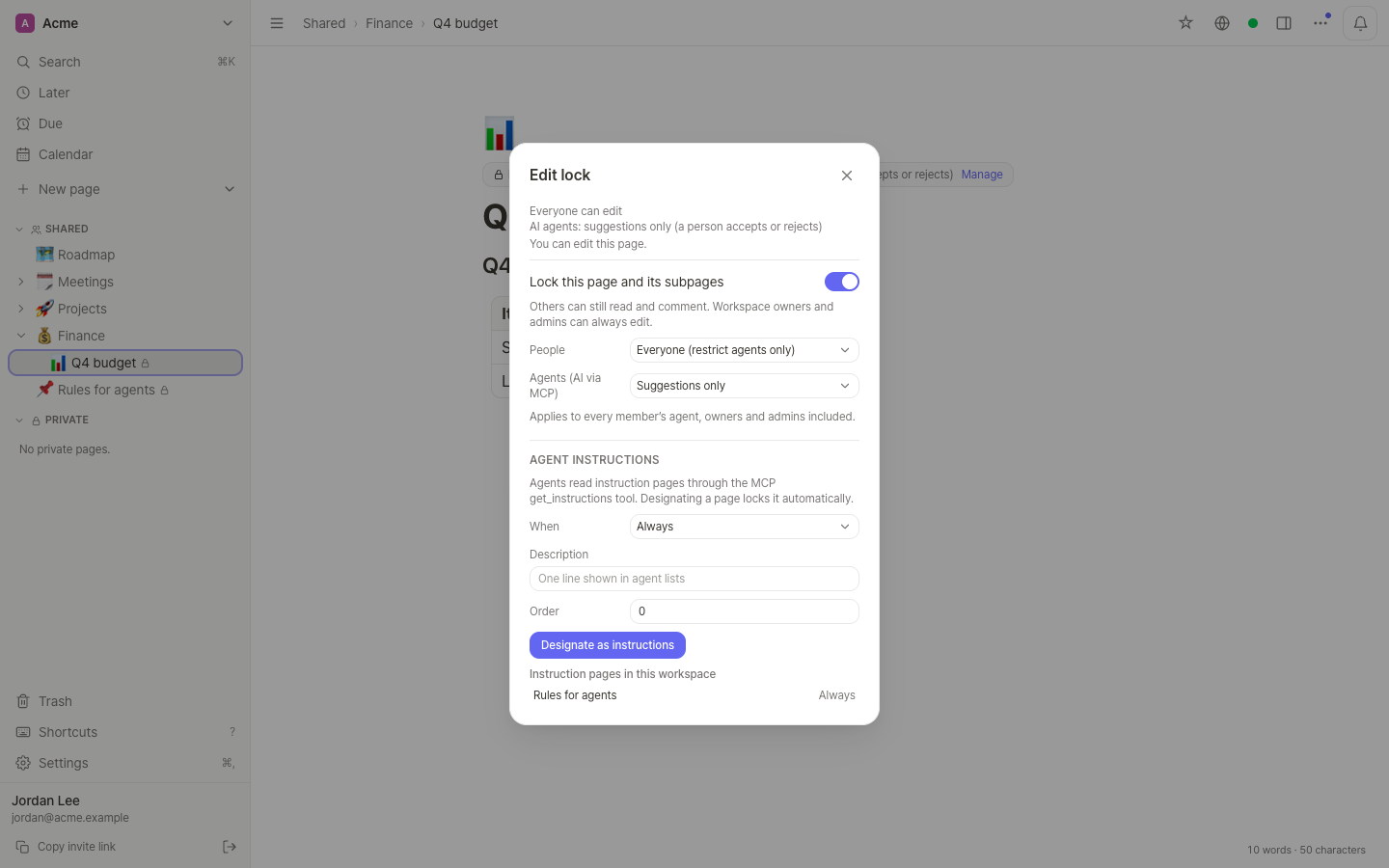
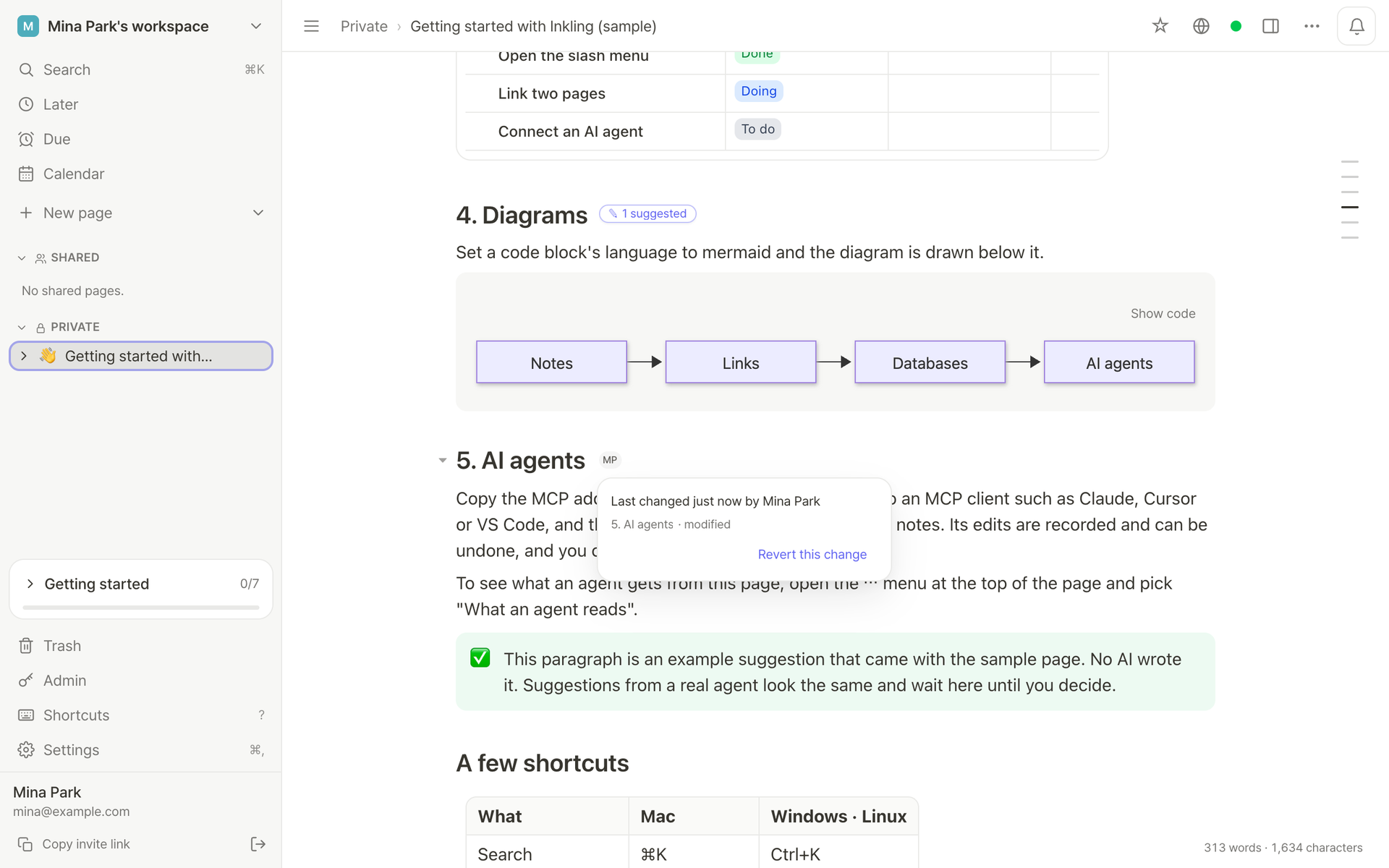
Built for small teams whose members each bring their own AI agent, Inkling keeps one shared set of notes that agents read by the section and change only through edits people can review. An agent asks a question and receives just the sections that answer it, packed into a token budget. It then edits one section against the version it read; if a teammate changed that section meanwhile, the agent gets the current text to merge instead of overwriting it. Edits can wait as suggestions that people accept in part or reject, and anything an agent changed can be reverted, one change or everything a connection touched on a page. A comment or database cell can hand a task to one member's agent, and a Team agents board shows what each connection is working on. The notes themselves cover Notion-style databases with table, board, calendar, gallery, timeline, chart, form and list views, plus wikilinks, backlinks, a graph, JSON Canvas whiteboards, Dataview-style query blocks and daily notes. Live co-editing shows cursors and presence, while roles, guests, edit locks and expiring password links control who sees what. Claude, Cursor and VS Code connect through OAuth to a built-in MCP server with 48 tools, and Slack or webhooks announce changes. Running on a dedicated VPS on RepoCloud with guaranteed CPU, RAM, and SSD, full root SSH access, and a browser serial console. MIT licensed.
Benefits
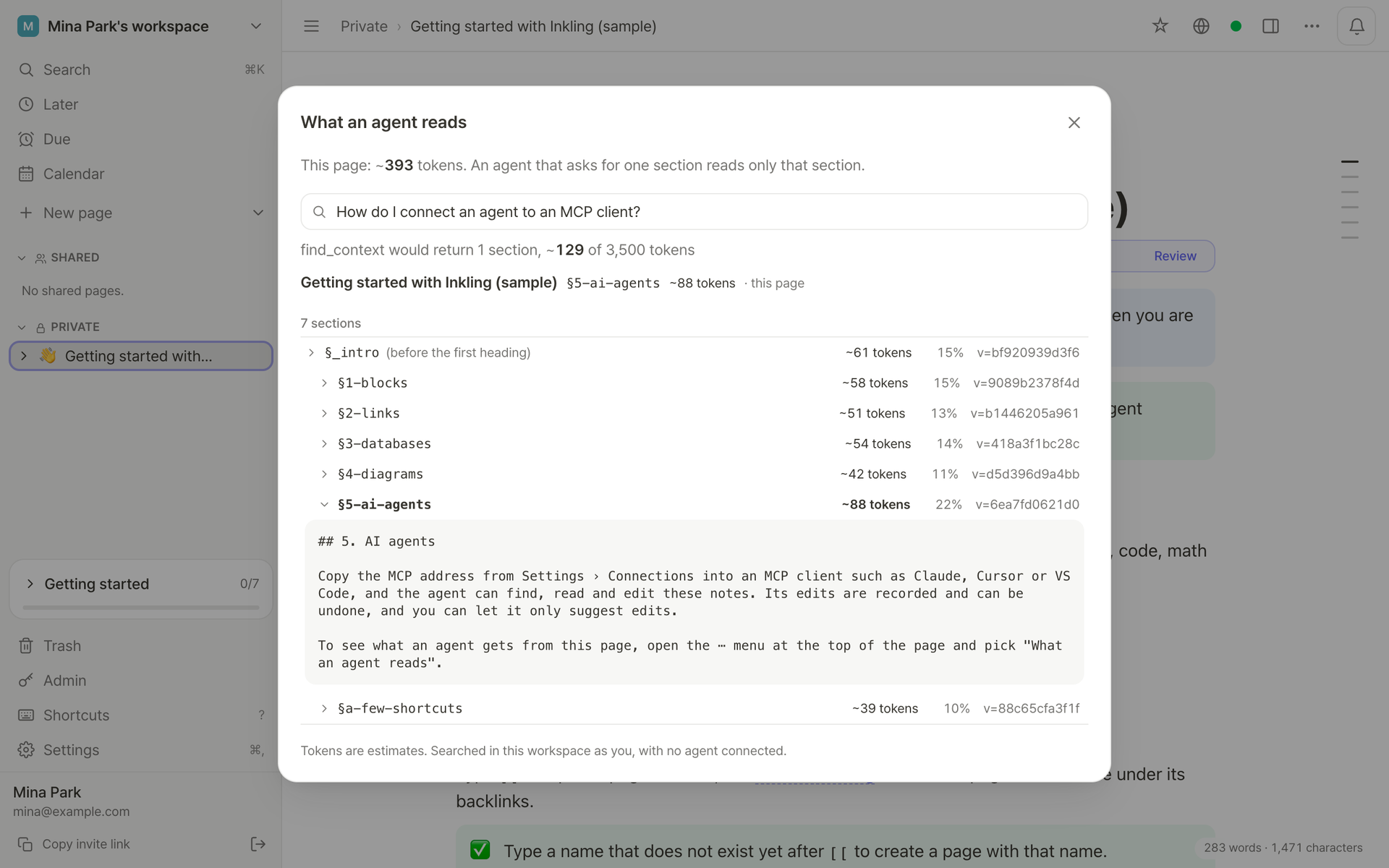
- Agents read only what answers
- find_context returns only the sections that answer a question, packed into a default 3,500-token budget; the project's own benchmark cut 2,254 tokens per question to 624.
- Edits never overwrite a teammate
- patch_section changes one section against the version the agent read; if someone edited it since, nothing is written and the current text comes back to merge, while a person typing keeps their text.
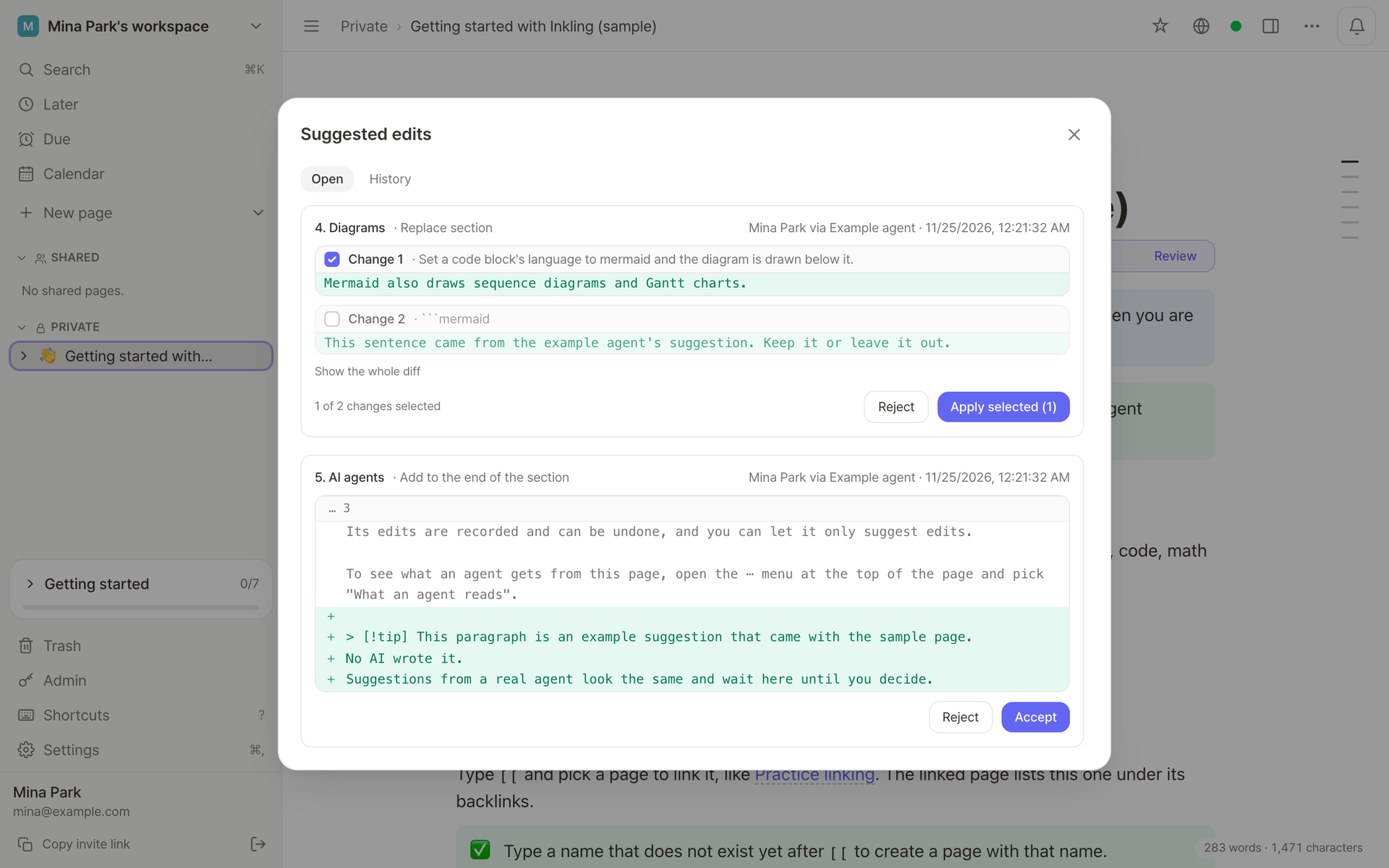
- People review every agent edit
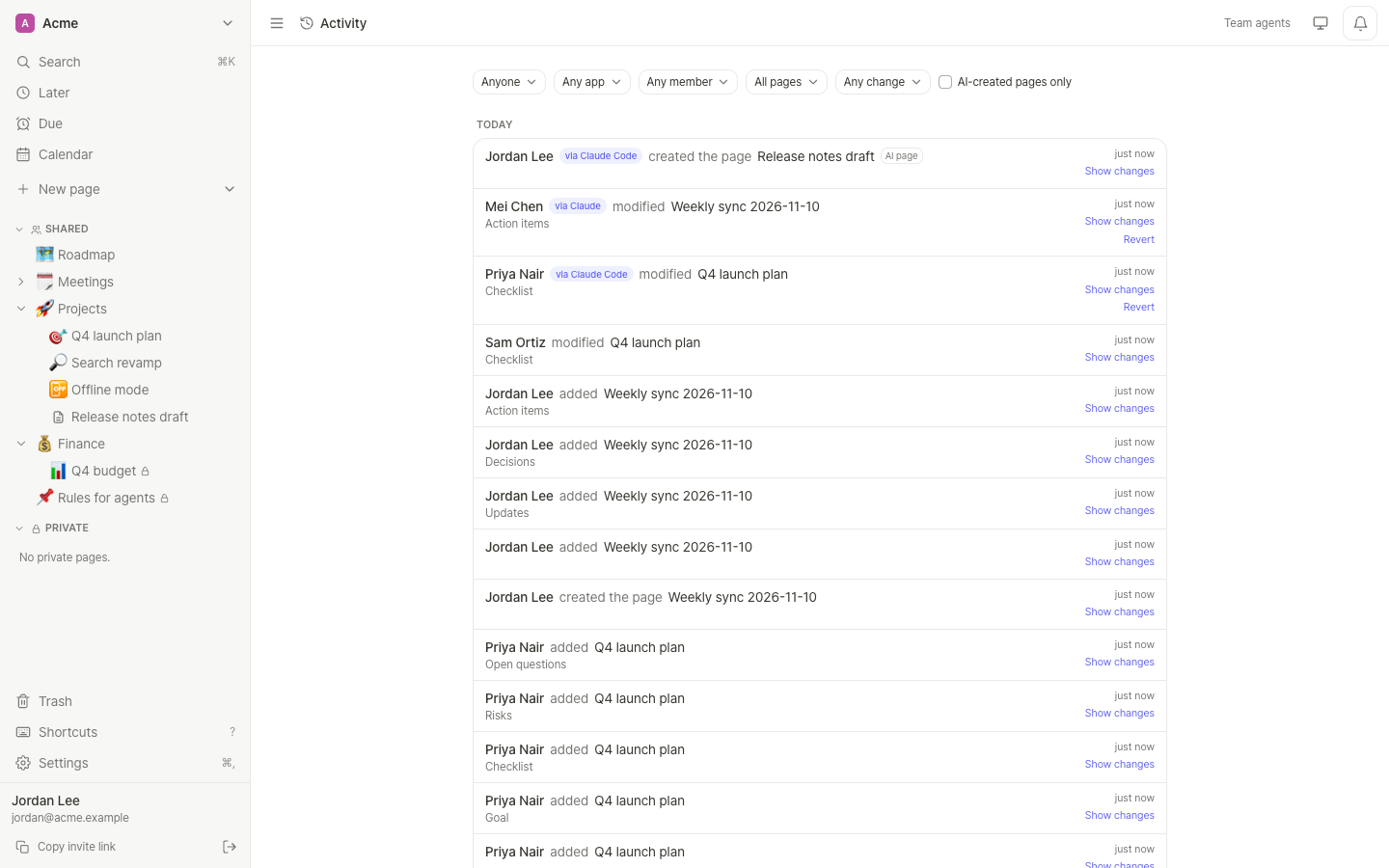
- A workspace setting or edit lock turns agent edits into suggestions shown as diffs; people accept all, part or none, and every agent write is a labelled version that can be reverted.
- Each teammate connects their own agent
- One person installs it; everyone else signs up in the browser with a key from the admin, connects their own Claude Code or Cursor by OAuth, and their agent sees only what they see.
Features
- Built-in MCP server
- A built-in MCP server over Streamable HTTP lists 48 tools, or 32 with ?profile=core; OAuth 2.1 or an agent connection token signs each connection in.
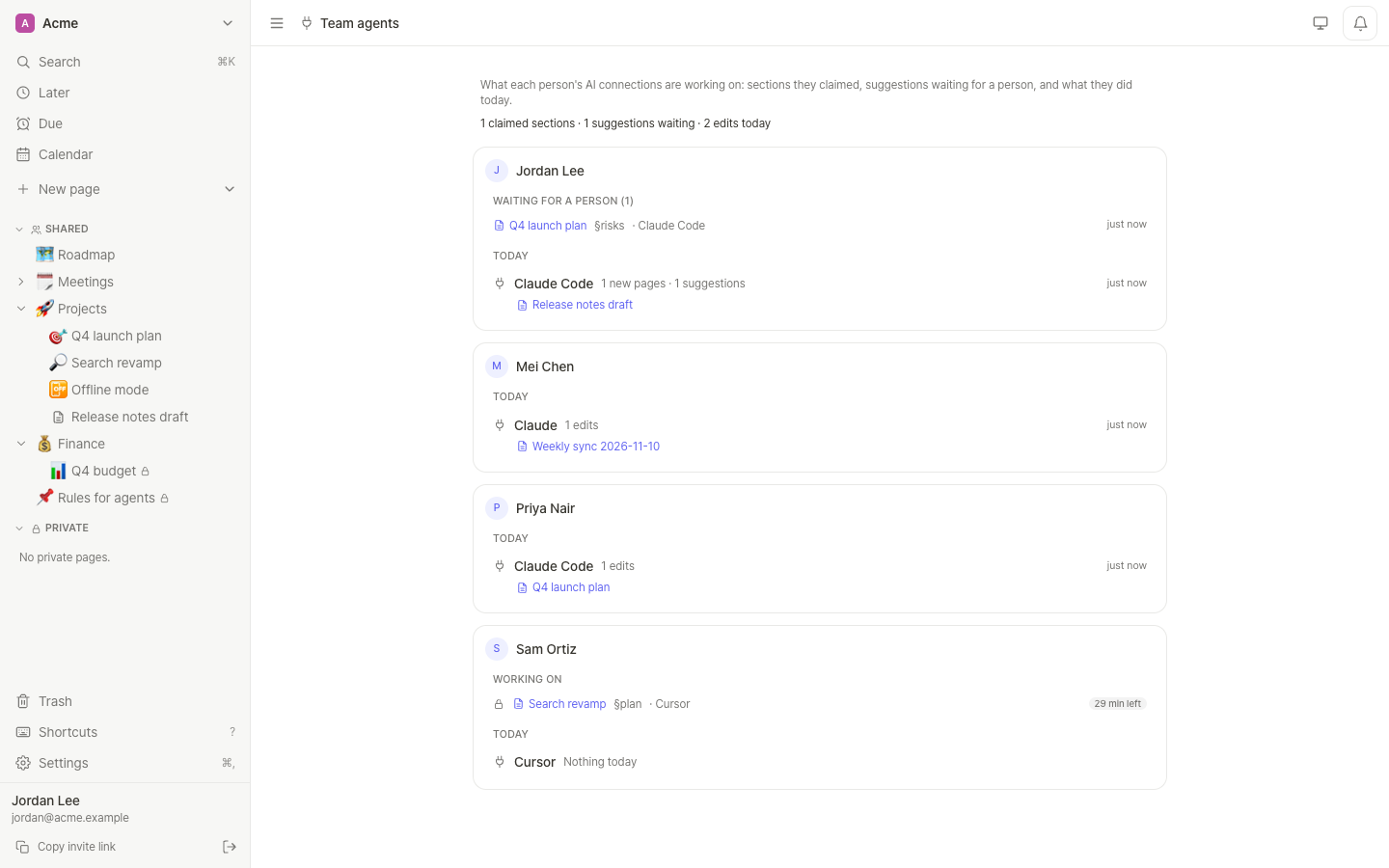
- Team agents board
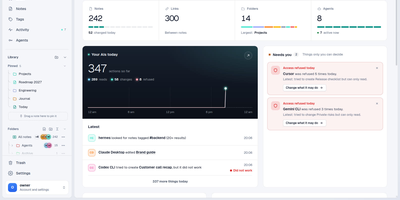
- Comments and database person cells can assign work to one member's agent, which finds it in its inbox; the board shows claimed sections, waiting suggestions and today's edits.
- Edit locks and scopes
- Locks hold a page tree to suggestions, comments or reading, separately for people and agents; connections can be read-only or limited to some workspaces or one page tree.
- Notion-style databases
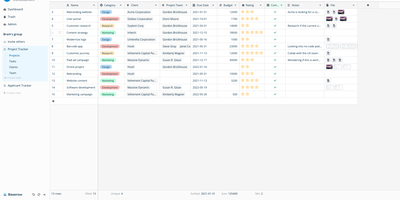
- Table, board, calendar, gallery, timeline, chart, form and list views with relations, rollups, formulas, automations and CSV or XLSX import and export.
- Links, graph and canvas
- Wikilinks, backlinks, unlinked mentions, a workspace graph, JSON Canvas whiteboards and Dataview-style TABLE, LIST and TASK query blocks that stay live.
- Backups and restore tests
- A sidecar runs scheduled, verified, optionally encrypted backups with GFS retention, weekly restore tests and rclone off-site copies; a Caddy overlay adds automatic HTTPS.