Stars
Forks
Watchers
Morphic
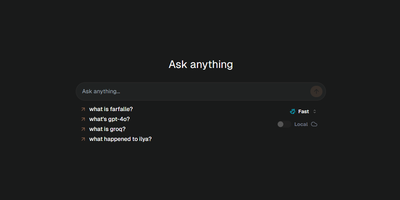
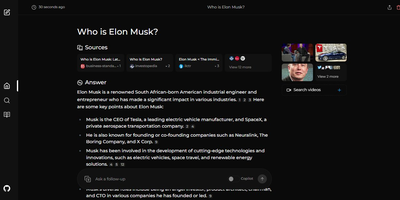
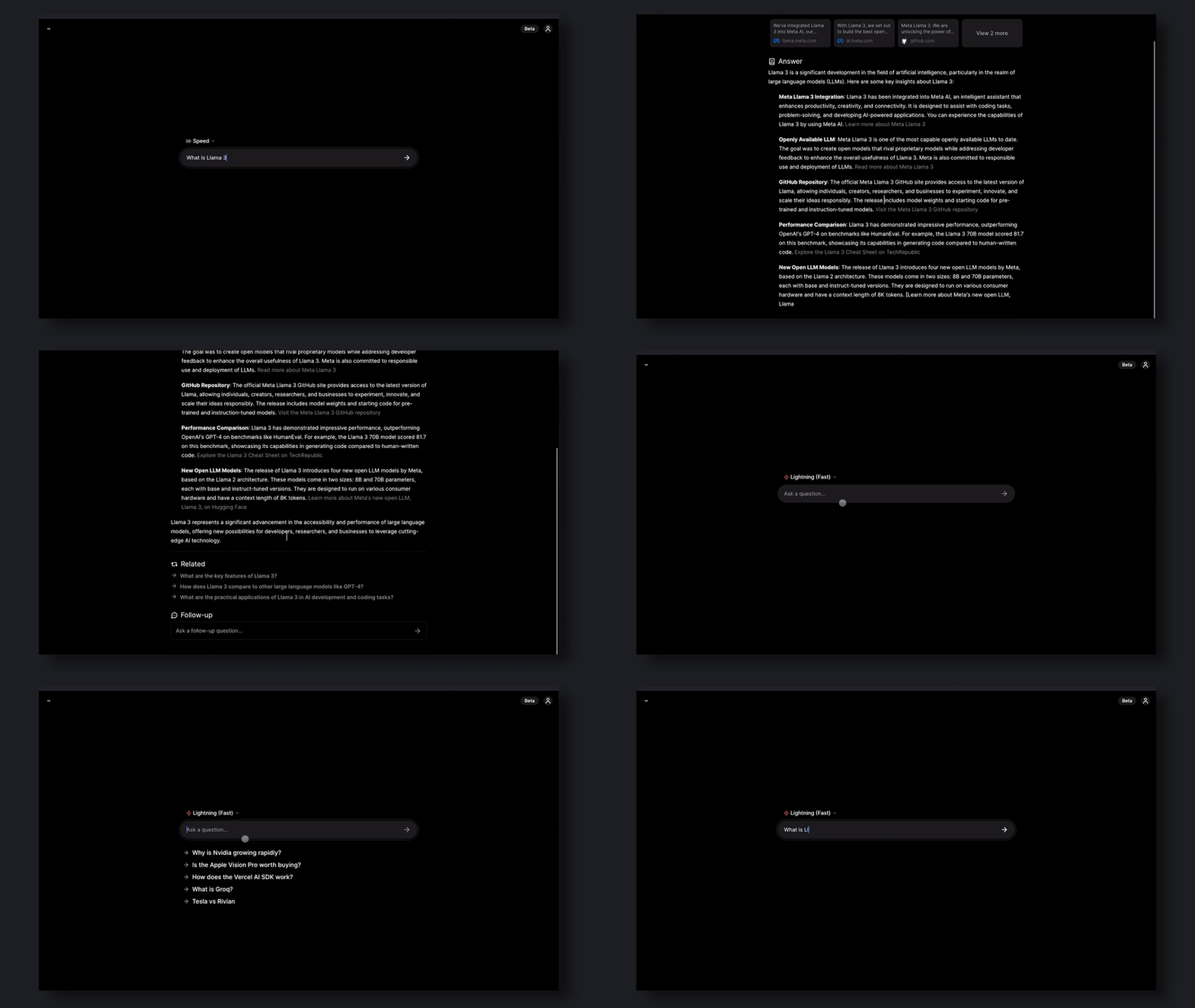
Perplexity's answer-engine experience, self-hostable and open-source: Morphic searches the web and writes cited answers. Instead of returning a list of links, it searches the web, reads the sources, and generates a complete answer with inline numbered citations. The generative UI streams rich components, source cards with thumbnails, image grids, syntax-highlighted code, and LaTeX math, rather than plain markdown. Quick mode answers fast; Adaptive mode runs deeper multi-step research. Search backends are pluggable: the Docker Compose bundle ships with a private SearXNG instance so no search API key is required, and Tavily, Brave, and Exa are supported alternatives. LLM providers include OpenAI, Anthropic, Google, Ollama, and any OpenAI-compatible endpoint, with per-mode model mapping - fast, cheap models for quick searches, stronger models for adaptive research, tuning the cost-quality trade-off per query type. An inspector panel exposes tool execution during multi-step research, and AI-suggested follow-up questions keep an investigation moving. Chat history persists in PostgreSQL, results are shareable by URL, file uploads feed context into queries, and optional Supabase authentication adds multi-user or guest access. Because the default search path is your private SearXNG instance, research topics never hit a commercial search API - and with local Ollama models the marginal cost of a query approaches zero. Built with Next.js, TypeScript, and the Vercel AI SDK under Apache 2.0.
Benefits
- Perplexity Without the Subscription
- A self-hosted instance replaces a per-seat AI search subscription with flat hosting plus your own API keys, or near-zero marginal cost with local Ollama models.
- Private Search Out of the Box
- The bundled SearXNG metasearch engine means queries never hit a commercial search API by default; your research topics stay on your infrastructure.
- Answers You Can Verify
- Every claim carries an inline numbered citation linking to its source, so answers are checkable instead of being an opaque model output.
- Model Choice Per Task
- Map fast, cheap models to quick searches and stronger models to adaptive research mode, tuning the cost and quality trade-off per query type.
Features
- Cited Generative Answers
- The engine searches, reads 10-20 sources, and synthesizes a comprehensive answer with inline citations and AI-suggested follow-up questions.
- Generative UI
- Answers stream as rich components from a JSON spec: source cards with thumbnails, image grids, code blocks, and LaTeX rendering.
- Quick and Adaptive Search Modes
- Quick mode for fast single-pass answers; Adaptive mode plans and executes multi-step research for deeper questions, with an inspector panel exposing tool execution.
- Pluggable Search Backends
- Bundled SearXNG requires no API key; Tavily, Brave, and Exa are supported alternatives, with URL-specific search and content extraction via Tavily or Jina.
- Multi-Provider LLM Support
- OpenAI, Anthropic, Google, Ollama, Vercel AI Gateway, and OpenAI-compatible endpoints, with a dynamic model selector and per-mode model configuration.
- History, Sharing, and Auth
- PostgreSQL-backed chat history, shareable result URLs, file uploads, and optional Supabase authentication with guest mode.