SaaS Alternative
SolarWinds IP Address Manager Infoblox BlueCat Address Manager ManageEngine OpUtilsCategories
Network Management Network Automation Rack Management Network Documentation IP Address Management Subnet Planning VLAN and VRF TrackingStars
Forks
Watchers
Developer links
phpIPAM
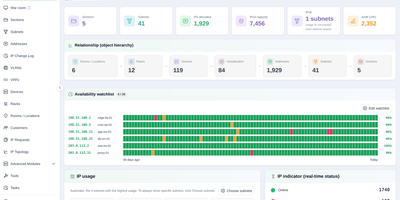
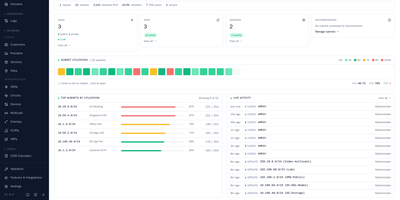
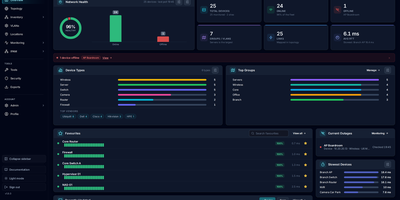
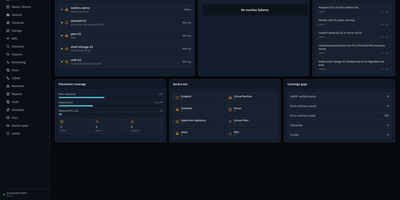
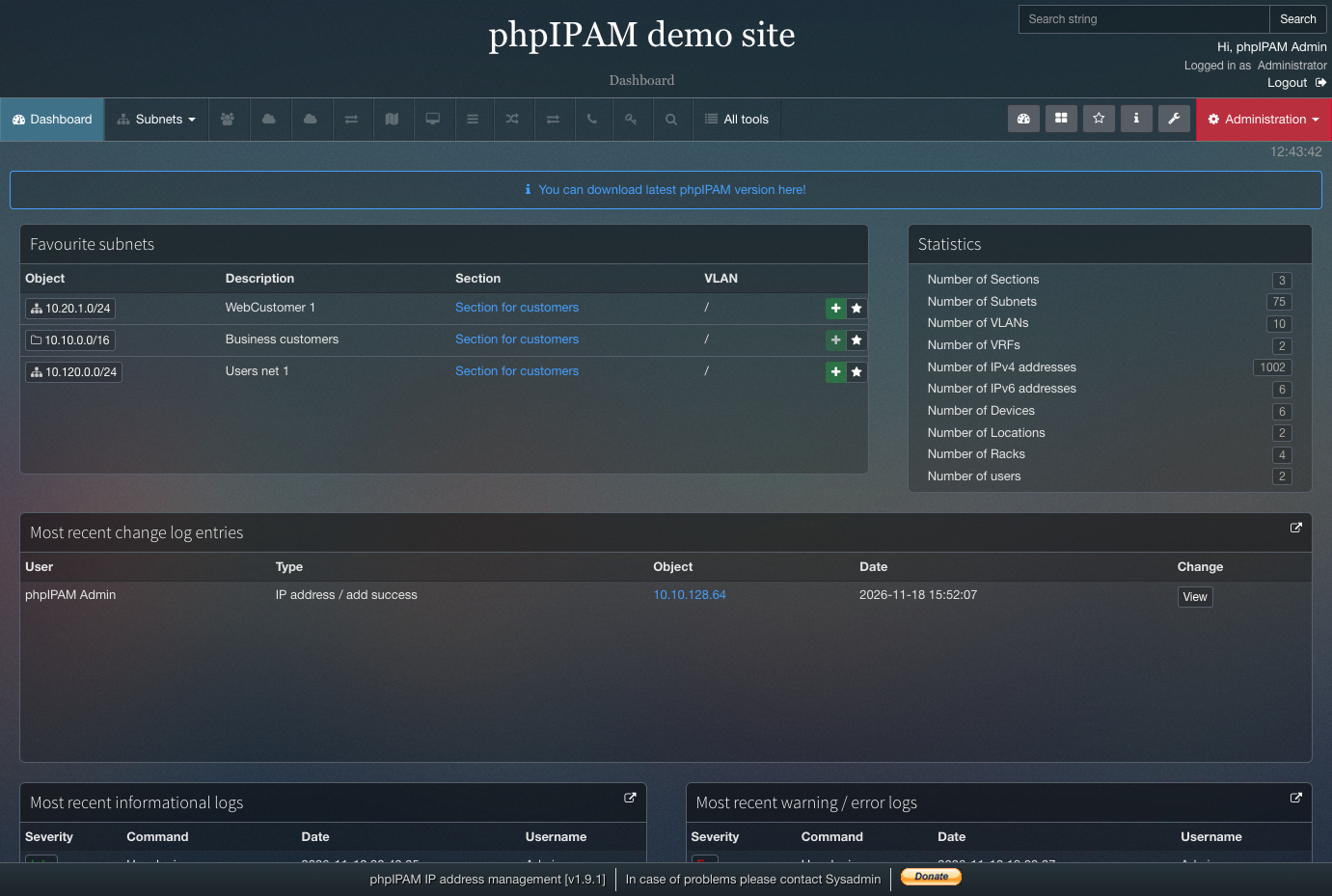
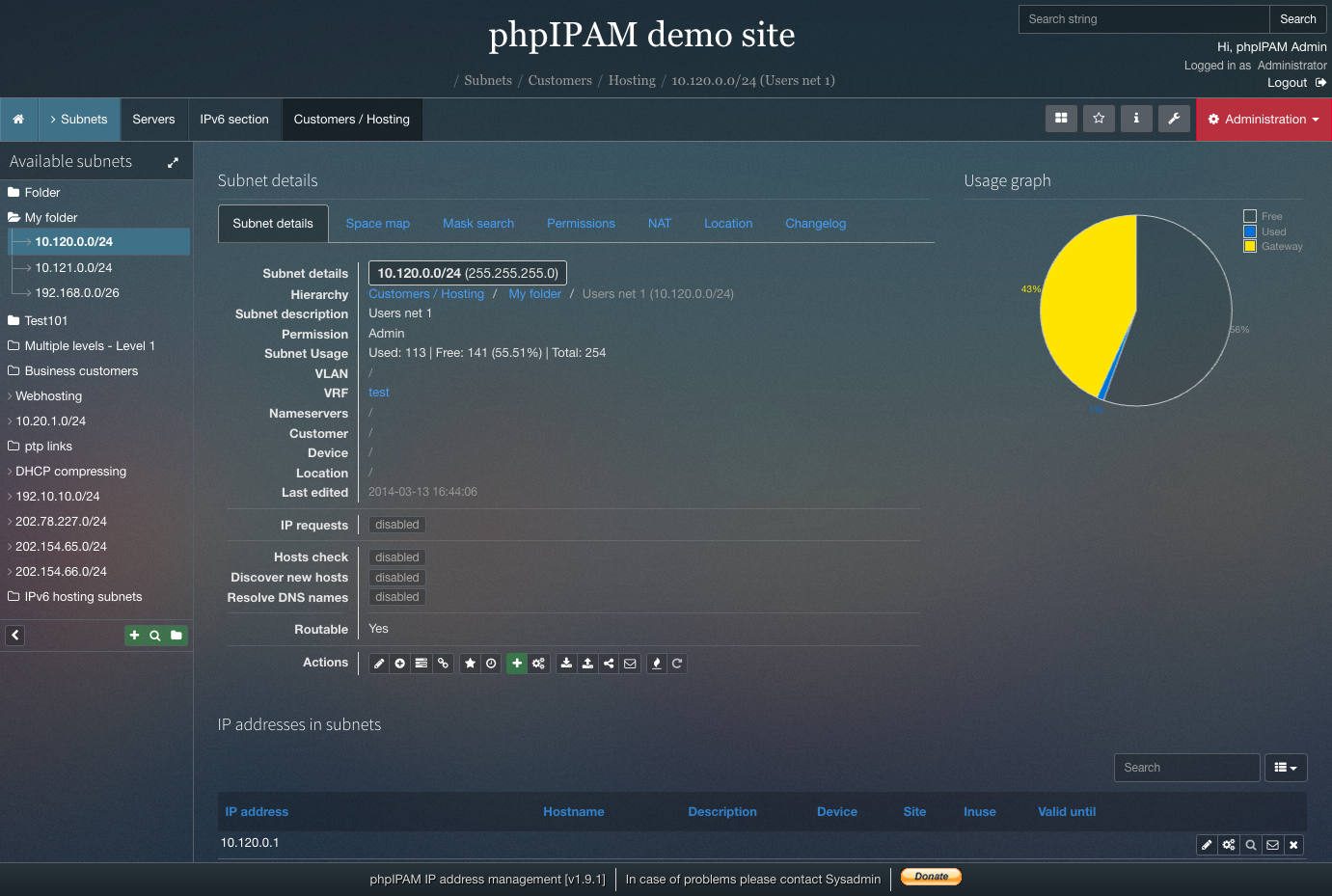
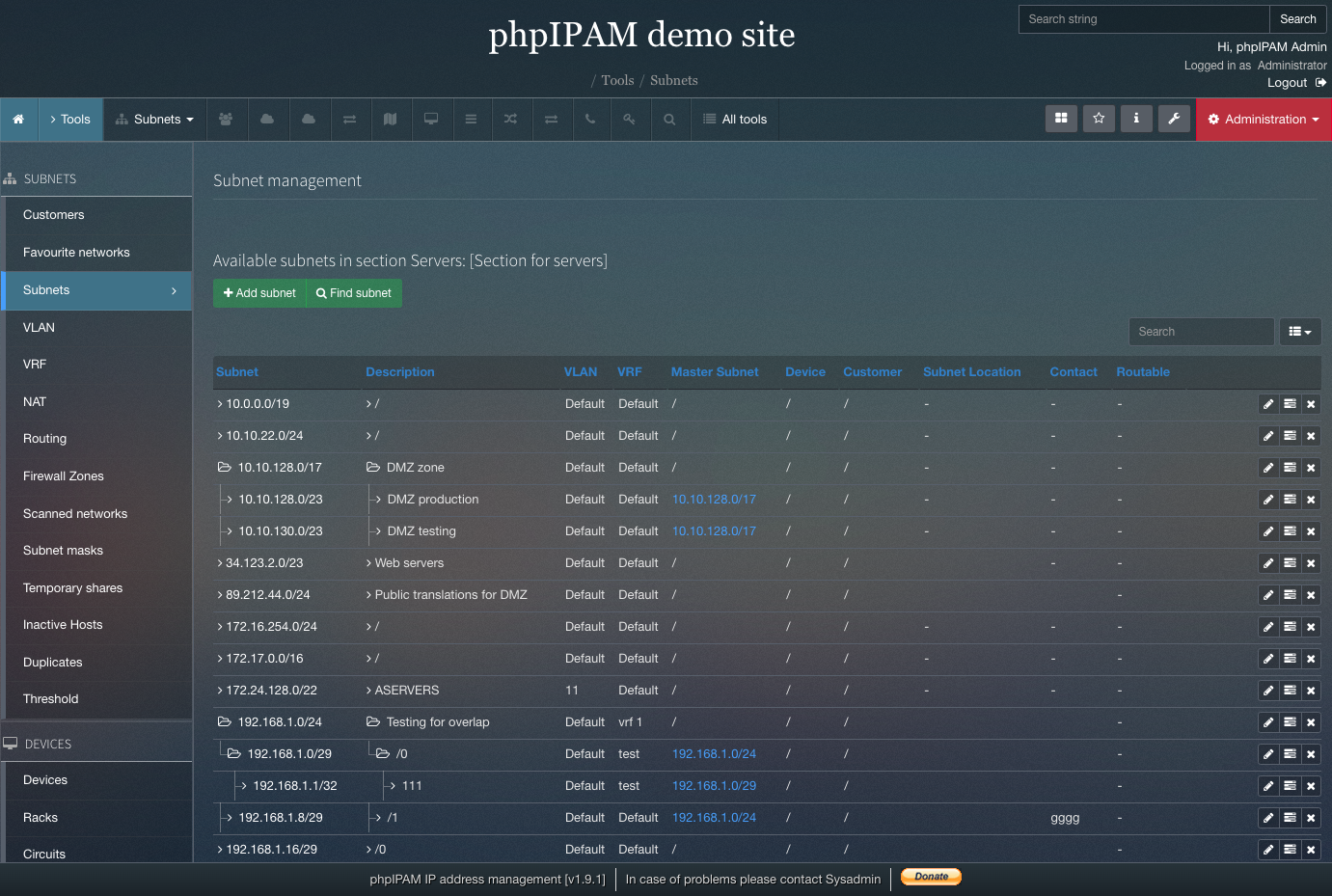
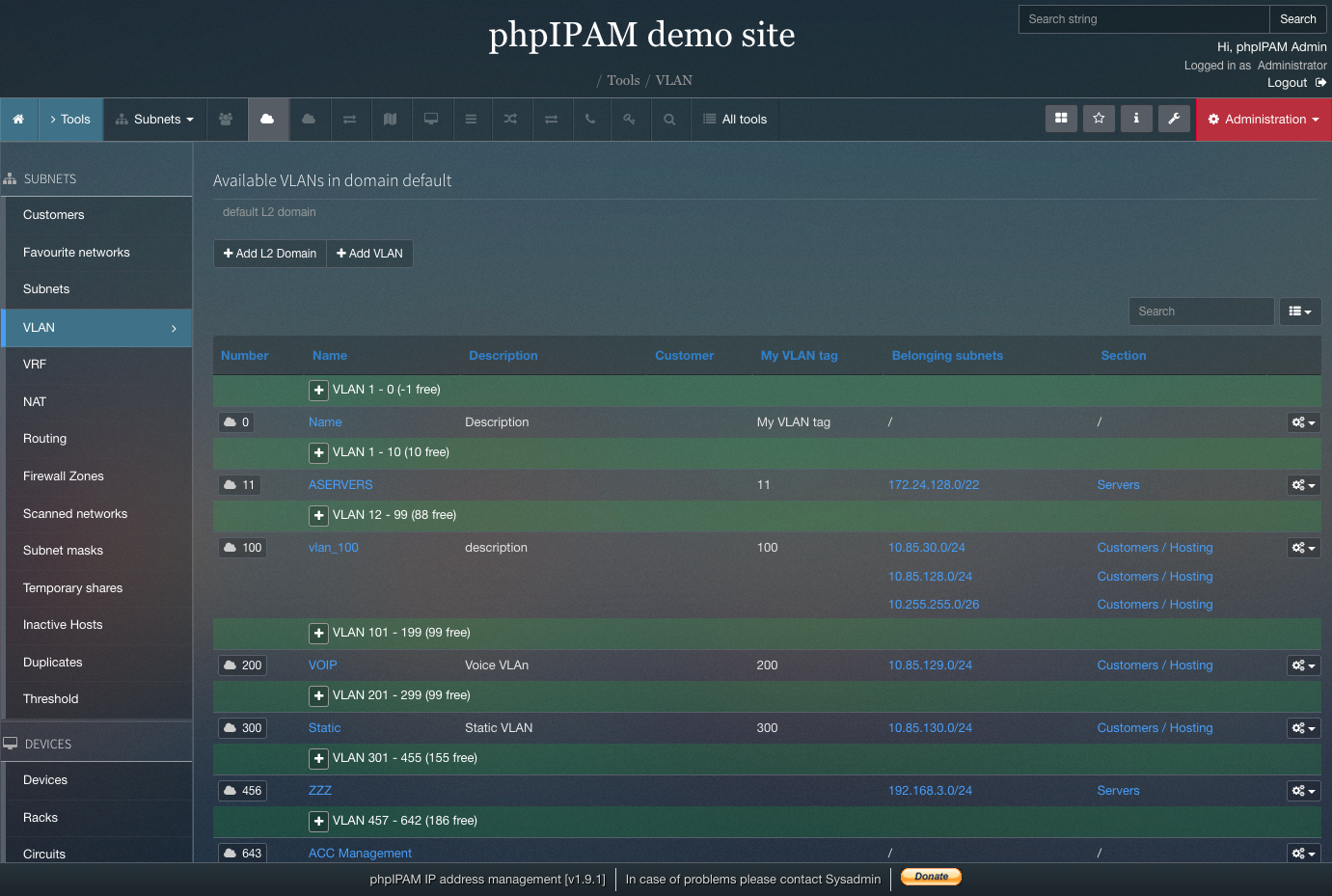
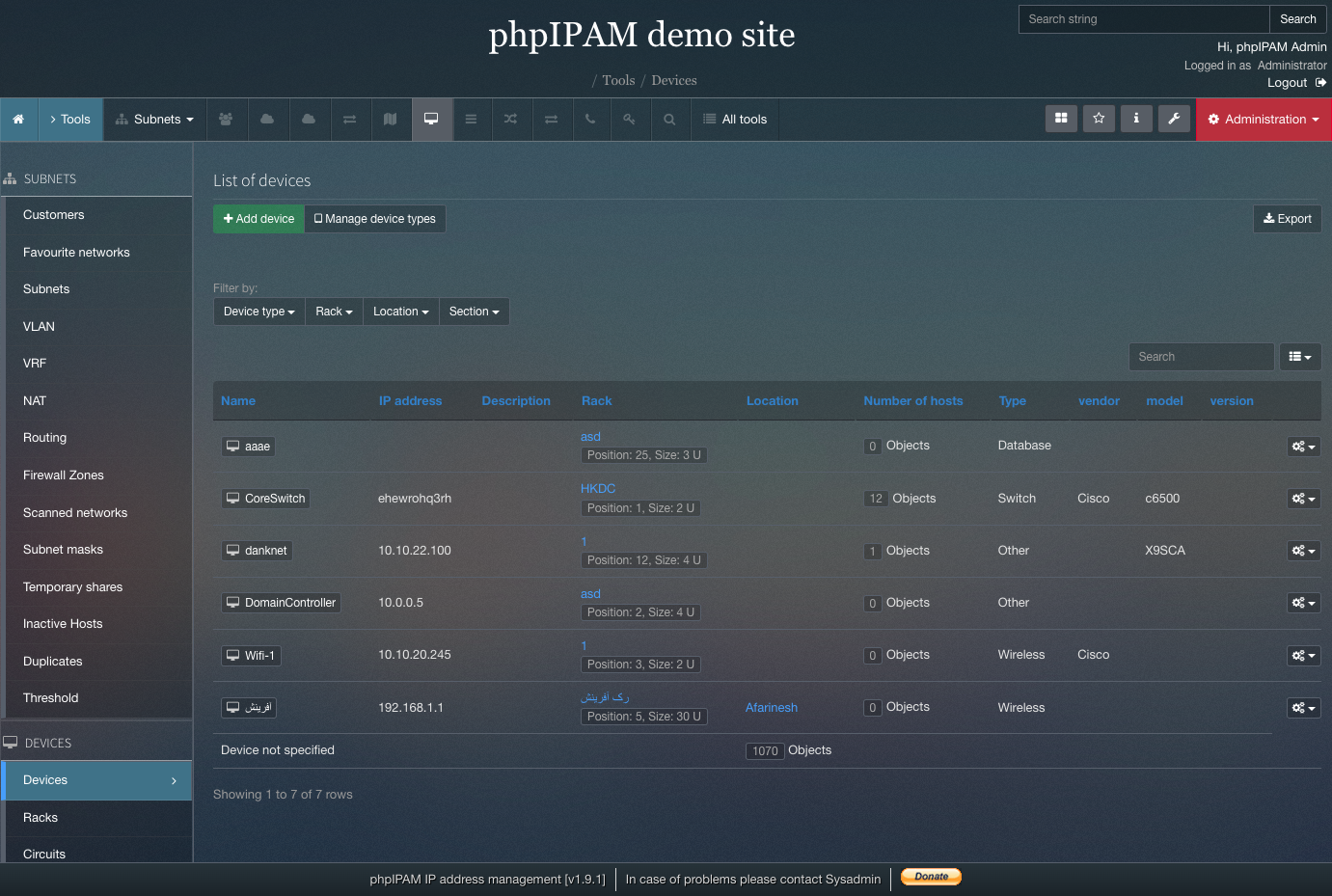
Every IPv4 and IPv6 address on your network gets a hostname, description, device, and owner in phpIPAM, a web-based IP address management system that replaces the subnet spreadsheet. Sections group subnets, folders and master subnets nest them into a hierarchy, and each subnet page reports used and free counts, a usage graph, unused ranges, and a visual grid of every host. Subnet scans check host status and discover new hosts, and the Inactive Hosts tool lists addresses that stopped answering. The VLAN page lists the subnets that belong to each VLAN, VRFs separate overlapping ranges, NAT pages track source, destination, and static translations, and racks, devices, locations, and circuits document the gear behind the addresses. Imports accept XLS, CSV, and RIPE data, custom fields add your own columns, and a changelog records who changed what. Users sign in with local accounts, Active Directory, LDAP, or RADIUS, add two-factor codes or passkeys, and receive per-group permissions on sections and subnets. Visitors can request an address from the login page, and temporary links share one subnet or address with outsiders for up to seven days. REST endpoints cover sections, subnets, addresses, VLANs, VRFs, and devices; PowerDNS integration, e-mail notifications, an IP calculator, and a bandwidth calculator complete the toolbox. Running on a dedicated VPS on RepoCloud with guaranteed CPU, RAM, and SSD, full root SSH access, and a browser serial console. GPL-3.0-only licensed.
Benefits
- See Free Space at a Glance
- Subnet pages report used and free counts with a usage graph, list the free ranges between allocated hosts, and draw a grid of every address, so spare capacity is obvious.
- Find Stale and New Hosts
- Subnet scans check host status and discover new hosts using ping, fping, or PEAR, run from cron or remote agents, and the Inactive Hosts tool lists addresses that stopped answering.
- Hand Access to the Right Groups
- Group permissions on sections and subnets, sign-in through Active Directory, LDAP, or RADIUS, and optional two-factor codes or passkeys keep each team inside its own address space.
- Automate Everything Through the API
- The REST API accepts GET, POST, PUT, PATCH, and DELETE on sections, subnets, folders, VLANs, addresses, VRFs, and devices, returns JSON or XML, and authenticates requests with tokens.
Features
- Sections, Folders, Nested Subnets
- Sections group subnets, folders and master subnets nest them into a hierarchy, and the Space map and Mask search tabs show where free blocks of a given size remain.
- VLAN, VRF, and NAT Records
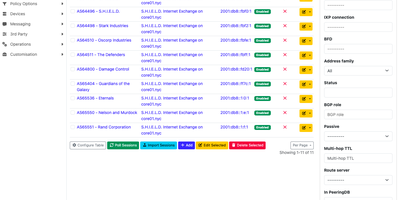
- VLAN tables list the subnets that belong to each VLAN, VRFs separate overlapping ranges, and NAT pages track source, destination, and static translations per device.
- Racks, Devices, and Circuits
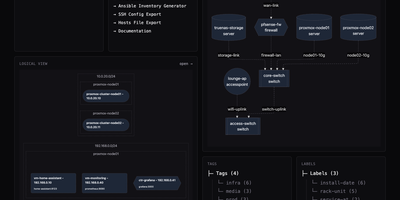
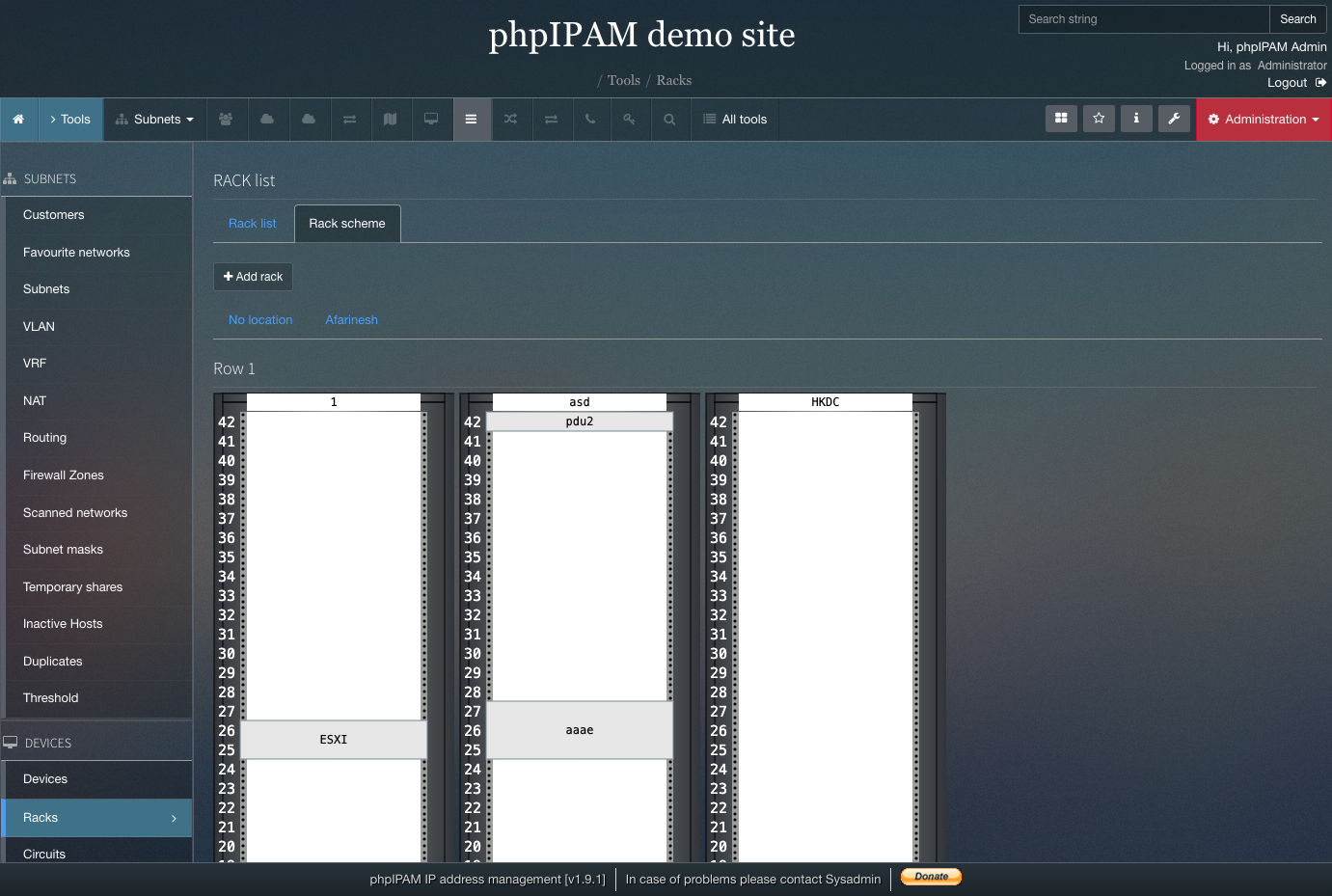
- Rack schemes draw devices by U position, the device list records vendor, model, and type, and the Locations and Circuits modules add sites and circuit records.
- Imports, Exports, Custom Fields
- Load subnets and addresses from XLS or CSV files, pull subnets from RIPE, export data, and add custom fields that become your own columns on records.
- Requests and Temporary Shares
- People without accounts can request an address from the login page, and temporary links share one subnet or IP for up to seven days, optionally e-mailed to recipients.
- Docker Images and Scan Agents
- The phpipam-www and phpipam-cron images simplify deployment, and remote scan agents check hosts on distant networks and write the results to the central database.