Categories
Knowledge Base Workflow Automation Customer Support Issue Tracking Helpdesk Asset Management Ticketing System IT Service ManagementStars
Forks
Watchers
Developer links
Request Tracker
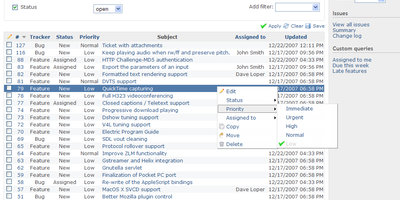
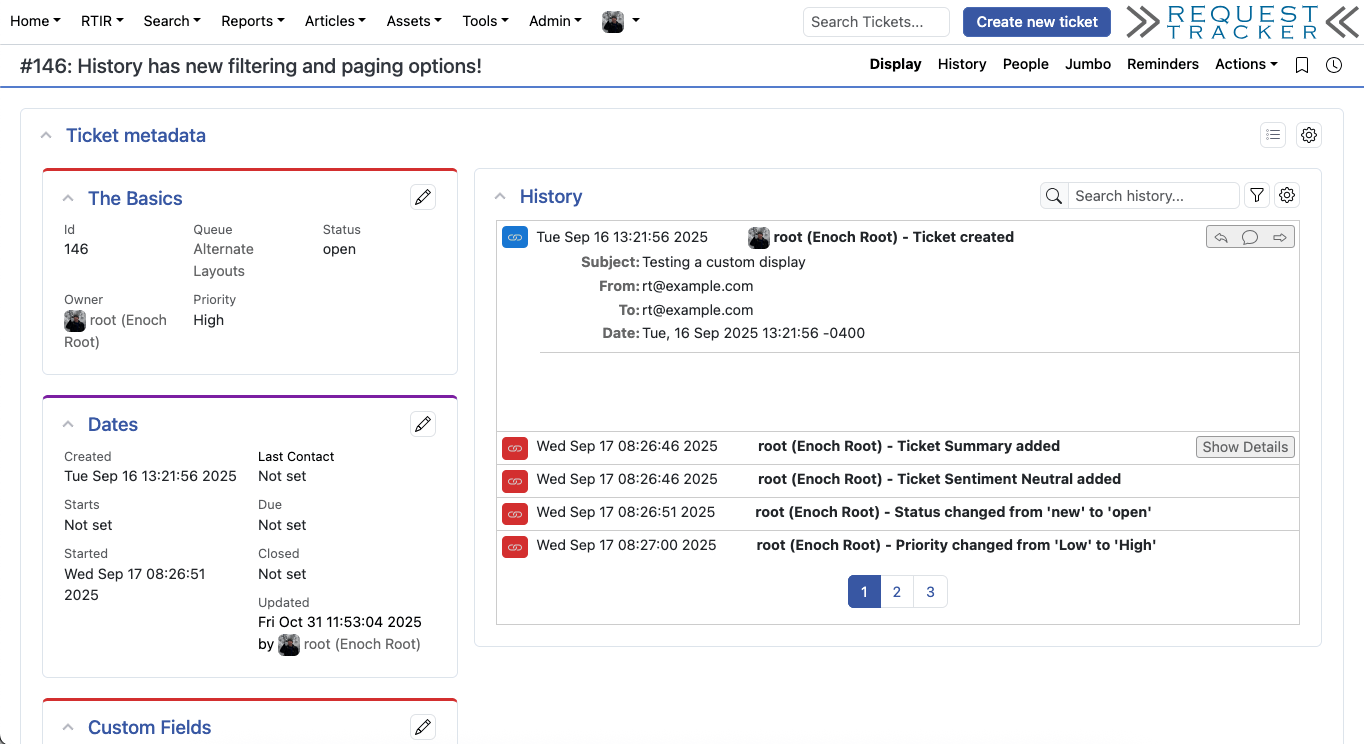
Email-driven ticketing for IT, support, and operations teams: Request Tracker turns every message sent to support@, helpdesk@, or security@ into a tracked ticket with an owner, a priority, a due date, and a complete audit trail. Staff reply to customers and comment privately to colleagues from the web interface or straight from their inbox, while requestors follow their own tickets in a self-service portal. Lifecycles built in a visual editor define custom statuses, transitions, and rights per queue, and scrips fire notifications or automated actions whenever a ticket changes. Service level agreements honor business hours, escalations trigger as deadlines approach, and scheduled tickets recreate recurring chores such as monthly patch windows. A transaction query builder, saved searches, charts, and drag-and-drop dashboards turn ticket history into reports that export to CSV or arrive by email on a schedule. Asset catalogs track laptops, licenses, and servers beside the tickets that mention them, and an Articles knowledge base feeds canned answers into replies. Time worked is logged per ticket with a My Week timesheet, approvals route sensitive requests to the right people, and PGP or S/MIME protects email in both directions. A REST2 API, a command-line client, and more than 400 extensions connect RT to the rest of your tooling. Running on a dedicated VPS on RepoCloud with guaranteed CPU, RAM, and SSD, full root SSH access, and a browser serial console. GPL-2.0 licensed.
Benefits
- Email becomes tracked work instantly
- The rt-mailgate gateway pipes mail from support@ or sales@ addresses straight into queues, so replies and internal comments land on the right ticket whether staff use the web interface or an email client.
- Workflows modeled in a visual editor
- Lifecycles define statuses, transitions, and rights per queue in a browser-based editor, while scrips attach conditions and actions that notify people or update records on every ticket transaction.
- Self-hosting keeps ticket data private
- RT runs on your own server with MySQL, MariaDB, PostgreSQL, or Oracle behind Apache or nginx, so customer conversations, attachments, and asset records stay on infrastructure you control.
- One installation serves many teams
- Unlimited queues, custom roles, custom fields, and fine-grained access rights let a help desk, an IT asset team, and an incident response group share one deployment with separate permissions.
Features
- Email Gateway Integration
- rt-mailgate pipes messages from any mail server's aliases file into queues, with separate correspond and comment actions for customer replies and internal notes.
- Lifecycles and Scrips
- A browser-based lifecycle editor defines custom statuses and transitions, and scrips pair conditions with actions to automate notifications and ticket changes.
- Dashboards and Charts
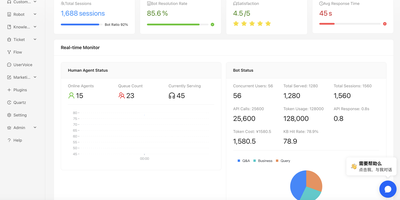
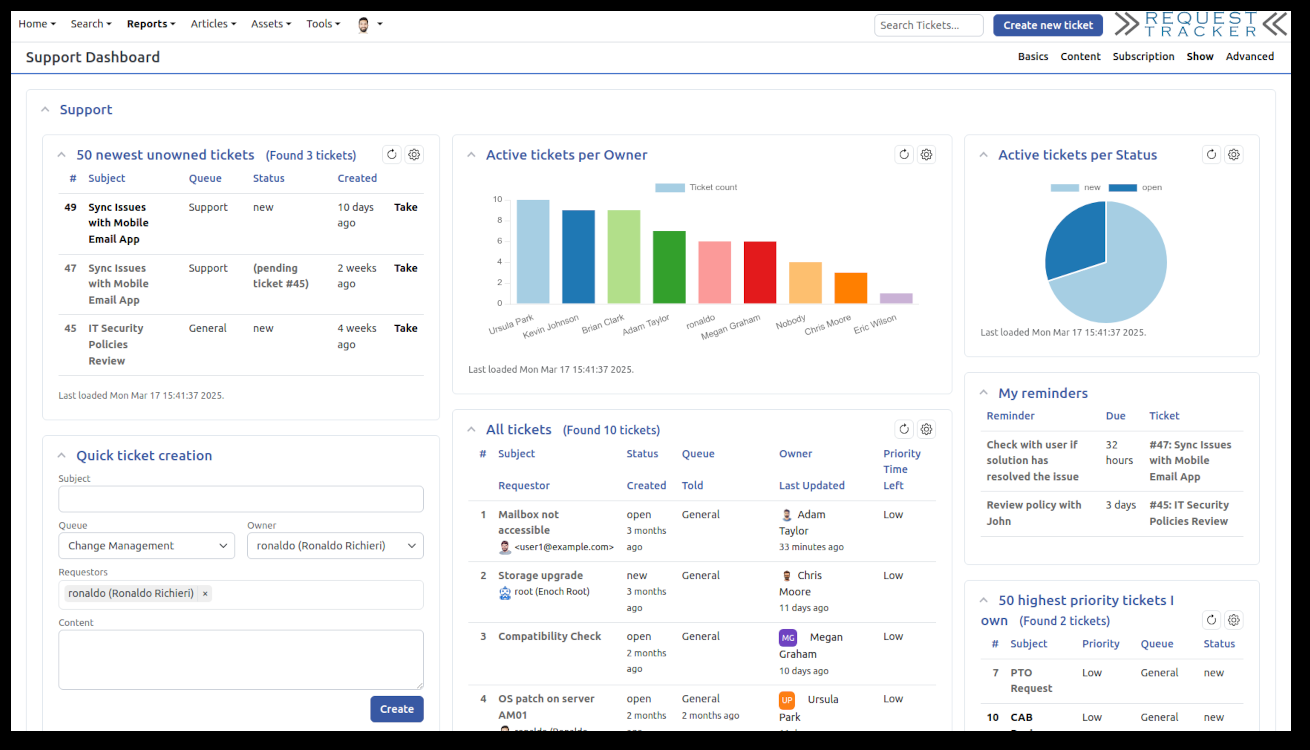
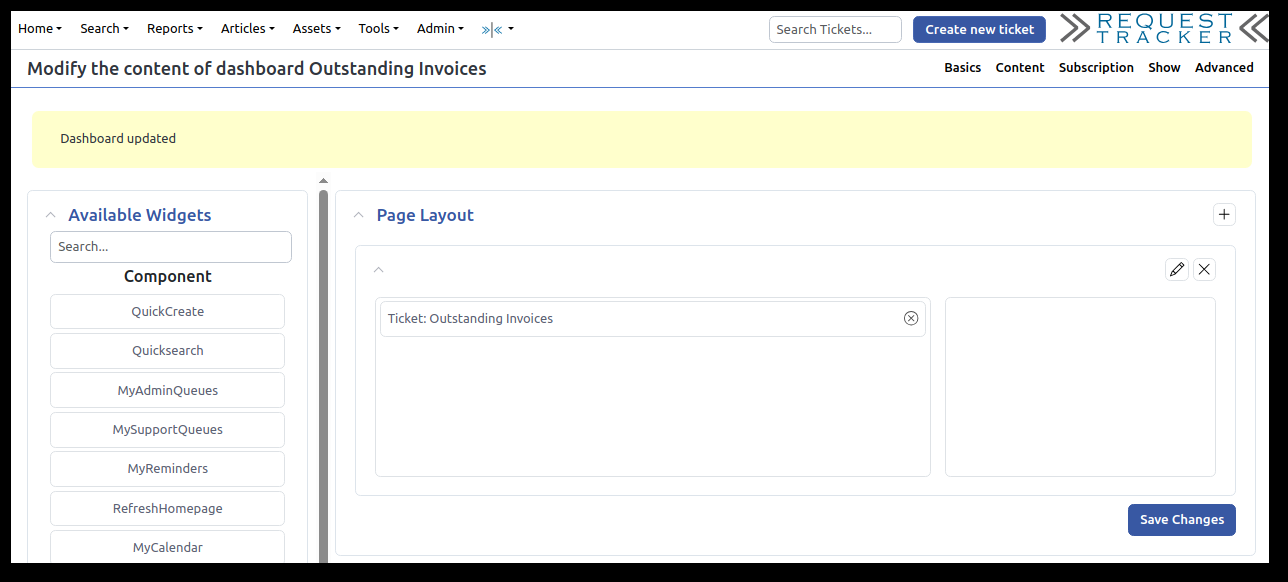
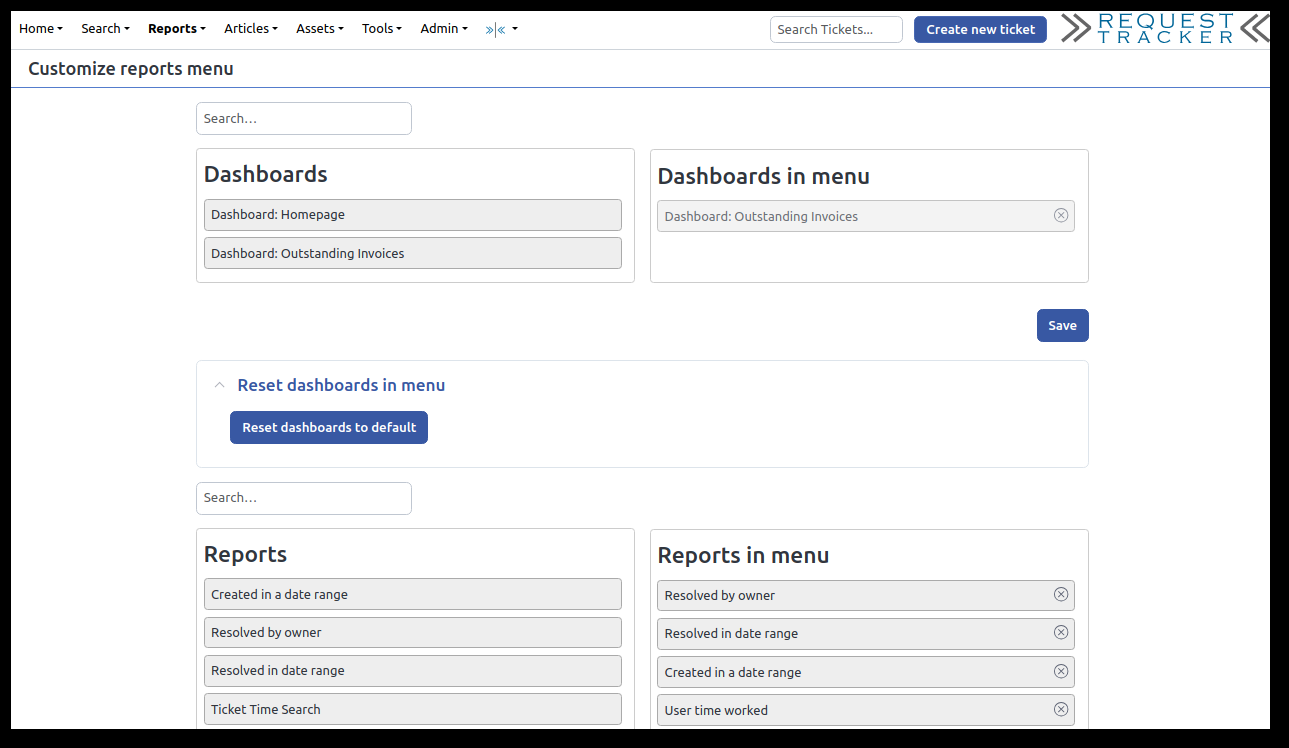
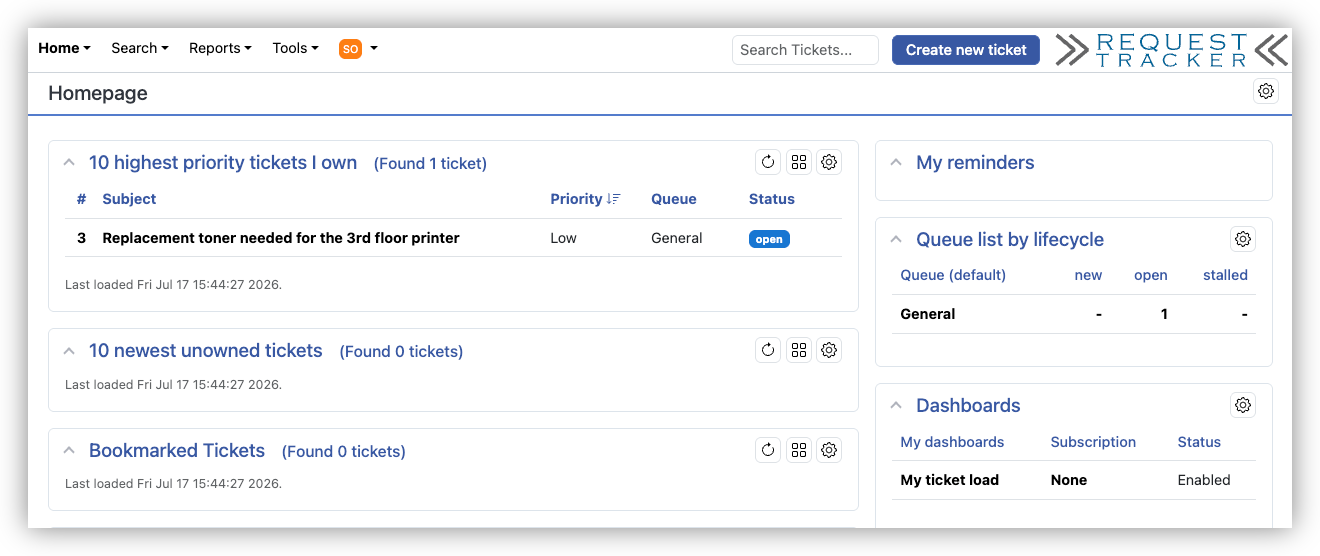
- Drag-and-drop dashboards combine saved searches with charts, backed by a transaction query builder and scheduled email delivery of reports exportable to CSV or Excel.
- Asset Management
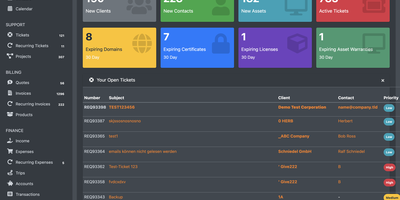
- Catalogs track tangible and intangible assets with custom fields, ticket links, dedicated rights, and lifecycles, searchable alongside support tickets in the same database.
- REST2 API
- REST2 endpoints with token authentication and JSON payloads integrate RT with Zapier and other systems, while a command-line client scripts routine ticket work.
- Time Tracking
- Time worked and estimated is recorded on every ticket in core, with a My Week page for weekly entries and time search reports.