Stars
Forks
Watchers
Developer links
Mumble
Voice chat for a gaming community, a podcast crew, or a distributed team stops depending on someone else's platform once you run your own Mumble server. The Murmur server hosts channels where hundreds of users can talk at once with latency low enough for competitive play, and every conversation is encrypted in transit with certificate-based authentication for identities. Administrators shape access with a detailed permission system: channels can be public, password-gated, or arranged so two groups stay separate while their leaders can speak to both. Users get positional audio in supported games, an in-game overlay showing who is talking, a multi-channel recorder for podcast production, and a public server browser for finding communities. The server side is built for automation: the Ice middleware interface exposes user and channel management to scripts, authenticator modules check logins against existing account databases, and community web interfaces and channel viewers plug into the same API. Running the server is light on resources, and regulars can register their identity once and be recognized across visits without passwords. Running on a dedicated VPS on RepoCloud with guaranteed CPU, RAM, and SSD, full root SSH access, and a browser serial console. BSD-3-Clause licensed.
Benefits
- Latency built for games
- Voice travels through the Murmur server with latency low enough for competitive play, so callouts, coordination, and conversation stay in sync with the action on screen.
- Encrypted by default
- All voice and control traffic is encrypted, and users authenticate with public and private key certificates, so identities are verifiable and conversations stay private on your infrastructure.
- Permissions without limits
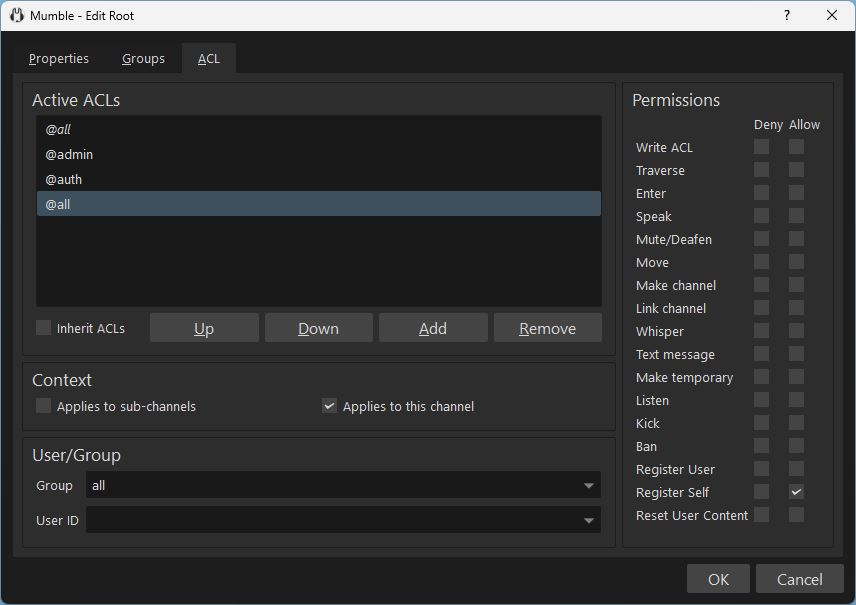
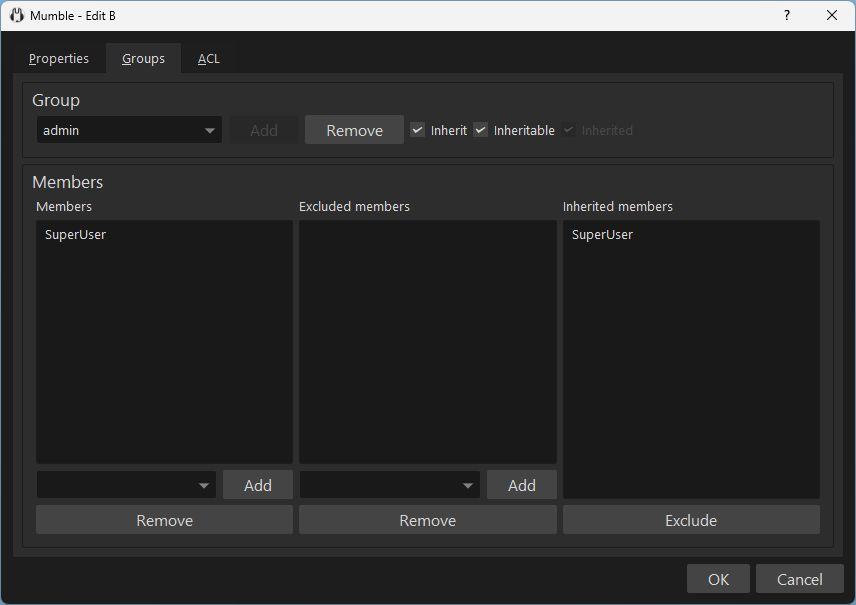
- The access control list system governs who can enter, speak, whisper, record, or administer each channel, supporting structures from open lobbies to leader-only command channels.
- Scriptable server administration
- The Ice middleware interface exposes users, channels, and server settings to external programs, enabling authenticators, web panels, music bots, and custom chat commands.
Features
- Channel Trees
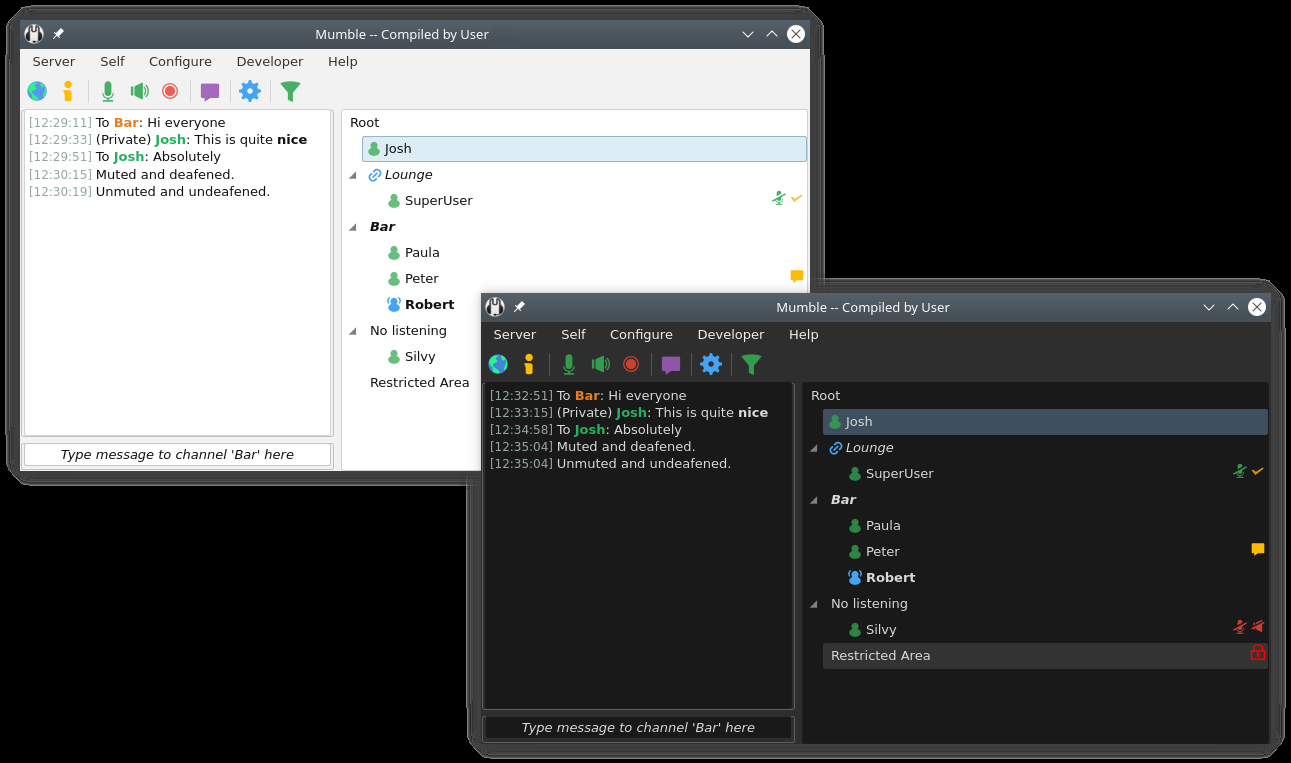
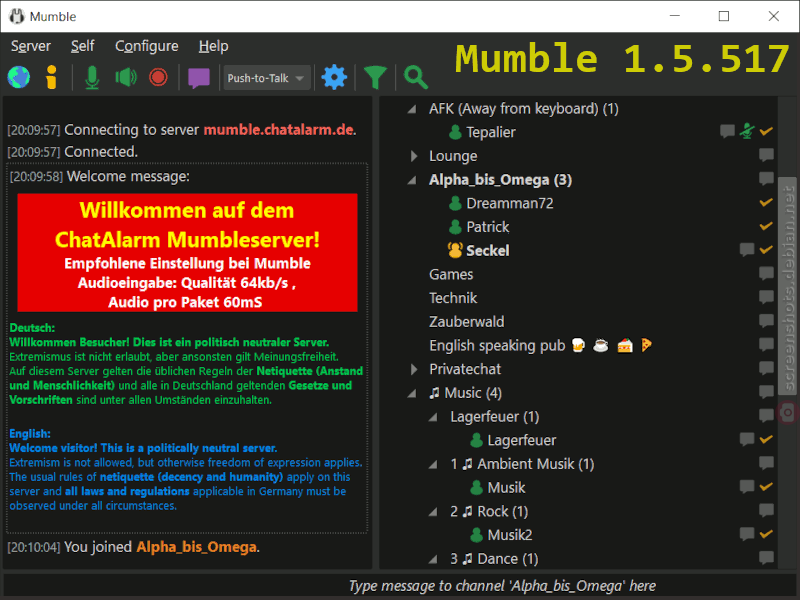
- Organize a community into nested channels and sub-channels with individual passwords, descriptions, links, and user limits, mirroring squads, departments, or project teams.
- Positional Audio
- In supported games, voices come from the direction of each player's character, giving spatial awareness that flat stereo voice chat cannot reproduce.
- Multi-Channel Recorder
- The client records every participant on a separate audio track, which simplifies editing podcasts and interviews where each speaker needs individual levels.
- In-Game Overlay
- A lightweight overlay shows who is speaking, frame rate, and the time inside full-screen games, without alt-tabbing out to the voice client.
- Public Server Browser
- A built-in directory lists public servers by region and topic, helping new communities get discovered and helping players find a home.
- Authenticator Modules
- Login checks can run against existing user databases through authenticator scripts, so members keep one identity across the community website and voice server.