Categories
Self-Hosted Developer Tools AI Agents AI Infrastructure API Gateway Model Context Protocol MCP GatewayStars
Forks
Watchers
Developer links
MCPJungle
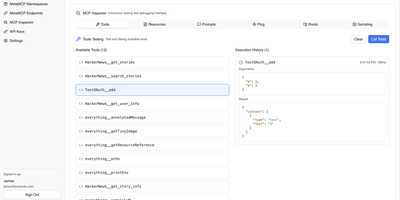
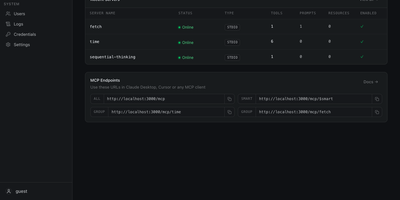
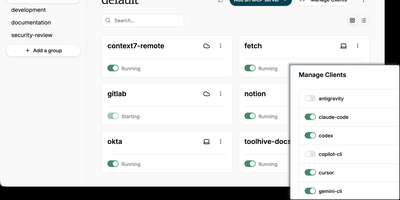
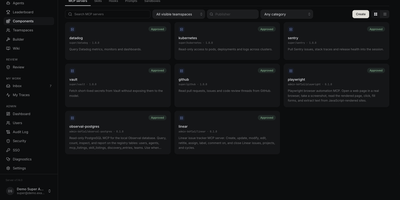
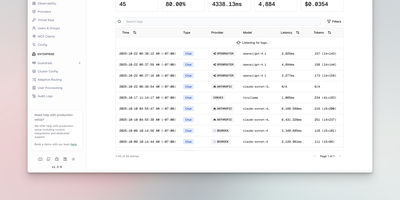
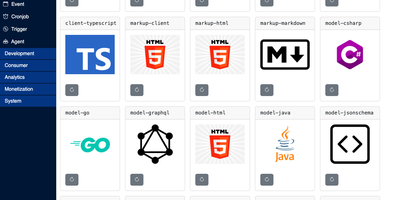
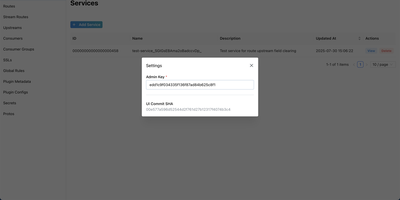
MCPJungle puts every MCP server your AI tools use behind one endpoint, so Claude, Cursor, Codex, and your own agents all connect to a single gateway instead of a tangle of per-client configurations. Register remote HTTP servers and local STDIO servers once, and their tools, prompts, and resources become discoverable through the gateway in one place. Tool groups expose curated subsets at their own endpoints, so a coding agent sees only the tools its job needs instead of hundreds of irrelevant ones competing for context. The dashboard gives you a visual registry of servers, tools, and groups for everyday management, while the CLI and REST API cover scripting and automation. Development mode runs with zero authentication for a personal setup; enterprise mode adds per-client tokens that allow-list exactly which servers each client may reach. User accounts and manual server initialization give teams a governed shared deployment, with OpenTelemetry metrics showing what clients call and how the gateway performs. Upstream servers can authenticate with bearer tokens or OAuth, so credentials stay centralized in the gateway rather than copied into every client config. Registry data persists in a local file for solo use or in PostgreSQL when the gateway becomes shared team infrastructure. Running on a dedicated VPS on RepoCloud with guaranteed CPU, RAM, and SSD, full root SSH access, and a browser serial console. MPL-2.0 licensed.
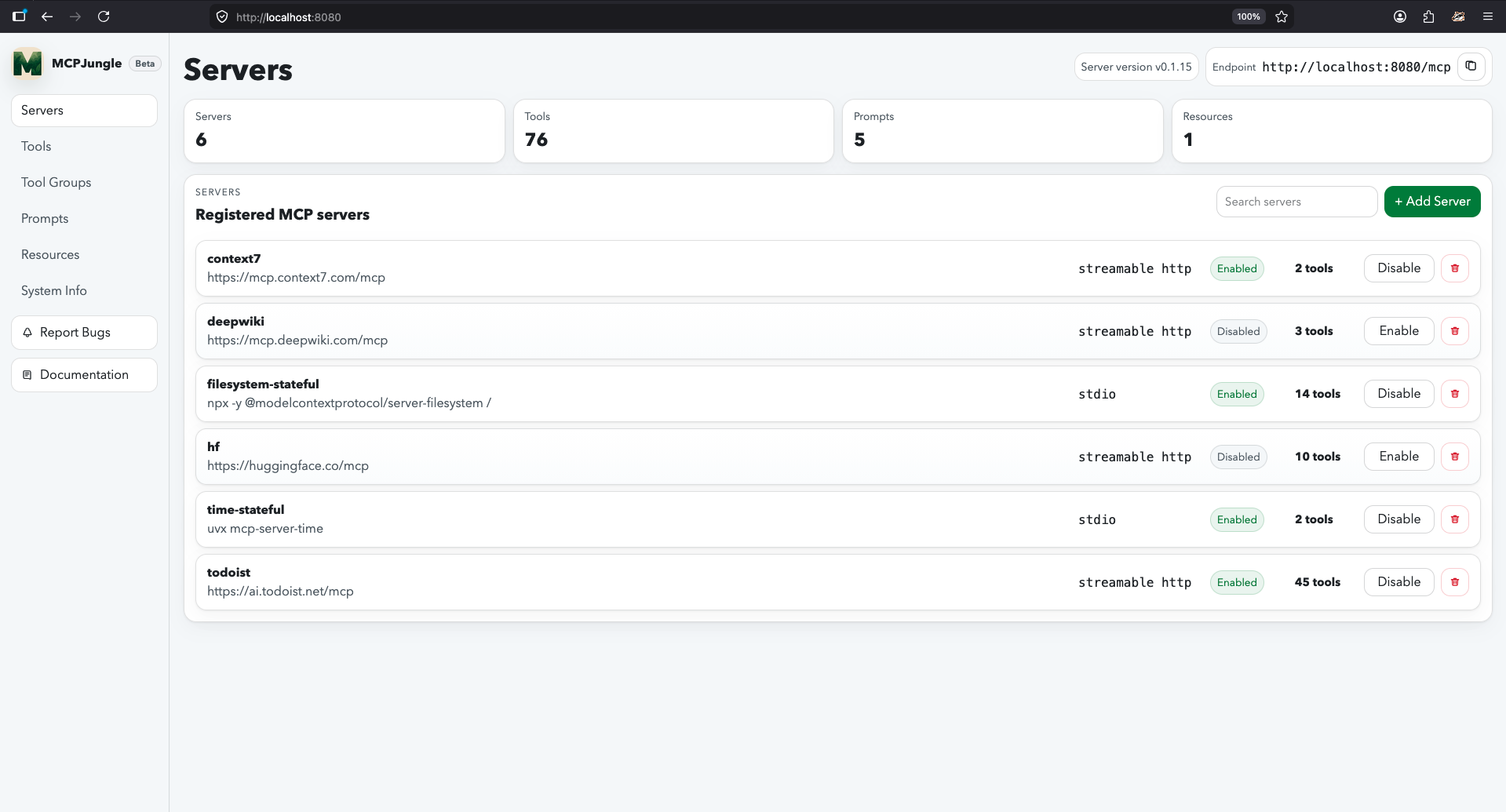
Benefits
- One Endpoint for Everything
- Every AI client connects to a single /mcp address, so adding or removing a tool server happens once in the registry instead of inside each client's configuration file.
- Curated Tools per Client
- Tool groups publish only the tools, prompts, and resources a given agent needs at its own endpoint, keeping limited context windows free of irrelevant capabilities.
- Access Control When Shared
- Enterprise mode issues a token per client with an explicit allow-list of reachable servers, so a compromised or curious agent cannot wander into tools it was never granted.
- Credentials Stay Centralized
- Upstream servers authenticate through the gateway with bearer tokens or OAuth, which means secrets live in one protected place rather than being pasted into every laptop's client settings.
Features
- Single MCP Endpoint
- All registered servers are exposed through one streamable HTTP endpoint at /mcp, with legacy SSE transport retained for older clients.
- Remote and STDIO Servers
- Register hosted MCP servers by URL or run local STDIO servers under the gateway, mixing both kinds behind the same client connection.
- Tool Groups
- Create named groups containing cherry-picked tools, prompts, and resources, each served from its own scoped MCP endpoint.
- Dashboard, CLI, API
- Manage the registry from the web dashboard for everyday tasks, the mcpjungle CLI for completeness, or the REST API under /api/v0 for automation.
- Enterprise Access Control
- Per-client tokens, server allow-lists, and operator user accounts govern shared deployments, with manual initialization for controlled rollouts.
- OpenTelemetry Metrics
- Enterprise deployments emit OpenTelemetry metrics by default, exposing client activity and gateway health to your existing observability stack.