Categories
Self-Hosted Developer Tools AI Agents Automation Multi-Agent Systems Code Review Slack Integration AI Coding AssistantStars
Forks
Watchers
Developer links
Agent Army
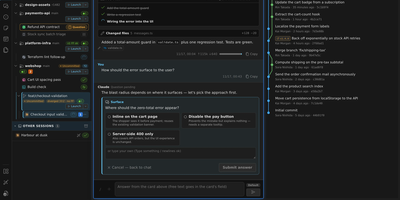
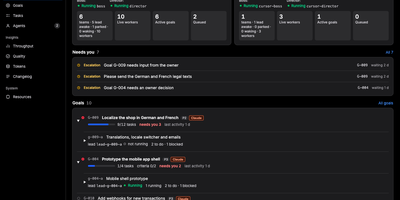
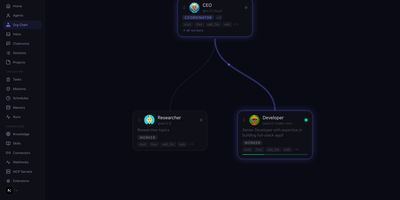
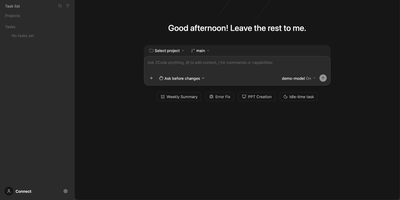
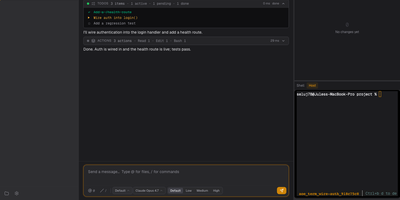
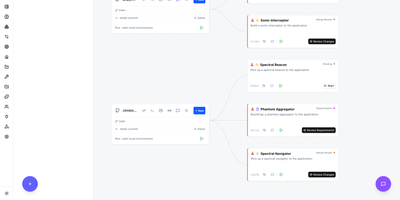
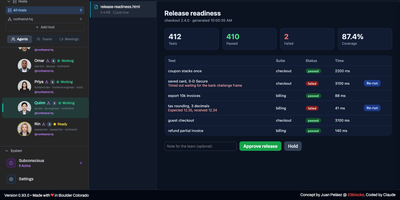
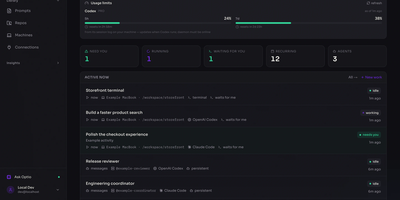
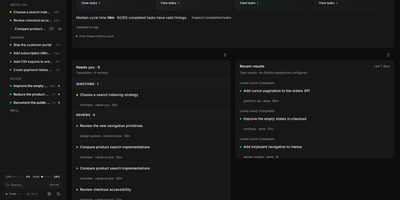
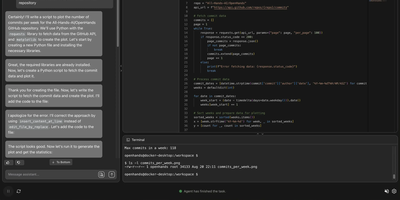
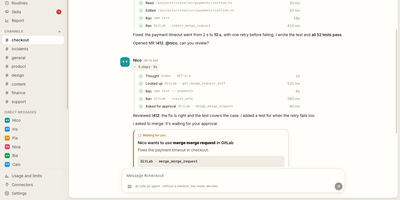
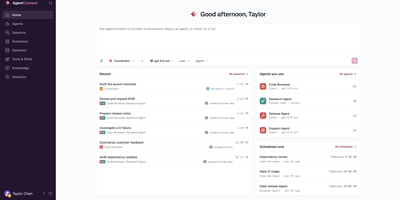
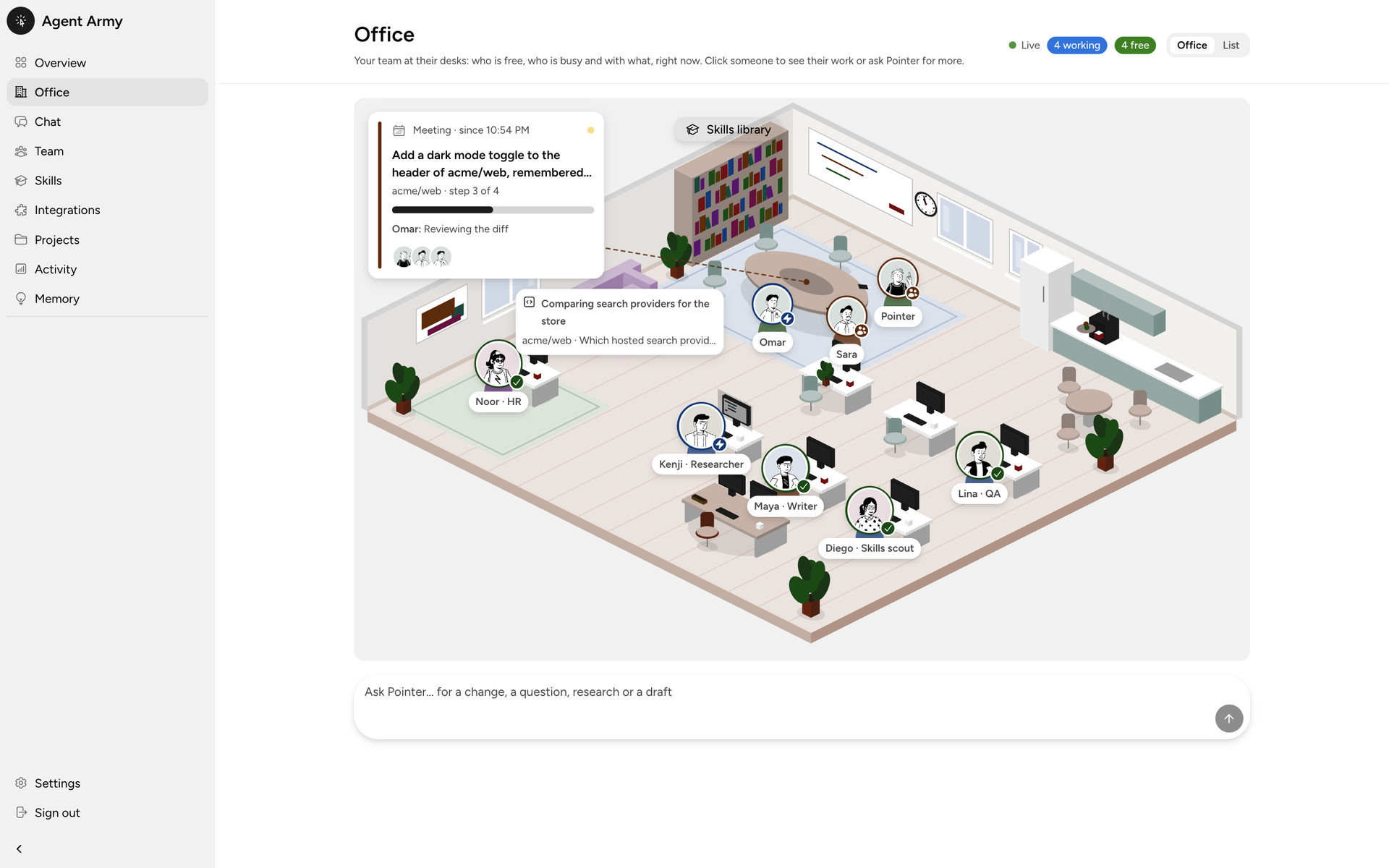
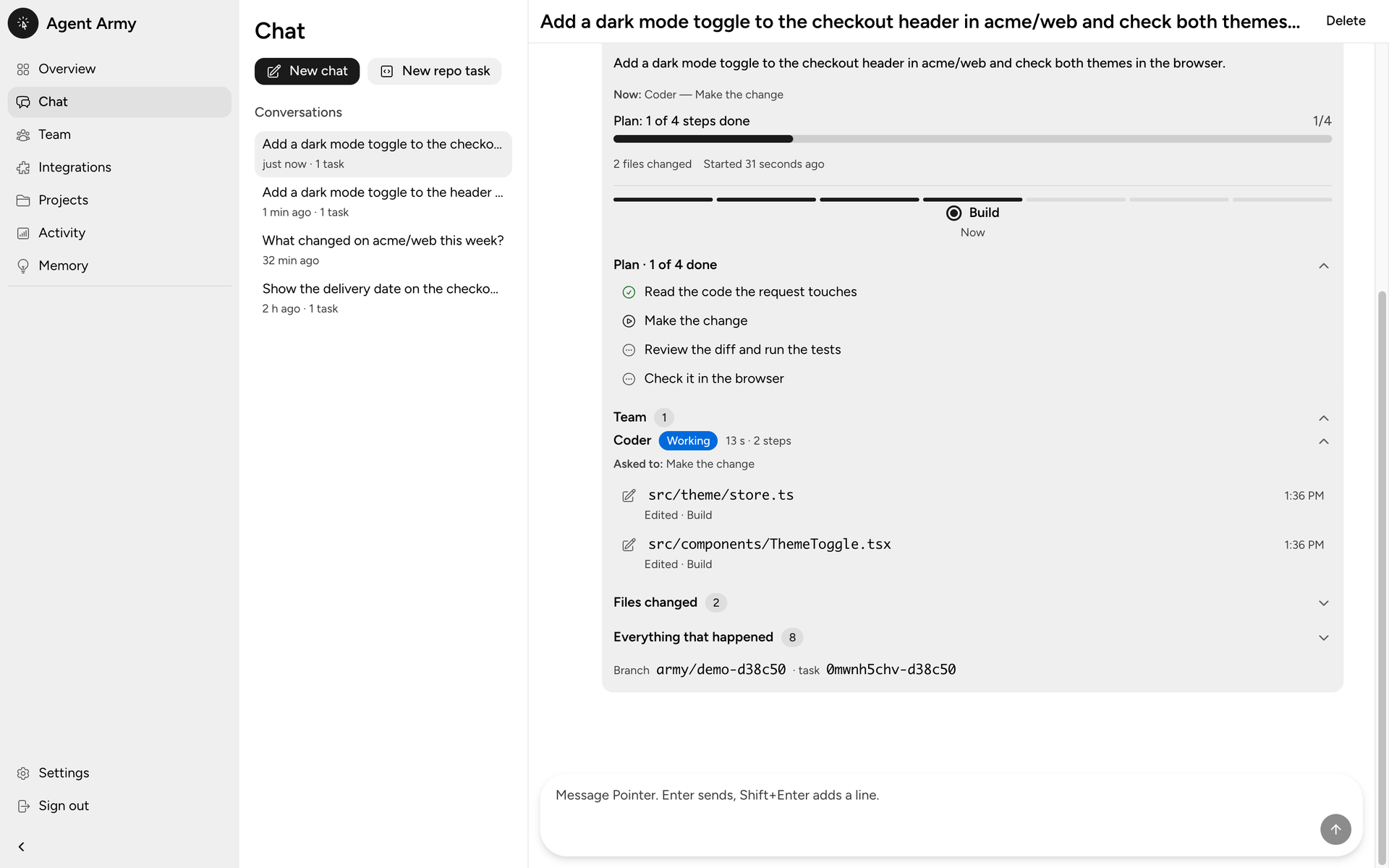
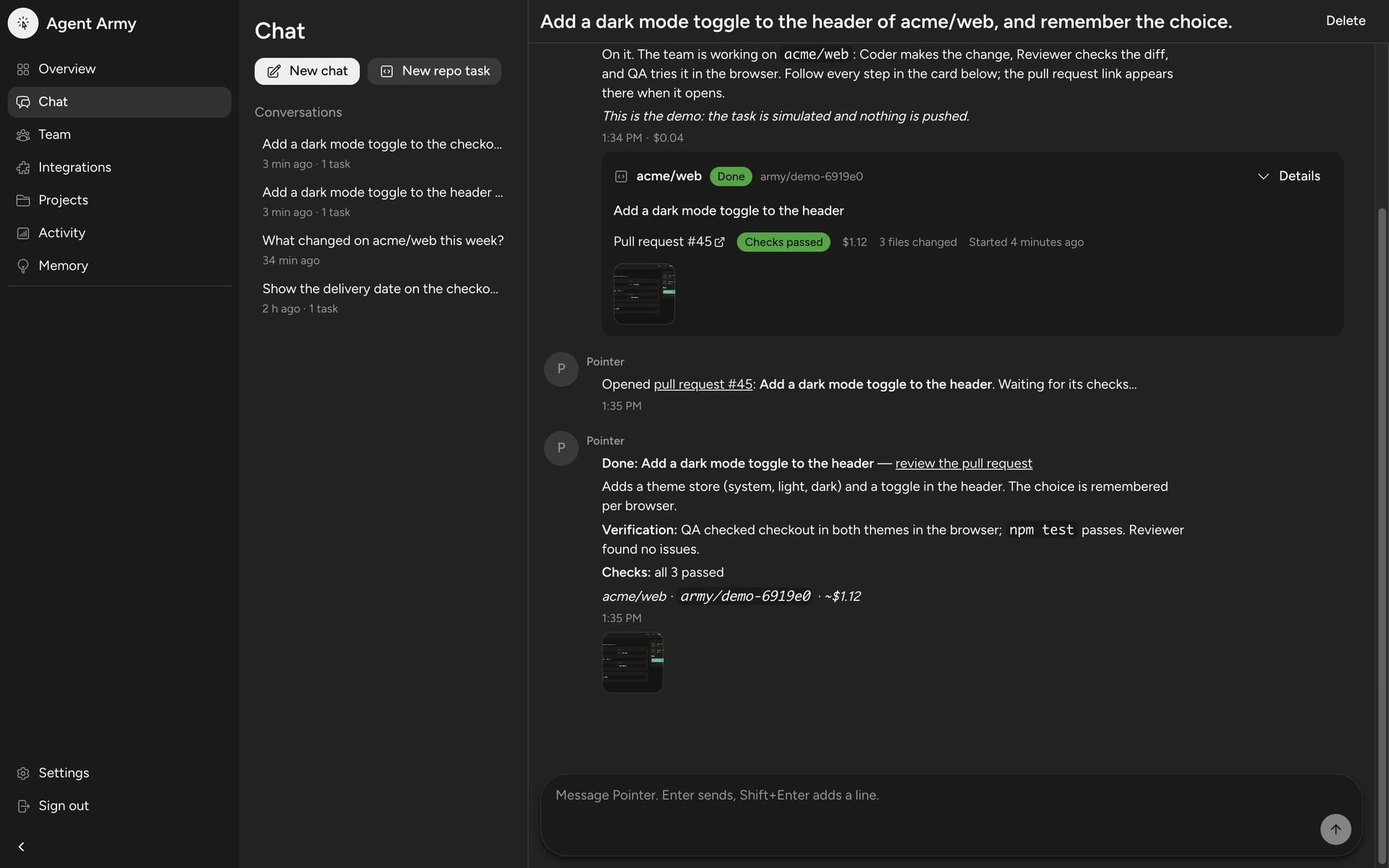
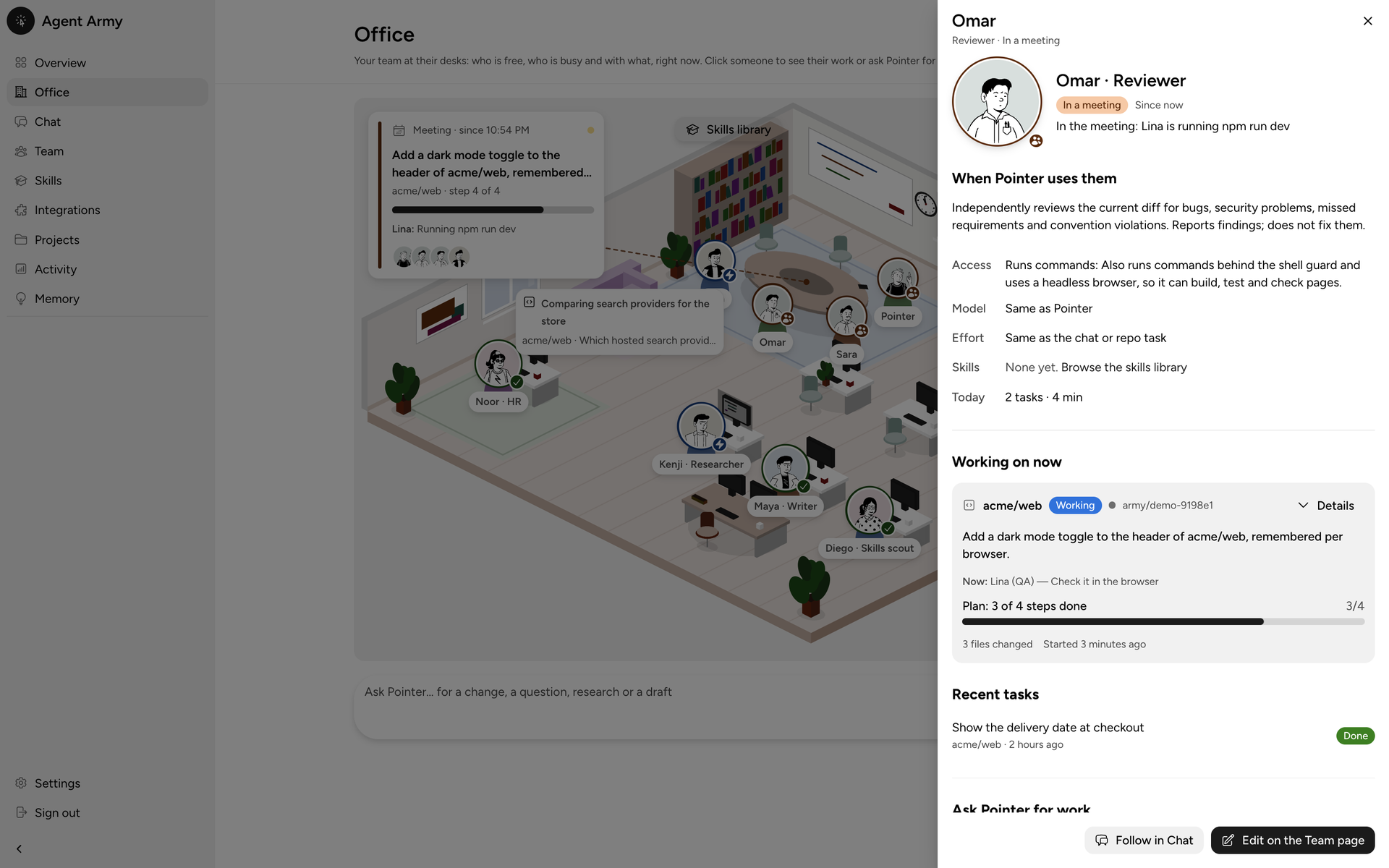
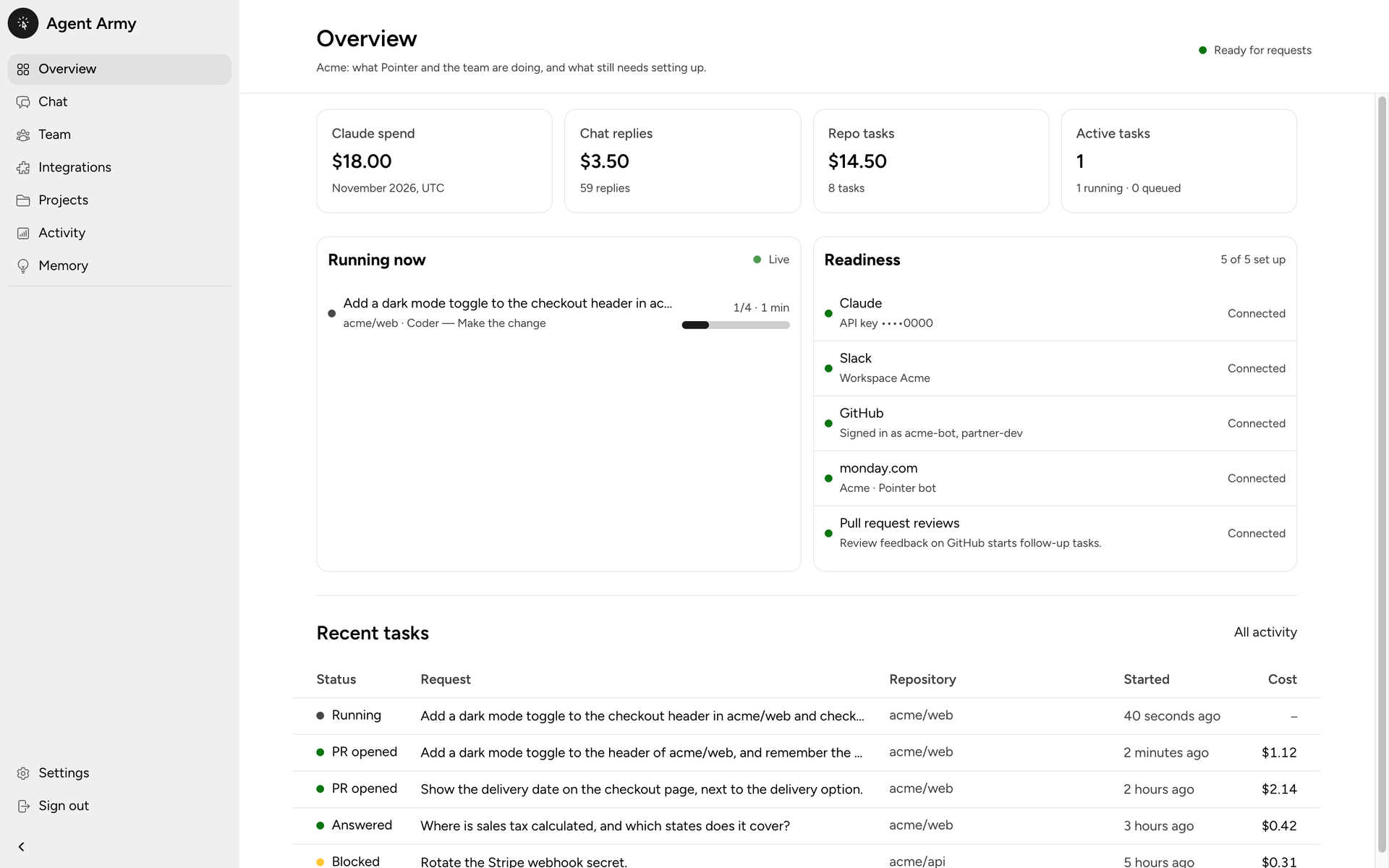
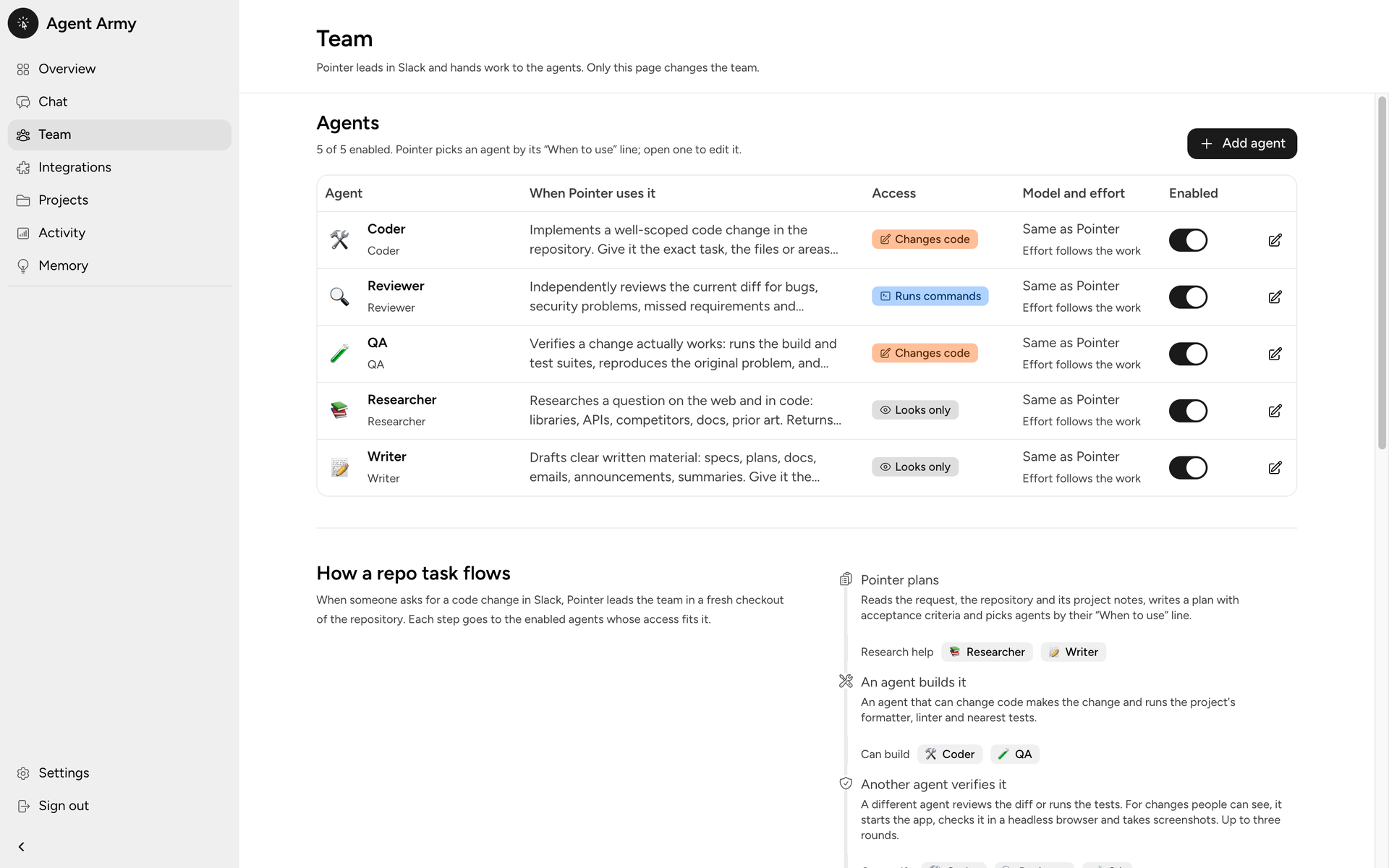
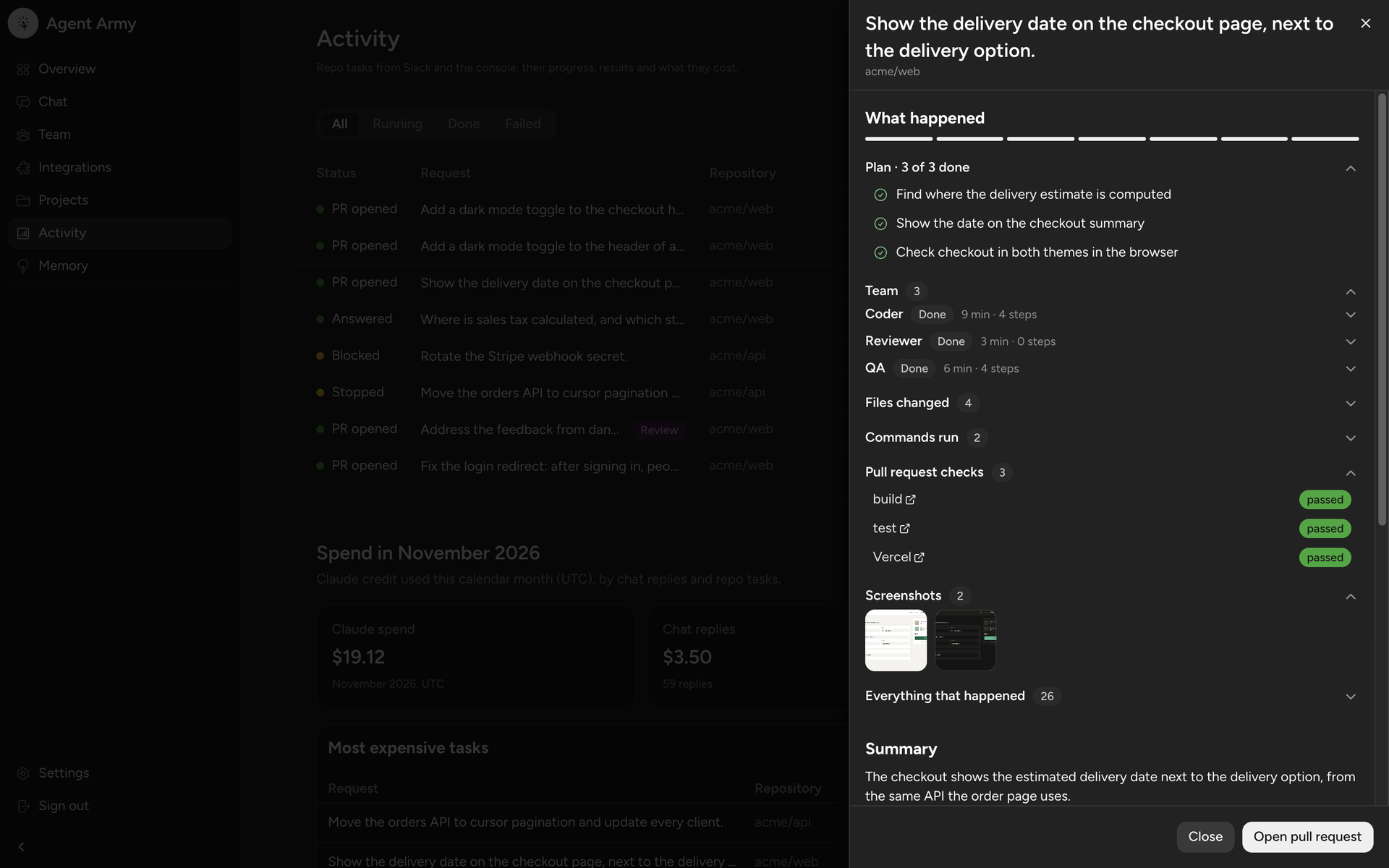
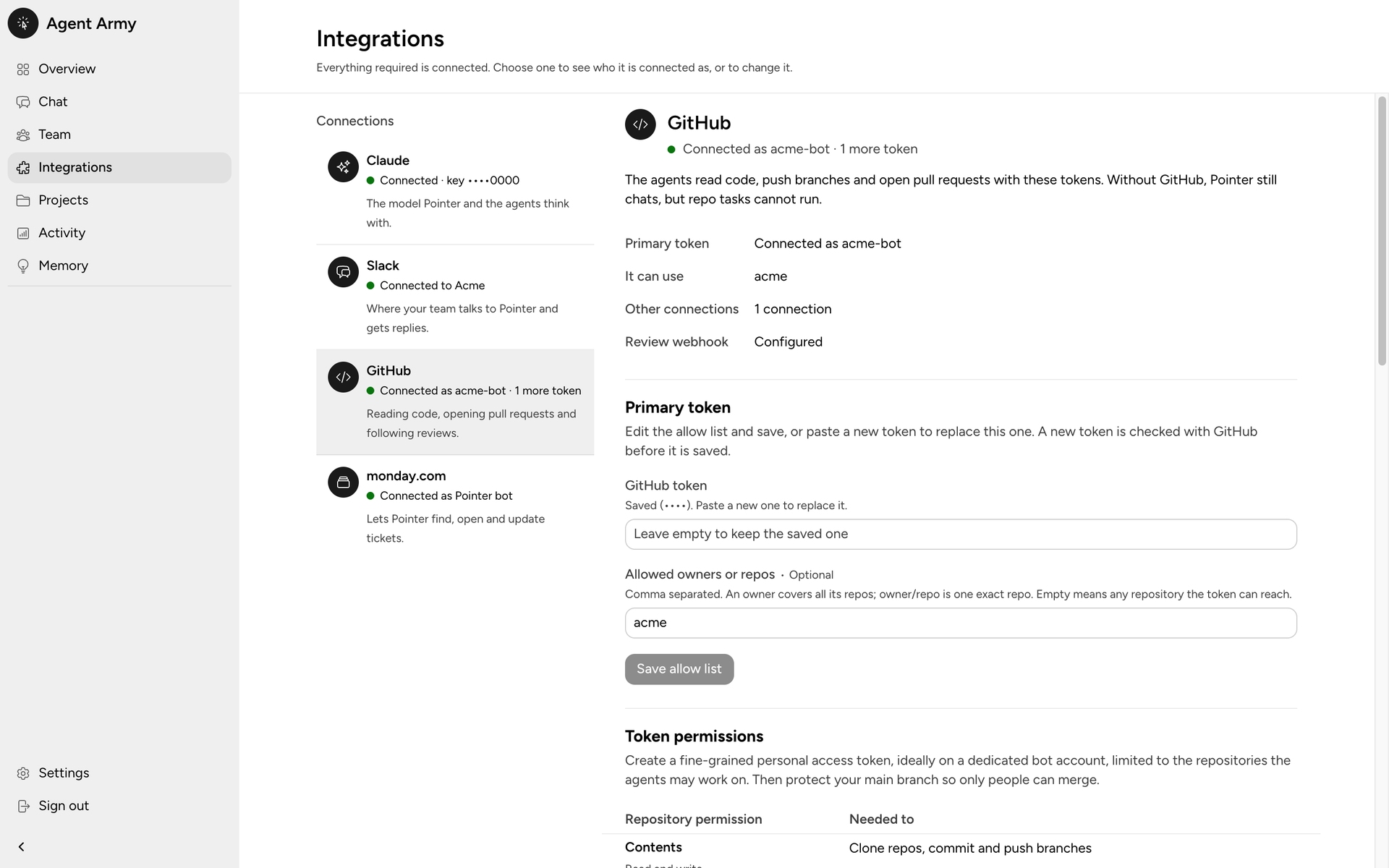
Message Pointer in Slack or the web console, and a team of Claude agents plans the change, builds it, checks it in a headless browser, and opens a reviewed pull request for you to merge. Pointer also answers questions, researches the web, reads GitHub and shared files, and remembers what you tell it. The team is a list you edit: Coder builds, Reviewer reads the diff, QA proves each test fails without the change, and you can add roles. A virtual office shows every agent at a desk with a face, who is free, who is busy, and who sits in a meeting. Open any task to follow its steps, its plan checklist, the files and commands, and the screenshots it took. It waits for CI, fixes failing checks, opens the real preview deployment, and answers review comments on the pull request. Move a Jira issue or a monday.com ticket to Ready for dev and the team starts, updating the ticket as it goes. About 140 more apps connect through MCP servers, among them Linear, Notion, Sentry, Stripe, and Figma. Monthly caps per repository, provider, and agent come with Slack alerts, and small tasks route to a cheaper model. Agents only open pull requests; they never push to your branches or merge. Running on a dedicated VPS on RepoCloud with guaranteed CPU, RAM, and SSD, full root SSH access, and a browser serial console. MIT licensed.
Benefits
- An engineering team in Slack
- Ask in a DM, channel, or thread and a coordinated team plans, codes, reviews, and tests the change, returning a pull request instead of a promise.
- Humans keep final control
- Agents only open pull requests and cannot push to protected branches or merge, so every change still passes your own review and branch protections.
- Costs stay predictable
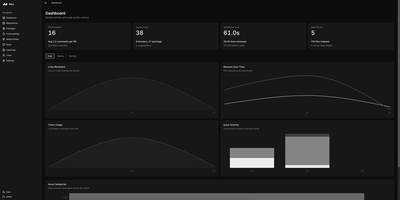
- Caps per month, repository, provider, and agent, plus Slack alerts before a limit and cheaper models for small tasks, keep Claude spending visible and bounded.
- Your data stays on your server
- The MIT-licensed service runs on your own host, and code, conversations, and keys stay in your deployment, with credentials stored encrypted and never sent back to the browser.
Features
- Pointer in Slack and Console
- Chat with Pointer in Slack DMs, channels, and threads or in the web console to ask questions, research, read GitHub and shared files, and start repo tasks.
- Editable Agent Team
- Coder, Reviewer, QA, Failure Reviewer, Researcher, Writer, HR, and Skills Scout come built in; rename them, rewrite instructions, and set access, model, and effort for each.
- Virtual Office View
- An isometric office shows each agent at a desk with a status ring, a meeting table for multi-agent tasks, and a detail card for every person.
- Verified Pull Requests
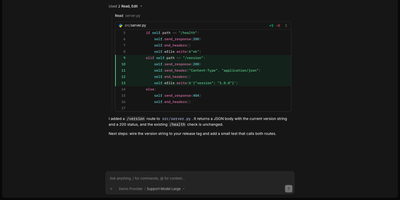
- Each repo task runs in an isolated worker that clones, plans, builds, checks UI changes in headless Chromium, waits for CI, fixes failures, and opens the pull request.
- Spending Caps and Routing
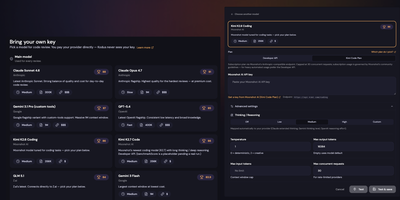
- Monthly, per-repository, per-provider, and per-agent caps raise Slack alerts, while model routing sends small tasks to cheaper models and falls back across up to four providers.
- Ticket and App Integrations
- Connects GitHub, GitLab, Bitbucket, Jira, Confluence, monday.com, Miro, and about 140 more apps through MCP servers, most with one-click sign-in.