Categories
Self-Hosted DevOps Kubernetes Container Management Deployment Platform as a Service Web DashboardStars
Forks
Watchers
Developer links
Zeabur
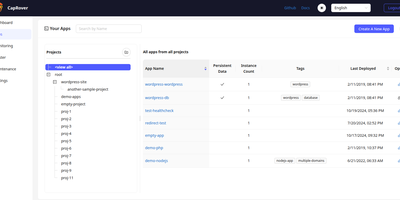
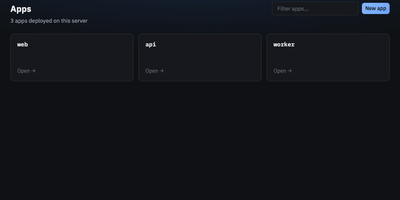
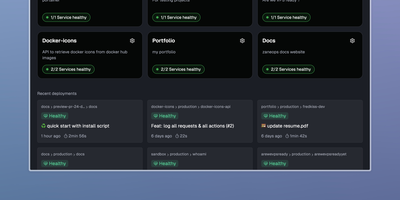
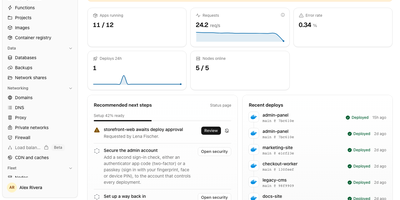
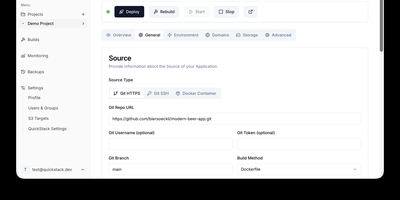
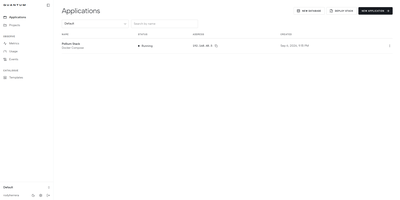
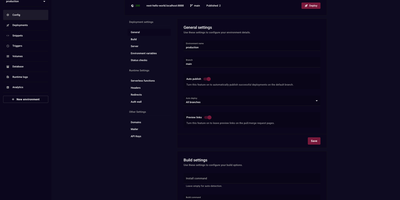
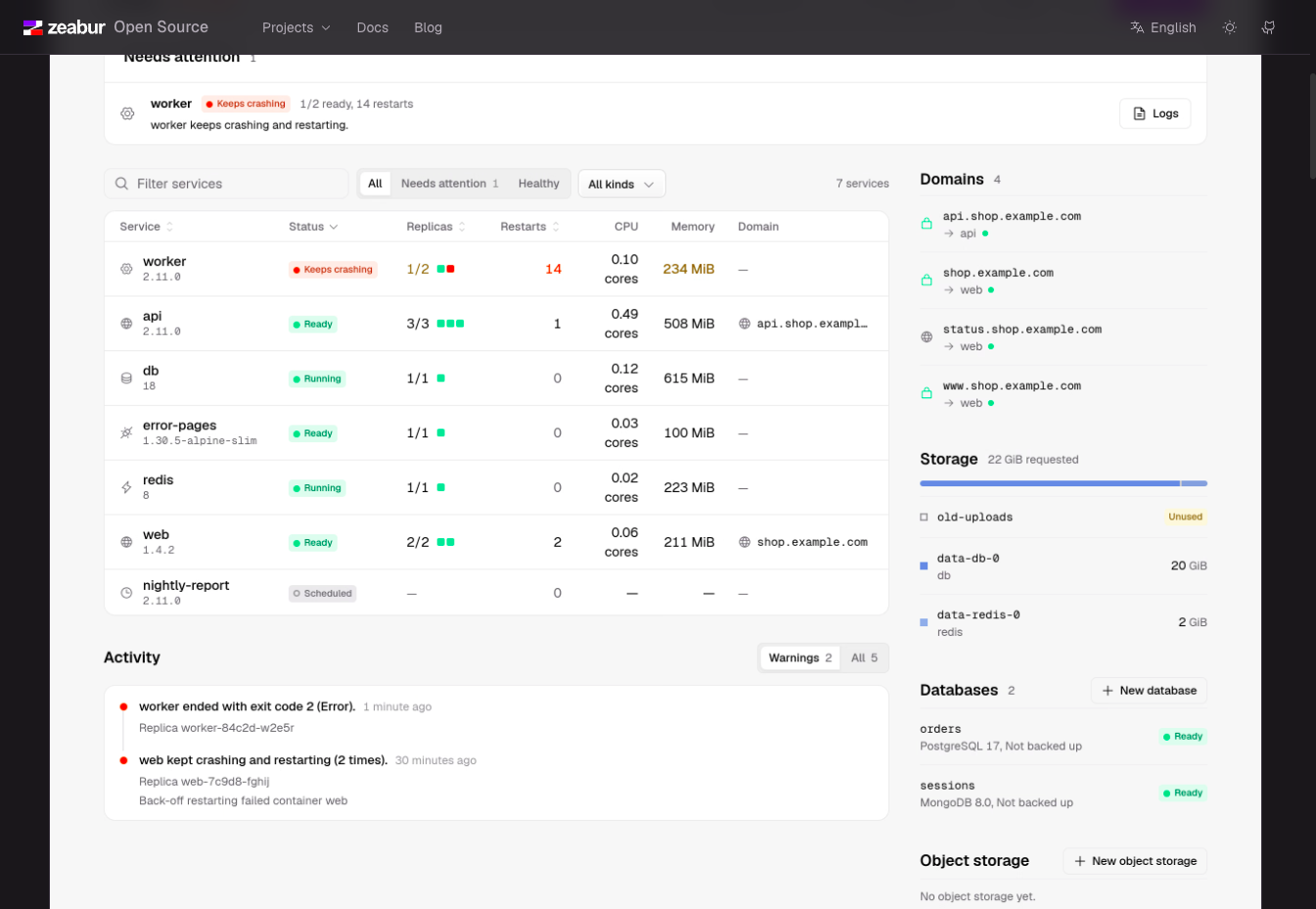
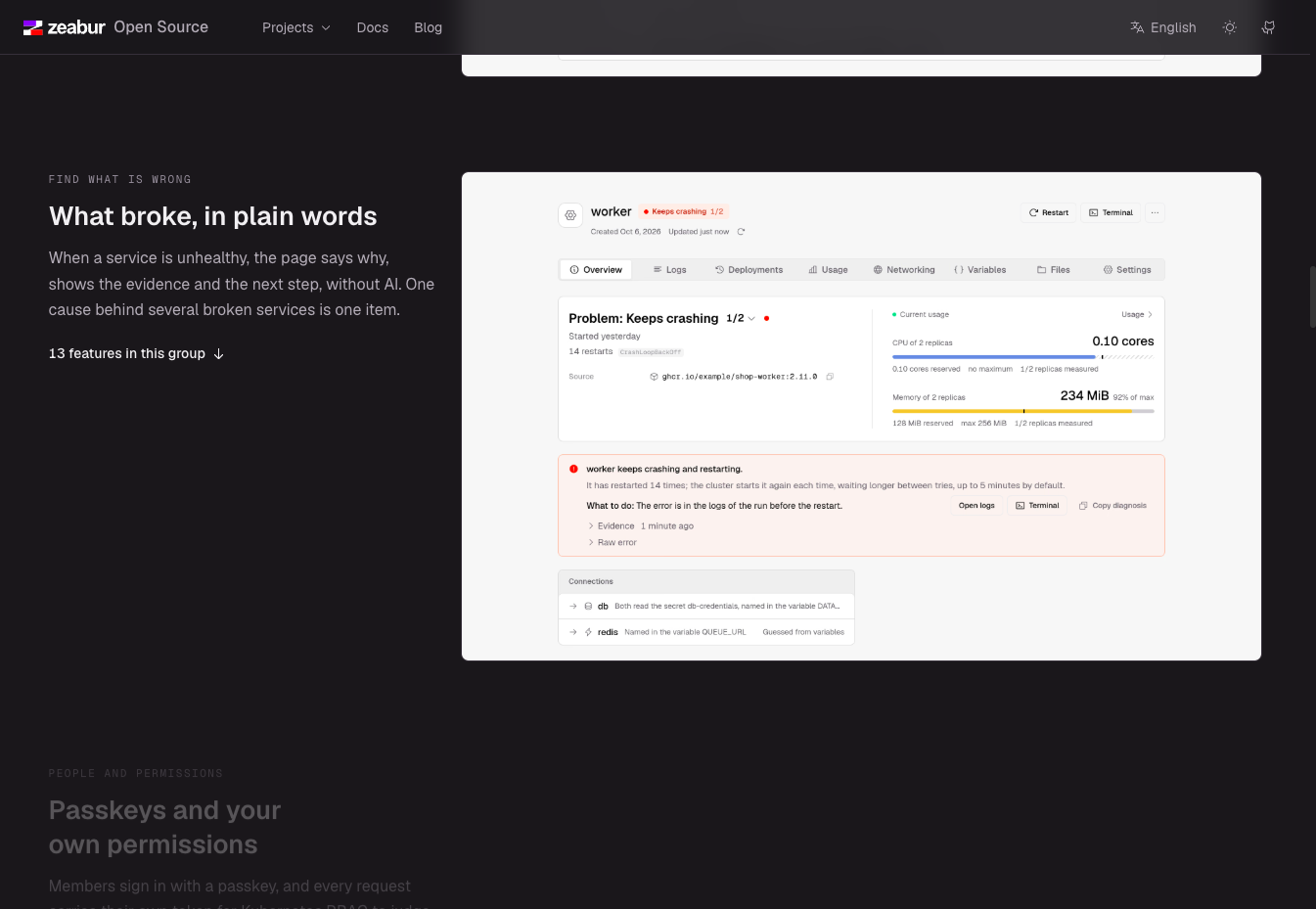
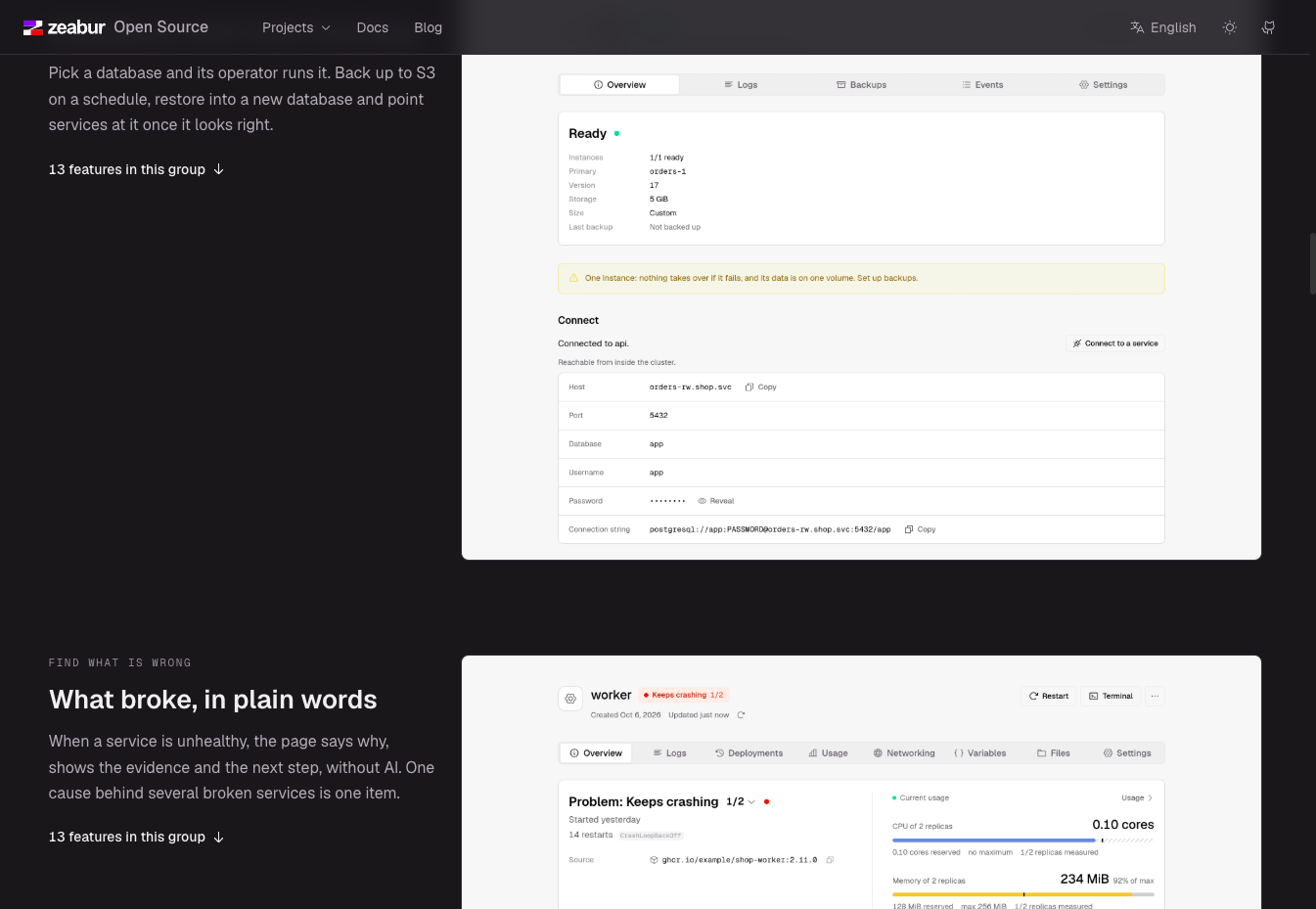
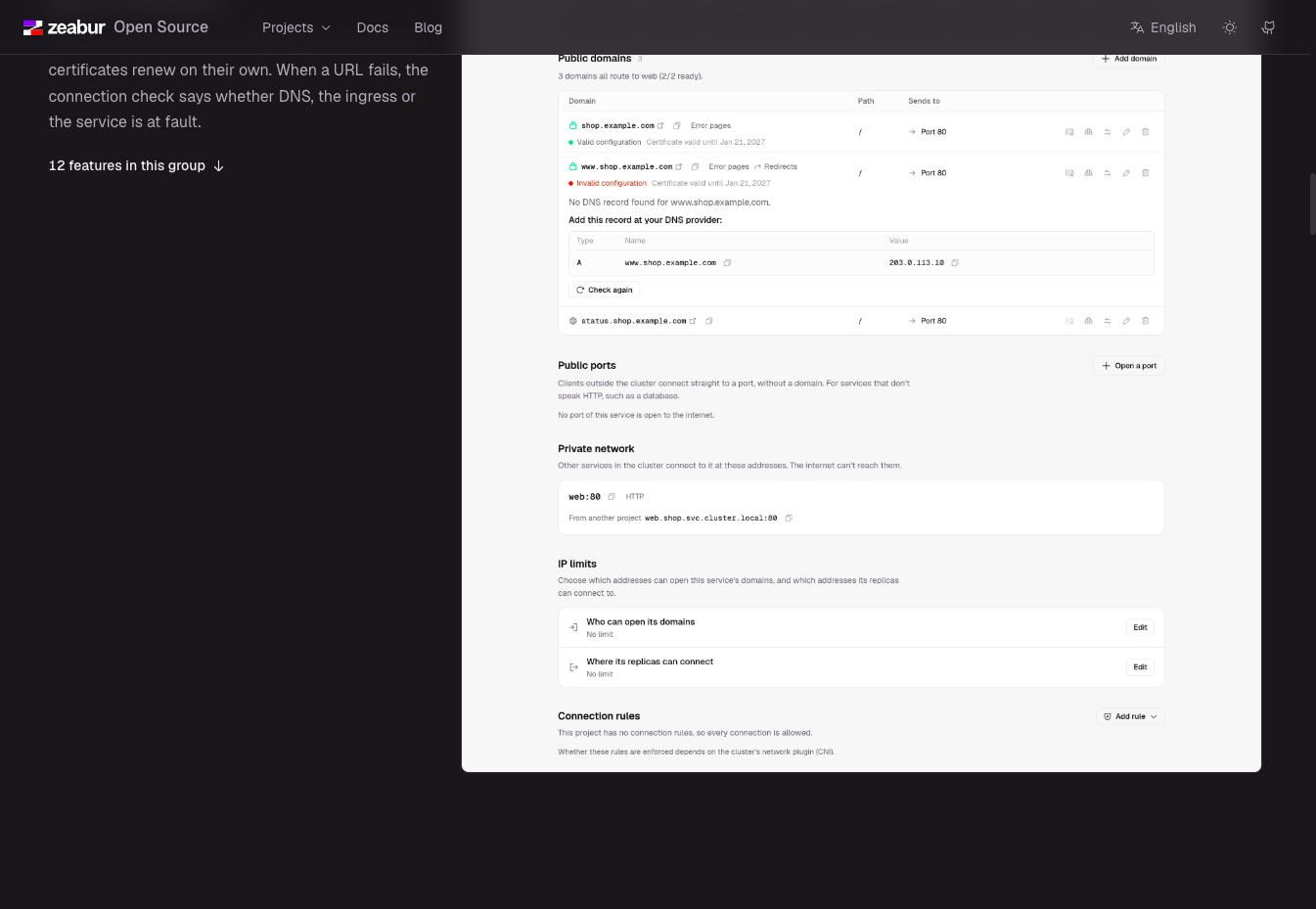
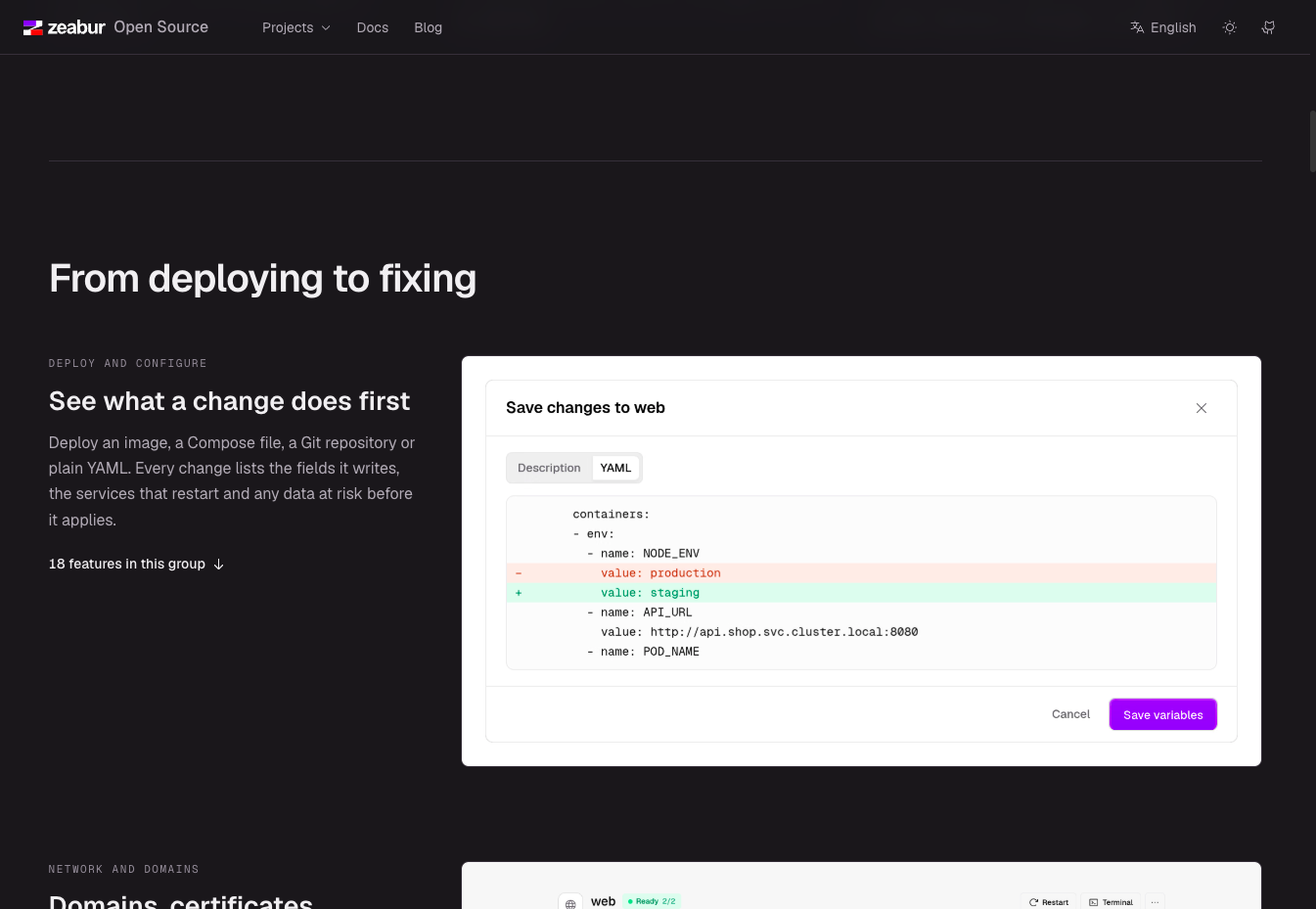
Zeabur is a self-hosted web platform that deploys and runs your services on your own Kubernetes cluster, presenting the cluster as simple projects and services instead of raw manifests. Every change starts as a readable plan listing the exact fields it will write and who owns them today, and nothing is applied until you confirm it. When something breaks, Zeabur says so in plain words and points at the fix: a worker that restarted fourteen times gets a button straight to the logs from the run before the restart. You deploy from Git repositories, from an uploaded folder or ZIP archive, or directly in the dashboard, then follow live logs, open a terminal inside a container, and watch CPU and memory move over time. Projects are namespaces and all state lives in Kubernetes objects, so there is no Zeabur database to back up, and uninstalling the platform leaves your Deployments, Services, and Ingresses running untouched. Companion pieces add passkey sign-in for kubectl with tokens that expire in minutes, image builds from Git through a BuildKit operator, and a catalog of cluster components and app templates. Running on a dedicated VPS on RepoCloud with guaranteed CPU, RAM, and SSD, full root SSH access, and a browser serial console. Apache-2.0 licensed.
Benefits
- Changes Previewed Before Applying
- Every modification first renders as a plan naming the exact fields it writes and their current owners, protected by a signed plan token, so you approve the change instead of discovering it afterwards in production.
- Plain-Language Cluster Diagnostics
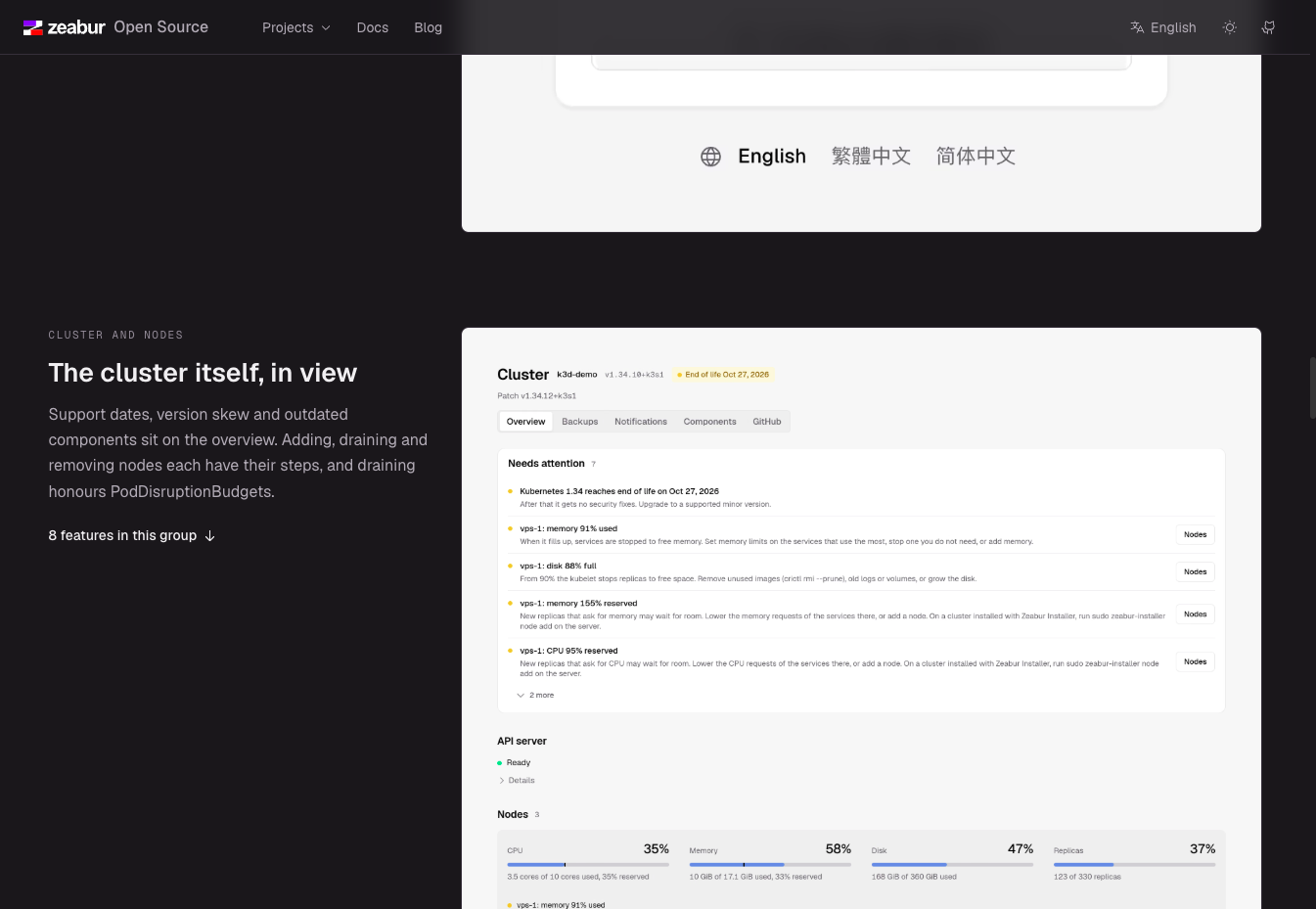
- Health problems are explained as sentences with the remedy attached, like a restarted worker linked directly to its previous logs, instead of a wall of events you must decode under pressure at midnight.
- No Database To Manage
- Projects are Kubernetes namespaces and services are the cluster's own objects, so Zeabur stores nothing of its own; remove it and your workloads keep running under kubectl, Helm, Argo CD, or Flux.
- Your Own Kubernetes Permissions
- Every request carries your own credential and the kube-apiserver decides what it may do, so existing RBAC, namespaces, and team boundaries keep working exactly as your cluster already defines them today.
Features
- Projects As Namespaces
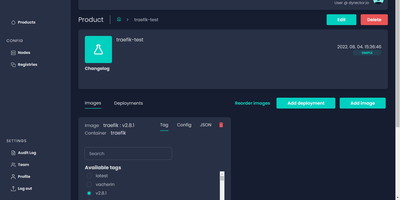
- The web interface maps each Kubernetes namespace to a project and its Deployments, Services, and Ingresses to services you can inspect, scale, restart, and roll back.
- Live Logs And Terminal
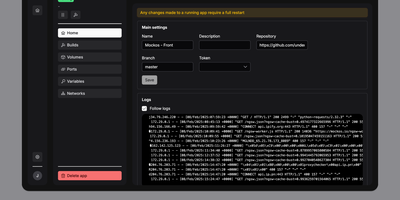
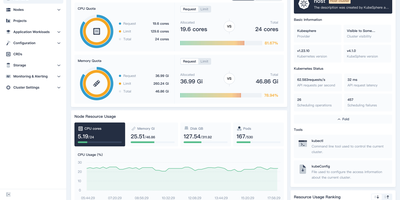
- Followed live logs, a shell inside any container, cluster events, and CPU and memory both current and over time, without leaving the dashboard or touching kubectl.
- Git And Upload Deploys
- A BuildKit-based operator builds container images from Git, while uploaded folders and ZIP archives deploy through the dashboard or a single zeaburctl up command.
- Passkey Kubectl Sign-In
- Zeabur Identity signs kubectl in through the browser with a passkey and issues tokens that expire within minutes, replacing long-lived kubeconfig credentials for your team.
- Component And Template Catalog
- Zeabur Catalog installs cluster components and application templates tested in CI, delivered as a helm command, a Flux HelmRelease, an Argo CD Application, or a k3s HelmChart.
- Backups And Network Policies
- Backup status through K8up, Velero, and CloudNativePG, NetworkPolicy reachability views, node inspection, and Kubernetes version upgrade guidance round out day-two cluster operations.