Categories
DevOps Security Infrastructure PKI Certificate Management Certificate Authority SSL/TLS ManagementStars
Forks
Watchers
Developer links
Ultimate Certificate Manager
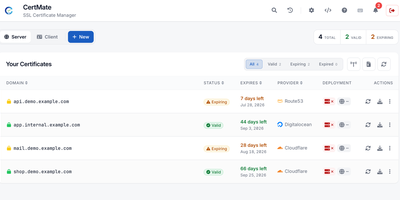
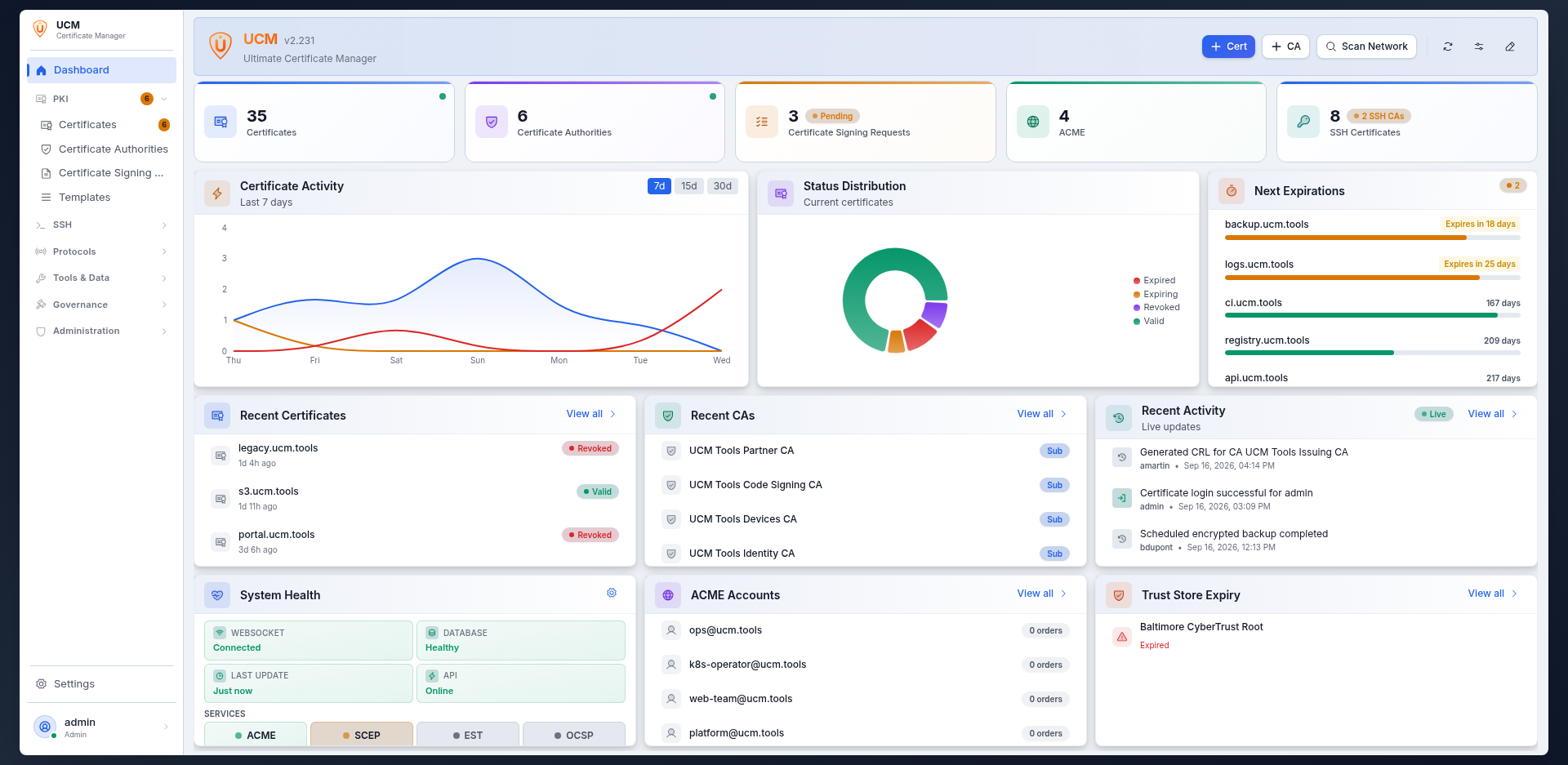
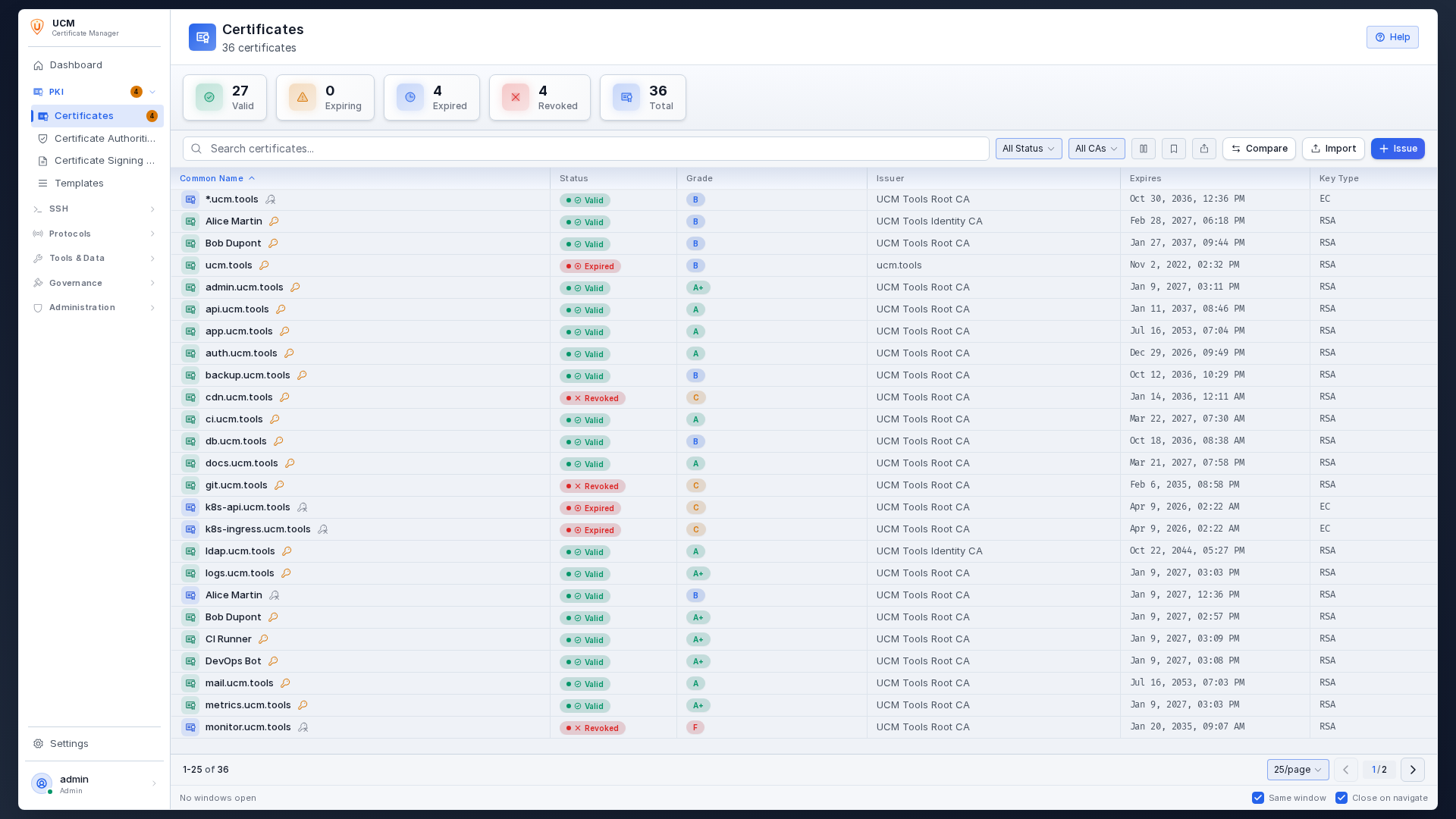
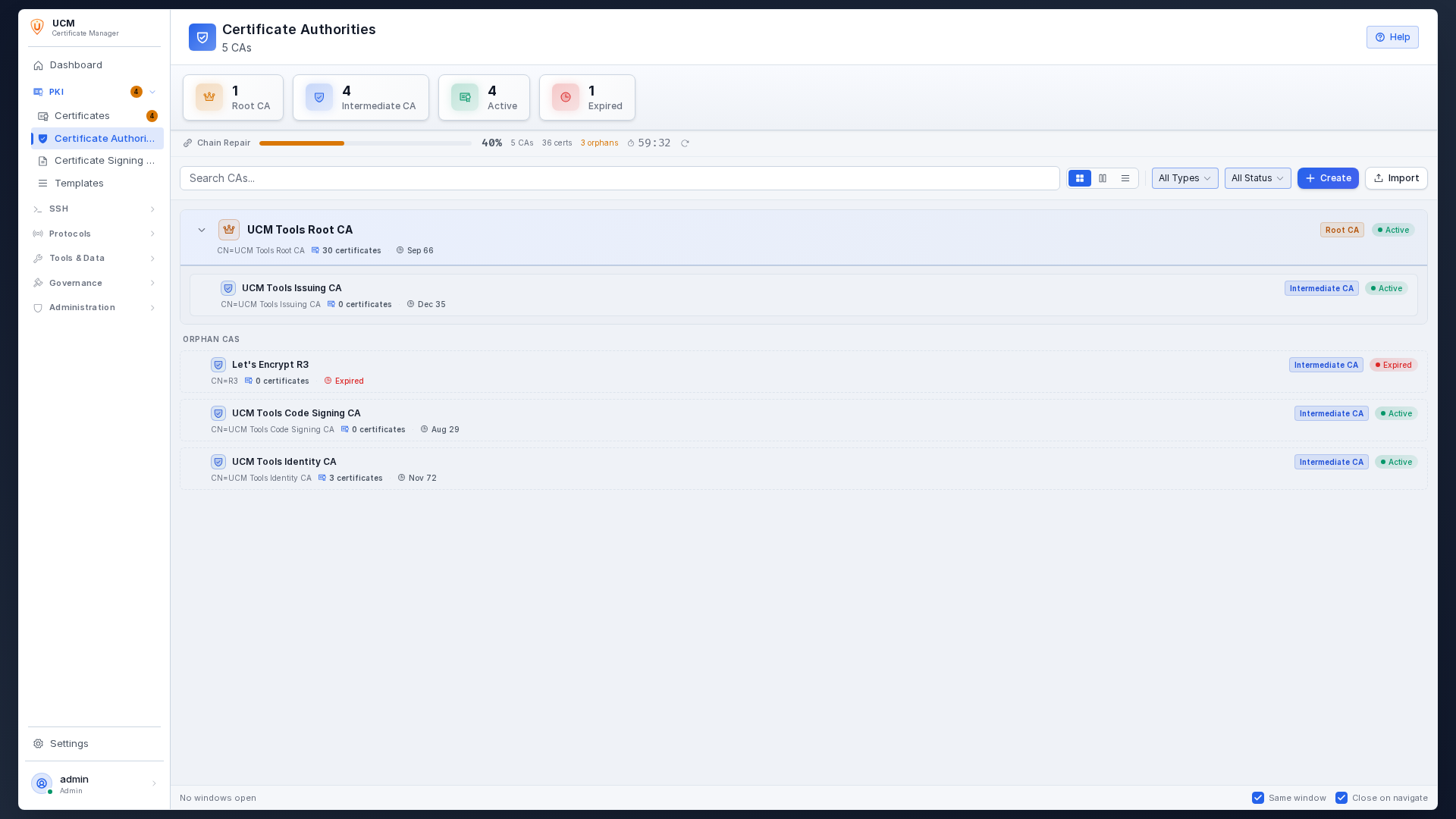
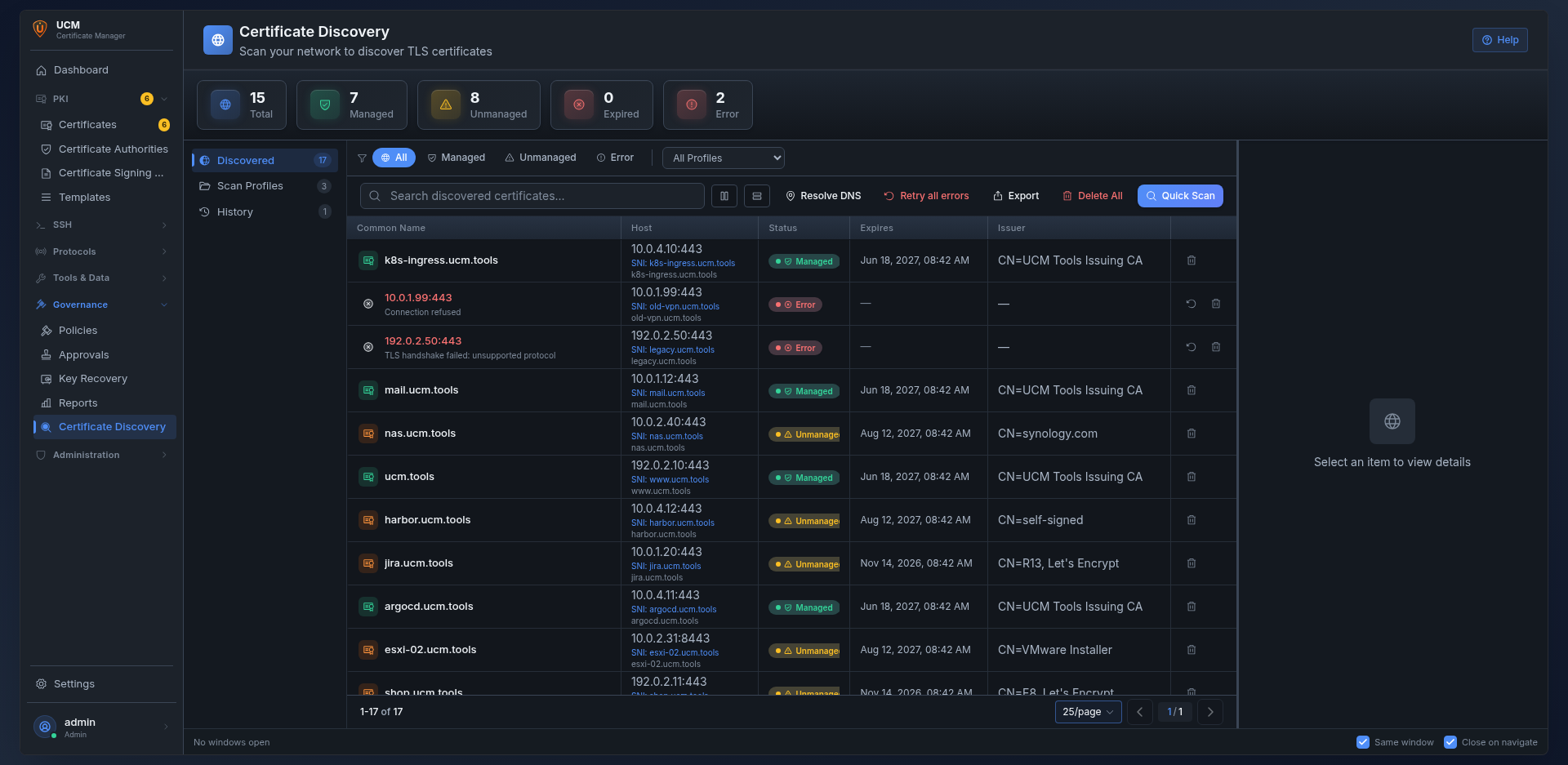
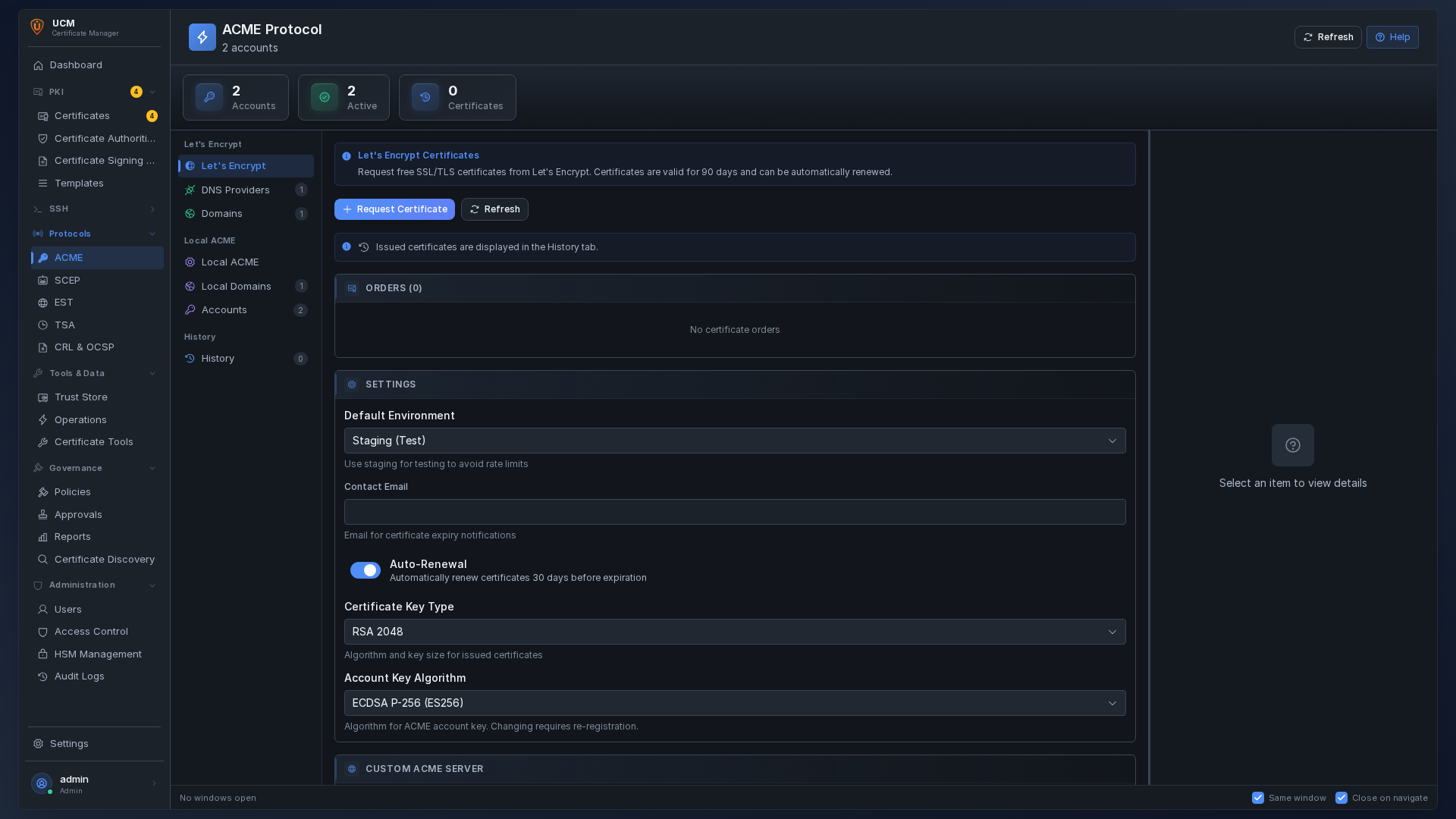
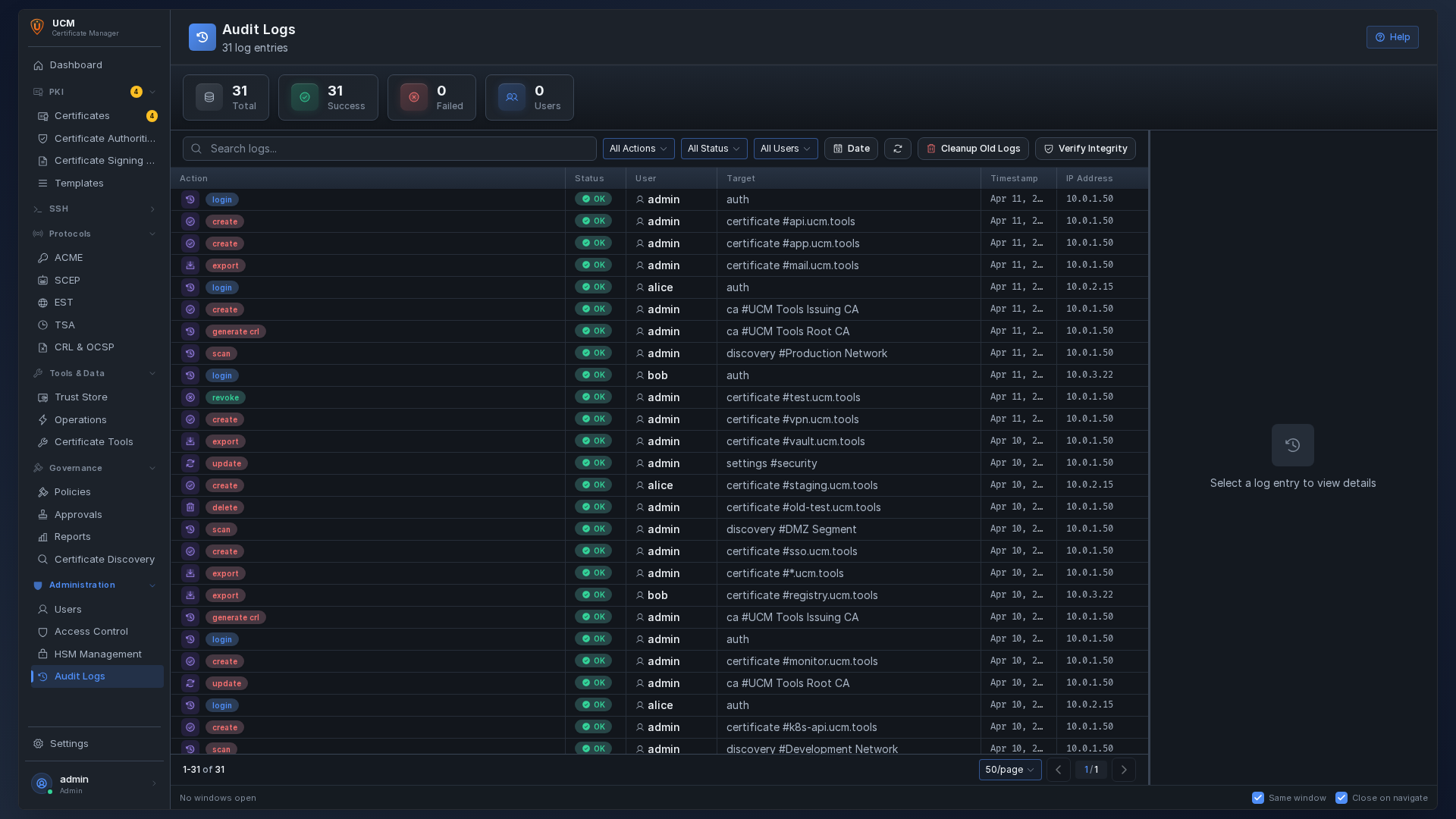
Ultimate Certificate Manager, or UCM, runs your own certificate authority from a web interface, so issuing, renewing, and revoking certificates stops being a pile of OpenSSL commands. Create root and intermediate CAs, arrange them in a hierarchy, and manage every certificate through its life: issue, sign, renew in place, revoke with a reason, and export as PEM, DER, PKCS#12, or JKS. Devices and servers enroll themselves through ACME, SCEP, and EST endpoints, while OCSP answers status checks in real time and CRL distribution points publish revocations on schedule. Network discovery scans your address space and reports the certificates it finds, so expiring or unknown certificates surface before they cause an outage. Templates define server, client, code-signing, email, and smartcard profiles, with key types from RSA and elliptic curves to post-quantum ML-DSA, and issuance policies can route sensitive requests through an approval queue. Signing keys can live in an HSM so private material never leaves the hardware, and every key at rest can be encrypted under a master key. Operators sign in with passwords, TOTP, WebAuthn, mTLS, LDAP, OAuth2, or SAML, and role-based permissions decide who may issue, approve, or merely audit. Running on a dedicated VPS on RepoCloud with guaranteed CPU, RAM, and SSD, full root SSH access, and a browser serial console. AGPL-3.0 licensed.
Benefits
- Certificates Without OpenSSL Commands
- A web interface covers CA creation, issuance, renewal, revocation, and export in PEM, DER, PKCS#12, and JKS formats, replacing fragile command-line PKI rituals with reviewable, repeatable workflows.
- Devices Enroll Themselves Automatically
- ACME, SCEP, and EST endpoints let servers, phones, and network devices request and renew certificates on their own, with approval workflows available when a human should sign off first.
- Find Certificates Before Outages
- Scheduled network discovery scans your address space and inventories the certificates it finds, flagging expirations and unknown issuers early enough to renew calmly instead of during an incident.
- Keys Protected Like Secrets
- CA signing keys can stay inside an HSM, private keys at rest are encrypted under a master key, and role-based access with WebAuthn and TOTP limits who can issue anything.
Features
- ACME, SCEP, EST Enrollment
- RFC 8555 ACME with DNS-01, HTTP-01, and TLS-ALPN-01 challenges, RFC 8894 SCEP for devices, and RFC 7030 EST handle automated enrollment, renewal, and re-enrollment across the fleet.
- OCSP and CRL Services
- An RFC 6960 OCSP responder answers certificate status in real time, while per-CA CRL schedules with delta CRL support publish revocations to configurable distribution points.
- CA Hierarchy Management
- Root and intermediate CAs are created, imported, cross-signed, and revoked from one hierarchy view, with RFC 5280 name constraints and validity policies enforced on every issuance path.
- Post-Quantum Key Support
- Templates and CAs support RSA, NIST and Brainpool elliptic curves, and ML-DSA-44, ML-DSA-65, and ML-DSA-87 post-quantum keys, including keys held in PKCS#11 HSMs.
- Network Certificate Discovery
- Discovery profiles scan networks on schedule, fingerprint the TLS certificates they find, and match them against managed records so shadow certificates and upcoming expirations become visible.