Categories
Self-Hosted AI Agents Knowledge Base Workflow Automation MCP Server AI Assistant Local LLM Model RoutingStars
Forks
Watchers
Developer links
Toskar Core
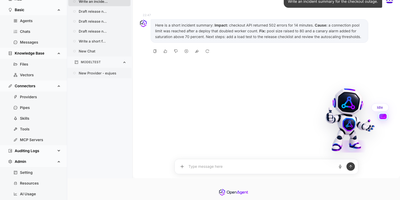
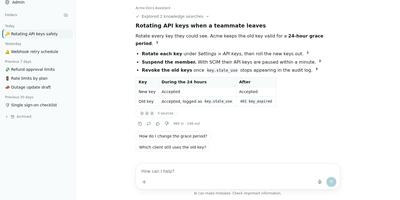
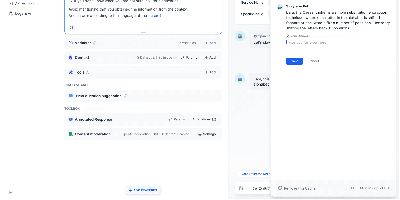
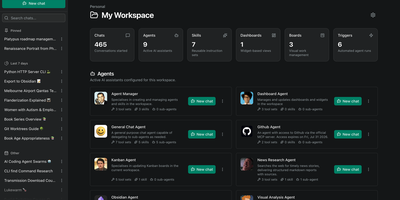
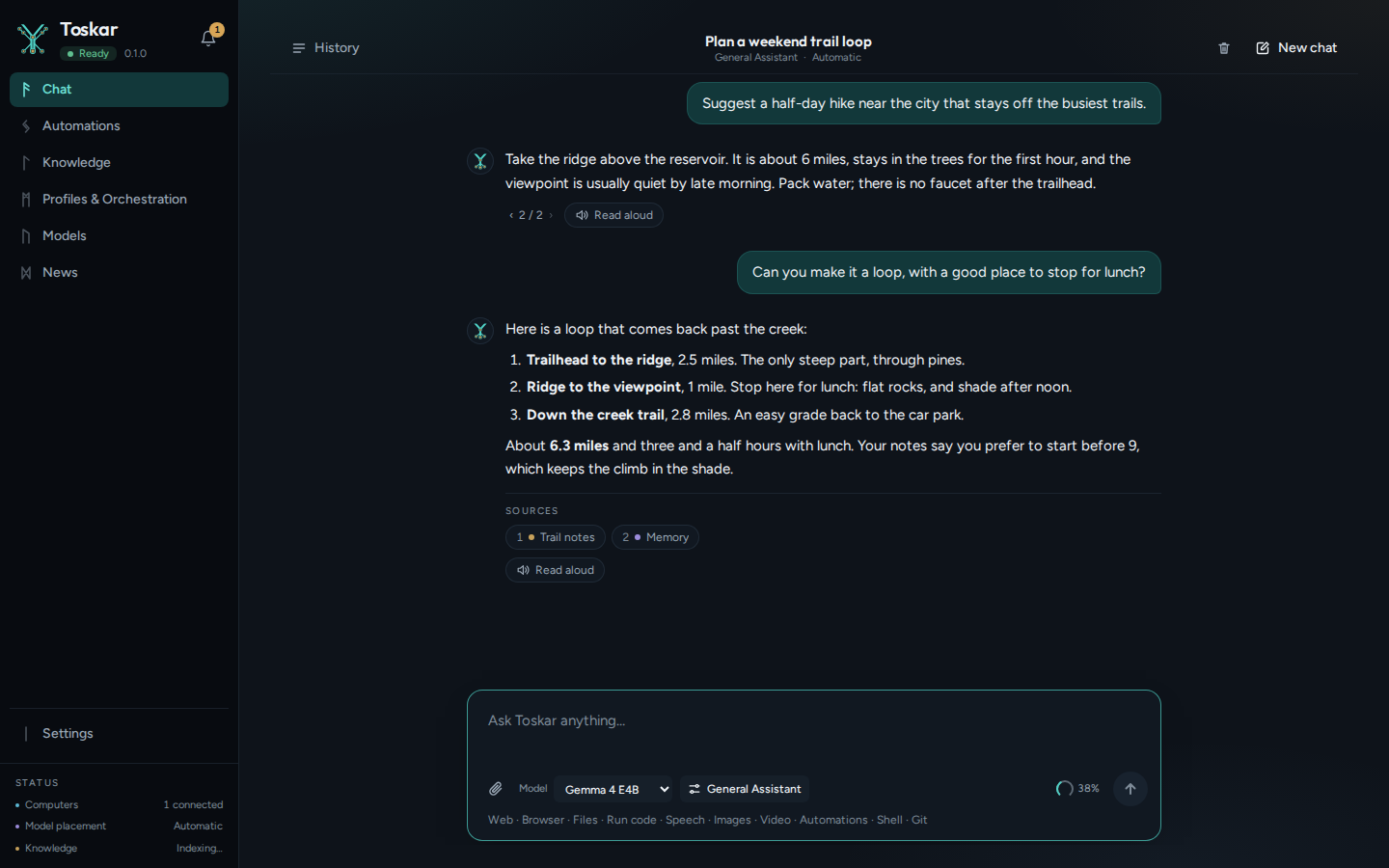
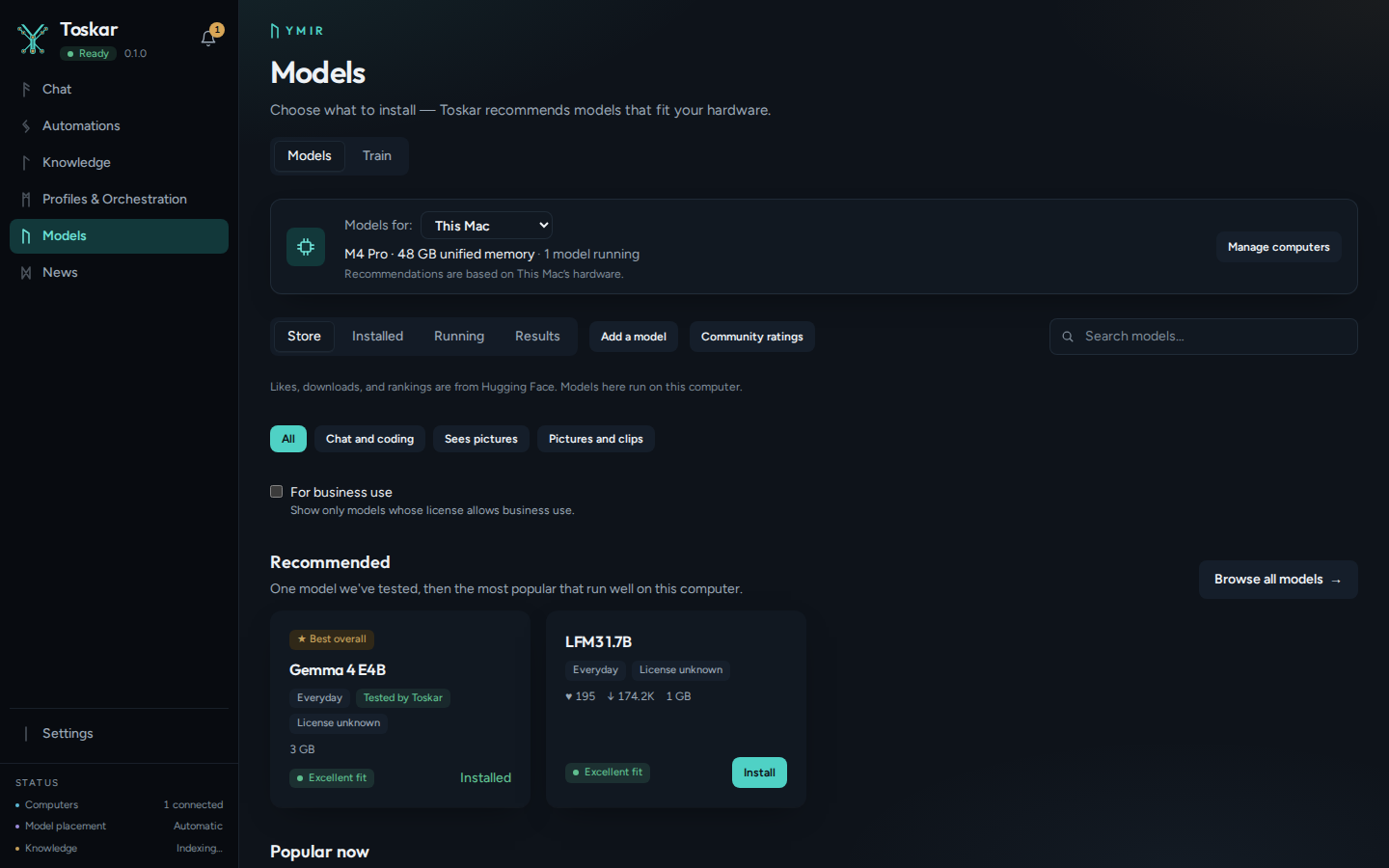
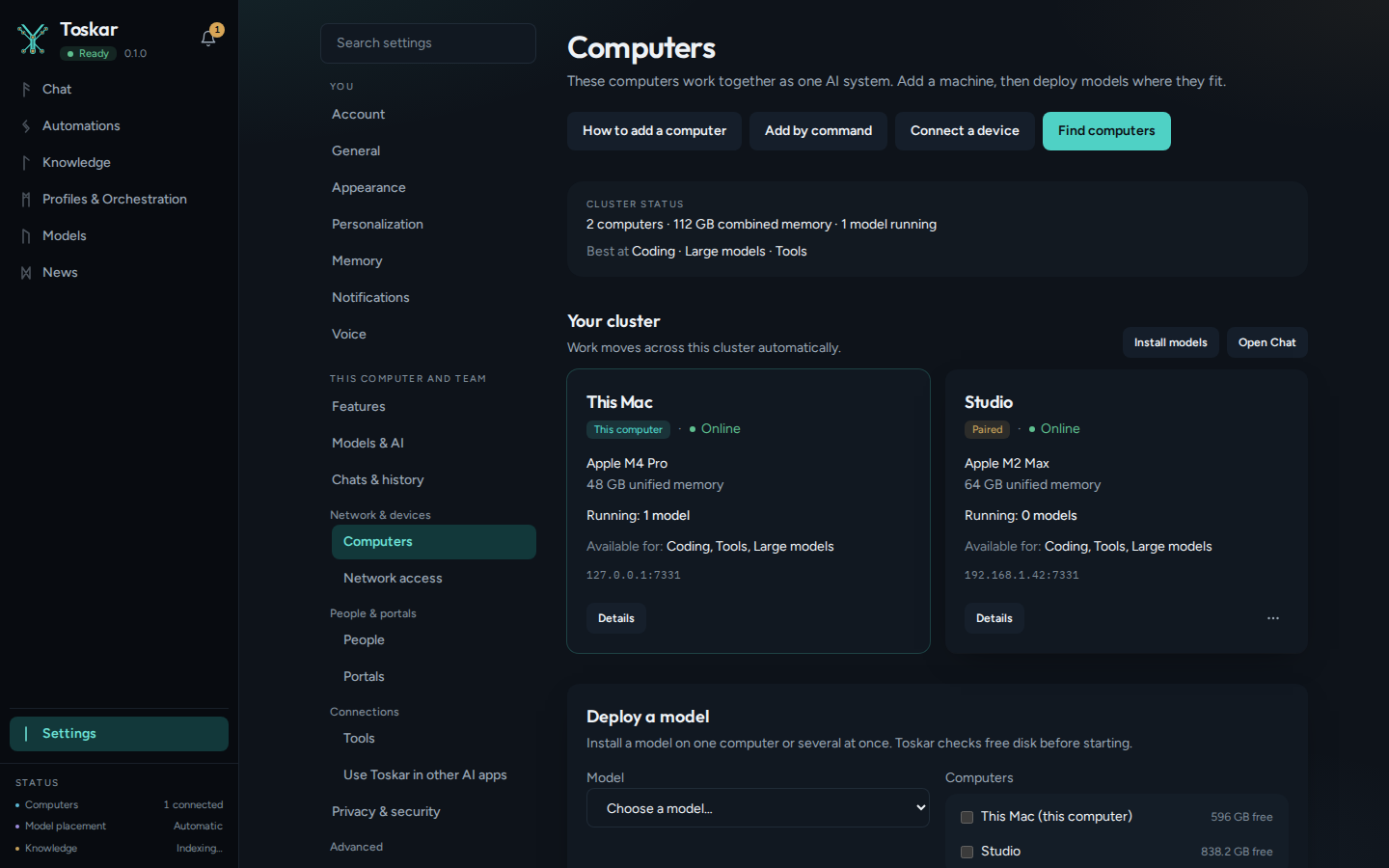
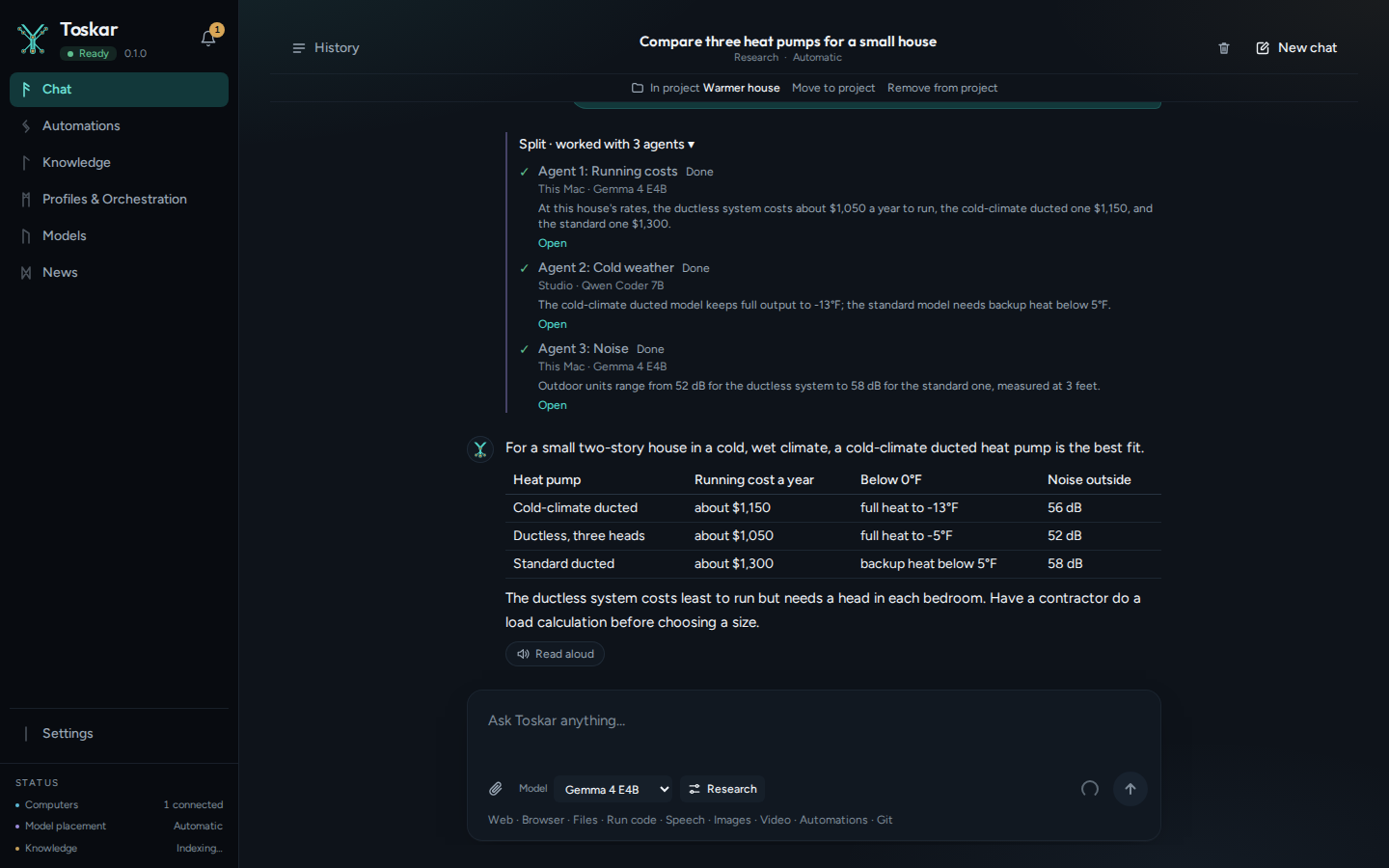
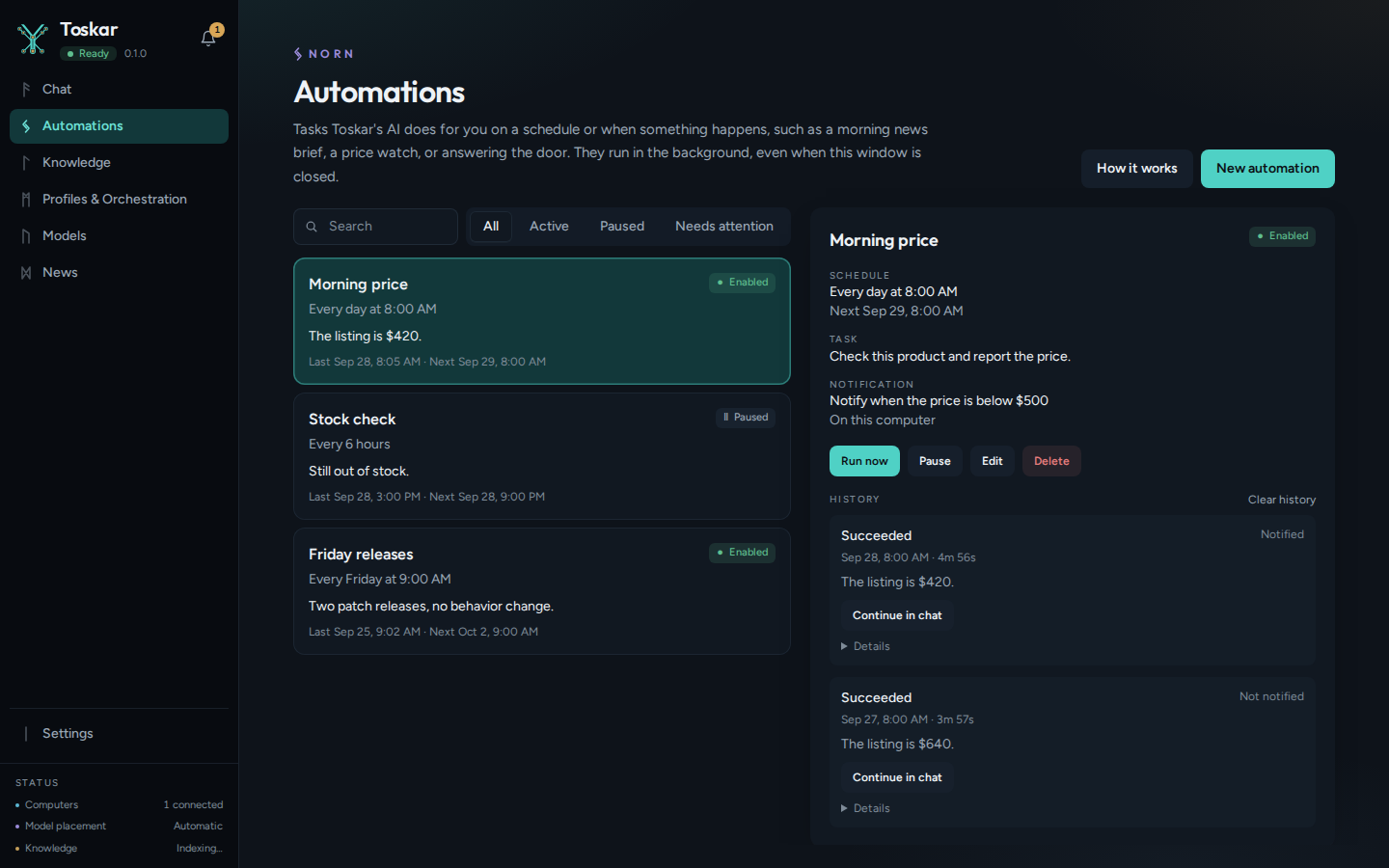
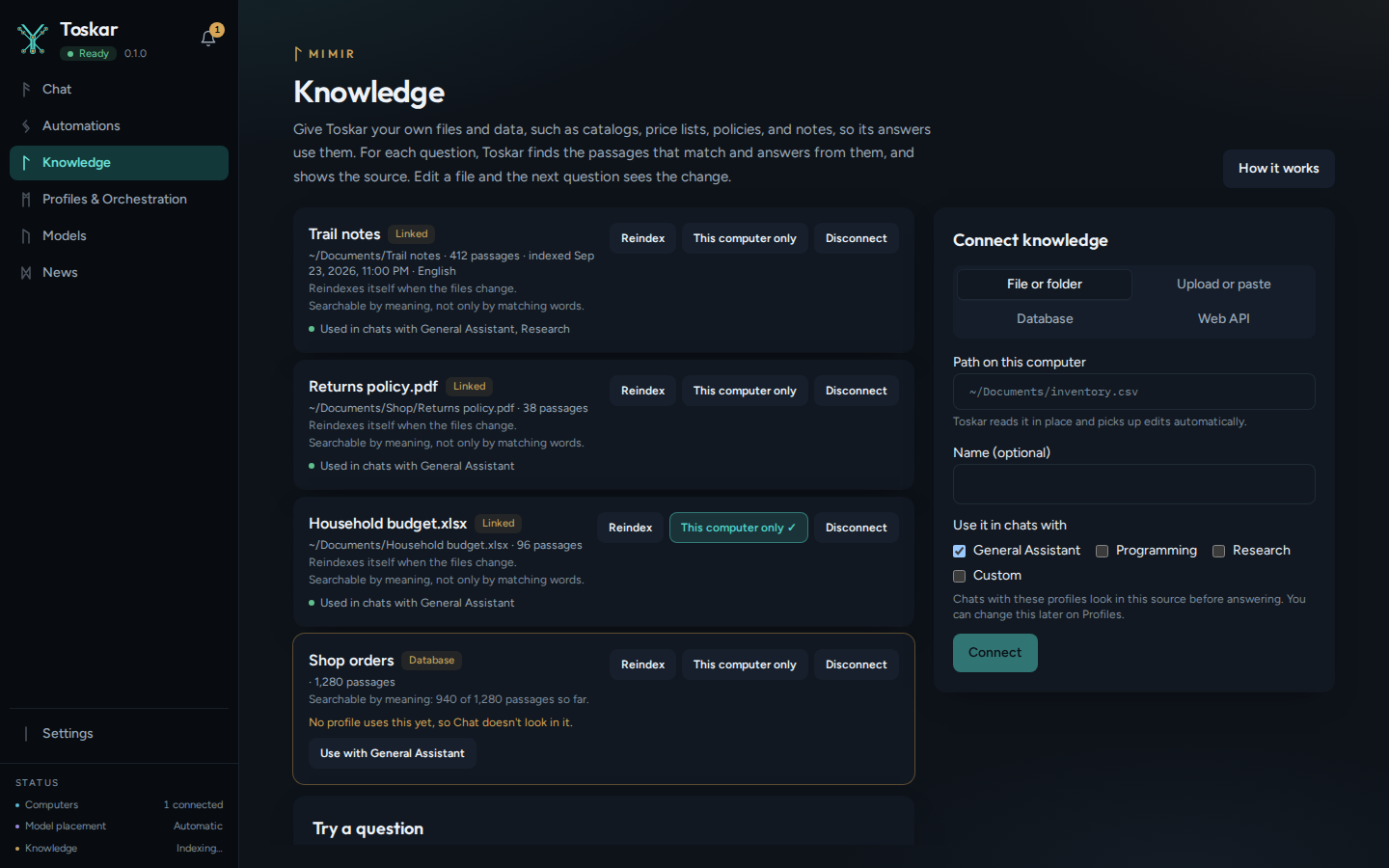
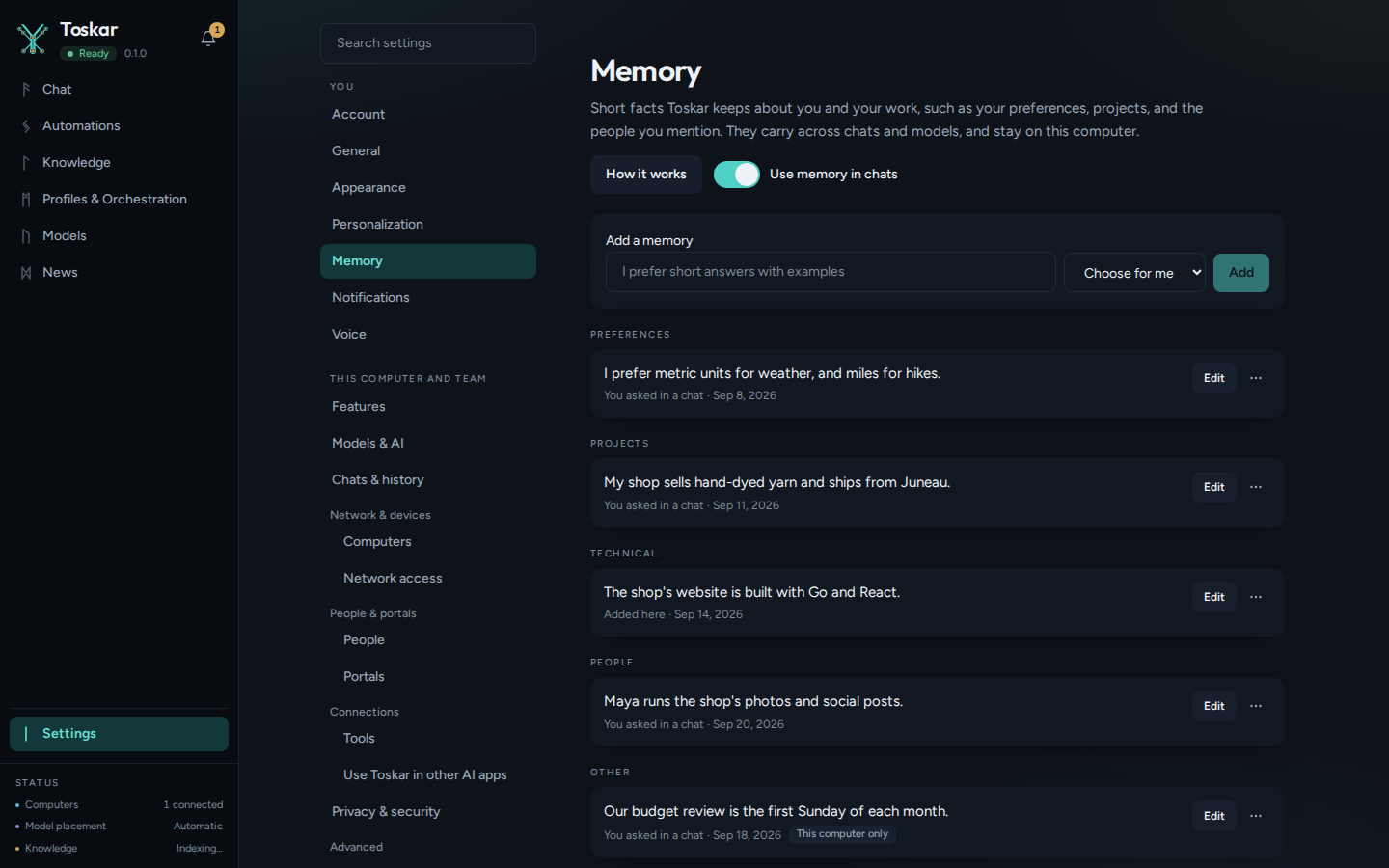
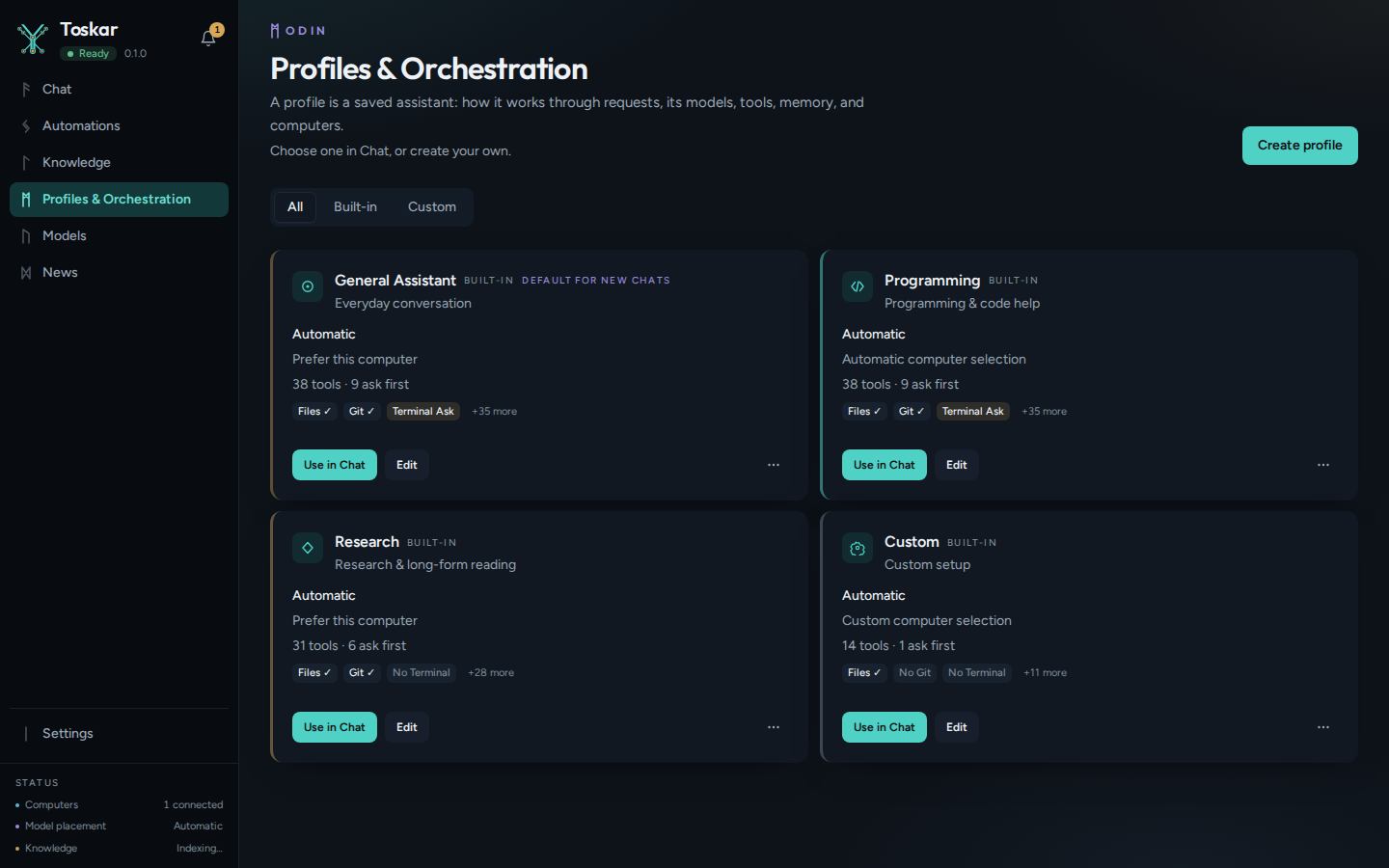
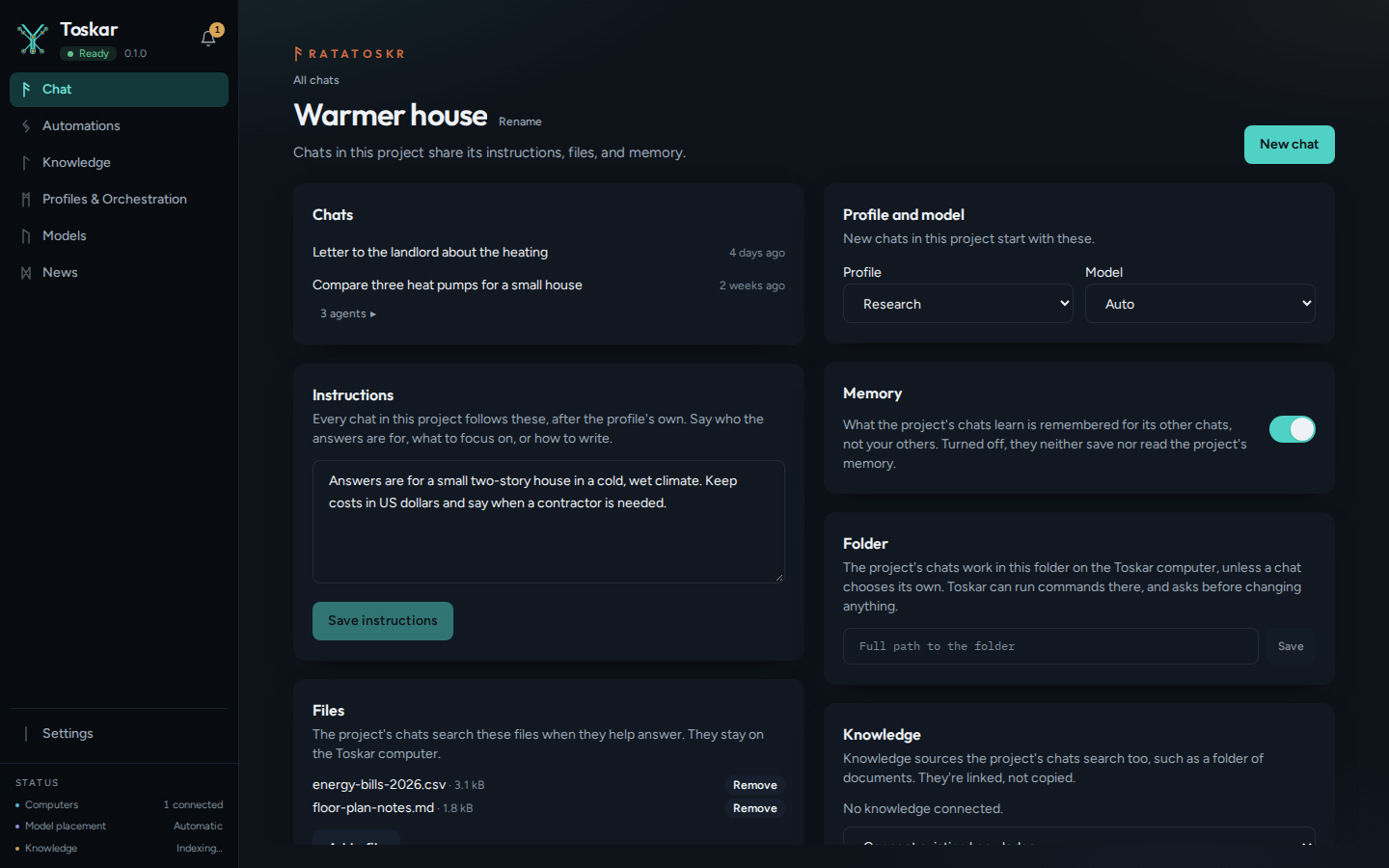
A local AI server for every computer you own, Toskar Core picks open models that fit each machine and manages access for everyone on your network. It reads your CPU, GPU, and memory, lists Hugging Face models that fit, then downloads, starts, and unloads them as needed. Auto mode routes quick questions, coding, current information, and detailed analysis to different models, retrying elsewhere on failure. Pair a Mac with a Linux box and each request runs where its model fits; a Team profile adds a planner, workers on different machines, and a reviewer. Persistent memory carries preferences across chats and models. Connected knowledge searches folders, PDFs, spreadsheets, scanned documents, and read-only SQL databases, then cites its sources. Web, file, shell, and Git tools each carry Allow, Ask, or Deny rules; MCP servers add more. Automations run on a schedule or when a page, feed, file, webhook, or Home Assistant device changes, and notify only when it matters. LoRA training turns your own examples into a specialized assistant exported as one GGUF file. Owners, admins, members, and visitors get private chats behind passwords or OpenID Connect, and branded chat portals with their own passcodes serve guests. Apps and coding agents built for OpenAI or Anthropic APIs can use it by changing one address. No account, no analytics, no crash reports. Running on a dedicated VPS on RepoCloud with guaranteed CPU, RAM, and SSD, full root SSH access, and a browser serial console. AGPL-3.0-or-later licensed.
Benefits
- Models Matched to Your Hardware
- Toskar inventories each computer's CPU, GPU, and memory, labels every model by how well it fits, and handles downloading, starting, and idle unloading, so nobody tunes quantization or ports by hand.
- One Server Across Many Computers
- Pair a Mac, a graphics-card PC, and a Linux box over encrypted links; each request runs on the computer where its model fits, and Team profiles run parts on different machines simultaneously.
- Access Control for Every Person
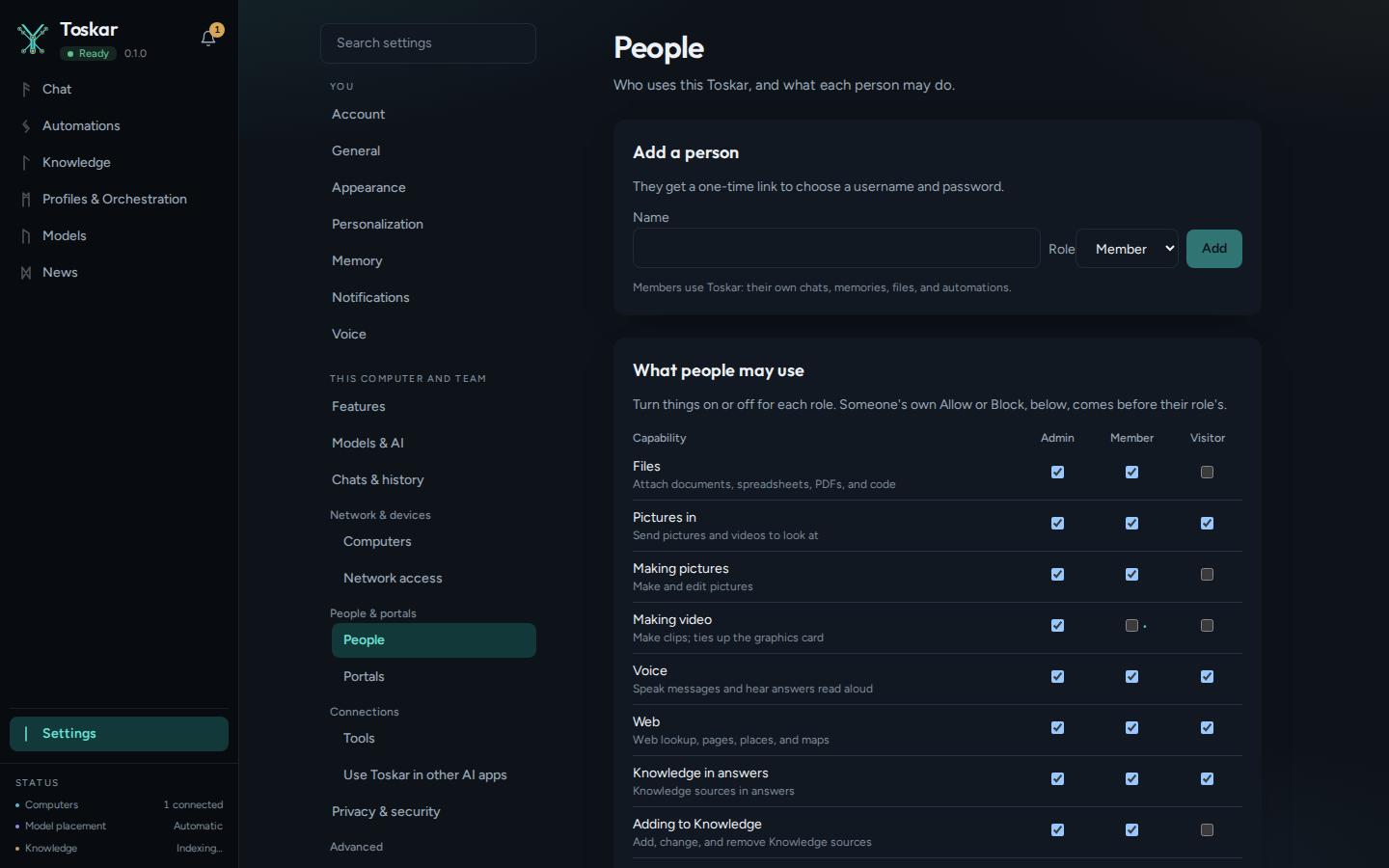
- Owners, admins, members, and visitors keep private chats, memories, files, and automations, while admins pin people to profiles and switch tools, web access, and picture or video making on or off per role.
- Your Data Stays on Your Hardware
- Chats, documents, memories, and models live in Core's data folder, there is no account and no analytics by default, and Settings lists everything that left the computer.
Features
- OpenAI and Anthropic APIs
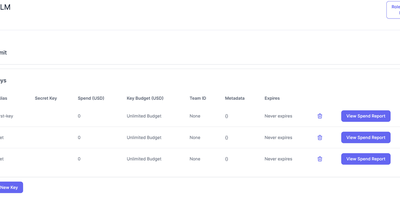
- Serves /v1/chat/completions, /v1/responses, and Anthropic /v1/messages on port 7331 with per-key permissions, so SDKs, scripts, and agents like Claude Code connect.
- MCP Server and Client
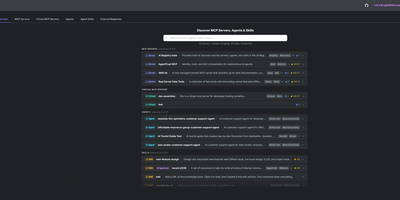
- Adds tools from MCP servers and acts as one itself at /mcp or over stdio with toskarctl mcp, so editors like Cursor and VS Code use local models.
- Event-Driven Automations
- Triggers include schedules and cron expressions, page changes, new feed posts, file changes, webhooks, and Home Assistant devices, with conditional notifications and per-run history.
- Connected Knowledge Search
- Indexes folders, uploads, PDFs with OCR, Excel, CSV, SQLite, PostgreSQL, MySQL, and web APIs, searching by keyword or, with an embedding model, by meaning, with cited passages.
- LoRA Training Pipeline
- Guided fine-tuning of a base model on your examples using MLX on Apple silicon or PyTorch on NVIDIA GPUs, tested against the base and exported as a GGUF file.
- Headless Linux Service
- Linux .deb and .rpm packages install a system service for servers without a desktop, alongside a one-line install script, a signed apt repository, and Homebrew on macOS.