Categories
Self-Hosted Open Source Privacy Knowledge Base Education AI Assistant Digital Library MapsStars
Forks
Watchers
Developer links
Project NOMAD
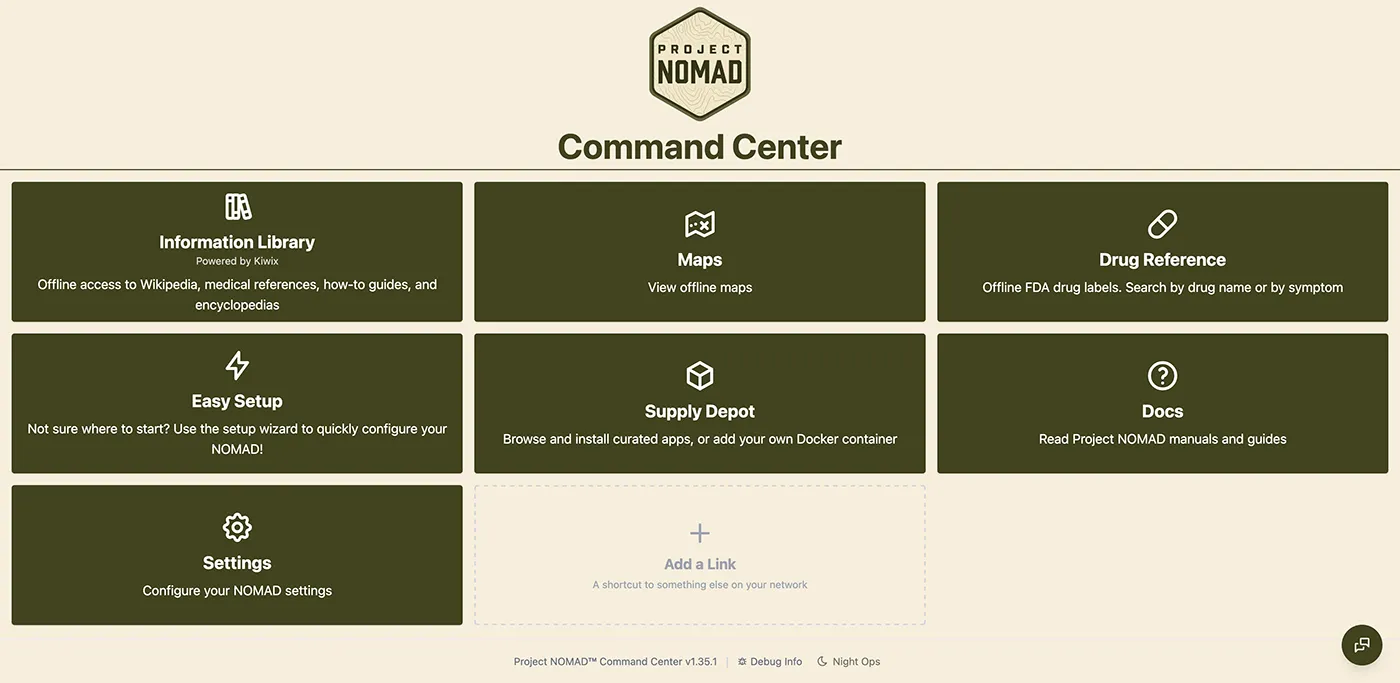
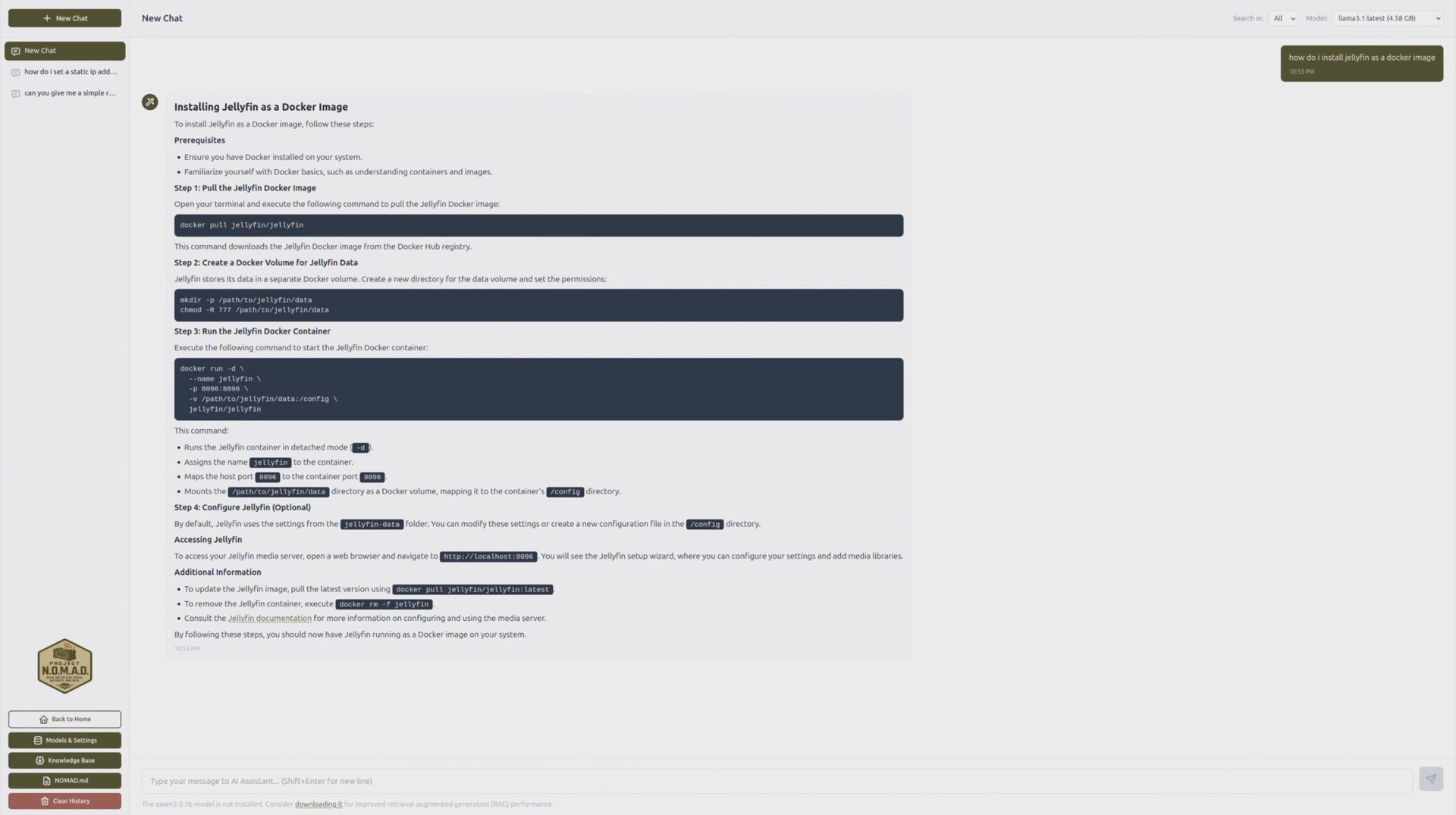
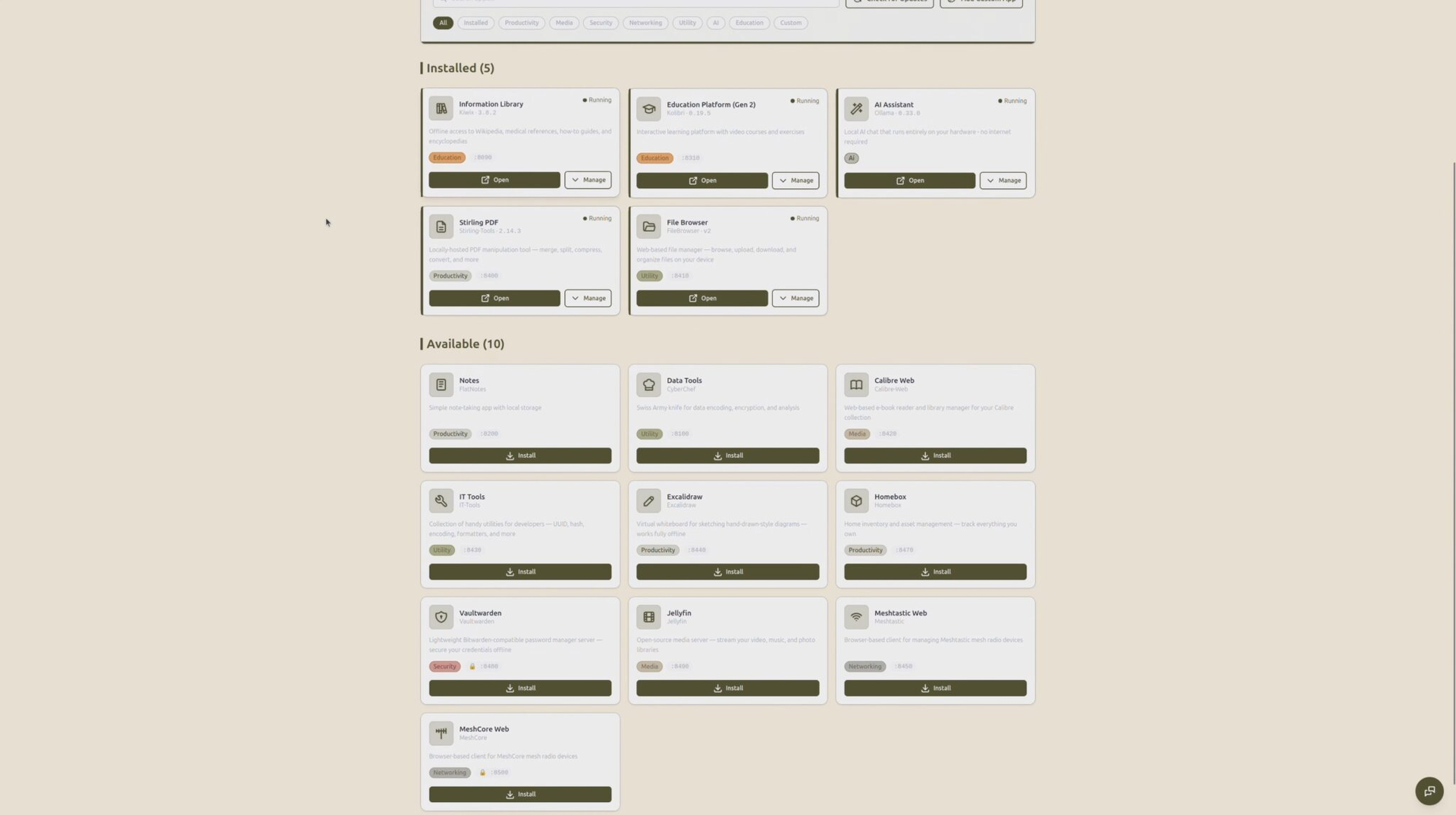
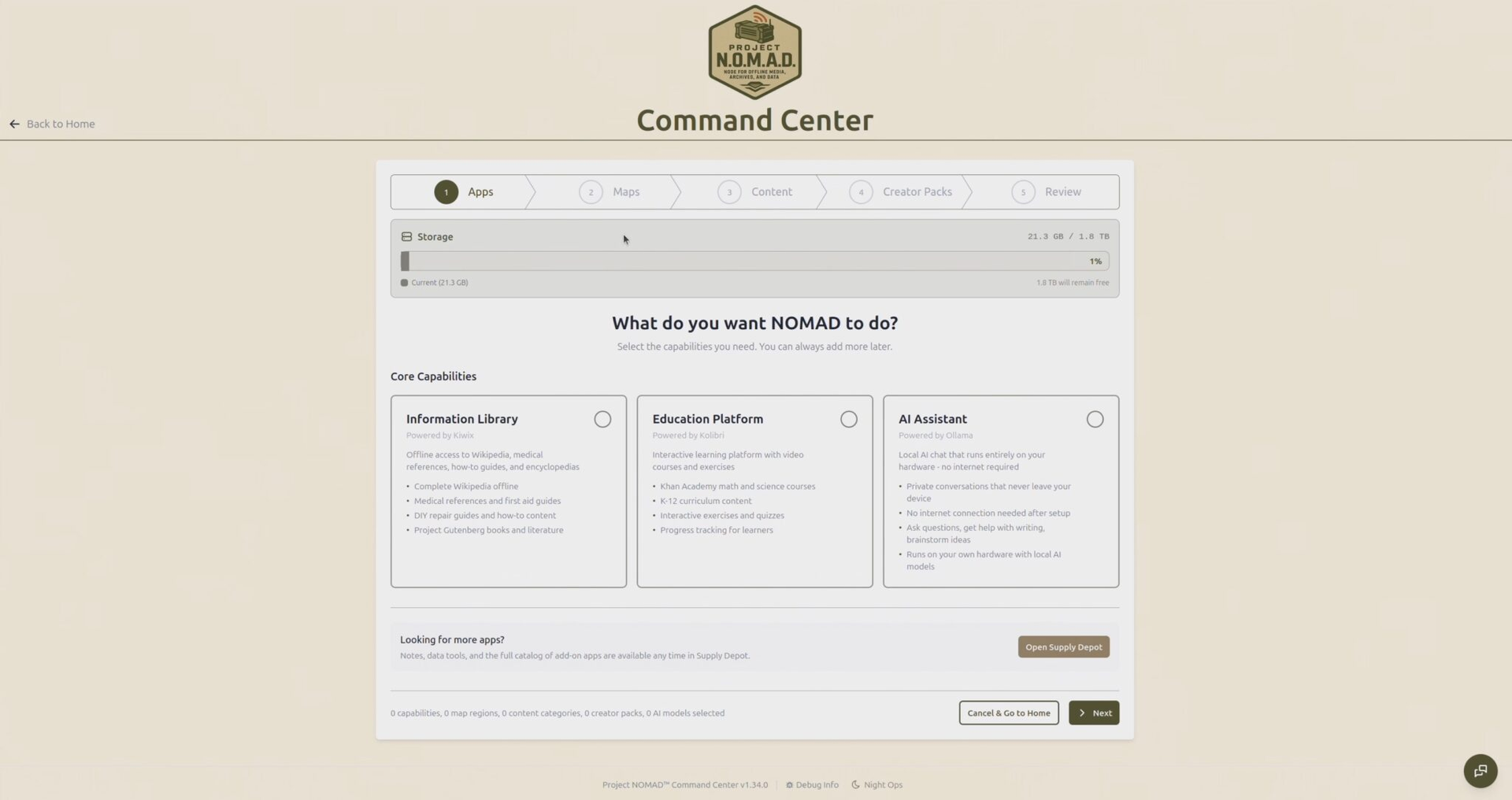
When the connection drops, Project NOMAD keeps serving offline Wikipedia, Khan Academy courses, maps, and an optional private AI assistant from a single Debian-based Linux server. The core needs only about 5 GB of disk and under 1 GB of RAM. Content is what fills the drive, and a setup wizard sorts it into Essential, Standard, and Comprehensive tiers while a storage bar tracks the running total. Wikipedia runs from a quick-reference set of the top 100,000 articles to the complete English edition with images at about 121 GB, and Kiwix also serves medical references, survival and repair guides, and Project Gutenberg ebooks. Kolibri adds Khan Academy courses with multi-user progress tracking, and any browser on the network can study. Offline maps cover the whole globe, single countries, or regions, with markers you can search, color, and navigate to by coordinate. The AI assistant is the heavy part, bringing the install to roughly 25 GB. It chats through Ollama or any OpenAI-compatible server such as LM Studio, searches uploaded documents, lists sources with dates when known, and lets vision models read attached images. CyberChef handles encoding and hashing, and FlatNotes keeps Markdown notes. The Supply Depot adds one-click apps or your own Docker containers. Opt-in auto-updates for the Command Center, installed apps, and downloaded content run inside a window you set. Running on a dedicated VPS on RepoCloud with guaranteed CPU, RAM, and SSD, full root SSH access, and a browser serial console. Apache 2.0 licensed.
Benefits
- One Installer Instead Of Manual Wiring
- A single script sets up Docker, the Command Center, and dependencies, then the dashboard installs Kiwix, Kolibri, Ollama, and other tools for you instead of leaving you to wire each one together.
- Private AI With No Cloud Accounts
- The optional assistant talks to your own Ollama or OpenAI-compatible server, needs no API keys or accounts, and NOMAD sends no telemetry, so questions and uploaded documents stay on your server.
- Content Sized To Your Disk
- Wikipedia can be chosen from a quick reference set up to the full 121 GB edition with images, and a storage bar in the setup wizard tracks the running total as you choose.
- Network Access Is Yours To Control
- NOMAD includes no authentication by design, so firewall rules and open ports decide who can reach it, and its maintainers advise against exposing the Command Center directly to the public internet.
Features
- Offline Information Library
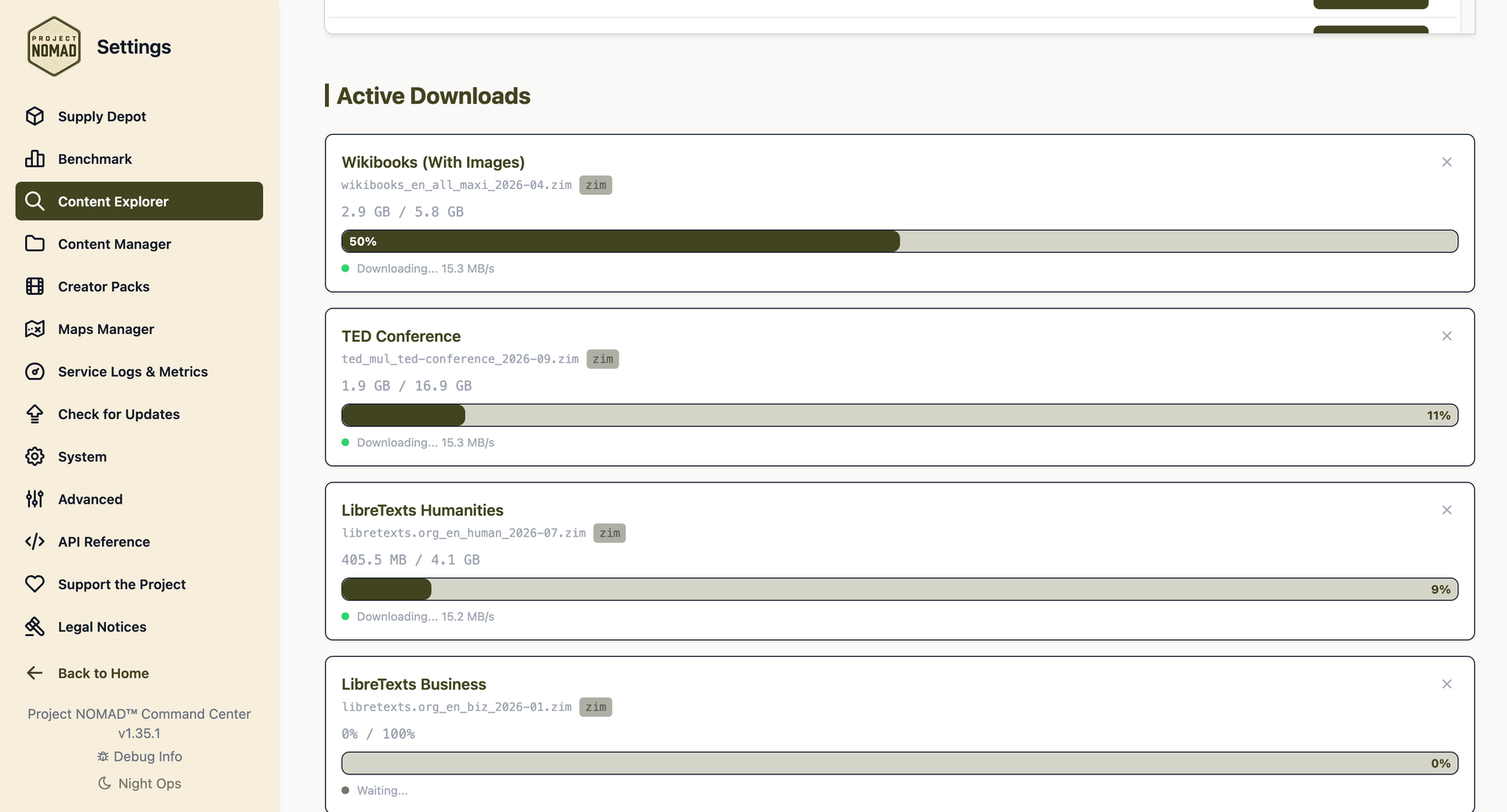
- Kiwix serves Wikipedia, Project Gutenberg, medical references, and repair guides from ZIM files, with a Wikipedia content selector, ZIM library manager, and Kiwix catalog browsing in any language.
- AI Chat With Knowledge Base
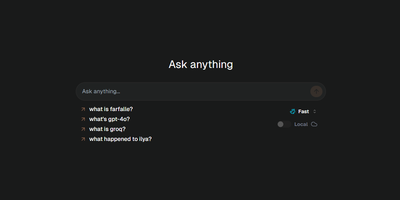
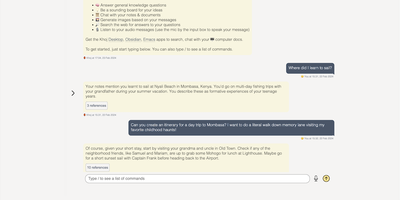
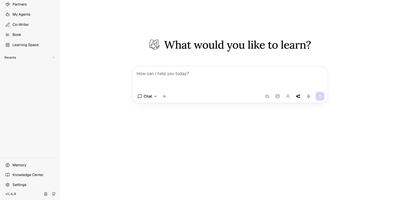
- Ollama or an OpenAI-compatible server powers chat, uploaded documents are indexed in Qdrant for retrieval, answers list sources with dates when known, and vision models can read attached images.
- Kolibri Education Platform
- Kolibri hosts Khan Academy courses, TED Talks, and other channels with multi-user progress tracking, so any browser on the network can study without installing an app.
- Offline Maps With Markers
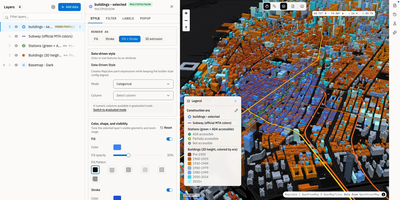
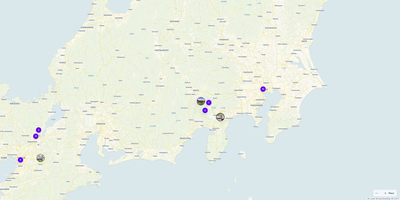
- Map data from ProtoMaps renders through MapLibre GL and PMTiles for the whole globe, single countries, or regions, with markers you can search, color, and navigate to by coordinate.
- Docker App Manager
- The Command Center installs, configures, and updates each tool as a Docker container through the Docker socket, and the Supply Depot adds one-click apps or your own images.
- Opt-In Automatic Updates
- Minor and patch releases install automatically inside a window you set, after a cool-off period and only when pre-flight checks for disk space and running downloads pass.