Categories
Self-Hosted Observability AI Gateway LLM Proxy Model Routing Cost Tracking API Key Management FailoverDeveloper links
Model Hotel
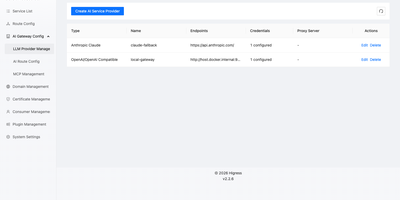
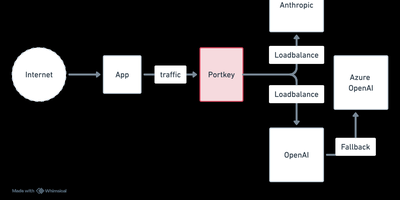
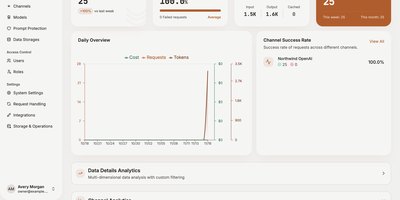
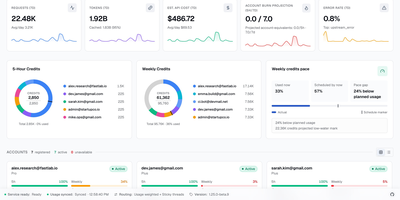
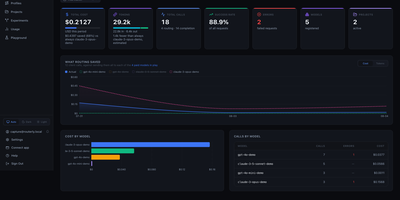
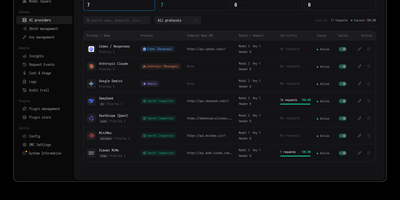
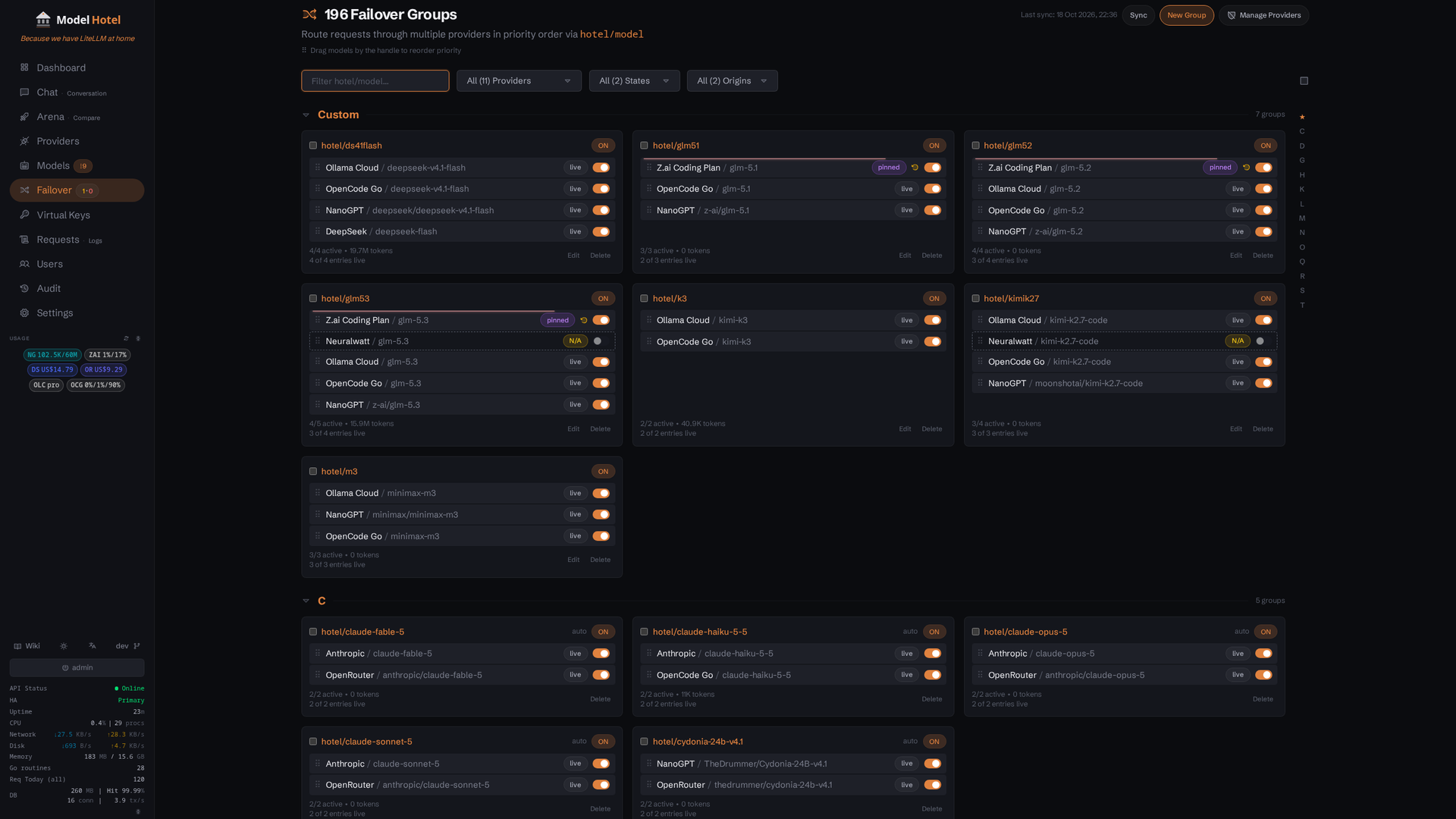
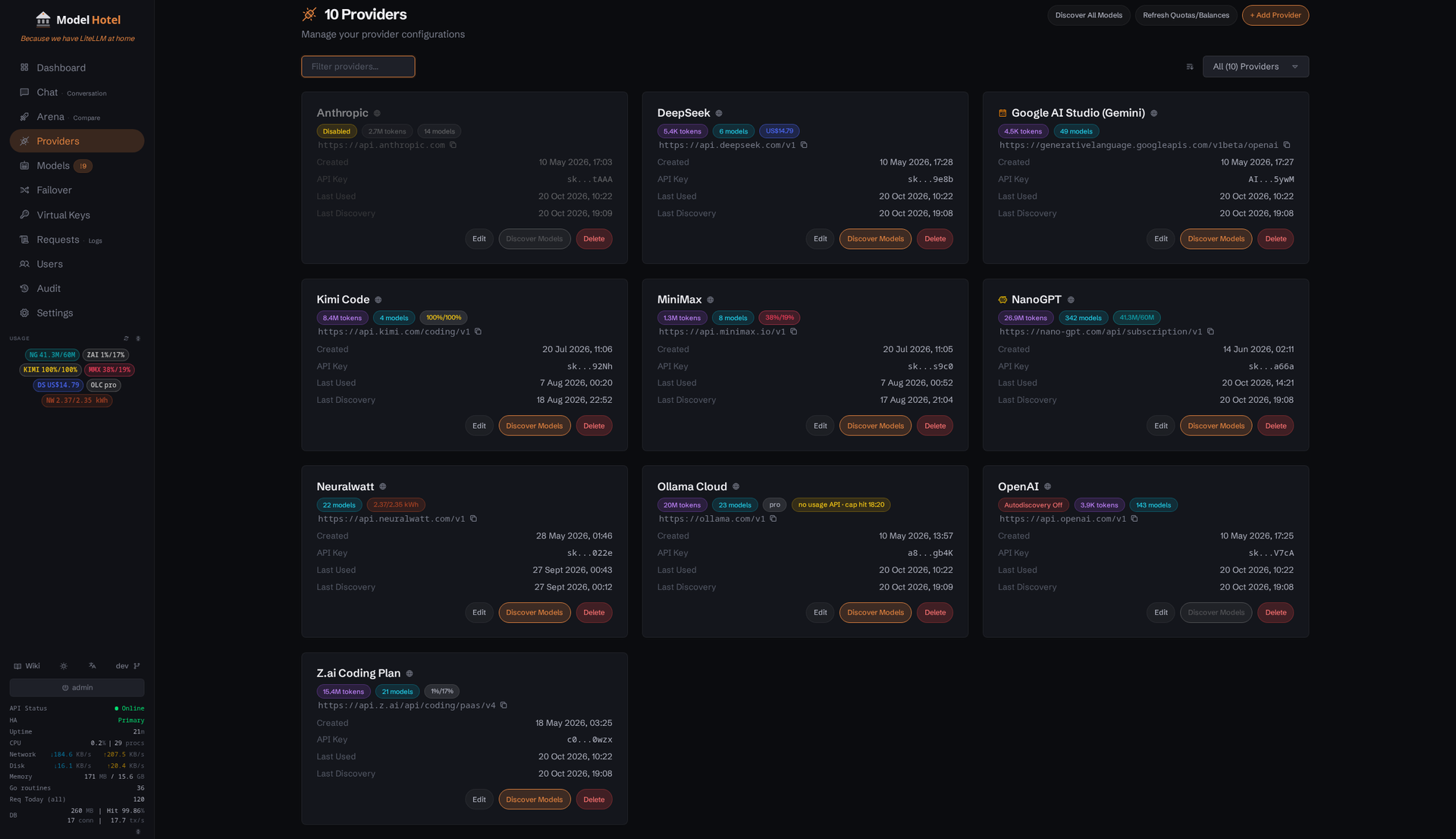
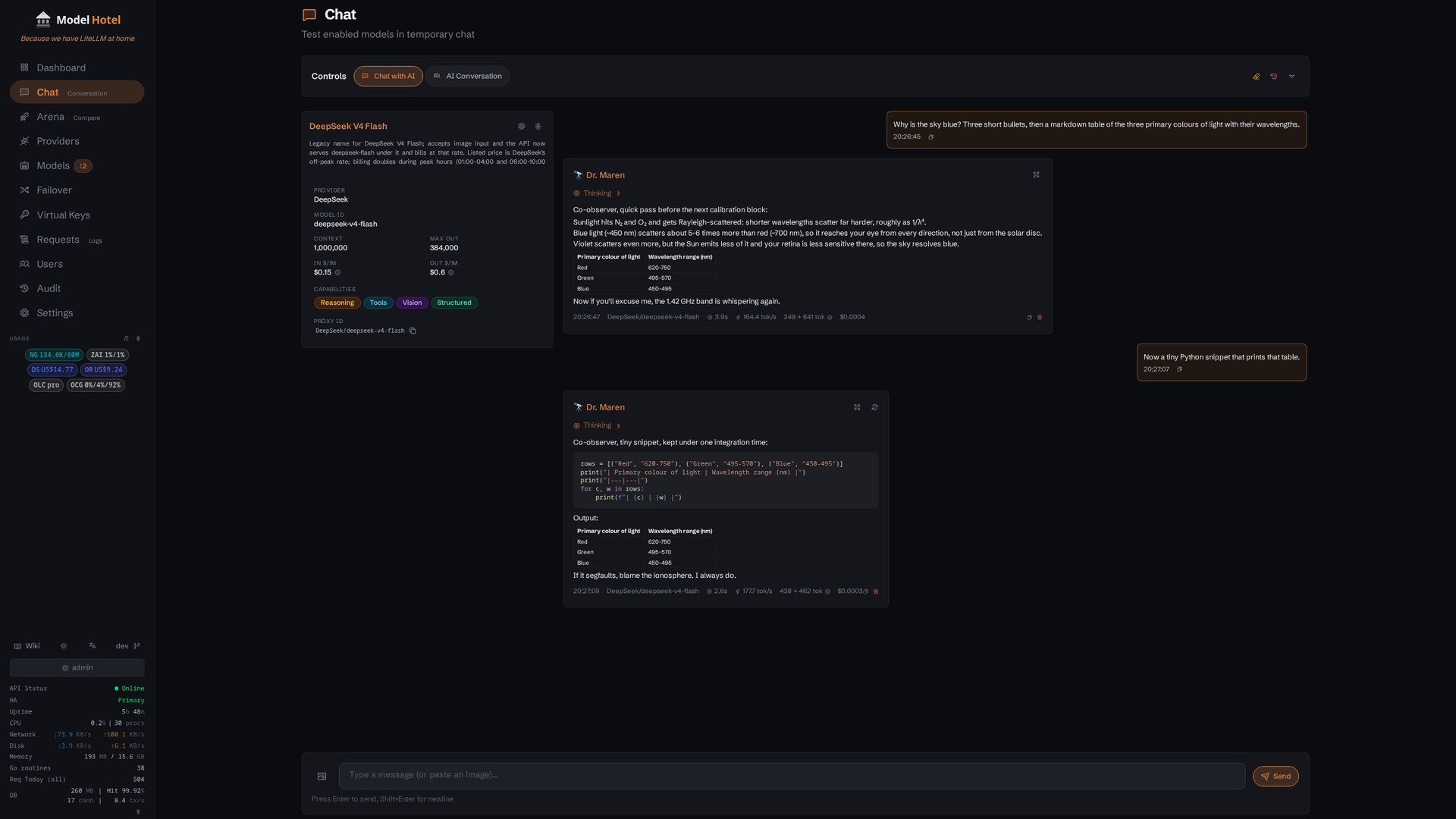
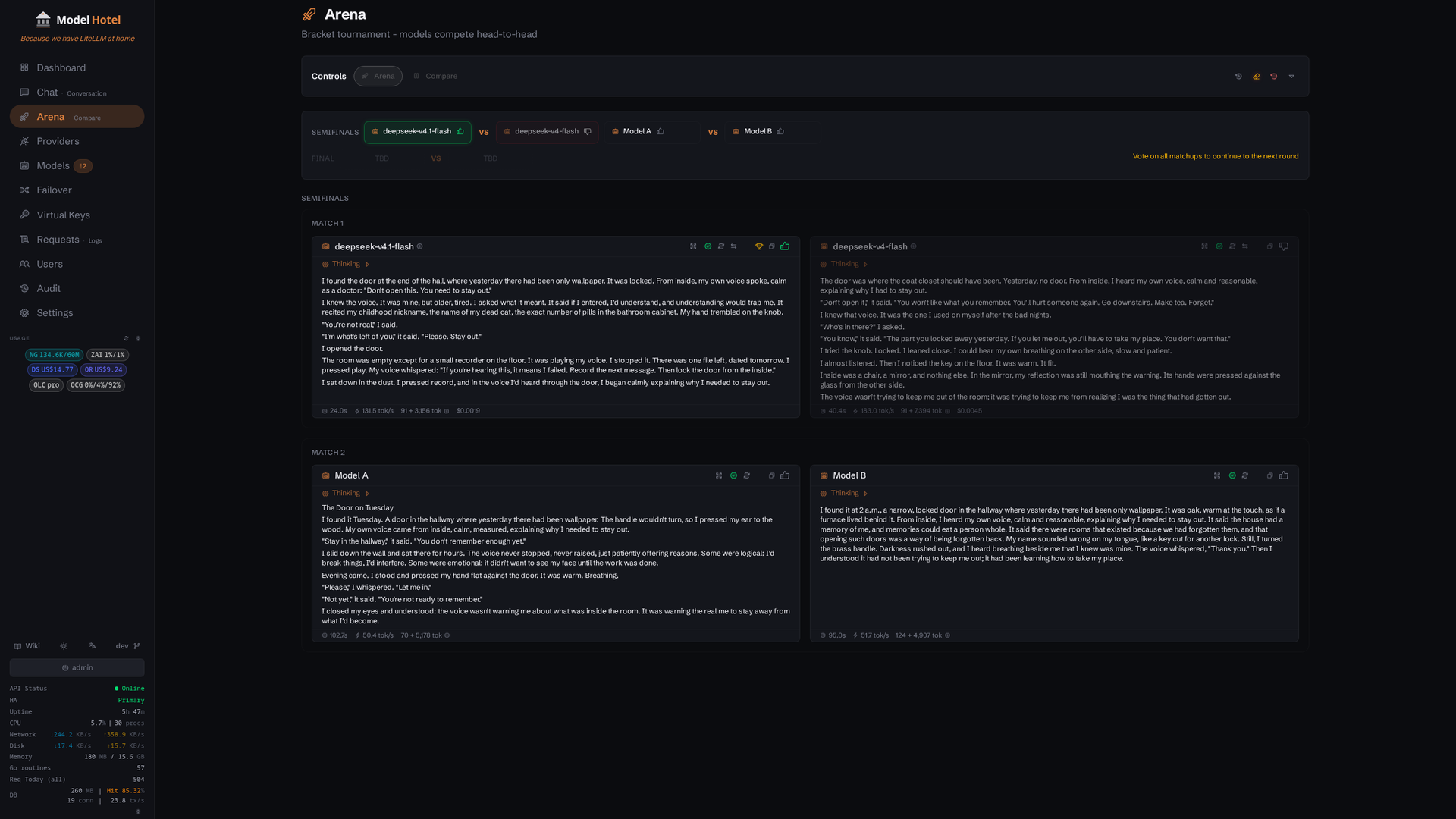
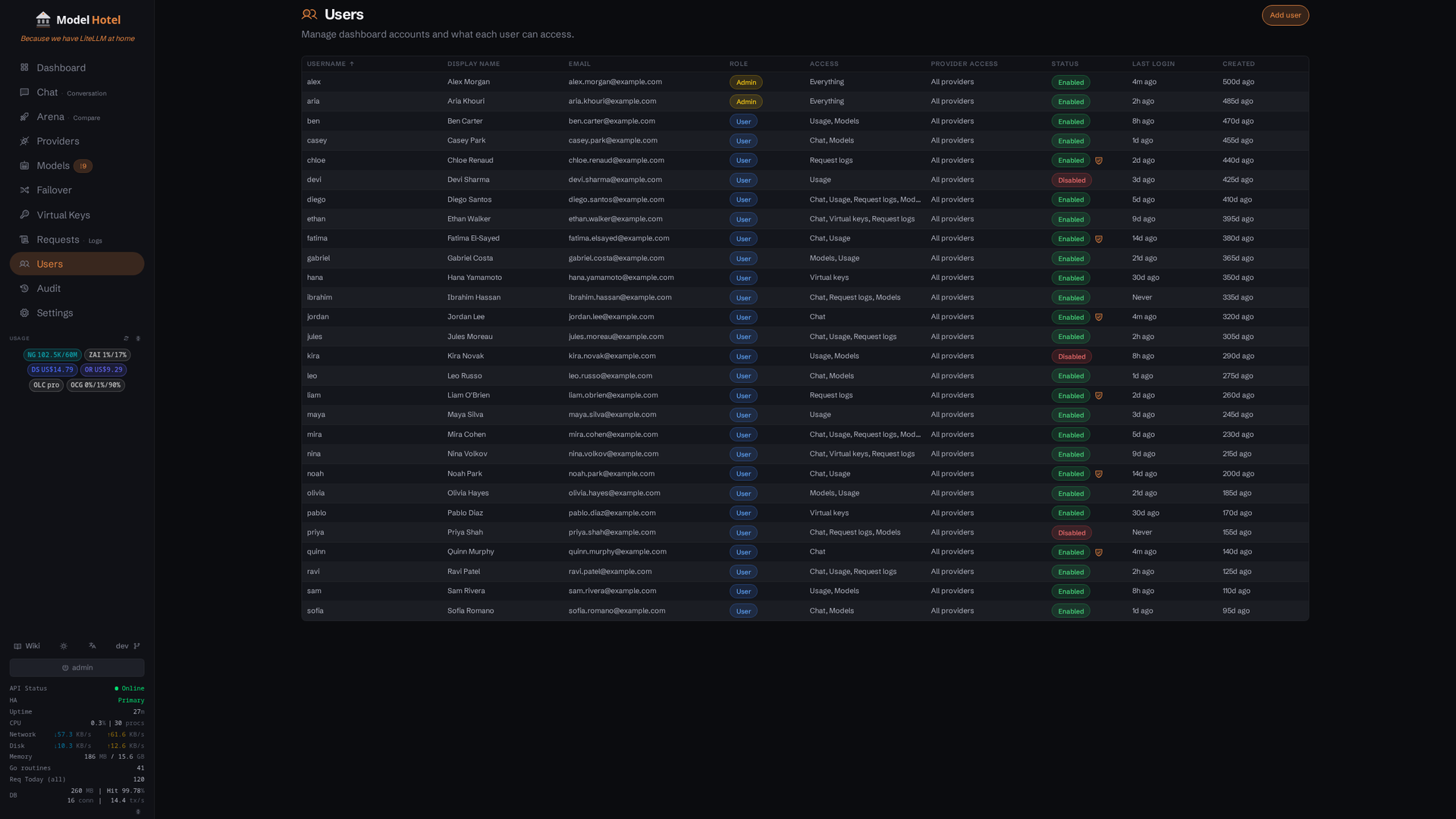
One OpenAI-compatible endpoint fronts every LLM provider you use, hosted or local, and fails over when a quota runs out or a provider goes down. Offer one model through two providers and a failover group forms by itself; the hotel/ prefix tries them all in your priority order. Anthropic, OpenAI, Google AI Studio, and OpenRouter sit beside Ollama, LM Studio, and TabbyAPI, plus any custom OpenAI-compatible API. Errors, timeouts, and rejected keys retry on the next provider, and a per-model circuit breaker benches repeat offenders. Models are discovered the moment a provider is added. Each client gets a virtual key with rate limits, a daily, weekly, or monthly dollar budget, and a list of allowed providers. Prompts and replies are never logged, and the request log records timing, tokens, cost, and gateway overhead for every call. A chat playground, a side-by-side compare grid, and blind bracket tournaments help you pick the best model. Claude Code, Codex CLI, and the OpenAI and Anthropic SDKs connect unchanged, alongside embeddings, rerank, image, and speech endpoints. Sign in with a passkey, an authenticator app, OpenID Connect, or GitHub, and give teammates named accounts with limited access. Prometheus metrics and Apprise alerts keep operators informed, and Traefik-balanced instances with an Android companion app cover high availability. Running on a dedicated VPS on RepoCloud with guaranteed CPU, RAM, and SSD, full root SSH access, and a browser serial console. MIT licensed.
Benefits
- Providers fail over without clients noticing
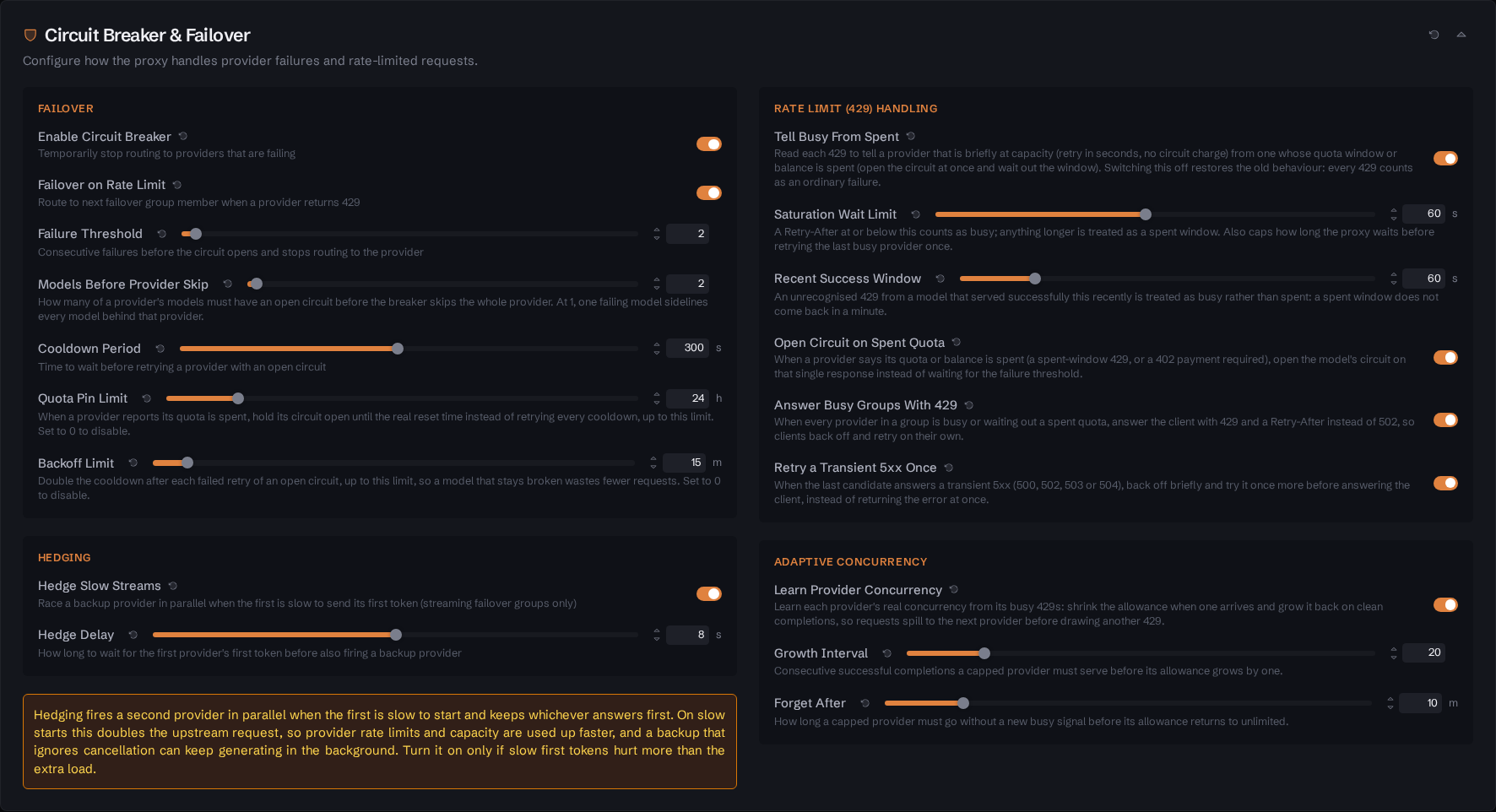
- Add the same model from several providers and a failover group forms automatically; circuit breakers skip failing providers and retry the next one, so client apps keep working through outages and quota limits.
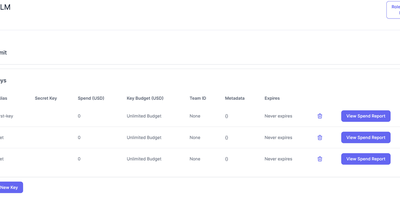
- One key per client, with budgets
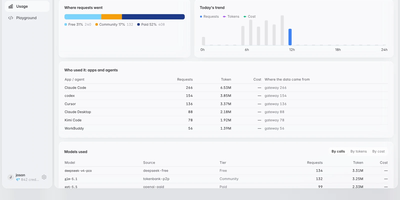
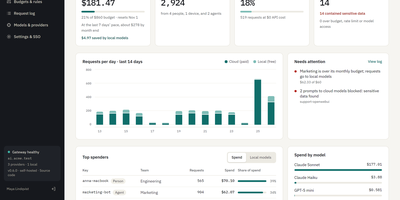
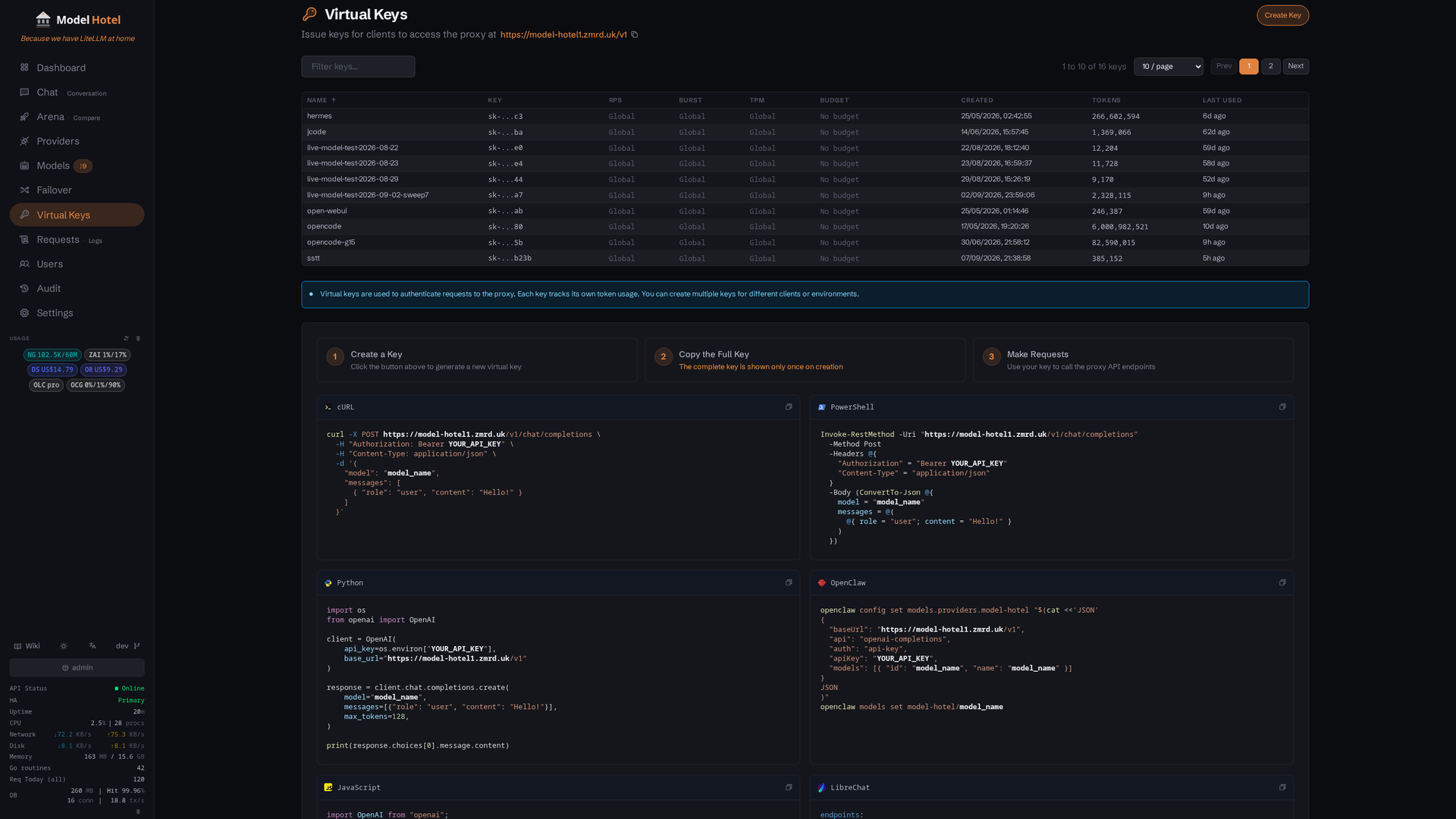
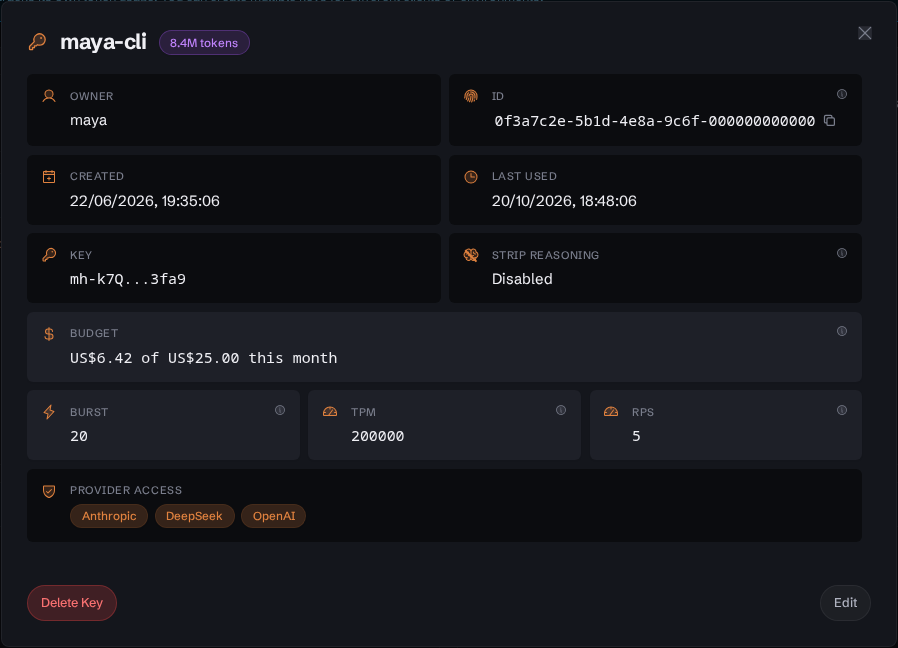
- Issue separate virtual keys per user or service, each hashed with SHA-256, with rate limits, token caps, dollar budgets, and provider restrictions, so real provider credentials never leave the gateway.
- Prompts never touch the logs
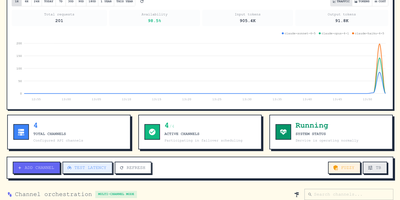
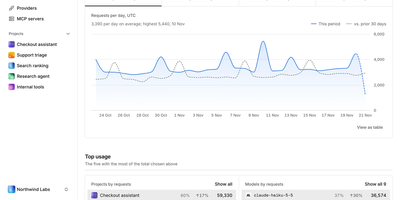
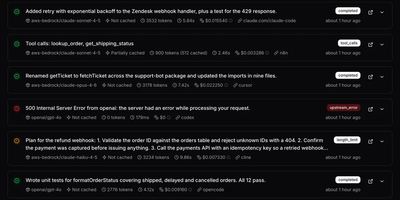
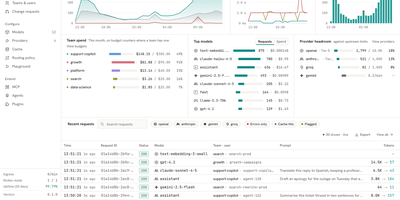
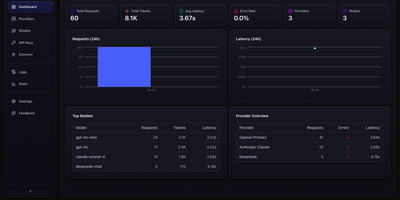
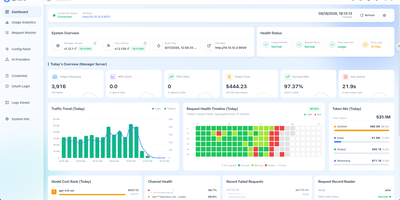
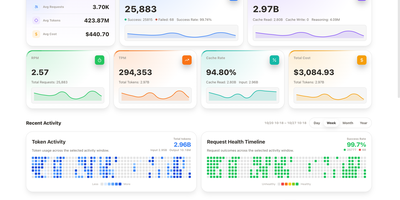
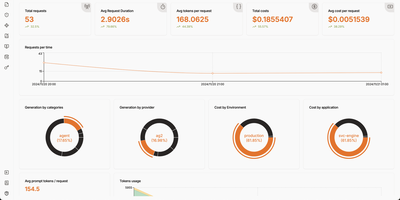
- User prompts and replies are never captured, while each request logs timing, time to first token, tokens per second, cost, and proxy overhead, showing whether latency comes from the provider or the gateway.
- Existing clients switch with one URL
- Claude Code, Codex CLI, and the OpenAI and Anthropic SDKs work by changing one base URL, and the same endpoint passes through embeddings, rerank, images, speech, and music requests.
Features
- Go and PostgreSQL Core
- A Go service built on the chi router and pgx stores state in PostgreSQL 16 and embeds its React 19 and Vite dashboard in a single container image.
- Failover Groups and Breakers
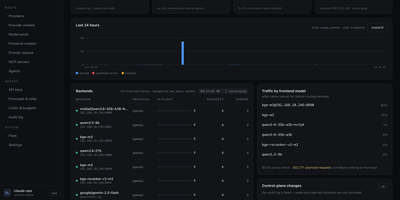
- Same-name models across providers form priority-ranked groups; a per-model circuit breaker, first-token probe, stall watchdog, and optional request hedging handle failing providers and slow streams.
- Model Discovery and Pricing
- Providers are rescanned through their own model APIs every six hours by default, and models.dev fills missing pricing, context length, and modality fields without overwriting edited values.
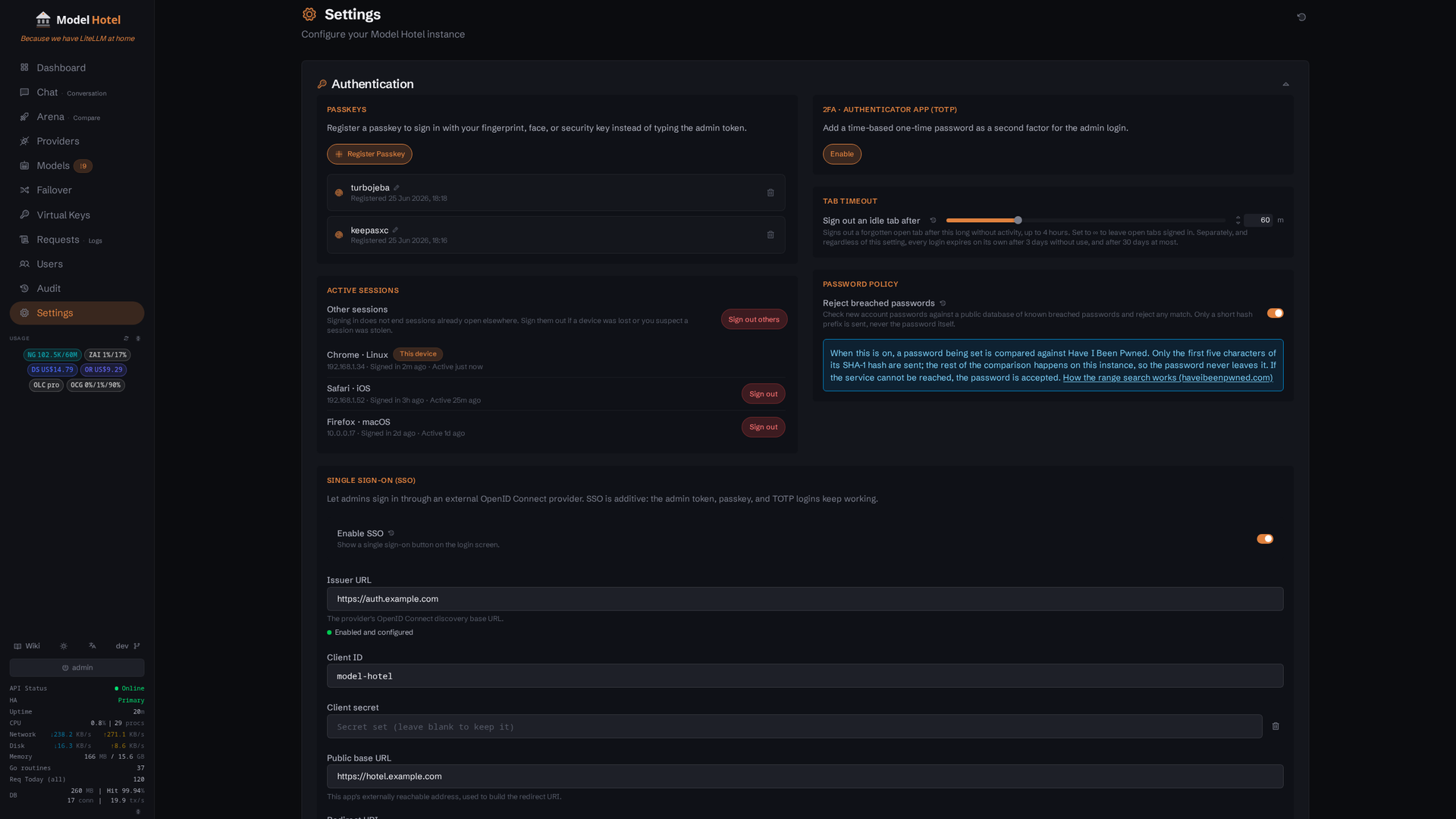
- Encrypted Keys and Passkeys
- Provider keys use AES-256-GCM with Argon2id derivation; dashboard login supports WebAuthn passkeys, TOTP, OpenID Connect, GitHub, and named accounts with granular grants.
- Prometheus and OTLP Export
- A token-protected /metrics endpoint exposes request, latency, token, spend, and breaker series, JSON logs can ship to OpenTelemetry collectors, and Apprise relays alerts to Telegram, Slack, and email.
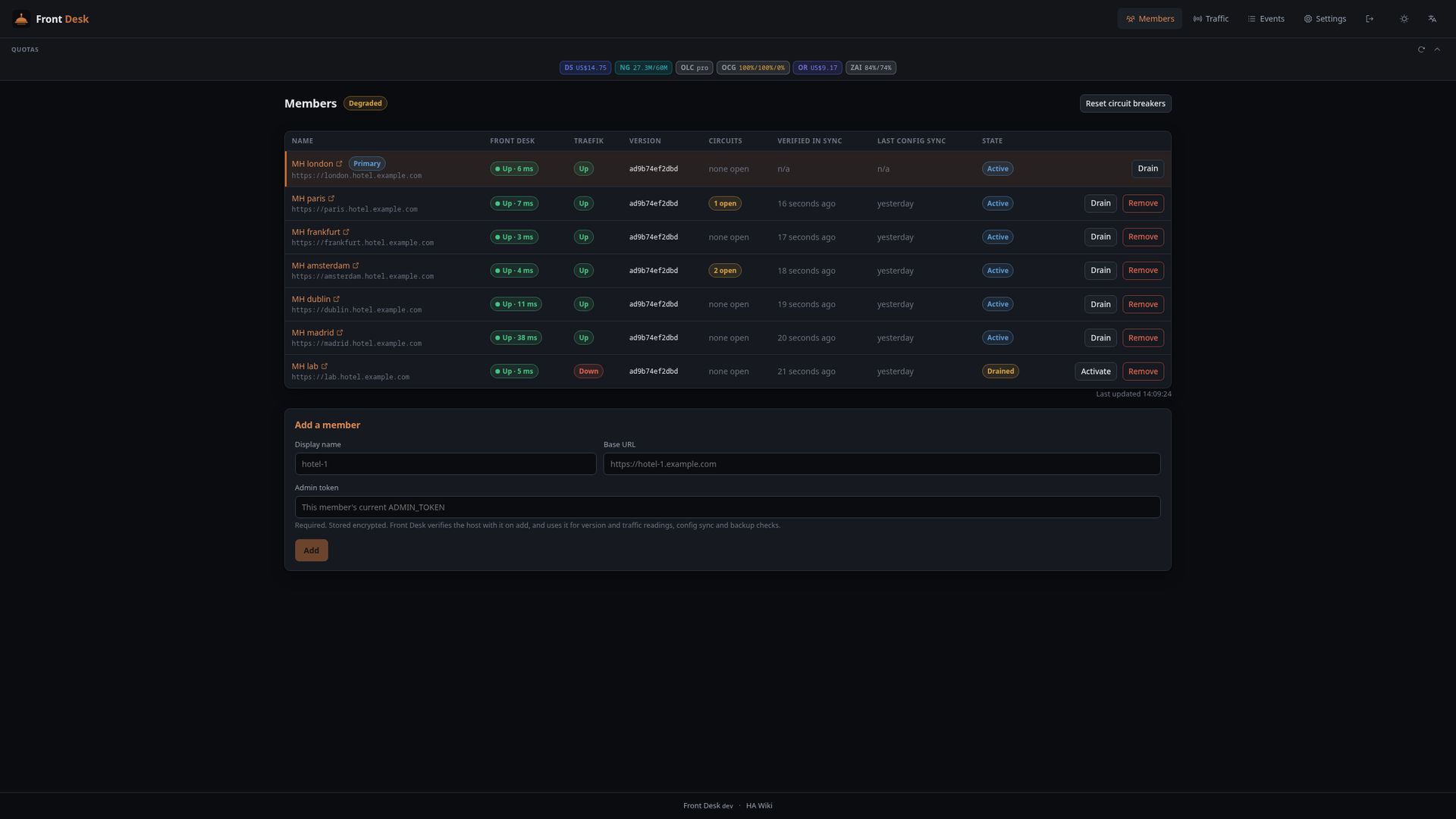
- Front Desk and Bellhop
- A Front Desk control plane replicates configuration across instances load-balanced by Traefik, and the Bellhop Android app shows fleet health, traffic, and provider quota badges.