Categories
AI Agents Healthcare FHIR Decision Support Population Health Preventive Care Clinical NLP Care CoordinationDeveloper links
Anticipa
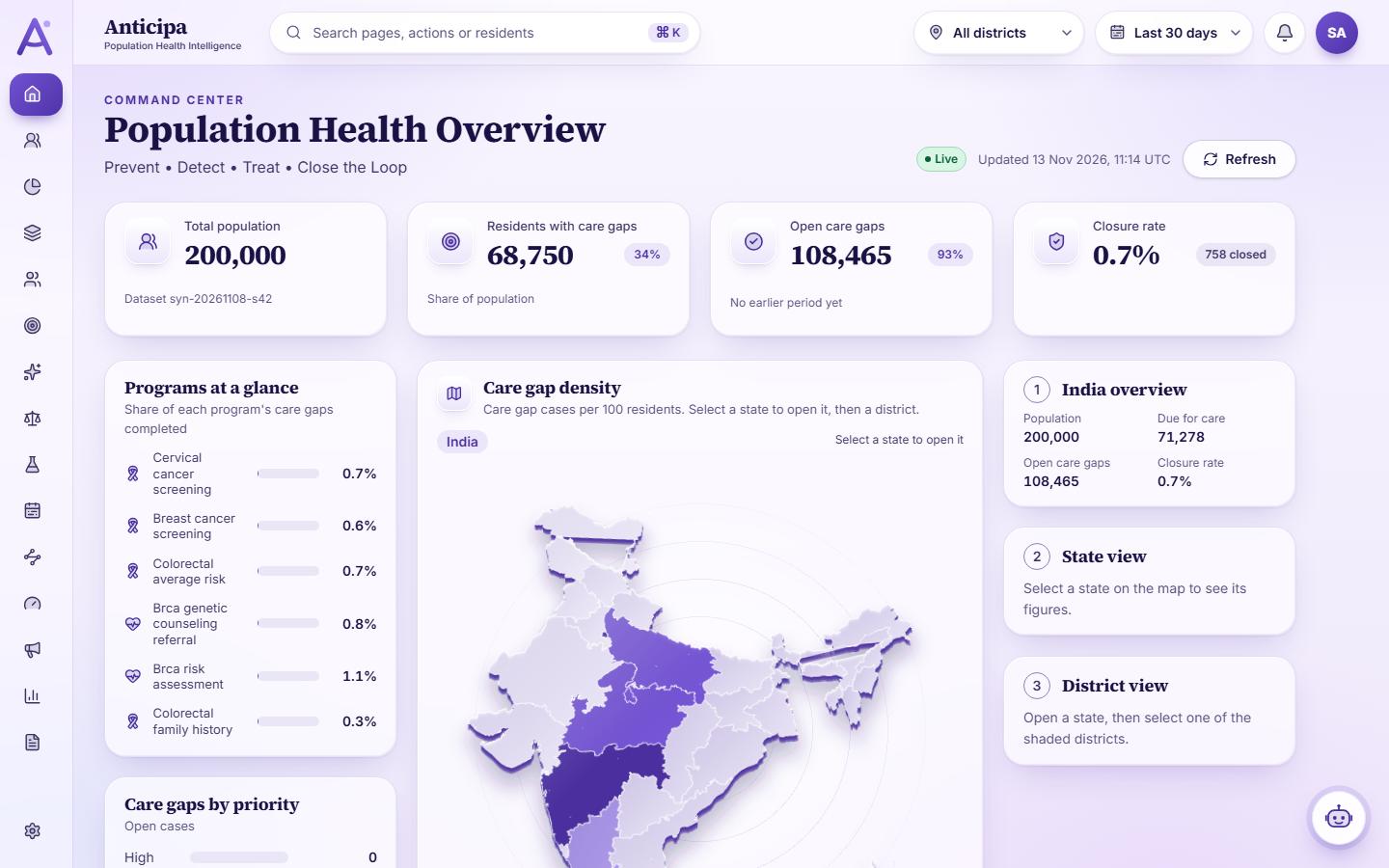
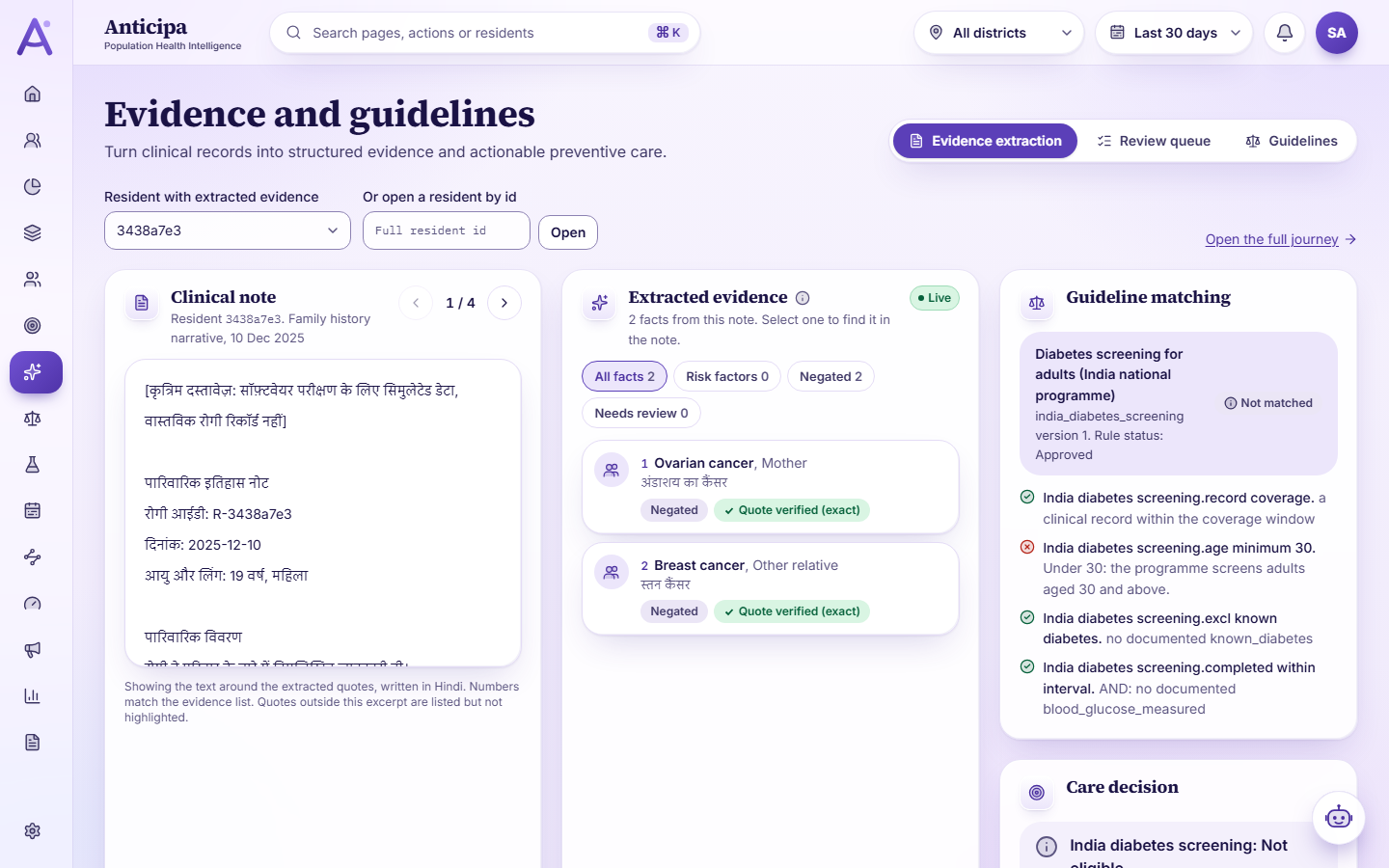
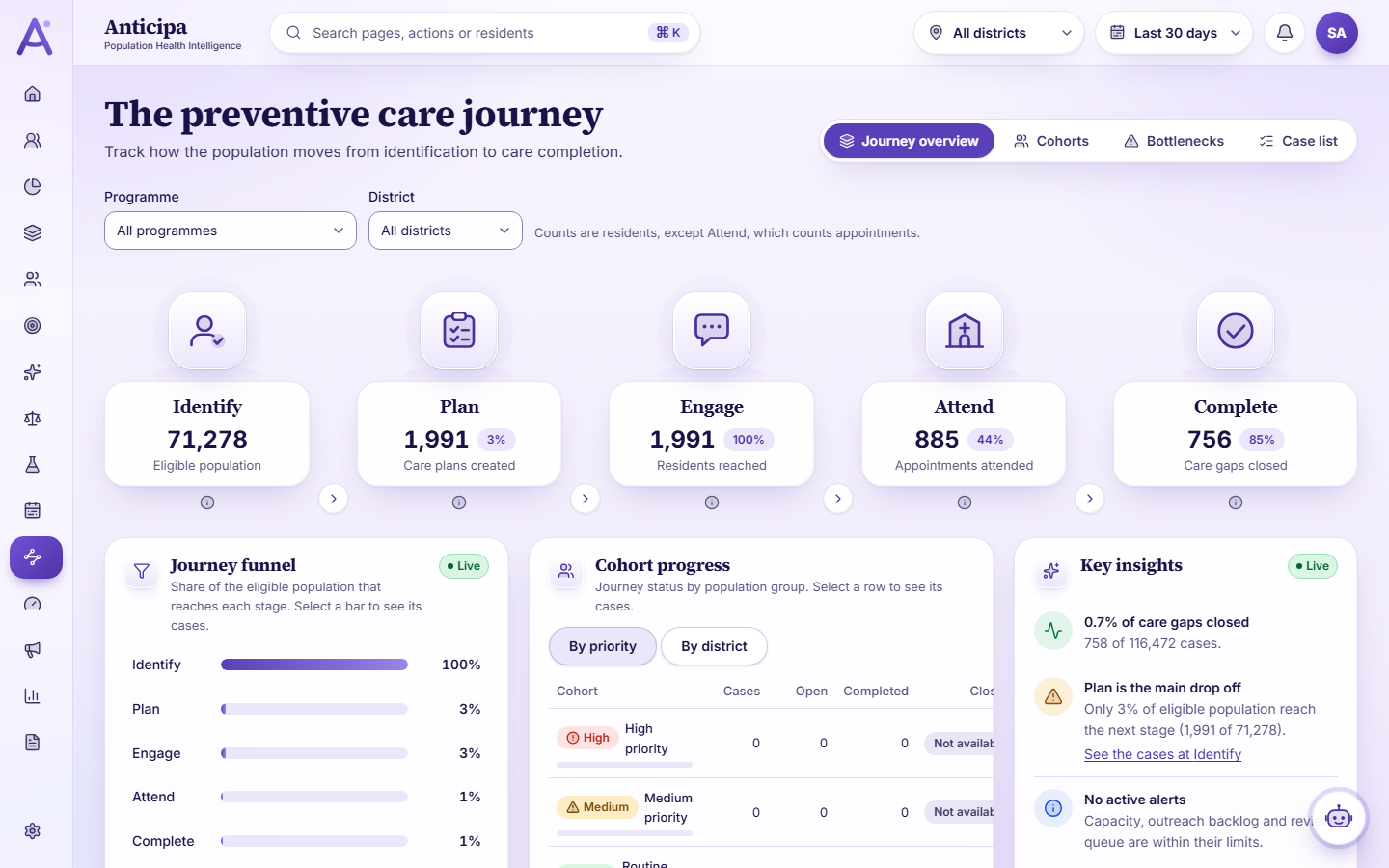
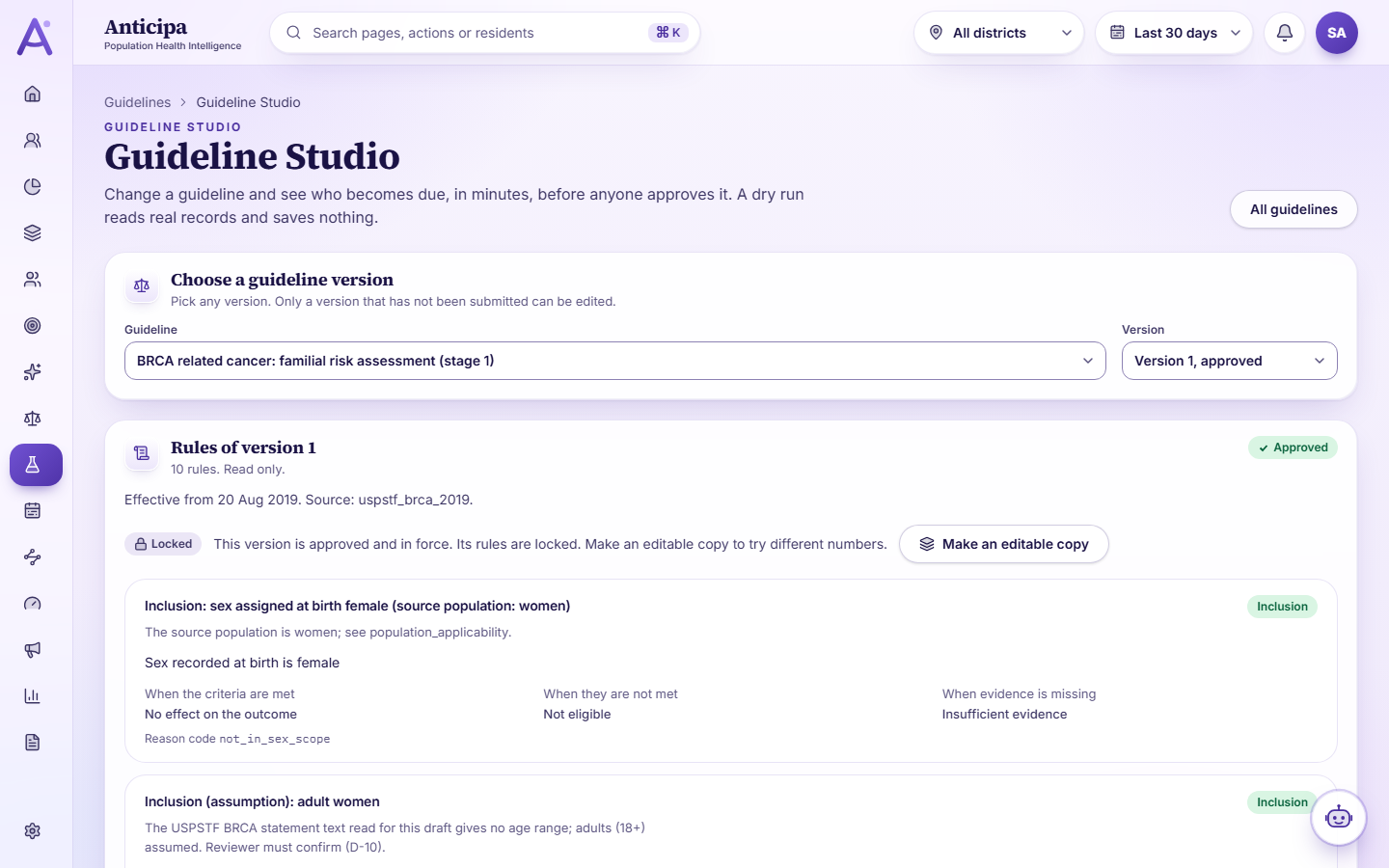
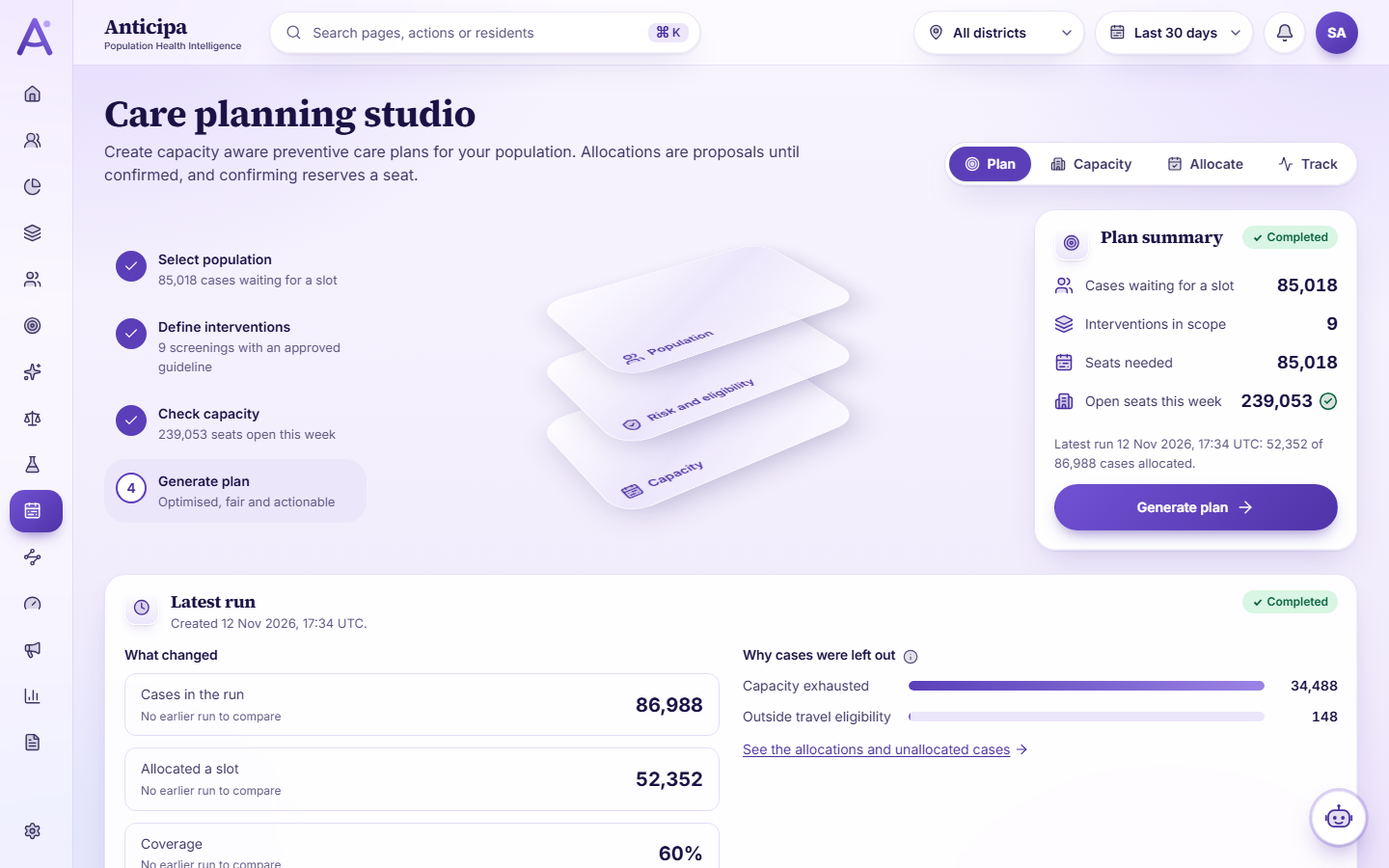
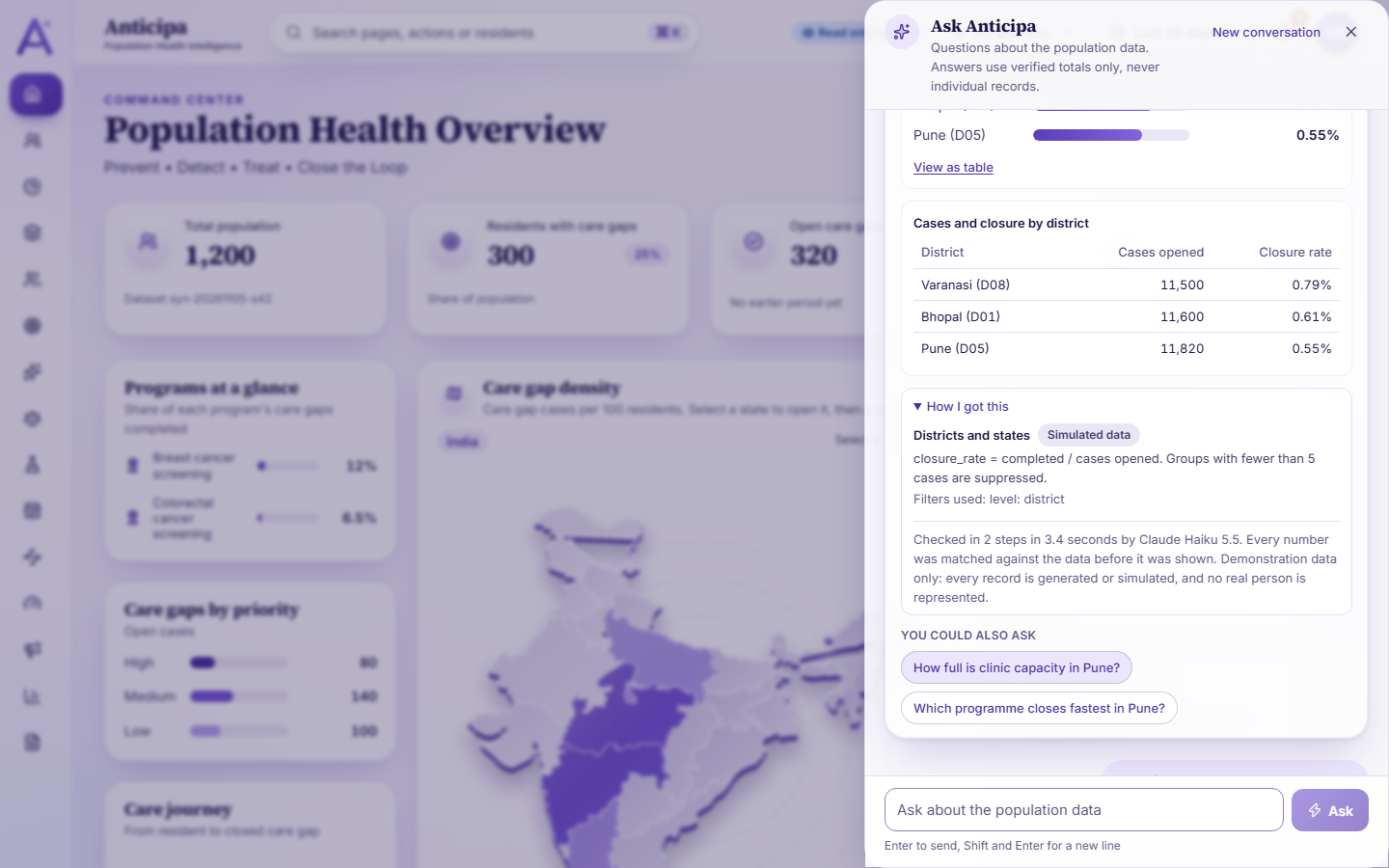
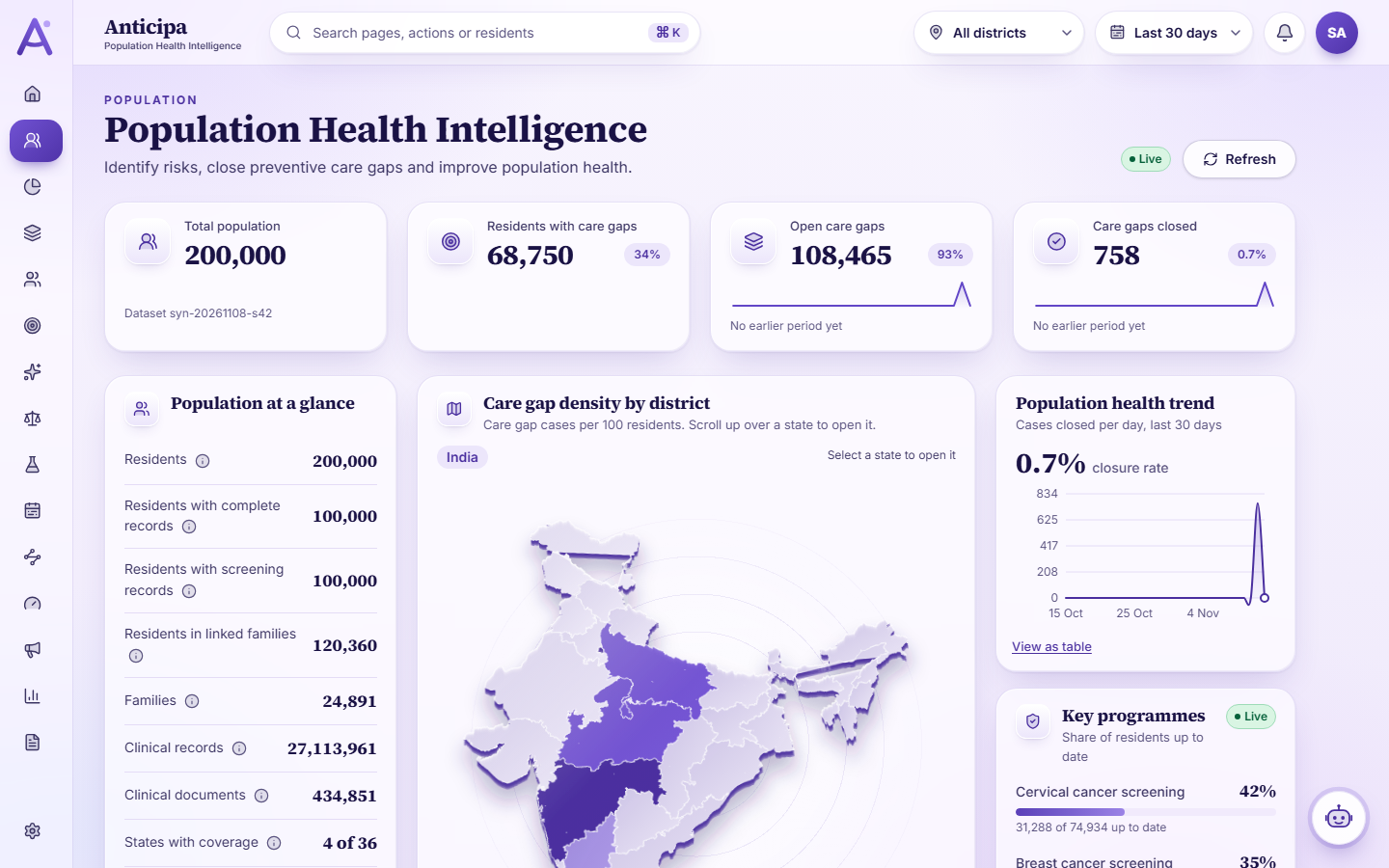
Care teams, district health programs, and insurers can use Anticipa to find everyone due for preventive screening and follow cases until someone verifies the care happened. It reads clinical notes in English, Hindi, and Arabic and extracts facts such as a mother's breast cancer at age 46, with an exact quote that is verified against the note. Versioned rules, not the AI, decide whether a resident is eligible, already screened, temporarily excluded, or needs clinical review, and each outcome lists its reasons. Guideline Studio dry-runs an edited guideline against real records to show who would become due before anyone approves it. A capacity planner places cases into clinic slots with a fairness term across districts and languages, and cases it leaves out get a plain reason code. Outreach goes out from approved templates in three languages, while a resident conversation agent handles logistics and routes health questions to a clinician. Nothing closes on trust. A case counts as completed only when a different person verifies the evidence, and an append-only audit trail records every action. Command Center drills from an India map to states and districts, and Ask Anticipa answers plain-language questions with a table or chart and a How I got this panel. The bundled population is synthetic and all messages are simulated; nobody is contacted. Running on a dedicated VPS on RepoCloud with guaranteed CPU, RAM, and SSD, full root SSH access, and a browser serial console. MIT licensed.
Benefits
- Rules decide, the AI only reads
- Claude reads notes and talks to residents, but versioned, replayable guideline rules make every eligibility call, so no model output can make a resident eligible or ineligible.
- Every fact points to its source
- Each extracted fact carries an exact quote that a deterministic matcher verifies against the note with character offsets, and facts without a verifiable quote are dropped or sent to human review.
- Capacity planning that stays fair
- OR-Tools CP-SAT places cases into clinic slots with a fairness term; on the project's synthetic 200,000-resident run the gap between best and worst served districts fell from 13.2 to 0.6 points.
- Closure needs verified proof
- A case closes as completed only with completion evidence verified by a different person than the submitter, and 20 of 20 improper closure attempts were refused in the project's evaluation.
Features
- Evidence Extraction Engine
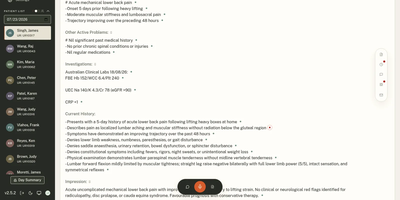
- Claude Haiku reads English, Hindi, and Arabic notes and returns structured facts with subject and negation; hard cases escalate to Claude Sonnet, capped at 10 percent of a run.
- Guideline Engine and Studio
- A pure function evaluates residents against approved, immutable guideline versions in a validated rule language; six packs and an India program pack are included, and Studio dry-runs edits.
- Capacity Planning Studio
- Google OR-Tools CP-SAT assigns cases to service slots under hard constraints (service match, open clinic, seat capacity, consent) that an independent validator checks, and unplaced cases get reason codes.
- Multilingual Outreach and Chat
- Approved English, Hindi, and Arabic templates drive simulated outreach, and a conversation agent answers logistics questions after a deterministic classifier routes emergencies and health questions to a clinician.
- Ask Anticipa Analytics
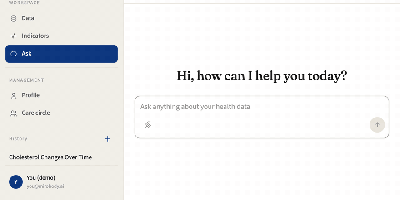
- Questions go through a Claude tool loop over nine read-only analytics tools and return a table or chart with a How I got this panel; clinical questions are refused.
- Command Center India Map
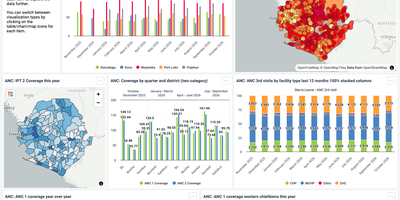
- A tilted-glass d3-geo and TopoJSON map drills from country to state to district with a cross-filter across programs, plus Population, Programs, Reports, and an administrator monitor.