Categories
Self-Hosted DevOps CI/CD Container Registry Package Registry Artifact Repository Software Supply ChainStars
Forks
Watchers
Developer links
OpenArtifact
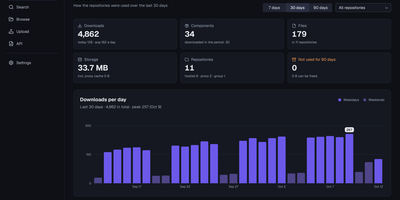
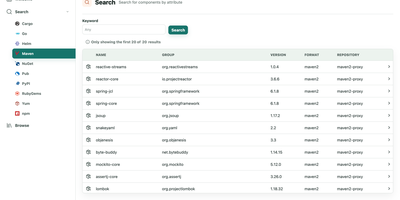
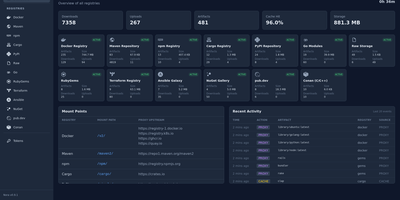
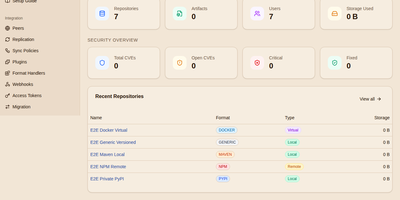
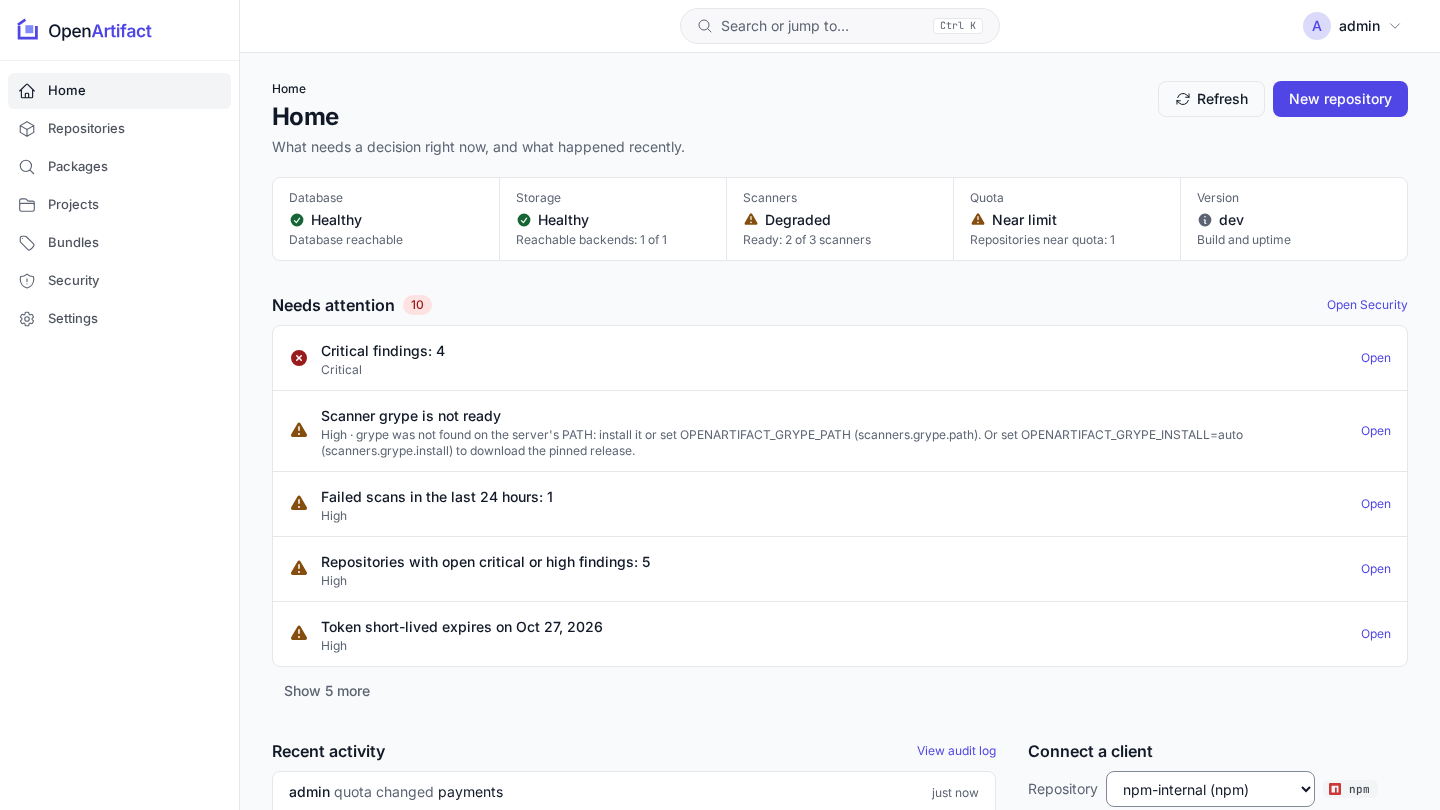
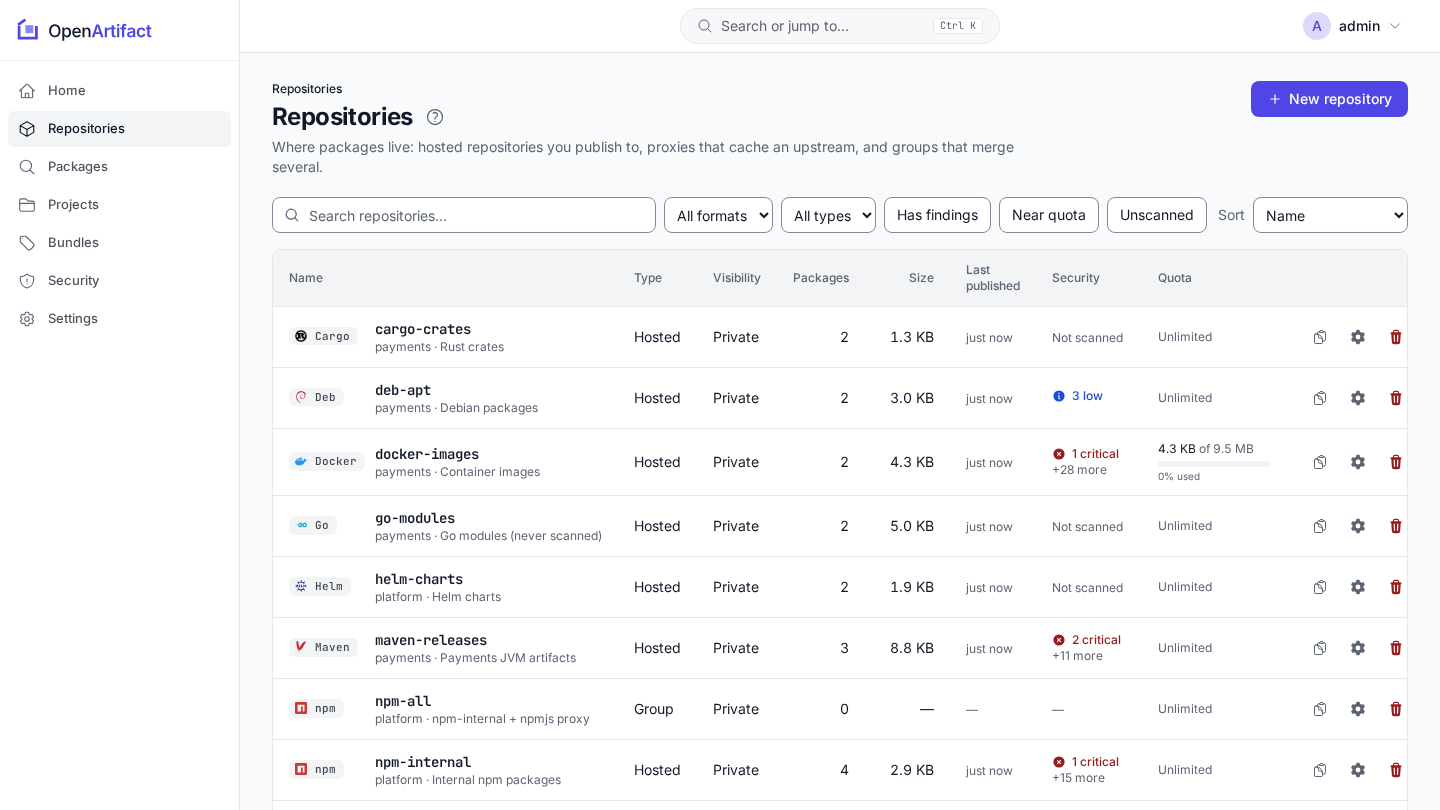
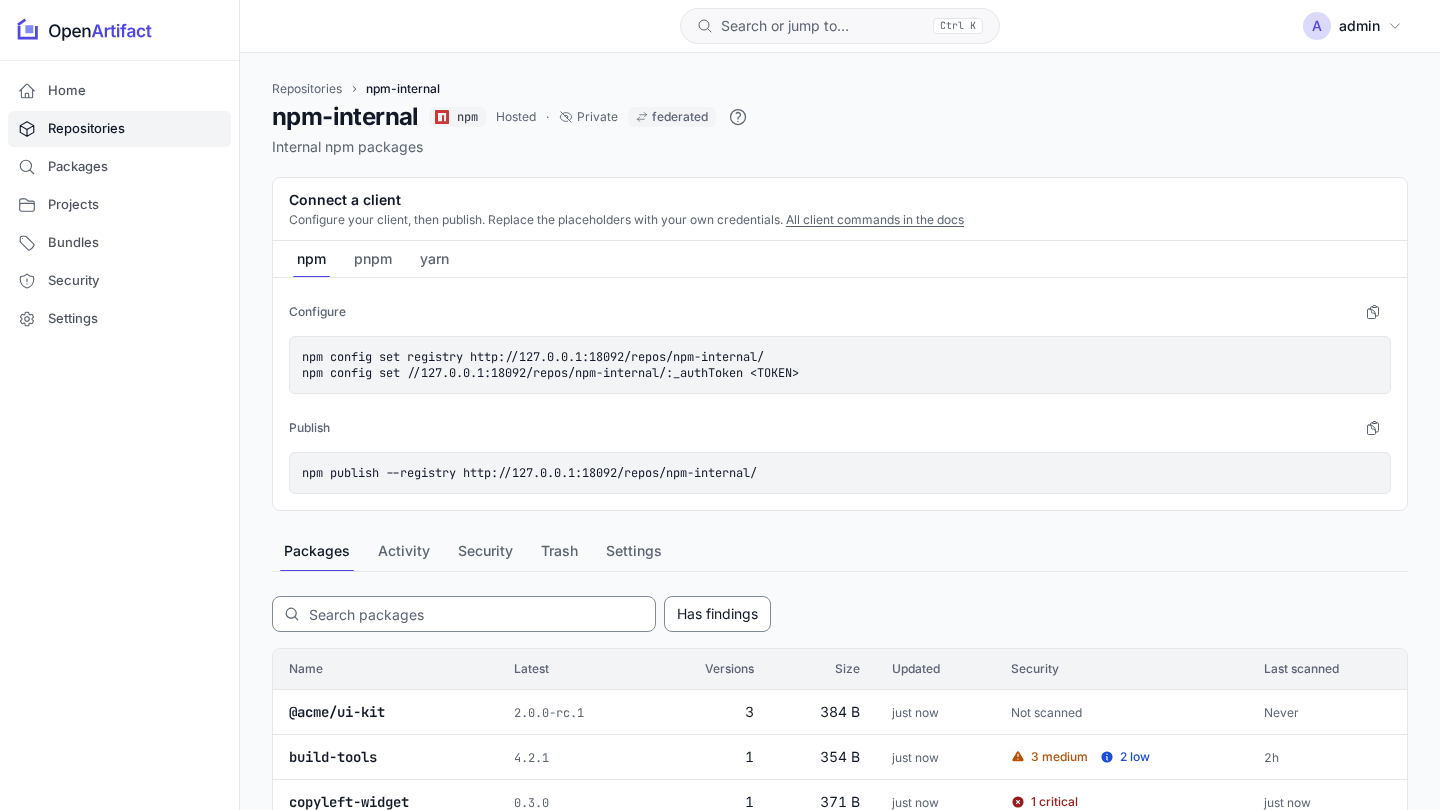
One registry for every package your builds produce: OpenArtifact stores and serves 23 artifact formats behind a single URL scheme and permission model on infrastructure you control. Create hosted repositories for the packages you publish, proxy repositories that cache upstream registries and keep serving when they go down, and group repositories that merge members in order behind one address. Point Maven, npm, PyPI, Docker and OCI clients, Helm, Cargo, NuGet, Go, RubyGems, Debian, RPM, and a dozen more tools at it with their native protocols, no plugins or wrappers. Control who can publish and pull with users, groups, permission targets, and API tokens, sign people in through OIDC or SAML single sign-on, and give CI tokenless login through OIDC token exchange. Scan what you store: software bills of materials in CycloneDX and SPDX, vulnerability findings from OSV, Trivy, and Grype, license compliance checks, and secret detection run against your artifacts. Set cleanup policies and storage quotas so old snapshots stop eating disk, attach custom properties to artifacts, and promote release bundles through your pipeline stages. Store blobs on a local filesystem, S3, Google Cloud Storage, Azure, Garage, SeaweedFS, or an OCI registry, federate selected formats between instances, and import an existing Nexus or Artifactory server with the oa command line tool. Running on a dedicated VPS on RepoCloud with guaranteed CPU, RAM, and SSD, full root SSH access, and a browser serial console. AGPL-3.0 licensed.
Benefits
- One registry, 23 formats
- Maven, npm, PyPI, Docker/OCI, Helm, Cargo, NuGet, Debian, RPM, and more share one URL scheme and one permission model, so teams stop running a separate silo for every ecosystem.
- Upstreams cached, builds protected
- Proxy repositories cache public registries and can keep serving stale artifacts during an outage, and group repositories merge hosted and proxy members behind one address in a defined order.
- Scanning built into storage
- CycloneDX and SPDX bills of materials, OSV, Trivy, and Grype vulnerability findings, license compliance, and secret detection run against stored artifacts instead of living in a separate tool.
- Enterprise access, self-hosted
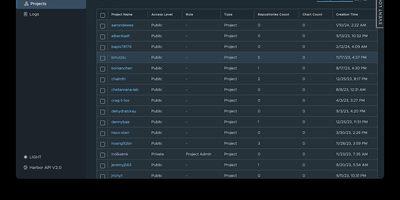
- Users, groups, permission targets, API tokens, OIDC and SAML single sign-on, service accounts, and tokenless CI login through OIDC token exchange come with the free AGPL server.
Features
- Hosted, proxy, group repositories
- Publish your own artifacts, mirror upstreams with serve-stale and curation rules, or merge members into ordered groups, for 22 of the 23 supported formats natively.
- Native client protocols
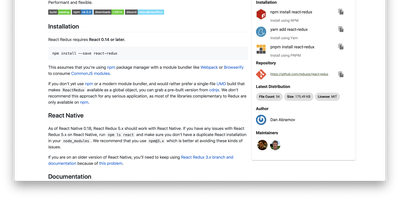
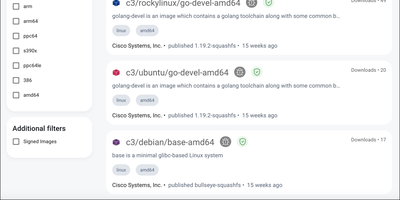
- Maven, npm, PyPI, Docker and OCI under /v2/, Helm, Cargo, Conan, Conda, NuGet, Go modules, RubyGems, sbt, Terraform, and raw files work without client plugins.
- RBAC and SSO
- Permission targets for users and groups, projects, service accounts, API tokens, OIDC and SAML single sign-on, and OIDC token exchange for passwordless CI publishing.
- SBOM and vulnerability scanning
- Generate CycloneDX and SPDX software bills of materials and scan with OSV, Trivy, and Grype, alongside license compliance and secret detection findings.
- Flexible blob storage
- Store artifacts on filesystem, S3, Google Cloud Storage, Azure, Garage, SeaweedFS, or an OCI registry, with cleanup policies, storage quotas, and backups.
- Migration and automation
- Import Nexus or Artifactory with the oa CLI, apply declarative configuration, call the OpenAPI REST API, fire webhooks, and read Prometheus metrics and the audit log.