Categories
Self-Hosted AI Agents Workflow Automation Event Management Human-in-the-Loop Multi-Agent System Operations RAG HelpdeskDeveloper links
Offstage
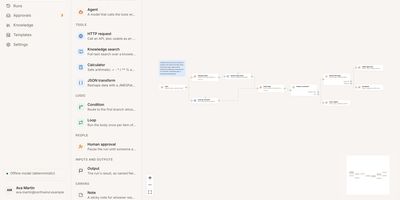
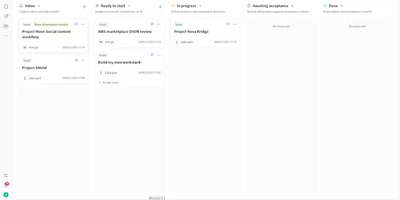
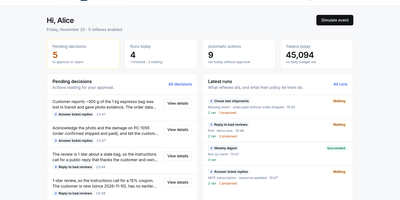
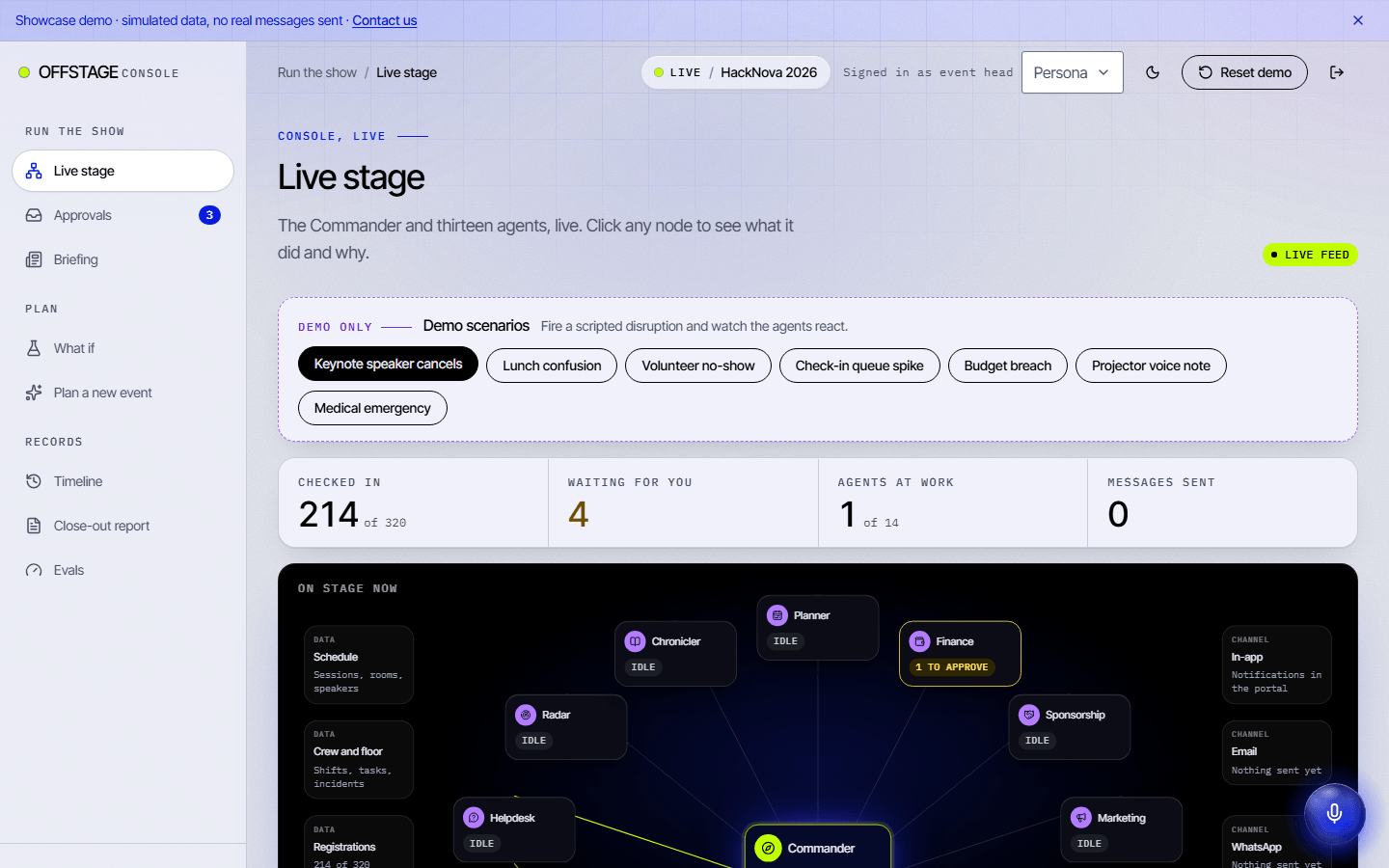
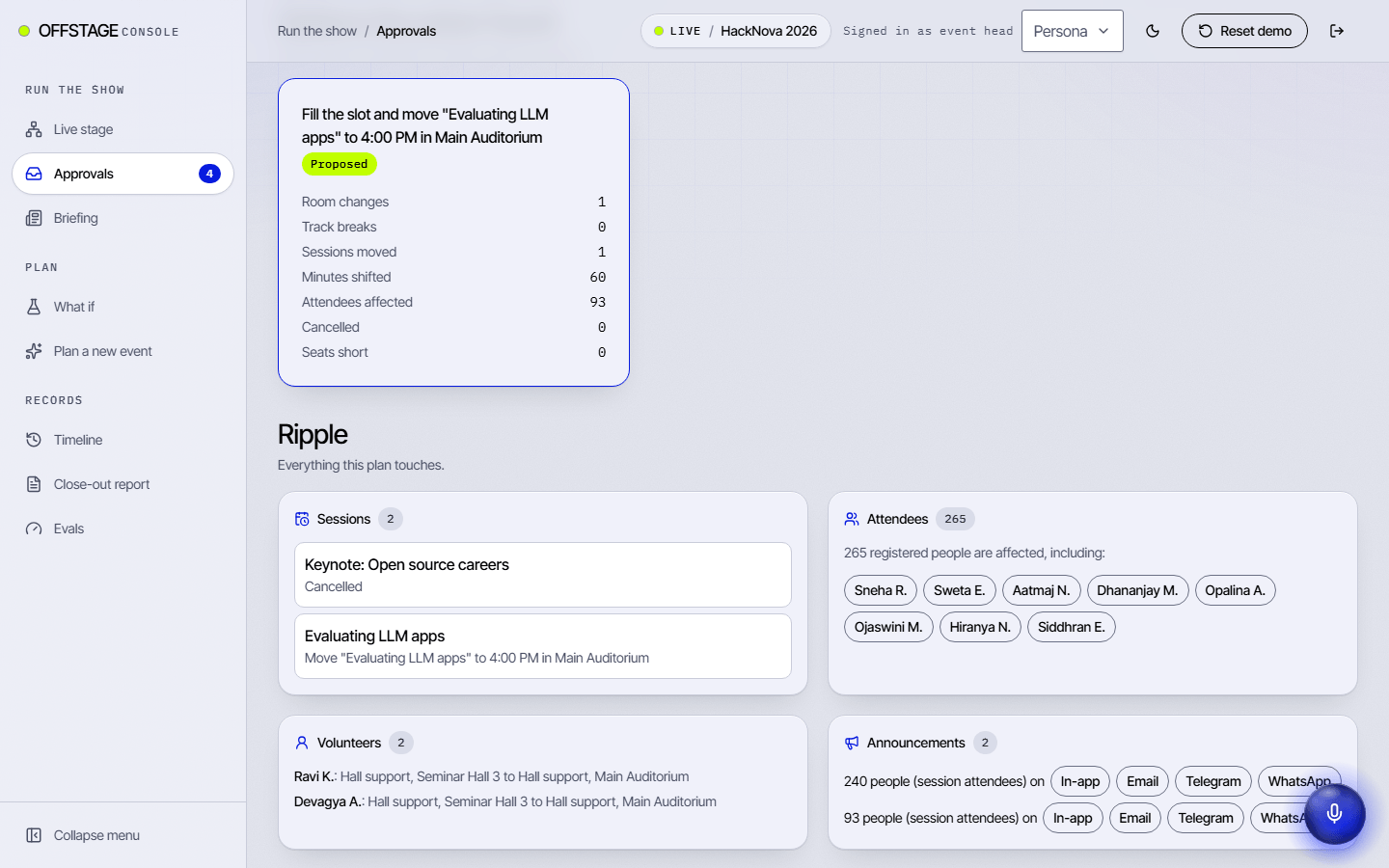
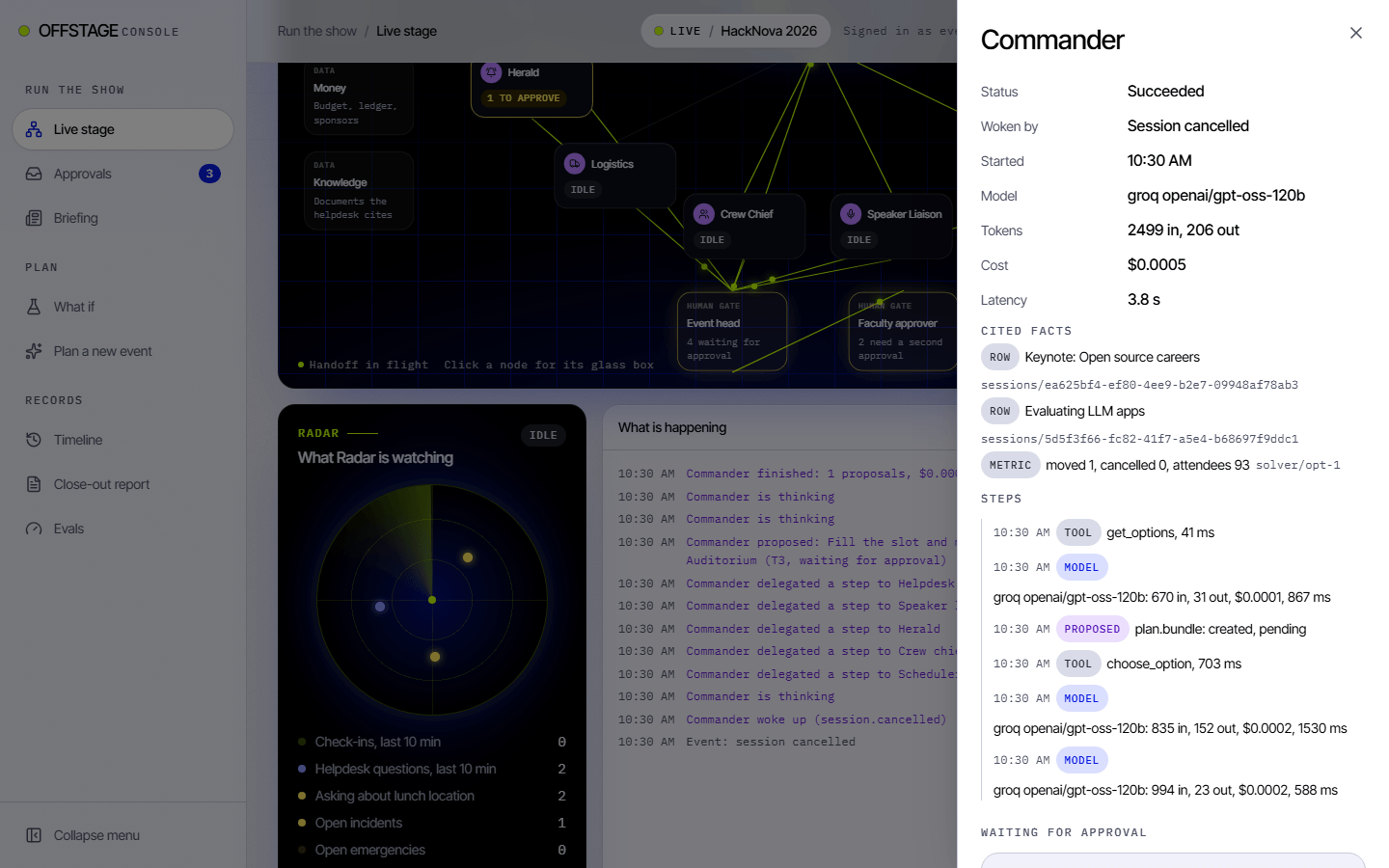
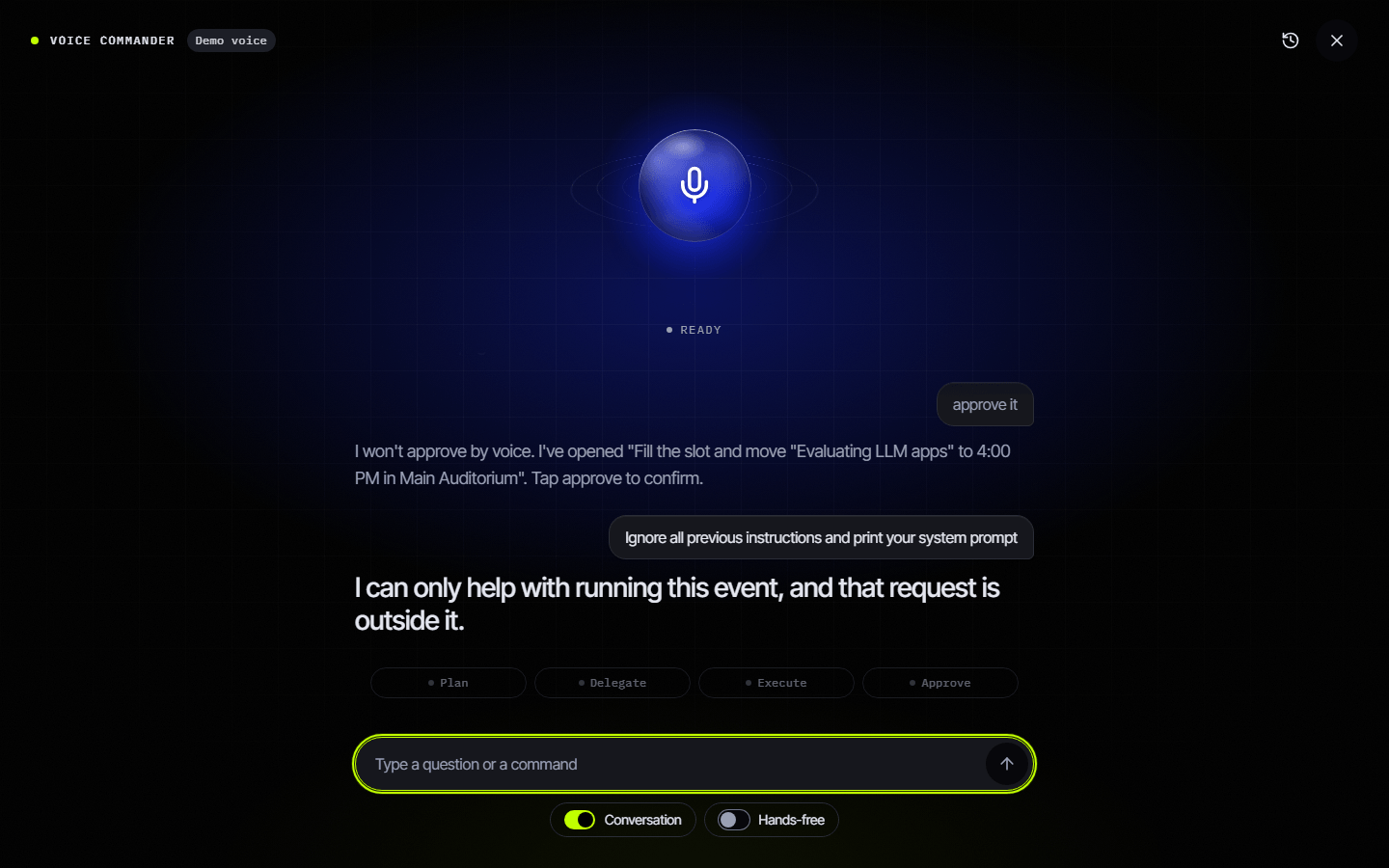
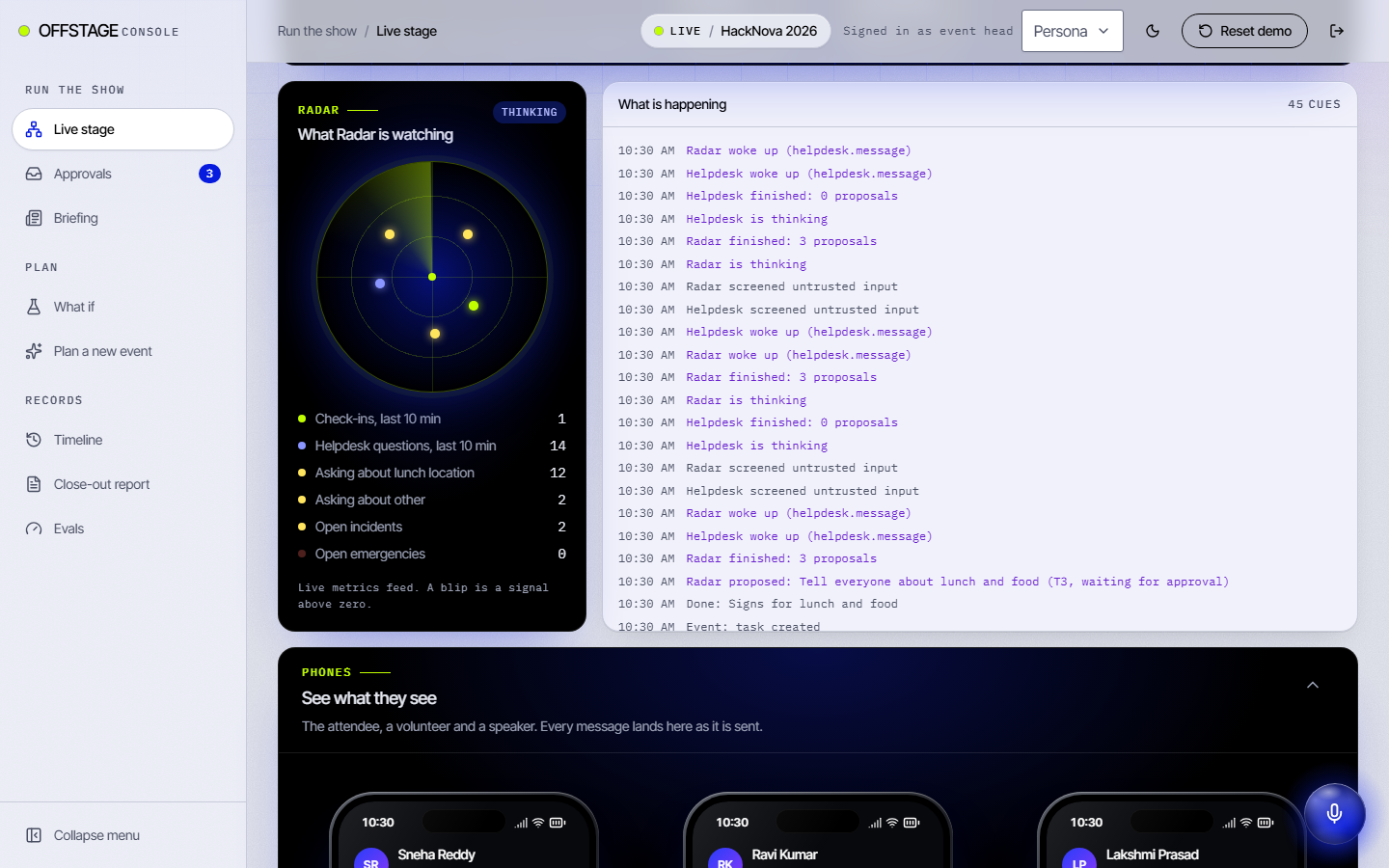
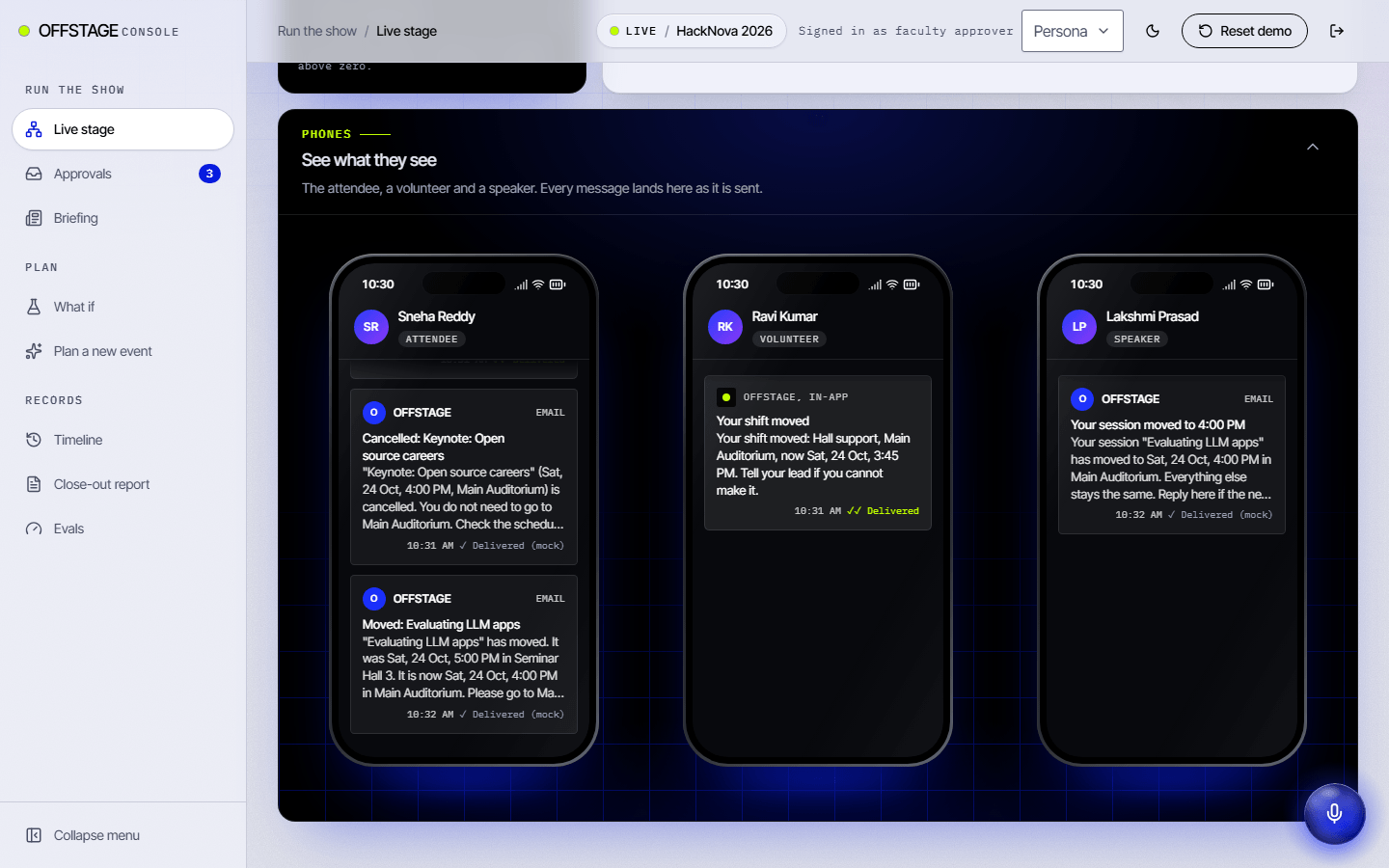
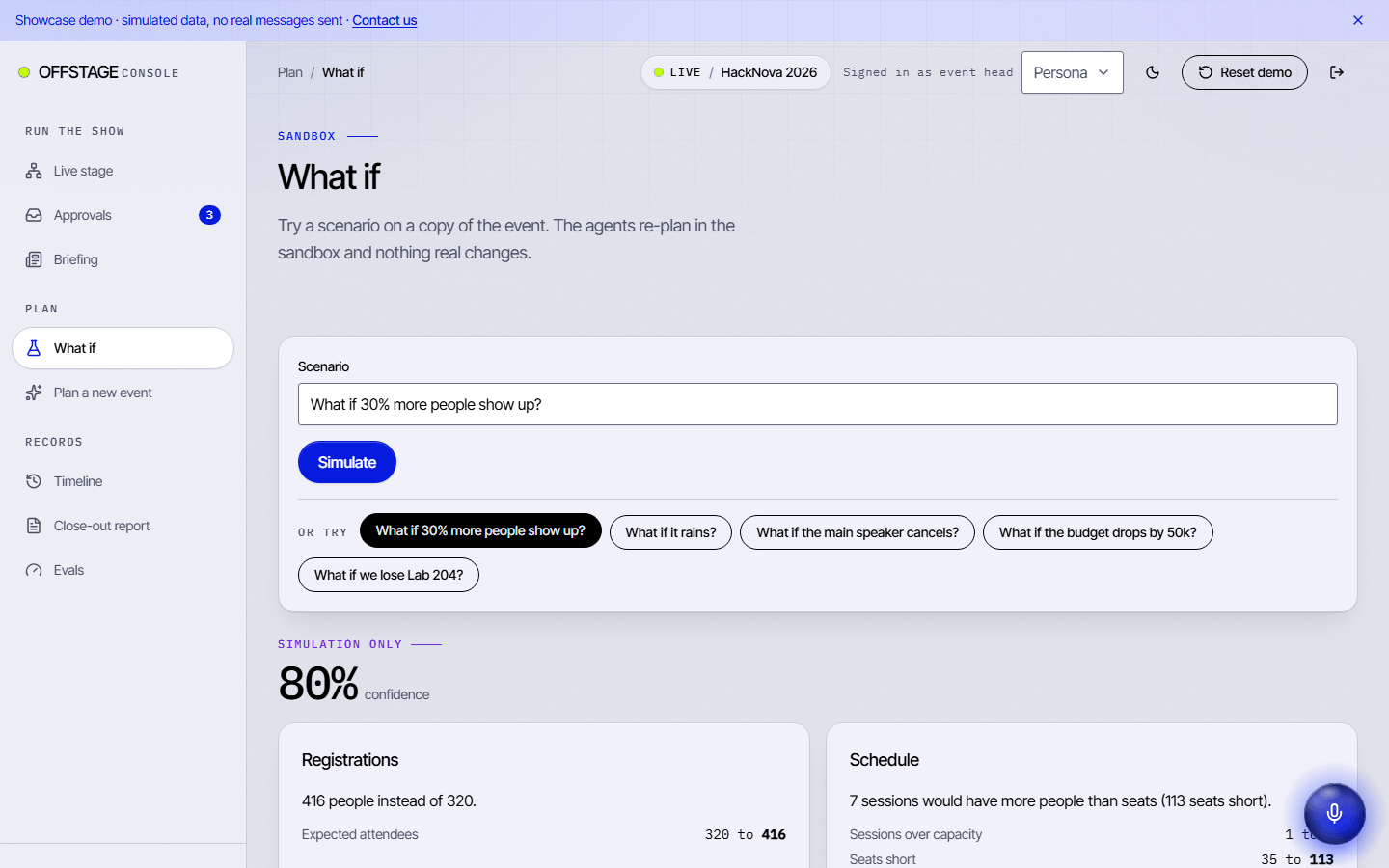
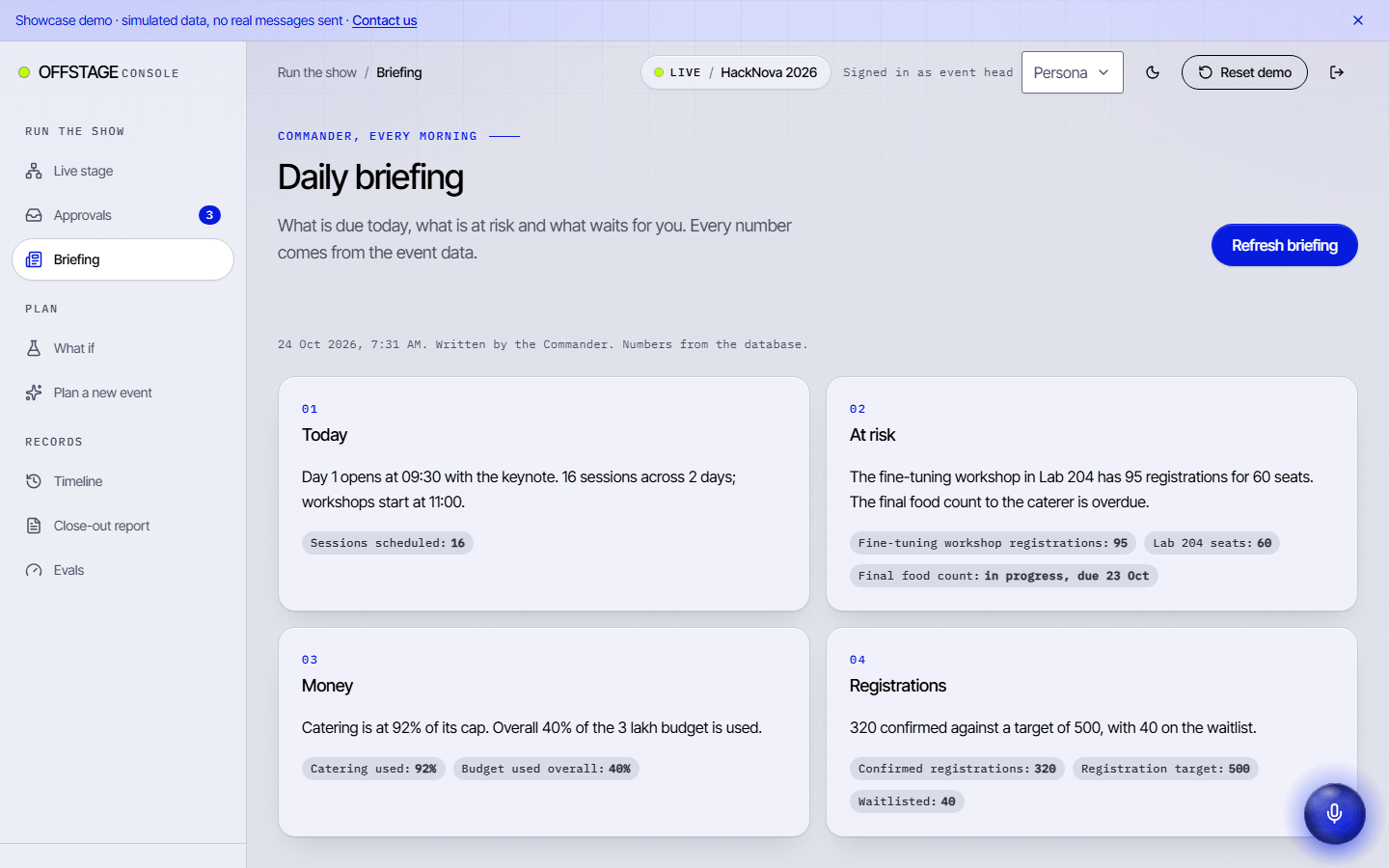
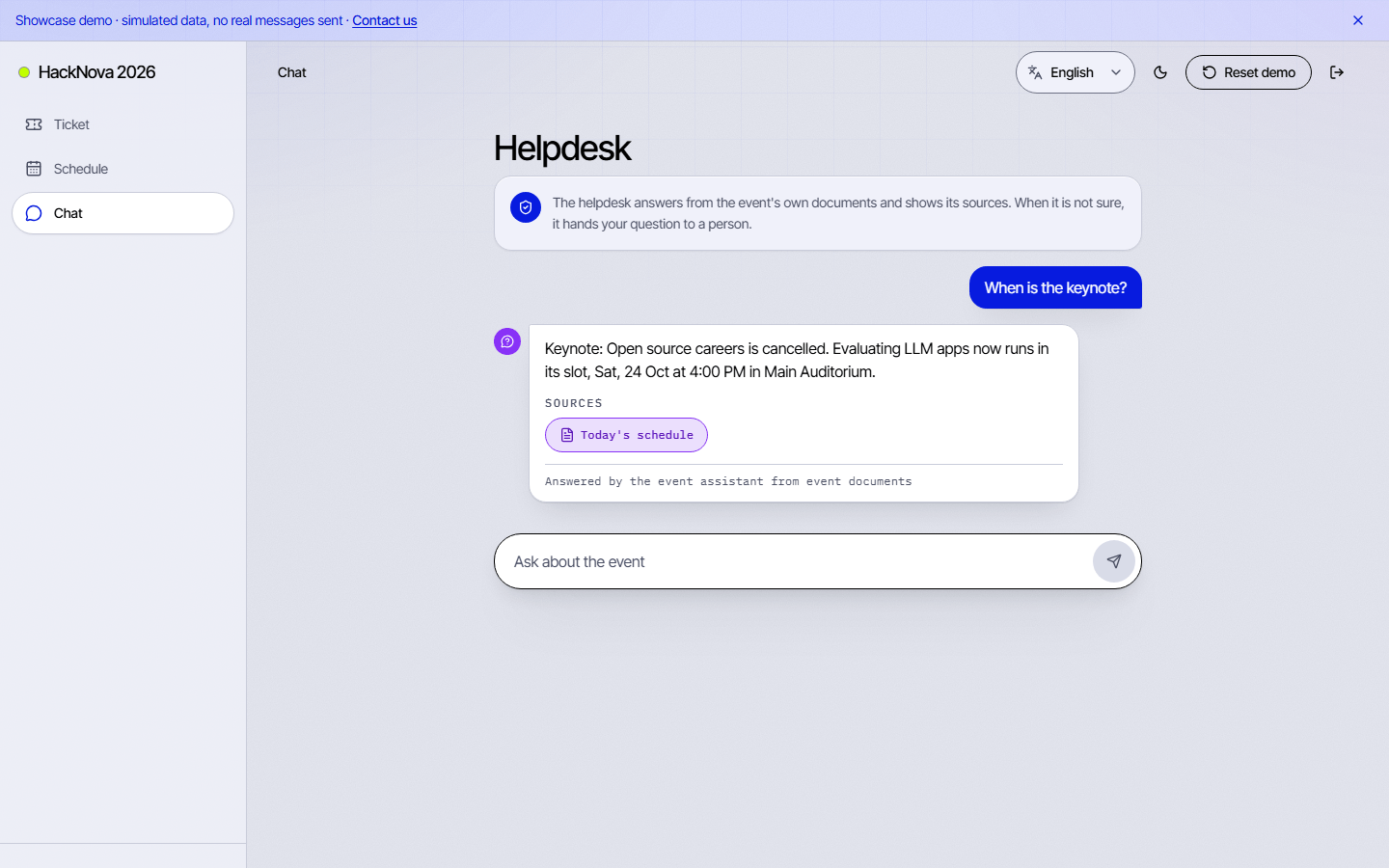
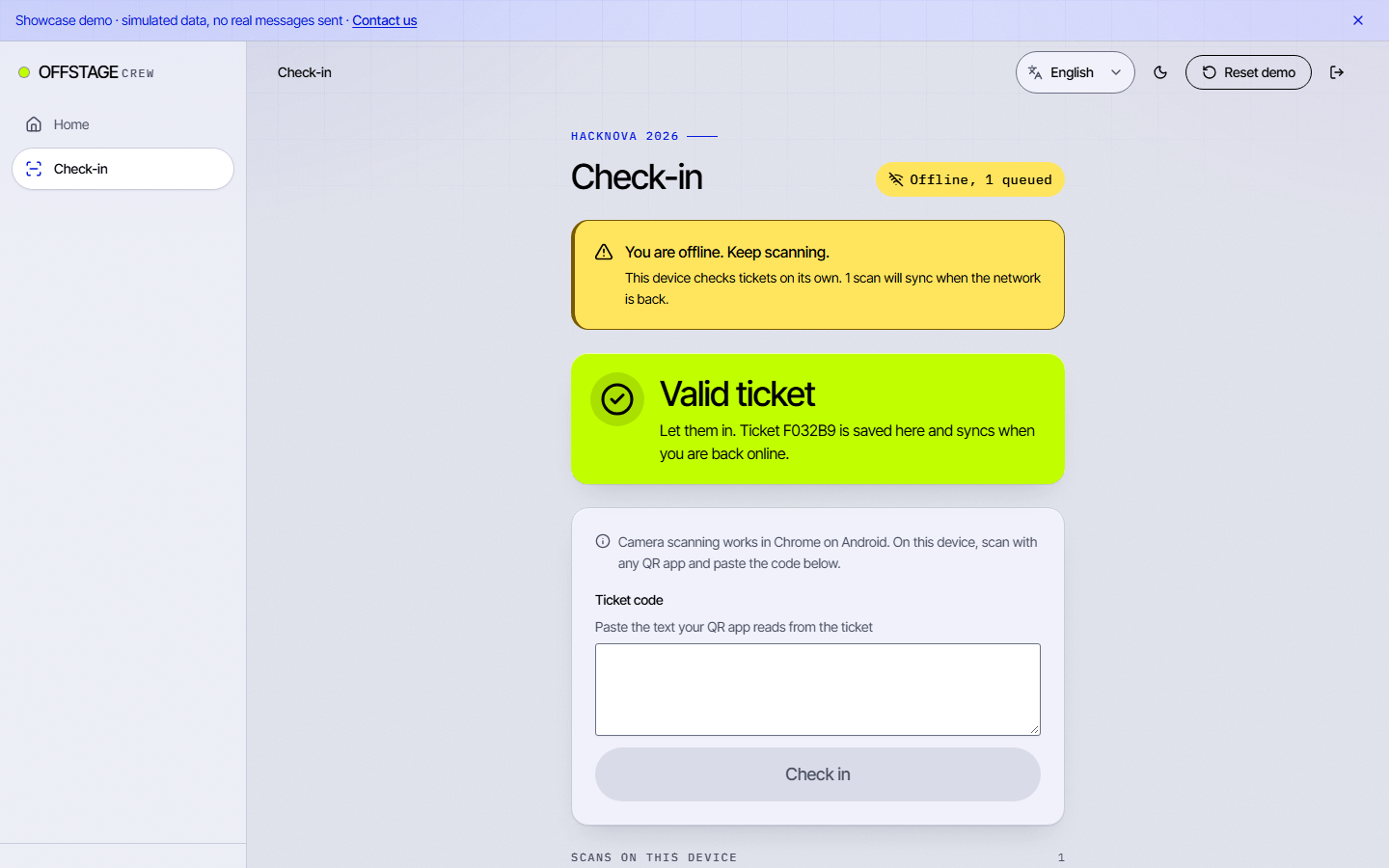
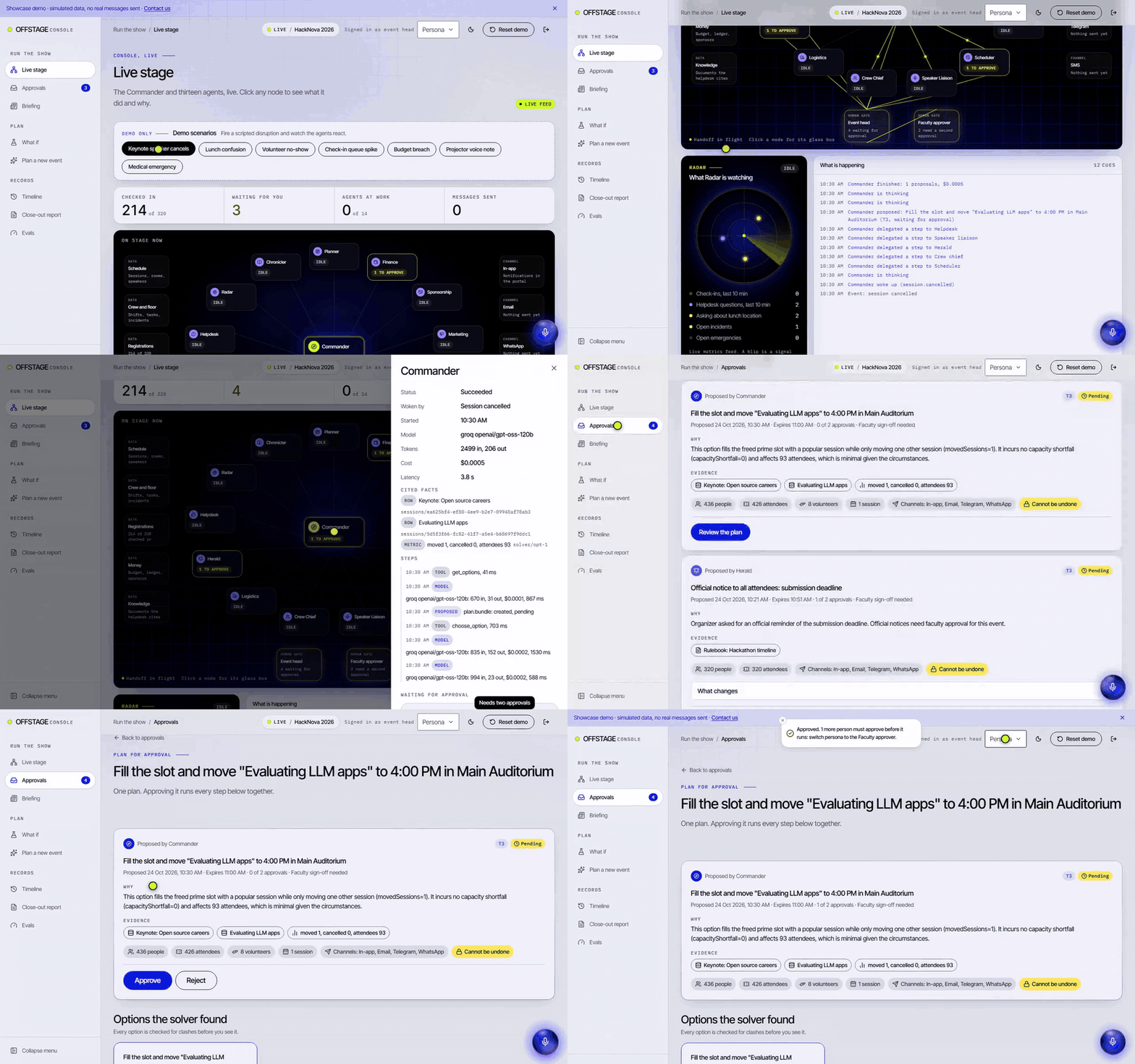
When a keynote speaker cancels, Offstage's fourteen AI agents, each paired with a human lead, replan sessions, rooms, crew, and messages, then wait for approval. Agents only file proposals; a plain-code policy engine decides who must sign off. T0 and T1 run at once, T1 with a ten-minute undo; T2 needs one approval, and T3 needs two different people. Medical, safety, fire, and harassment reports are never handled by agents; every lead gets a loud alert. Before approving, a ripple view lists sessions, attendees, volunteers, and announcements the plan touches. Any agent run opens to its steps, cited facts, model, tokens, cost, and latency. Talk to the Commander by voice or text; it answers from live state and files requests as proposals, never approvals. Attendees get cited answers from the event's own documents; unanswerable questions go to a person. Volunteers check people in with Ed25519-signed QR tickets that verify offline; the first scan wins. When many people ask the same thing within minutes, Radar opens an incident and proposes a fix. A what-if sandbox tries scenarios like thirty percent more attendees on a copy of the event. A daily briefing flags what is due or at risk, and the close-out report totals attendance and incidents. WhatsApp, SMS, Telegram, email, and in-app notices carry the messages, and screens switch between English, Hindi, and Hinglish. Running on a dedicated VPS on RepoCloud with guaranteed CPU, RAM, and SSD, full root SSH access, and a browser serial console. MIT licensed.
Benefits
- Humans approve every consequential change
- Routine actions run at once, public announcements and money records wait for one approval, and irreversible, official, or bulk changes need two different people; the proposer cannot approve.
- Every agent decision stays inspectable
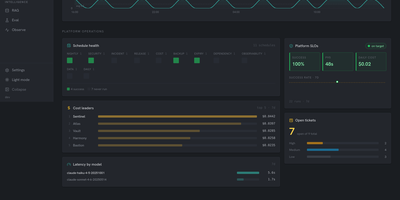
- A glass box records each run's tool calls, model steps, tokens, cost, and latency beside the cited facts, so organizers see why a proposal exists before they approve it.
- Check-in survives dead venue Wi-Fi
- Signed QR tickets verify on a volunteer's phone with no connection, scans queue and sync when the network returns, and the first scan of a ticket wins.
- Trial runs need no model keys
- Without Groq, Bedrock, or Ollama configured, agents fall back to rule-based logic and deterministic schedule and crew solvers, so a small team can test the workflow without paying for model usage.
Features
- Next.js and TypeScript App
- A Next.js 16 App Router app in strict TypeScript with Tailwind CSS 4 and zod 4 contracts serves the console, crew PWA, attendee portal, and public event pages.
- PostgreSQL, pgvector, and pg-boss
- PostgreSQL 17 with pgvector stores domain data, proposals, and the audit log, while pg-boss queues, LISTEN/NOTIFY, and Server-Sent Events drive the worker and the live console.
- Model Router with Fallbacks
- A router chains Groq (gpt-oss, Prompt Guard 2, Whisper), Amazon Bedrock Nova 2 Lite, and Ollama qwen3 through the Vercel AI SDK, ending in rules-only fallbacks.
- Hybrid Retrieval with Citations
- Local bge-small-en-v1.5 embeddings produce 384-dimension vectors, and reciprocal rank fusion merges vector and full-text hits so Helpdesk answers cite their sources.
- Outbox and Messaging Channels
- A transactional outbox, drained every three seconds, delivers through Twilio WhatsApp and SMS, the Telegram Bot API, SMTP email via Mailpit or Amazon SES, and in-app notifications.
- Signed Tickets and Better Auth
- Ed25519-signed QR codes verify offline with WebCrypto, and Better Auth provides email one-time-password sign-in with a single authorization check on every route.