Categories
Self-Hosted Data Engineering Data Pipeline Data Integration Data Warehouse Reverse ETL Data Activation Customer Data PlatformStars
Forks
Watchers
Developer links
Multiwoven
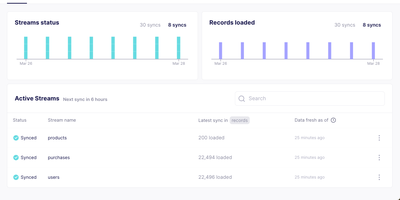
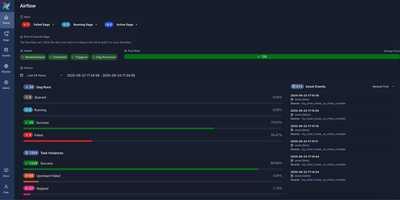
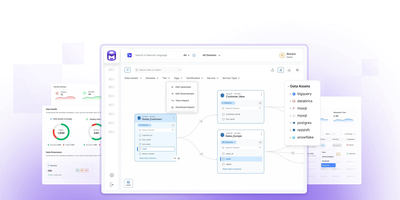
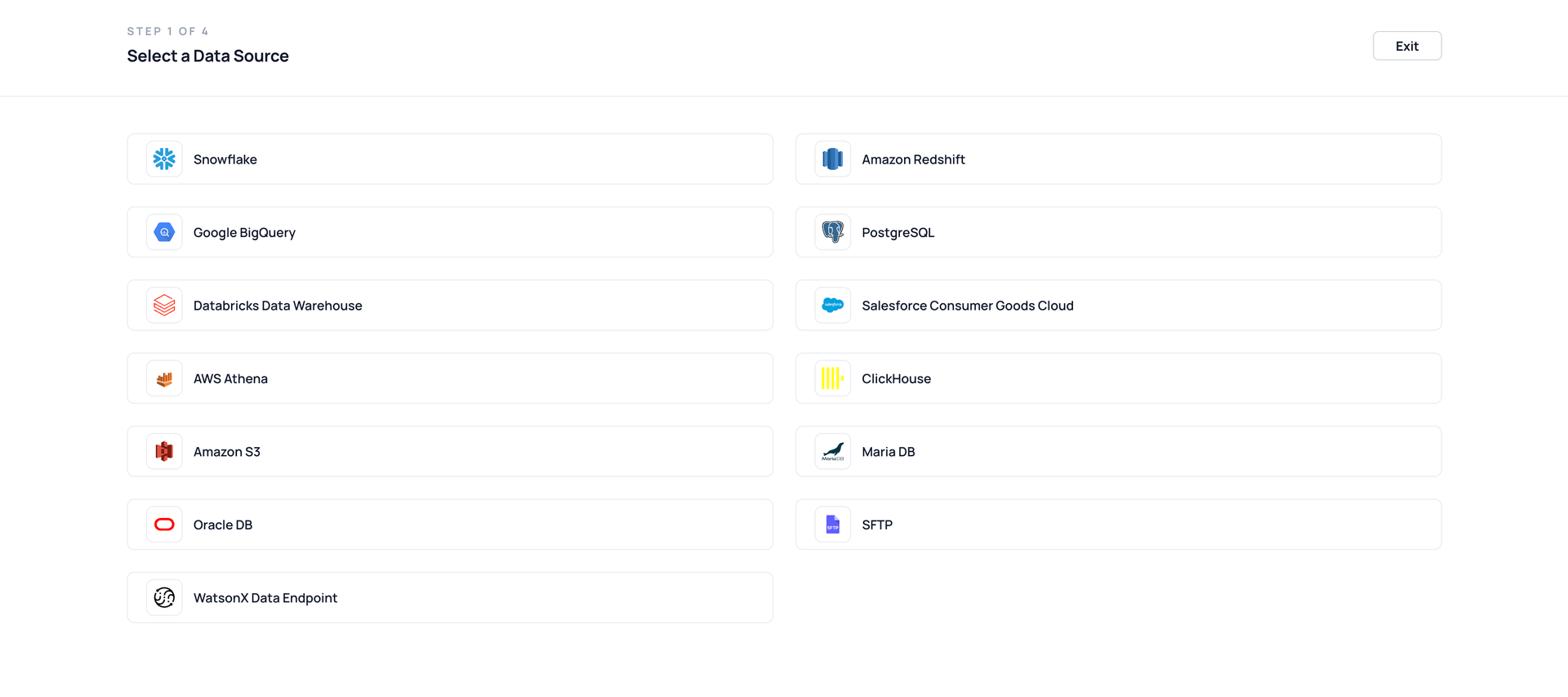
When warehouse data never reaches the CRM, ad platform, or help desk that needs it, Multiwoven is the open-source reverse ETL platform that syncs it there on a schedule. Sources include Snowflake, BigQuery, Redshift, Databricks, PostgreSQL, ClickHouse, MariaDB, Oracle, Amazon S3, and SFTP. Models define what to move: write SQL with a 100-row preview, pick tables in a visual selector, or reuse existing dbt models. Destinations span Salesforce, HubSpot, Klaviyo, Mailchimp, Zendesk, Slack, Airtable, Google Sheets, Stripe, Facebook Custom Audiences, HTTP endpoints, and vector stores such as Pinecone, Qdrant, and Weaviate. Each sync maps model columns onto destination objects like Salesforce Account, Contact, or Opportunity, then runs as a full refresh or as an incremental sync that moves only new or changed rows, optionally tracked by a cursor field. Schedules can be manual, an interval from minutes to weeks, or a cron expression. A dashboard reports sync activity, each run records its status with successful and failed row counts, and failed runs can trigger status emails. Workspaces keep sources, models, syncs, and destinations separate for each team, while Admin, Member, and Viewer roles and email invitations control access. A connector framework lets teams add sources or destinations that are not yet supported. Running on a dedicated VPS on RepoCloud with guaranteed CPU, RAM, and SSD, full root SSH access, and a browser serial console. AGPL-3.0 licensed.
Benefits
- Warehouse data reaches every team
- Models built in SQL, a visual selector, or dbt feed syncs into Salesforce, HubSpot, Zendesk, Slack, and Google Sheets, so teams work from the same warehouse numbers.
- Move only what has changed
- Incremental syncs, optionally tracked by a cursor field, transfer only new or updated rows, minimizing data movement compared with a full refresh that replaces everything in the destination.
- Flexible schedules with clear status
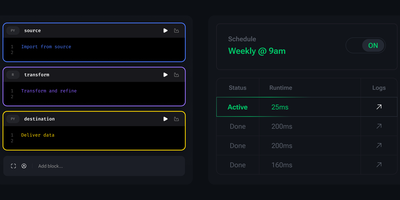
- Run syncs manually, at intervals measured in minutes, hours, days, or weeks, or on a cron expression, with sync status shown as Healthy, Pending, Failed, or Disabled.
- Team workspaces with role control
- Each workspace keeps its own sources, models, syncs, and destinations, and Admin, Member, or Viewer roles decide who can edit; invitations go out by email.
Features
- Flexible Data Modeling
- Define models with a SQL editor that previews 100 rows, a visual table selector, or dbt models, and set a unique primary key for each model.
- Broad Connector Catalog
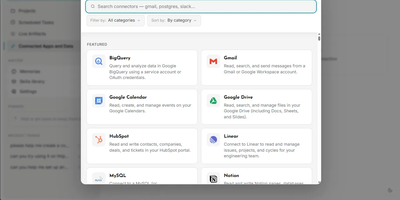
- Sources include Snowflake, BigQuery, Redshift, Databricks, PostgreSQL, ClickHouse, Oracle, and S3; destinations include Salesforce, HubSpot, Klaviyo, Zendesk, Slack, Stripe, Weaviate, and Pinecone.
- Full and Incremental Syncs
- Full refresh replaces destination data, while incremental and cursor-field syncs transfer only new or updated rows to destination objects such as Salesforce Account, Contact, and Opportunity.
- Temporal-Orchestrated Scheduling
- Syncs schedule through Temporal workflows with manual, interval, or cron triggers, and run states such as Querying, Queued, In Progress, Success, and Failed.
- Workspaces and RBAC
- Workspaces isolate sources, models, syncs, and destinations per team, with Admin, Member, and Viewer roles and email invitations whose links expire after 30 days.
- Docker Compose Deployment
- Docker Compose starts the Rails server, React UI, background worker, PostgreSQL, Redis, and Temporal, with the web UI on port 8000, and Helm charts cover Kubernetes.