Categories
Access Control Identity Management Single Sign-On Authentication Server OAuth2 Provider Security InfrastructureStars
Forks
Watchers
Developer links
Kanidm
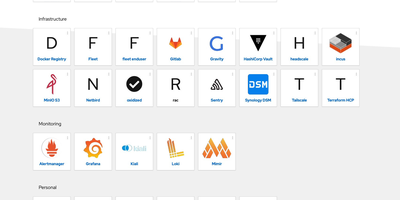
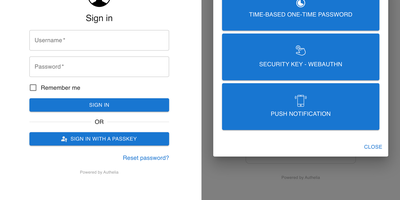
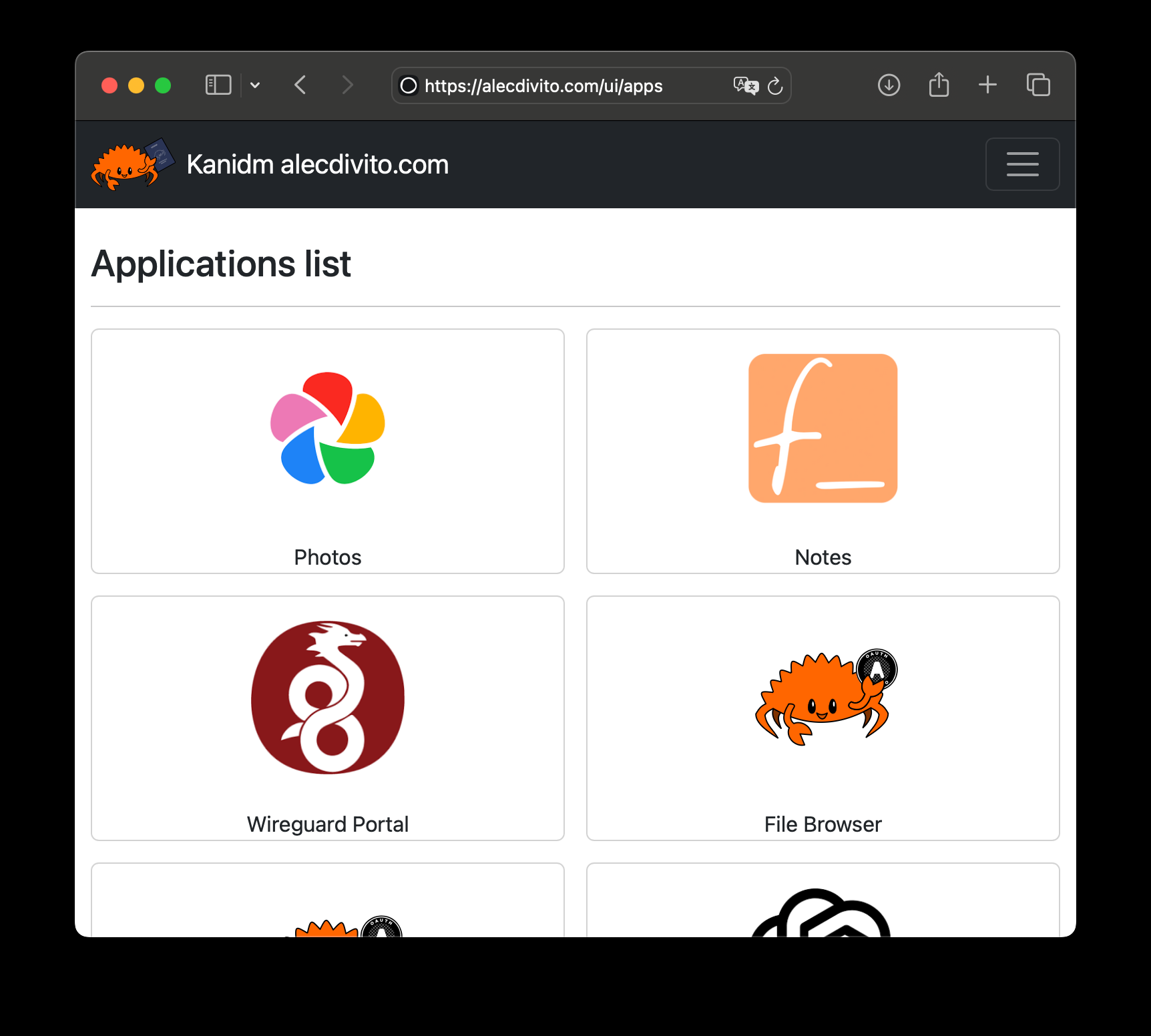
Every service you self-host wants its own account database, and Kanidm exists so they can all share one: one identity server where people sign in with passkeys and every application trusts the same login. Users register YubiKeys, Touch ID, Windows Hello, or TPM backed authenticators, and attested passkey policies let administrators restrict sign-in to specific authenticator models in high security environments. Applications connect as OAuth2 or OpenID Connect clients with authorization code, client credentials, PKCE, token exchange, and revocation supported, so your wiki, Git forge, and file sync all delegate sign-in instead of storing passwords. The application portal gives each person one page of tiles for every service they may open, and role based access control decides which groups see which applications and scopes. Older systems that only speak LDAP bind to the read-only LDAPS gateway, while Wi-Fi and VPN gear authenticates through the built-in RADIUS server with MS-CHAPv2 and EAP-TLS. Linux machines join through the Unix client for PAM and NSS authentication, cached offline credentials protected by the machine TPM, and SSH keys distributed from the server to every host. A second server replicates the whole database with strong eventual consistency, every node accepting writes without elections or quorums, so a failed machine never locks your users out of sign-in. Running on a dedicated VPS on RepoCloud with guaranteed CPU, RAM, and SSD, full root SSH access, and a browser serial console. MPL-2.0 licensed.
Benefits
- Phishing-Resistant Passkeys by Default
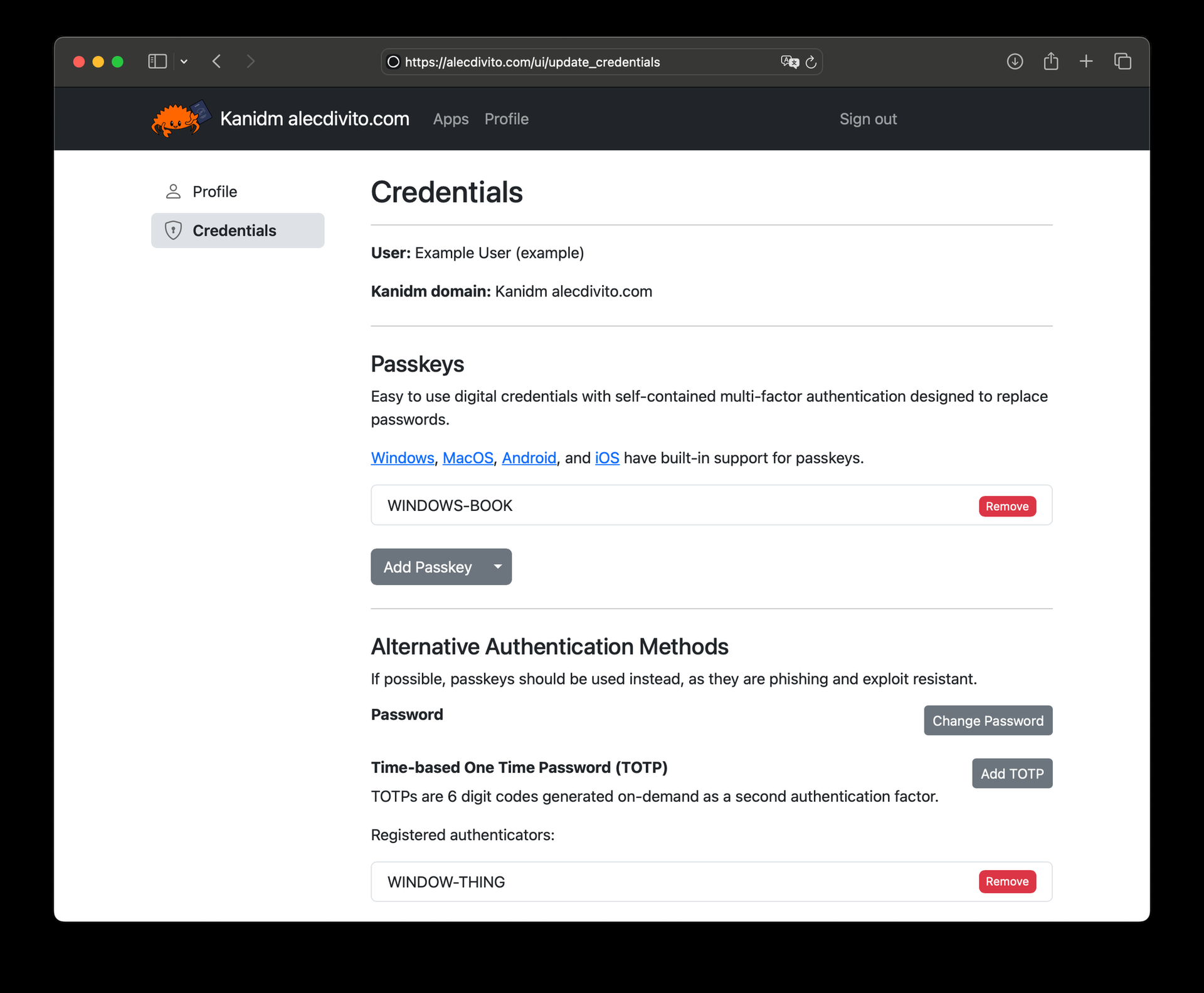
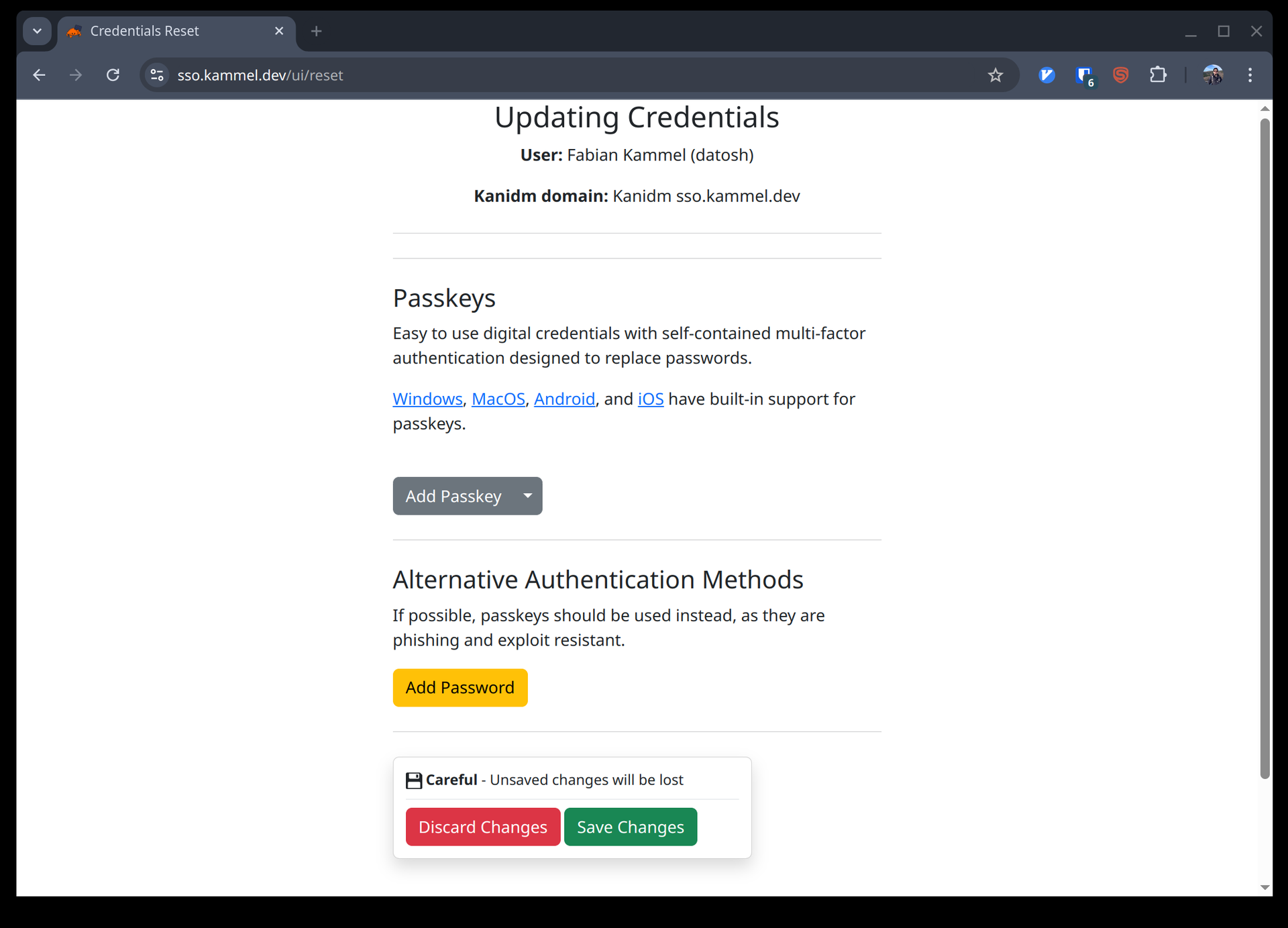
- Sign-in centers on WebAuthn passkeys from YubiKeys, Touch ID, Windows Hello, and TPMs, which cannot be phished or replayed, with TOTP and Argon2ID passwords as secondary options.
- One Login for Everything
- Every connected application delegates authentication to Kanidm over OAuth2 and OpenID Connect, so users remember one identity and administrators disable a leaver once, everywhere, immediately.
- Legacy Protocols Still Covered
- Software that predates OIDC binds to the read-only LDAPS gateway, and network hardware authenticates over RADIUS, so old and new systems share the same identity store.
- Replication Without a Cluster Database
- Kanidm's own database replicates between servers with strong eventual consistency, every node writable without elections or quorum, so no external PostgreSQL cluster becomes your single point of failure.
Features
- Passkey-First Authentication
- WebAuthn level 3 passkeys with FIDO MDS attestation, per-account credential management in the web UI, TOTP second factors, and Argon2ID password hashing per RFC 9106.
- OAuth2 and OIDC Provider
- Authorization code and client credentials grants with PKCE, token exchange, revocation, and introspection; RBAC maps groups to scopes and claims including PII controls.
- LDAPS and RADIUS Gateways
- A read-only LDAP gateway over TLS serves legacy applications, while the RADIUS server answers MS-CHAPv2 and EAP-TLS requests for Wi-Fi and VPN authentication.
- Unix and SSH Integration
- The Kanidm Unix client provides PAM and NSS authentication on Linux hosts, TPM protected offline credential caching, and centralized SSH key distribution to accounts.
- Multi-Server Replication
- Strong eventual consistency replication keeps multiple servers synchronized with all nodes accepting writes; refresh and incremental phases converge nodes after outages without manual failover procedures.