Stars
Forks
Watchers
Developer links
Gorse
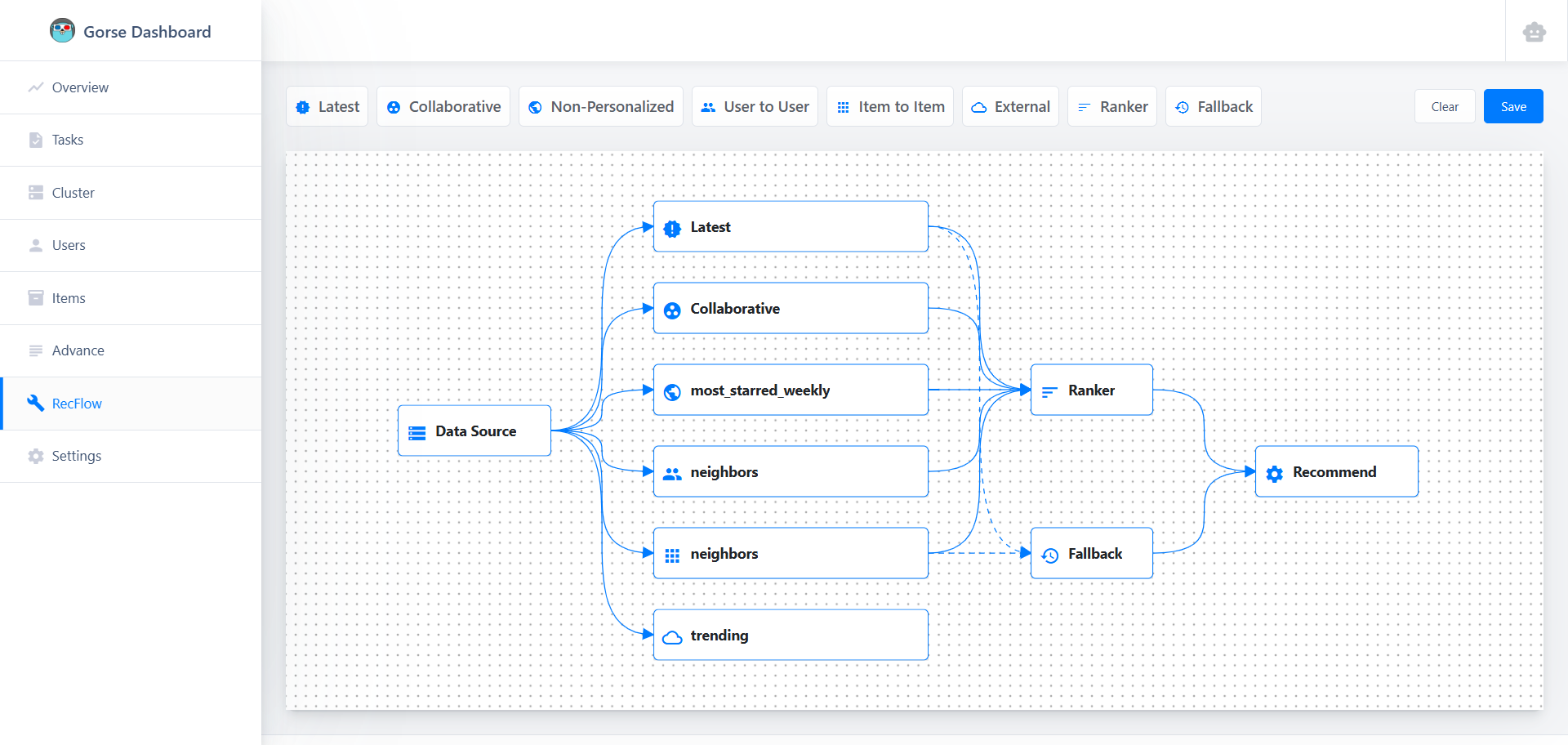
Gorse generates personalized recommendations from your application's user interaction data through automatically trained models, requiring no machine learning expertise to deploy or operate. Over 10,000 GitHub stars and production deployments processing millions of interactions validate a multi-source architecture that merges candidates from latest-item, user-to-user, item-to-item, and collaborative filtering recommenders, then ranks them using factorization machines or LLM-based rerankers with configurable query and document templates. Multimodal content support processes text, images, and video metadata via embedding vectors stored in BF16 format, with optional Qdrant, Weaviate, or Milvus integration for distributed similarity search. The visual RecFlow editor provides a drag-and-drop interface for designing recommendation pipelines, connecting data sources to recommenders and rankers without writing configuration files. A distributed cluster separates concerns across master nodes for model training and dashboard hosting, worker nodes for offline recommendation generation, and server nodes for real-time API endpoints, all scaling horizontally behind load balancers. Online evaluation analyzes recommendation quality from recent user feedback with configurable cache sizes and expiration intervals. RESTful APIs expose CRUD endpoints for users, items, and feedback alongside recommendation retrieval with category filters and API key authentication. Stores data in MySQL, PostgreSQL, MongoDB, or ClickHouse with Redis caching. Running on a dedicated VPS on RepoCloud with guaranteed CPU, RAM, and SSD, full root SSH access, and a browser serial console. Apache 2.0 licensed.
Benefits
- Multi-Source Recommendation Engine
- Merges candidates from latest-item, user-to-user, item-to-item, and collaborative filtering recommenders then ranks them with factorization machines or LLM-based rerankers for personalized results.
- Visual RecFlow Pipeline Editor
- Drag-and-drop GUI editor lets administrators design recommendation pipelines connecting data sources, recommenders, and rankers without editing TOML configuration files manually.
- Distributed Scalable Architecture
- Master, worker, and server nodes scale independently with workers handling offline user recommendations and servers handling real-time API requests behind any load balancer.
- Multimodal Content Embeddings
- Process text, image, and video metadata via embedding vectors in BF16 format with optional Qdrant, Weaviate, or Milvus integration for distributed similarity search.
Features
- RESTful Recommendation API
- Expose CRUD endpoints for users, items, and feedback plus recommendation retrieval with configurable result counts, category filters, and API key authentication.
- LLM-Based Reranking
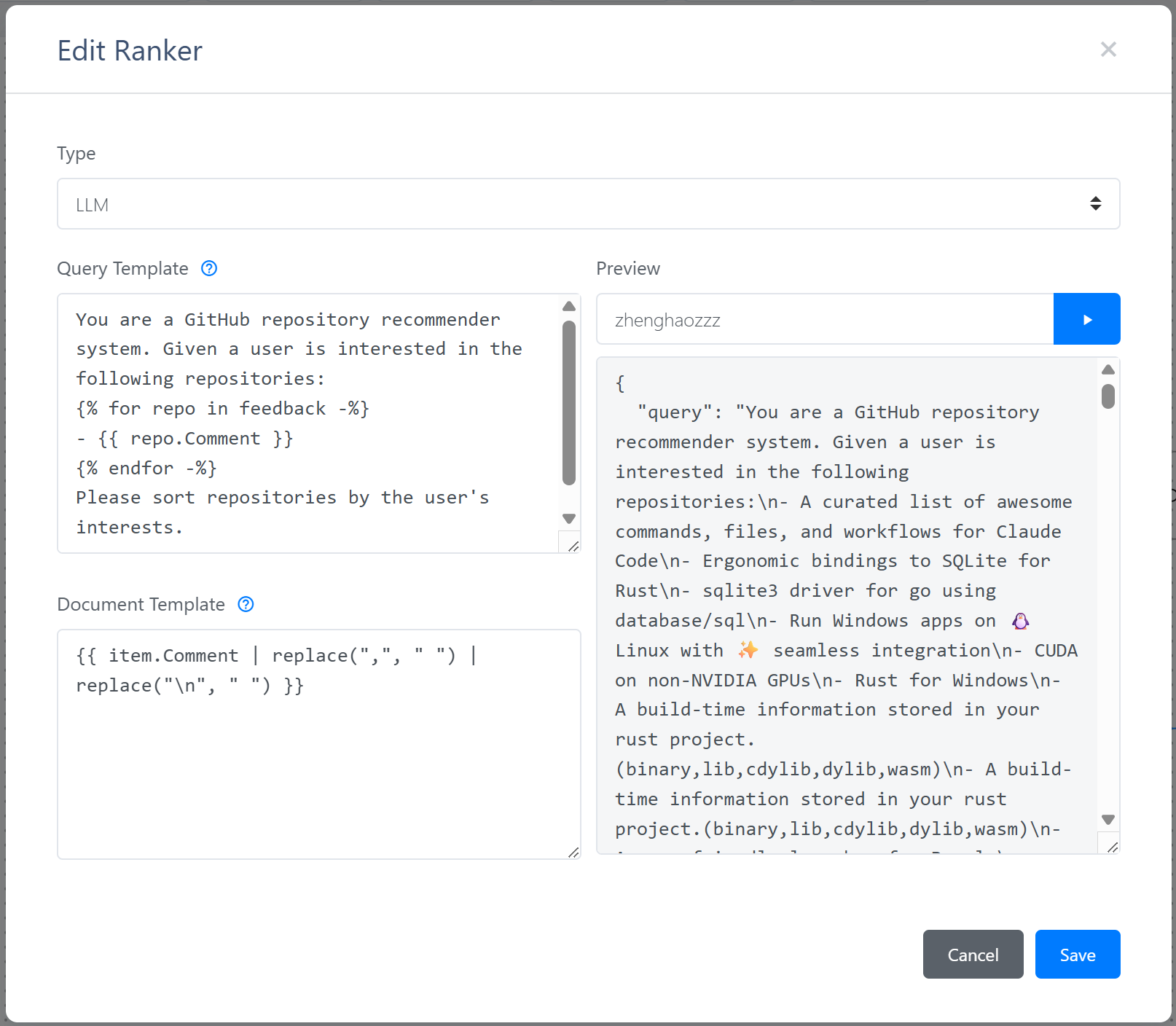
- Configure large language model rerankers with query and document templates to rank recommended items using user feedback context and item metadata.
- Cross-Database Storage
- Store data in MySQL, PostgreSQL, MongoDB, or ClickHouse with intermediate recommendation results cached in Redis for low-latency serving.
- Online Evaluation
- Analyze recommendation quality from recent user interactions with configurable feedback windows, precision and recall metrics, and dashboard visualization.
- GUI Dashboard
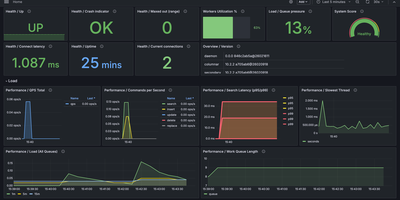
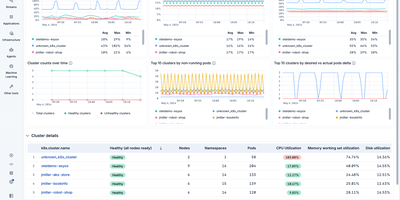
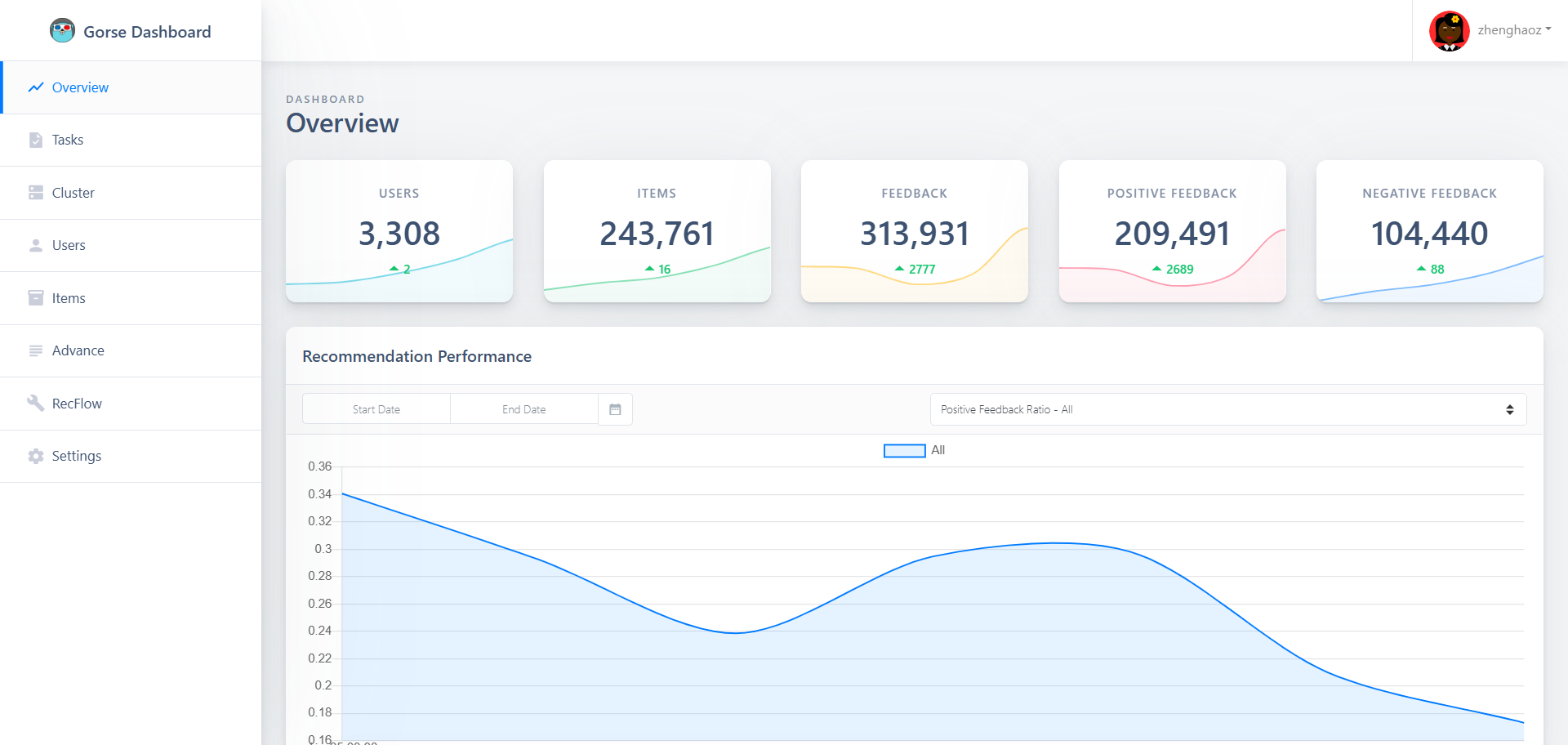
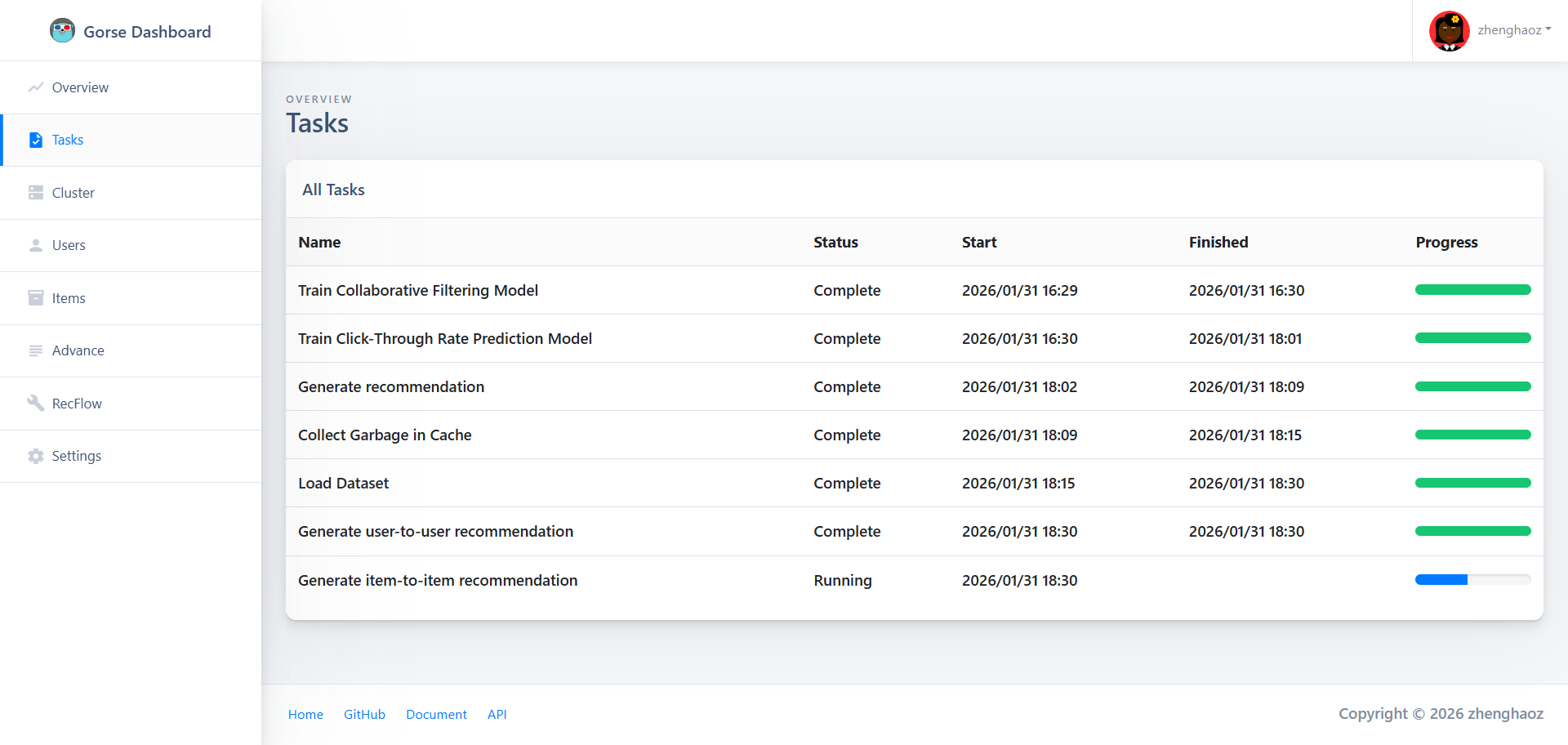
- Web dashboard on the master node provides system monitoring, cluster status, task progress, data import and export, and RecFlow pipeline configuration.