Categories
AI Agents Customer Support WebRTC Conversational AI Speech to Text Text to Speech Voice Agents Latency MonitoringStars
Forks
Watchers
Developer links
Euron Open VoiceOS
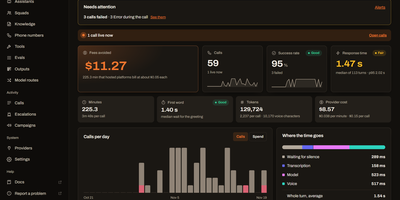
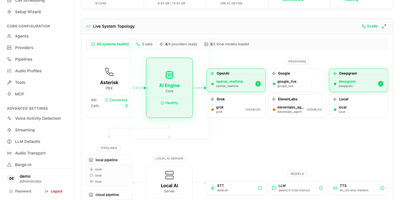
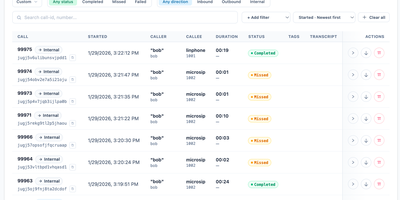
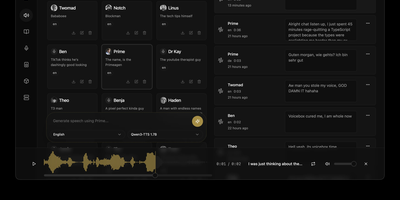
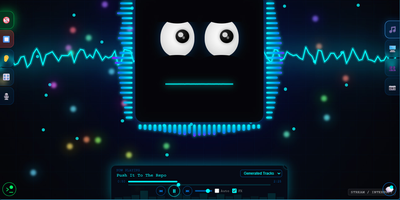
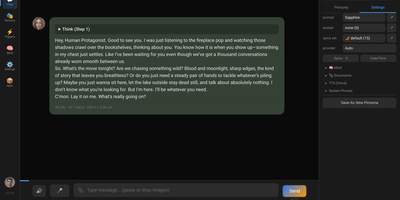
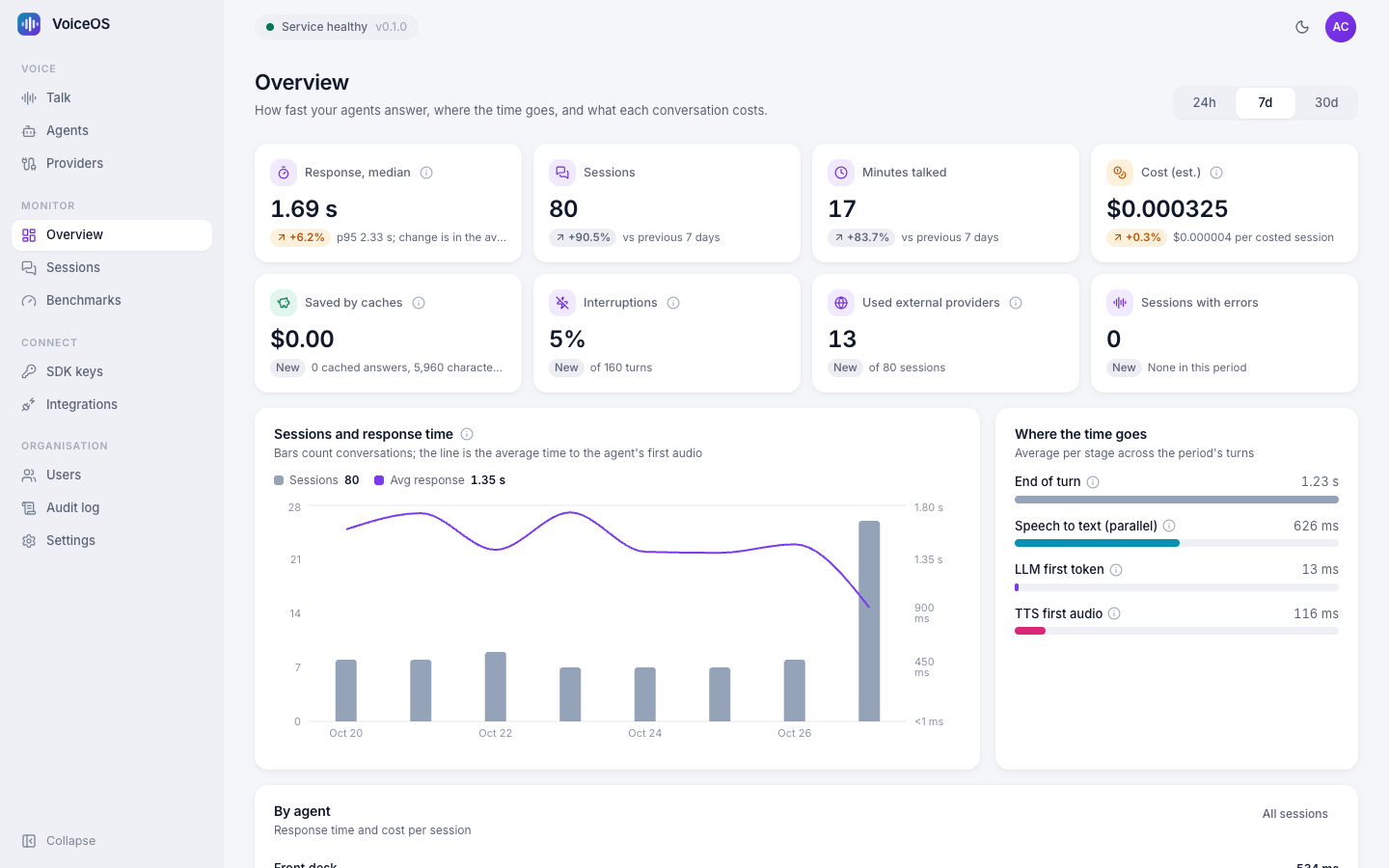
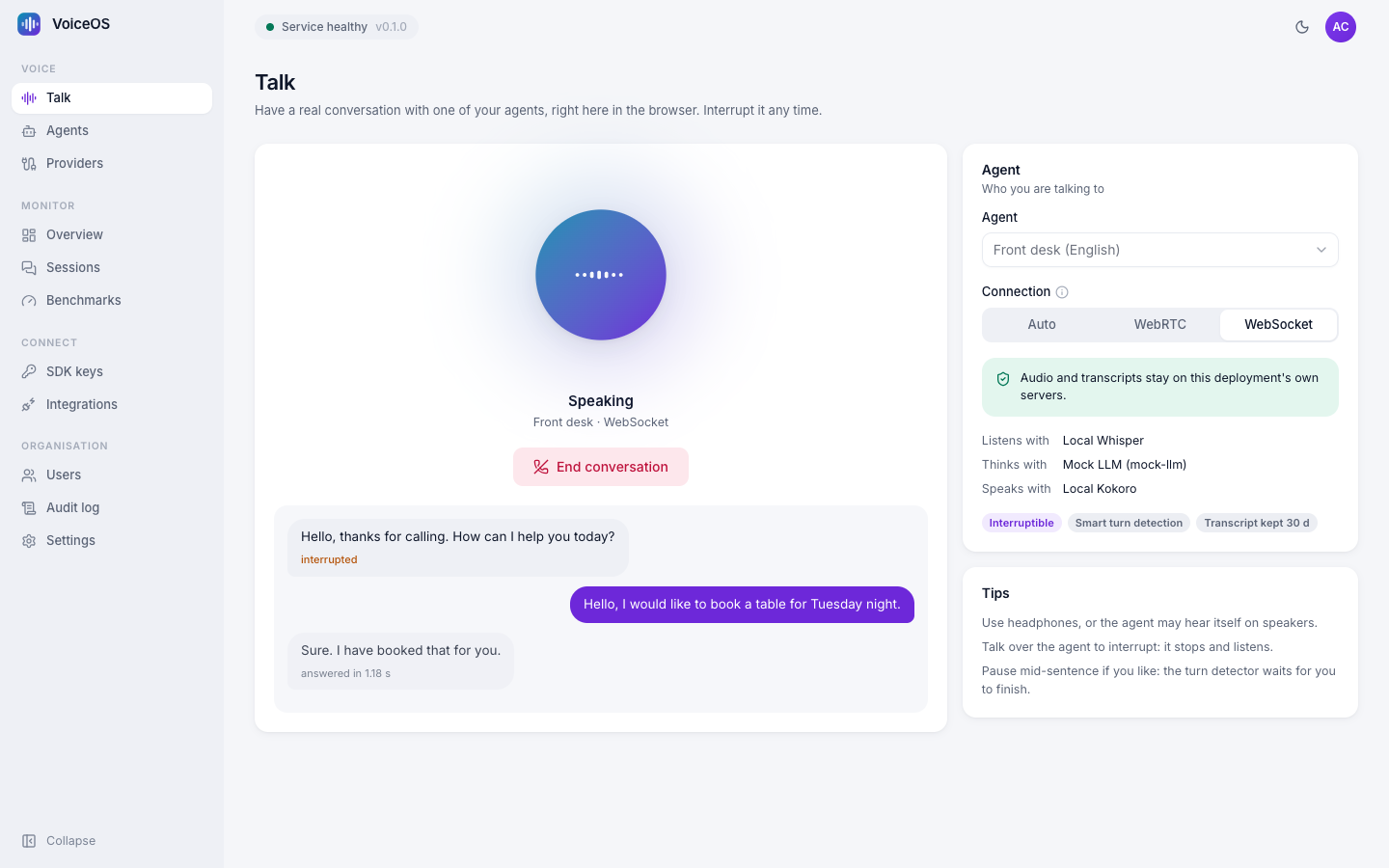
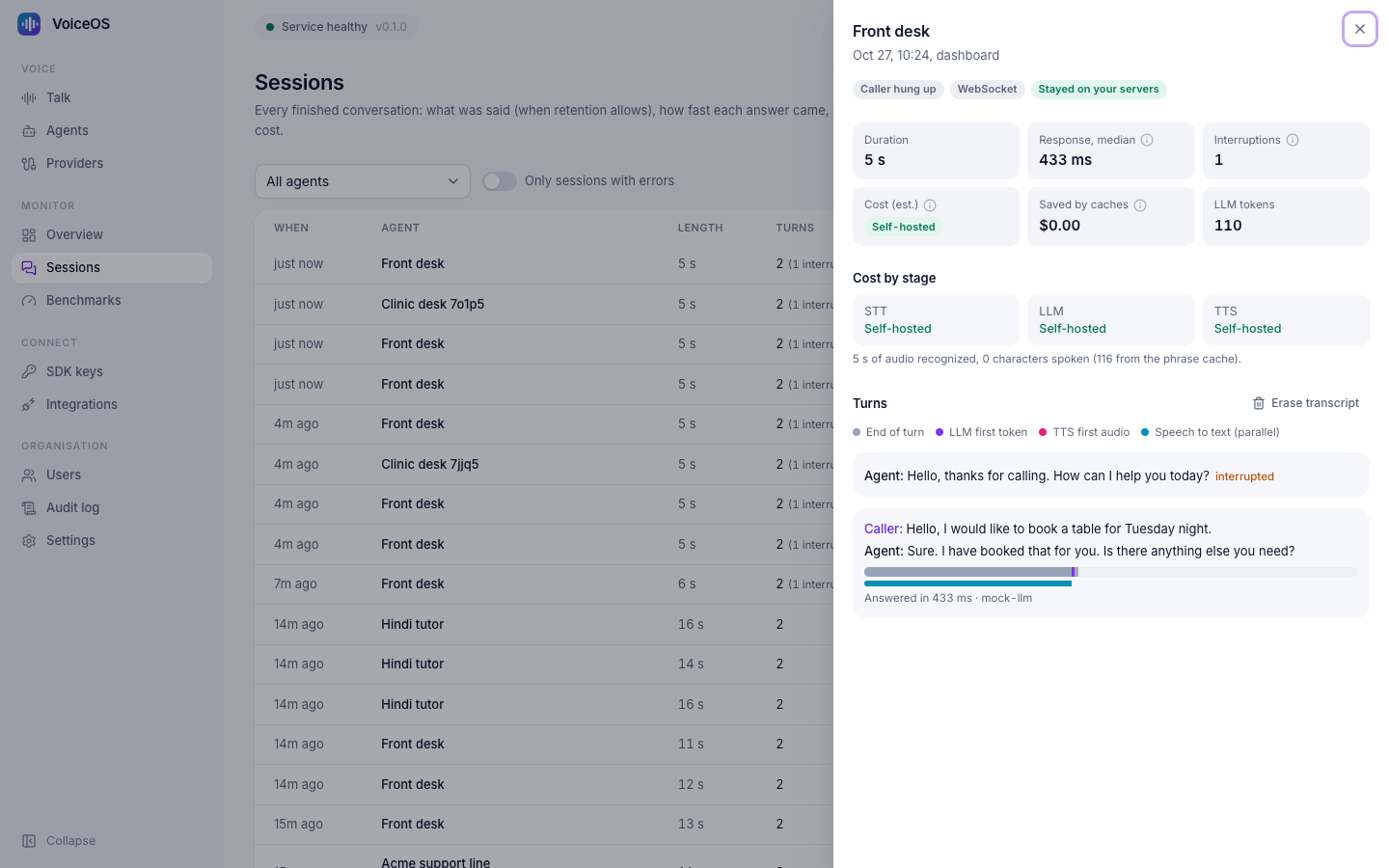
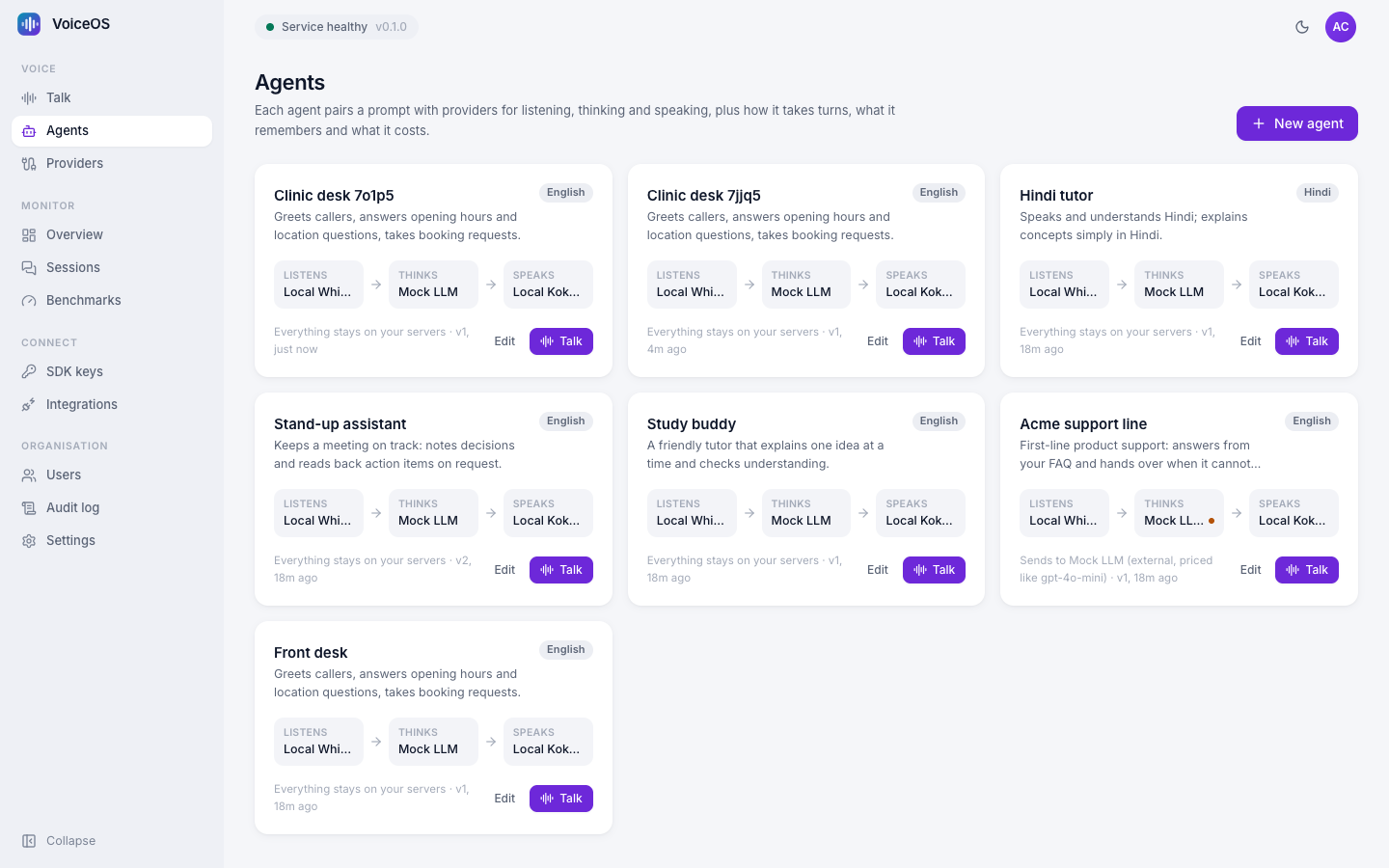
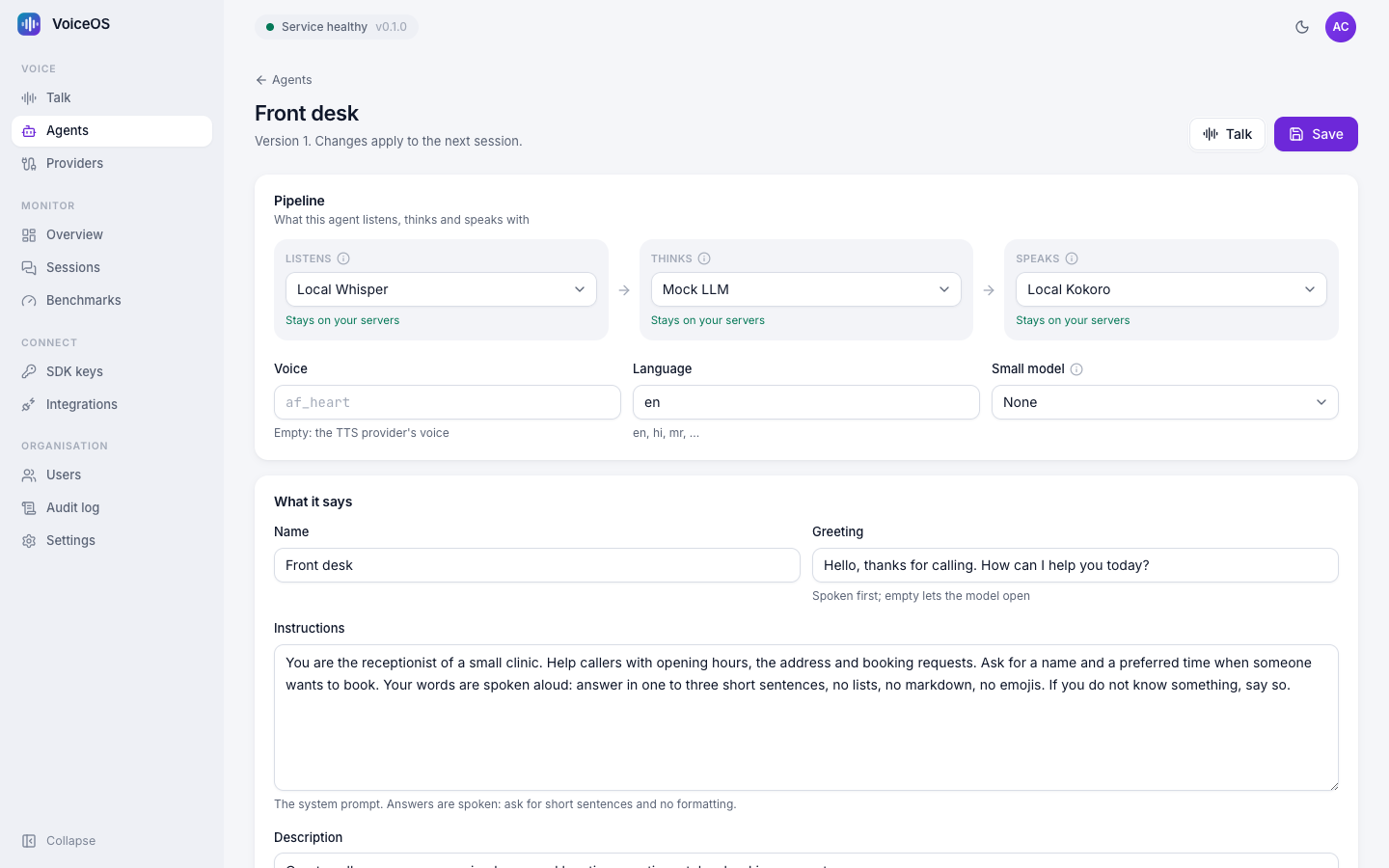
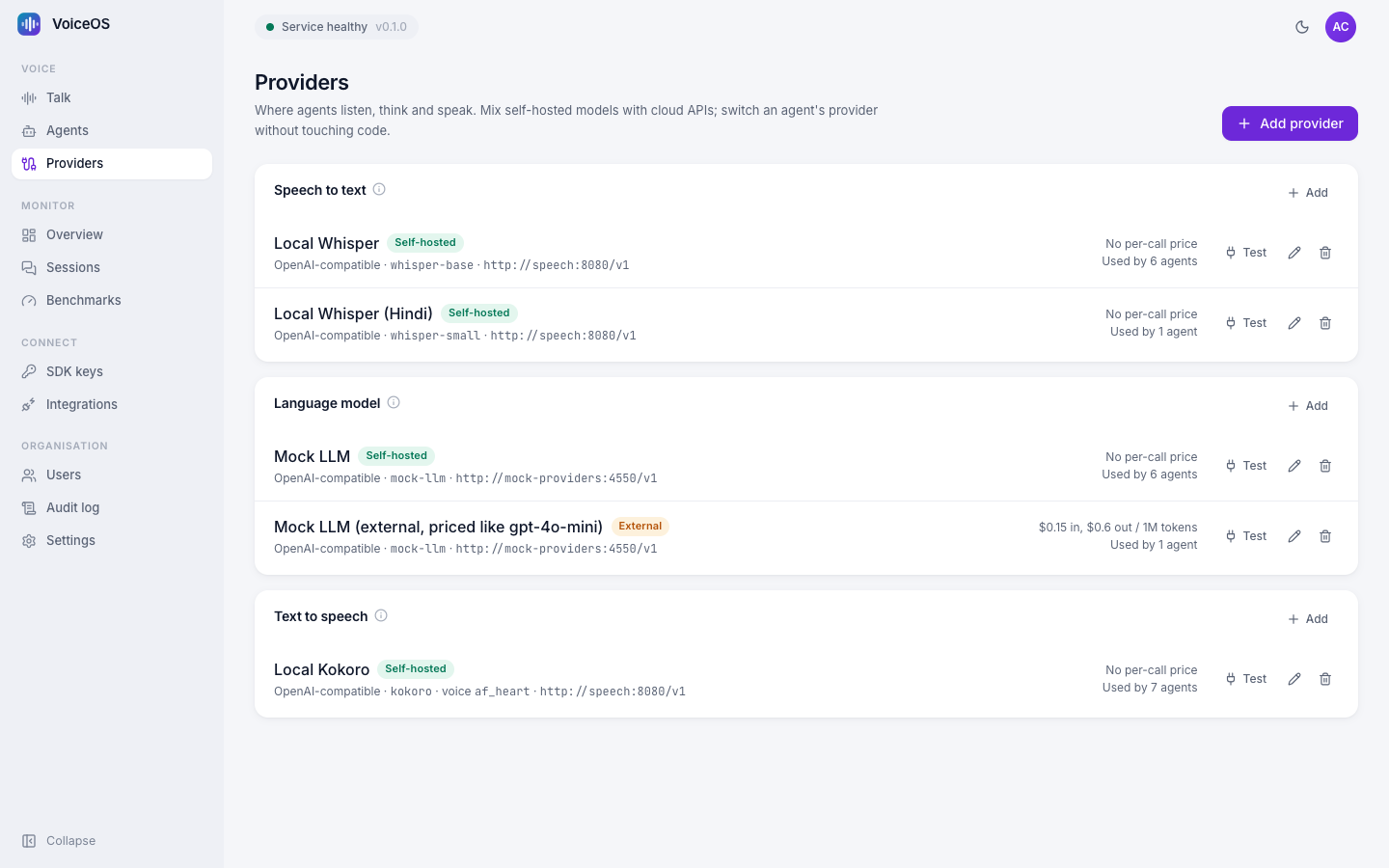
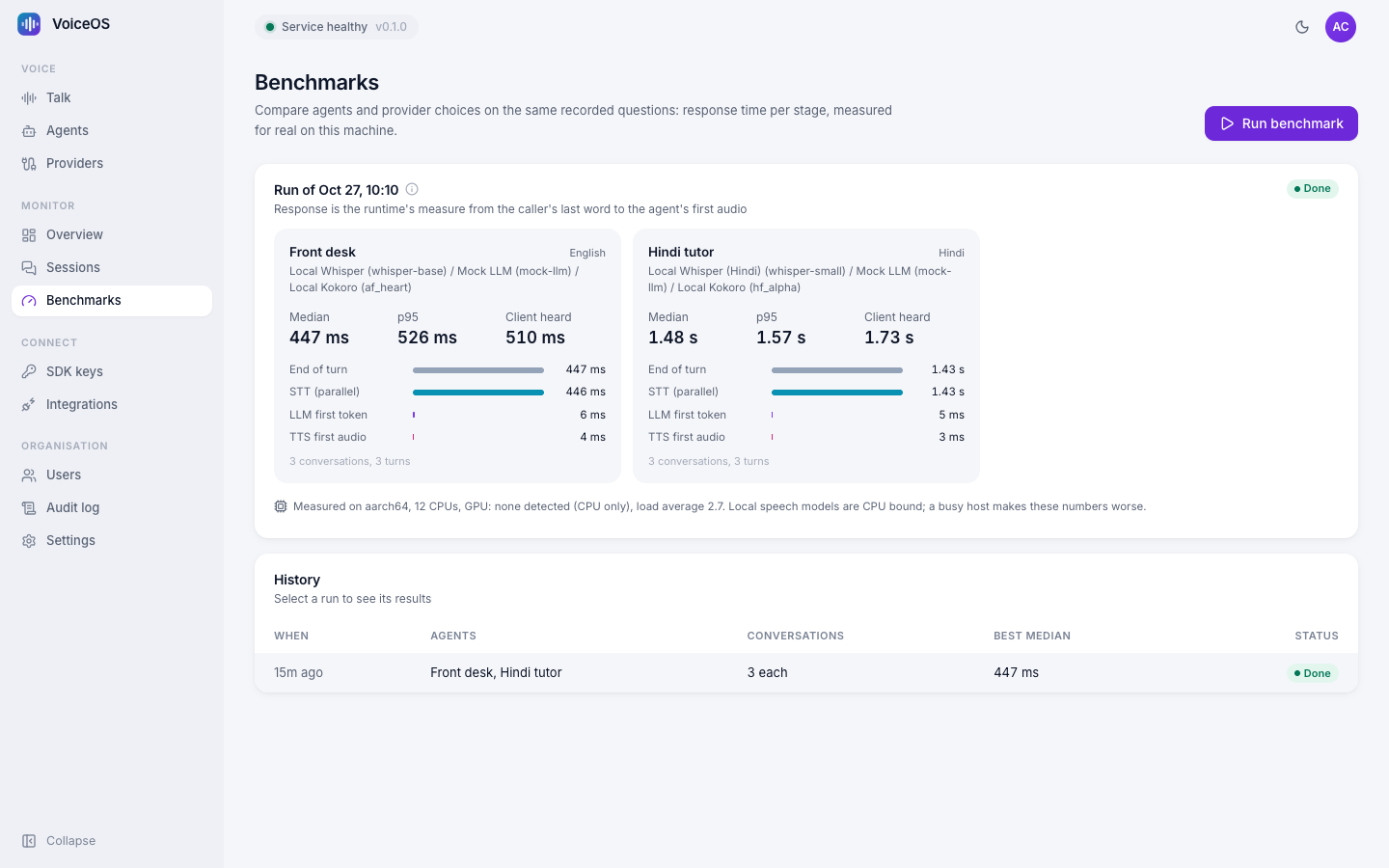
Every second of a voice conversation gets a timestamp and a price tag in Euron Open VoiceOS, a platform for building real-time voice agents that listen, think, and speak. Start from a template, such as receptionist, tutor, or meeting assistant, and talk to it in the browser. Each turn is split into end of turn, speech to text, the model's first token, and first audio, and each session adds usage and an estimated cost, so you see where time and money went. Local Whisper hears and local Kokoro speaks, so a new agent needs no cloud account, and any stage can switch to Deepgram, Sarvam, ElevenLabs, Cartesia, Anthropic, or any OpenAI-compatible endpoint. Callers can interrupt at any moment, and a failing provider earns a spoken apology instead of silence. No audio is ever stored, transcripts are redacted for emails, phone numbers, and cards, and callers are told up front when a provider runs outside your servers. A phrase cache, a response cache, and small-model routing for short turns trim the bill. Developers mint SDK keys scoped to agents and website origins, trade them for one-minute session tickets, and connect from any browser over WebRTC or WebSocket. Hindi templates come ready to use, and a bundled benchmark scores word error rate for English, Hindi, and Marathi. Running on a dedicated VPS on RepoCloud with guaranteed CPU, RAM, and SSD, full root SSH access, and a browser serial console. MIT licensed.
Benefits
- See where every second goes
- Response time is split into end of turn, speech to text, first token, and first audio, measured from real frames, so a slow stage shows up immediately.
- Costs stay honest and visible
- Every session is priced per stage from usage the providers reported, with complete, partial, not reported, and self-hosted states stated plainly instead of a guessed zero.
- Voice data stays under control
- No audio is stored, transcripts are redacted before writing, retention is set per agent, and every external provider is disclosed to the caller before the session starts.
- First agent needs no accounts
- Local Whisper and Kokoro run on CPU with a mock language model in the demo, so a first conversation works before anyone signs up for a provider.
Features
- Pipecat Voice Runtime
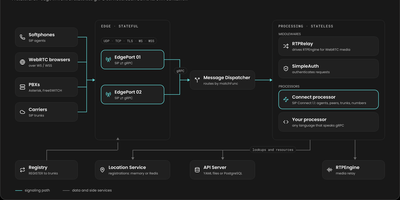
- Pipecat runs the live audio pipeline over SmallWebRTC or a FastAPI WebSocket, with Silero VAD and the Smart Turn model deciding when the caller has finished speaking.
- Local Whisper and Kokoro
- A separate speech container serves faster-whisper on CPU and kokoro-onnx behind OpenAI-compatible endpoints, so the first agent works with no API key or GPU.
- Next.js Operations Dashboard
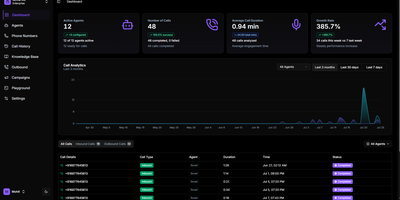
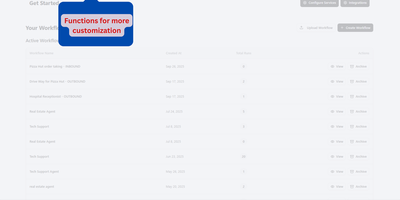
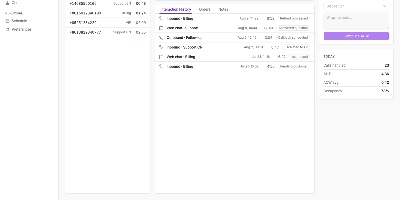
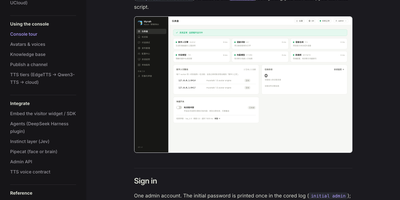
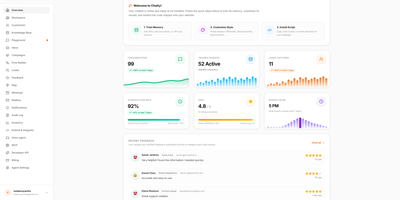
- The dashboard, built with Next.js 15, React 19, and Tailwind CSS 4, shows overview charts, session waterfalls, agents, providers, benchmarks, SDK keys, and users.
- FastAPI Control Plane
- A FastAPI service with SQLAlchemy, PostgreSQL 16, and optional Redis owns agents, providers, keys, and sessions, issuing HS256 session tickets and sealing provider keys with AES-GCM.
- Docker Compose and Make
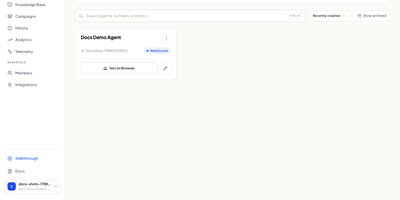
- make up starts the whole stack in Docker Compose, including speech, runtime, TURN, API, worker, and dashboard, and make demo seeds five agents and a month of history.
- Terraform Stack for AWS
- Ten Terraform modules across three environments deploy ECS Fargate, RDS, ElastiCache, KMS, and coturn, and the full stack is applied end to end against the Floci emulator.