Categories
Self-Hosted Open Source Knowledge Base Documentation Wiki Team Collaboration Markdown Editor Flat-File StorageStars
Forks
Watchers
Developer links
Wiki-Go
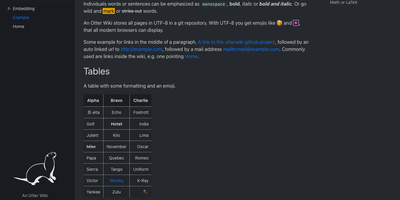
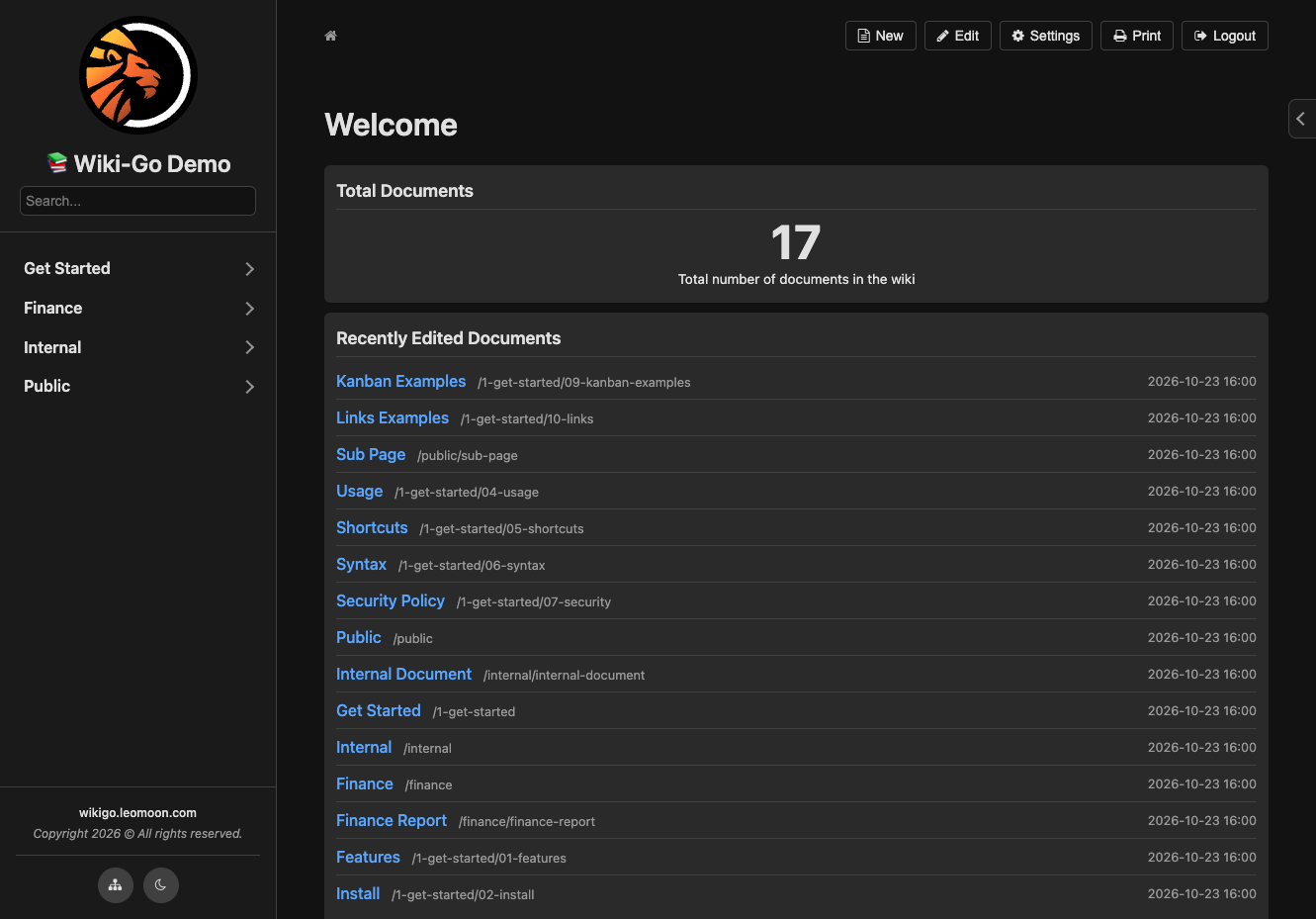
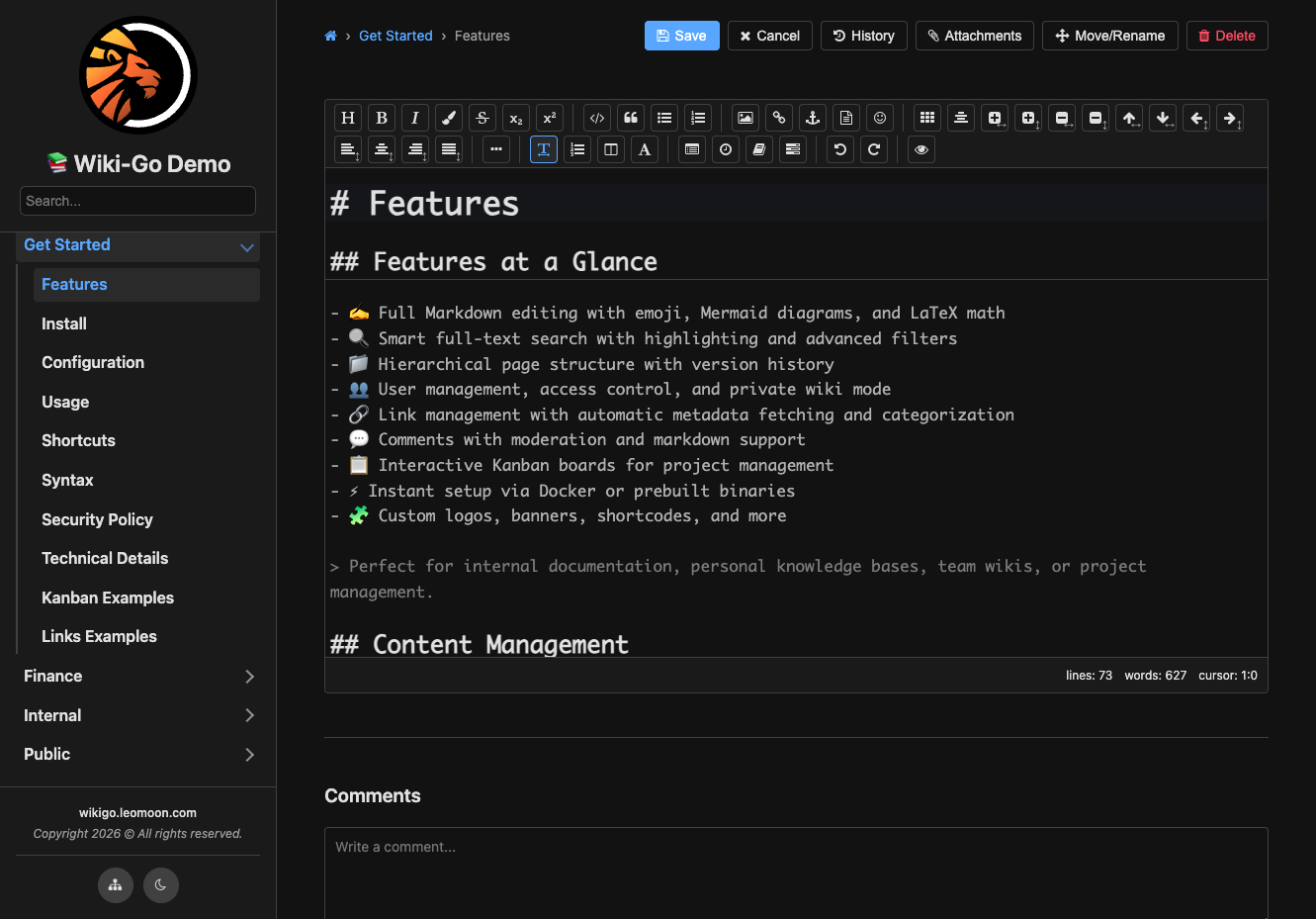
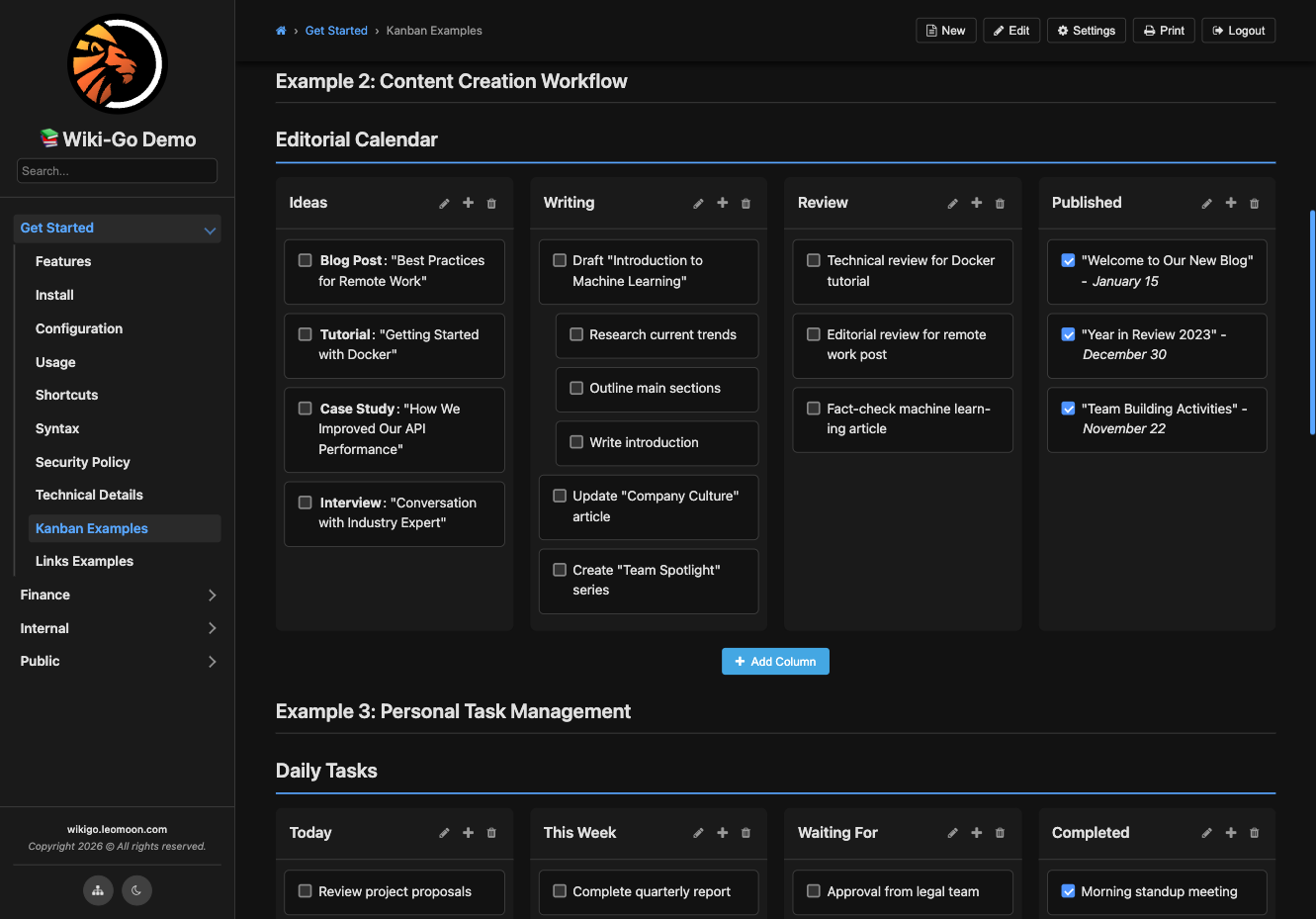
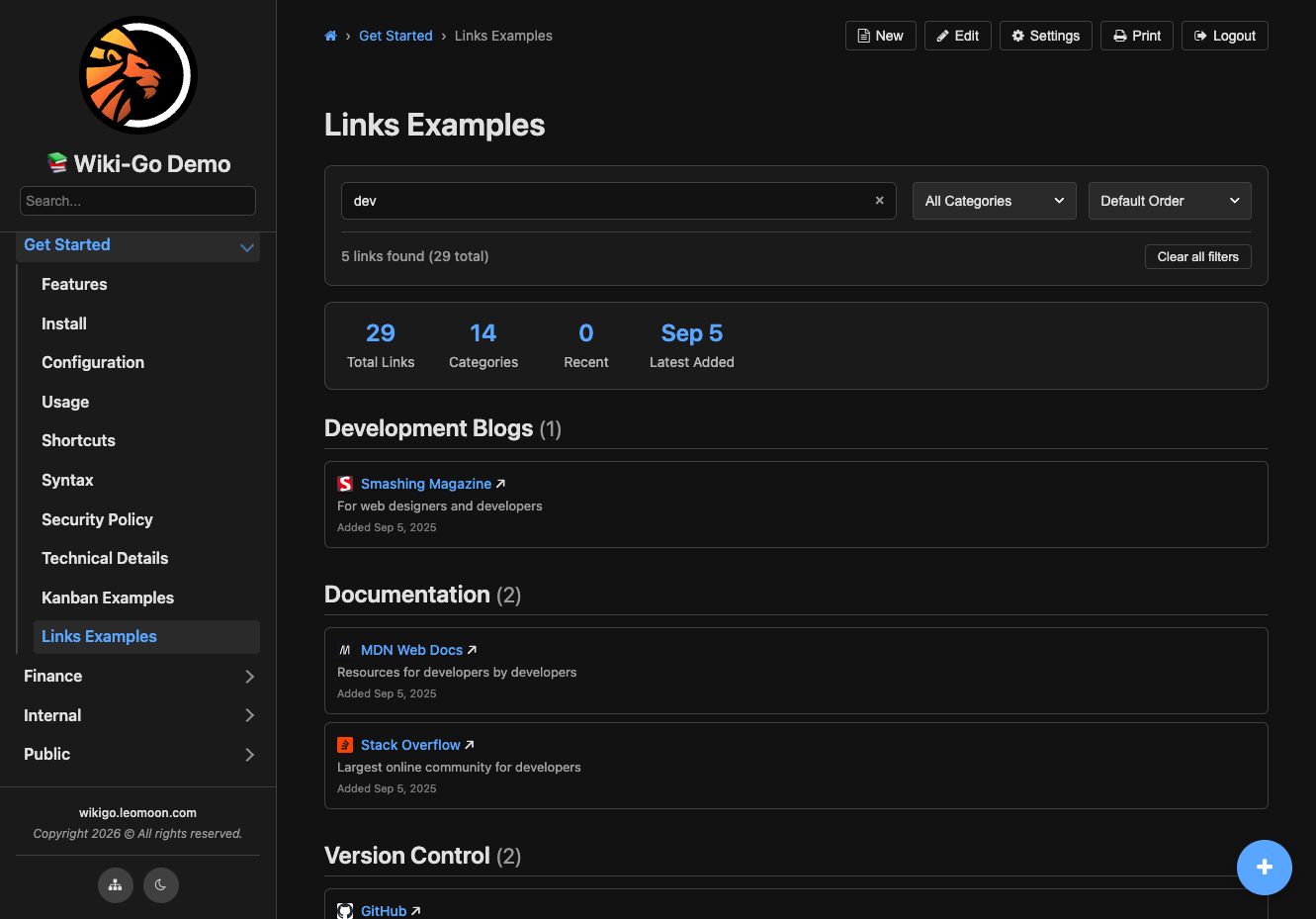
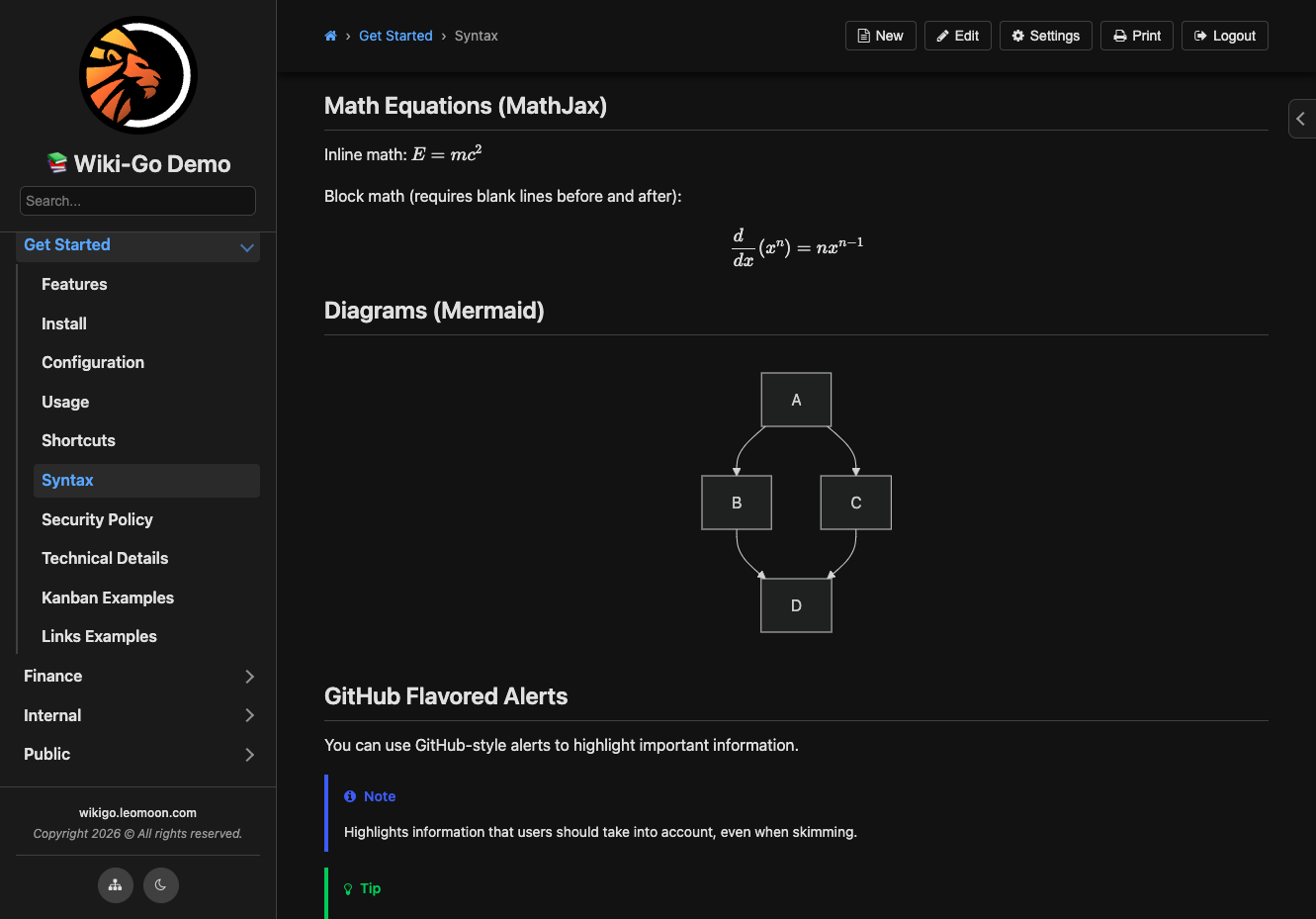
Wiki-Go turns a folder of Markdown files into a searchable team wiki with page history, comments, and access rules, and never asks you to run a database. Pages live in a nested tree with a sidebar and breadcrumbs, and an editor with a preview toggle handles emoji shortcodes, highlighted code, LaTeX math, Mermaid diagrams, collapsible sections, GitHub-style alerts, and embedded YouTube, Vimeo, or MP4 video. Full-text search supports exact phrases in quotes and term inclusion or exclusion, and highlights each match. Each save keeps a revision, up to a configurable limit, and any stored version can be restored later. Attachments such as PDFs, spreadsheets, images, and archives sit beside the page they belong to. Drop a Kanban board into any document for drag-and-drop task tracking with nested tasks, or build a categorized link library that fills in page metadata automatically. Signed-in users comment in Markdown, and admins can remove comments. Admin, editor, and viewer roles, user groups, path-based public or private rules, and an optional private-wiki mode decide who sees what. Branding comes from a custom logo, banner, and favicon, shortcodes such as stats insert live site statistics, and readers can switch between dark and light themes or print any page. A REST API opens content to scripts, and a community tool imports Notion exports. Running on a dedicated VPS on RepoCloud with guaranteed CPU, RAM, and SSD, full root SSH access, and a browser serial console. GPL-3.0 licensed.
Benefits
- Back up a wiki by copying files
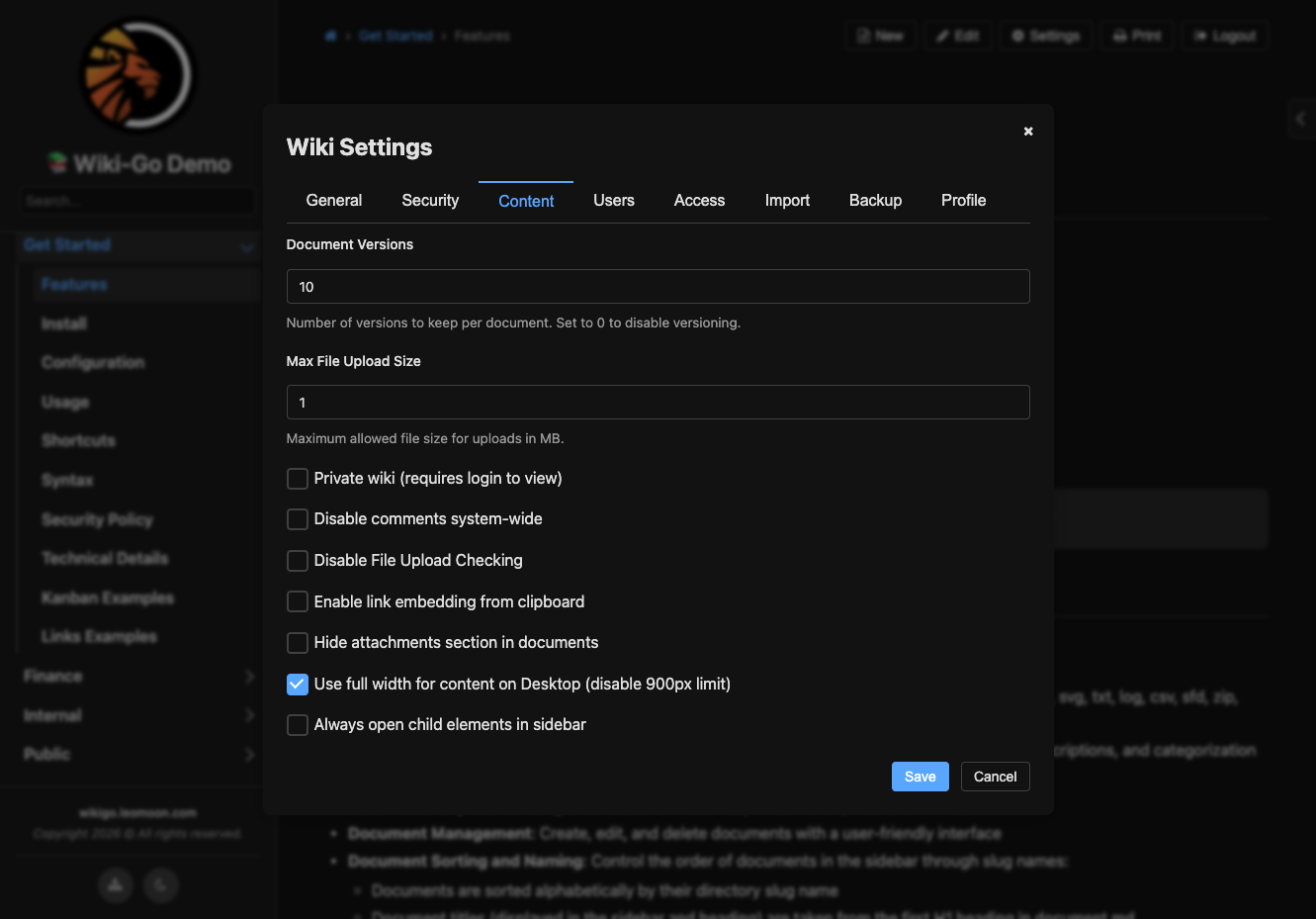
- Pages, revisions, comments, and attachments are plain files under one data folder, so backups, migrations, and version control work with ordinary file tools and need nothing more than a folder copy.
- Decide who can read or edit
- Path-based rules make sections public, private, or limited to user groups, while admin, editor, and viewer roles and temporary bans after repeated failed logins protect the wiki.
- Undo mistakes with page history
- Each save keeps a revision, up to a configurable limit, and the History dialog restores any stored version, so a bad edit never costs the whole page.
- Keep project boards beside docs
- Any document can hold Kanban boards where tasks and nested sub-tasks move between columns by drag and drop, so sprint plans and checklists stay next to the notes they depend on.
Features
- Markdown Editor with Preview
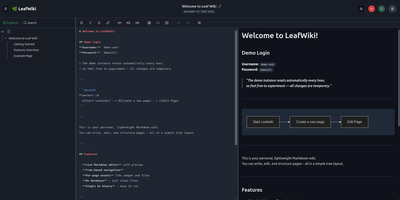
- A CodeMirror editor with a preview toggle, emoji shortcodes, Prism syntax highlighting, keyboard-driven table editing, and switches for word wrap and line numbers.
- Math, Diagrams, and Alerts
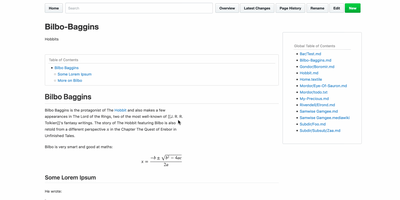
- MathJax renders LaTeX equations inline and as blocks, Mermaid draws flowcharts from text, and GitHub-style Note, Tip, Important, Warning, and Caution alerts call out key points.
- Full-Text Search
- Search accepts exact phrases in quotes and term inclusion or exclusion, highlights matches in results, and is one shortcut away with Ctrl+Shift+F from any page.
- Kanban Boards and Link Libraries
- Multiple Kanban boards per document with nested tasks, plus categorized link collections that fetch page metadata automatically for public HTTP and HTTPS destinations.
- Roles and Access Rules
- Admin, editor, and viewer roles, user groups, path-based public, private, or group-restricted rules, private-wiki mode, bcrypt-hashed passwords, and login throttling against brute force.
- REST API and Notion Import
- A RESTful API gives scripts programmatic access to wiki content, and a community Python tool converts a Notion Markdown export, including attachments, into Wiki-Go's document tree.