Stars
Forks
Watchers
Developer links
Pipelock
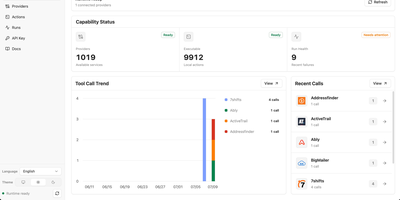
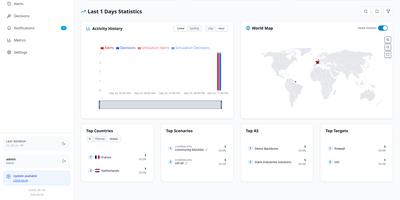
Your AI coding agent has your API keys in its environment and unrestricted network access, which means one prompt injection away from sending those secrets anywhere. Pipelock closes that gap by sitting as a proxy between your agents and every outbound connection, scanning the actual content of HTTP, WebSocket, MCP, and Agent-to-Agent traffic before it leaves your server. An 11-layer scanner pipeline checks every request against 62 credential patterns covering AWS, GCP, Azure, GitHub, OpenAI, Anthropic, SSH keys, and database URLs, then inspects every response for prompt injection using 29 detection patterns with six-pass normalization that catches base64-encoded, leetspeak, and whitespace-obfuscated payloads. The MCP proxy wraps any Model Context Protocol server (stdio, HTTP, or WebSocket) with bidirectional scanning that detects tool description poisoning and mid-session rug-pull changes via SHA-256 fingerprinting. Every scanning decision produces a cryptographically signed action receipt that third parties can verify offline without trusting the agent or the vendor. The Operator Console provides a web dashboard for reviewing evidence scorecards, receipt timelines, agent sessions, enforcement decisions, and fleet posture at a glance. Cross-request taint tracking catches slow-drip exfiltration attempts that spread a secret across multiple calls. Canary tokens plant synthetic secrets that trip alerts the moment an agent tries to exfiltrate them. Pre-built Prometheus metrics and a Grafana dashboard provide real-time visibility into traffic volumes and block rates. Deploy on a dedicated VPS on RepoCloud with guaranteed CPU, RAM, and SSD, full root SSH access, and a browser serial console. Apache 2.0 licensed.


Benefits
- Content-Aware Egress Scanning
- An 11-layer pipeline inspects the actual payload of every HTTP, WebSocket, MCP, and A2A request. Pattern matching, entropy analysis, and six-pass normalization catch encoded and obfuscated exfiltration attempts.
- Signed Receipts for Every Decision
- Each scanning verdict is cryptographically signed by the proxy. Third parties verify receipts offline using the published key, without trusting the agent runtime, the vendor, or any external service.
- MCP Security Built In
- Wraps any MCP server (stdio, HTTP, WebSocket) with bidirectional scanning. Detects tool description poisoning, mid-session rug-pull changes, and suspicious tool call chains before they reach the agent.
- Works with Every Major Agent
- Pre-built integration guides for Claude Code, OpenAI Codex, Cline, Cursor, VS Code, JetBrains, OpenAI Agents SDK, Google ADK, AutoGen, CrewAI, and LangGraph. One config covers all transports.
Features
- DLP Scanning
- 62 credential patterns covering cloud keys, developer tokens, SSH private keys, and database URLs. Cross-request taint tracking catches slow-drip exfiltration across multiple calls.
- Injection Detection
- 29 prompt injection patterns with six-pass normalization covering instruction overrides, role hijacking, exfiltration phrases, and tool abuse. Catches base64-encoded and leetspeak-obfuscated payloads.
- Operator Console
- Web dashboard for reviewing evidence scorecards, receipt timelines, agent sessions, enforcement decisions, fleet posture, exemptions, and incident correlation across all monitored agents.
- Action Receipts
- Every scanning decision emits a signed receipt with verdict, actor identity, policy hash, and receipt correlation ID. Verify offline with the published signing key.
- Transport Coverage
- HTTP forward proxy, CONNECT with optional TLS interception, WebSocket bidirectional frame scanning, MCP stdio wrapping, MCP HTTP, MCP WebSocket, and Agent-to-Agent protocol support.