Categories
Self-Hosted Video Recording Computer Vision Sky Camera Astronomy Meteor Detection Object TrackingStars
Forks
Watchers
Developer links
OpenSkyCam
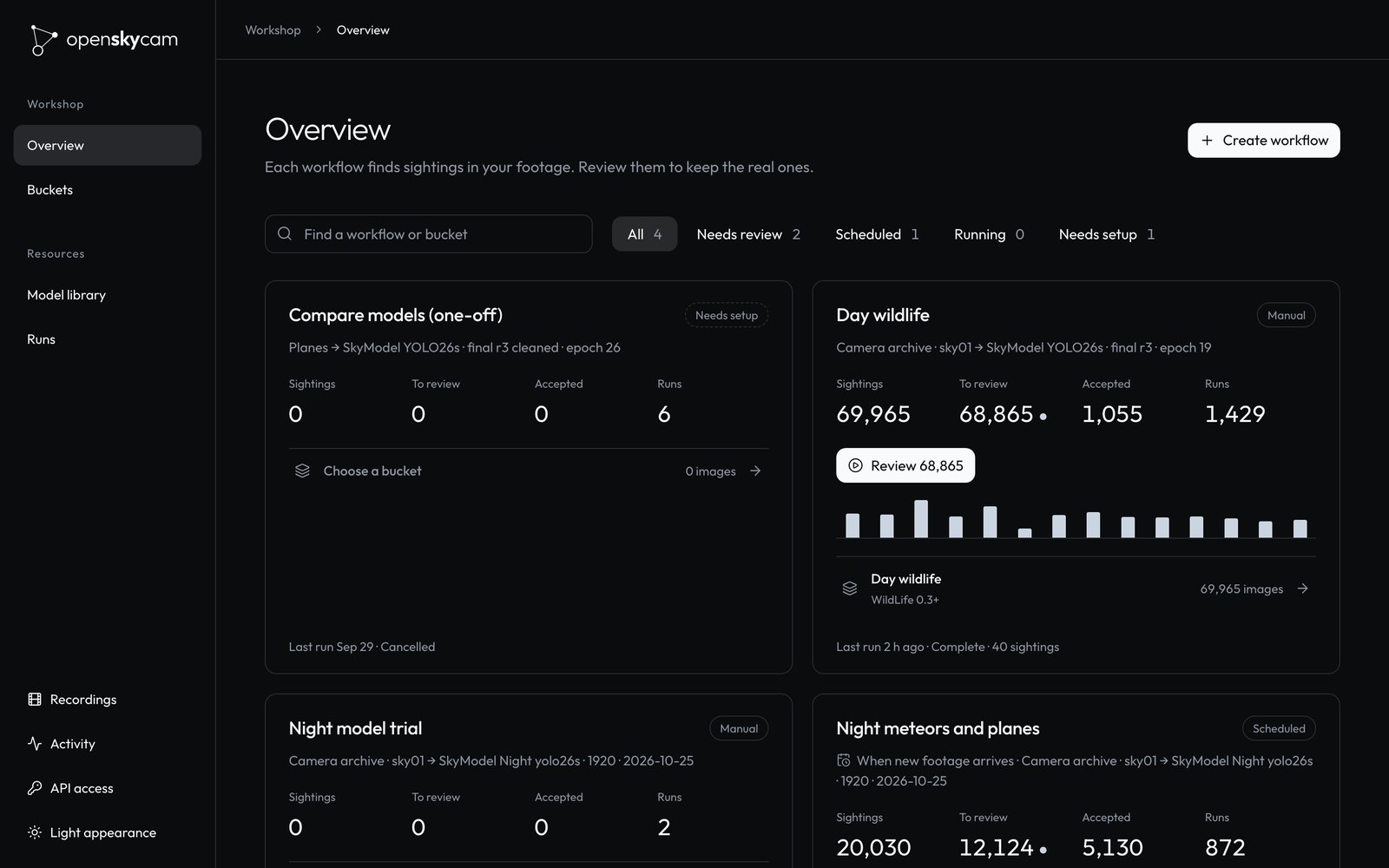
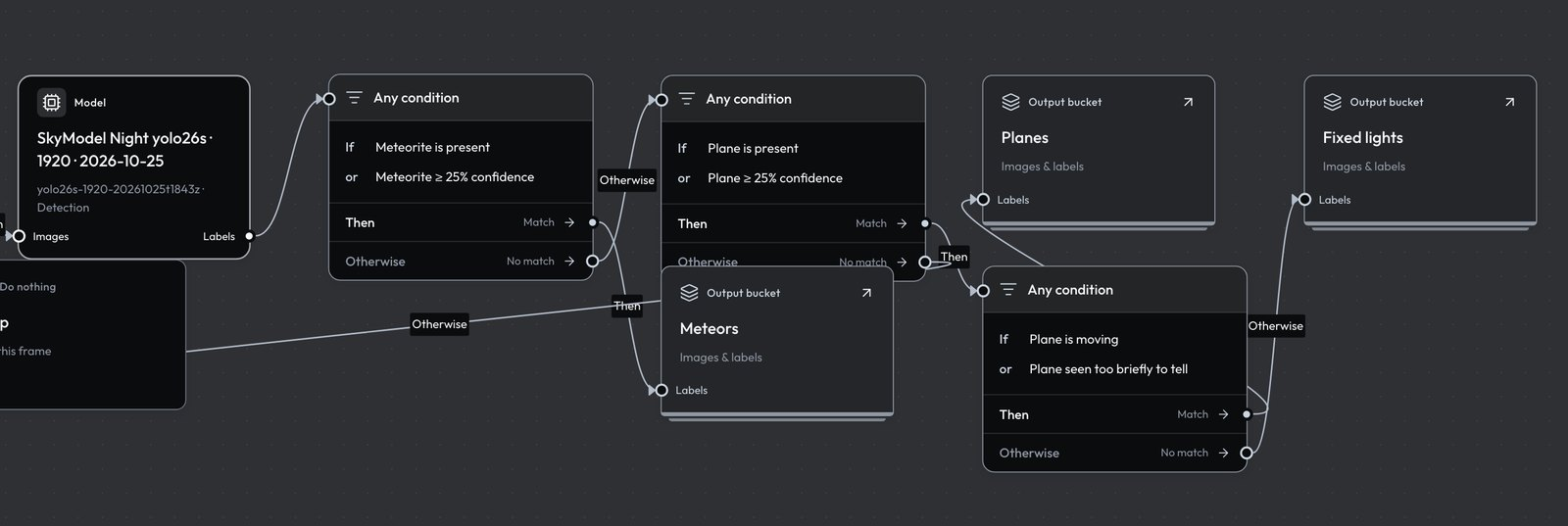
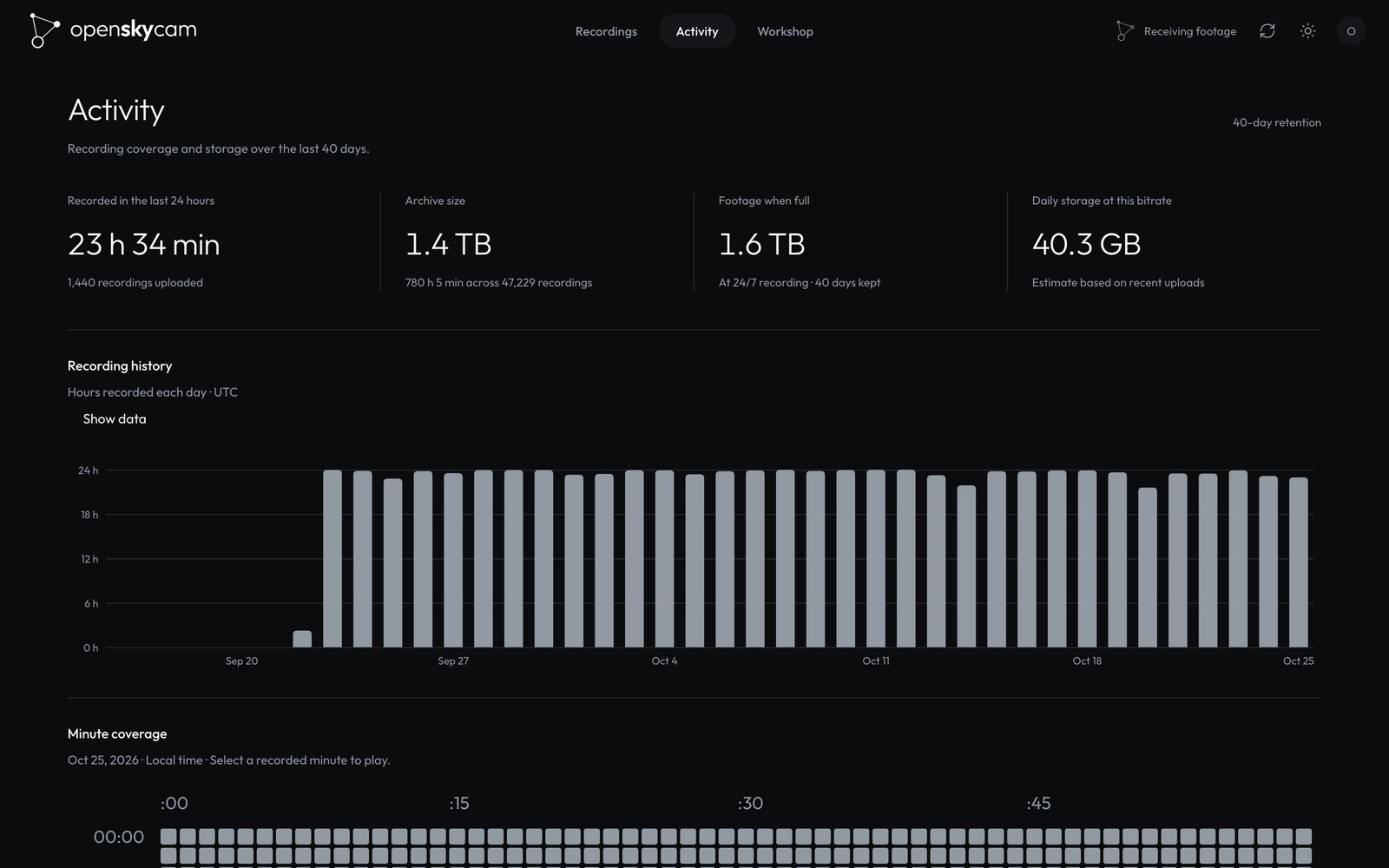
OpenSkyCam records a sky-facing IP camera around the clock on hardware you own, and searches the footage for meteors, planes, and anything else that moves. A small Linux relay by the camera copies the RTSP stream into one-minute MP4 files without re-encoding, kept on your disk under a rolling 40-day window: browse by day, scrub by hour, zoom into the 4K frame, download originals. Workshop workflows sample frames from any time window, run up to four detection or classification models over them, and sort each frame into buckets by class, score, count, time of day, or motion, once or nightly as footage lands. Detections of one object link across a recording into tracks labeled moving, stationary, or brief, so fixed stars and porch lights are discarded and aircraft kept. A trained night detector for planes and meteors ships with the project; every detection waits in a review view where you confirm or correct its label and box, then freeze the approved set as a versioned training dataset. The processor lives on your machine too (Apple or NVIDIA GPU, or plain CPU), and the footage itself never leaves your disk. Every website action is also a /v1 API call, and an MCP server lets an AI agent find last night's clearest meteors, take a photo at any second of stored video, or schedule the next workflow. Running on a dedicated VPS on RepoCloud with guaranteed CPU, RAM, and SSD, full root SSH access, and a browser serial console. MIT licensed.
Benefits
- Never Miss A Meteor Again
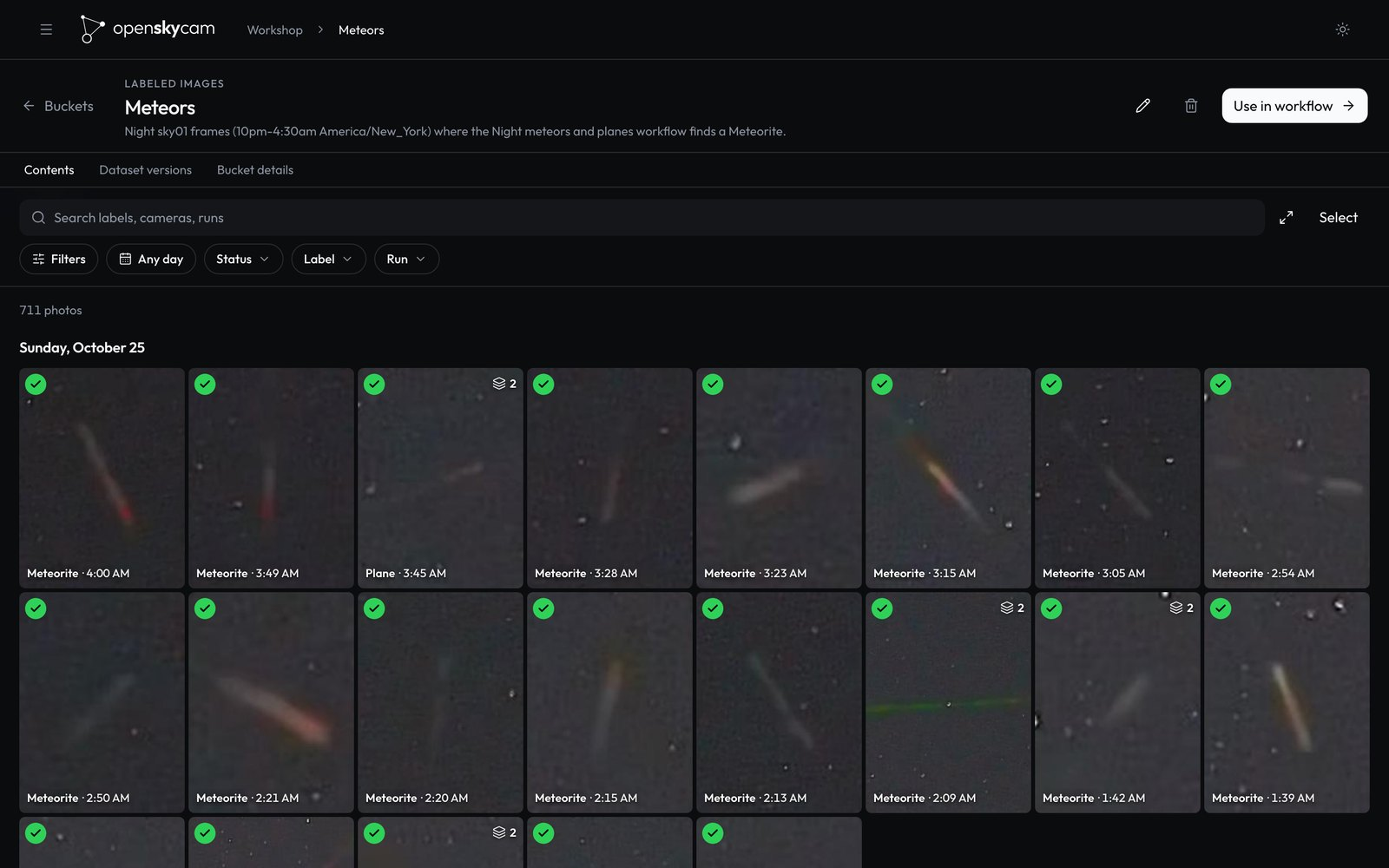
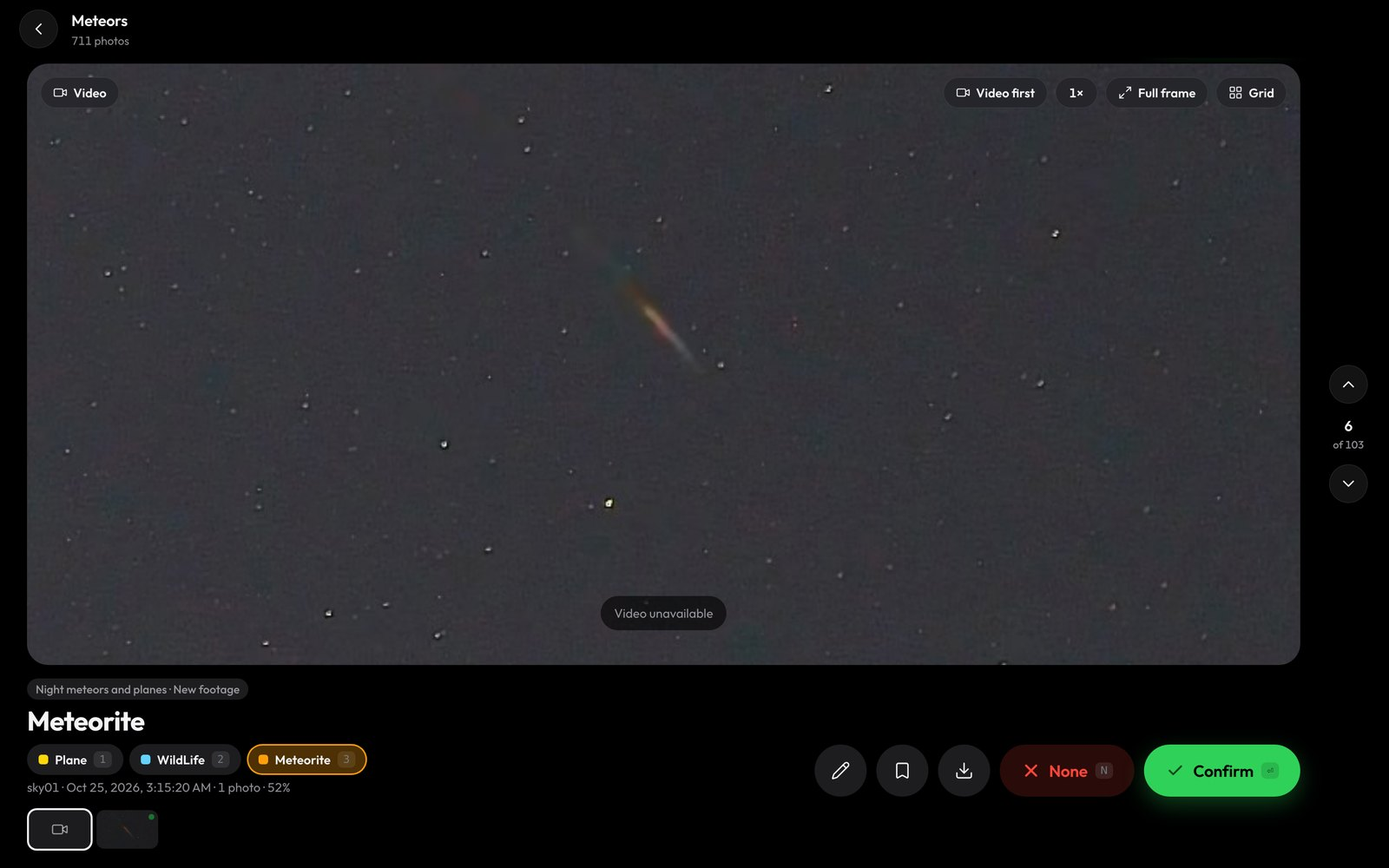
- A trained night detector scans every recorded minute for meteors and planes, so the one bright streak of the month is waiting in your review queue in the morning.
- Footage Stays On Your Disk
- The relay writes one-minute MP4 files to storage you own with a rolling 40-day window, and the catalog only points at them; the video itself never leaves your hardware.
- Your Agent Can Run It
- An MCP server exposes the whole website to AI agents with seven tools, six guides, and five skills, so an agent can find last night's meteors or schedule a workflow.
- Review Builds Training Data
- Confirm or correct detection labels and boxes in the review view, then freeze dataset versions with images, labels, tracks, and splits that a script can download for retraining.
Features
- 60-Second MP4 Relay
- A Linux relay (a Raspberry Pi is enough) copies the camera's H.264 or H.265 RTSP stream into one-minute MP4 files without re-encoding, about 43 GB a day at 4 Mbps.
- Workshop Detection Workflows
- Workflows sample frames from a time window, run up to four YOLO detection or classification models, and route frames to buckets by class, score, count, time, or motion.
- Motion Track Classification
- Detections of the same object are linked across a recording into tracks labeled moving, stationary, or brief, so workflows keep aircraft and discard fixed lights automatically.
- Bundled Night Detector
- A trained YOLO26s model for planes and meteors at night ships with the repo and its evaluation card; on held-out nights it found 95% of planes and 90% of meteors.
- MCP Server For Agents
- Agents connect at /v1/mcp to seven tools covering the website, with six guides and five skills; deletes need confirmation, keys cannot create keys, and every call is logged.
- OpenAPI /v1 Interface
- Every website action is a /v1 API call described by /openapi.json, with people signing in through Cloudflare Access and scripts or agents using API keys instead.