Categories
Community Engagement Open Government Civic Tech Citizen Participation Participatory Budgeting Participatory Democracy E-Government Online VotingStars
Forks
Watchers
Developer links
Decidim
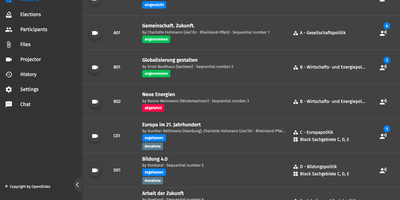
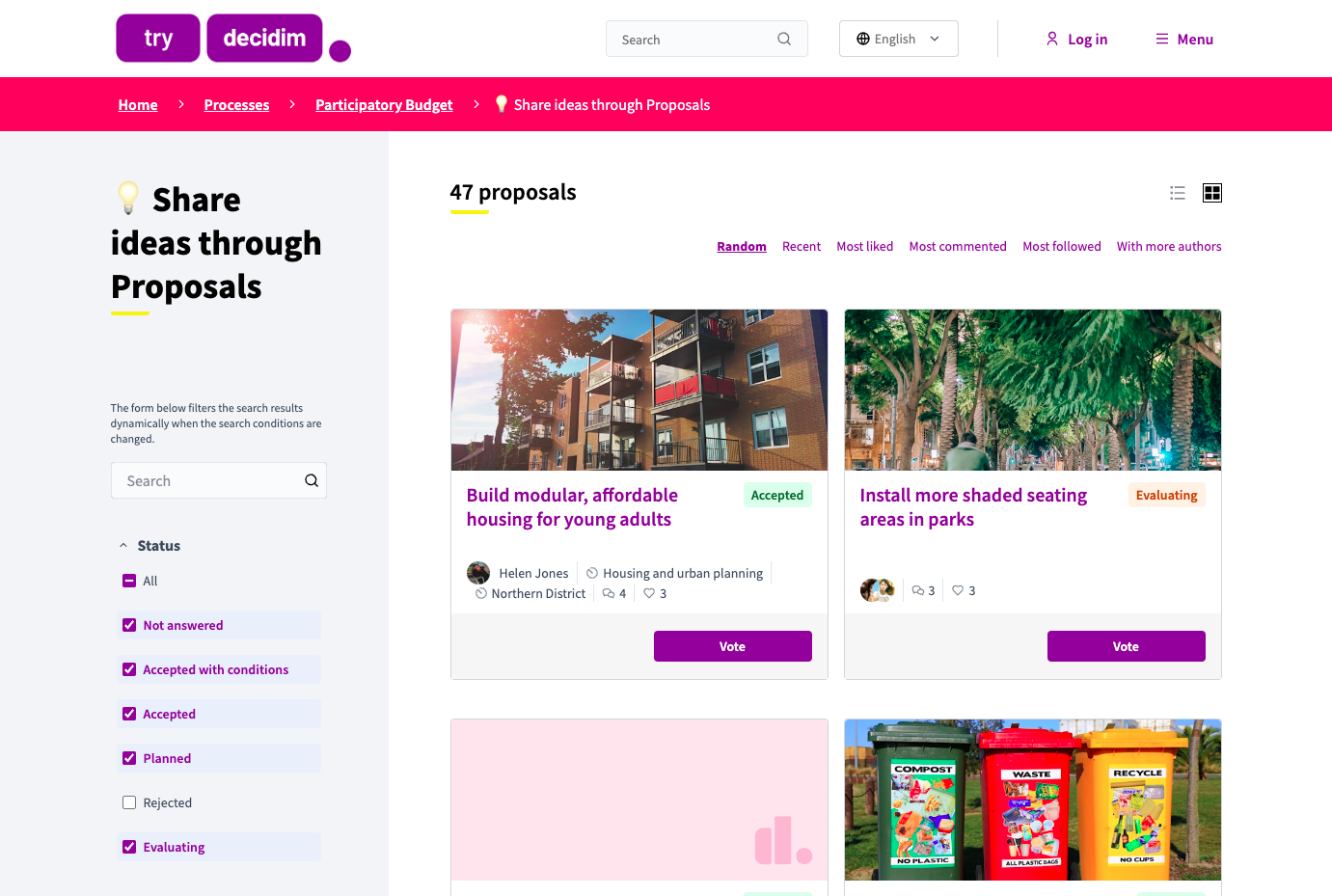
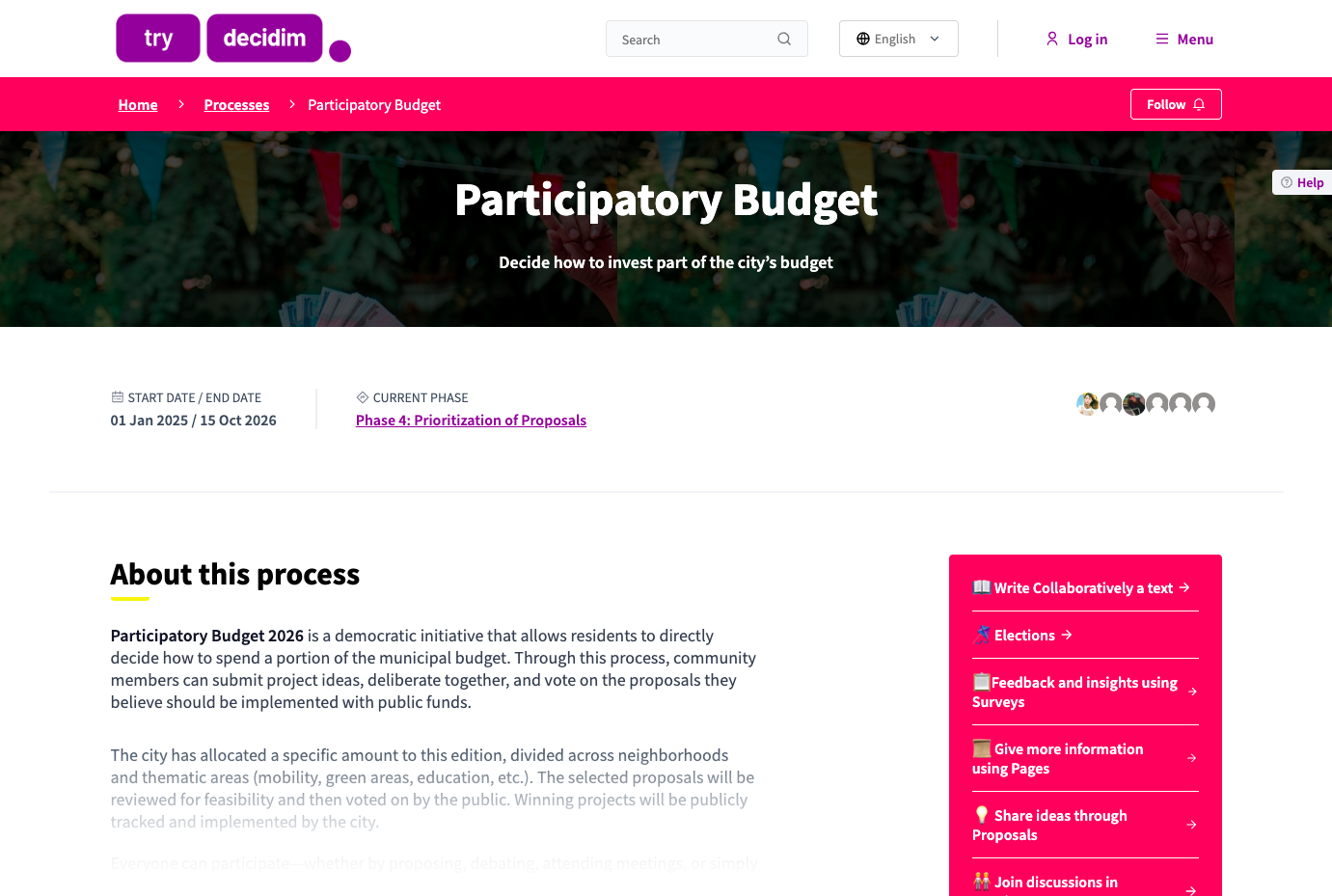
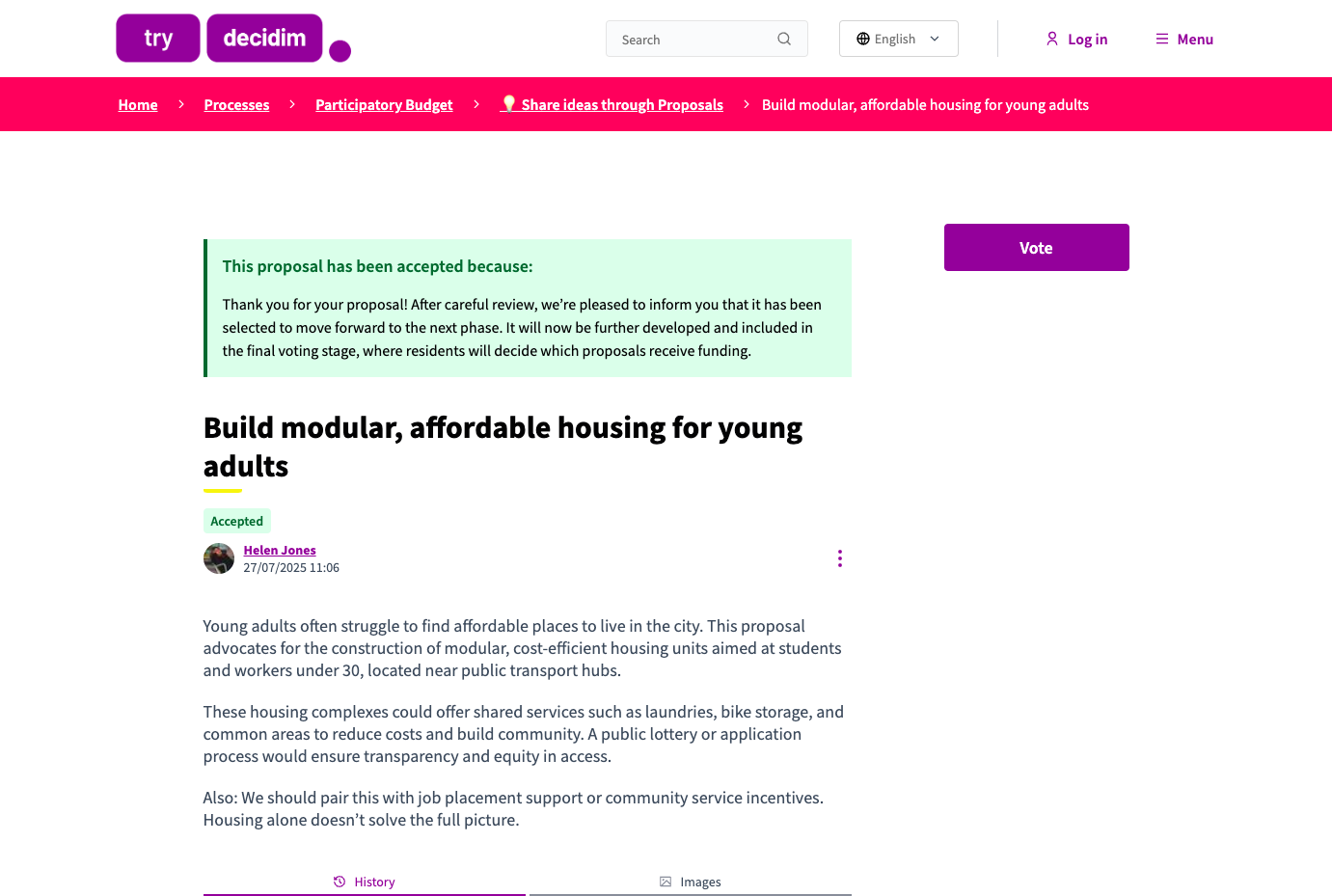
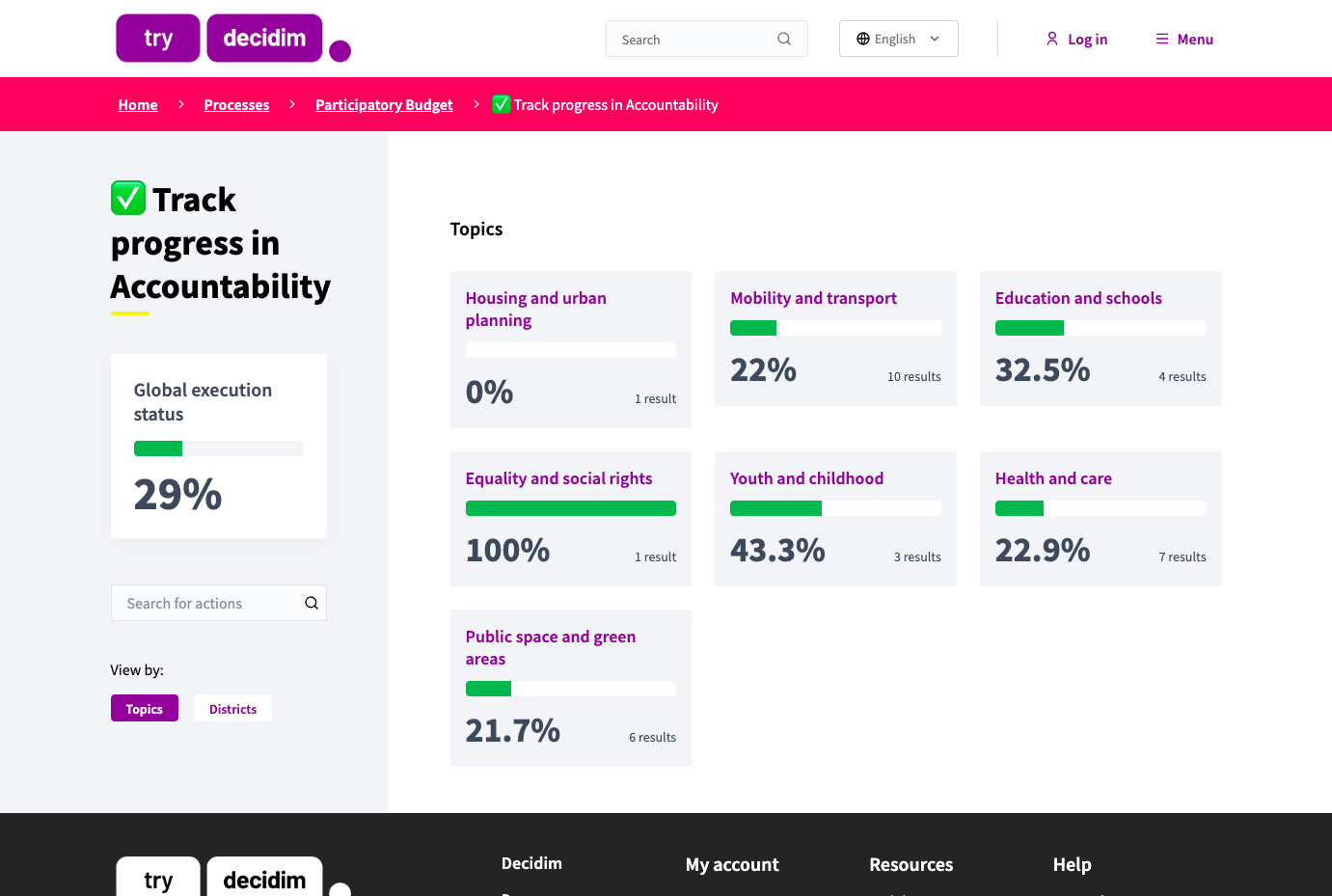
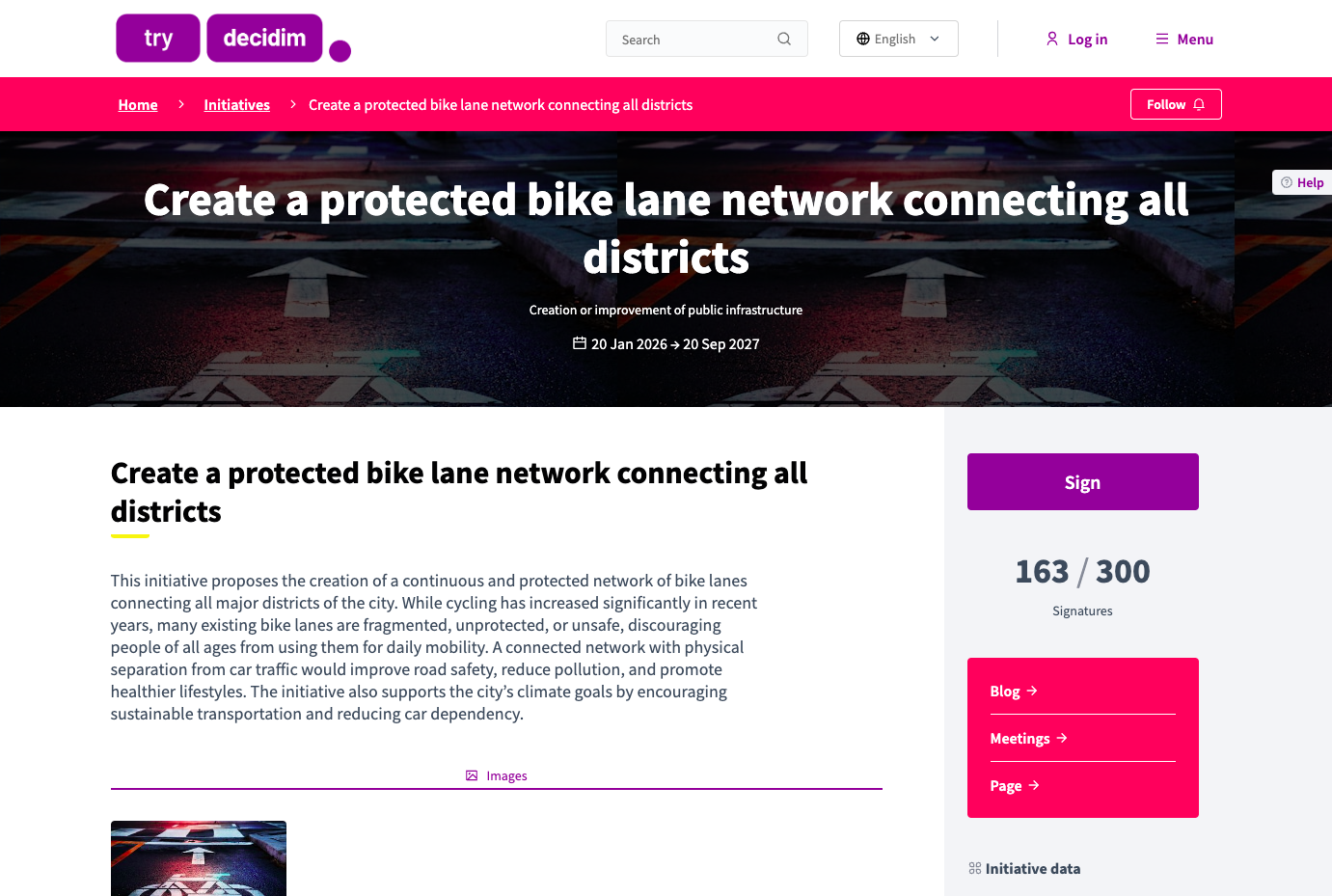
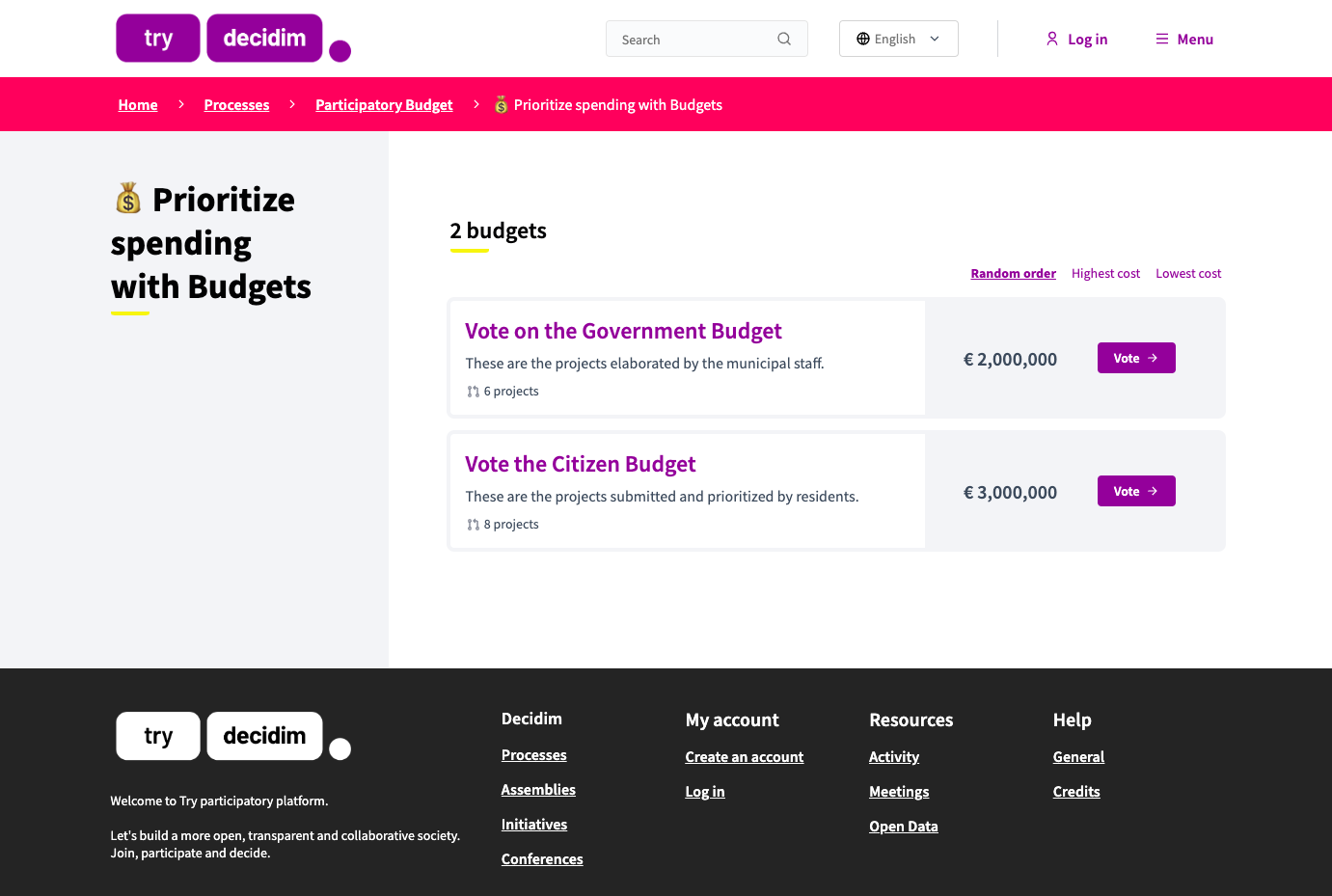
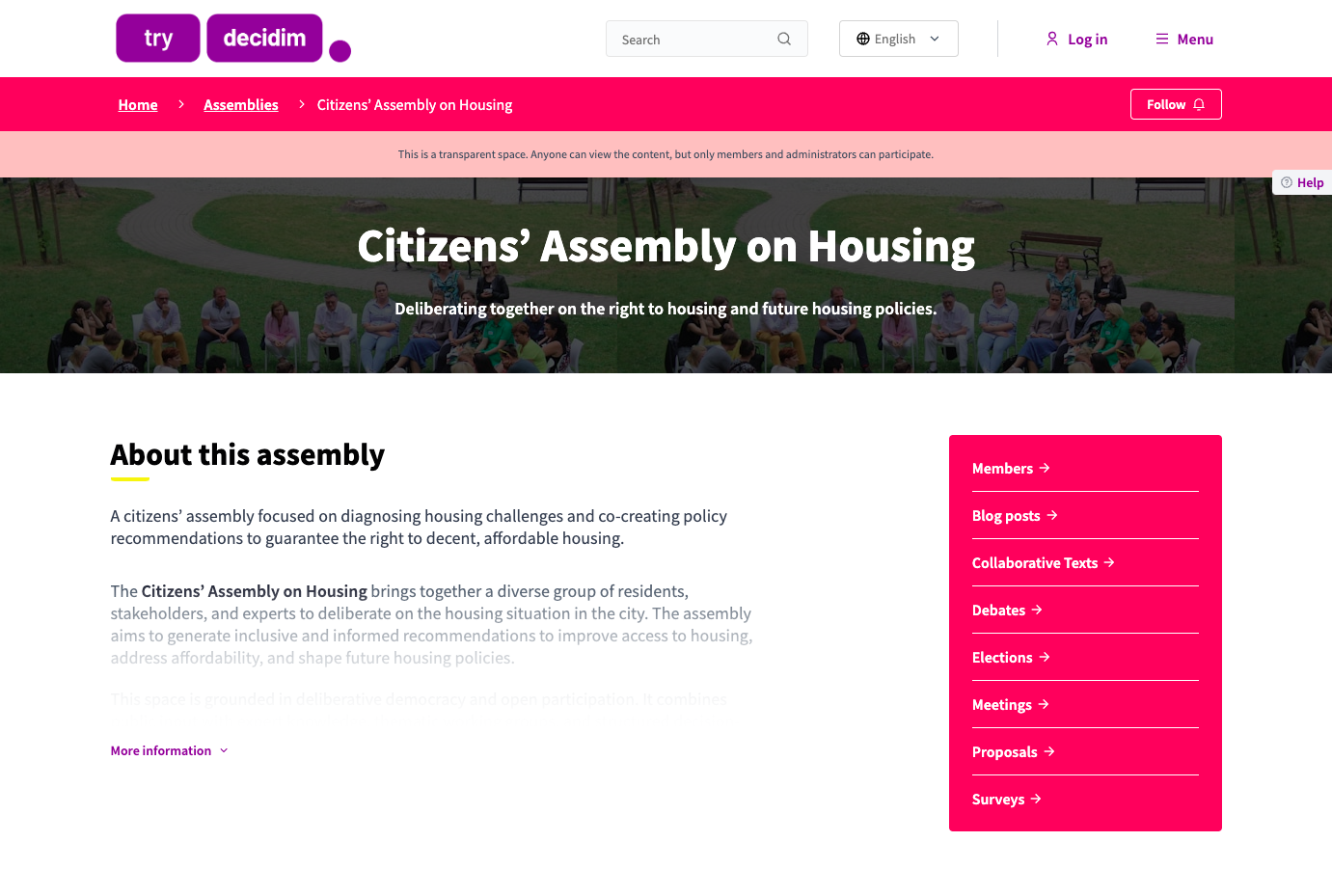
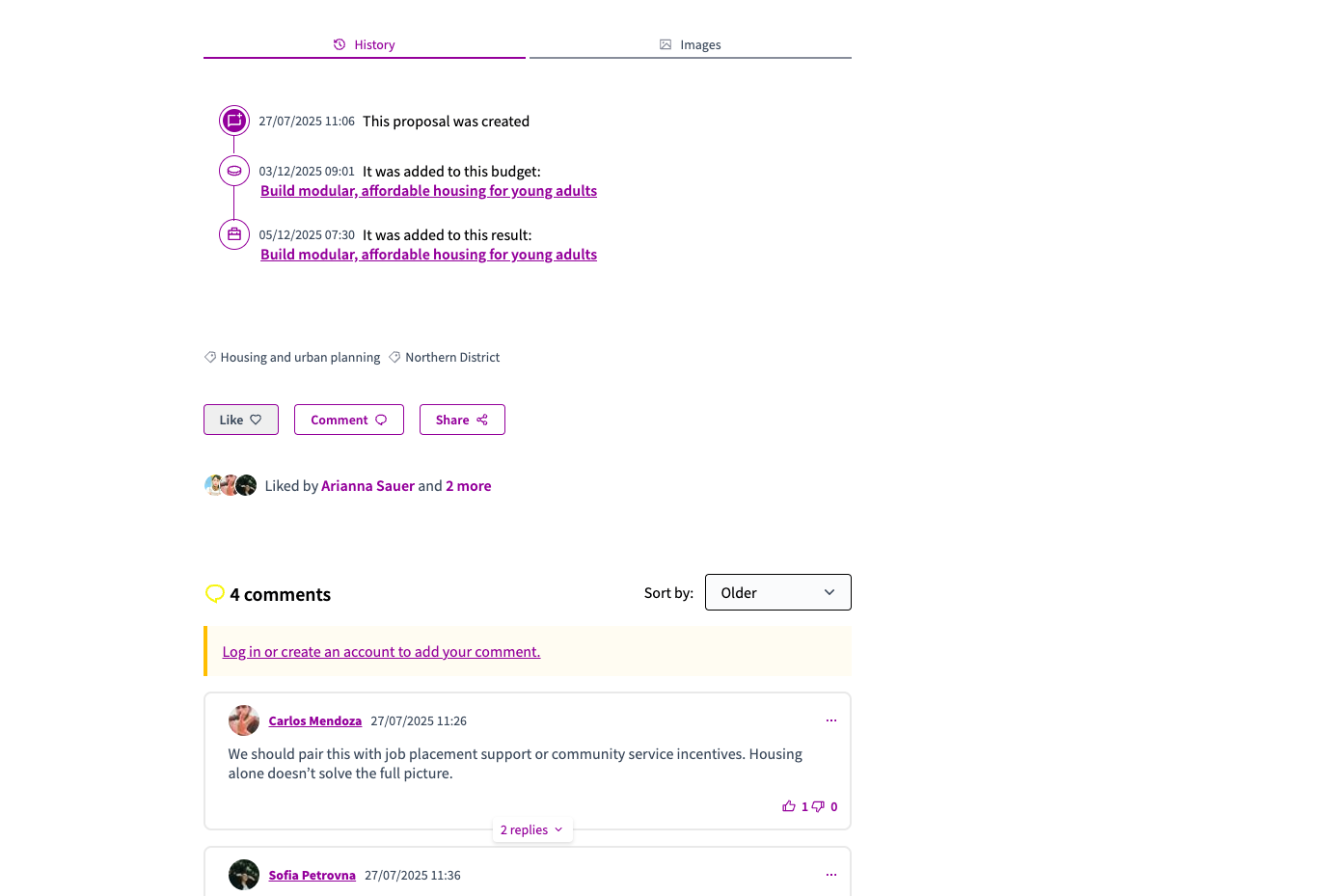
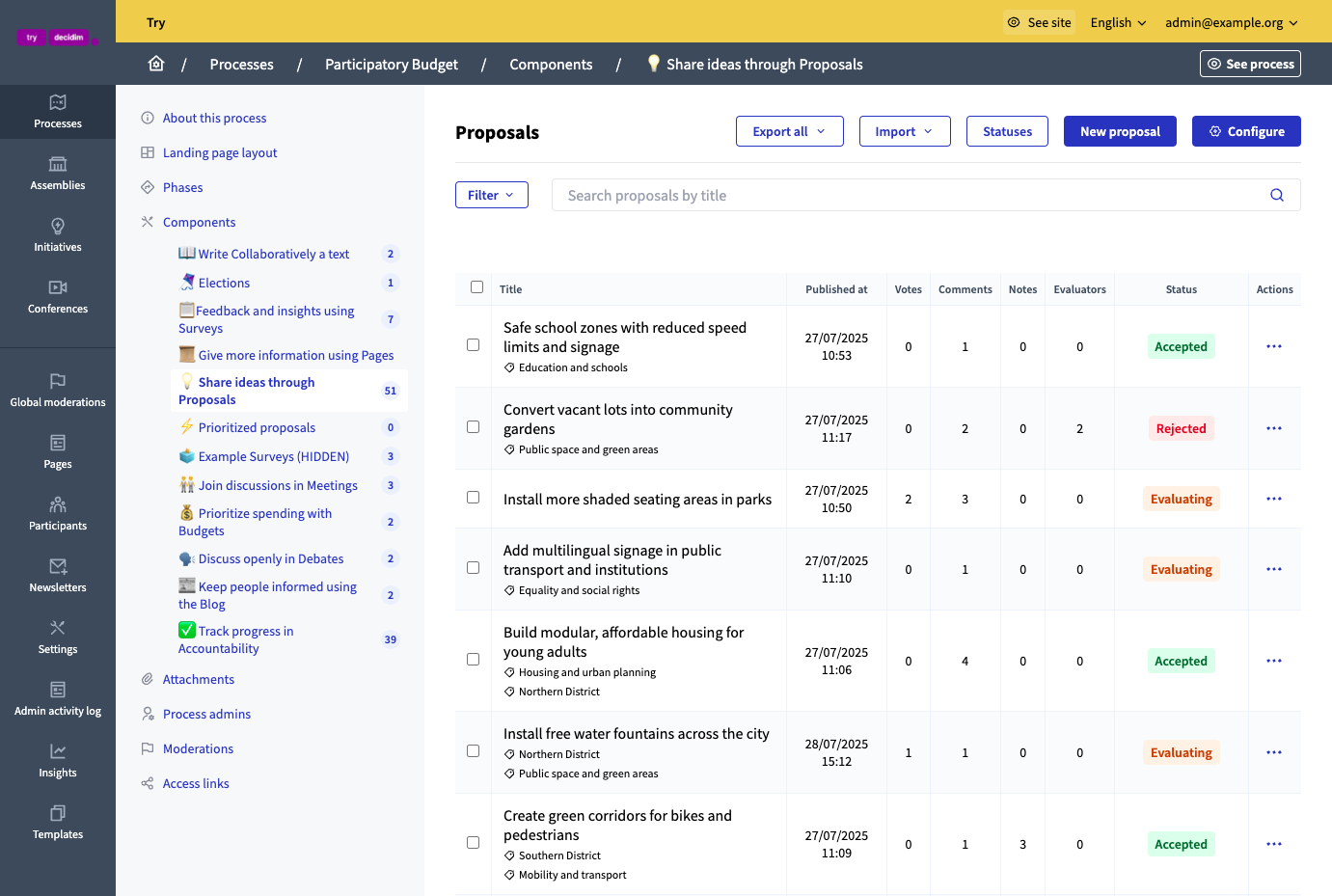
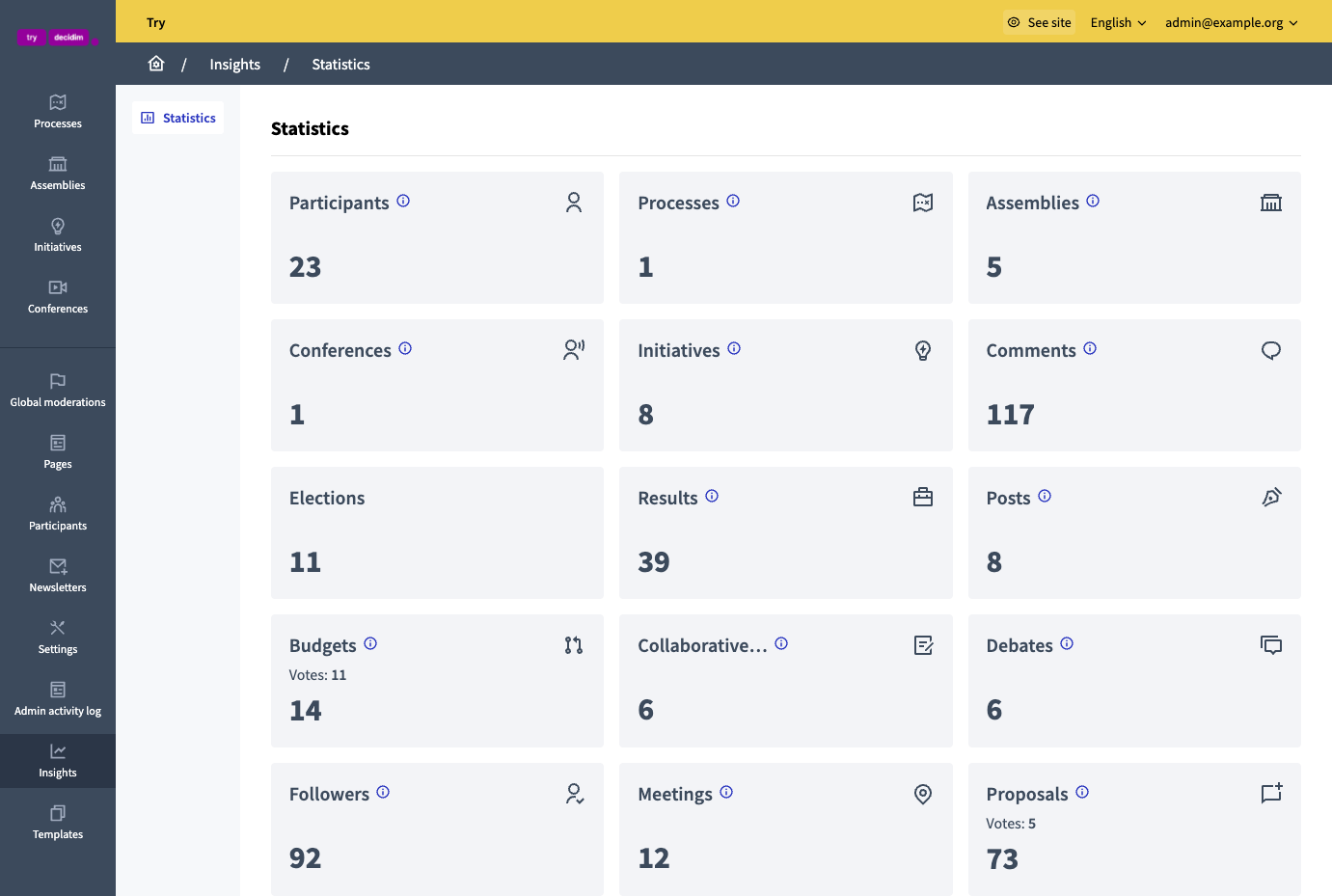
When a city, union, or association wants its people to propose, debate, and vote on decisions in the open, Decidim gives it a self-hosted platform for the whole conversation. One idea can travel from first draft to delivered result without leaving the platform. It begins as a proposal in a creation wizard that compares it with existing ones and accepts geolocation and attachments. Neighbors answer and rate comments in debates, or meet in person or online with registration limits and published minutes. Money questions go to a participatory budget, where residents vote on projects with costs. Proposal voting can be limited, weighted, or cost-based, and elections come with a voting booth. Once approved, the accountability component turns the proposal into a result with progress reports that show residents how far delivery has come. All of it happens inside spaces: participatory processes with phases, assemblies for standing councils and working groups, conferences with a program of sessions, and initiatives that gather signatures. Surveys, pages, blog posts, and newsletters round out the platform. Verification by identity document, postal letter code, or uploaded census can gate specific actions such as proposing or voting. One installation hosts several organizations, each with its own domain, languages, and participants. Proposals, results, and survey answers export as CSV or JSON, and a read-only GraphQL API exposes public data. Running on a dedicated VPS on RepoCloud with guaranteed CPU, RAM, and SSD, full root SSH access, and a browser serial console. AGPL-3.0 licensed.
Benefits
- Public Decisions With a Paper Trail
- Proposals, debates, votes, and accountability results live in one public record, so residents can follow an idea from submission through approval to the progress reports on its delivery.
- One Platform for Many Organizations
- A single installation can host several organizations, each with its own domain, languages, participants, and enabled verification methods, which suits a federation, a province, or a provider serving many small towns.
- Participation Rules You Control
- Verification by identity document, postal letter, or uploaded census lets you reserve proposing or voting for verified residents, and forced login shows unauthenticated visitors only the log-in form.
- Open Data Without Vendor Lock-In
- Administrators export proposals, results, and survey answers as CSV or JSON, and a read-only GraphQL API publishes public data, so civic records stay reusable if you ever migrate.
Features
- Participatory Processes and Assemblies
- Processes run through configurable phases, assemblies model standing councils with members and meeting agendas, and each space combines the components its organizers choose.
- Proposals, Debates, and Meetings
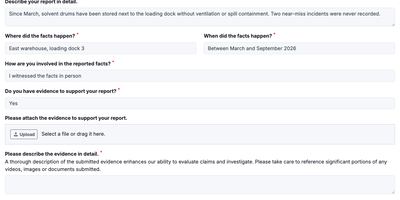
- A proposal wizard checks new ideas against existing ones and accepts geolocation and attachments; debates, answerable comments, and meetings with registration and minutes keep deliberation in one place.
- Budgets, Voting, and Elections
- Participatory budgets let residents vote on projects with costs, proposal voting can be limited, weighted, or cost-based, and elections use a census or token system with a voting booth.
- Accountability and Notifications
- The accountability component turns approved proposals into results with progress reports, while follows, notifications, and newsletters keep participants informed about the spaces they care about.
- Verification and Multitenancy
- Authorization methods include identity documents, postal letter codes, and census uploads, and the System panel at /system creates and configures multiple organizations on one installation.
- GraphQL API and Exports
- A read-only GraphQL API documented at /api/docs exposes public data, and admin screens export proposals, results, and survey responses as CSV or JSON for analysis elsewhere.