Stars
Forks
Watchers
Developer links
GO Feature Flag
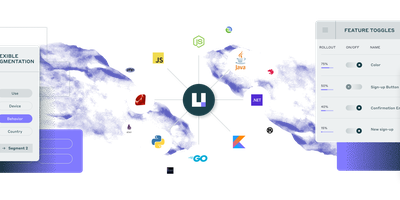
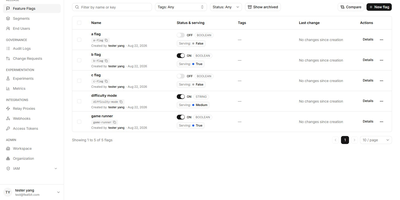
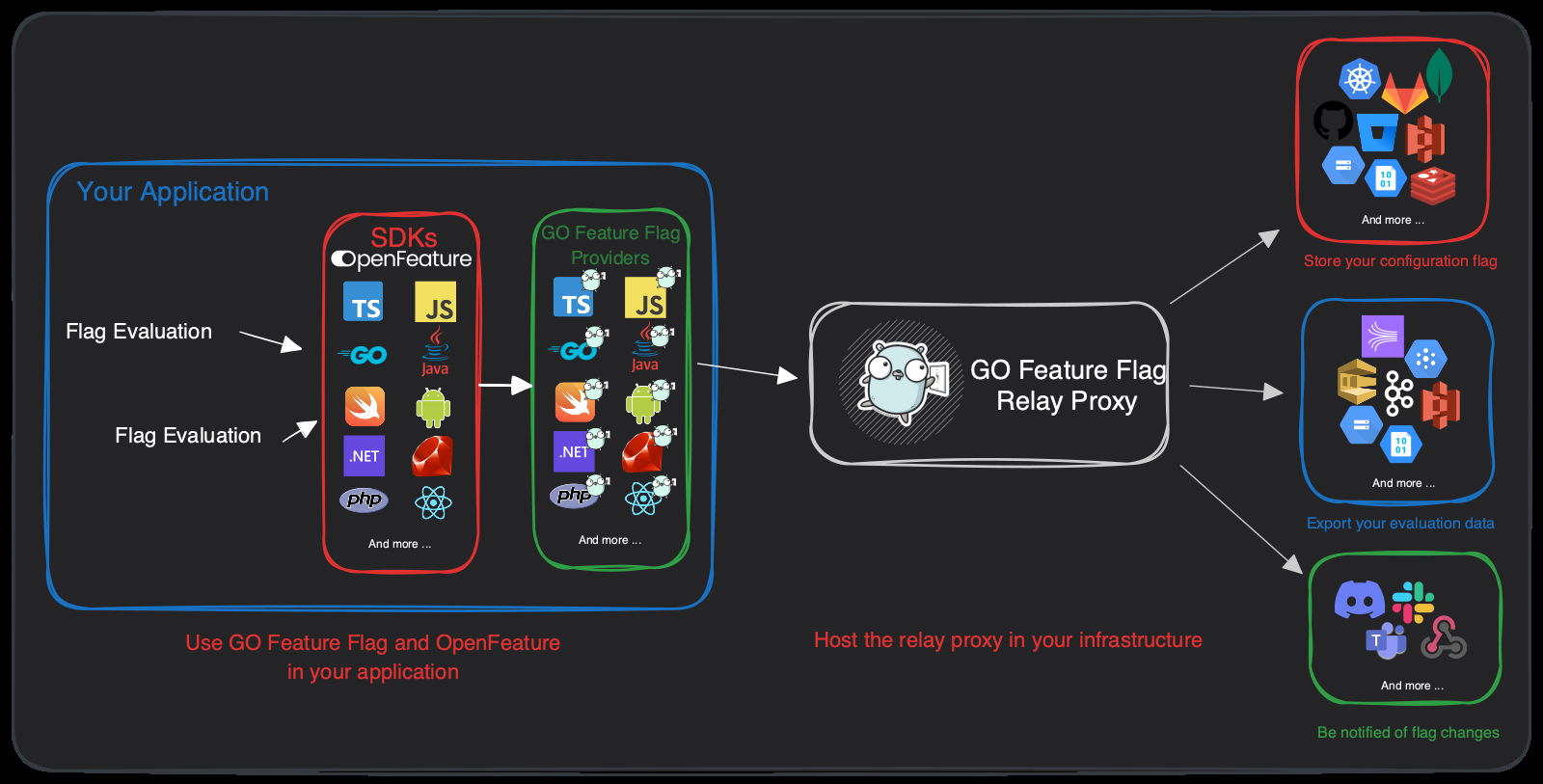
Release a feature to five percent of users today, everyone on Friday, and only beta testers in between, all by editing one file: that is the job GO Feature Flag does for your applications. Flags live in a YAML, JSON, or TOML configuration you store in Git, S3, Kubernetes, or any retriever you already trust, and a lightweight relay proxy serves evaluations to every service through the standard OpenFeature SDKs in many languages. Targeting rules aim flags at specific users, segments, or contexts, progressive rollouts raise percentages on a schedule, experimentation splits traffic for A/B tests, and scheduled changes flip flags while the team sleeps. Every evaluation can be exported to files, S3, Google Cloud Storage, or Kafka for analysis, and webhook or Slack notifiers announce the moment a flag changes. Because the data plane is your proxy and your file, any language your stack speaks, from mobile apps to backends, evaluates the same flags with identity, variation, and rollout logic decided centrally. Running on a dedicated VPS on RepoCloud with guaranteed CPU, RAM, and SSD, full root SSH access, and a browser serial console. MIT licensed.
Benefits
- One File Controls Releases
- Flags live in a YAML, JSON, or TOML file you already version and review, so changing a rollout is a commit instead of a deployment pipeline.
- Any Language Via OpenFeature
- The relay proxy serves evaluations through standard OpenFeature SDKs, so backends, frontends, and mobile apps share one flag system without vendor lock-in.
- Rollouts On A Schedule
- Progressive percentages, experimentation splits, and scheduled changes release features gradually and reversibly, with targeting rules for specific users and customer segments.
- Evaluation Data You Own
- Evaluation events export to files, object storage, or Kafka, and webhook or Slack notifiers report every flag change as it happens.
Features
- Relay Proxy Server
- A lightweight hosted proxy evaluates flags centrally for every OpenFeature SDK, so applications never embed flag logic.
- Flexible Flag Storage
- Retrievers load flag files from HTTP, S3, Kubernetes, GitHub, and local storage in YAML, JSON, or TOML.
- Targeting And Rollout Rules
- Rules combine user attributes, percentages, experimentation splits, progressive rollout steps, and scheduling to control each variation precisely.
- Data Exporters And Notifiers
- Export evaluations to S3, Google Cloud Storage, files, or Kafka, and notify webhook or Slack on changes.