Comigo
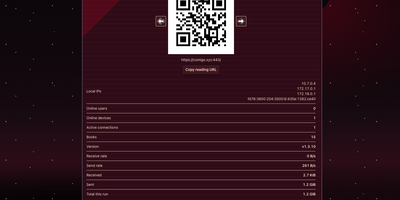
Your comic and manga collection becomes one tidy library with Comigo, readable in any browser on any device in the house. Point it at a folder and it indexes image folders plus zip, rar, tar, cbz, cbr, and epub archives, then serves pages in scroll or page-turning layouts. Pages arrive cropped and compressed for the screen in front of you, and modern heic and avif files read beside plain jpg and png. A QR code on the server screen brings phones and tablets straight into the same library, and reading position follows you between devices mid-chapter. Your history is tracked automatically, so a series paused last month reopens at the exact page where you stopped. The built-in player handles audio and video stored beside your books, which covers drama CDs and anime extras in the same shelves. Plugins add automatic page turning and an on-screen clock, and you can write your own to change how reading sessions behave. Libraries can live on another Comigo server across the network, whole image folders download in batches, and epub files convert for dedicated e-readers. The offline mode reads archives directly inside the browser with nothing uploaded, which suits borrowed machines and locked-down networks. Running on a dedicated VPS on RepoCloud with guaranteed CPU, RAM, and SSD, full root SSH access, and a browser serial console. MIT licensed.

Lunarr
Lunarr turns the movie and TV folders you already store into a private streaming service with posters, progress tracking, and play-anywhere convenience. Point it at local disks or at libraries living on SFTP and WebDAV servers, and it scans, identifies, and decorates everything with TMDb artwork, cast pages, similar titles, and because-you-watched recommendations. Press play and the file either streams directly or is transcoded on the fly into seekable HLS, generating only the segments around the moment you are watching instead of converting whole films up front. Continue watching follows you between sessions, sidecar subtitles are picked up automatically, and known intros and credits can be skipped. Send the picture to the big screen with Chromecast or AirPlay, pair new devices without typing passwords, and hand a guest a share link instead of your account. Underneath, an admin console manages users, roles, and which libraries each person may see, watches background jobs, and holds API keys and registration settings. Rescans run on schedules you set from minutes to a month, local folders can be watched live for new arrivals, and metadata refreshes itself on a timer. Running on a dedicated VPS on RepoCloud with guaranteed CPU, RAM, and SSD, full root SSH access, and a browser serial console. Apache-2.0 licensed.
Codever
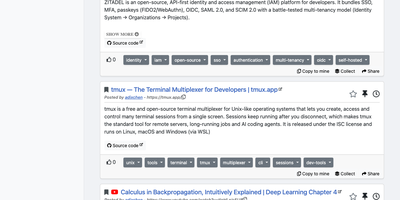
Every developer has a graveyard of browser tabs, chat messages, and stray text files holding links and code worth keeping; Codever replaces the graveyard with a bookmarks, notes, and snippets manager designed for developer workflows. Save a page in two clicks from Chrome or Firefox, drop selected text in as a snippet or note, or use the bookmarklet in any other browser, with title, description, and tags prefilled for you. From IntelliJ IDEA and Visual Studio Code you can push code straight into your library and pull it back without switching to the browser. Bookmarks carry descriptions and tags, and Pinned and Read Later lists sit beside your history so rediscovery takes seconds. Notes are written in Markdown and render with math, tables, and inline code, while snippets keep reusable code one search away with its context attached. Full text search spans bookmarks, notes, and snippets at once, with Brave, Google, Stack Overflow, and Bing one click away when the library comes up empty. Entries can be public, copied into your own collection, or gathered into curated sets for a team or topic. Accounts sign in through Keycloak with GitHub, Google, GitLab, or Stack Overflow, so a self-hosted instance fits the identity setup your team already uses. Running on a dedicated VPS on RepoCloud with guaranteed CPU, RAM, and SSD, full root SSH access, and a browser serial console. MIT licensed.
Marble
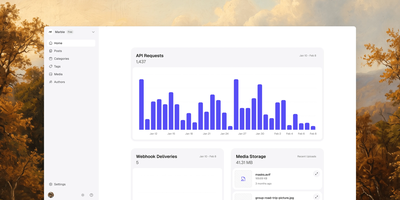
Marble gives your blog, changelog, or product updates a calm editorial home, then hands clean JSON to whatever website you already built. Writers work in a focused rich-text editor with headings, lists, code blocks, images, video, and embeds, while a readability score quietly grades each draft as it grows. Every post carries authors, one category, tags, a cover image, and typed custom fields, so a changelog entry and a long guide can share one predictable structure. Your frontend pulls sanitized HTML or Markdown through the REST API or typed SDK, filtering by category, tag, or search in a single request. Read-only public keys serve published posts safely, while scoped private keys unlock drafts and write access for the tools you trust. Uploads of images, video, audio, and documents land in a media library with alt text and dimensions, ready to embed anywhere. Signed webhooks announce every change to your site, Slack, or Discord with retries and a delivery log, and an MCP server lets AI agents search and draft content too. Running on a dedicated VPS on RepoCloud with guaranteed CPU, RAM, and SSD, full root SSH access, and a browser serial console. AGPL-3.0 licensed.
JobSpy API
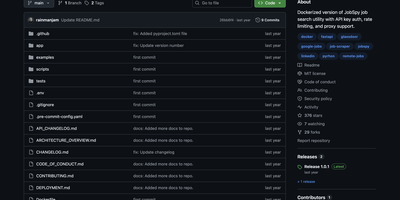
JobSpy API turns seven major job boards into a single REST endpoint, aggregating listings from LinkedIn, Indeed, Glassdoor, Google Jobs, ZipRecruiter, Bayt, and Naukri through one GET request. Built on FastAPI with the Python JobSpy scraping library, the API returns structured JSON or downloadable CSV containing job titles, companies, locations, salaries, descriptions, posting dates, and direct application URLs. Filters cover search terms, location, distance radius, job type (full-time, part-time, contract, internship), remote status, hours since posting, country, and salary range. Interactive Swagger UI and ReDoc interfaces provide try-it-now functionality for testing queries directly in the browser. Security includes x-api-key header authentication with configurable rotation, per-endpoint rate limiting with adjustable thresholds, and response caching with configurable TTL to reduce redundant scraping. Global proxy support routes outbound requests through HTTP/HTTPS proxies to avoid IP-based rate limiting from job boards. Environment variables control everything from default search parameters and logging levels to CORS origins and documentation paths. Health check and ping endpoints integrate with uptime monitoring services. Docker Compose exposes the API on a configurable port. MIT licensed.
Tingly Box
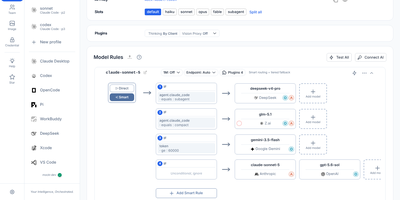
Give every agent your team runs the same front door, and the model chaos behind it becomes manageable. Tingly Box is a self-hosted gateway with a web console where providers, keys, routing rules, and team usage live in one place. Claude Code, OpenCode, Codex, Xcode, and other clients simply call the endpoint. A request arrives. The gateway reads your rules, weighs cost against speed against the policy you wrote, picks a model and a token, translates the protocol if the two ends disagree, and streams the answer back. Existing subscription quotas are spendable here, connected by OAuth beside ordinary API keys, and per-scenario profiles let quick edits and deep refactors land on different models by default. Team mode shares that endpoint properly. Model rules are managed centrally, each member receives a dedicated key, data stays isolated per user, and the usage dashboard shows exactly who consumed what. The gateway also speaks images, generating and editing through the same address with a playground for testing prompts before clients depend on them. Agents remain reachable after you leave the desk, driven through Telegram, DingTalk, Feishu, Lark, Weixin, or WeCom, with guardrails and an MCP gateway available as power-ups. Virtual models give new rules a safe target for testing and benchmarking before real traffic moves over. Running on a dedicated VPS on RepoCloud with guaranteed CPU, RAM, and SSD, full root SSH access, and a browser serial console. MPL-2.0 licensed.
BugTraceAI
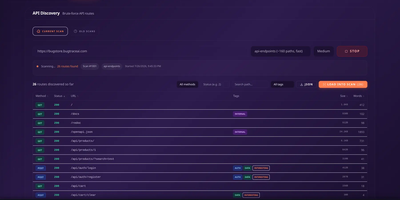
Point an AI pentesting crew at a web app you own and watch it hunt: BugTraceAI plans the checks, sends specialist agents after each weakness class, and brings back evidence you can inspect. A scan moves through six visible phases, from crawling and endpoint discovery through strategy, exploitation and validation, and ends in a findings table where every result carries a severity, a CVSS score and a confirmed status. The web dashboard follows the hunt live as a graph of specialists branching from a coordinating agent, and its API discovery workspace brute-forces routes and loads the interesting ones straight into a scan. Analysts get their own toolbox of more than twenty utilities for poking HTTP traffic by hand, an AI repeater for replaying requests, and ModelLab for comparing models on cost and results. Findings download as a ZIP with the full report, and a terminal workspace with pipeline, findings, agents, timeline and logs views suits keyboard-driven work. Bring your own model through OpenRouter, Anthropic, Z.ai or a local endpoint, and aim the whole suite at the bundled BugStore practice shop when you want to rehearse safely. Running on a dedicated VPS on RepoCloud with guaranteed CPU, RAM, and SSD, full root SSH access, and a browser serial console. Apache-2.0 licensed.
ABC User Feedback
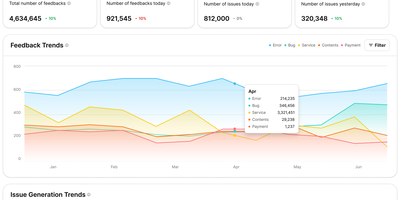
One board holds every piece of customer feedback, from app store reviews to survey answers, and turns the repeating ones into tracked issues. Each project defines channels like App Review, VOC, or Survey with custom fields for text, numbers, dates, selects, images, and AI-generated values. The feedback table filters by keyword, date, and field, expands rows for detail, and exports results when a report is due. Issues carry status labels and appear in a kanban or list view, with ticket links that point to Jira or another tracker. A dashboard charts feedback and issue trends over any date range, with counters for today and yesterday. The AI field can summarize, translate, or score sentiment on incoming messages, and issue recommendation suggests where a new message belongs, with token usage limits and notifications to cap spending. Webhooks announce events to other systems, API keys let apps submit feedback directly, and role-based access limits what each member can do. Members join by email invitation, and single sign-on connects an existing identity provider. A CLI starts the full stack, and optional OpenSearch improves search and AI accuracy. Running on a dedicated VPS on RepoCloud with guaranteed CPU, RAM, and SSD, full root SSH access, and a browser serial console. Apache-2.0 licensed.
Mikochi
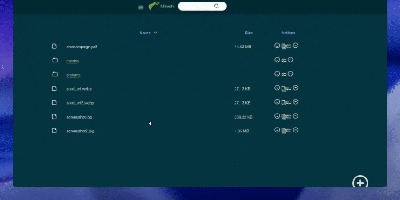
Point a browser at your server's folders and skip the FTP clients, the SSH tunnels, and the heavyweight cloud clones: Mikochi turns any directory on your machine into a clean web file browser you can open from anywhere. You browse nested folders in a fast list view, jump to files with fuzzy search, upload new material, create folders, rename items, and delete what is no longer needed. Whole directories come down as a single tar.gz archive, which makes backups and bulk transfers painless. Media files get a smarter treatment: Mikochi generates streaming links that open directly in VLC or mpv, so a film or album stored on the server plays on your screen without downloading gigabytes first. Access stays protected behind a username and password login with JWT sessions, and you can serve everything over TLS with your own certificates or disable authentication entirely on a trusted private network. Deployment takes one Docker command with a mounted data directory, and Kubernetes users get an official Helm chart. Homelab owners point it at a NAS share, developers drop it on a build box, and anyone tired of scp commands gets a permanent window into their files. Running on a dedicated VPS on RepoCloud with guaranteed CPU, RAM, and SSD, full root SSH access, and a browser serial console. MIT licensed.
UseAgent
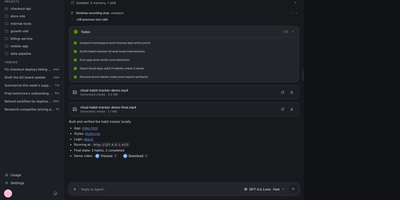
Hand a task to an AI teammate the way you would hand it to a person: describe the work, then follow along and step in when it matters. UseAgent runs Claude Code, Codex, OpenCode, and Pi inside isolated Linux workspaces, each with your repositories, a terminal, a real browser, and a desktop you can open and take over. Start work from the web app, by mentioning an agent in Slack, or through the API, and get pull requests, documents, spreadsheets, presentations, and research back as usable files. Four engines share one thread and one event format, so you can compare how Claude Code and Codex each handled the same bug, then switch engines on the next reply without losing history, files, or memory. Risky operations pause at approval gates, and a decision resumes the run with a one-shot, argument-bound capability instead of blanket trust. Every step, tool call, and approval is stored as an append-only event log in your Postgres, replayable after the fact and durable across restarts mid-task. Teach the workspace your procedures by importing versioned skills from GitHub and pinning playbooks to tasks, while knowledge pages and optional team memory stay beside the work, inspectable and correctable. Recurring tasks run on schedules with full history. Provider keys stay on your server and never enter an agent sandbox. Running on a dedicated VPS on RepoCloud with guaranteed CPU, RAM, and SSD, full root SSH access, and a browser serial console. AGPL-3.0 licensed.
Mycorrhiza
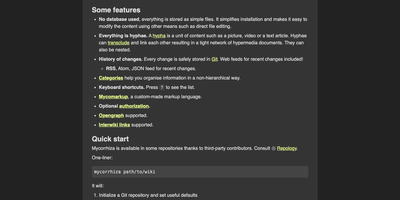
Most wikis bury your writing inside a database you can never quite export cleanly; Mycorrhiza keeps every page as a plain file you can open, edit, and back up with ordinary tools. Each unit of content is a hypha, a page that can be an article, an image, or a video, and hyphae transclude and link to one another so related notes weave into a dense hypertext network instead of a stack of isolated pages. You write in Mycomarkup, a markup language designed to stay unambiguous while remaining quick to type, and categories organize pages without forcing a rigid hierarchy, although nested hyphae are there when you want one. Every edit is committed to Git automatically, giving the wiki a complete, inspectable history, and recent changes flow out as RSS, Atom, and JSON feeds. Keyboard shortcuts drive navigation for people who live in the editor, authorization supports plain accounts or Telegram login, and Open Graph metadata makes shared pages preview properly elsewhere. Interwiki links connect your wiki to others, and because there is no database to provision, a single small binary serves the whole site. Running on a dedicated VPS on RepoCloud with guaranteed CPU, RAM, and SSD, full root SSH access, and a browser serial console. AGPL-3.0 licensed.
Nora
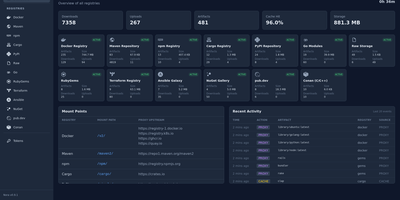
Public registries rate-limit your CI, log every pull, and pick the worst moment to go down; Nora replaces that dependency with a self-hosted artifact registry that hosts and caches seventeen package formats behind a single address. Point Docker, Maven, npm, pip, Cargo, and eleven other clients at one endpoint, and Nora serves your private artifacts while transparently caching upstream packages fetched from Docker Hub, Maven Central, npmjs, and crates.io. Each base image or library downloads once and is then served locally, so builds get faster, stop tripping rate limits, and survive upstream outages. Curation rules decide what is allowed to reach your builds: allowlists and blocklists filter packages by name, minimum release-age rules hold back freshly published versions, and new digests can wait in quarantine until approved. Anything you publish keeps its name: a hosted package is never silently replaced by an upstream package sharing it. Pipelines publish without stored secrets through OIDC identity from GitHub Actions and GitLab CI, and API tokens with read, write, and admin roles cover the rest. A web dashboard shows downloads, cache hit rates, storage usage, and recent activity for every registry, and audit logs plus Prometheus metrics feed your monitoring. For disconnected networks, a mirror command prefetches whatever your lockfiles name, an import tool migrates Artifactory or Nexus repositories, and backup and restore keep a spare copy. Running on a dedicated VPS on RepoCloud with guaranteed CPU, RAM, and SSD, full root SSH access, and a browser serial console. MIT licensed.
NutriTrace
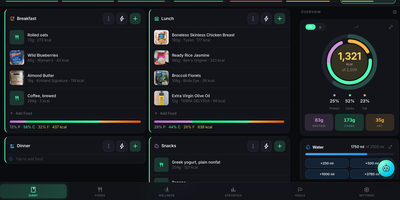
Stop handing your daily food diary, body weight history, and biometric sleep data to ad-funded fitness clouds: NutriTrace brings complete calorie, macro, micronutrient, and wellness tracking to your own server with an offline-capable web PWA and native Android app. Log meals across customizable slots using live Open Food Facts and USDA FoodData Central lookups, barcode scanning, AI nutrition label OCR, or direct recipe imports from Mealie and CookTrace. Calorie and macro targets adjust automatically through three goal engines, including an inspectable Adaptive TDEE algorithm that regresses 35 days of intake against scale weight at 7,700 kcal per kilogram. Connect Fitbit via Google Health, Garmin, Withings, and Android Health Connect to pull steps, heart rate variability, sleep stages, and body composition into unified Sleep, Readiness, and Resilience scores. An integrated Trace AI assistant and Smart Log let you log meals by voice, text, or meal photo, while the opt-in Model Context Protocol server exposes 20 read, write, and management tools to Claude Desktop, Cursor, and Codex. Multi-user households get OpenID Connect SSO and one-step migration from MyFitnessPal, Cronometer, Lose It, and Waistline. Running on a dedicated VPS on RepoCloud with guaranteed CPU, RAM, and SSD, full root SSH access, and a browser serial console. AGPL-3.0 licensed.
MyCompany
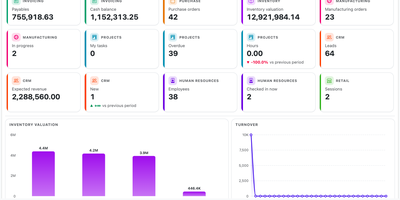
MyCompany runs the whole back office of a small business, sales, stock, production, invoices, projects, payroll, and the shop till, as one application sharing one database. A lead arrives and moves across a kanban board with calls and emails logged on its card, then becomes a sales order and an invoice without retyping a single field. Purchasing raises supplier orders, receives goods into the right warehouse, and watches stock move between locations with full movement history, reservations, lots, and serial numbers. Manufacturing plans production orders from bills of materials with operations and work centers, tracking the materials actually consumed and what each finished batch cost. Projects track tasks and time with supervisor timesheets, HR keeps employee records, hourly rates, and payslips, and the retail point of sale handles barcodes, payments, register sessions, and discounts. Because every module reads and writes the same records, the invoice knows what the warehouse shipped and the project knows what the customer was billed. When your business outgrows a standard screen, customizations live in separate extension modules, so vendor updates never collide with the workflows you adapted. Running on a dedicated VPS on RepoCloud with guaranteed CPU, RAM, and SSD, full root SSH access, and a browser serial console. Apache-2.0 licensed.
Facet
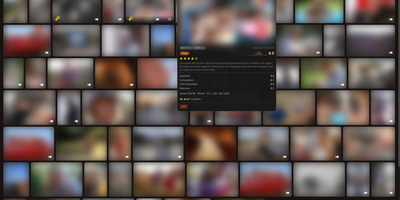
Thousands of frames land on the card after a wedding shoot, and Facet finds the keepers among the bursts, blinks, and near-duplicates. Facet scores every photo across nine dimensions, aesthetic quality, composition, face quality, eye sharpness, technical sharpness, color, exposure, subject saliency, and dynamic range, with category-specific weights for portraits, landscapes, wildlife, and 30-plus other content types. The culling darkroom groups bursts and visually similar frames, protects exposure brackets and panorama sequences, and flags closed eyes per face, so you keep the sharpest open-eyed frame and reject the rest in one pass. Face detection clusters into people you can rename, merge, and search, while albums, star ratings, favorites, and AI content tags organize what survives. Browse survivors through a mosaic gallery with semantic search by plain description, a timeline, a geotag map, and slideshow capsules. Statistics dashboards track your gear usage and metric correlations, and the weight editor learns from A/B comparisons so scores drift toward your own taste. Shared album links support client proofing with hearts and comments, phones auto-upload over the built-in WebDAV inbox, and ratings round-trip to Lightroom, darktable, and Immich through XMP sidecars. Everything runs locally on your own hardware: no cloud accounts, no subscriptions, no photo ever leaves the server. Running on a dedicated VPS on RepoCloud with guaranteed CPU, RAM, and SSD, full root SSH access, and a browser serial console. MIT licensed.
Bookshelf
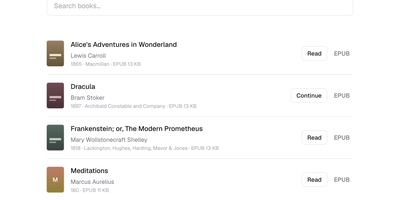
Bookshelf turns a folder of EPUBs and PDFs you already own into a private library you can browse and read from any browser, at home or on your own server. Drop books into a folder, run the sync, and the shelf appears with covers extracted, titles searchable, and accents forgiven, so typing Bronte finds Brontë. Each reader in the house gets a profile that remembers their place in every book, and picking a book up on your phone resumes where the laptop left it, with a Continue button waiting on the shelf. EPUBs open chapter by chapter instead of downloading the whole archive, and PDFs stream in small ranged reads, so even a large scanned book opens quickly. Choose a two-page spread, a single page, or continuous scroll, then set paper, sepia, or night tints for longer sessions. E-readers join through the OPDS catalog, which lets a Kobo or Kindle-side client browse and download from the same shelf. There is no database to run and no account system to manage; the library is plain files you can back up with the volume. Running on a dedicated VPS on RepoCloud with guaranteed CPU, RAM, and SSD, full root SSH access, and a browser serial console. MIT licensed.

Family Ledger
Family Ledger gathers every account a household owns into one private picture of net worth, using ten minutes of data entry per month. Bank cards, brokerage accounts, funds, property, loans, crypto, precious metals, and insurance sit together, grouped by family member, with CNY, USD, and HKD support. Each month the app lists the balances to fill in, so two partners can finish the job at different times from a phone or desktop. The dashboard separates what you earned from what your money earned, and it reports true annualized return with XIRR and TWR, plus a net-worth line adjusted for inflation. An asset lens slices holdings by risk, platform, industry, currency, and region through sunburst charts and pivot tables, and fund look-through shows the real stock, bond, and industry exposure behind each fund. Upload a brokerage screenshot and a vision model reads every holding for you to confirm. AI checkups score allocation, risk, liquidity, and returns, then suggest rebalancing steps. Goals for retirement, education, and emergency reserves come with optimistic, neutral, and pessimistic forecasts. Running on a dedicated VPS on RepoCloud with guaranteed CPU, RAM, and SSD, full root SSH access, and a browser serial console. AGPL-3.0 licensed.

Genealogy
Genealogy turns scattered family records into a living, browsable family tree that relatives can explore together and keep growing. Each person gets a full profile with parents, partners, children, and siblings, and couples are first-class records too, so remarriages, separations, and blended families are represented honestly instead of being forced into a single marriage box. Photos can be uploaded in batches, watermarked, and browsed in a carousel on the profile, while documents attach the scans and certificates that back up each fact. Events build a timeline overview for every person, so births, marriages, moves, and milestones read as a story rather than a spreadsheet. Several branches can live side by side: separate trees are organized as teams with owners, managers, editors, and read-only members, ownership can be transferred, and invitations keep research private to the family. Personal settings follow each user, including language, timezone, and a light or dark theme on any screen size. A built-in backup manager runs manual or scheduled daily backups with cleanup and email confirmation, and a log viewer surfaces slow queries and errors before they surprise you. Running on a dedicated VPS on RepoCloud with guaranteed CPU, RAM, and SSD, full root SSH access, and a browser serial console. MIT licensed.