Stoat
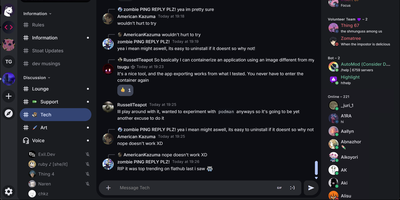
Stoat delivers a complete Discord-like community chat experience that organizations can self-host on their own infrastructure with full data ownership. The platform provides text channels organized in categories, real-time voice calls powered by LiveKit, file sharing with automatic media proxying, custom emoji support, bot framework, GIF search, server invites, and granular role-based permissions — all wrapped in a polished web UI that feels immediately familiar to Discord users. The architecture separates concerns across dedicated Rust binaries handling the REST API, WebSocket real-time events, file storage with S3-compatible backends, push notifications, and media proxying, backed by MongoDB for persistence and Redis for caching. Web, desktop, and mobile clients connect through the same API, ensuring consistent experience across platforms. Unlike federated alternatives such as Matrix, Stoat provides a single-server deployment model focused on the Discord-style community experience: server invites, channel categories, member management, and an invite-first onboarding flow that communities expect. The Docker Compose deployment stack handles all microservices with Caddy providing automatic TLS via Let's Encrypt. Running on a dedicated VPS on RepoCloud with guaranteed CPU, RAM, and SSD, full root SSH access, and a browser serial console. AGPL-3.0 licensed.
Saki Panel
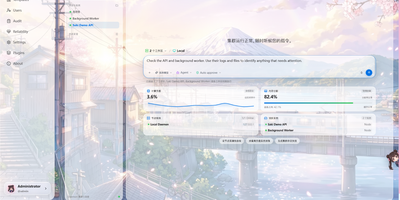
Saki Panel is a self-hosted operations console that manages your game servers, containers, and background processes across multiple Linux machines, with an AI assistant sitting inside the workspace when something breaks. Start, stop, restart, and monitor nine kinds of instances, from Minecraft and Steam game servers to Docker containers, Compose stacks, Node and Python apps, and plain shell commands. Remote nodes connect over SSH and report CPU, memory, and disk metrics to a cluster dashboard, so every machine is visible in one place. When an instance crashes, Saki Watch records the exit and its error fingerprint, then helps diagnose the cause from live logs, files, and metrics instead of making you copy text between a terminal and a chat window. Proposed fixes appear as diffs that need your approval, are graded by risk level, and can roll back automatically if verification fails after a patch. Day to day work happens in the same console: a web terminal, a file manager with an editor and archive support, database tools for SQLite, MySQL, PostgreSQL, and Redis, and cron-scheduled tasks with full run history. Role-based access with dozens of permission codes, audit logs, and incident notifications through webhooks or Telegram keep a small team in control. Running on a dedicated VPS on RepoCloud with guaranteed CPU, RAM, and SSD, full root SSH access, and a browser serial console. Apache-2.0 licensed.
OpenAdServer
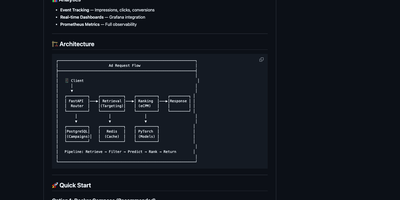
OpenAdServer runs your own ad network on your own infrastructure, ranking every request with machine-learned click predictions instead of static rotation. A request arrives with a slot, user, device, and geo context; the pipeline retrieves matching campaigns, filters them by targeting, budget, and frequency caps, predicts click probability, and ranks survivors by eCPM before responding in milliseconds. You serve banner, native, video, and interstitial formats with geo, device, operating system, demographic, and interest targeting, plus daily and hourly frequency limits per user. Budget pacing smooths delivery across the day so campaigns do not exhaust spend in the first hour. Three prediction models ship ready to train and swap without downtime: logistic regression for speed, factorization machines for feature interactions, and DeepFM for deep learning on your click logs. Automatic feature engineering processes sparse and dense fields, and hot-swapping lets a retrained model replace the live one mid-flight. Impressions, clicks, and conversions stream into event tracking, Prometheus metrics expose full observability, and Grafana dashboards visualize performance in real time. Advertisers, campaigns, and creatives are managed through CRUD APIs, and bid types cover CPM, CPC, CPA, and optimized CPM. Training scripts prepare data from your logs, train a model in a few commands, and report AUC before you promote it. Running on a dedicated VPS on RepoCloud with guaranteed CPU, RAM, and SSD, full root SSH access, and a browser serial console. Apache-2.0 licensed.
OpenCode Manager
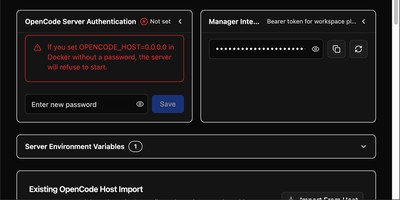
OpenCode Manager is a mobile-first command center for AI coding agents. Install the PWA on your phone or tablet and you get real-time streaming chat, multi-repository Git operations, and scheduled automation right in your pocket. Git integration handles SSH-authenticated repo cloning, worktree management, unified diffs, and branch operations across all your projects in one dashboard. Chat with coding agents through Server-Sent Events streaming that supports slash commands, @-mentions for files, Plan and Build modes, and Mermaid diagram rendering for architecture discussions. Schedule reusable prompts to run against any repository on intervals or cron expressions, with each run tracking history and linking to sessions so you can pick up exactly where automation left off. MCP server configuration adds local and remote HTTP servers with OAuth support, plugging into the broader Model Context Protocol ecosystem. A dedicated assistant workspace provides an isolated AI environment with auto-provisioned skills for managing schedules, notifications, and settings. Multiple AI providers are supported including Anthropic, GitHub Copilot, and OpenAI-compatible services, each configurable with custom system prompts and granular tool permissions. Push notifications alert you to session events, agent questions, errors, and task completions across all managed repositories.
B1Admin
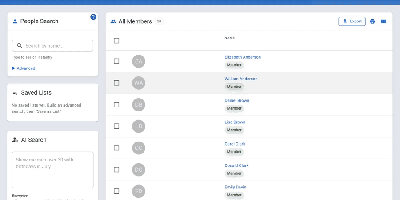
Churches run on spreadsheets and memory until B1Admin gives members, visitors, groups, attendance, and giving one shared home that the whole staff can trust. You keep detailed records on members and guests, follow up with visitors before they drift away, and coordinate small groups with their own rosters and communication. Sunday morning runs smoother with attendance tracking and a self check-in app, so families register children and members mark themselves present without a paper bottleneck at the door. Donations are tracked with detailed reports for the treasurer, online giving connects through Stripe, PayPal, or Kingdom Funding with recurring gifts and webhook-confirmed settlements, and custom forms collect registrations, signups, and requests without a separate forms tool. The same deployment serves your public website at the root, the admin dashboard for staff, a member portal where congregants manage their own information, and an API for integrations, all behind automatic HTTPS on one domain. Upgrades back up your data first, and because it is free and open source, a small church gets the same system as a large one. Running on a dedicated VPS on RepoCloud with guaranteed CPU, RAM, and SSD, full root SSH access, and a browser serial console. MIT licensed.
Noisedash
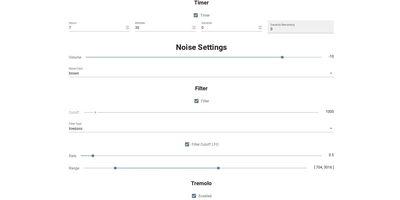
Noisedash is a self-hosted soundscape studio that generates the ambient noise you wish your surroundings made, from steady fan hums to layered rainstorms, and plays it in any browser. Start from white, pink, or brown noise and shape it with filters, LFOs, and effects until the hum in your head goes quiet. Upload your own recordings of rain, wind, thunder, or a café at noon, set loop points and fade-ins, and drop them into the mix as a continuous bed or an occasional sprinkle. Add reverb to a sample, let a thunderclap wander in every few minutes instead of looping, and balance every layer until the room feels right. Save the result as a noise profile, keep one for sleeping and another for deep work, and switch between them with a tap. Profiles travel: export one to share with a friend, import theirs, or record the generated audio to take the soundscape somewhere else entirely. An instance can host the whole household, with admin tools managing users, and the interface works as happily on a phone beside the bed as on a desktop. Running on a dedicated VPS on RepoCloud with guaranteed CPU, RAM, and SSD, full root SSH access, and a browser serial console. AGPL-3.0 licensed.
Atomic CRM
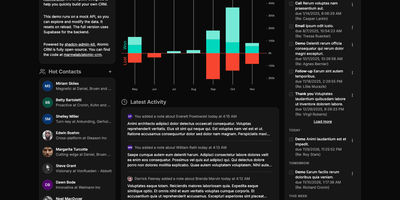
Atomic CRM keeps every contact, company, deal, and follow-up task in one shared workspace that a sales team opens from any browser. Each contact and company carries its full history: call and meeting notes, tasks with reminders, and an activity log that lines up every interaction in order. Email stops living in personal inboxes, because CCing the CRM address files the thread as a note on the right record automatically. Deals sit on a Kanban board where value and owner are printed on every card, so the quarter's state is visible at a glance and stalled opportunities stand out. Contact import and export move spreadsheets in and out, and custom fields capture the attributes your business tracks rather than a vendor's defaults. The team signs in with Google, Azure, Keycloak, or Auth0 accounts it already has. Themes, fields, and components are yours to reshape, and upstream component improvements flow into your fork through the project's component registry. An API connects the CRM to the rest of your stack, and the same PostgreSQL backend runs on Supabase cloud or your own server. Running on a dedicated VPS on RepoCloud with guaranteed CPU, RAM, and SSD, full root SSH access, and a browser serial console. MIT licensed.
Deep Research Web UI
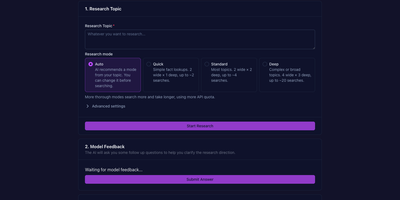
Ask a hard question and get back a cited report instead of a chat answer: Deep Research Web UI plans its own searches, reads the pages it finds, checks claims against the sources, and shows its work as it goes. The research unfolds as a live tree in your browser, each branch a search direction with streaming responses, so you watch a broad question narrow into answerable parts. When snippets are not enough, it fetches full source pages and extracts verbatim evidence, sharing one token and request budget across the run. Every claim cites its source inline, and clicking a citation opens an evidence panel with the source, retrieval time, and the excerpt behind the finding. Findings can be followed up: name what to verify and the agent searches again, updating only the passages that cite that finding while the original report stays untouched in your history. You bring the models, from OpenAI-compatible endpoints, DeepSeek, and OpenRouter to a local Ollama or LiteLLM proxy, paired with Tavily, Firecrawl, Google PSE, You.com, or Serply for the searching. Finished reports export as Markdown or PDF, search separates your question from time and source filters and retries once with a revised query when evidence is thin, and Server Mode keeps the team's API keys in environment variables behind an optional access password instead of in every visitor's browser. Running on a dedicated VPS on RepoCloud with guaranteed CPU, RAM, and SSD, full root SSH access, and a browser serial console. MIT licensed.
Cap
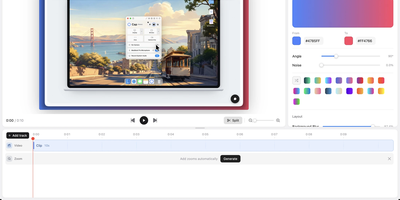
Cap is an open-source screen recorder with a built-in sharing site, so the explanation you would have booked a call for becomes a link someone can watch whenever it suits them. Pick Instant Mode when speed matters: choose a screen, window, or area, add your camera and microphone, and the video uploads while you record, so the share link is ready the second you stop. Pick Studio Mode when polish matters: Cap records locally at up to 4K and 60 frames per second, keeps screen and camera as separate tracks, and opens an editor for trimming, backgrounds, zooms, captions, and export to MP4 or GIF. Whichever mode made it, a shared video lands on a page that plays in any browser, where viewers can leave comments and reactions. Owners can keep a video private or protect it with a password, and team workspaces keep a shared library organized. Share pages come from your own domain, and recordings live in the bundled object store or any S3-compatible bucket. Connect a transcription and AI provider to add transcripts, titles, summaries, and clickable chapters. Bug reports, product demos, onboarding walkthroughs, design reviews, and async standups all shrink to a short recording and a link. The desktop apps for macOS, Windows, and Linux connect to your server through a single Cap Server URL setting. Running on a dedicated VPS on RepoCloud with guaranteed CPU, RAM, and SSD, full root SSH access, and a browser serial console. AGPL-3.0 licensed.
Cinephage
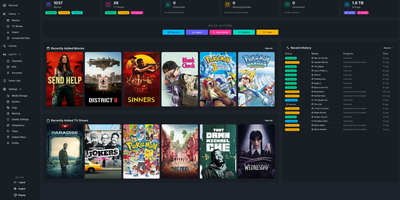
Cinephage puts your movies, series, live TV, subtitles, indexers, and download clients into one self-hosted media command center instead of a stack of separate automation services. Browse and organize libraries from a responsive interface that works on desktop and mobile, with file scanning and metadata matching keeping titles identified correctly. Search across configured indexers, compare releases with quality profiles and custom scoring rules, and send chosen downloads to your client without repeating setup for each media type. Let monitoring tasks watch for missing episodes, upgraded releases, and newly aired content, while the blocklist stops failed releases from coming back. Pull subtitles from multiple providers with language profiles, create dynamic smart lists from list sources or custom queries, and add matching titles automatically. Generate streaming links as .strm files for players such as Jellyfin, Emby, and Kodi, try live TV channels with guide data where configured, and receive library update notifications in your media server. Running on a dedicated VPS on RepoCloud with guaranteed CPU, RAM, and SSD, full root SSH access, and a browser serial console. GPL-3.0 licensed.
Romarr
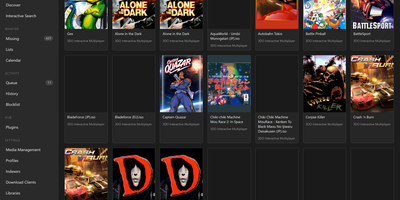
Name a game and Romarr goes and finds a copy you can prove is good. Search every indexer at once, through Prowlarr or directly, and each release comes back scored with the reasons written out: seeders, the right region, a plausible size, points off for hacks, betas, and repacks. The winner goes to whichever client speaks its protocol, from thirteen torrent daemons and eight debrid services to SABnzbd or a plain watched folder, and within a minute of finishing, the ROM itself is picked out of its archive, multi-track discs kept together as a set. Then comes the part no other library manager does: every import is checksummed against your No-Intro and Redump DATs and stamped verified, bad dump, or unknown. A verified dump is byte-for-byte the published one, a bad dump is refused unless you force it, and homebrew or translations import without ceremony as unknown. A verified copy automatically upgrades an unverified one, collections compare against a DAT to show exactly what you are missing, and duplicates are audited before anything moves. Finished games land in RomM, Gaseous, Retrom, or a simple folder, routed per platform, and your library server is told to rescan so the game appears with its art. Running on a dedicated VPS on RepoCloud with guaranteed CPU, RAM, and SSD, full root SSH access, and a browser serial console. MIT licensed.
Doca
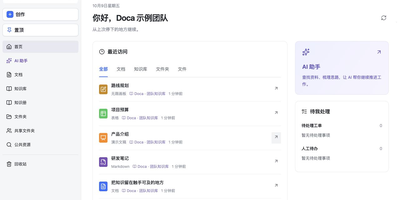
Doca puts rich text, Markdown, spreadsheets, slides, and an infinite canvas under one login and one permission model, giving individuals and small teams a self-hosted workspace for writing together. Every format supports real-time co-editing with presence, comments, saved history, and manual snapshots, and rich text and Markdown documents can be restored to an earlier version. Documents live in knowledge libraries with tree navigation, invitations, inherited permissions, share links, and trash, while personal files and shared folders sit on local disk or S3-compatible storage. Knowledge books go further: they subscribe to sources, run an editable workflow, keep source evidence, and route results through human review. A personal AI assistant, powered by whichever model you configure, searches authorized documents, reads PDF and Office attachments, edits images, and prepares browser drafts. MCP services let external AI clients such as Codex use those tools under your permissions. Sign in with a password, OIDC, Google, GitHub, WeChat, or QQ, review registrations before they go live, and send webhooks to other systems. A plugin SDK and marketplace add business modules, and a browser extension clips pages into documents. The interface ships in Chinese and English. Running on a dedicated VPS on RepoCloud with guaranteed CPU, RAM, and SSD, full root SSH access, and a browser serial console. MIT licensed.
LiveKit
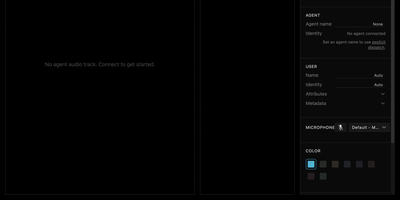
With over 20,000 GitHub stars and adoption by companies building everything from telehealth platforms to AI voice agents, LiveKit is the most widely deployed open-source real-time communication server available. The Go-based Selective Forwarding Unit handles hundreds of concurrent participants per node with adaptive bitrate streaming, simulcast layers, SVC codec support for VP9 and AV1, and end-to-end encryption. Client SDKs span JavaScript, Swift, Kotlin, Flutter, React Native, Rust, Python, Unity, and ESP32 embedded devices, while server-side APIs cover Node.js, Go, Ruby, Java, Python, Rust, PHP, and .NET. The Agents framework enables building AI-powered voice and video applications — real-time speech-to-text, LLM-driven conversations, and computer vision pipelines — running as server-side participants in any room. Egress records sessions to S3-compatible storage or streams to RTMP endpoints, while Ingress pulls external feeds from OBS via RTMP, WHIP, or SRT into LiveKit rooms. The SIP bridge connects traditional telephony to WebRTC rooms for hybrid conferencing. JWT-based authentication, webhook notifications, room-level moderation APIs, and selective subscription give operators granular control. Deploy as a single binary for development, Docker Compose for production single-node, or Kubernetes with the official Helm chart for distributed multi-region clusters using Redis for state coordination. Running on a dedicated VPS on RepoCloud with guaranteed CPU, RAM, and SSD, full root SSH access, and a browser serial console. Apache 2.0 licensed.
OneCLI
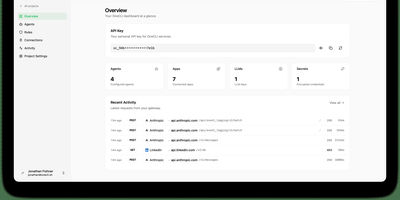
OneCLI gives every employee a sandboxed personal AI agent that works across company tools without ever seeing the real credentials it uses. Create an agent for each person, grant only the services that person may touch, and chat with it from its dashboard page or directly inside Slack channels and direct messages. The agent keeps its own filesystem, shell, memory, and skills between conversations, so follow up messages can redirect work in progress instead of starting over. Schedules wake agents at the right time to run recurring checks, reports, and follow ups without a person remembering to prompt them. When an agent calls Gmail, Salesforce, HubSpot, GitHub, Sentry, or another connected service, the gateway checks the request against team policy and injects the stored credential only for that call. Sensitive actions can pause for a deterministic human approval in chat, so sending an email, deleting a ticket, or changing a deal stage waits for your yes. Shared team connections let administrators connect a service once and grant it per agent, while memory remains readable and editable by the owner at any time. Running on a dedicated VPS on RepoCloud with guaranteed CPU, RAM, and SSD, full root SSH access, and a browser serial console. Apache 2.0 licensed.
MiBee NVR
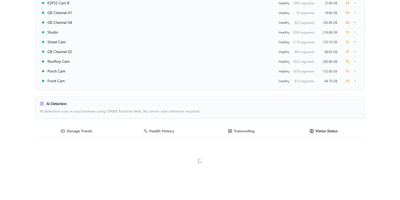
Your cameras should answer to you, not to a vendor cloud, and MiBee NVR turns an ordinary server into a complete video recorder that keeps every frame on your own disks. The surveillance grid shows all cameras live at once with per-camera health scores, while the recordings timeline marks AI-detected events so you can jump straight to the moment that matters instead of scrubbing hours of empty hallway. ONVIF cameras joining the network are discovered and enrolled automatically, and a camera that changes its IP address is relocated by serial number and reconnected without your intervention. Adaptive recording watches the compressed stream and drops calm scenes to a timelapse-grade baseline, cutting disk use by 75 to 98 percent on static views while a pre-buffer guarantees no frames are lost when motion resumes. You can push video in from remote publishers over RTMP, SRT, or WHIP, re-serve every camera as an RTSP feed, and browse the recording library from a TV through DLNA. Browser-side AI detection flags people and motion with no inference server to maintain, and Prometheus metrics with ready-made Grafana dashboards expose per-camera stream and storage health. Running on a dedicated VPS on RepoCloud with guaranteed CPU, RAM, and SSD, full root SSH access, and a browser serial console. AGPL-3.0-only licensed.

Plainpad
Notes are personal, and Plainpad keeps them that way by running entirely on your own server instead of a vendor cloud. Class notes, trip plans, lyrics, and side-project ideas sit in one fast list that searches instantly and opens in any modern browser, adapting to phones, tablets, and desktops. Added to a home screen it launches like an app, and offline editing keeps writing possible when the connection drops. Turning on encryption stores titles and content encrypted at rest, so even database access does not expose what you wrote. One installation supports unlimited accounts with administrator and user roles, and every person keeps a private notebook no one else can read. There are no note limits, no device limits, no ads, and no tracking of any kind. Moving in is scripted through the built-in REST API, which can import collections from files and other note services into the right accounts. The stack asks only for PHP and MySQL, or a single Docker Compose command, and a sample data seeder can populate a fresh install with realistic study notes for evaluation. Simplicity is the design goal: the interface stays quiet, loads quickly, and leaves the words in front. Running on a dedicated VPS on RepoCloud with guaranteed CPU, RAM, and SSD, full root SSH access, and a browser serial console. GPL 3.0 licensed.
Medusa
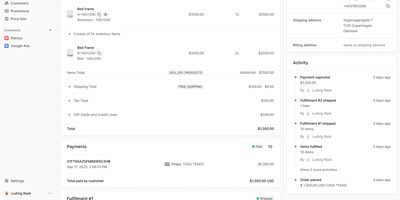
With over 35,000 GitHub stars and 460 contributors, Medusa is the headless commerce framework that gives development teams full ownership of their e-commerce backend without license fees, per-transaction charges, or revenue sharing. The modular architecture ships over 18 domain modules covering products, collections, categories, inventory, pricing, carts, orders, payments, fulfillment, promotions, customers, users, API keys, and stock locations, each independently usable and replaceable. REST and GraphQL APIs expose every commerce operation to any frontend framework — official starters exist for Next.js with community options for Nuxt, Remix, and Gatsby. The React-based admin dashboard provides out-of-the-box order management, product maintenance, promotions configuration, B2B accounts, and multi-warehouse inventory, extensible via the Admin SDK for custom views and workflows. The workflow engine orchestrates long-running commerce processes like checkout, fulfillment, and returns with compensating transactions for reliability. Over 200 official and community plugins integrate Stripe, PayPal, Klarna, Algolia, Meilisearch, SendGrid, Mailchimp, Contentful, Sanity, and Klaviyo. Native multi-region and multi-currency support handles tax-inclusive pricing, region-specific payment and fulfillment providers, and localized storefronts from a single backend. Enterprises including Viessmann, Makro PRO, and INSPIRED Pet Nutrition run Medusa in production. Self-hosting deploys via Docker or directly on Node.js with PostgreSQL and Redis. Running on a dedicated VPS on RepoCloud with guaranteed CPU, RAM, and SSD, full root SSH access, and a browser serial console. MIT licensed.
OpsKnight
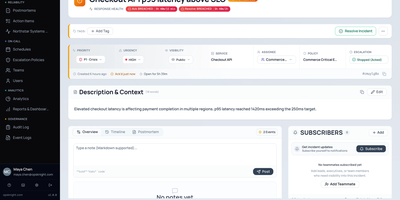
When production breaks at 3 a.m., somebody has to know it is their turn, and OpsKnight keeps that answer on your own server instead of a per-seat subscription. Alerts from Prometheus, Grafana, Datadog, Sentry, CloudWatch, and generic webhooks arrive at authenticated endpoints, get deduplicated, and are routed to the right service. On-call schedules support rotation layers, daylight saving safe handoffs, and temporary overrides, and escalation policies page users, schedules, or whole teams in timed steps. Responders get push, email, SMS, WhatsApp, and Twilio voice calls where the keypad acknowledges the page. Each incident has an ownership panel, a timeline, notes, subscribers, action items, and SLA timers, and Slack or Teams war rooms keep chat in step. The Command Center shows active, muted, and unassigned incidents at a glance, analytics report MTTA, MTTR, and SLA compliance, and a System Health Center runs live diagnostics. A public status page with uptime history, maintenance notices, and subscribers keeps customers informed, and postmortems capture what the team learned. Sign-in supports OIDC and SCIM provisioning, and an installable mobile web app brings pages to your phone. Running on a dedicated VPS on RepoCloud with guaranteed CPU, RAM, and SSD, full root SSH access, and a browser serial console. AGPL-3.0 licensed.