GeneWeb
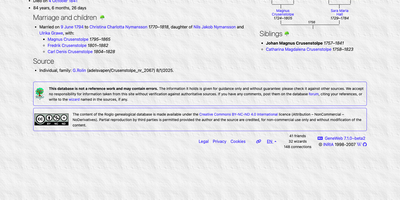
Most family trees sit inside a single desktop file that only one relative can open, but GeneWeb publishes the whole tree on the web as an interactive site the entire family can browse and grow together. One lightweight server hosts as many genealogical databases as you like, and every page is generated on demand from the data itself, so edits appear instantly without rebuilding static files. Each person page gathers births, marriages, deaths, and other events with exact dates, witnesses, notes, and sources, giving every fact in the tree a documented trail back to its evidence. Trees arrive and leave in the standard GEDCOM format or in GeneWeb's own compact format, and details that do not fit the import land safely in notes instead of being discarded. The built-in relationship calculator traces the exact link between any two people in the database, even through billions of possible paths, and its consanguinity rates reveal how closely related spouses really were. Searching follows real research habits: names match across spelling variations, women are found by their maiden names, and nobility titles appear on a chronological timeline. Privacy comes built in through password accounts: friends can view private data, wizards can edit it, and visibility rules can hide everyone born within the last hundred years automatically. Running on a dedicated VPS on RepoCloud with guaranteed CPU, RAM, and SSD, full root SSH access, and a browser serial console. GPL-2.0 licensed.
Jmal Cloud
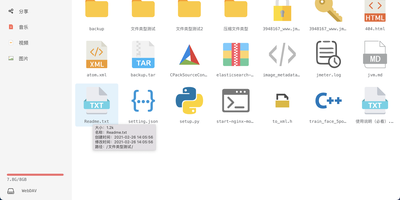
Jmal Cloud is a self-hosted private cloud drive that keeps your files on your own server, with online previews, resumable uploads, full-text search, and WebDAV access. The web manager previews photos, videos, Office documents, PDFs, EPUB books, and even CAD DWG drawings in the browser, then puts recently modified files, favorites, shared folders, and a trash bin a click away. Huge uploads resume from the exact chunk that stopped, while full-text search drills into text, PDFs, and Office documents when filenames fail you. Connect Alibaba Cloud OSS, Tencent Cloud COS, or MinIO as storage backends and browse every bucket through the same folders. Wire in a self-hosted OnlyOffice Document Server and draw.io to edit Word, Excel, and PowerPoint files and sketch flowcharts or mind maps without leaving the drive. Mount the library as a local network drive over WebDAV, share folders through links for upload and download, and push scheduled backups with the Rust jmalcloud CLI. Packages and Docker images cover Ubuntu, Debian, CentOS, Fedora, and Arch on x86_64 and ARM64, and the interface speaks English, Chinese, and Japanese. Running on a dedicated VPS on RepoCloud with guaranteed CPU, RAM, and SSD, full root SSH access, and a browser serial console. MIT licensed.
Enroute
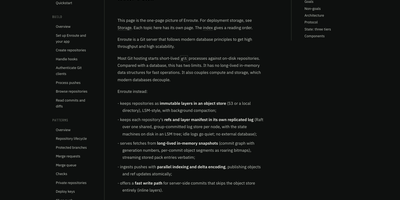
Git servers still think in folders on one machine's disk, and Enroute is the Git server rebuilt like a modern database: your repositories live as immutable layers in object storage, served by compute nodes you can add or replace at will. Point any Git client at it and push; the push creates the repository, gets indexed and validated without locks, and commits once its entry is replicated across the ledger nodes' disks, which is how a single repository absorbs thousands of pushes per second. Clones and fetches always read one consistent snapshot, so readers never block writers, and background layer merging replaces the git repack jobs you used to schedule. The programmable part is hooks: your own code decides who can read or write, which branches a client may see, whether a ref update is allowed, and what happens after a push, from running CI to mirroring elsewhere. A rich gRPC API lets applications create, inspect, and manage repositories programmatically, so you can build your own code-hosting product on top instead of forking a monolith. Start as one node with a local directory, then separate compute from ledger nodes and replicate across three machines without pushing a repository again. Running on a dedicated VPS on RepoCloud with guaranteed CPU, RAM, and SSD, full root SSH access, and a browser serial console. Apache-2.0 licensed.
Domain Watchdog
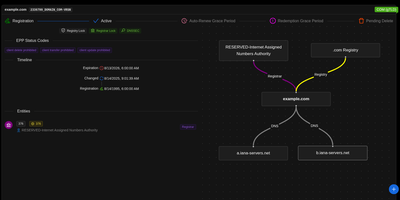
When the domain you want is already taken, Domain Watchdog tracks its history, warns you as it changes, and can try to register it as soon as it becomes available. Searching any domain returns its registrar, status, nameservers, and registration events from RDAP, the structured JSON successor to WHOIS. A timeline lays out the full lifecycle, from creation through renewals and transfers to final deletion, while deletion forecasting orders tracked domains by their expected drop window. Watchlists group domains with the events that matter, send alerts by email or as webhooks to Slack, Mattermost, or Discord, and publish an iCal feed plus RSS feeds for events and EPP status. Attach a connector for OVH, Gandi, Namecheap, AutoDNS, or Name.com, and an expired domain on the watchlist triggers an order attempt through that provider's API. The app also lists ICANN-accredited registrars and TLDs, and rate limiting with caching minimizes RDAP requests. Administrators can cap watchlists, domains per watchlist, and webhooks per watchlist, toggle public RDAP lookups, and add custom static content to the instance. Scripts can manage watchlists and connectors, search domains, and request user tokens through the documented REST API. Running on a dedicated VPS on RepoCloud with guaranteed CPU, RAM, and SSD, full root SSH access, and a browser serial console. AGPL-3.0 licensed.

Haben
For German freelancers, tradespeople, and small companies that want bookkeeping without a subscription, Haben runs the full path from receipt to tax office on your own server. Invoices carry live previews, item catalogs, and reusable text blocks, and every invoice can be finalized as a ZUGFeRD or XRechnung e-invoice carrying the required German invoice details. Receipts arrive by drag and drop, phone camera, or email, and optional AI extraction reads amounts and dates before you categorize and post them. Bank reconciliation imports statements through PSD2 connections or CAMT.053 files from banks and payment services, then proposes matches with reasons you can accept or correct. Underneath sits double-entry bookkeeping on SKR03 or SKR04 charts, with a journal, account sheets, and DATEV exports your tax adviser already understands. VAT advance returns draw their figures straight from postings and travel to ELSTER directly through ERiC or through Mein ELSTER, and annual filings cover VAT returns, Anlage EÜR, and income tax. Quotes convert to invoices in one action, dunning follows open items, and filing deadlines arrive as calendar feeds and email reminders. Reports show EÜR results, open items, and monthly trends, and the year-end archive exports as a checksummed ZIP. Running on a dedicated VPS on RepoCloud with guaranteed CPU, RAM, and SSD, full root SSH access, and a browser serial console. AGPL-3.0 licensed.
Haloy
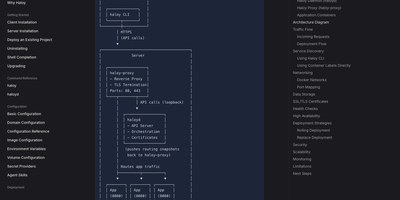
Haloy turns any ordinary Linux VPS into a production-ready application platform, so a single affordable server can run your web apps with zero-downtime deploys, automatic HTTPS, and instant rollbacks. Setup takes minutes: an install script places the daemon and proxy on your server, you point an API domain at it, and the haloy CLI connects from your machine with a token. Each app is described by one small haloy.yaml that names the app, its server, its domains and aliases, its port, and a health check path; give the project a Dockerfile and Haloy builds the image and ships it to the server for you. Deployments roll out container by container: new replicas start, pass health checks, receive traffic, and only then do the old ones stop, so users never notice an outage. Every deployment is recorded, and one command rolls the app back when a release misbehaves. The built-in proxy terminates TLS on ports 80 and 443, requests and renews Let's Encrypt certificates automatically, redirects plain HTTP to HTTPS, and routes each domain to the right containers. Preview environments give each change its own live URL, so a branch can be reviewed in the browser before it reaches production. Tag any manually started Docker container with Haloy labels and the daemon discovers it, routes traffic to it, and manages its certificate. Running on a dedicated VPS on RepoCloud with guaranteed CPU, RAM, and SSD, full root SSH access, and a browser serial console. MIT licensed.
Dikasir
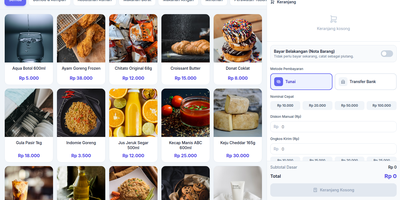
Checkout counter, stockroom, and bookkeeping share one screen in Dikasir, a self-hosted cashier system. Search products by keyword or barcode. Hold and resume carts. Apply promo rules and take cash, bank transfer, Midtrans, Xendit, or pay-later notes. Offline mode queues sales until the connection returns, and thermal receipts print over WebUSB. Stock is tracked per warehouse with stock opname, branch transfers, batch and expiry dates, composite kits, and reorder suggestions. Purchase orders flow into goods receiving and supplier returns. Payables and receivables show aging and partial payments. Customer tiers, loyalty points, vouchers, segments, and campaigns drive repeat sales, and a WhatsApp gateway sends reminders and promotions automatically. Dashboards break sales and profit down by hour, day, and cashier. Invoices export as PDF or Excel. Role-based permissions, cashier shifts with cash closing, discount approvals, and an audit log with before and after snapshots keep staff accountable. Running on a dedicated VPS on RepoCloud with guaranteed CPU, RAM, and SSD, full root SSH access, and a browser serial console. AGPL-3.0 licensed.
Borg Backup Server
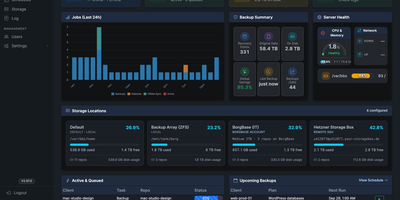
Every connection starts at the endpoint, never at the server, so Borg Backup Server can back up Linux, Mac, and Windows machines behind NAT and firewalls without opening a single inbound port. A lightweight agent on each machine polls for tasks over HTTPS, pushes deduplicated archives over SSH, and reports live progress. Append-only SSH access means an endpoint can add and restore archives but never prune or delete them. The dashboard shows backup charts, server stats, and active jobs at a glance. Plans run from hourly to monthly, several per client, built from reusable directory templates for common server roles, with per-plan retention from hourly to yearly. Lost a file? Browse the archive tree in your browser, tick what you need, and restore it to the client or download a .tar.gz. MySQL and PostgreSQL dumps run before each backup and restore as a copy or a replacement. Repositories can live on the server, on BorgBase, Hetzner, or rsync.net, and mirror to S3-compatible storage such as AWS, Wasabi, or Backblaze B2. Apprise alerts reach more than 100 services, and a nightly report lands in your inbox. Two-factor login and role-based access guard the console. Upgrades roll out to the server and every agent together, and the server backs itself up daily. Running on a dedicated VPS on RepoCloud with guaranteed CPU, RAM, and SSD, full root SSH access, and a browser serial console. MIT licensed.

BrainrotGuard
BrainRotGuard puts a parent between YouTube's recommendation engine and your kid: children search freely, but nothing plays until you tap Approve in Telegram. The request that lands on your phone carries the thumbnail, title, channel, and duration, and one tap either starts the video on the child's tablet instantly or denies it for good. Channels you trust can be allowlisted as educational or entertainment so their new uploads arrive pre-approved, while blocked channels and title word filters stop repeat offenders automatically. Each child gets a profile with its own PIN, watch history, and time budgets, and educational and entertainment content can draw from separate daily limits. Scheduled windows keep the app closed during school hours or after bedtime, with different rules per weekday and bonus minutes grantable for today only. Approved videos stay in a library the child can rewatch without asking again, a dedicated Shorts row can be shown or switched off entirely, and a search-off mode limits younger kids to channels and videos you already approved. You see all of it from the parent side: pending queues, search history, and an activity log of what was watched and for how long. Running on a dedicated VPS on RepoCloud with guaranteed CPU, RAM, and SSD, full root SSH access, and a browser serial console. MIT licensed.
Mira
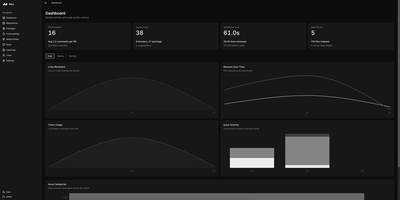
The fastest tool on the public Martian Code Review Bench at 77 seconds per PR with competitive F1 scores — while every higher-scoring competitor takes 5 to 14 times longer — Mira is the fully open-source AI code reviewer that ships the entire feature surface other tools gate behind per-seat subscriptions: indexed PR reviews with full-repo context, streaming walkthroughs posted within seconds, inline vulnerability scanning from hourly OSV.dev polls, org-wide package inventory answering "which repos use [email protected]?" in one query, interactive dependency graphs with blast-radius SVG rendering via ReactFlow, a learning loop that synthesizes rules from rejected comments and human review patterns on merged PRs, and cost telemetry showing actual spend per repo and per model. Unlike CodeRabbit, Greptile, and GitHub Copilot code review which are SaaS-only with per-seat pricing, Mira runs as a single Docker image on your infrastructure with your LLM key through OpenRouter (fronting Anthropic, OpenAI, Google Gemini, DeepSeek) or direct to Ollama and vLLM for fully air-gapped deployments. The engine indexes Python, TypeScript, Go, Rust, Java, C/C++, C#, Swift, Kotlin, Scala, and PHP with per-file symbol extraction, enabling multi-file reasoning across diffs rather than isolated line-by-line review. Integrates with GitHub, GitLab, and Forgejo via webhook with full feature parity. Running on a dedicated VPS on RepoCloud with guaranteed CPU, RAM, and SSD, full root SSH access, and a browser serial console. Apache 2.0 licensed.
Shelfarr
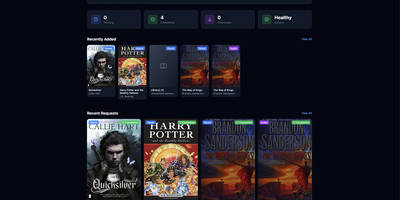
Shelfarr is the request button your book library was missing: anyone in your household can search millions of ebooks and audiobooks, request the format they want, and let automation fetch and shelve it. Discovery searches Open Library, Hardcover, and Google Books with covers, series, editions, and narrator details, so picking between the ebook and the audiobook takes a glance. Hardcover shelves and public reading lists can be previewed and requested, and following an author means their next release surfaces without a manual search. Requests wait for an admin's approval or move straight to searching, where your indexers are queried and every result is scored against your preferred formats, bitrate, and language. The winning release goes to the download client you route it to; finished files are renamed with your templates and delivered into your library's watched folders, which are told to rescan. Nothing found is not the end: searches retry with back-off and flag the request for attention instead of losing it. Family members get their own accounts with roles, two-factor authentication or single sign-on, notifications in the app or on Discord and Telegram, and admins keep manual uploads, API tokens, and download routing under their control. Running on a dedicated VPS on RepoCloud with guaranteed CPU, RAM, and SSD, full root SSH access, and a browser serial console. GPL-3.0 licensed.

SyncTube
SyncTube turns any browser into a shared movie room where one link opens a synchronized player and live chat for the whole group. Paste a YouTube, Twitch, Vimeo, or PeerTube URL, or a direct mp4 or m3u8 link, and the room watches the same frame at the same moment. A leader takes global control of play, pause, seeking, and playback rate, and smaller groups can open pausing or resuming to everyone. Local files start playing for the room while they upload, and external subtitle files plus separate audio tracks cover voiceovers and fan translations. Chat doubles as a remote control: timed commands jump the whole room forward or back, skip a sponsored segment, boost quiet audio, or return to the moment before an accidental rewind. Playlists accept ranged link patterns for episode batches, viewers vote to skip, and keyboard shortcuts drive fullscreen, refresh, and sync toggles without leaving the player. Operators can cache supported site videos on the server, restyle every front-end file, and extend subtitle rendering or quality switching through plugins. Admins moderate with bans and kicks from chat, and the whole service runs from one small server that fits a private friends-only room or a public community channel. Running on a dedicated VPS on RepoCloud with guaranteed CPU, RAM, and SSD, full root SSH access, and a browser serial console. MIT licensed.
House Planner
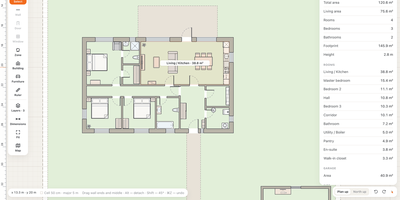
House Planner holds the design of your house in one browser workspace, from true-scale floor plans drawn over a satellite photo of your plot to costed wiring, plumbing, sewer, and heating layouts. Draw walls at true scale in millimetres with thickness and materials, add doors, windows, garage gates, and furniture with true dimensions, and watch room areas and plot coverage total as you work. Flip into 3D for a massing model or the house finished with material textures and facade colours, with cut-down walls for reading the layout from above. Every utility network gets an engineering layer: route sewer lines to a septic tank with slopes and cleanouts, auto-route electrical circuits with breaker and voltage-drop checks, and run water piping from well and boiler to each fixture. Underfloor heating loops lay out room by room, split before 80 metres, and balance flow against heat loss. The bill of materials computes quantities from the plan and networks, producing a priced estimate you can print, tick off as you buy, or export to CSV. Every save is a numbered version with restorable snapshots, tabs cannot overwrite each other, and the JSON plan can be edited by an AI assistant through the same API. One password guards the project, phones get a read-only view for on-site checks, and the whole thing runs in one Docker container with no database. Running on a dedicated VPS on RepoCloud with guaranteed CPU, RAM, and SSD, full root SSH access, and a browser serial console. MIT licensed.
Libre-Closet
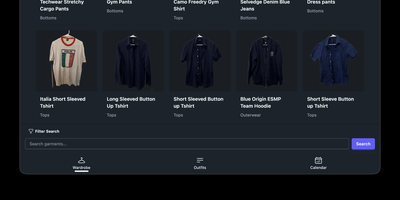
Your closet, cataloged like an inventory system instead of a pile you rummage through every morning. Photograph each garment once and record its name, category, brand, size, colors, washing details, and acquisition date, then filter the whole wardrobe by custom categories you define yourself, with type-ahead suggestions keeping entries consistent. Uploads get automatic background removal and WebP optimization, so every item sits on a clean backdrop that makes outfits easy to judge side by side. The outfit builder combines garments into saved looks, and the scheduling calendar lays those looks across the week while showing what you have already worn, so repeats and neglected favorites become obvious. A weather forecast rides along on each calendar day, and tapping a day opens the detail you need before dressing for an important date. Wardrobes can be shared through invite links with view-only or can-edit permissions, which suits couples, families, and stylists managing client closets. The interface installs to a phone home screen as a PWA and keeps working offline, with the UI available in seven languages. Run it wide open for personal use or switch on JWT accounts for a multi-user household, all from one container with SQLite on local disk. Running on a dedicated VPS on RepoCloud with guaranteed CPU, RAM, and SSD, full root SSH access, and a browser serial console. AGPL-3.0 licensed.
EDDI
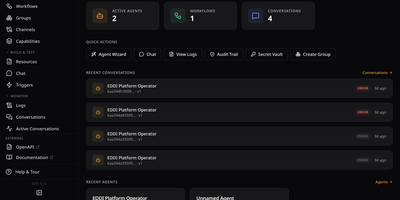
Deploy autonomous conversational AI agents and coordinate complex multi-agent workflows through EDDI, an open-source orchestration middleware that turns declarative configuration files into secure, production-grade enterprise assistants. Engineering teams connect AI models from twelve different commercial and local providers, using bilateral Model Context Protocol tools to let external desktop clients and coding assistants interact directly with running conversational services. Autonomous agents collaborate through structured group interaction patterns including round table discussions, peer reviews, Delphi consensus rounds, and devil's advocate debates to refine generated solutions before delivery. Declarative workflow extensions automate external REST API calls with dynamic request templating, extracting structured properties into persistent conversation memory and chaining multi-step service interactions without custom script glue. Built-in secret vaults safely manage sensitive API credentials, while the centralized web dashboard provides live conversation inspection, token quota enforcement, and comprehensive audit logging for regulatory compliance. Running on a dedicated VPS on RepoCloud with guaranteed CPU, RAM, and SSD, full root SSH access, and a browser serial console. Apache 2.0 licensed.
Cotal
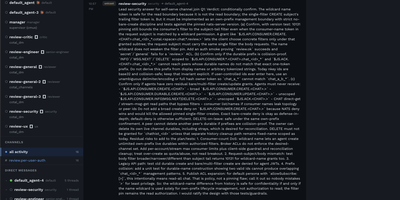
Cotal puts your AI agents in one shared room: Claude Code, Codex, and OpenCode discover each other, message channels, hand off work, and ask you to approve the result. Post to a channel and every subscriber hears it; message one peer and the durable inbox holds it until they are free; address a role like reviewer and one available reviewer claims the job. Presence shows who is actually there, and attention modes decide which channel traffic may interrupt an agent mid-task. A manager starts and stops agent processes in tmux or cmux, here or on remote hosts you authorize, without sitting between their messages. For work that waits and branches, Cotal Lang programs launch agents, pause at human checkpoints with deadlines, and resume from their recorded steps after an interruption. Services join the same space by publishing command contracts that authorized agents can discover and invoke; the bundled Linear adapter shows the pattern. Supervise from a terminal console with the live roster and activity feed, or from the read-only browser dashboard and its graph of agents and channels. Spaces stay separate, every message carries a checked identity, and per-agent grants decide who may delegate, spawn teammates, or call a service. Running on a dedicated VPS on RepoCloud with guaranteed CPU, RAM, and SSD, full root SSH access, and a browser serial console. Apache-2.0 licensed.
PayMe
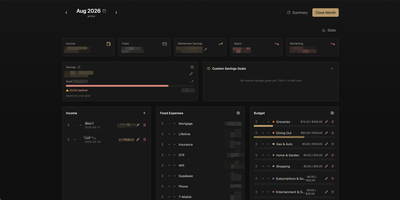
PayMe is a privacy-first personal finance dashboard that runs entirely on your own hardware with zero third-party service dependencies. The Rust backend compiled to a single binary serves a React 19 frontend built with Vite, TypeScript, and Tailwind CSS 4, storing all financial data in a local SQLite database that auto-migrates on startup. Monthly dashboards track income entries, fixed expenses like mortgage and utilities, and budget categories with real-time progress bars showing spending against configurable limits. The savings module includes goal tracking with percentage-based progress indicators, custom savings goals for targeted objectives, retirement savings projections with breakdown analysis, and projected savings calculations. Variance analysis compares actual spending against budgets across categories. Drag-and-drop reordering powered by dnd-kit lets you arrange income sources, expenses, and budget items to match your workflow. The interactive charts rendered by Recharts visualize spending trends, income patterns, and savings trajectories. Month-by-month navigation tracks financial history over time, while the Summary and Stats views aggregate data across periods. JWT-based authentication secures access, and the full OpenAPI Swagger documentation at the /swagger-ui endpoint exposes every API route for automation and integration. Docker Compose deployment creates a minimal image with the compiled Rust binary and static frontend assets, running on port 3001 behind nginx, Caddy, or Traefik reverse proxy with HTTPS. On RepoCloud, deploy PayMe on a dedicated VPS with persistent SQLite storage, root SSH access, and complete privacy over your household financial data, all under the MIT license.
Astrum Repository
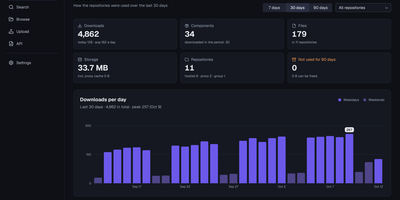
One server can hold every package your builds pull, publish, and cache, so the team stops juggling a different registry for every language. Astrum Repository hosts your own artifacts, proxies public registries so builds keep working when an upstream is down, and groups both behind a single address your tools already understand. Thirty-nine formats share that address: Docker and OCI images, Maven, npm, PyPI, Cargo, Go modules, Helm charts, NuGet, Terraform modules, APT and Yum packages, Hugging Face models, browser extensions, Git LFS, and even remote caches for Nx and Turborepo. Blob storage grows with you, moving between disk, S3, and agent-connected stores that combine into groups without relocating data. Access stays deliberate through users, roles, privileges, and content selectors, with LDAP and OpenID Connect sign-in and access tokens minted for CI pipelines. Day-to-day operations are visible rather than guessed: health endpoints, Prometheus metrics, scheduled tasks, cleanup policies, audit trails, and backups are built in, and several servers can share one database when a single node is no longer enough. The web interface speaks twelve languages, so a platform team spread across regions still works in one console. Running on a dedicated VPS on RepoCloud with guaranteed CPU, RAM, and SSD, full root SSH access, and a browser serial console. MIT licensed.