NutriTrace
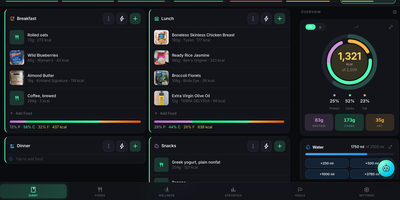
Stop handing your daily food diary, body weight history, and biometric sleep data to ad-funded fitness clouds: NutriTrace brings complete calorie, macro, micronutrient, and wellness tracking to your own server with an offline-capable web PWA and native Android app. Log meals across customizable slots using live Open Food Facts and USDA FoodData Central lookups, barcode scanning, AI nutrition label OCR, or direct recipe imports from Mealie and CookTrace. Calorie and macro targets adjust automatically through three goal engines, including an inspectable Adaptive TDEE algorithm that regresses 35 days of intake against scale weight at 7,700 kcal per kilogram. Connect Fitbit via Google Health, Garmin, Withings, and Android Health Connect to pull steps, heart rate variability, sleep stages, and body composition into unified Sleep, Readiness, and Resilience scores. An integrated Trace AI assistant and Smart Log let you log meals by voice, text, or meal photo, while the opt-in Model Context Protocol server exposes 20 read, write, and management tools to Claude Desktop, Cursor, and Codex. Multi-user households get OpenID Connect SSO and one-step migration from MyFitnessPal, Cronometer, Lose It, and Waistline. Running on a dedicated VPS on RepoCloud with guaranteed CPU, RAM, and SSD, full root SSH access, and a browser serial console. AGPL-3.0 licensed.
Cotal
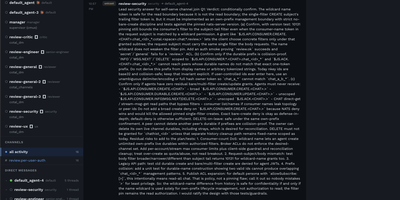
Cotal puts your AI agents in one shared room: Claude Code, Codex, and OpenCode discover each other, message channels, hand off work, and ask you to approve the result. Post to a channel and every subscriber hears it; message one peer and the durable inbox holds it until they are free; address a role like reviewer and one available reviewer claims the job. Presence shows who is actually there, and attention modes decide which channel traffic may interrupt an agent mid-task. A manager starts and stops agent processes in tmux or cmux, here or on remote hosts you authorize, without sitting between their messages. For work that waits and branches, Cotal Lang programs launch agents, pause at human checkpoints with deadlines, and resume from their recorded steps after an interruption. Services join the same space by publishing command contracts that authorized agents can discover and invoke; the bundled Linear adapter shows the pattern. Supervise from a terminal console with the live roster and activity feed, or from the read-only browser dashboard and its graph of agents and channels. Spaces stay separate, every message carries a checked identity, and per-agent grants decide who may delegate, spawn teammates, or call a service. Running on a dedicated VPS on RepoCloud with guaranteed CPU, RAM, and SSD, full root SSH access, and a browser serial console. Apache-2.0 licensed.
Trading Journal AI
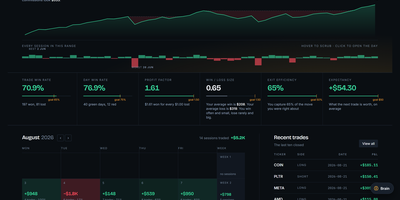
Most traders know their balance and almost nothing else, because the patterns that actually cost money hide across hundreds of individual fills. Trading Journal AI rebuilds your round-trip trades from a broker CSV, grouping partial fills, scale-ins and shorts automatically, then tracks win rate, profit factor, expectancy, drawdown, MFE, MAE and exit efficiency for every account. Thinkorswim and Interactive Brokers import directly, seven more brokers including Tradovate, NinjaTrader, Webull and tastytrade are in beta, and a generic template covers any other broker's export. The Leak Finder ranks groups of trades that share something you knew at entry, an entry window, a weekday, a size habit, an emotion from your diary, and shows which of them quietly drain the account, with confidence scored against the rest of your history. Exit Lab replays your completed stock trades on one-minute prices and compares your actual exits against 1R and 2R targets, breakeven rules, trailing stops and VWAP or EMA exits, in R and in dollars. If you add an Anthropic key, Claude reads your trading diary and grades each day on process rather than outcome; without one, every number still works, because the statistics are plain code and never AI. Four interface themes, one SQLite file, no account and no telemetry complete the picture. Running on a dedicated VPS on RepoCloud with guaranteed CPU, RAM, and SSD, full root SSH access, and a browser serial console. MIT licensed.
Agenticos
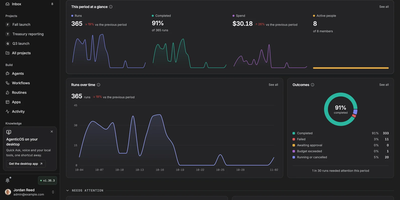
Give each team an AI teammate that works where the team already works: AgenticOS lets colleagues and agents share one live chat and the same project files, so an agent can answer in the thread, apply a correction from a reply, and show its work as it writes. You build an agent in the browser by writing its instructions, picking a model, and switching on tools, then publish it to web chat, Slack, Teams, Discord, Mattermost, Telegram, a website widget, or an API. Agents analyze spreadsheets, run code in a sandbox, browse the web in a browser you can watch and take over, and hand programming work to Claude Code or Codex. Company knowledge comes from uploaded documents and synced drives, searched with cited answers, while reusable skills teach agents how your team writes reports, reviews code, or researches a market. Agents can draw charts and diagrams in chat and publish dashboards as apps with stable links your team opens anywhere. Administrators set roles and department groups, cap each agent's monthly budget, require approval for sensitive tools, and read a recorded run history with costs. Running on a dedicated VPS on RepoCloud with guaranteed CPU, RAM, and SSD, full root SSH access, and a browser serial console. Apache-2.0 licensed.
Torollo
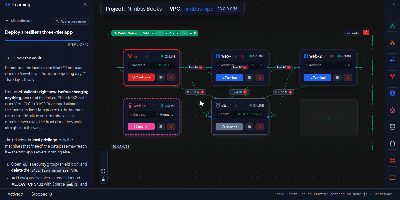
Torollo is a hands-on backend engineering lab where the architecture you draw becomes real infrastructure, so a load balancer on the canvas is an actual Nginx container and a firewall rule you sketch is enforced by iptables. Place Ubuntu servers, PostgreSQL, MongoDB, Redis, and RabbitMQ nodes, wire them into VPCs and subnets, then watch the traffic simulator send requests through the topology you built. Guided roadmaps walk you from a single web server to a resilient three-tier application, a cache-aside Redis design, and a worker queue, grading every step against the live system instead of your intentions. Validators probe container status, SQL schemas, Redis keys, network reachability, and HTTP responses, and a failed check explains exactly what was expected versus what your containers actually did. Built-in explorers let you run SQL against Postgres, query MongoDB collections, and issue Redis commands, while browser terminals give you a shell inside any node. Roadmaps are plain JSON files you can import or author yourself, progress is tracked per step with hints and solutions, and the whole catalogue is available in English and French. Running on a dedicated VPS on RepoCloud with guaranteed CPU, RAM, and SSD, full root SSH access, and a browser serial console. MIT licensed.
OneGlanse
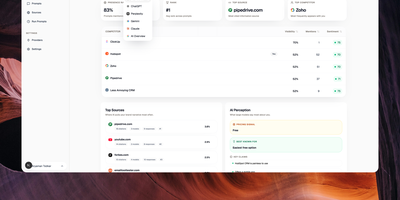
OneGlanse tracks how ChatGPT, Perplexity, Gemini, Claude, and Google AI Overview mention, rank, and recommend your brand, using the same product interfaces your customers actually see. You add your brand, competitors, and the questions buyers ask, then start prompt runs against one AI product or all five in a single pass. Every run stores the complete answer text together with the citations and source domains the answer relied on, so you can open any response later and read exactly what was said. A model you connect with your own OpenAI or Anthropic key reads each saved answer and records mentions, ranking position, sentiment, and recommendation strength. The dashboard rolls those readings up into presence rate, average rank, top source, and top competitor views that update as new runs land. Competitor tables show which rival brands appear beside you, how often they show up, and how their sentiment compares across providers. Source reports rank the publishers and pages that AI answers cite most, down to citation share per domain. Perception panels collect the claims, pricing language, and strengths that answers repeat about your brand. Self-hosted deployments schedule recurring runs, transfer your signed-in provider sessions to the server, and keep prompts, answers, and scores in your own database. Running on a dedicated VPS on RepoCloud with guaranteed CPU, RAM, and SSD, full root SSH access, and a browser serial console. MIT licensed.
plMail
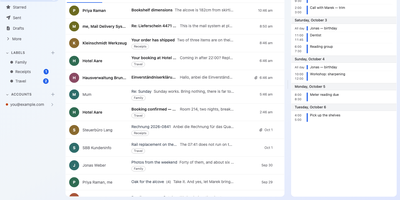
Gmail, Outlook, and every IMAP mailbox you own share one inbox, one search box, and one calendar in plMail, a mail client you host yourself. Accounts sit side by side with sending aliases, and new mail arrives on its own through IMAP IDLE, Gmail and Outlook push, and browser notifications. Credentials are encrypted before storage. Search understands from:, subject:, label:, has:, and before:, completes as you type, and highlights matched words. Filters are nested any, all, or none trees, and each shows how many real messages match before you save it. Drag several conversations at once onto folders, labels, or inbox tabs; a label adds itself without removing the mail from your inbox. A calendar sits beside the mail, with two-way sync for Google, Microsoft, and CalDAV. Move events on the week grid, answer invitations in place, and send share and booking links. An optional language model, pointed at your own Ollama server or any OpenAI-compatible endpoint, searches by meaning, drafts replies, summarizes threads, and sorts mail into tabs once you switch it on. Attach files from and save them to Drive, OneDrive, Dropbox, Nextcloud, Immich, and Paperless-ngx. Sign in through Authentik, Keycloak, or any OpenID Connect provider, and pick from 41 themes. Android and iOS apps connect to your own server. Running on a dedicated VPS on RepoCloud with guaranteed CPU, RAM, and SSD, full root SSH access, and a browser serial console. AGPL-3.0 licensed.
Rustunnel
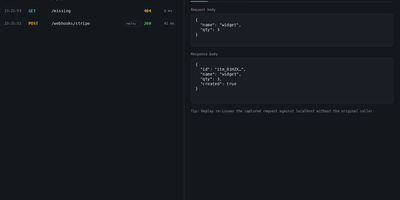
Rustunnel turns a service running on your laptop or private network into a public HTTPS, TCP, or UDP endpoint without opening inbound ports on the machine where it lives. Point the client at a local port and share the public address for webhook testing, a quick demo, an AI agent tool, SSH access, a game server, or an IoT device that cannot accept inbound connections. Give tunnels custom subdomains on your own wildcard domain, terminate HTTPS with automatic Let's Encrypt certificates, and keep client traffic encrypted from edge to local service. Put several backends behind one subdomain or TCP port and let TCP or HTTP health probes remove sick members before visitors hit them. When two peers can reach each other directly, start a P2P tunnel with NAT hole punching and QUIC, with relay fallback when the direct path fails. Watch sessions, tunnel health, traffic, and request logs from the live dashboard, inspect headers and bodies in the local request inspector, and replay a captured call while debugging a webhook. Manage tunnels, tokens, groups, captured requests, and history through the REST API, scrape Prometheus metrics, review audit logs, or let an MCP-compatible coding assistant create and close tunnels in plain language. Running on a dedicated VPS on RepoCloud with guaranteed CPU, RAM, and SSD, full root SSH access, and a browser serial console. AGPL-3.0 licensed.
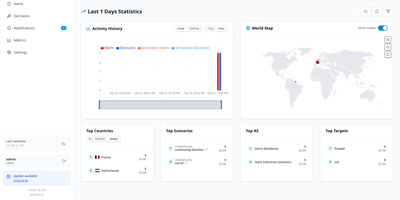
CrowdSec Web UI
CrowdSec Web UI provides a centralized web console for monitoring intrusion detection telemetry, managing firewall remediation decisions, and auditing security events across multiple CrowdSec security engines. Administrators can connect several CrowdSec Local API endpoints simultaneously, aggregating threat intelligence and active bans into a unified visual interface. The dashboard displays geographic origins of attacking IP addresses, active remediation durations, and specific scenario triggers such as brute-force authentication attacks or web vulnerability probes. Operators can search through historical alert logs, inspect raw HTTP request details, and drill down into individual IP behaviors to differentiate authentic threats from false positives. Manual intervention tools let security teams enforce custom IP bans, adjust expiration timers, or immediately revoke erroneous bans across all connected bouncers with a single click. Integrated notification pipelines dispatch real-time security alerts to external destinations including ntfy, Gotify, and MQTT message brokers whenever critical thresholds are breached. Built-in Prometheus metrics dashboards visualize processing latencies, parser throughput, and decision counts over customizable time windows. Running on a dedicated VPS on RepoCloud with guaranteed CPU, RAM, and SSD, full root SSH access, and a browser serial console. AGPL-3.0 licensed.
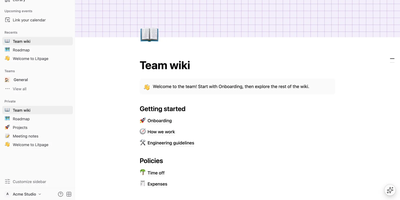
Litpage
A project brief and the task board tracking it belong together, and Litpage keeps pages, databases, and team discussion in one self-hosted workspace instead of scattering them across subscriptions. Write in a block editor with 41 block types, a slash menu, markdown shortcuts, drag and drop, mentions, equations, and highlighted code blocks. The same data becomes a table, board, list, gallery, calendar, timeline, chart, dashboard, feed, form, or map, with typed fields, formulas, relations, and rollups underneath. Automations and buttons turn those databases into working tools, while templates keep repeated projects consistent. Teammates edit together live, comment, suggest edits, and revisit version history, with page-level and field-level permissions deciding who sees what. Pages can be shared publicly or published as sites, and Markdown, CSV, HTML, Word, and PDF files import into the tree. Optional AI runs on the provider and key you configure: chat that searches your workspace, custom agents on schedules or triggers, writing help, database autofill, and meeting-note summaries. Administrators get member and guest management, security policies, an audit log, analytics, passkeys, and two-step verification. A REST API with personal tokens, webhooks, and an MCP endpoint open everything to your other tools. Running on a dedicated VPS on RepoCloud with guaranteed CPU, RAM, and SSD, full root SSH access, and a browser serial console. MIT licensed.
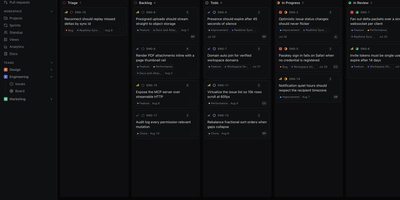
Orbit
Orbit puts your team's tasks, documents, and conversations in one workspace on your own server, so planning work no longer means checking three separate apps. Task projects carry your own workflow: switch between list, board, and timeline layouts, drag work between statuses, break large efforts into sub-issues, and link related tasks with an activity feed recording every change. Saved views keep preferred filters one click away, and personal pages like My tasks, This week, and Overdue show what needs attention today. Documents live in a page tree with teamspaces and favorites; the rich editor supports tables, code blocks, and checklists, several people can write at once with visible cursors, version history keeps earlier drafts recoverable, and a Notion importer brings existing pages across. Chat sits beside the work rather than in a separate silo: channels, direct messages, threads, files, reactions, and search, with links to tasks and pages unfolding into previews inside the conversation. GitHub sync turns labeled issues and pull requests into tasks and completes them when pull requests merge. AI clients connect through a built-in MCP server with OAuth, so an assistant can read your projects with the full context of your workspace while the data never leaves your server. Administrators manage workspaces, members, roles, API tokens, audit logs, and scheduled backups to S3 from the same interface. Running on a dedicated VPS on RepoCloud with guaranteed CPU, RAM, and SSD, full root SSH access, and a browser serial console. Apache-2.0 licensed.
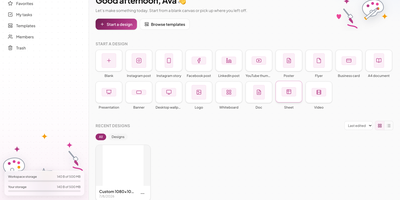
HyCanvas
HyCanvas folds graphics, presentations, videos, whiteboards, documents, and spreadsheets into one self-hosted browser editor, covering work that usually takes several separate design subscriptions. Start from one of 140 templates across social, print, events, business, and presentations, or import a PowerPoint file and keep editing it. The canvas carries shapes, frames, tables, nine chart types, QR codes, image filters, crop and masks, background removal, and Magic Resize for one-click reformatting. Video projects get a multi-track timeline with trims, transitions, keyframes, styled captions, green-screen keying, and screen or webcam recording. Whiteboards add sticky notes, connectors, a shared timer, and dot voting, and a finished board converts straight into a slide deck. Teammates co-edit in realtime with presence cursors, comments with mentions, version history, and approvals, while share links open view-only, comment, or edit access. Brand kits hold your colors, fonts, and logos, and a brand lock warns or blocks off-brand edits before they ship. Connect your own AI provider key to generate decks, documents, images, and charts from a prompt, then export PNG, JPG, PDF, SVG, PPTX, MP4, or GIF with no watermark. Running on a dedicated VPS on RepoCloud with guaranteed CPU, RAM, and SSD, full root SSH access, and a browser serial console. AGPL-3.0 licensed.
taOS
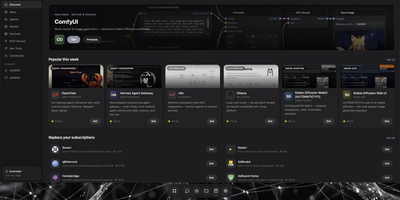
taOS is a self-hosted operating system for AI agents that lives on hardware you already own, offline by default and cloud only when you invite it. Open one URL and a full web desktop appears: floating windows, a dock, launchpad, widgets, notifications, and 43 bundled apps, from mail and kanban projects to an app store with over a hundred one-click installs. Agents deploy through a guided wizard into isolated containers (LXC on bare metal, Docker on a VPS), each with its own memory store, files, secrets, and network identity. taOS owns the agent lifecycle outside the framework, so you can swap SmolAgents for LangChain or OpenClaw and the agent keeps its history, channels, trained adapters, and API keys untouched. Long-term memory is a temporal knowledge graph with hybrid search on your disk, not a row in a vendor database, and the messages app works like a private Discord that also installs as a phone PWA. Local inference spans Apple Silicon, NVIDIA, AMD, Rockchip NPUs, Raspberry Pi boards, and salvaged Android phones, with auto-clustering that pools idle machines into one compute fabric. Messaging connectors cover Telegram, Discord, Slack, Matrix, email, and webhooks, and a rollback command returns the system to a known-good state when an experiment misbehaves. Running on a dedicated VPS on RepoCloud with guaranteed CPU, RAM, and SSD, full root SSH access, and a browser serial console. AGPL-3.0 licensed.
Newspipe
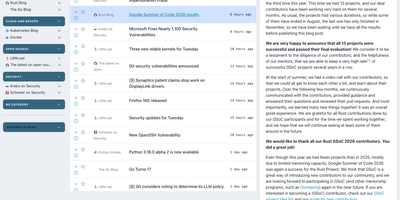
Newspipe gives a team or a household its own feed reader that nobody can shut down. Subscribe to any RSS or Atom source, sort feeds into categories, and read articles in a three-column view with the list in the middle and the full text on the right. Tabs filter unread, read, liked, and read-later items, stars mark favorites, and search finds anything already stored. Notes can be attached to any article and reviewed on a dedicated page. A history page charts how many articles arrived each year, and the inactive feed report flags sources that went quiet. Bookmarks have their own manager with a Pinboard importer and public listings. A single instance serves many users, and administrators create accounts and trigger fetches from an admin area. Feeds import and export as OPML, whole accounts move as JSON, and an API lets scripts manage subscriptions or plug in a custom crawler. The interface speaks English, French, and German, switches between light and dark themes, and can authenticate against LDAP. A scheduled command fetches new articles automatically. Running on a dedicated VPS on RepoCloud with guaranteed CPU, RAM, and SSD, full root SSH access, and a browser serial console. AGPL-3.0 licensed.
Inference Gateway
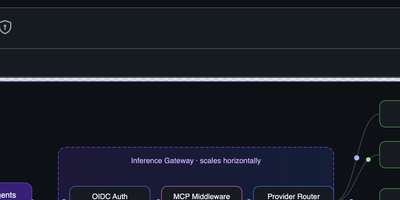
Inference Gateway puts a single OpenAI-compatible API endpoint in front of OpenAI, Anthropic, Groq, Cohere, Ollama, DeepSeek, Google, Mistral, MiniMax, Moonshot, Nvidia, and llama.cpp, so your application code never changes when you switch models or providers. The Go binary starts on port 8080 and normalizes authentication, streaming protocols, and response formats across all backends transparently. Native Model Context Protocol support auto-discovers tools from connected MCP servers and injects them into LLM requests without client-side management, enabling server-side tool execution across any provider that supports function calling. Agent-to-Agent protocol integration allows distributed agent communication through a declarative Agent Definition Language that generates production-ready Go or Rust servers from a single YAML manifest. The dedicated Kubernetes Operator manages Gateway, Agent, MCP, and Orchestrator custom resources with automatic HPA scaling, OIDC authentication, and service discovery that rebuilds MCP configurations when the discovered server set changes. Prometheus metrics and OpenTelemetry tracing provide full request-level observability across the entire inference pipeline. Middleware controls enable per-request provider selection, model routing, and fallback strategies. Official SDKs in Go, Python, TypeScript, and Rust provide typed client interfaces with streaming support. Docker Compose deployment requires only environment variables for API keys. A CNCF Sandbox applicant. Running on a dedicated VPS on RepoCloud with guaranteed CPU, RAM, and SSD, full root SSH access, and a browser serial console. Apache 2.0 licensed.
Roamgate
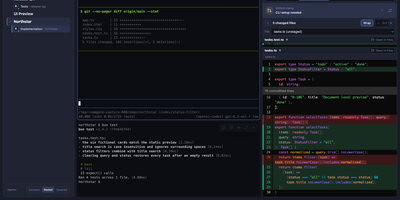
Close the laptop, keep the agents: Roamgate brings the Herdr workspace running on your server into any browser, so the terminal session you left mid-task is waiting on your phone exactly as you left it. Every workspace and recognized agent sits in one view: check what each agent is doing, read its conversation, and take over a real terminal with streaming output, split panes, scrollback, multiline paste, and clickable links. When the agent finishes, the review happens in the same place: inspect staged, unstaged, untracked, and branch changes, annotate exact diff lines, preview rendered Markdown, and send compiled feedback back into the agent pane without pre-filling a submission you did not approve. Files browse beside the terminals, and session history survives disconnects because Herdr owns the sessions, not your browser tab. Connections stay flexible: run the bridge beside Herdr on one machine, save SSH profiles to reach remote hosts, and install the whole thing as a PWA for an app window without tabs. Login is required even on loopback, push notifications flag agents waiting for input, and themes, accents, and terminal fonts make the cockpit yours. Running on a dedicated VPS on RepoCloud with guaranteed CPU, RAM, and SSD, full root SSH access, and a browser serial console. MIT licensed.

Family Ledger
Family Ledger gathers every account a household owns into one private picture of net worth, using ten minutes of data entry per month. Bank cards, brokerage accounts, funds, property, loans, crypto, precious metals, and insurance sit together, grouped by family member, with CNY, USD, and HKD support. Each month the app lists the balances to fill in, so two partners can finish the job at different times from a phone or desktop. The dashboard separates what you earned from what your money earned, and it reports true annualized return with XIRR and TWR, plus a net-worth line adjusted for inflation. An asset lens slices holdings by risk, platform, industry, currency, and region through sunburst charts and pivot tables, and fund look-through shows the real stock, bond, and industry exposure behind each fund. Upload a brokerage screenshot and a vision model reads every holding for you to confirm. AI checkups score allocation, risk, liquidity, and returns, then suggest rebalancing steps. Goals for retirement, education, and emergency reserves come with optimistic, neutral, and pessimistic forecasts. Running on a dedicated VPS on RepoCloud with guaranteed CPU, RAM, and SSD, full root SSH access, and a browser serial console. AGPL-3.0 licensed.
Quickly
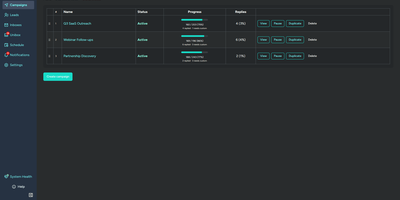
Cold outreach works better when your sending platform does not charge per seat and per contact for the privilege. Quickly runs multi-step email sequences across unlimited connected Gmail and Microsoft 365 inboxes, rotating sends automatically while respecting each inbox's daily limit. Because messages go out through Google and Microsoft's official OAuth APIs, they ride those providers' own infrastructure and reputation instead of a shared SMTP pool. You personalize every step with template variables drawn from your CSV import, split subject and body variants for A/B testing, and let bounce detection stop bad addresses before they hurt your domains. Replies from every account land in one unified inbox with threaded conversations, and AI classification sorts each reply as interested, not interested, out of office, wrong person, auto-reply, or unsubscribed, with Ollama available for fully offline classification. Analytics break performance down per campaign and per step with open, click, and reply rates and timeline charts, while a system health dashboard watches inbox token health and tracking domain reachability. Fifteen webhook event types and more than ninety REST endpoints feed tools like n8n, an MCP server exposes lead tools to AI assistants, and a test mode simulates sends, opens, and clicks without delivering anything. Running on a dedicated VPS on RepoCloud with guaranteed CPU, RAM, and SSD, full root SSH access, and a browser serial console. MIT licensed.