OpenSRE
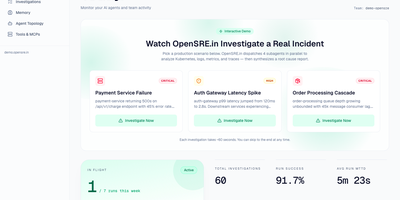
The pager fires at 3am, and OpenSRE starts the investigation before a human has found the dashboard password. It queries the connected observability and infrastructure tools, works toward a root cause, and records what the evidence supports. Past incidents stay useful because episodic memory stores root causes, alert types, affected services, and fixes, then surfaces the matching playbook during a similar failure. A Neo4j knowledge graph maps service dependencies and ownership, so the agent can traverse dependencies, estimate blast radius, and check recent changes with structural context. Fifty-one production skills cover Elasticsearch, Datadog, Grafana, PagerDuty, Kubernetes, AWS, Jenkins, Argo CD, and more, so teams keep the stack they already operate. Start investigations from the web console, Slack, or Microsoft Teams, and follow progress from the same places. The console holds the investigation list, a memory hub for browsing episodes, and a config editor for the deployment. Direct Anthropic access is the default path, and the optional LiteLLM proxy adds OpenAI, Gemini, and other providers. Microsoft Entra single sign-on signs users into the console, with token login kept as break-glass access. Fault-injection tests against a demo application exercise cart, product, recommendation, and advertising failures end to end. Running on a dedicated VPS on RepoCloud with guaranteed CPU, RAM, and SSD, full root SSH access, and a browser serial console. Apache-2.0 licensed.
Kimai
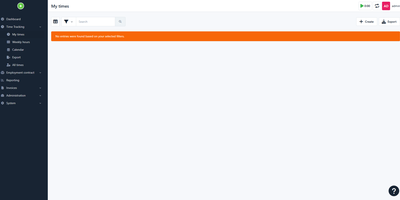
From a freelancer logging billable hours to companies with hundreds of users, Kimai scales professional-grade open-source time tracking - a Symfony/PHP application without the per-seat pricing of Harvest or Toggl. Tracking is flexible by design: run multiple concurrent timers, use punch-in/punch-out mode, or enter times manually, organized by customer, project, and activity with tags, and priced by user-, customer-, or project-specific rates. The billing pipeline is where Kimai earns "professional grade": generate invoices directly from timesheet data with configurable templates (DOCX, ODS, XLSX, PDF), entry grouping, and invoice-number generators, while an export flag locks billed records against editing and excludes them from future invoices - the audit-safety detail spreadsheet workflows never get right. E-invoicing supports EN 16931, XRechnung 3.0, and Zugferd/Factur-X. Enterprise controls come standard: SAML and LDAP login against Google Workspace, Azure AD, or Authentik, TOTP two-factor auth, customizable role permissions, and teams that scope customers and projects to departments. Money and time budgets alert before overruns, advanced reporting slices recorded time by any dimension, and an extensive JSON API plus a plugin marketplace (expenses, approvals, and more) integrate it with existing infrastructure. Over 30 translations, multi-timezone, AGPL-licensed.
Synapse
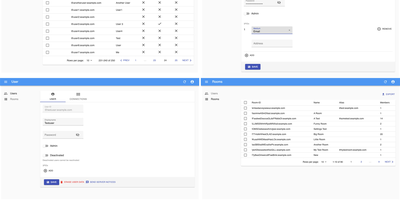
Your chat server should be able to talk to everyone else's chat server: Synapse is the reference homeserver for the Matrix network, hosting your users, rooms, and message history on infrastructure you control while federating openly with thousands of other servers. People keep their own identity on your domain and still message friends, colleagues, and communities elsewhere, because rooms are shared across servers instead of locked inside one company's silo. Any Matrix client works against it, from Element on phones and desktops to a shelf of community clients, and end-to-end encrypted conversations stay readable only by their participants. Bridges and application services wire the network into Slack, Discord, Telegram, IRC, and other systems, so existing conversations can move across gradually instead of in one painful migration weekend. Single sign-on through SAML or OpenID Connect folds chat accounts into the identity provider your organization already runs, and guests, registration controls, and rate limits stay in your hands. Media uploads, message history, and user data live in your PostgreSQL database and your file storage, with retention and federation policies set per room or for the whole server. When one process is no longer enough, worker processes split the load, Prometheus metrics show where it goes, and the admin API handles accounts, rooms, and moderation programmatically. Running on a dedicated VPS on RepoCloud with guaranteed CPU, RAM, and SSD, full root SSH access, and a browser serial console. AGPL-3.0 licensed.
OpenPencil
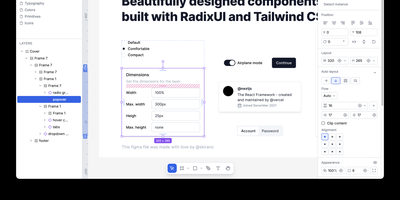
OpenPencil is the open-source design editor that reads and writes native Figma .fig files using the same Kiwi binary format — enabling bidirectional copy-paste between Figma and OpenPencil without data loss. The built-in AI assistant provides 90+ design tools through a chat interface, creating and modifying shapes, fills, strokes, auto-layout, components, variables, and boolean operations from natural language prompts, with BYOK support for Anthropic, OpenAI, Google AI, OpenRouter, Z.ai, MiniMax, and compatible endpoints. A Skia CanvasKit WASM renderer paired with Yoga WASM layout engine delivers Figma-parity rendering with flex and CSS Grid support including gap, padding, and alignment. The headless CLI inspects node trees via XPath queries, lints naming and accessibility, converts between document formats, analyzes color and typography patterns, extracts design tokens, and exports to PNG, SVG, JSX/Tailwind, and HTML. An MCP server exposes all design operations over stdio and HTTP, connecting Claude Code, Cursor, Windsurf, and Gemini CLI for AI-assisted design automation. Real-time P2P collaboration via WebRTC with Yjs CRDT synchronization requires no server and no account. The Vue SDK provides headless components for embedding the editor into custom applications. Ships as a 7 MB Tauri v2 desktop app for macOS, Windows, and Linux, or runs in any browser as a PWA. Running on a dedicated VPS on RepoCloud with guaranteed CPU, RAM, and SSD, full root SSH access, and a browser serial console. MIT licensed.
Radicale
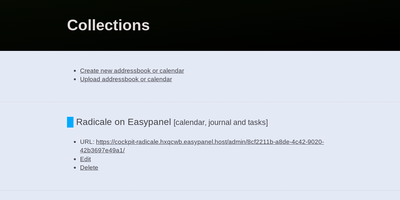
Calendars, to-do lists, journal entries, and contacts, synced over the open CalDAV and CardDAV standards nearly every client already speaks: Radicale is a small pure-Python server that works with Thunderbird, DAVx5 on Android, Apple Calendar and Contacts, GNOME, and many more. Its defining design choice is radical simplicity: there is no database. Events live as plain .ics files and contacts as .vcf files in an ordinary folder structure, which makes backup a copy command, migration a move, and disaster recovery a matter of reading text files. The server works out of the box with no complicated setup, then grows as needed: flexible authentication (htpasswd files among other methods), per-collection authorization rules, TLS-secured connections, and a plugin system for extending storage, auth, and rights handling. Built-in limits on parallel connections, file sizes, and failed authentication attempts harden it for network exposure behind a reverse proxy. A bundled web interface handles creating and managing calendars and address books - useful since many clients cannot create collections themselves. Maintained since 2011 with 140+ contributors, GPLv3-licensed, and light enough to run on the smallest VPS or a Raspberry Pi.
Mailu
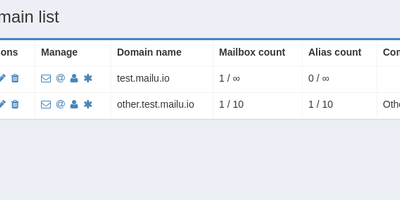
With over 7,100 GitHub stars and 200 contributors since 2016, Mailu has become one of the most popular self-hosted email solutions, delivering a complete production-ready mail server stack as pre-configured Docker containers that eliminate weeks of manual setup. The platform bundles Postfix for SMTP and Submission with auto-configuration profiles for Thunderbird, Outlook, and mobile clients, Dovecot for IMAP and POP3 with full-text search across email attachments, Rspamd for intelligent spam filtering with auto-learn Bayesian classification, greylisting, SPF and DMARC validation, and ClamAV for antivirus scanning of attachments with configurable malicious file blocking. The web administration interface provides global admin controls, per-domain delegation, user quota management, domain aliases, custom routing rules, and announcement capabilities. Users access self-service features including aliases, auto-reply, auto-forward, fetched accounts from external mailboxes via fetchmail, and Sieve filter management through ManageSieve. Security features include enforced TLS on all connections, automatic Let's Encrypt certificate provisioning, outgoing DKIM signing, DANE and MTA-STS support for transport security, and Snuffleupagus PHP hardening for the web interface. The setup wizard at setup.mailu.io generates complete Docker Compose configurations tailored to specific deployment requirements. All components are free and open-source software with zero proprietary dependencies and no tracking. Running on a dedicated VPS on RepoCloud with guaranteed CPU, RAM, and SSD, full root SSH access, and a browser serial console. MIT licensed.
PandaDOS
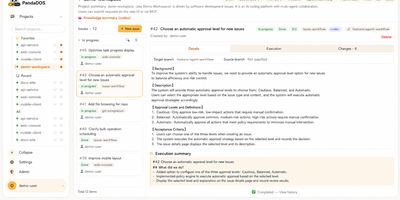
PandaDOS is a self-hosted control plane that turns Claude Code and Codex into long-running coding agents you direct through an issue queue from any browser, instead of babysitting a terminal. You file an issue with the outcome and acceptance criteria, and PandaDOS clarifies missing requirements, plans the work, picks the agent, and drives implementation, verification, and delivery in stages. Three approval levels, cautious, balanced, and automatic, decide which actions proceed alone; safe reversible steps continue automatically while destructive, irreversible, production, or secret-related decisions always come back to you. The browser workspace shows the real agent conversation, a native terminal, project files, Git history and diffs, and an execution summary, so you can inspect or intervene at any moment from a phone or laptop. Agents run on local or SSH-connected executor machines inside tmux sessions, and work sharing one repository is serialized while independent projects proceed in parallel without conflicting edits. Modules keep one assigned agent and durable project knowledge, so context from finished issues carries into the next task instead of evaporating when a chat ends. Teams can sign in through Feishu, ask the project manager questions in chat, and receive subscription notifications and approval cards on their phones. Running on a dedicated VPS on RepoCloud with guaranteed CPU, RAM, and SSD, full root SSH access, and a browser serial console. Apache-2.0 licensed.
ZoneMinder
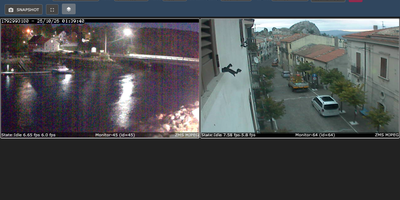
Turn ordinary IP cameras, USB webcams, and video files into a self-hosted surveillance system that watches, records, and replays everything from a browser. Every camera becomes a monitor that can capture, analyze, and record around the clock or only when motion appears. Draw detection zones in six types (active, inclusive, exclusive, preclusive, inactive, and privacy) so a visitor on the driveway raises an alarm and swaying trees do not. The Montage view tiles live feeds in selectable layouts, Cycle rotates through them, and the Watch view adds scale, stream quality, and player controls for a single camera. Events arrive in a sortable list with thumbnails, durations, and alarm scores, play back against a timeline, and can be reviewed across every camera in Montage Review. Filters automate housekeeping by archiving, emailing, messaging, uploading, copying, moving, or deleting matching events on a schedule. PTZ controls steer supported cameras. User roles limit who can view or change each monitor, a REST API and MQTT support connect other tools, and the optional event server adds push notifications and object detection through machine-learning hooks. Multi-server installs spread cameras and storage across machines, and the zmNinjaNg app brings the same views to phones and desktops. Running on a dedicated VPS on RepoCloud with guaranteed CPU, RAM, and SSD, full root SSH access, and a browser serial console. GPL-2.0 licensed.
Apache Kafka
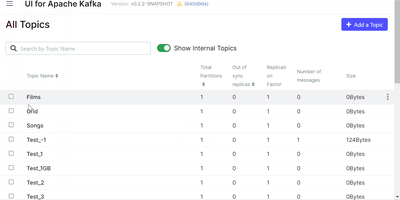
Used by over 80% of Fortune 100 companies including LinkedIn, Netflix, Uber, and Goldman Sachs, Apache Kafka processes trillions of messages per day as the world's most widely deployed distributed event streaming platform. Since version 4.0 released in March 2025, Kafka operates exclusively with KRaft consensus, replacing Apache ZooKeeper entirely with an internal Raft-based metadata quorum managed by controller nodes, reducing operational complexity and eliminating external coordination dependencies. Topics are organized as append-only partitioned commit logs with configurable replication factors across brokers, delivering network-limited throughput with end-to-end latencies as low as 2 milliseconds. Kafka Streams provides a client library for building stateful stream processing applications with exactly-once semantics, windowed aggregations, joins across streams and tables, and interactive queries against local state stores. Kafka Connect integrates with hundreds of systems including PostgreSQL, MySQL, Elasticsearch, Amazon S3, MongoDB, HDFS, and JMS through a standardized connector framework with distributed worker mode and automatic offset management. Share Groups introduced in version 4.2 deliver queue-style consumption semantics alongside traditional consumer groups, enabling Kafka to serve both pub-sub and point-to-point messaging patterns natively. The Schema Registry enforces Avro, Protobuf, and JSON Schema compatibility rules across producers and consumers, preventing schema evolution from breaking downstream applications. Tiered Storage offloads older log segments to object storage like S3 while maintaining transparent consumer access, dramatically reducing local broker storage costs for long-retention topics. Running on a dedicated VPS on RepoCloud with guaranteed CPU, RAM, and SSD, full root SSH access, and a browser serial console. Apache 2.0 licensed.
OpenStock
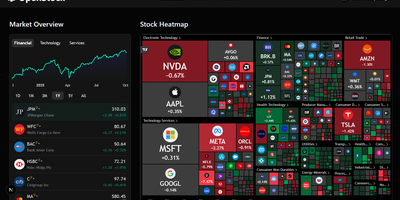
OpenStock delivers a production-ready financial market terminal that unifies real-time equity pricing, technical analysis, and multi-asset watchlists into a personal self-hosted dashboard. Investors can monitor equities across thirty international exchanges, inspect live candlestick charts powered by TradingView, and evaluate technical momentum oscillators without paying recurring platform subscriptions. The global command palette accessible via keyboard shortcuts enables instantaneous ticker discovery across global exchange symbols and economic sectors. Users can organize individual stock watchlists in MongoDB, configure automated price threshold alerts triggered every fifteen seconds, and review cross-platform sentiment scores synthesized from Reddit, X, and financial news feeds. The built-in automation engine schedules weekly digest reports and event-driven notifications dispatched directly to your inbox through Nodemailer transports. Responsive market heatmaps and top-mover widgets surface daily sector performance before the opening bell rings. Deployable via Docker Compose with dedicated MongoDB persistence, the platform scales across multi-key Finnhub rate limits effortlessly. Running on a dedicated VPS on RepoCloud with guaranteed CPU, RAM, and SSD, full root SSH access, and a browser serial console. AGPL-3.0 licensed.
Flowplan
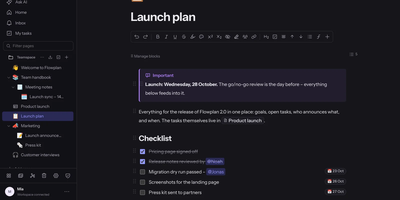
Flowplan puts your team's documents, databases, whiteboards, handwriting notebooks, and daily journal into one self-hosted page tree, so the work lives in a single place you control instead of five subscriptions. Write in a block editor that stays out of the way, and when a number appears mid-sentence, type the calculation and press Tab to drop in the result, or graph functions and vectors in 2D and 3D without leaving the page. The same records can be viewed as a table, board, calendar, timeline, gallery, list, feed, chart, form, or sprint board, with relations, rollups, and formulas tying them together, and projects get ticket numbers, sprints with burndown, and automations on top. Brainstorm on whiteboards with sticky notes, mind maps, and voting; keep a journal page per day with templates and an optional PIN lock; and write by hand in notebooks with lined, grid, or Cornell paper, annotate PDFs, and sketch inside documents with a pressure-sensitive pen. Teammates edit together with live cursors, comment in inline threads, and share single pages with guests through password-protected, expiring links, while permissions reach down to a single record. AI is off until an admin enables it, per feature and per person, and it can run entirely on your own hardware or answer questions about the workspace with links to its sources. Running on a dedicated VPS on RepoCloud with guaranteed CPU, RAM, and SSD, full root SSH access, and a browser serial console. AGPL-3.0 licensed.
Google Browser Scraper
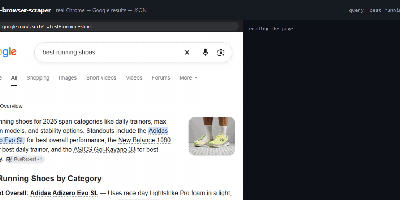
Google Browser Scraper is a self-hosted SERP API that gets Google results from a real Chrome browser and your own residential proxy, because plain HTTP scraping is refused and a fresh browser on a fresh IP is refused almost as fast. It warms a sticky proxy session with ordinary browsing first, lets the browser pass Google's checks, and then switches to a hybrid mode that fetches results pages directly over HTTPS with the browser's own cookies, at about 0.4 MB and 1.4 seconds per search on a warm IP. Every page comes back as SERP-style JSON with organic results, ads, related questions, related searches, pagination, the AI Overview, and local results. If a proxy IP starts serving poisoned pages for some other query, the scraper catches it within a few pages, drops that IP, and asks the query again on a fresh one. Captchas and blocks are reported as captchas and blocks, never disguised as an empty result set, so your pipeline knows when to retry or rotate. Run it as a CLI for keyword files, import it as a Python library, serve it as a local HTTP API, or expose the MCP server so AI agents get live Google search. Every run ends with a traffic and cost summary per thousand pages, and any sticky residential proxy works, with NodeMaven sessions handled for you. Running on a dedicated VPS on RepoCloud with guaranteed CPU, RAM, and SSD, full root SSH access, and a browser serial console. MIT licensed.
PocketPaw
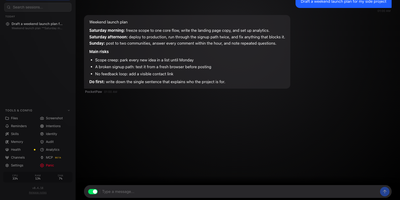
Ask for a recycling reminder from your phone on Sunday and have a research report waiting by Monday, without handing your data to a subscription service. PocketPaw is a personal agent you host yourself, reachable from the browser dashboard or the chat apps you already use, including Discord, Slack, WhatsApp, Telegram, Signal, Matrix, Teams, and Google Chat. Pick a backend for the work: Claude Agent SDK, OpenAI Agents, Google ADK, Codex CLI, OpenCode, or Copilot SDK, then point it at a cloud key or a local Ollama model. Over fifty tools cover browsing, web search, files, shell commands, OCR, voice, image generation, and delegation to helper agents. Reminders and scheduled intentions run on their own, and memory keeps long-term facts and compacts old sessions. Identity files shape the agent's tone and instructions, and a skills library adds new slash commands. A guardian model reviews tool calls, with injection scanning, plan mode approvals, tool profiles, and an audit log for oversight. Analytics show cost, latency, and traces against monthly budget caps. Memory, tool logs, and cost traces all live on your own server. Running on a dedicated VPS on RepoCloud with guaranteed CPU, RAM, and SSD, full root SSH access, and a browser serial console. MIT licensed.
Lalabase
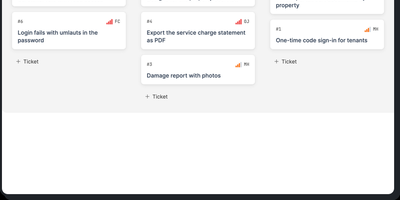
Lalabase is project management built for developers who work with clients, putting tickets, time tracking, documentation, and meetings in one workspace instead of five separate tools. Each client gets an organisation with its own projects and its own access, and roles decide exactly what clients can see. Tasks run as a list or a board with the statuses, priorities, and fields you define per project, rather than the workflow a vendor chose for you. Time tracking records several sessions per ticket, each billable on its own, with exports that go straight into the invoice. Documentation lives beside the work: notes and documents sit in the project, and a folder in your GitHub or GitLab repository becomes the project's docs automatically. Meetings keep their transcript, an AI summary, and the tasks that follow from what was actually said. When you need an answer, the AI assistant takes one question across tickets, comments, documents, hours, and meetings, and it cites the ticket, page, or conversation every answer came from. It even reads your repository's indexed code structurally, so questions about what is implemented get answered against the code. The assistant stays off until you enable it with your own provider key or a model in your own network. An MCP server and REST API let your own agents list, create, and update tickets, comment, and log time. Running on a dedicated VPS on RepoCloud with guaranteed CPU, RAM, and SSD, full root SSH access, and a browser serial console. AGPL-3.0 licensed.
ODS
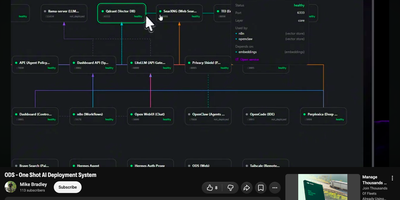
ODS turns a GPU machine or server you already own into a complete private AI stack with a single install command, replacing a shelf of separate tools with one system that serves models, chat, agents, automation, and search from your own hardware. The installer reads your GPU, VRAM, memory, and disk, then downloads a GGUF model matched to that hardware tier, and a compact bootstrap model starts answering within minutes while the full model finishes downloading. From the web dashboard you watch every service's health, ports, and resource use, restart what misbehaves, and check storage and updates without touching a terminal. You chat with local models in Open WebUI, hand background work to the Hermes and Portal agents, and build automations in n8n that connect the stack to more than 400 other apps. Documents you add become searchable knowledge through Qdrant vector storage, so answers cite your files instead of the model's memory. SearXNG and Perplexica answer web questions without trackers or accounts, Whisper transcribes speech, Kokoro reads text aloud, and ComfyUI generates images, all on the same box. Every bundled service is an extension you can enable, disable, or replace, and a Privacy Shield scrubs personal data before anything reaches an optional cloud model through the LiteLLM gateway. Running on a dedicated VPS on RepoCloud with guaranteed CPU, RAM, and SSD, full root SSH access, and a browser serial console. Apache-2.0 licensed.
PandaWiki
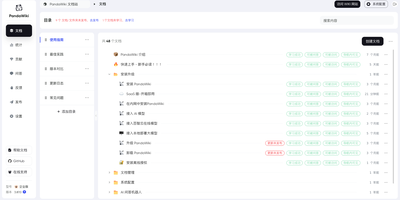
In seven wizard steps, PandaWiki sets up a product docs, manual, FAQ, or blog site whose built-in AI answers visitors using only your own content. Those visitors can chat with an assistant that cites its sources and accepts image questions, or switch to a docs-only search that lists ranked pages with summaries. Publishing stays under control: each document has three switches, visible in navigation, reachable by URL, and answerable by AI, and nothing appears or gets learned until it is published. Authors write in a Markdown and HTML editor, or import from URLs, RSS and Atom feeds, sitemaps, offline .txt, .md, .xlsx, .docx, and .pdf files, Notion, Yuque, SiYuan, Wiki.js, Feishu, Confluence, and DingTalk. Pages export to Word, PDF, or Markdown. The wizard covers models, domain, HTTP or HTTPS ports, import, publishing, answer testing, and page decoration. One knowledge base can also feed a web widget and DingTalk, Feishu, WeCom, and Discord bots. Administrators get a dashboard of visits, questions, visitor regions, hot documents, and referring domains. Chat models come from Baizhi Cloud, DeepSeek, OpenAI, or Ollama, while vector and reranking models are built in. The open-source edition covers one wiki site, 300 documents, and one admin, and its console and documentation are in Chinese. Running on a dedicated VPS on RepoCloud with guaranteed CPU, RAM, and SSD, full root SSH access, and a browser serial console. AGPL-3.0 licensed.
Cotal
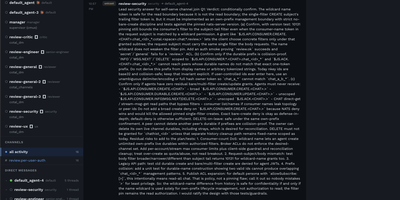
Cotal puts your AI agents in one shared room: Claude Code, Codex, and OpenCode discover each other, message channels, hand off work, and ask you to approve the result. Post to a channel and every subscriber hears it; message one peer and the durable inbox holds it until they are free; address a role like reviewer and one available reviewer claims the job. Presence shows who is actually there, and attention modes decide which channel traffic may interrupt an agent mid-task. A manager starts and stops agent processes in tmux or cmux, here or on remote hosts you authorize, without sitting between their messages. For work that waits and branches, Cotal Lang programs launch agents, pause at human checkpoints with deadlines, and resume from their recorded steps after an interruption. Services join the same space by publishing command contracts that authorized agents can discover and invoke; the bundled Linear adapter shows the pattern. Supervise from a terminal console with the live roster and activity feed, or from the read-only browser dashboard and its graph of agents and channels. Spaces stay separate, every message carries a checked identity, and per-agent grants decide who may delegate, spawn teammates, or call a service. Running on a dedicated VPS on RepoCloud with guaranteed CPU, RAM, and SSD, full root SSH access, and a browser serial console. Apache-2.0 licensed.
Zabbix
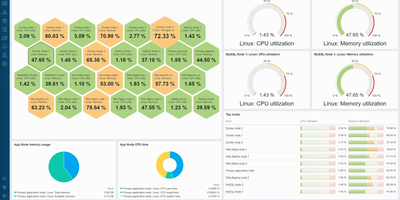
Monitoring everything from network switches to Kubernetes clusters since 2001 with over 6,200 GitHub stars and deployments exceeding 100,000 devices per installation, Zabbix has established itself as one of the most mature and feature-rich open-source monitoring platforms available, trusted by organizations including Dell, Salesforce, ICANN, and T-Mobile. The platform collects metrics from virtually any source using Zabbix Agent written in C, Zabbix Agent 2 written in Go with native plugin support, SNMP v1/v2c/v3 polling and trapping, IPMI for hardware health, JMX for Java applications, SSH and Telnet checks, HTTP/HTTPS polling, and ODBC database queries. Version 7.0 LTS introduced synthetic browser monitoring that executes user-defined JavaScript via WebDriver to simulate multi-step user interactions on websites, proxy load balancing with automatic host redistribution across proxy groups for high availability, in-memory proxy data buffering delivering up to 100x performance improvement, native multi-factor authentication with TOTP and Duo support, and just-in-time user provisioning from SAML and LDAP. Low-level discovery automatically detects file systems, network interfaces, SNMP OIDs, VMware resources, and Kubernetes pods, creating monitoring items and triggers dynamically. The alerting engine correlates events with configurable escalation chains, sending notifications through Slack, Microsoft Teams, PagerDuty, Jira, email, and SMS with customizable message templates. Over 1,000 official templates provide instant monitoring for Linux, Windows, VMware, AWS, Azure, Docker, PostgreSQL, MySQL, Apache, Nginx, and hundreds more. Running on a dedicated VPS on RepoCloud with guaranteed CPU, RAM, and SSD, full root SSH access, and a browser serial console. AGPL-3.0 licensed.