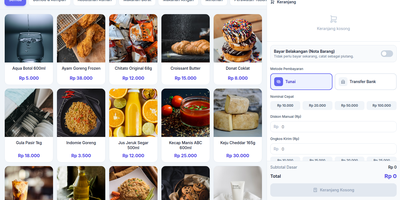
Dikasir
Checkout counter, stockroom, and bookkeeping share one screen in Dikasir, a self-hosted cashier system. Search products by keyword or barcode. Hold and resume carts. Apply promo rules and take cash, bank transfer, Midtrans, Xendit, or pay-later notes. Offline mode queues sales until the connection returns, and thermal receipts print over WebUSB. Stock is tracked per warehouse with stock opname, branch transfers, batch and expiry dates, composite kits, and reorder suggestions. Purchase orders flow into goods receiving and supplier returns. Payables and receivables show aging and partial payments. Customer tiers, loyalty points, vouchers, segments, and campaigns drive repeat sales, and a WhatsApp gateway sends reminders and promotions automatically. Dashboards break sales and profit down by hour, day, and cashier. Invoices export as PDF or Excel. Role-based permissions, cashier shifts with cash closing, discount approvals, and an audit log with before and after snapshots keep staff accountable. Running on a dedicated VPS on RepoCloud with guaranteed CPU, RAM, and SSD, full root SSH access, and a browser serial console. AGPL-3.0 licensed.
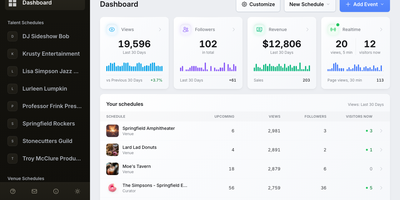
Event Schedule
One self-hosted site can publish your event calendar, sell tickets, take bookings, and send the newsletter. Event Schedule gives venues, performers, and curators their own schedule types, and a curator page gathers events from the venues and performers it follows. Recurring patterns cover daily, weekly, monthly-by-weekday, and yearly dates with per-date exceptions, and calendars import from ICS feeds, Google Calendar, or Eventbrite. Tickets come in several types with promo codes, waitlists, gift cards, and a drag-and-drop seating plan, and payments go through Stripe, PayPal, Payfast, Razorpay, or cash straight to your own accounts. Door staff scan QR tickets in a browser and a live dashboard counts arrivals. Appointment pages sync both ways with Google Calendar, Outlook, and CalDAV. The newsletter editor sends segmented, A/B tested campaigns through your own SMTP server, and optional AI features turn pasted text or flyer images into draft events. Analytics, an audit log, TOTP two-factor login, signed webhooks, a REST API, and twelve interface languages cover the admin side. Running on a dedicated VPS on RepoCloud with guaranteed CPU, RAM, and SSD, full root SSH access, and a browser serial console. AAL licensed.
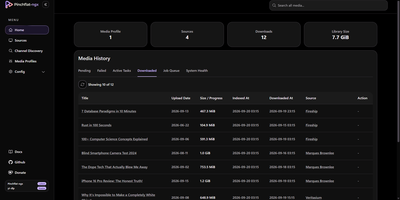
Pinchflat NGX
Pinchflat NGX is a self-hosted media manager that subscribes to YouTube channels and playlists, then downloads new videos into your own library automatically. Sources can be channels, playlists, or single videos, added by pasting a URL, searching in Browse, or importing a Google Takeout subscription list. Media profiles set quality, output templates, and retention, and each source can route its files to its own folder. The Sources page switches between a poster grid and a sortable table, with start, pause, and stop controls on every row. Channel Discovery suggests related channels with a score and evidence, and nothing is added until you accept it. A diagnostics page shows queue health, database size, and integrity checks, and notifications can use Discord embed formatting. Finished downloads trigger library refreshes on Plex, Jellyfin, and Emby, and an OPML feed serves podcast clients. OIDC single sign-on protects the web interface through providers like Authentik and Authelia. Running on a dedicated VPS on RepoCloud with guaranteed CPU, RAM, and SSD, full root SSH access, and a browser serial console. AGPL-3.0 licensed.
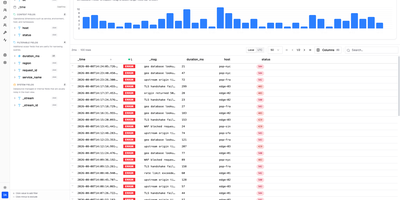
Logchef
Logchef gives engineering teams a self-hosted workspace to search, live tail, chart, and alert on logs stored in ClickHouse or VictoriaLogs. Queries start in the explorer with LogchefQL or a native SQL or LogsQL editor, beside a field sidebar with value counts, a histogram, and a sortable results table. Live tail streams matching rows as they arrive. Dashboards combine ClickHouse and VictoriaLogs panels on one grid, with time series, stat, breakdown, and table views that can be dragged and resized. Scheduled alerts run a query on a set frequency, compare it with a threshold, then email team members or post JSON to webhooks. An AI assistant turns plain-language questions into queries, and Ask Chef investigates an incident, citing the rows behind each statement and listing what remains unproven. Teams, users, and roles decide who can see each datasource, with OIDC or built-in email and password sign-in. A command-line client queries, explains, and tails logs from the terminal, and a built-in MCP endpoint serves AI assistants. Running on a dedicated VPS on RepoCloud with guaranteed CPU, RAM, and SSD, full root SSH access, and a browser serial console. AGPL-3.0 licensed.
Questarr
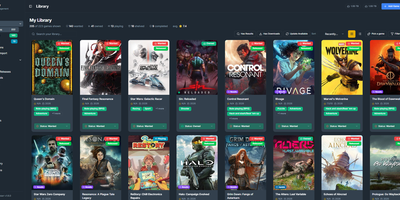
Questarr keeps a game backlog, wishlist, and release calendar in one dark web app, then goes looking for releases and hands them to a download client. Browse popular games and recent releases from IGDB, RSS feeds, and xREL.to, add titles to the library or a Steam-synced wishlist, and give each one a status. Library views filter by results, downloads, and available updates, and a backlog roulette picks the next game to play. Manual and smart collections group titles, for example every owned game above an IGDB rating threshold. A month-by-month calendar tracks upcoming launches. Indexers synced from Prowlarr over Torznab or Newznab feed automatic searches for wanted games, and qBittorrent, Transmission, rTorrent, Deluge, SABnzbd, NZBGet, or Synology Download Station receive the grabs. Release scoring, a blacklist, and a local classifier separate the game from patches, DLC, and demos. A system tasks page lists every background job with its interval, last run, and a Run now button. Alerts arrive in the app or through Apprise, and game pages pull in metadata from IGDB, Steam, PCGamingWiki, ProtonDB, and NexusMods. Running on a dedicated VPS on RepoCloud with guaranteed CPU, RAM, and SSD, full root SSH access, and a browser serial console. GPL-3.0 licensed.
WGDashboard
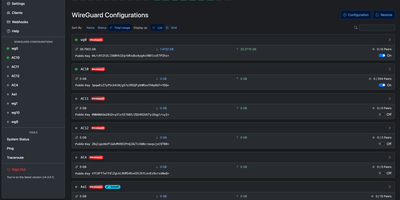
Managing WireGuard and AmneziaWG servers no longer means SSH sessions and typing wg show, because one browser dashboard covers every configuration and peer. WGDashboard finds existing configurations under /etc/wireguard and /etc/amnezia/amneziawg, so a running server appears right after installation. The home screen shows CPU, storage, memory, and swap meters above each configuration with its usage totals, peer count, and an on and off switch. Open a configuration for live data usage charts and a peer grid with search, sorting, tags, and bulk selection. Peers can be added one at a time or in bulk with generated keys and the next free addresses, then edited, restricted, deleted, or shared as a QR code, link, or email. Scheduled jobs restrict or delete peers when set conditions are met. Built-in ping and traceroute tools plot their results on a map. Settings add optional TOTP multi-factor sign-in, API keys, webhooks, light and dark themes, and a language selector. A remote server list connects one dashboard to others. Installation works on bare-metal Linux or in Docker. Running on a dedicated VPS on RepoCloud with guaranteed CPU, RAM, and SSD, full root SSH access, and a browser serial console. Apache-2.0 licensed.
Mularr
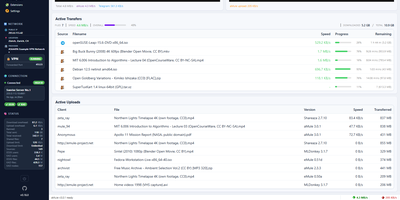
Classic eD2k and Kad downloading gets a browser interface with the look of Windows XP, Windows Classic, a clean modern dashboard, or green-on-black Hacker mode. Mularr wraps an aMule daemon and shows live download and upload graphs, active transfers with progress and remaining time, and the uploads other clients are pulling. Transfers can be started, paused, stopped, categorized, and bulk imported from ED2K links. Servers, search, shared files, categories, and extensions each get their own page. For automation it presents itself as a qBittorrent download client and a Torznab indexer, so Sonarr and Radarr can use it with their standard settings. Extensions for Sonarr and Radarr read the Wanted list and publish matches into a feed the apps can poll. Telegram can act as an extra download provider and notification channel, and Hispashare releases appear in search results next to aMule's. A VPN panel reports Gluetun health and the forwarded port, and the settings page covers ports, bandwidth limits, IP filters, a blacklist, and shared folders. One container image and a single data volume are enough to get started. Running on a dedicated VPS on RepoCloud with guaranteed CPU, RAM, and SSD, full root SSH access, and a browser serial console. MIT licensed.
RuoYi-Vue-Pro
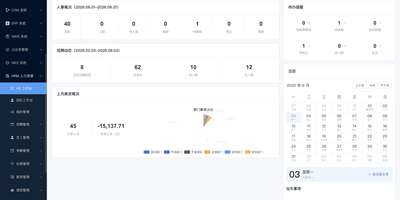
One admin platform can cover the back office of a whole company, from approvals and inventory to customers, projects, and devices. RuoYi-Vue-Pro, also called Yudao, wraps a long list of business modules around a shared system core, so teams switch on only the pieces they need. The core handles tenants, tenant packages, menus, roles, departments, SMS and email channels, audit logs, and OAuth2 single sign-on for connected apps. A workflow module offers a BPMN designer and a simplified DingTalk and Feishu style designer for approval flows. Business modules add ERP, WMS inbound and outbound documents, CRM, MES production dashboards, an HR workbench, finance vouchers, project work items, and an OA workspace with attendance, notices, and notes. More modules cover a shop and member center, payments, WeChat official accounts, AI model chat, IoT product and device management, and instant messaging with groups, shared cards, and voice calls. A code generator turns database tables into CRUD pages and back-end code, and file storage can point to local disk or S3-compatible services. Public demo sites allow a full click-through before installing anything. Running on a dedicated VPS on RepoCloud with guaranteed CPU, RAM, and SSD, full root SSH access, and a browser serial console. MIT licensed.
Prowler
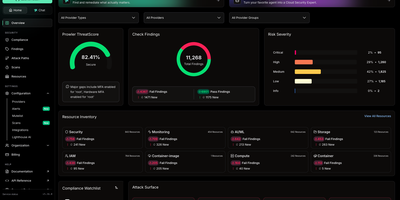
Point it at your cloud accounts and it returns a ranked list of what is misconfigured, mapped to the standards auditors ask about. Connect providers like AWS, Azure, Google Cloud, Kubernetes, Microsoft 365, and GitHub, launch a scan or schedule recurring ones, and read the results on an overview with a ThreatScore gauge, severity bars, and a resource inventory by category. The Findings page groups failed checks, expands each group into the affected resources, and lets teams mute noise, triage status, send groups to Jira, and create alerts that email or message people after each scan. Compliance pages score every framework from CIS and NIST to PCI DSS, SOC 2, HIPAA, GDPR, and ISO 27001, with a watchlist for the ones you care about and downloadable reports. Attack Paths draws a graph from IAM roles and policies to outcomes like code execution, using a Neo4j graph database filled by AWS scans. A built-in AI assistant answers questions about critical findings and compliance gaps with the model provider you configure. Organizations, roles, and API keys keep access tidy. Running on a dedicated VPS on RepoCloud with guaranteed CPU, RAM, and SSD, full root SSH access, and a browser serial console. Apache-2.0 licensed.

Reiverr
Finding something to watch, requesting it, downloading it, and pressing play all happen on one remote-friendly screen. Browse trending titles, genre rows, and streaming network shelves backed by TMDB, then open a series to pick the episodes to request. Download-ahead rules fetch the next few episodes as you watch, keep the last watched ones, and remove watched files after a chosen period, so the disk does not fill with finished shows. A built-in torrent client does the downloading through an indexer, and each user gets a storage quota that appears next to every request. The library page tracks unwatched and watched series and movies with filters for media type, files on disk, and sort order, plus an A to Z jump bar. A Downloads page lists what is fetching and what each request holds, and the Server page scans library folders, flags managed or external files, and shows logs. Existing media folders are discovered from disk and stay compatible with Jellyfin layouts. Direct playback supports audio track selection and sidecar subtitles. Apps for Samsung Tizen and Android TV talk to the same backend. Running on a dedicated VPS on RepoCloud with guaranteed CPU, RAM, and SSD, full root SSH access, and a browser serial console. AGPL-3.0 licensed.
9Drive
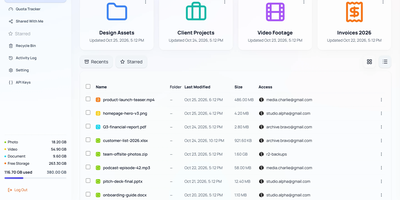
Four half-full cloud accounts become one big drive with a single search bar. Connect Google Drive accounts and S3-compatible buckets like Cloudflare R2, MinIO, Wasabi, or Backblaze B2, and the Quota Tracker shows total, used, and available space across all of them. Upload routing picks the destination by most free space, round-robin, or a custom priority order, and files stream straight through to storage without touching the server disk. The file manager offers nested virtual folders with custom colors and icons, list and grid views, filters for type, account, size, and date, previews for images, videos, PDFs, and Office files, a recycle bin, and a starred list. Public links open a built-in viewer with an embed mode, and invitations give other people viewer or editor access to a file or folder, tracked on a Shared page. An activity log records uploads, shares, and changes, and API keys with upload-only scope let scripts and CI jobs push files through a documented endpoint. Dark mode and a phone-friendly layout that installs as a PWA come built in. Running on a dedicated VPS on RepoCloud with guaranteed CPU, RAM, and SSD, full root SSH access, and a browser serial console. Apache-2.0 licensed.
JumpServer
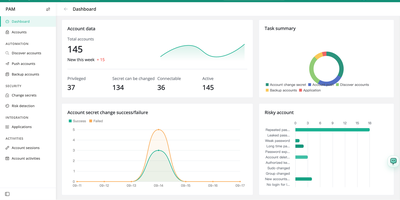
Every server login, database query, and remote desktop session passes through one audited front door instead of scattered SSH keys and shared passwords. Administrators register assets like Linux hosts, Windows machines, databases, clouds, and websites, store the accounts for each, and grant people access through authorization rules. Users open a web terminal or connect with a native client to reach SSH, SFTP, RDP, VNC, database, and Kubernetes targets, with an AI assistant that can describe tasks and run commands in the terminal. Every session is recorded for replay, commands are logged, file transfers are tracked, and auditors can watch live sessions or cut them off. Access control lists filter commands, limit source addresses, and restrict time windows, and multi-factor authentication and LDAP or Active Directory sign-in protect the front door. Automation jobs discover accounts on assets, push new ones, rotate secrets on a schedule, and back up credentials, with a risk dashboard that flags weak, repeated, or stale passwords. Community Edition covers up to 5,000 assets. Running on a dedicated VPS on RepoCloud with guaranteed CPU, RAM, and SSD, full root SSH access, and a browser serial console. GPL-3.0 licensed.

AI Chatbot Framework
Ask for a job in plain words and an agent with its own private computer does it: it reads files, runs commands, calls connected apps, and reports back in the chat. Every user gets a persistent sandbox workspace, so one person's files and commands never touch another's. Type a new message mid-run and the agent picks it up without stopping, or press Stop at any time. For bigger jobs the agent starts sub-agents that work side by side, each on a model of its choice, and the chat shows what each one is doing. Skills teach it repeatable methods in the open Agent Skills format; upload a zip, write one by hand, or let the agent write its own, and use them from a slash menu. The Connections page links Linear, Notion, Jira, Stripe, and other apps through one-click OAuth sign-in, or any MCP server by address. Scheduled tasks run on a repeating or one-time schedule, and each run becomes a readable chat. Small personal apps like a to-do cockpit or budget view appear in the sidebar, and charts, plans, and forms can render right inside answers. A files browser, an artifacts panel, a command menu, light and dark themes, and a phone layout round out the interface. Running on a dedicated VPS on RepoCloud with guaranteed CPU, RAM, and SSD, full root SSH access, and a browser serial console. MIT licensed.
ABC User Feedback
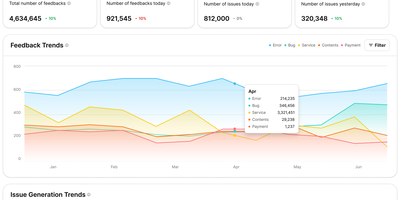
One board holds every piece of customer feedback, from app store reviews to survey answers, and turns the repeating ones into tracked issues. Each project defines channels like App Review, VOC, or Survey with custom fields for text, numbers, dates, selects, images, and AI-generated values. The feedback table filters by keyword, date, and field, expands rows for detail, and exports results when a report is due. Issues carry status labels and appear in a kanban or list view, with ticket links that point to Jira or another tracker. A dashboard charts feedback and issue trends over any date range, with counters for today and yesterday. The AI field can summarize, translate, or score sentiment on incoming messages, and issue recommendation suggests where a new message belongs, with token usage limits and notifications to cap spending. Webhooks announce events to other systems, API keys let apps submit feedback directly, and role-based access limits what each member can do. Members join by email invitation, and single sign-on connects an existing identity provider. A CLI starts the full stack, and optional OpenSearch improves search and AI accuracy. Running on a dedicated VPS on RepoCloud with guaranteed CPU, RAM, and SSD, full root SSH access, and a browser serial console. Apache-2.0 licensed.
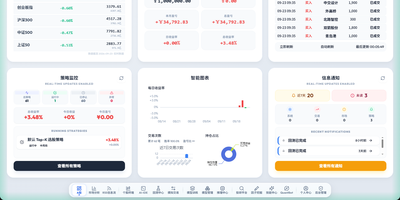
QuantMind
From raw market data to a simulated trade, every step of quant research happens in one web console. A home dashboard shows index levels, a paper account, strategy status, and recent fills at a glance, and a market analysis page tracks sector rotation and money flow. A stock terminal pairs candlestick charts with company profiles, financial and valuation tabs, and model score curves. Researchers describe a trading hypothesis in plain language, and the factor mining workspace drafts expressions, evolves them, and stores the winners in a factor library. The training studio offers thirteen algorithms, from boosted trees to recurrent networks, with walk-forward stability checks and local or remote GPU scheduling. The backtest center reports returns, Sharpe ratio, drawdown, and an equity curve for any date range, stock pool, and rebalance rhythm. Daily batch inference ranks the whole market, and a rolling news feed tags headlines as bullish or bearish. Paper trading replays real exchange rules, including price limits, lot sizes, fees, and slippage. A chat assistant can run these steps from a sentence, including through messaging apps. Running on a dedicated VPS on RepoCloud with guaranteed CPU, RAM, and SSD, full root SSH access, and a browser serial console. AGPL-3.0 licensed.
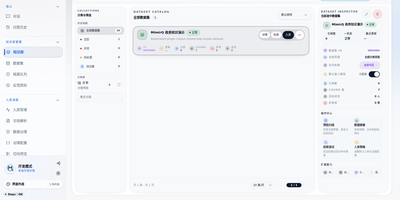
MimirQ
When a knowledge base gives a wrong answer, MimirQ shows which stage let it down. Documents move through a pipeline that teams can open at every step: parsing, cleaning, chunking, indexing, retrieval, reranking, and cited answers. A dataset catalog tracks documents, chunks, and ingestion status, and an execution monitor charts throughput, retries, parser queues, and run logs. The governance workbench previews each file, scores quality, and supports cleaning and labeling before chunks are cut by headings, records, or parent-child structure. Retrieval blends keyword and vector search with reranking, and every reply lists its source evidence with feedback scoring. A graph view maps entities, events, and relationships on one canvas for exploration. Golden-set evaluation stores standard questions and answers, runs them against the current pipeline, and reports recall and ranking metrics, so a release can be blocked when quality slips. Settings pages manage model providers, parsers, and retrieval options, and a Dify-compatible external knowledge API lets existing workflows call it. Role-based access and document permissions keep restricted material hidden from the wrong users. Running on a dedicated VPS on RepoCloud with guaranteed CPU, RAM, and SSD, full root SSH access, and a browser serial console. Apache-2.0 licensed.
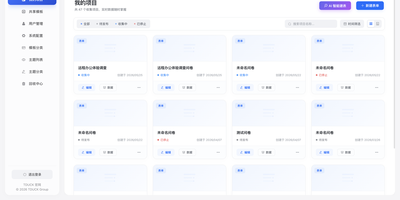
TDuck
Describe the survey you need in one sentence, and TDuck drafts the questions for you. This open-source form platform replaces hosted tools like Typeform with a version you run on your own server, so responses never leave your hands. The visual designer offers over 27 field types, from text, dates, and ratings to file uploads, signatures, cascading selects, sub-forms, and matrix scales. Logic rules show or hide questions based on earlier answers, and imported question lists save time on long forms. Appearance settings cover header images, backgrounds, colors, and button text. Each form can be limited by device, account, IP, or WeChat identity, with an answer window you set. Finished forms publish as links or QR codes, and a recycle bin recovers deleted ones. Statistics show views, completion rate, weekly trends, submission maps, and per-question pie or bar charts that export as images. Responses can be edited, exported, printed, or zipped with attachments. Webhooks fire on new, changed, or deleted entries, a sync API exposes all data, and email, SMS, and WeChat notices keep owners informed. Running on a dedicated VPS on RepoCloud with guaranteed CPU, RAM, and SSD, full root SSH access, and a browser serial console. MIT licensed.

FoJin
Ask a question about Buddhist scripture in plain language and get an answer that points to the exact passage it came from. FoJin brings thousands of texts from hundreds of digital libraries into one search box, so a reader no longer jumps between a dozen archives with different layouts. The AI assistant, called XiaoJin, answers with clickable citations that open the original text, and it can also reply in the voice of historical masters scoped to their own tradition. Search covers classics, translators, and catalog numbers, with filters by country and collection. Reading pages show full text, and parallel views line up translations in many languages, with Chinese, Pali, and Tibetan versions of the same sutra side by side. Thirty-nine dictionaries answer term lookups, a knowledge graph maps people, lineages, and places, and a data source directory shows what each collection offers. Readers can save collections, bookmarks, and annotations, then export citations in BibTeX, RIS, or APA. A read-aloud mode highlights each sentence in sync with audio. Quote verification confirms that a sentence really exists in the canon, and where. Running on a dedicated VPS on RepoCloud with guaranteed CPU, RAM, and SSD, full root SSH access, and a browser serial console. Apache-2.0 licensed.