Raven
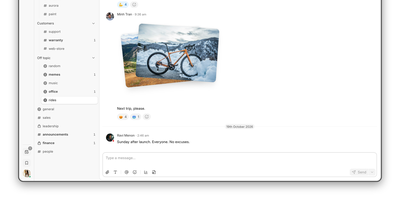
Raven is a team chat app you host yourself, with the channels, threads, and file sharing of the big hosted tools and none of the per-seat bills. Public and private channels group into workspaces, and direct messages cover everything else. A side discussion can move into a thread so the main channel stays readable. Messages support formatting, mentions, code blocks, polls, emoji, and custom reactions, and dropped-in photos, videos, and documents get previews plus a per-channel list of every file. One search box finds messages, files, links, and people across all your channels. Notifications reach the browser and phones with quiet hours and per-channel settings, reminders bring a message back later, and scheduled messages go out at a set time. Paste a link to any document on the site and Raven shows a card with its status and key fields, post to a channel when a document is created or submitted, or approve and reject straight from the conversation. Bots, incoming webhooks, and agents backed by your own OpenAI-compatible provider extend the chat, and iOS and Android apps connect to the same site. Running on a dedicated VPS on RepoCloud with guaranteed CPU, RAM, and SSD, full root SSH access, and a browser serial console. AGPL-3.0 licensed.
Dagu
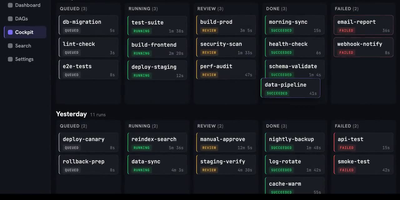
With over 3,700 GitHub stars and growing adoption among teams tired of managing complex orchestration platforms, Dagu delivers a complete workflow engine as a single Go binary that requires no external database, message broker, or framework installation. Define directed acyclic graphs in declarative YAML — specifying dependencies, schedules, retries, timeouts, approvals, and notifications — while keeping existing shell scripts, containers, and tools completely unchanged. The built-in Web UI provides live pipeline visualization, per-step log streaming, run history browsing, artifact previewing, manual retry controls, and workflow YAML editing without SSHing into servers. Execute steps as shell commands, Docker containers, Kubernetes Jobs, SSH remote commands, SQL queries, or HTTP requests, with conditional branching and parallel execution handled natively. The integrated Model Context Protocol server exposes dagu_read, dagu_change, and dagu_execute tools, enabling AI agents like Claude, Codex, and Cursor to inspect workflow state, preview YAML modifications, and control runs through authenticated endpoints. The harness.run executor lets external coding-agent CLIs operate inside DAG steps with full scheduling and approval gate support. Scale beyond a single machine with the distributed worker mode, which dispatches tasks to remote nodes via gRPC with automatic label-based routing and worker selection. Deploy with Docker, the official Helm chart for Kubernetes, or a simple binary download requiring only a Linux, macOS, or Windows host. Running on a dedicated VPS on RepoCloud with guaranteed CPU, RAM, and SSD, full root SSH access, and a browser serial console. GPLv3 licensed.
LibreBooking
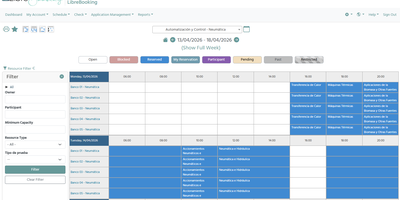
Conference rooms, equipment, boats, and even people can be reserved through LibreBooking, a self-hosted scheduler that keeps double bookings off the calendar. Schedules define bookable time slots with custom layouts and seasonal availability, while each resource carries its own minimum and maximum duration, buffer time, lead time, capacity, and optional approval step. Check-in and check-out can release unclaimed slots automatically, and blackout times close resources for maintenance. Quotas stack limits by hours or reservation count, credits meter peak and off-peak usage, and users can buy credits through Stripe or PayPal. Accessories such as projectors or chairs ride along with a booking under their own quantity limits. Groups carry application, group, resource, and schedule administrator roles, and custom attributes extend reservations, resources, and users with text, dropdown, date, or checkbox fields. Reports can be charted, exported to CSV, printed, or emailed, and public resources publish RSS and iCalendar feeds for Outlook and Thunderbird plus an embeddable calendar snippet. A tablet view beside a door shows live availability for on-the-spot booking, a monitor view fills lobby screens, and a Slack command starts a reservation. Sign-in options include LDAP, Active Directory, OAuth2, and SAML, and the REST JSON API automates bookings. Users can join waitlists, request reminder emails, and accept terms of service before booking, while six color themes restyle the interface. Running on a dedicated VPS on RepoCloud with guaranteed CPU, RAM, and SSD, full root SSH access, and a browser serial console. GPL-3.0 licensed.
Tailchat
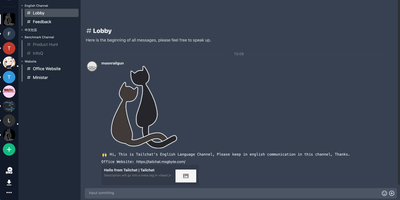
Think of it as a team messaging platform where every feature beyond core chat is a plugin you can install or remove, inspired by VS Code's extension model but applied to real-time communication. The Moleculer microservice backend scales horizontally across nodes while Socket.io delivers instant message synchronization with text, images, files, mentions, reactions, and rich Markdown formatting. Available plugins provide LiveKit video conferencing, collaborative drawing boards, task management panels, end-to-end encryption, custom themes, and third-party push notification reception without touching core code. Groups use a two-level space system with customizable panel layouts arranged through drag-and-drop, while role-based access control enforces fine-grained permissions across the organization. The Open Platform exposes OAuth for single sign-on across connected applications and a Bot API enabling bidirectional message processing between Tailchat and external services via HTTP requests. Multi-platform clients cover web, Electron desktop with screenshot capabilities, and mobile apps with native push. Docker Compose deployment bundles MongoDB for persistence, Redis for caching and transport, and MinIO for S3-compatible file storage. Deploy on RepoCloud with a dedicated VPS for persistent team infrastructure under the Apache 2.0 license.
Carbon ERP
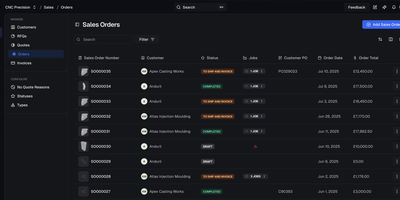
Carbon delivers a unified manufacturing operating system that eliminates the integration tax of running separate ERP, MES, and QMS platforms. The Remix and TypeScript frontend paired with Supabase PostgreSQL backend provides full-stack type safety from database schema to React components, with real-time subscriptions pushing production floor updates to every connected client. The built-in MCP server exposes 1,374 operations across 15 modules through three discovery tools, enabling AI agents to interact with manufacturing data while respecting attribute-based access control. Nested bill of materials with unlimited depth supports complex assemblies, while the MRP engine calculates material requirements across multi-level structures with configurable lead times and safety stock. The configurator handles configure-to-order scenarios with rule-based variant generation. Full lot and serial traceability from receiving through shipping satisfies AS9100, ISO 13485, CFR Part 11, and ITAR compliance requirements. Custom fields extend any entity without schema modification, and the app framework lets integrators build domain-specific modules that plug into the core navigation, permissions, and data layer. Typed API clients for TypeScript, Python, C#, and cURL enable programmatic access to every manufacturing operation. Docker-based local development boots Postgres, Redis, Inngest, and the application stack with a single CLI command. Running on a dedicated VPS on RepoCloud with guaranteed CPU, RAM, and SSD, full root SSH access, and a browser serial console. AGPL-3.0 licensed.
RosarioSIS
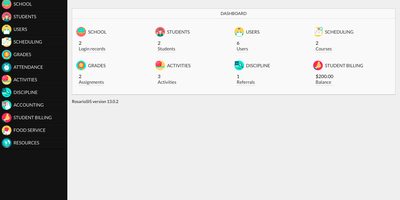
Report cards, attendance rosters, class schedules, discipline logs, and fee statements all live in one browser-based system with RosarioSIS, an open-source student information system for K-12 schools and similar institutions. Administrators define marking periods in up to three tiers, set grade levels and daily periods, and search students by gender, grade level, schedule, absences, GPA, or class rank. The scheduler places whole classes or a single student, and runs in test mode each time a student's requests are saved, so conflicts can be resolved with the student still in front of you. Teachers keep a weighted gradebook with grade ranges, progress reports, report cards, and transcripts, take attendance electronically, and use the eligibility feature to flag who may join athletic or academic activities. Discipline logs, student billing with fees, payments, balances, and statements, food service, and accounting complete the core modules. Parents and students get their own portal, new families can register online, listings export to Excel, CSV, or XML, and charts and PDF documents support decisions and paperwork. The interface adapts to tablets and phones and is translated into a dozen languages. Add-on modules bring email, library, hostel, Jitsi Meet video rooms, and Moodle integration. Running on a dedicated VPS on RepoCloud with guaranteed CPU, RAM, and SSD, full root SSH access, and a browser serial console. GPL-2.0 licensed.
Worklenz
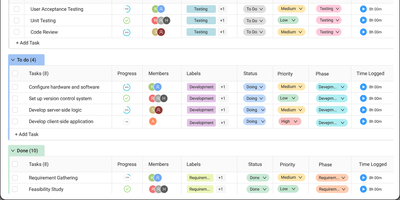
Worklenz delivers an all-in-one project management platform purpose-built for teams that bill clients for their time and expertise. The task management system supports list, Kanban board, and timeline Gantt views with priorities, due dates, assignees, labels, and subtasks. Built-in time tracking offers both start-stop timers and manual entry, logging billable hours directly against tasks and automatically aggregating time data into project-level cost reports. The resource management module provides a visual team utilization dashboard showing capacity allocation across all active projects, helping managers avoid overallocation and balance workloads. Client portals give external stakeholders direct visibility into project progress, task status, and deliverables without requiring internal account access. Financial insights track budgets versus actuals, showing project profitability, cost breakdowns, and burn rate in real time. The analytics engine generates reports on project health, team workload distribution, task completion trends, and time allocation patterns. Project templates enable one-click setup of common agency workflows with pre-configured task structures, milestones, and assignments. The React frontend uses Ant Design components with TypeScript, while the Express.js backend connects to PostgreSQL for data and Redis for caching. Docker Compose deployment includes Nginx reverse proxy with SSL/TLS support, automated database backups, health checks on all services, network isolation, and MinIO for object storage. On RepoCloud, deploy Worklenz on a dedicated VPS with root SSH access, persistent PostgreSQL storage for your project data, and complete control over client portal access and team configurations, all under the AGPL-3.0 license.
Open Agent Email
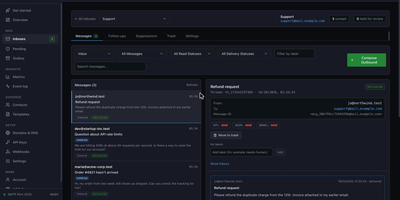
Every AI agent that deals with people eventually needs an email address, and Open Agent Email gives each one a real inbox on your own domain. Agents receive mail in proper threads, reply in place, send new messages, schedule sends up to 90 days ahead, and handle attachments, labels, search, trash and restore from one mailbox. A human approval gate can hold any outgoing message until a person clicks approve or reject, with an expiry and a full history, so a risky reply never reaches a customer unchecked. Incoming mail is screened for prompt-injection tricks and hidden text, checked against SPF, DKIM, and DMARC, and can be scanned for viruses before an agent reads it. Agents connect through a REST API with an OpenAPI file, dependency-free Python and TypeScript SDKs, the oae command line, signed webhooks, a live WebSocket stream, or 96 MCP tools for coding agents. The browser dashboard covers guided setup, inboxes, pending approvals, the outbox queue with retries, delivery metrics with bounce and complaint tracking, contacts, templates, domains with DNS verification, and API keys. Sending runs through your own relay, SES events feed suppression lists automatically, and scoped per-inbox keys limit what each agent may do. Running on a dedicated VPS on RepoCloud with guaranteed CPU, RAM, and SSD, full root SSH access, and a browser serial console. Apache-2.0 licensed.

Peppermint
A deliberately simple ticketing system standing in for both Zendesk and Jira: Peppermint handles internal staff requests and external customer support alike. The stack is modern full-stack TypeScript: Next.js and React over Prisma and PostgreSQL, which makes it light to run and approachable for developers extending it. Ticket creation is straightforward - a markdown editor with file uploads, assignment, status tracking, and a logical workflow that new agents grasp without a manual. Mailbox integration converts email into tickets automatically: configure SMTP/IMAP per mailbox and incoming messages become trackable tickets. Each client accumulates an interaction history, giving agents context on every past request before replying. Two touches distinguish it from bare-bones ticketing: a built-in markdown notebook with todo lists for internal documentation and knowledge sharing, and OIDC authentication so agents sign in through your existing identity provider - Keycloak, Okta, Authentik, or Azure AD. Configurable webhooks and email notifications push ticket events to third-party services. The UI is responsive from mobile to 4K, and everything works fully offline in air-gapped environments. Docker-native and scalable via Kubernetes, with an active community of 3,000+ GitHub stargazers.
Shelf
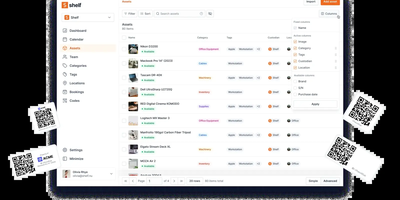
Shelf answers the three questions every equipment manager dreads — who has it, where is it, and when is it coming back — using QR-code-first tracking where every asset gets a unique scannable label, every handover is logged with timestamps and e-signed custody agreements, and every scan captures GPS coordinates displayed on a map. Built on React Router 7 with React 19, TypeScript 5, Prisma 6 ORM, and Tailwind CSS 3 with Radix UI components, the platform generates QR codes and barcodes (Code128, Code39, Datamatrix) printable on DYMO, Brother, and Zebra label printers. The custody system records every handover with user details and generates PDF custody agreements with e-signatures for high-value items, while a complete audit trail tracks responsibility from check-out to return. The visual booking calendar prevents double-bookings automatically, supports partial check-outs and returns with segmented lifecycle bars, and handles quantity-tracked consumables alongside individually serialized equipment. Asset Models enable bulk creation of identical items with shared defaults while maintaining individual QR codes and custody histories. Location tracking displays last-scanned GPS coordinates on MapTiler maps. Supabase Auth provides email and SSO authentication, pg-boss handles background job queuing, and Nodemailer delivers SMTP email. The Shelf Companion app on iOS and Android enables field scanning and bookings. Export Asset Inventory, Asset Distribution, and Custody Snapshot reports for compliance. Deploy via Docker with PostgreSQL and Supabase. Running on a dedicated VPS on RepoCloud with guaranteed CPU, RAM, and SSD, full root SSH access, and a browser serial console. AGPL v3.0 licensed.
Ackee
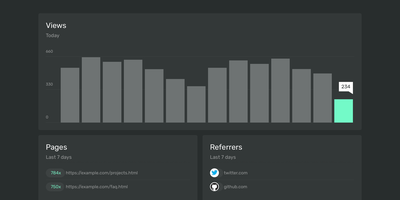
Page views, referrers, browsers, and screen sizes - Ackee delivers the analytics developers actually check, from a deliberately minimal Node.js and MongoDB stack that skips both Matomo's weight and Google Analytics' cloud dependency. Its defining constraint is anonymization: no cookies, no unique user tracking, and a multi-step anonymization process that keeps visitors unidentifiable while the aggregate numbers stay useful. In its default anonymous mode Ackee collects no personally identifiable information at all, which means GDPR and CCPA compliance out of the box and no cookie consent banner on your sites. A detailed mode adds screen size, language, and per-visit referrers - still without cookies or fingerprinting. Integration mirrors the Google Analytics pattern: create a domain in settings, drop the generated ackee-tracker snippet into your pages, and data appears in a clean single-page dashboard. One instance tracks multiple domains, and custom events capture button clicks, signups, and conversions. The distinctive engineering choice is the fully documented GraphQL API: everything the dashboard shows comes from that API, so you can query active visitors, average duration, and view statistics programmatically, feed data in from apps and services beyond websites, or build an entirely custom interface on top. If you want bare-minimum analytics with a real API and zero privacy anxiety, this is the tool.
Friendica
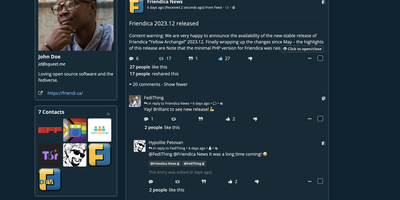
Friendica connects to more federation protocols than any other single platform: ActivityPub reaches Mastodon, Pleroma, Misskey, Lemmy, Pixelfed, and PeerTube; the Diaspora protocol bridges that network; and OStatus provides legacy compatibility. But protocol reach is just the foundation. Where most fediverse platforms stop at microblogging, Friendica offers long-form posts, photo albums, event calendars with RSVP, group discussions, and rich multimedia content. BlueSky and Tumblr connectors extend your reach into non-federated networks, while RSS import pulls content from any blog or news source into your timeline. Privacy controls let you scope each post to specific contacts, groups, or public visibility with per-post granularity rather than account-wide settings. Multiple themes customize the interface from Facebook-like layouts to minimal designs, and Fedilab provides native mobile access. Under the hood, the PHP application with MariaDB runs as either an Apache or FPM Docker image with Redis caching and background cron workers handling federation delivery, media processing, and notification dispatch. One of the oldest fediverse projects (1,650+ stars, 160+ contributors since 2010), Friendica has weathered every protocol evolution and platform migration the decentralized web has thrown at it, making it one of the most battle-tested social networking platforms available.
Sourcebot
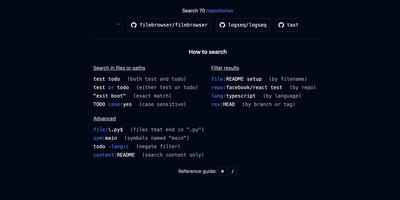
Point Sourcebot at your GitHub, GitLab, Bitbucket, Azure DevOps, Gerrit, or Gitea repositories and get regex, symbol, and filtered search results in under a second across thousands of repos and branches. Backed by Y Combinator with production deployments at NVIDIA, Shutterstock, SeatGeek, Arista, and Red Hat, the Zoekt-powered engine deploys as a single Docker container with zero external data transmission. Ask Sourcebot connects reasoning models like Claude Opus to your entire codebase, enabling natural language questions that return structured answers grounded with inline citations and navigable code snippets, backed by automatic tool calls that search code, follow references, and read files across all indexed repositories. Ask connectors extend this to Jira, Slack, Linear, and Confluence via MCP, pulling external context alongside code for debugging and documentation. IDE-level code navigation provides goto definition and find all references across repository boundaries without local cloning. The built-in file explorer renders any indexed file with syntax highlighting, breadcrumb navigation, and git blame showing per-line commit attribution. An analytics dashboard tracks daily, weekly, and monthly search activity. Permission syncing from GitHub and GitLab enforces access control lists so users only see repositories they are authorized to access. Running on a dedicated VPS on RepoCloud with guaranteed CPU, RAM, and SSD, full root SSH access, and a browser serial console. Other licensed.
Tolgee
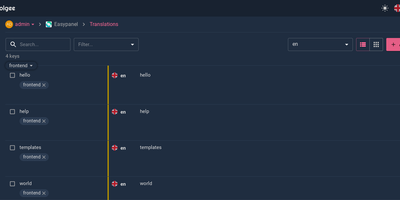
Hold Alt/Option, click any string in your running app, and edit the translation in place: Tolgee is an open-source localization platform built the way developers wish translation worked - changes save straight to the platform with no hunting through JSON or PO files. In-context editing works even in production via the Tolgee Tools browser extension, which injects credentials without touching source code, so a client or colleague with zero coding skills can translate the product inside the product. The SDKs (React, Angular, Vue, Svelte, plus iOS and Android) extract context from each UI element and capture one-click screenshots, giving both human translators and machines the surrounding meaning that raw string files lose. Autonomous translation uses that context: new keys are instantly filled from translation memory or machine translation (DeepL, Google Translate, AWS Translate), with optional human review afterward - shipping no longer waits on a translation agency. A CLI handles import/export, a REST API covers automation, a Figma plugin bridges design, and an MCP server lets AI coding assistants search keys, create translations, and trigger machine translation without leaving the editor. Self-hosting this Crowdin/Phrase/Lokalise alternative keeps every string, screenshot, and API key on your infrastructure.
Alerta
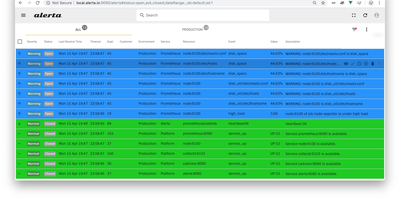
Five monitoring systems should not mean five places to look when something breaks at 3 a.m. Alerta is an open-source alert management server that consolidates alerts from many sources into a single stream, de-duplicates repeats, correlates severity changes, and shows only the current state of each problem in a web console built for fast scanning. Prometheus, Zabbix, Nagios, InfluxDB Kapacitor, cloud watch alarms, and your own scripts all post into the same HTTP API, which accepts a flexible alert format carrying environment, resource, event, severity, and custom attributes, so no tool has to contort itself into someone else's schema first. Repeats of a known fault raise a duplicate count instead of generating another page, and a severity change updates the existing alert rather than birthing a twin. Operators acknowledge problems, assign them, silence expected fire during blackout periods set for maintenance windows, and partition visibility by customer for teams that monitor other people's infrastructure. A command-line client, query language, webhooks, and plugin hooks carry alerts onward into tickets, chat, and paging workflows, and everything persists in MongoDB or PostgreSQL with API keys and OAuth protecting access. Running on a dedicated VPS on RepoCloud with guaranteed CPU, RAM, and SSD, full root SSH access, and a browser serial console. Apache-2.0 licensed.
freehire
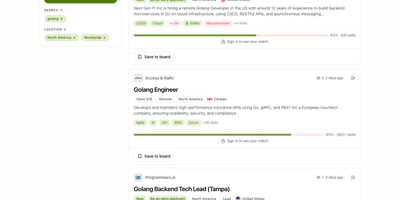
A job search engine you host yourself, freehire collects postings from employer career pages, so results link back to the original listing instead of a recruiter repost. Adapters for Greenhouse, Lever, Workday, Ashby, iCIMS, and dozens more normalize every posting into one schema and collapse cross-board duplicates into one entry. Full-text search narrows results by region, work mode, seniority, skills, and salary using curated dictionaries instead of model guesses, so filters return what they promise. Saved searches send email or Telegram digests of new matches, shared boards travel as unindexed links, and insights and trends show which skills are gaining postings and what roles pay by region. A ghost-job signal flags repost patterns and stale listings and shows its evidence, so you can spot roles that never actually close. The CV builder renders PDFs from templates marked ATS-safe or not, a deterministic score compares CVs with vacancies, and a connected LLM tailors CVs using only facts you assert, then rehearses the interview. An application board tracks every stage, a mail inbox links recruiter replies to the application they answer, and reminders flag silent leads. Self-hosters choose their own sources: one catalog row adds a company, and cron-driven workers crawl and index it. A keyless public API, a CLI, and an autofill Chrome extension extend it. Running on a dedicated VPS on RepoCloud with guaranteed CPU, RAM, and SSD, full root SSH access, and a browser serial console. MIT licensed.
Microcks
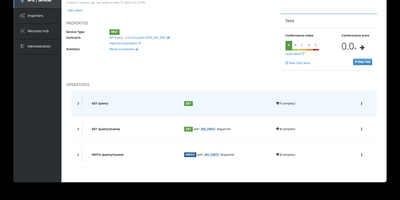
Microcks turns your API specifications into living mocks and contract tests, so teams can develop and verify against an API long before the real implementation exists. Feed it OpenAPI, AsyncAPI, GraphQL schemas, gRPC Protobuf files, Postman collections, or SoapUI projects, and it immediately publishes mock endpoints that answer with realistic examples drawn from the specification itself. Dispatching rules route requests by path, query parameters, headers, body content, or XPath and Groovy expressions, while content negotiation and templating functions shape each response to look convincingly real. Event-driven APIs get the same treatment, with AsyncAPI mocks that publish messages to Kafka topics or WebSocket channels your consumers can subscribe to during development. When an implementation shows up, contract tests replay the recorded expectations against the live service and report every mismatch, down to the exact request and response that failed. Run those tests from the web interface, on a schedule, or from CI pipelines with the command-line client, and wire importers to rescan your Git repositories so new specification versions appear as mocks automatically. The built-in hub adds one-click samples and reusable API packages, giving a new team a stocked repository of mockable services within minutes of the first login. Running on a dedicated VPS on RepoCloud with guaranteed CPU, RAM, and SSD, full root SSH access, and a browser serial console. Apache-2.0 licensed.
HFS
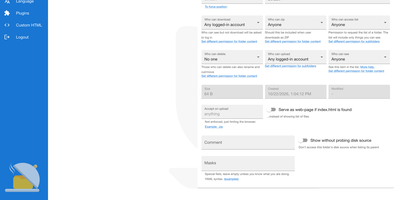
HFS turns any folder on a server into a file-sharing site that visitors open in a browser, with no upload step and no space or bandwidth cap beyond your own disk. Visitors browse, search, and download single files or whole folders as ZIP archives that start streaming immediately, and interrupted uploads or downloads can resume. A virtual file system lets you arrange and rename what is shared without touching the files on disk, while accounts and per-folder permissions decide who can see, download, upload, or delete. The admin web panel covers HTTPS with built-in certificate generation, bandwidth limits globally or per IP address, geographic blocking by country, and live connection monitoring with disconnect and IP ban. Plugins add thumbnails, share links, LDAP, two-factor sign-in, download quotas, and notifications, and a few lines of JavaScript in the admin panel can change the look or the backend behavior without a restart. The front end speaks 27+ languages, works on phones, and includes a media player for audio and video. Typical uses include sending large files to friends without uploading them first, publishing a download area, and collecting uploads from visitors. Running on a dedicated VPS on RepoCloud with guaranteed CPU, RAM, and SSD, full root SSH access, and a browser serial console. GPL-3.0 licensed.