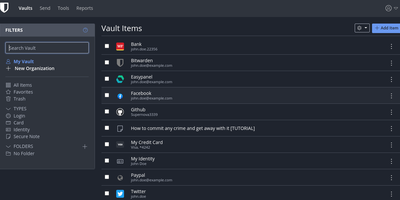
Vaultwarden
The Bitwarden server, reimplemented in Rust: Vaultwarden (formerly bitwarden_rs) is the unofficial lightweight edition. It speaks the same wire protocol as the official server, so every official Bitwarden client - browser extensions, iOS, Android, desktop, and the bw CLI - connects without modification, while the server itself runs as a single container against SQLite (or MySQL/MariaDB/PostgreSQL) instead of the official multi-container stack that wants gigabytes of RAM. Features Bitwarden gates behind paid tiers ship free: organizations with collections, groups, member roles, and policies; TOTP code storage; file attachments; Bitwarden Send; Emergency Access; event logs; and admin password reset. Two-factor options cover authenticator apps, email, FIDO2 WebAuthn, YubiKey, and Duo, and OIDC-based SSO landed natively in v1.35.0. Zero-knowledge encryption is unchanged - vault data is encrypted client-side and the master password never reaches the server. Attachments and Sends store on local disk or S3-compatible backends, an admin panel manages users and server settings, and backup is copying one data directory. Suited to individuals and teams up to roughly 50 users.
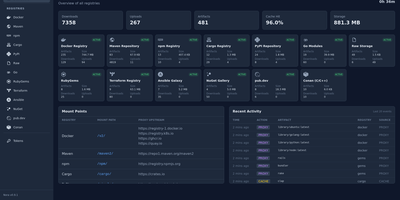
Nora
Public registries rate-limit your CI, log every pull, and pick the worst moment to go down; Nora replaces that dependency with a self-hosted artifact registry that hosts and caches seventeen package formats behind a single address. Point Docker, Maven, npm, pip, Cargo, and eleven other clients at one endpoint, and Nora serves your private artifacts while transparently caching upstream packages fetched from Docker Hub, Maven Central, npmjs, and crates.io. Each base image or library downloads once and is then served locally, so builds get faster, stop tripping rate limits, and survive upstream outages. Curation rules decide what is allowed to reach your builds: allowlists and blocklists filter packages by name, minimum release-age rules hold back freshly published versions, and new digests can wait in quarantine until approved. Anything you publish keeps its name: a hosted package is never silently replaced by an upstream package sharing it. Pipelines publish without stored secrets through OIDC identity from GitHub Actions and GitLab CI, and API tokens with read, write, and admin roles cover the rest. A web dashboard shows downloads, cache hit rates, storage usage, and recent activity for every registry, and audit logs plus Prometheus metrics feed your monitoring. For disconnected networks, a mirror command prefetches whatever your lockfiles name, an import tool migrates Artifactory or Nexus repositories, and backup and restore keep a spare copy. Running on a dedicated VPS on RepoCloud with guaranteed CPU, RAM, and SSD, full root SSH access, and a browser serial console. MIT licensed.
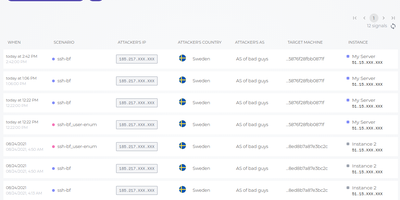
CrowdSec
With over 14,000 GitHub stars and a growing global network of security deployments, CrowdSec turns every attack on any participating server into protection for the entire community. The security engine operates as a combined IDS/IPS and WAF, analyzing log sources from Nginx, Apache, SSH, WordPress, and over 50 other services to detect brute force attacks, port scans, web vulnerability exploitation, and credential stuffing in real time. When one server detects a new threat, the attacker's IP is shared through the community blocklist, proactively protecting thousands of other installations before the attacker can reach them. The built-in WAF powered by Coraza v3 inspects HTTP requests at the application layer, validates against OpenAPI schemas, and applies custom rules with flexible AND/OR condition mixing for precise threat detection. Bot detection serves challenge pages with client fingerprinting to distinguish legitimate traffic from automated scrapers and scanners. Remediation components block malicious IPs at multiple infrastructure layers including iptables, nftables, Nginx, HAProxy, Cloudflare, and AWS Security Groups through the detect-here-remedy-there architecture. The scenario-based detection system ships with default rules for common attack patterns and supports custom scenarios written in YAML with an expressive filter language. A centralized console provides real-time visualization of alerts, threat intelligence analysis, and management of multiple distributed security engines. GDPR compliant by design, all log analysis happens locally and raw logs never leave your infrastructure. Running on a dedicated VPS on RepoCloud with guaranteed CPU, RAM, and SSD, full root SSH access, and a browser serial console. MIT licensed.
Authentik
With over 24,000 GitHub stars and a rapidly growing community of self-hosters, authentik delivers enterprise-grade identity management that replaces commercial solutions like Okta and Auth0 with a fully self-hosted platform requiring no per-user licensing fees. The platform serves as a unified identity provider supporting SAML 2.0, OAuth 2.0 and OpenID Connect, LDAP for legacy application compatibility, SCIM 2.0 for automated user provisioning, and RADIUS for network device authentication. The visual flow designer enables administrators to create custom authentication workflows combining password verification, multi-factor authentication with TOTP, WebAuthn, and SMS codes, email verification, captcha challenges, and conditional logic based on user attributes or device context. The forward-auth and reverse proxy integration works seamlessly with Traefik, Nginx, Caddy, and Envoy to protect applications that lack built-in authentication. User enrollment flows support self-registration with configurable approval workflows, invitation links, and automatic group assignment. The LDAP outpost exposes user and group data to legacy applications requiring LDAP bind authentication, while the SCIM provider automates user lifecycle management with downstream applications. Multi-tenancy support through brands allows a single authentik instance to serve multiple organizations with independent domains, branding, and authentication policies. The admin interface provides comprehensive user management, group hierarchy, application catalog, event logging with GeoIP enrichment, and system health monitoring. Running on a dedicated VPS on RepoCloud with guaranteed CPU, RAM, and SSD, full root SSH access, and a browser serial console. Licensed under a source-available license with an open-source community edition.
Ory Kratos
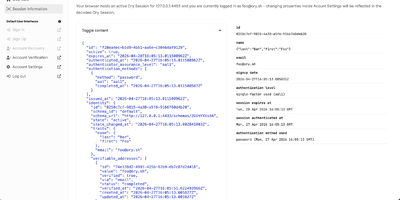
With 13,800 GitHub stars, adoption by OpenAI for ChatGPT's authentication infrastructure serving 800 million weekly active users, and governance under the Ory open-source ecosystem, Ory Kratos provides enterprise-grade identity management as a headless API server that separates authentication logic from user interface — enabling any frontend framework to consume standardized self-service flows for registration, login, recovery, verification, and profile management. Multi-factor authentication supports passkeys, WebAuthn security keys, TOTP authenticator apps, SMS one-time codes, email magic links, and backup recovery codes with configurable Authenticator Assurance Levels enforcing step-up authentication for sensitive operations. Social sign-in connects to any OpenID Connect provider including Google, GitHub, Apple, and Microsoft, plus enterprise SAML 2.0 federation for B2B single sign-on. Customizable identity schemas using JSON Schema define user profiles with flexible trait structures, while pre- and post-flow webhooks enable integration with CRMs, analytics, and compliance systems. The courier system handles email and SMS delivery for verification codes and password recovery links. Session management provides device tracking, forced logout, and configurable lifespans with privileged session elevation. Deploy alongside Ory Hydra for OAuth2/OIDC token issuance and Ory Keto for fine-grained permissions to build a complete identity platform. Docker Compose deployment with PostgreSQL. Running on a dedicated VPS on RepoCloud with guaranteed CPU, RAM, and SSD, full root SSH access, and a browser serial console. Apache 2.0 licensed.
Cryptgeon
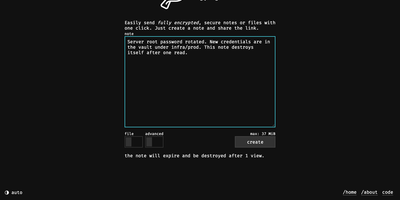
Passwords pasted into chat live forever, but a Cryptgeon note vanishes the moment it has been read. You type a note or pick a file, press create, and get a share link with a QR code to hand over. Encryption happens in the browser with XChaCha20-Poly1305, so the server holds only ciphertext and never sees the key that sits after the hash in the link. Advanced options set the number of views or a lifetime in minutes, and a custom password can be required on top of the generated key. Everything is kept in memory in a Valkey or Redis cache, so nothing is written to disk. Operators tune limits with environment variables for note size, maximum views, maximum expiration, file uploads, and ID length. The interface is a calm monospace page with dark and light themes. A command-line client sends notes from a terminal, and a Raycast extension covers the macOS launcher. Theme text, logo, favicon, and an imprint page can be customized to match a team or company. A health endpoint reports status to proxies and orchestrators. Running on a dedicated VPS on RepoCloud with guaranteed CPU, RAM, and SSD, full root SSH access, and a browser serial console. MIT licensed.
LightNVR
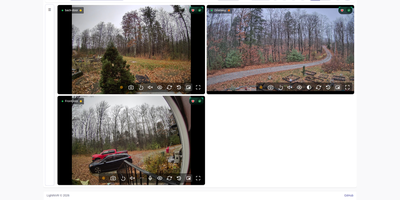
At 3 a.m., your driveway camera is the only witness that matters, and LightNVR makes sure the footage lives on a drive in your house, not a subscription cloud. ONVIF discovery finds cameras on the network; an RTSP address adds the rest. Recording runs continuously, on a schedule, or only when something happens: draw a polygon over the gate, pick the object classes worth alerting on, set a confidence threshold, and clips keep a pre-event buffer so the lead-up survives too. Plate recognition turns passing traffic into a searchable log. Playback splits two ways. The live grid streams over WebRTC at sub-second latency, overlays detection boxes on the picture, and the Investigation workspace lines sixteen cameras onto one shared clock after an incident. Storage obeys retention policies, protected recordings stay put, and full disks archive out to S3, NFS or SAN volumes. Access comes with database users, roles, TOTP two-factor codes and API keys. Prometheus metrics report the recorder's own health, MQTT events feed Home Assistant, and a REST API carries detections into the rest of the house. The binary idles within 256 MB on supported boards and speaks nineteen languages. Running on a dedicated VPS on RepoCloud with guaranteed CPU, RAM, and SSD, full root SSH access, and a browser serial console. GPL-3.0 licensed.
ZoneMinder
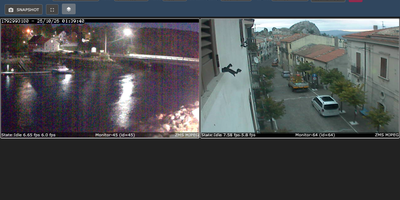
Turn ordinary IP cameras, USB webcams, and video files into a self-hosted surveillance system that watches, records, and replays everything from a browser. Every camera becomes a monitor that can capture, analyze, and record around the clock or only when motion appears. Draw detection zones in six types (active, inclusive, exclusive, preclusive, inactive, and privacy) so a visitor on the driveway raises an alarm and swaying trees do not. The Montage view tiles live feeds in selectable layouts, Cycle rotates through them, and the Watch view adds scale, stream quality, and player controls for a single camera. Events arrive in a sortable list with thumbnails, durations, and alarm scores, play back against a timeline, and can be reviewed across every camera in Montage Review. Filters automate housekeeping by archiving, emailing, messaging, uploading, copying, moving, or deleting matching events on a schedule. PTZ controls steer supported cameras. User roles limit who can view or change each monitor, a REST API and MQTT support connect other tools, and the optional event server adds push notifications and object detection through machine-learning hooks. Multi-server installs spread cameras and storage across machines, and the zmNinjaNg app brings the same views to phones and desktops. Running on a dedicated VPS on RepoCloud with guaranteed CPU, RAM, and SSD, full root SSH access, and a browser serial console. GPL-2.0 licensed.
Cerbos
Cerbos decouples authorization logic from application code entirely, evaluating human-readable YAML policies in under one millisecond through a stateless Policy Decision Point that requires no application state synchronization or cross-network fan-out. Its custom decision engine benchmarks up to 17x faster than OPA-based alternatives. Access control policies use conditions expressed in Google's Common Expression Language, supporting role-based, attribute-based, and policy-based access control patterns including derived roles, scoped policies, and permissions-aware data filtering that pushes authorization predicates directly into database queries. The PDP exposes both gRPC and HTTP APIs with SDKs for JavaScript, Python, Go, Java, .NET, Rust, PHP, and Ruby, making integration a single function call regardless of tech stack. GitOps-native workflows treat policies as code with Git versioning, CI validation through GitHub Actions, coverage reports, breaking-change detection, and audit logs of every authorization decision for ISO27001, SOC2, and HIPAA compliance. Deployment flexibility spans Kubernetes sidecars, standalone services, systemd daemons, AWS Lambda functions, and WebAssembly-embedded PDPs that run authorization logic directly in browsers, serverless architectures, and edge devices. The Admin API manages policy lifecycle operations programmatically, while the built-in Playground and REPL provide interactive testing environments for policy authoring and debugging. Running on a dedicated VPS on RepoCloud with guaranteed CPU, RAM, and SSD, full root SSH access, and a browser serial console. Apache 2.0 licensed.

Comp AI
Comp AI turns the months-long slog of SOC 2, ISO 27001, HIPAA, and GDPR certification into a largely automated process by connecting to your existing infrastructure and continuously collecting the evidence auditors actually ask for. Point it at your AWS account, Google Cloud project, GitHub organization, or any of 580+ supported integrations, and autonomous agents pull configuration snapshots, access logs, encryption status, and policy compliance data on a recurring schedule so your compliance posture reflects reality rather than last quarter's manual export. The AI policy engine analyzes your tech stack, team structure, and risk tolerance to generate organization-specific policies for information security, access control, incident response, data retention, and vendor management; no two companies get the same boilerplate. An open-source device agent runs on employee machines checking disk encryption, firewall status, screen lock settings, password length, and antivirus presence around the clock, flagging failures the moment they occur instead of surfacing them during an audit. Built-in penetration testing agents scan your codebase and API endpoints for vulnerabilities like SQL injection and output audit-ready reports. The vendor risk management module scores third-party services and surfaces compliance gaps before they become findings. A public trust center lets prospects verify your compliance status directly, eliminating security questionnaire bottlenecks. Running on a dedicated VPS on RepoCloud with guaranteed CPU, RAM, and SSD, full root SSH access, and a browser serial console. AGPL-3.0 licensed.
Supertokens Core
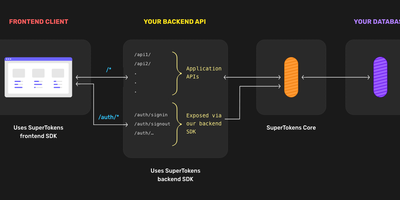
Authentication that lives inside your application rather than behind a redirect to an external identity provider - SuperTokens takes a fundamentally different architecture from Auth0 and AWS Cognito. Three tiers make that work - frontend SDKs (React, Angular, Vue, vanilla JS, React Native) render overridable login UI and manage tokens; backend SDKs (Node.js, Python, Go) expose auth endpoints on your own API domain; and SuperTokens Core, the piece you host here, is the stateless HTTP service handling core auth logic, password hashing, token signing, and database operations against PostgreSQL. The recipe system keeps features decoupled: use email/password, social login, passwordless (magic links, OTP), phone-password, multi-factor authentication (TOTP, WebAuthn), user roles, and microservice auth - individually or combined; you can even use SuperTokens purely for session management alongside another login provider. Sessions are where it shines: rotating refresh tokens with theft detection, automatic access-token refresh, CSRF protection, and secure cookie handling out of the box - the details that become vulnerabilities when hand-rolled. Verification happens locally in your backend via cached JWT signing keys, so the Core stays off the hot path. Self-hosted means no user limits, free forever, with all user data in your database. Apache-licensed.

Pocket ID
Backed by over 8,700 GitHub stars and OpenID Connect certification, Pocket ID delivers what enterprise identity platforms like Keycloak provide but without the configuration complexity — a passkey-only OIDC provider purpose-built for homelabs and small deployments. The core design decision is radical simplicity: no passwords exist in the system, only WebAuthn-based passkeys using hardware security keys, TouchID, FaceID, or device PINs, making phishing attacks structurally impossible rather than merely discouraged. The Go backend built on the Gin framework serves a compiled SvelteKit frontend as static assets, running as a single Docker container with SQLite as the default database and optional PostgreSQL for larger deployments. User management supports manual creation, signup links, and open registration, with group-based access control that restricts which OIDC clients each group can access and attaches custom claims for downstream role mapping. LDAP synchronization pulls users and groups from OpenLDAP or Active Directory, while SCIM support enables automated provisioning from compatible identity sources. Federated client credentials handle machine-to-machine authentication for service-to-service communication patterns. The audit system logs every authentication event with GeoIP enrichment, sends email notifications for sign-ins from unknown devices, and provides one-time login codes for accessing accounts from devices without passkey support. TLS with HTTP/2 is built in, PKCE adds code exchange protection, and OpenTelemetry provides tracing and metrics integration. Running on a dedicated VPS on RepoCloud with guaranteed CPU, RAM, and SSD, full root SSH access, and a browser serial console. BSD 2-Clause licensed.
Websurfx
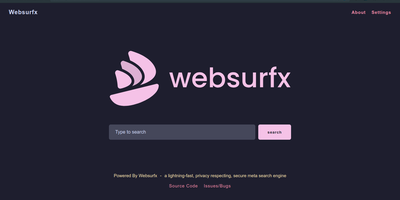
Websurfx aggregates results from multiple search engines into one private, ad-free interface that never tracks your queries. Written in Rust, the backend provides memory safety against buffer overflows and data races at the language level while handling concurrent requests across upstream providers like DuckDuckGo and Searx. A built-in re-ranking algorithm scores and merges results by relevance, producing a unified page that draws from many sources while appearing as one coherent search. Safe-search filtering operates across four levels from unrestricted to complete content blocking, with regex-based filter lists for parental controls in schools and organizations. Upstream requests route through configurable proxy chains or Tor, preventing search providers from correlating your queries with a specific IP address. Four Docker image variants target different caching strategies: hybrid Redis plus in-memory for maximum throughput, Redis-only, in-memory-only, or zero-persistence for environments where cached queries must never touch disk. The Lua configuration file controls engine selection, request timeouts, rate limiting thresholds, and production-mode delays that throttle upstream traffic to prevent abuse. Quick-result widgets handle calculations, currency conversions, and unit transformations inline without external redirects. Image search capabilities serve visual discovery for designers and researchers who need media results without surveillance. Runs on a RepoCloud VPS with dedicated resources and full root access. AGPL-3.0 licensed.

Graylog
Trusted by over 60,000 organizations worldwide with more than 8,100 GitHub stars since 2010, Graylog has established itself as one of the fastest paths from raw log data to operational visibility, delivering centralized log management, security analytics, and compliance auditing through a purpose-built web interface with sub-second search at scale. The platform ingests logs from virtually any source via syslog, GELF, Beats, raw TCP/UDP, HTTP, CEF, IPFIX, and Netflow protocols, processing each message through configurable pipelines that parse fields, apply transformations, enrich events with GeoIP data from MaxMind or IPinfo lookup tables, and route messages to appropriate streams based on content rules. OpenSearch handles full-text indexing and storage with dynamic shard sizing that automatically calculates appropriate sizes from available node memory, while MongoDB stores configuration metadata including user accounts, roles, dashboards, alert rules, and pipeline definitions. The alerting system integrates with Slack, PagerDuty, and email with customizable notification templates and Replay Search links for immediate investigation context. Version 7.0 introduced MCP server integration for connecting preferred LLMs to perform AI-assisted log analysis and automation, while version 7.1 added Sigma detection rule import from private GitHub, GitLab, and Bitbucket repositories for detection-as-code workflows. The Sidecar agent management system centrally configures and deploys Filebeat, Winlogbeat, and nxlog collectors across infrastructure from the Graylog web interface. Running on a dedicated VPS on RepoCloud with guaranteed CPU, RAM, and SSD, full root SSH access, and a browser serial console. SSPL licensed.
BentoPDF
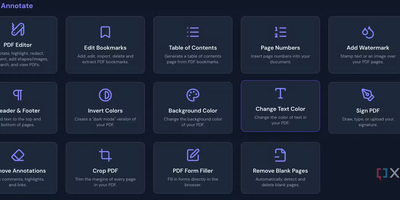
Merge, split, compress, convert, edit, annotate, redact, OCR, and sign PDFs - BentoPDF packs over 130 tools into a privacy-first toolkit that runs entirely in the browser through WebAssembly. Files are never uploaded - processing happens in browser memory on the user's machine and disappears when the tab closes, which makes the tool GDPR-clean by architecture and safe for financial, legal, and internal documents. The engine combines WASM builds of PyMuPDF, Ghostscript, and CoherentPDF; Tesseract handles OCR with searchable text-layer output; Office conversions cover Word, Excel, and PowerPoint; and digital signatures use X.509 certificates (PFX/PEM) with the private key staying on the client. Because there is no server-side processing, deployment is a static-file exercise: a single Docker container, or any static host. A dedicated self-hosted build strips the marketing pages while keeping every tool, and air-gapped deployments are first-class - an automated script bundles the WASM modules, OCR language data, and fonts for fully offline networks. No accounts, no limits, no watermarks; TypeScript and Vite under the hood.
MCPProxy
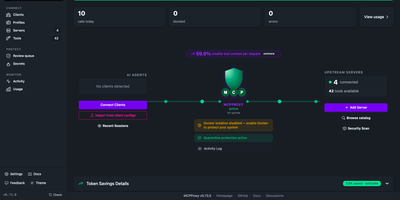
MCPProxy puts one safe endpoint in front of every MCP server your AI agents use, and it holds each new server in quarantine until a person approves it. Add stdio or HTTP servers on the Servers page, then review the captured tool definitions and scanner findings in the Review queue before any agent can call them. The Tools page lists every tool with a Read, Write, or Destructive tier, an approval state, and a usage count, plus switches to hide whatever you do not want exposed. Agents see a short set of discovery and call tools instead of the full catalog, and the Home dashboard estimates how much context that saves per request. The Activity Log records each call with its server, intent, status, and duration, and exports for audits. The Usage page charts calls per tool, response sizes, errors, latency, and activity over time, filtered by profile, client, or token. Profiles and agent tokens scope what each client may reach, a Secrets page keeps credentials out of config files, and a setup wizard connects Claude Code, Claude Desktop, Cursor, Windsurf, and VS Code. Platform teams and solo builders get one place to see and control everything their agents can touch. Running on a dedicated VPS on RepoCloud with guaranteed CPU, RAM, and SSD, full root SSH access, and a browser serial console. MIT licensed.
ServiceRadar
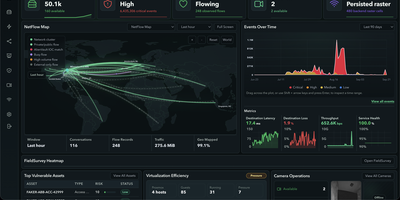
Most teams juggle five consoles to watch one network, and ServiceRadar replaces them with a single operations dashboard for flows, topology, logs, metrics, and alerts. Agents deployed at remote sites keep collecting checks even when the link drops, then deliver their stored records once the connection returns. Discovery over SNMP, LLDP, and CDP builds a topology map that shows traffic between devices, and a NetFlow map traces conversations across the world. Telemetry arrives from OpenTelemetry, syslog, GELF, SNMP polling and traps, BGP, and NetFlow or IPFIX exporters, and a short key:value query language filters any of it. An anomaly engine groups spikes and drift into episodes, so operators get one durable alert instead of a hundred noisy ones. Notification routes with escalation policies page people through Slack, Discord, email, or webhooks, and a delivery log records every attempt. Security views gather scanner findings, threat intelligence matches, and DNS activity, and Ansible playbooks run against inventory devices with live per-host results. Custom checks run as sandboxed plugins, and teams can publish their own dashboards. Managed service providers, multi-site businesses, remote field operations, and homelabs that outgrew a status page are the natural fit. Running on a dedicated VPS on RepoCloud with guaranteed CPU, RAM, and SSD, full root SSH access, and a browser serial console. Apache-2.0 licensed.

Ultimate Certificate Manager
Ultimate Certificate Manager, or UCM, runs your own certificate authority from a web interface, so issuing, renewing, and revoking certificates stops being a pile of OpenSSL commands. Create root and intermediate CAs, arrange them in a hierarchy, and manage every certificate through its life: issue, sign, renew in place, revoke with a reason, and export as PEM, DER, PKCS#12, or JKS. Devices and servers enroll themselves through ACME, SCEP, and EST endpoints, while OCSP answers status checks in real time and CRL distribution points publish revocations on schedule. Network discovery scans your address space and reports the certificates it finds, so expiring or unknown certificates surface before they cause an outage. Templates define server, client, code-signing, email, and smartcard profiles, with key types from RSA and elliptic curves to post-quantum ML-DSA, and issuance policies can route sensitive requests through an approval queue. Signing keys can live in an HSM so private material never leaves the hardware, and every key at rest can be encrypted under a master key. Operators sign in with passwords, TOTP, WebAuthn, mTLS, LDAP, OAuth2, or SAML, and role-based permissions decide who may issue, approve, or merely audit. Running on a dedicated VPS on RepoCloud with guaranteed CPU, RAM, and SSD, full root SSH access, and a browser serial console. AGPL-3.0 licensed.