WA-AKG
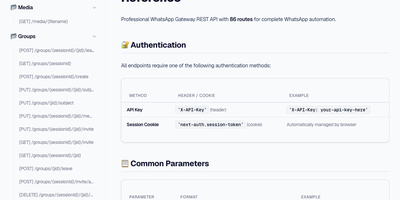
WA-AKG turns ordinary WhatsApp numbers into a programmable messaging API, so your apps, CRMs, and automations can send and receive WhatsApp messages through a dashboard and REST endpoints instead of a phone. Connect several numbers at once by scanning QR codes, and each session stays visible with its connection state, ready for messages, media, documents, and stickers. The scheduler queues text and media for exact delivery times, and broadcasts go out in batches with randomized delays that keep sending patterns human. Keyword auto-replies answer common questions around the clock in private chats, groups, or both, with whitelists and blacklists deciding who the bot engages. Webhooks forward incoming messages, connection changes, and group events to your own systems in real time, and an n8n node plugs the gateway straight into workflow automations. Contacts sync with verified names and profile pictures, a sticker maker with background removal handles media chores, and the full API is documented in Swagger for client generation. The dashboard speaks English, Bahasa Indonesia, and Brazilian Portuguese, so support teams can run campaigns and customer conversations from the browser. Running on a dedicated VPS on RepoCloud with guaranteed CPU, RAM, and SSD, full root SSH access, and a browser serial console. MIT licensed.

Serviette
Your documents change every day, and your RAG answers should change with them: Serviette keeps a chat and REST API continuously in sync with the files you point it at, no re-indexing jobs to remember. Point it at a local folder, Google Drive, S3 or MinIO bucket, SharePoint library, or even an FTP or WebDAV share, and edits, additions, and deletions flow into the index in real time. One YAML file, or the interactive wizard, chooses among eight vector databases, from embedded DuckDB with zero setup to pgvector, Qdrant, Milvus, Chroma, Weaviate, Pinecone, or MongoDB Atlas. Text, Office files, PDFs with tables, and scanned images are parsed and answerable by default, with audio and video joining when you add the keys. Embeddings can run fully locally with no credentials, and keyless answers simply quote the retrieved passages with their sources. The indexer and the stateless server scale independently, the server shards across workers with one config line, and both a ChatGPT-style web chat and a versioned /api/v1 retrieval API answer on the same port. A free license key from Pathway activates the engine, and benchmarks cover corpora up to 50 GB of text. Running on a dedicated VPS on RepoCloud with guaranteed CPU, RAM, and SSD, full root SSH access, and a browser serial console. MIT licensed.
Nanobot
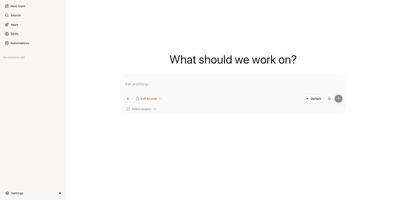
With over 46,000 GitHub stars, nanobot is the ultra-lightweight personal AI agent framework that delivers full agentic capabilities — tools, persistent memory, multi-agent workflows, scheduled automation, and 10+ chat channel integrations — in approximately 4,000 lines of readable Python core code. The agent loop receives messages from any connected channel, builds context from session history and long-term memory files, calls the configured LLM provider, executes requested tools, and publishes replies back to the originating channel. Supported LLM providers include OpenAI, Anthropic, Google Gemini, DeepSeek, Qwen via DashScope, Moonshot/Kimi, Ollama, vLLM for local models, and any OpenAI-compatible API through OpenRouter or LiteLLM. Chat channels connect the agent to Telegram, Discord, Slack, WhatsApp, Feishu/Lark, DingTalk, Email via IMAP/SMTP, QQ, Matrix with end-to-end encryption, Mattermost, and the built-in browser WebUI served from the published Python wheel with no separate frontend build. Built-in tools include filesystem read/write/edit, shell execution with configurable sandboxing via bubblewrap, web search and fetch with SSRF protection, MCP server integration, cron scheduling, image generation, and subagent spawning for parallel task delegation. The Dream memory system consolidates session history into persistent markdown files for long-term context retention across conversations. Deployment runs as a CLI agent, a persistent gateway server, a Docker container with Docker Compose, or an OpenAI-compatible API server. Running on a dedicated VPS on RepoCloud with guaranteed CPU, RAM, and SSD, full root SSH access, and a browser serial console. MIT licensed.
Whatomate
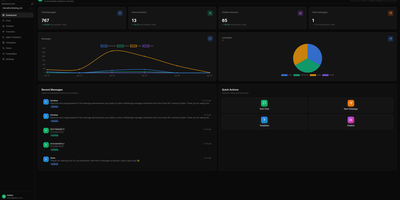
A complete WhatsApp Business Platform covering messaging, chatbot automation, and voice calling with IVR — a combination most self-hosted projects never attempt. The Fastglue/fasthttp backend processes WhatsApp Cloud API webhooks through PostgreSQL and Redis into a real-time WebSocket layer powering instant chat updates across a Vue 3 frontend built with shadcn-vue and TailwindCSS. Chatbot automation supports keyword triggers, multi-step conversation flows with branching logic, AI-powered responses from OpenAI, Anthropic, or Google models, knowledge base integration via vector stores, and seamless handoff to human agents when the bot gets stuck. The visual IVR builder uses a drag-and-drop node canvas where you wire greeting prompts, DTMF menu capture, HTTP callbacks to external APIs mid-call, business-hours routing by IANA timezone, agent team transfers with hold music, and reusable sub-flows. Every call recording streams encrypted to your S3-compatible bucket with retention you control. Multi-tenant architecture isolates organizations with separate data, roles, and API keys while a unified inbox presents both chat and call conversations to agents in a single dashboard. Meta-approved template management, bulk campaign messaging, analytics tracking, and a full REST API round out the platform. Deploy via Docker Compose with Postgres and Redis included. Running on a dedicated VPS on RepoCloud with guaranteed CPU, RAM, and SSD, full root SSH access, and a browser serial console. AGPL v3 licensed.
MaxKB
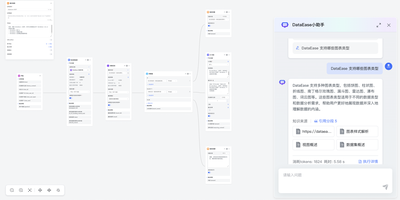
Support teams, IT departments, and researchers can put their own documents behind chatbots and AI agents built with MaxKB, an open-source platform that grounds answers in private knowledge. A support lead starts by uploading Markdown, DOCX, PDF, TXT, HTML, XLSX, XLS, or CSV files, or by syncing a web site, and MaxKB splits, vectorizes, and indexes the content on its own. An IT department can place the finished agent in any third-party site or internal tool with no coding, as a full-screen page, a mobile view, or a floating chat window. Researchers get replies that show, and let them download, the knowledge sources behind each answer. Simple agents pick tools, skills, and MCP connections from the question itself, while advanced agents are drawn as workflows with branching, multi-path recall, loops, and variables. Custom scripts, which AI can help write, plus schedules and event triggers extend what an agent can do. The model manager registers local models such as DeepSeek, Llama, and Qwen beside providers such as OpenAI, Claude, and Gemini, across language, embedding, reranking, vision, speech, and image generation. Conversation logs feed analysis for operations. Dozens of ready-made agent templates, knowledge base templates, tools, and skills in the template center and tool store shorten the first build. Running on a dedicated VPS on RepoCloud with guaranteed CPU, RAM, and SSD, full root SSH access, and a browser serial console. GPL-3.0 licensed.
LobeHub
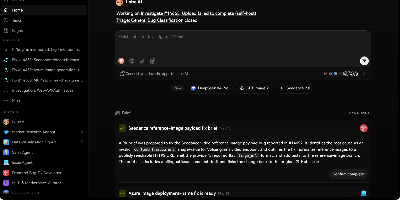
With over 82,000 GitHub stars and 700,000+ downloads, LobeHub has evolved from its origins as LobeChat into a comprehensive multi-agent AI collaboration platform where humans and autonomous agent teams co-evolve. The platform's Agent Harness architecture functions as an operating system between AI models and applications, handling prompt presets, tool orchestration, lifecycle hooks, planning, filesystem access, and sub-agent management across 25+ model providers including OpenAI, Anthropic Claude, Google Gemini, DeepSeek, Mistral, Groq, AWS Bedrock, Azure OpenAI, and local models through Ollama. Agent Groups enable sophisticated collaboration with sequential, parallel, iterative, and debate orchestration modes, allowing multiple specialized agents to tackle complex workflows simultaneously. The Agent Builder creates production-ready agents from natural language descriptions with auto-configuration, drawing from a marketplace of 505+ pre-built agents and 10,000+ MCP-compatible skills and plugins. Pages provide collaborative document editing with multi-agent co-authoring, while Schedules automate agent runs around the clock without human supervision. The knowledge base leverages PostgreSQL with pgvector for RAG-powered retrieval, and Personal Memory gives agents transparent, editable context that evolves through continual learning. The full self-hosted stack deploys via Docker Compose with PostgreSQL, Redis, RustFS for S3-compatible storage, and SearXNG for private web search, all configurable through environment variables. Running on a dedicated VPS on RepoCloud with guaranteed CPU, RAM, and SSD, full root SSH access, and a browser serial console. LobeHub Community licensed.
AnythingLLM
Chat with your own documents: AnythingLLM, from Mintplex Labs, wraps retrieval-augmented generation (RAG) in an open-source application anyone can run. You organize content into workspaces, each an isolated namespace with its own documents, vector embeddings, chat history, and settings, so one instance can hold several separate knowledge bases. Upload PDFs, DOCX, TXT, and other formats, or scrape web pages; the built-in collector parses and chunks them into a vector database (LanceDB by default, with Pinecone, Chroma, Qdrant, and others supported). Answers cite their source documents. It works with both cloud LLMs (OpenAI, Anthropic, Gemini) and local ones via Ollama or LM Studio, and the embedding model is separately configurable. Beyond RAG chat, it includes AI agents that can browse the web and run tools, an embeddable chat widget for your website, a developer API, and multi-user mode with admin, manager, and default roles plus per-workspace access control. Context assembly is smarter than naive RAG: pinned documents, attached files, vector search hits, and recent chat history are combined under a token budget so the model's context window is filled efficiently, and each workspace supports multiple independent conversation threads against the same knowledge base. Because the embedding model, vector store, and chat LLM are all independently swappable, you can move between providers without re-ingesting a single document. The stack is Node.js with a React frontend, MIT-licensed.
Open WebUI
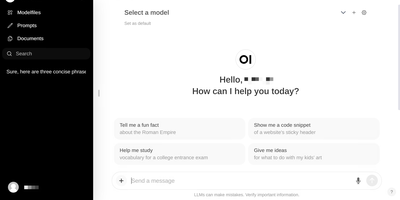
Large language models get a polished front end that can run fully offline: Open WebUI is the self-hosted front end of choice. It talks to local model runners, primarily Ollama, and to any OpenAI-compatible API, so LM Studio, vLLM, Groq, Mistral, OpenRouter, and cloud providers all plug into the same chat interface and can be mixed per conversation. RAG is built in: upload files to knowledge bases or reference them in chat with the # command, backed by a choice of nine vector databases (ChromaDB and PGVector officially maintained) and multiple extraction engines including Tika and Docling, with hybrid BM25-plus-vector search and cross-encoder reranking. Web search results from providers like SearXNG, Brave, and Tavily inject directly into conversations. Extensibility comes from Python tools and functions that run inside the chat, a Pipelines plugin framework, and native MCP support. Multi-user features include RBAC, SSO, and group permissions, and the instance itself exposes an OpenAI-compatible API your own apps can call.
Synaplan
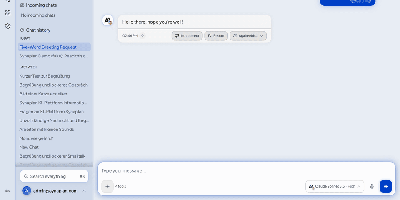
Instead of a separate chatbot for each channel, Synaplan runs one self-hosted AI assistant for your team, website visitors, WhatsApp line, and inbox, and shows what every reply cost. In the web app, connect OpenAI, Anthropic, Gemini, Groq, Mistral, xAI, Hugging Face, or local Ollama. Each kind of work gets its own model, from chat and image to video and audio, and every answer carries a Free, Low, Mid, or High cost badge. A planner splits a big request into a task graph and sends each step to the model that fits. On your website, one script tag adds a chat widget, and a human operator can take over any conversation live. On WhatsApp Business and email, the assistant replies on the channel where the question arrived. Behind every channel sits one knowledge base: upload PDFs, Word and Excel files, or images with OCR, and semantic search feeds them into answers. Saved tasks run on demand or on a schedule, approvals pause any action that writes, and watched pages mail you a diff when a URL changes. Connections reach Microsoft 365, Dropbox, Nextcloud, ownCloud, WebDAV, CalDAV, Jira, and Confluence. An MCP server and an Anthropic-compatible endpoint let Claude, Cursor, and Claude Code use your instance. Users and groups share folders and assistants, and admins see usage and health. Running on a dedicated VPS on RepoCloud with guaranteed CPU, RAM, and SSD, full root SSH access, and a browser serial console. Apache-2.0 licensed.
DeepTutor
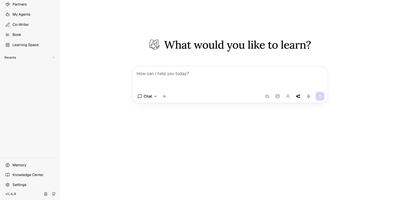
With 34,000+ GitHub stars and a v1.5 release driven by 36 merged community pull requests, DeepTutor from Hong Kong University's Data Science Lab delivers a full agent-native learning workspace that goes far beyond chatbot wrappers. Eight integrated surfaces — Chat, Deep Solve, Quiz Generation, Deep Research, Math Animator, Co-Writer, Book generation, and Mastery Practice — share a unified context so the objective follows the learner, not the tool. The platform's three-layer memory architecture (L1 working, L2 session, L3 long-term) makes personalization inspectable rather than opaque, letting users see exactly what the system remembers and why. Knowledge retrieval operates across five pluggable engines — LlamaIndex with FAISS vectors, PageIndex for page-level citations, GraphRAG for knowledge-graph traversal, LightRAG for local or server-offloaded retrieval, and linked Obsidian vaults — with document parsing via MinerU, Docling, markitdown, or PyMuPDF4LLM. Partners extend the tutoring brain to 15+ messaging platforms including Slack, Discord, Telegram, Matrix with E2EE, and Mattermost, each carrying private memory with branch, resume, and replay capabilities. Subagent integration brings Claude Code, Codex, Gemini, and Kimi directly into learning sessions. The system supports 30+ LLM providers from OpenAI and Anthropic to Ollama for fully local operation, with multi-user isolation, admin controls, and a full CLI interface. Running on a dedicated VPS on RepoCloud with guaranteed CPU, RAM, and SSD, full root SSH access, and a browser serial console. Apache 2.0 licensed.
Typebot
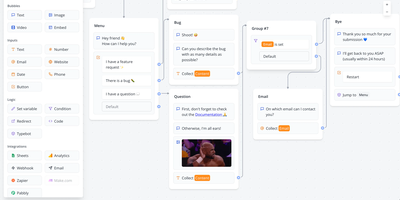
A fair-source chatbot and conversational-form builder: Typebot assembles conversations in a visual graph editor. In a visual graph editor you chain blocks from four categories: bubbles display text, images, video, audio, and embeds; inputs collect data through text fields, email, phone, buttons, picture choices, date pickers, file uploads, and Stripe payments; logic blocks handle conditional branching, variables, URL redirects, A/B testing, and custom JavaScript; integration blocks call webhooks, OpenAI, Google Sheets, Google Analytics, Meta Pixel, Zapier, Make, and Chatwoot. Build once, deploy anywhere: custom domains, WhatsApp, or embedded in any site as a container, popup, or chat bubble through a fast native JS library with no iframe and no external dependencies - plus an HTTP API for executing bots programmatically from any language. Theming covers fonts, colors, roundness, and shadows with custom CSS and reusable templates, and results arrive in real time with drop-off and completion analytics plus CSV export. Two Next.js apps (builder and viewer) self-host via Docker under the Functional Source License, which converts to Apache 2.0 after two years.
ZeroClaw
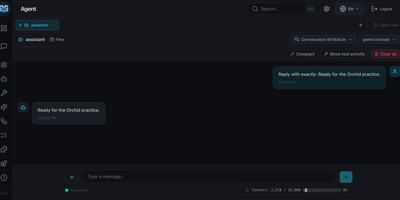
ZeroClaw puts one personal AI agent on every messaging app you already use, answering from your own server with your own model keys. A single instance binds Discord, Telegram, Matrix, Slack, WhatsApp, Signal, email, and webhooks at once, so you can start a conversation on your phone and finish it at your desk without losing context. You choose the brain behind it: Anthropic, OpenAI, a local Ollama model, or any OpenAI-compatible endpoint, with fallback chains that keep the agent answering when one provider has a bad day. The agent acts through tools that run shell commands, drive a browser, call HTTP APIs, and talk to custom MCP servers you plug in. A web dashboard gives you chat, a memory browser, a configuration editor, cron job management, and a tool inspector from any browser. Long-term memory lives in SQLite on your disk with embedding-based recall, so past conversations stay searchable and private. Supervised autonomy is the default posture: medium-risk actions pause for your approval, high-risk actions are blocked outright, and operating system sandboxes plus cryptographic receipts keep every tool call bounded and auditable. Event-driven standard operating procedures react to MQTT messages, webhooks, schedules, and hardware events, and named agents let different personalities guard different channels. Registered as a system service, it stays online around the clock. Running on a dedicated VPS on RepoCloud with guaranteed CPU, RAM, and SSD, full root SSH access, and a browser serial console. MIT or Apache-2.0 licensed.
Octop
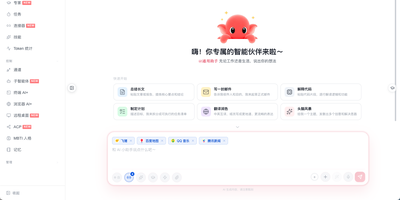
Modern engineering teams and busy households deploy Octop to run private, autonomous AI agents equipped with persistent memory workspaces, scheduled cron jobs, and direct browser automation. Users can orchestrate specialist agents tailored for software development, IT operations, content generation, and system diagnostics through an interactive React dashboard. The platform connects directly to Discord, Feishu, DingTalk, and WeCom, allowing team members to delegate complex tasks without leaving their everyday messaging apps. An integrated remote desktop and browser control engine lets agents navigate websites, capture screenshots, fill forms, and operate graphical software autonomously. Administrators can assign distinct MBTI personality profiles to agents, establish granular role-based permissions, configure scheduled cron workflows, and integrate custom Model Context Protocol servers for external tool access. Long-term memory persists across conversations through dedicated workspace files, ensuring contextual continuity whenever switching between underlying language models or team collaborators. Running on a dedicated VPS on RepoCloud with guaranteed CPU, RAM, and SSD, full root SSH access, and a browser serial console. MIT licensed.
AI Real Estate Assistant
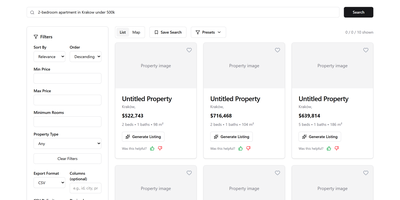
AI Real Estate Assistant puts a conversational search engine on top of your own property catalogue, so buyers type a request in plain language and receive matched listings in return. A query about a two-bedroom apartment in a named city under a price limit becomes extracted filters, semantic ranking over the catalogue, and a shortlist that matches the words instead of a rigid form. Behind the chat sits a working toolbelt: a mortgage calculator, a rent-versus-buy comparison, ROI and total-cost-of-ownership estimates, and an AI valuation that projects a property value one, three, five and ten years ahead with a confidence band. Every listing card shows an estimated monthly payment, and every property page carries an AI neighbourhood summary covering district character, nearby amenities and ease of getting around. Interactive maps cluster markers by area, a city overview page compares markets across districts, and a documents section accepts uploaded files that visitors can question in the same conversation. An agent directory presents the people behind the listings together with their stock, and the interface speaks nine languages with compliance labels on AI output. The demo mode answers with a local model and needs no paid key, and a real deployment routes each request to any of sixteen providers. Running on a dedicated VPS on RepoCloud with guaranteed CPU, RAM, and SSD, full root SSH access, and a browser serial console. MIT licensed.
BrightBean Chat
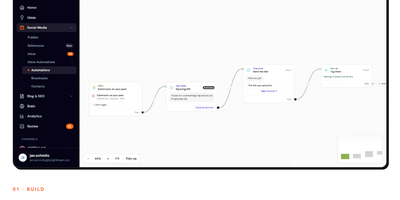
BrightBean Chat is a self-hosted chat automation platform that builds visual flows once and runs them across Instagram, WhatsApp, Messenger, Telegram, SMS, and email, so your audience automations live on your server instead of a per-contact subscription. You drag conditions, delays, randomizers, data collection, and message nodes onto a canvas, test the draft while the live version keeps running, then set it live with every save versioned. Flows start from keywords, comment-to-DM triggers, story mentions and replies, follows, ref URLs, QR codes, or calls to the public API. Every channel lands in one shared inbox where teammates assign conversations, label them, schedule replies, and take over from the bot, which pauses the automation for that contact. Contacts carry custom fields, tags, and segments that stay unified across channels, and imports and exports keep the list portable. Broadcasts and multi-step drip sequences check opt-outs and each platform's 24-hour messaging window before sending, pace themselves per channel, and show exactly who will receive a message and who is skipped. Per-node counters track sent, delivered, failed, and clicked, while a bearer-authenticated REST API and signed webhooks hand leads to Make, Zapier, n8n, or your own systems. Running on a dedicated VPS on RepoCloud with guaranteed CPU, RAM, and SSD, full root SSH access, and a browser serial console. AGPL-3.0 licensed.
Memoh
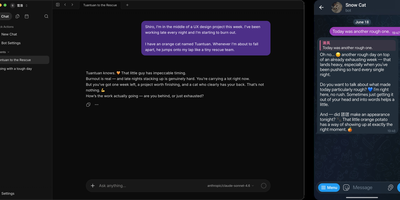
Memoh delivers an open-source multi-agent platform where every AI agent gets its own computer — not a chat window but a fully isolated container with dedicated filesystem, desktop environment, browser, network stack, and persistent long-term memory that survives across sessions, days, and platforms. The containerd-based runtime ensures each bot operates in complete isolation with snapshot and data import/export capabilities. The memory engine uses LLM-driven fact extraction with hybrid retrieval combining dense embeddings via Qdrant, sparse vectors, and BM25, plus 24-hour context loading and automatic compaction — with Mem0 and OpenViking as drop-in alternatives. Ten communication channels connect agents to users through Telegram, Discord, Lark, QQ, Matrix, WeCom, WeChat, Email, Web UI, and group chats with cross-platform identity binding. MCP tool calling enables agents to interact with external services, while browser automation drives GUI workflows for web research and data extraction. Agent hosting supports running external coding agents like Codex and Claude Code inside Memoh workspaces via ACP with per-bot configuration. Scheduled tasks run without human triggers, and agents proactively reach out when needed. The web dashboard built with Vue 3 and Tailwind CSS provides streaming chat, tool call visualization, file management, model and provider configuration, and bot lifecycle management. Deploy via Docker Compose with PostgreSQL, Qdrant, sparse service, and the Go backend server. Running on a dedicated VPS on RepoCloud with guaranteed CPU, RAM, and SSD, full root SSH access, and a browser serial console. AGPL-3.0 licensed.
Flowise
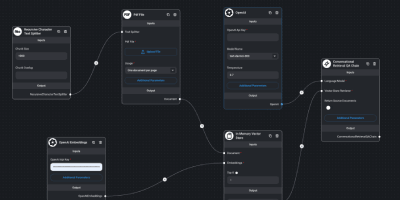
Drag nodes onto a canvas and ship an LLM app: Flowise is an open-source visual builder for AI agents and LLM applications, written in Node.js on LangChain.js and licensed Apache-2.0. You assemble flows by dragging nodes onto a canvas: models, prompts, memory, vector stores, retrievers, and tools, then wire them together and test in the built-in chat panel. Three builder types cover increasing complexity: Assistant for simple RAG chat over uploaded files, Chatflow for single-agent systems with techniques like rerankers and Graph RAG, and Agentflow for multi-agent orchestration with branching, looping, shared flow state, and human-in-the-loop checkpoints. Over 100 integrations connect data sources, vector databases, and both proprietary and open-source models, plus MCP client and server nodes for standard tool interop. Finished flows are exposed as REST APIs, embedded chat widgets, or via JS and Python SDKs - each flow gets an endpoint the moment it is saved, removing the deployment gap between a working prototype and something your application can call. Execution logs, visual step debugging, and external log streaming trace behavior, while input moderation and rate limiting act as guardrails; RBAC, SSO, and workspaces cover team deployments. Self-hosting keeps prompts, encrypted credentials, and conversation data on your own instance, which matters when flows handle internal documents or customer data - and wiring a model, prompt, memory, and vector store on the canvas replaces the boilerplate a hand-coded LangChain project would need.
Nakama
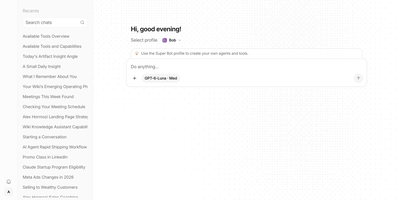
Nakama gives your whole team a shared home for AI agents, where each agent has its own identity, memory, tools, and permissions and meets people where they already talk. The dashboard feels like a familiar chat app: pick an agent from the rail, start a conversation, and watch it use tools, recall memory, and reply inside Telegram, WhatsApp, Discord, or Slack when the work lives there. Every agent is configured as a small personality you can read and edit, with prompt files for its soul, style, instructions, and memory, plus tabs for its channels, tools, MCP servers, and skills. One server hosts many organizations with invites and roles, and agents stay isolated from each other so the support agent never wanders into the finance agent's toolbox. The control center manages workspace settings, model providers, plugins, and integrations, and a connector layer opens the door to more than a thousand external apps. Daily encrypted backups and an in-app update button keep operations boring, and the entire platform idles in about two hundred megabytes inside a single container. Running on a dedicated VPS on RepoCloud with guaranteed CPU, RAM, and SSD, full root SSH access, and a browser serial console. MIT licensed.